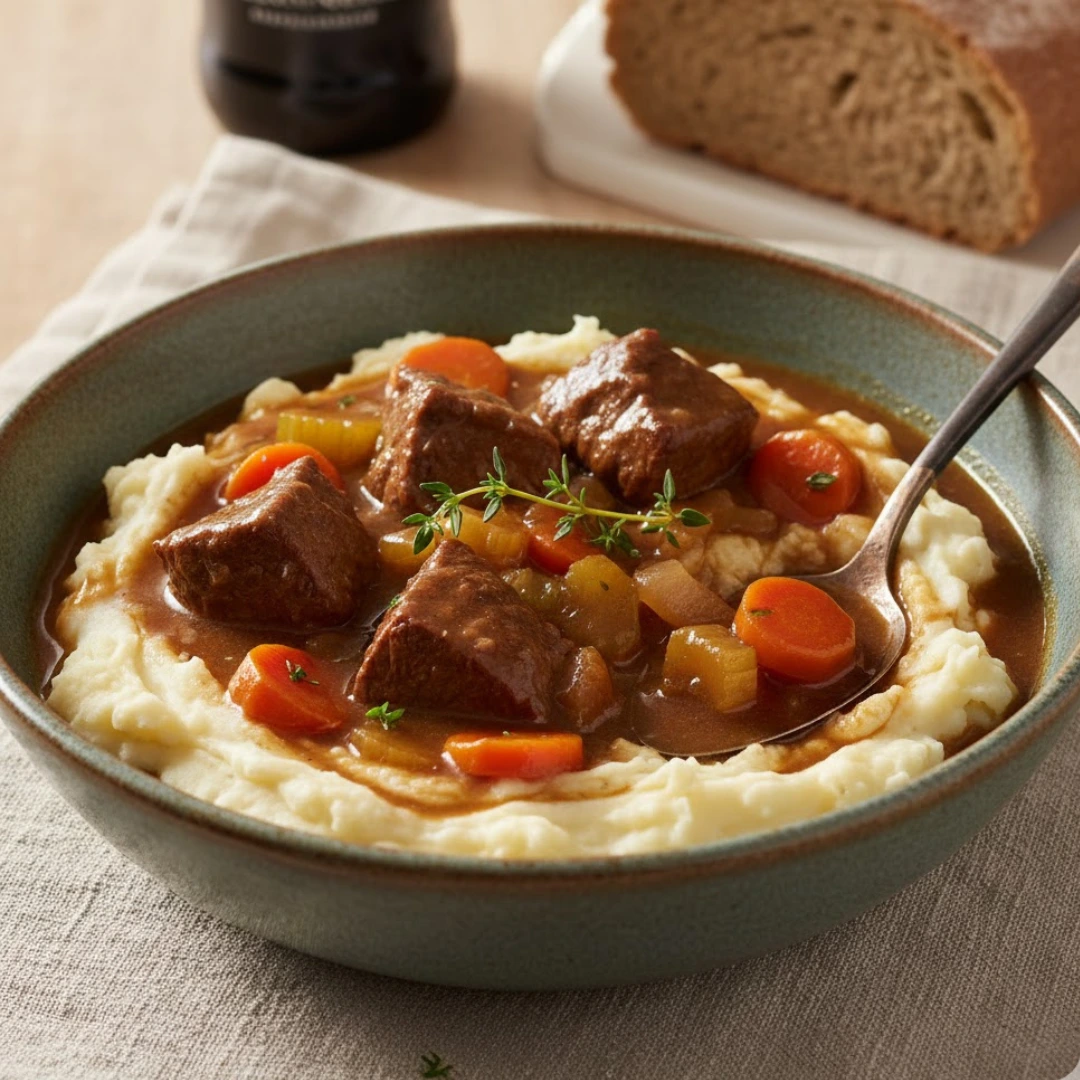
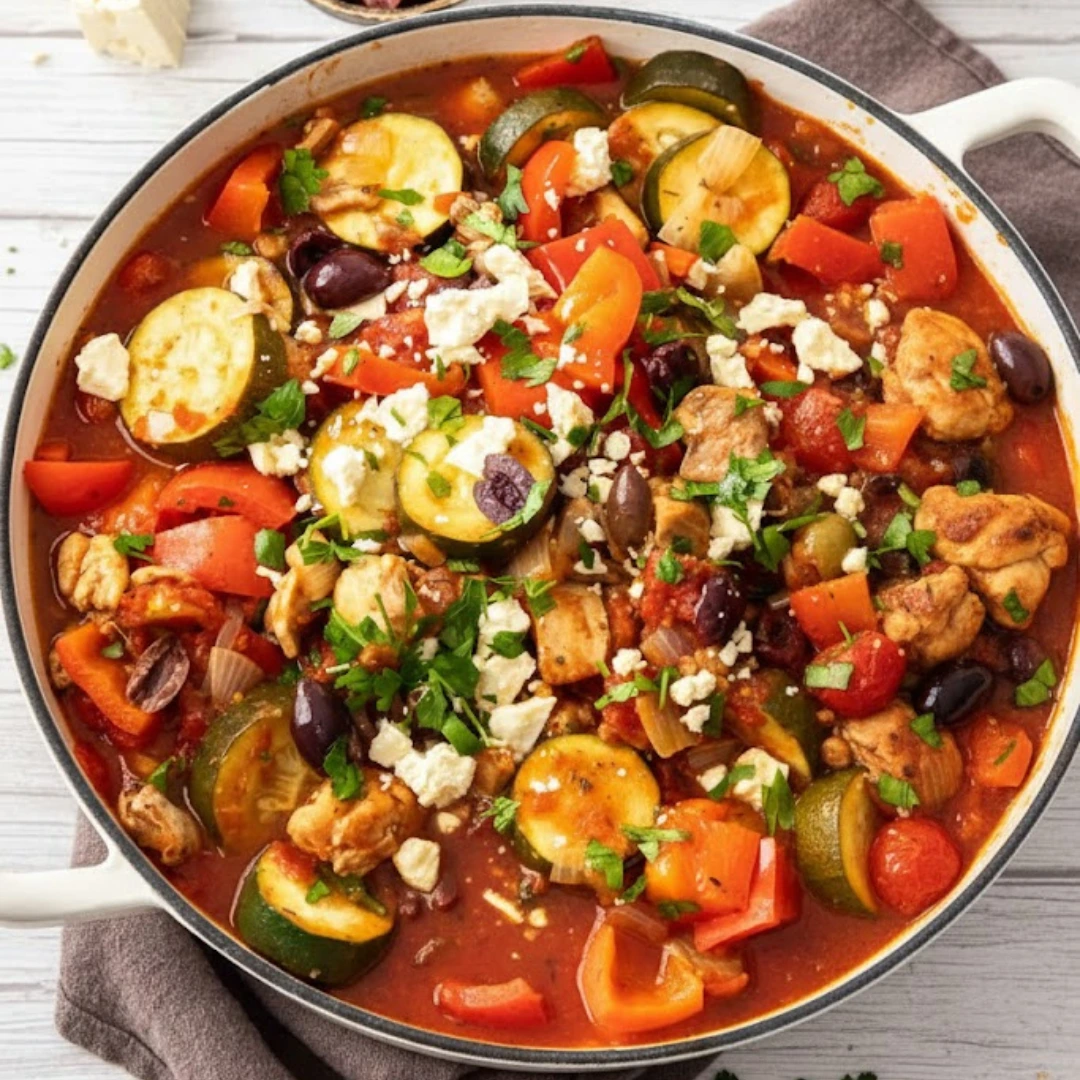
If you feel the need for comfort food that is quick and easy to prepare, look no further than this full-of-flavor Mediterranean Chicken Casserole. This one-pot meal is easy enough for a weeknight or ideal for relaxed weekend entertaining. As a bonus, it can be made ahead of time. Be certain, your family and friends will love it.
The Mediterranean diet is world-renowned for its health benefits and vibrant flavors, and this dish captures that essence perfectly. By simmering tender chicken thighs with colorful vegetables and aromatic herbs, you create a meal that is both nourishing and deeply satisfying. The beauty of a casserole lies in its ability to meld flavors together over time, resulting in a sauce that is rich, savory, and begging to be soaked up with a piece of crusty bread. Whether you are cooking for a busy family or hosting a small dinner party, this dish provides a maximum flavor profile with minimal cleanup.
Table of Contents
Essential Ingredients
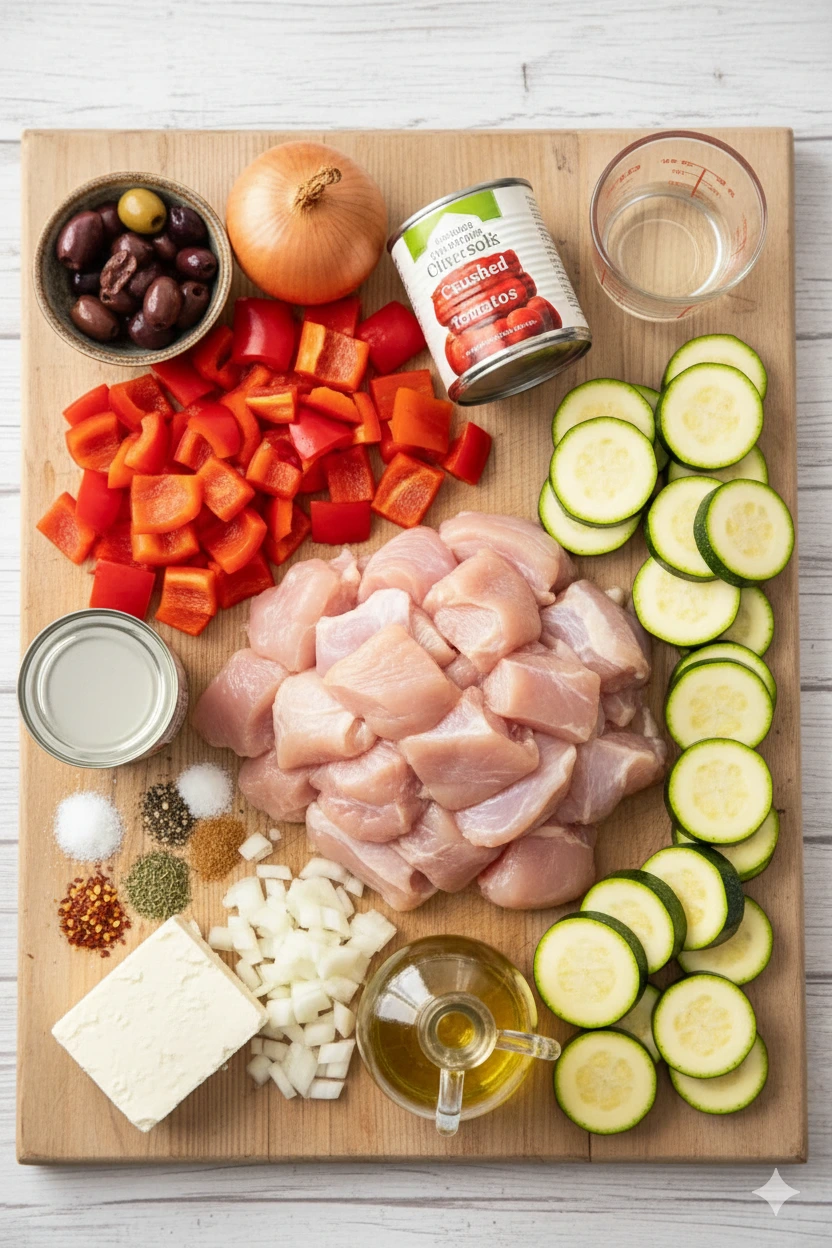
The success of this Mediterranean Chicken Casserole relies on high-quality, fresh ingredients that provide a balance of acidity, salt, and earthiness.
- 1 kg (2.2 lb) chicken thighs – skinless and boneless
- 1 teaspoon sea salt
- 1/2 teaspoon freshly ground black pepper
- 3 tablespoon extra virgin olive oil
- 1 large brown or yellow onion – finely chopped
- 4 cloves garlic – finely chopped
- 800 g (28 oz) crushed tin tomatoes
- 250 ml (1 cup) chicken stock
- 1 teaspoon dried oregano
- 1 teaspoon dried basil
- 1/4 teaspoon dried chilli or red pepper flakes – or to taste
- 2 large zucchini or courgette – cut into 1 cm slices (1/3 inch) wide
- 2 large red capsicum or bell pepper – cut into 3 cm (1 inch) squares
- 1/2 cup Kalamata olives – pitted and halved
- 2 tablespoon flat-leaf parsley – roughly chopped
- Sea salt and freshly ground black pepper – to taste
To Serve:
- 200 g (7 oz) feta cheese – crumbled on top
- Flat-leaf parsley – roughly chopped
Primary Cooking Instructions
- Preheat your oven to 180 Celsius (355 Fahrenheit).
- Trim excess fat from the chicken thighs and cut them into roughly 3 cm (1 inch) cubes.
- Pat the chicken dry with paper towels to ensure a good sear. Season the chicken cubes with sea salt and freshly ground black pepper.
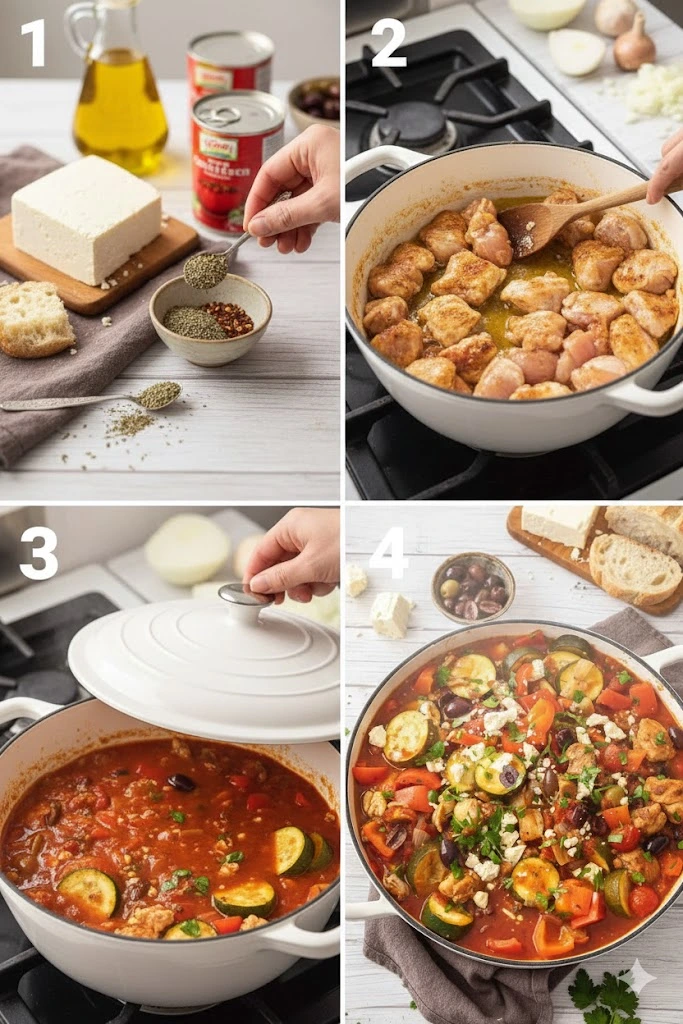
- Heat the olive oil over high heat in a large, heavy-based Dutch Oven or saucepan with a tight-fitting lid. The oil should be shimmering but not smoking.
- Add half the chicken to the pan. Brown for several minutes on all sides until a golden crust forms, then remove to a plate. Repeat with the remaining chicken.
- Turn the heat down to low. Add the finely chopped onion and cook for about 2 minutes, stirring occasionally. Add the garlic and cook for a further minute, ensuring it does not burn.
- Return the cooked chicken and any accumulated juices to the pan.
- Add the crushed tomatoes, chicken stock, dried oregano, dried basil, and chilli flakes. Stir well to de-glaze the pan, scraping up the browned bits from the bottom.
- Bring the mixture to a simmer and add the sliced zucchini and red capsicum.
- Cover the pot with the lid and place it in the preheated oven.
- Cook for 30 to 40 minutes until the chicken is tender and the vegetables are cooked through.
- Remove from the oven and stir in the halved Kalamata olives and the first portion of chopped parsley.
- Taste and adjust the seasoning with extra salt or pepper if needed.
- Serve directly from the pan or transfer to a dish, topping with crumbled feta cheese and the remaining fresh parsley.
Navigating Modifications and Substitutions
While the traditional recipe is balanced and flavorful, there are several ways you can adapt the Mediterranean Chicken Casserole to fit what you have in your pantry or your specific dietary preferences.
If you find yourself without chicken thighs, you can use chicken tenderloins or breasts, though you must adjust the timing. Leaner cuts like breast meat dry out quickly, so instead of cooking them for the full duration in the oven, you might consider adding them back into the sauce for only the last 15 minutes of oven time. For those who prefer a different protein altogether, Mediterranean-style sausages or even white beans like cannellini can provide a hearty alternative.
For the vegetables, if zucchini or red peppers aren’t your favorites, mushrooms or eggplant make excellent stand-ins. Mushrooms add a wonderful umami depth to the tomato base, while eggplant soaks up the juices beautifully. If you choose to use potatoes, ensure they are cut into small, uniform cubes so they soften completely during the 40-minute bake time.
Regarding the herbs, if you find that you don’t care for parsley, fresh basil is a fantastic substitute that maintains the Mediterranean profile. You can also experiment with different olives; while Kalamata provides a distinct saltiness, green Cerignola olives offer a milder, buttery contrast.
Enhancing the Experience: Accompaniments and Serving
The rich, tomato-based sauce of this Mediterranean Chicken Casserole is a highlight of the meal, and you will want something to capture every drop. The most classic pairing is a loaf of warm, crusty sourdough or a baguette. Garlic toast is another popular choice, providing a crunch that contrasts the tender chicken and softened vegetables.
If you prefer a more substantial base, serving the casserole over a bed of pasta is highly recommended. Angel hair, orzo, or even a thick pappardelle works beautifully to catch the sauce. For those looking for a lighter or gluten-free option, zucchini noodles (zoodles) or a simple side of steamed quinoa or rice can balance the richness of the feta and olives.
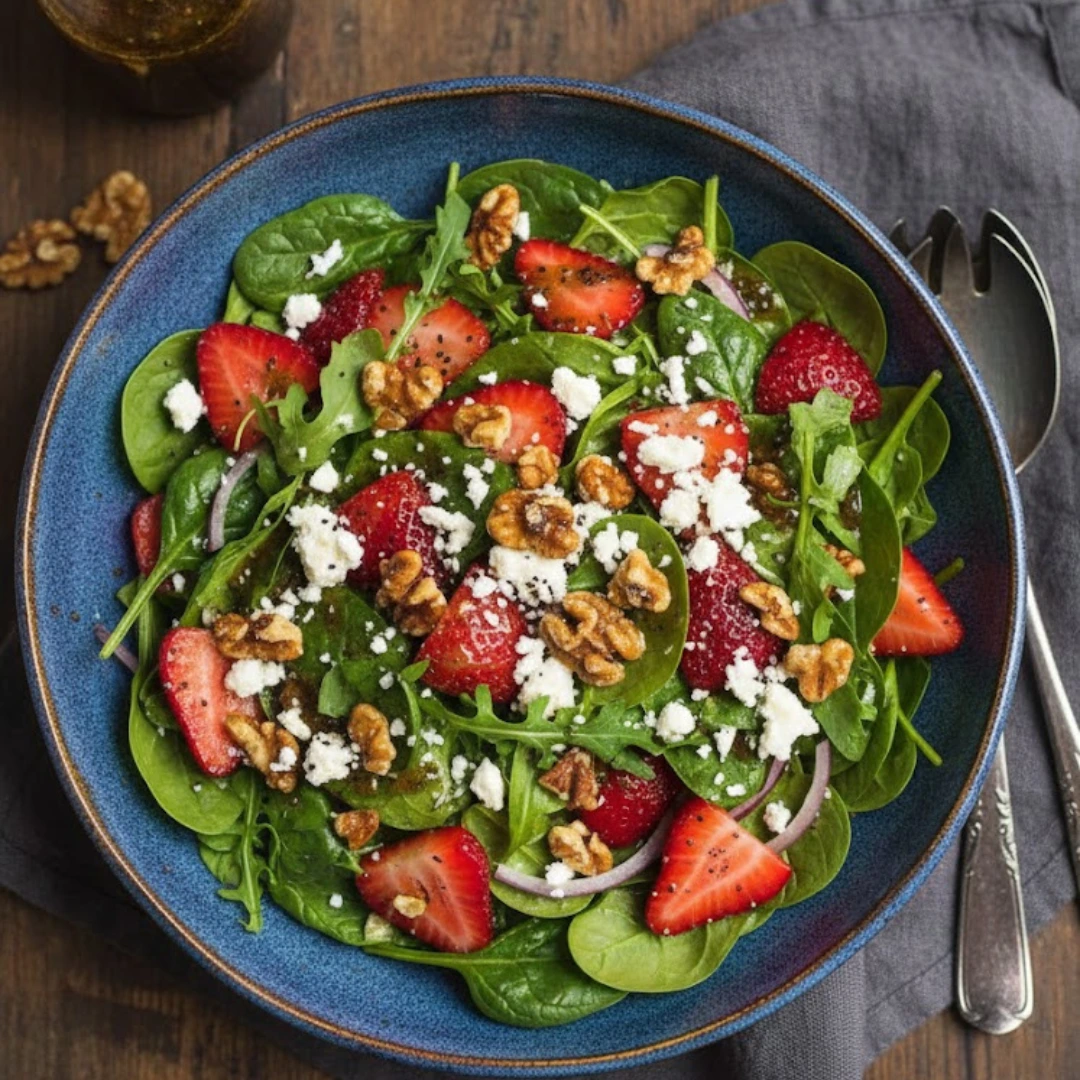
To complete the Mediterranean theme, a crisp green salad with a simple lemon and olive oil vinaigrette provides a refreshing palate cleanser between bites of the savory stew. The contrast of cold, crunchy greens against the warm, soft casserole creates a well-rounded dining experience.
Mastering the Step-by-Step Details
Achieving a restaurant-quality casserole at home requires attention to the small details during the preparation process. The first critical step is browning the chicken. When you pat the meat dry with paper towels, you remove surface moisture that would otherwise turn into steam. Steaming leads to gray, rubbery meat, whereas searing in shimmering olive oil creates the Maillard reaction—a chemical reaction between amino acids and reducing sugars that gives browned food its distinctive flavor. Do not overcrowd the pan; cooking in batches ensures the temperature stays high enough to sear the meat properly.
Deglazing the pan is another vital moment. After sautéing your aromatics (the onion and garlic), adding the liquid components like the chicken stock and crushed tomatoes allows you to scrape the “fond” off the bottom of the pot. The fond is the collection of browned bits left behind by the chicken, and it contains concentrated flavor that deepens the entire sauce.
Once the dish is in the oven, the gentle, surrounding heat ensures the chicken thighs remain succulent. Unlike breasts, thighs have more connective tissue that breaks down during a slow-simmering process, resulting in a “fall-apart” texture. The addition of the olives and feta at the very end is intentional. If you cook feta for too long, it can lose its distinct shape and become overly salty throughout the sauce. Adding it as a topping allows the diner to get bursts of creamy, tangy flavor in every bite.
Professional Culinary Insights for Success
To truly elevate this dish, consider the science of seasoning. This recipe uses sea salt and freshly ground black pepper, which offer a more complex flavor profile than standard table salt. Because the olives and feta cheese both carry significant sodium, it is wise to under-salt the dish slightly during the initial prep and do a final taste test after the olives and cheese have been introduced.
Temperature control is also key. This recipe specifies 180 Celsius for a fan-forced oven. If you are using a conventional oven without a fan, you may need to increase the temperature to 200 Celsius to achieve the same result. The heavy-based Dutch Oven is the preferred vessel because it retains heat exceptionally well and distributes it evenly, preventing “hot spots” that could burn the bottom of your casserole while it sits in the oven.
If you are a fan of heat, don’t be afraid to be generous with the dried chilli flakes. The sweetness of the red bell peppers and the acidity of the tomatoes provide a sturdy backdrop that can handle a bit of a kick. Conversely, if you are cooking for children or those sensitive to spice, the 1/4 teaspoon suggested is just enough to provide warmth without overwhelming the palate.
Deep-Dive Frequently Asked Questions
Is it really necessary to brown the chicken before putting the casserole in the oven?
While you could technically skip this step and the chicken would cook through, you would be missing out on a significant amount of flavor. Browning, or searing, creates a caramelized crust on the meat that adds a rich, savory depth to the entire sauce. It also improves the texture of the chicken, preventing it from tasting “boiled.”
What exactly does it mean to “deglaze” the pan, and why is it important?
Deglazing is the process of adding liquid to a hot pan to loosen the browned food particles stuck to the bottom after searing meat. In this recipe, the tomatoes and stock serve as the deglazing agents. These particles, known as the fond, are packed with flavor, and incorporating them into your sauce is what separates a good casserole from a great one.
Can I prepare this Mediterranean Chicken Casserole a day in advance?
Absolutely. In fact, many people find that the flavors are even better the next day. As the casserole sits in the refrigerator, the herbs, garlic, and spices have more time to infuse into the chicken and vegetables. When you are ready to serve, simply reheat it gently on the stove over medium-low heat until piping hot, then add the fresh parsley and feta.
How should I store leftovers and how long will they last?
Any remaining casserole should be cooled to room temperature before being transferred to an airtight container. It will stay fresh in the refrigerator for up to three days. If you want to store it longer, it can be frozen for up to three months. Just be aware that vegetables like zucchini may become slightly softer after the freezing and thawing process.
Can I use a pre-cooked rotisserie chicken instead of raw thighs?
Yes, this is a great shortcut for busy nights. If you use pre-cooked chicken, you should skip the initial browning phase. Sauté the onions and garlic, build the sauce with the tomatoes and vegetables, and let the vegetables cook through in the oven. Add the shredded or cubed rotisserie chicken during the last 10 minutes of cooking just to heat it through so it doesn’t become dry.
Nutrient Profile and Serving Information
This Mediterranean Chicken Casserole is a protein-rich meal that incorporates a variety of vegetables, making it a balanced choice for a healthy lifestyle.
Nutritional Table
| Nutrient | Amount Per Serving |
| Calories | 709 |
| Total Fat | 36 g |
| Saturated Fat | 12 g |
| Cholesterol | 284 mg |
| Sodium | 2000 mg |
| Total Carbohydrates | 35 g |
| Dietary Fiber | 9 g |
| Sugars | 21 g |
| Protein | 64 g |
| Calcium | 412 mg |
| Iron | 7 mg |
Nutritional Disclaimer
The nutritional information provided is an estimate based on standard ingredients and a four-person serving size. These values may vary depending on the specific brands of chicken stock, canned tomatoes, and feta cheese you choose to use. For the most accurate results, especially if you have specific dietary requirements, it is recommended to calculate the values using the exact products in your kitchen.
Perfecting Your Mediterranean Masterpiece
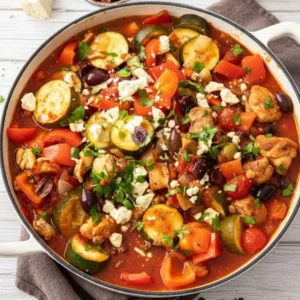
Creating a dish that feels like it came straight from a seaside kitchen in Greece or Italy doesn’t have to be complicated. The Mediterranean Chicken Casserole is a testament to the power of simple, high-quality ingredients handled with care. By taking the time to sear your chicken and sauté your aromatics, you build layers of flavor that make this meal truly memorable. Whether you serve it over pasta, with a side of bread, or on its own, it is a healthy and heartwarming option that fits perfectly into any recipe rotation. Once you pull that steaming pot out of the oven and top it with salty feta and fresh parsley, you’ll understand why this dish is a perennial favorite.
Mediterranean Chicken Casserole
Ingredients
- 1 kg chicken thighs, skinless and boneless (cut into 3 cm cubes)
- 1 tsp sea salt
- 0.5 tsp freshly ground black pepper
- 3 tbsp extra virgin olive oil
- 1 large brown onion, finely chopped
- 4 cloves garlic, finely chopped
- 800 g crushed tin tomatoes
- 250 ml chicken stock
- 1 tsp dried oregano
- 1 tsp dried basil
- 0.25 tsp dried chilli flakes (optional)
- 2 large zucchini, cut into 1 cm slices
- 2 large red capsicum (bell pepper), cut into 3 cm squares
- 0.5 cup Kalamata olives, pitted and halved
- 2 tbsp flat-leaf parsley, roughly chopped
- 200 g feta cheese, crumbled (for serving)
Instructions
- Preheat your oven to 180 Celsius (355 Fahrenheit). Trim excess fat from the chicken, cut into 3 cm cubes, pat dry with paper towels, and season with salt and pepper.
- Heat olive oil in a large, heavy-based Dutch Oven over high heat. Brown the chicken in two batches until golden on all sides. Remove meat to a plate and set aside.
- Reduce heat to low. Add the onion and cook for 2 minutes. Add the garlic and cook for 1 more minute, stirring to ensure it doesn’t burn.
- Return chicken and juices to the pan. Add tomatoes, stock, oregano, basil, and chilli flakes. Stir well to de-glaze the bottom of the pan.
- Bring to a simmer, then stir in the zucchini and red capsicum. Cover with a tight-fitting lid.
- Place the pot in the preheated oven and bake for 30–40 minutes until the chicken and vegetables are tender.
- Remove from the oven. Stir in the Kalamata olives and chopped parsley. Adjust seasoning with salt and pepper to taste.
- Serve directly from the pan or in a serving dish, topped generously with crumbled feta cheese and extra parsley.
Notes
Equipment
- Large Dutch Oven or heavy-based pot with lid
- chef’s knife
- cutting board
- paper towels
- tongs or slotted spoon