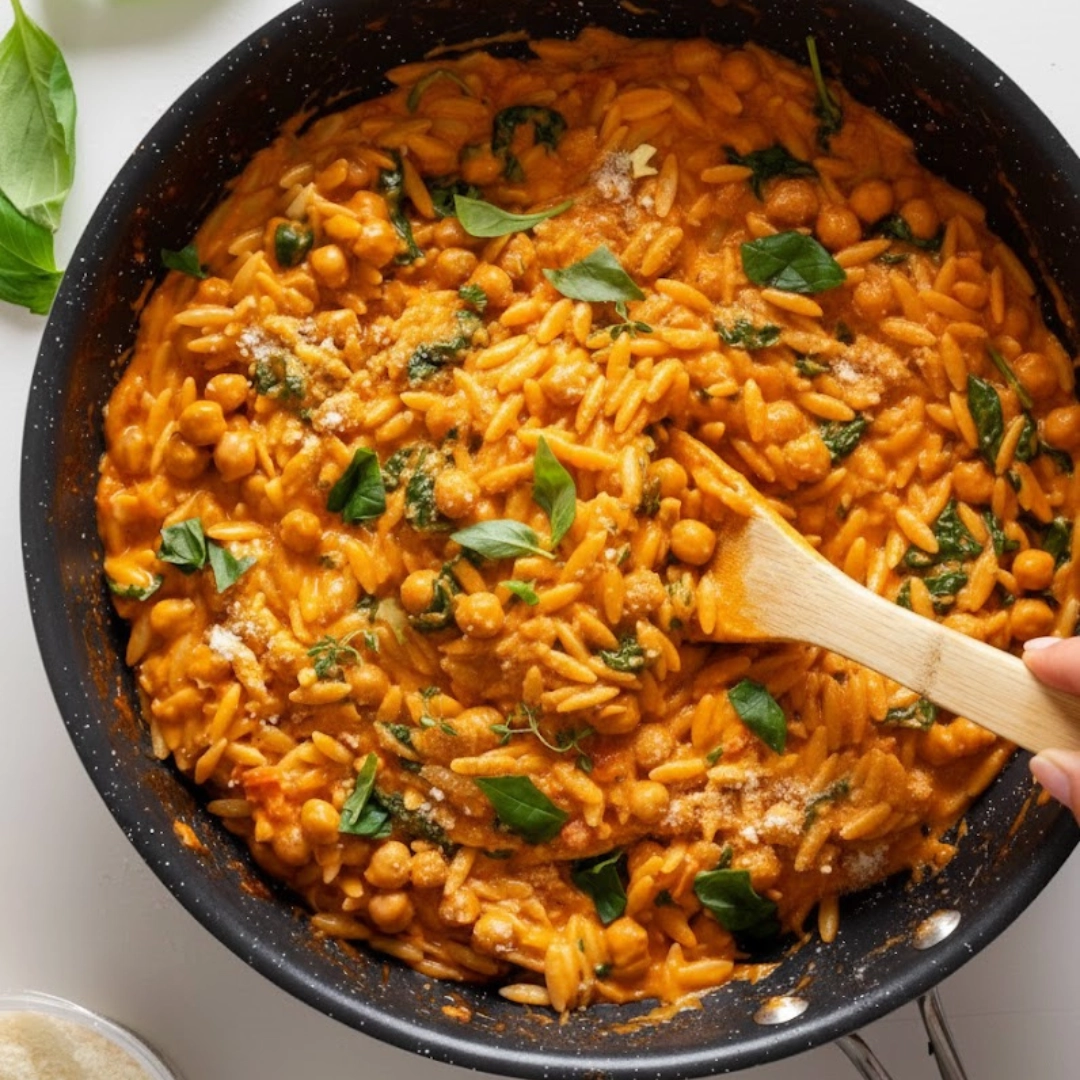
This is the dish that commands attention. It’s warm, it’s vibrant, and it is unapologetically rich. Imagine the velvety texture of a classic Italian-American Sunday sauce, but condensed into a twenty-minute, single-skillet meal that delivers profound flavor payoff. This is not a humble side dish; this is the main event—a luxurious meeting of tender, savory chickpeas and satisfying orzo pasta, all suspended in a luminous, sun-kissed tomato-cream sauce. Whether you are aiming to impress on a casual weeknight or simply treat yourself to something truly comforting, this vegetarian twist on the classic, the Marry Me Chickpeas and Orzo, delivers an experience that is deeply satisfying and instantly memorable. It’s the kind of meal that makes you rethink how simple food can taste this good.
Table of Contents
The Components of a Culinary Engagement
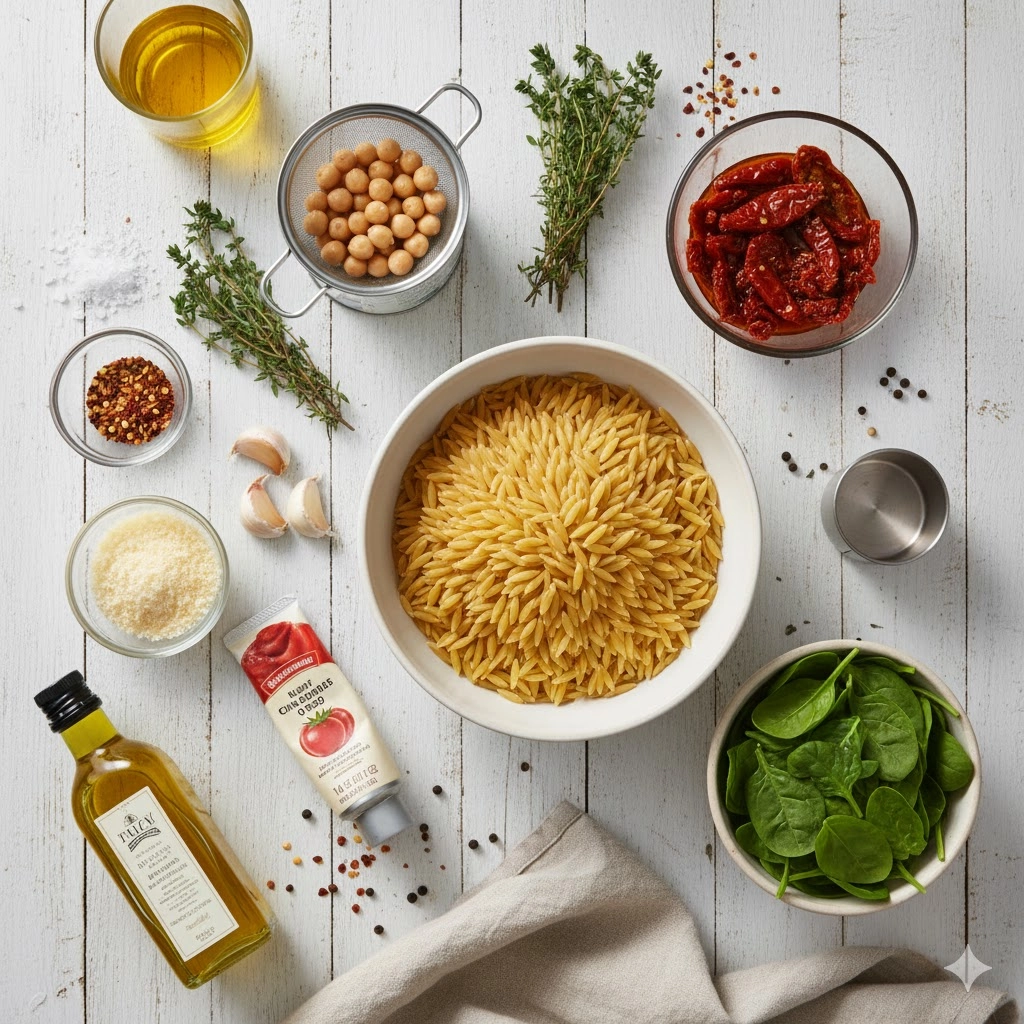
The success of this recipe lies in the thoughtful layering of a few powerful, yet humble, ingredients. Quality matters here, especially for the olive oil and canned tomatoes, as they form the backbone of the sauce.
The Essential Base
- Two tablespoons extra virgin olive oil
- One large shallot, thinly sliced (or one half cup of finely diced yellow onion)
- Four cloves garlic, minced
- One (fifteen ounce) can chickpeas (garbanzo beans), rinsed and drained
- Two tablespoons concentrated tomato paste
- One cup orzo pasta (risoni)
- Three cups vegetable broth (or high-quality chicken broth)
- One small bundle (about six sprigs) fresh thyme
The Luxurious Finish
- One half cup heavy cream
- One quarter cup grated Parmesan cheese, plus more for serving
- One half cup sliced or chopped sun-dried tomatoes (packed in oil, drained)
- Two cups fresh spinach, roughly chopped
- Kosher salt and freshly ground black pepper, to taste
- Optional: Pinch of red pepper flakes, for warmth
Quick Steps: Your Path to a Delicious Commitment
This recipe moves quickly once you start. Have all your ingredients prepped and measured out (mise en place) before you turn on the heat.
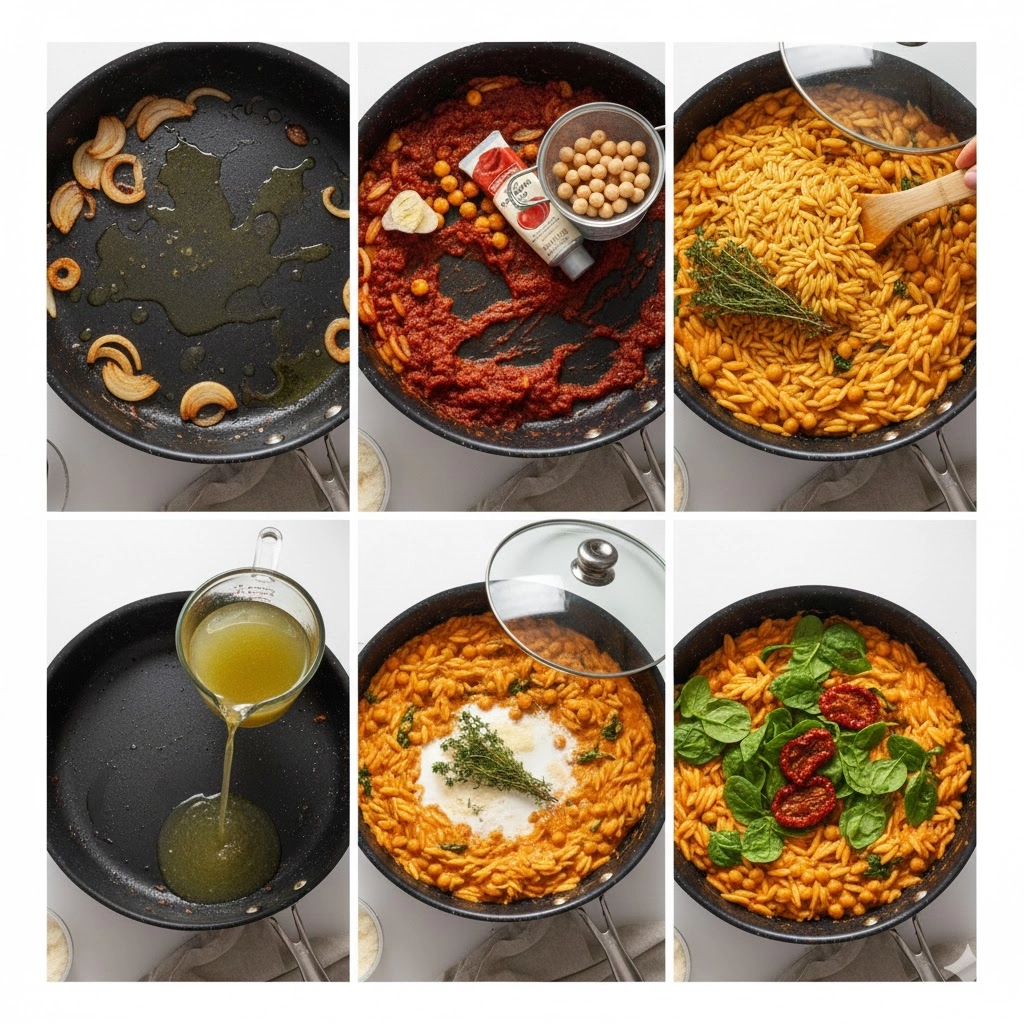
- Build the Foundation: Heat the olive oil in a large, deep skillet or Dutch oven over medium heat. Add the sliced shallot and sauté until softened and fragrant, about three minutes. Add the minced garlic and cook for one more minute until aromatic.
- Bloom the Flavor: Stir in the rinsed chickpeas and the tomato paste. Continue stirring and cooking this mixture for three to four minutes. The tomato paste should darken from a bright red to a brick red, taking on a deeper, caramelized flavor.
- Introduce the Orzo: Pour in the dry orzo and stir to coat all the grains thoroughly in the tomato-chickpea mixture. Cook for one minute, lightly toasting the pasta.
- Simmer and Hydrate: Pour in the three cups of broth and add the bundle of thyme sprigs. Bring the mixture to a gentle simmer, then reduce the heat to low. Cover the skillet and let it cook for approximately seven to ten minutes, or until the orzo is tender and most of the liquid is absorbed.
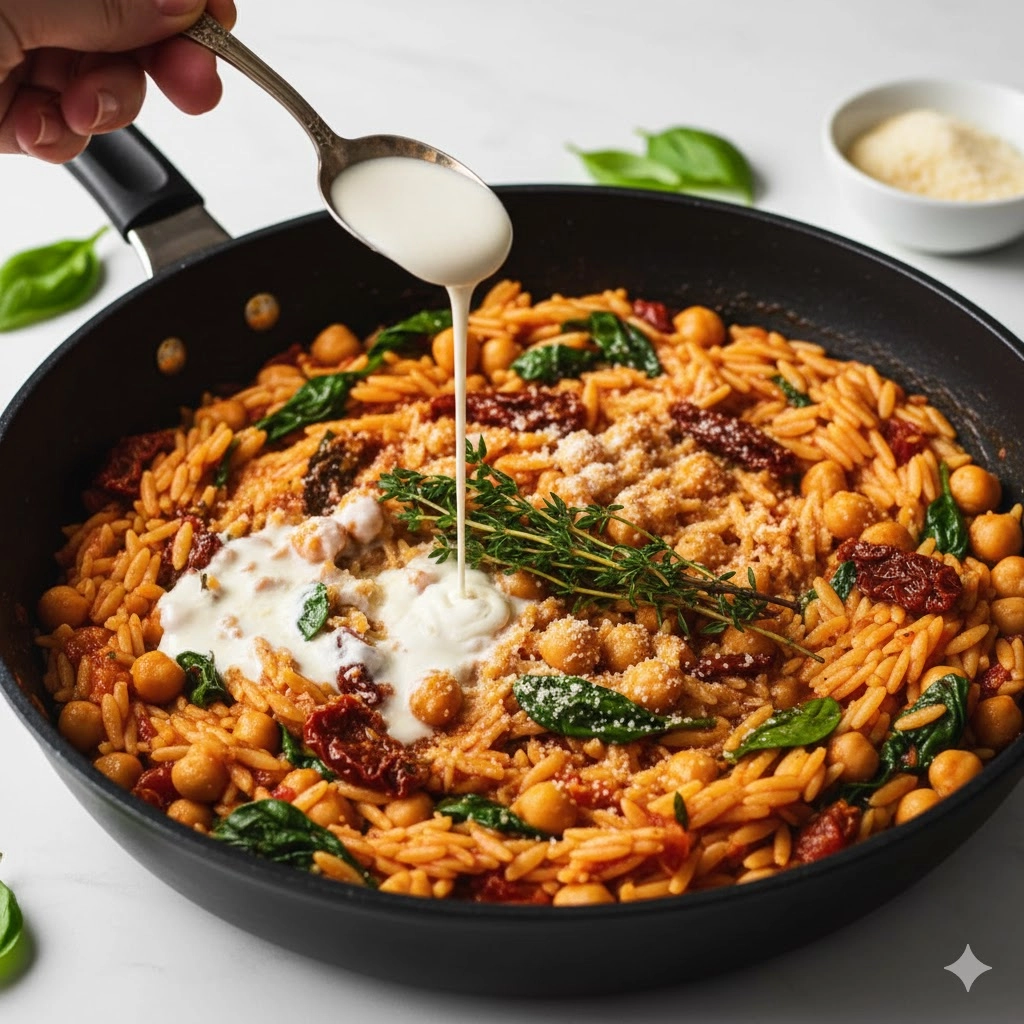
- Achieve Creaminess: Remove and discard the thyme sprigs. Pour in the heavy cream and stir gently. Add the one quarter cup of Parmesan cheese. Simmer uncovered for two to three minutes, allowing the sauce to thicken slightly.
- Add Greens and Season: Stir in the sun-dried tomatoes and the chopped fresh spinach. Continue stirring until the spinach wilts down completely, which takes only about one minute.
- Final Checks: Taste the dish. Adjust the seasoning aggressively with salt, black pepper, and if desired, a pinch of red pepper flakes.
- Serve Immediately: Garnish generously with freshly grated Parmesan and a few fresh thyme leaves.
Decoding the Skillet: Mastering Texture and Depth
The key difference between a good pasta dish and a truly great one is in the detail—the sensory cues and small techniques that elevate humble ingredients. This recipe is fundamentally a single-pot risotto technique applied to orzo, demanding careful attention to heat and timing.
The Aromatic Foundation
When you begin sautéing the shallot, keep the heat regulated to medium, not high. You are looking for a gentle softening—a translucent, sweet quality—not browning or scorching. Shallots caramelize faster than onions due to their high sugar content. The same rule applies to the garlic; once it smells sweet and fragrant, usually after about sixty seconds, it’s done. Burnt garlic will inject a bitter, acrid note into the entire dish, and there is no way to salvage that flavor once it occurs. The shallots and garlic set the baseline sweetness and pungency that will carry through the entire sauce.
Toasting the Chickpeas and Tomato Paste
This step is arguably the most critical for deep flavor. When you add the tomato paste, you are not merely warming it up; you are caramelizing its sugars and intensifying its acidity through a process called blooming. As you stir the paste and the chickpeas together, the color will change from a vibrant, slightly metallic red to a rusty, almost maroon shade. This three- to four-minute window allows the complex, umami-rich notes of the paste to develop. Simultaneously, the chickpeas—which are largely neutral—get a chance to gently pan-fry in the seasoned oil, drying their exterior slightly so they can better absorb the finished sauce. This is where the depth of the flavor is truly forged.
Simmering and Hydration
When adding the broth, ensure it is either warm or room temperature, if possible, to avoid dropping the temperature of the skillet too rapidly. This maintains the cooking momentum. Once covered, the orzo begins to absorb the liquid while simultaneously releasing its starch, which is essential for creating a smooth, cohesive sauce.
The ten-minute cooking time is an estimate. The true doneness check is texture. You are looking for al dente, where the pasta is tender but still has a slight chew remaining at its center. Peek inside the skillet around the seven-minute mark. If the liquid is completely gone but the orzo is still stiff, add a quarter cup more broth or water. If the pasta is soft but too much liquid remains, remove the lid and increase the heat slightly to encourage evaporation before moving to the next step.
Achieving Maximum Creaminess
The moment of truth arrives when you stir in the heavy cream. The cream should be added toward the end to prevent it from splitting during the long, aggressive simmer. The combination of the cream’s fat and the starch released by the orzo creates a stunningly velvety texture—a true testament to the “Marry Me” namesake. After stirring in the cream and Parmesan, keep the simmer very low and brief—two to three minutes is all you need. Do not boil vigorously. The final amount of salt you add is vital here, as it brightens all the fatty and starchy notes. A good test is to dip a spoon, taste, and then add salt until the sauce suddenly tastes vibrant and balanced, not just salty.
Expert Commentary: Elevating Your One-Pan Wonder
These specific insights move the recipe from simply functional to truly exceptional, focusing on flavor maximization.
- The Thyme Technique: Instead of mincing the thyme, use whole sprigs. The entire bundle is added to infuse the broth during the main simmer. The woody stems hold the fragrant leaves captive, preventing them from scattering and becoming unpleasant to chew, while still lending their essential, woodsy note. Remove the sprigs before stirring in the cream.
- The Power of Shallots: While onion works, shallots are highly recommended. Their flavor is milder and sweeter, integrating seamlessly into the cream sauce without the pungent, sharp edge a yellow onion can sometimes leave.
- The Acid-Balance Test: After the cream is added, the sauce can feel heavy. If your flavor profile seems dull, a small squeeze—about one teaspoon—of fresh lemon juice or a splash of white wine vinegar stirred in at the very end will instantly lift the sauce, adding brightness and complexity.
- Emulsification is Key: If you make this dish ahead of time, the orzo will continue to absorb the liquid, making it very stiff. To reheat successfully, stir in a quarter to a half cup of warm broth or water before heating it gently on the stovetop. This re-emulsifies the sauce and restores its luscious texture.
- The Importance of Parmesan Rind: If you have a spent Parmesan rind, toss it into the pot with the broth and the thyme during the simmering stage. Remove it before adding the cream. It infuses the stock with an incomparable, savory depth and richness that permeates the pasta.
- Using Fresh Tomatoes: If using fresh instead of sun-dried, lightly char cherry tomatoes in the skillet before you even begin the recipe. Remove them, proceed with the recipe, and fold them back in when you add the spinach. This adds a burst of freshness and a delicate smokiness.
- *Sizing Matters for the Marry Me Chickpeas and Orzo: If you double the recipe, you must increase the width of your pan, not just the depth. Orzo needs surface area to cook evenly and for the liquid to evaporate at the correct rate. Trying to squeeze a double batch into a standard twelve-inch skillet will likely result in a sticky, dense, undercooked mass.
Remixing the Recipe: Swaps and Flavor Shifts
The foundational technique of combining a small grain pasta with a starchy, creamy broth is highly flexible. Use these swaps to customize the dish based on your pantry and dietary needs.
Protein Additions
This dish is wonderful as a vegetarian centerpiece, but it handles added protein beautifully.
- Shrimp: Sauté half a pound of peeled, raw shrimp in the skillet with a tablespoon of olive oil before you start the main recipe. Remove them when they are about seventy-five percent cooked (still slightly translucent). Stir them back in during the final two minutes of simmering with the heavy cream.
- Chicken: Thinly slice or dice one pound of chicken breast or thighs. Sauté until fully cooked and lightly browned before building the aromatic base. Remove and stir back in with the spinach.
- White Beans: To keep the vegetarian profile, substitute cannellini beans or great northern beans for the chickpeas. They offer a slightly creamier texture and a more neutral flavor that pairs beautifully with the rich sauce.
Grain Alternatives
While orzo is classic, other small pastas can be used, though cooking times will vary.
- Fregola or Acini di Pepe: These require slightly longer cooking times, closer to twelve to fifteen minutes, but their spherical shape adds a wonderful textural element. Be prepared to add an extra half cup of liquid.
- Small Shaped Pasta (Ditalini or Stelline): Follow the timing for orzo, but be mindful that the larger shapes may require slightly more broth to achieve the desired tenderness and creaminess.
- Gluten-Free Pasta: Gluten-free orzo is increasingly available and works well. Always use warm broth and reduce the simmer time by two minutes, as gluten-free pasta can sometimes turn mushy if overcooked.
Dairy-Free Options
Achieving the signature lusciousness without dairy requires a specific fat and thickening agent.
- Full-Fat Coconut Milk: Substitute the heavy cream with one full can (about fourteen ounces) of full-fat unsweetened coconut milk or coconut cream. The flavor is subtle but adds exceptional richness.
- Cashew Cream: Soak one cup of raw cashews in boiling water for thirty minutes. Drain and blend with three quarters cup of fresh water until completely smooth. Use this in place of the heavy cream for a truly neutral, thick alternative.
- Nutritional Yeast: If using a dairy-free cream substitute, add one to two tablespoons of nutritional yeast along with it to introduce the cheesy, umami depth that Parmesan typically provides.
The Perfect Complement: Pairing This Cozy Dish
The richness and creaminess of the orzo dish means it pairs best with bright, acidic, and fresh elements that cut through the fat.
- A Simple Green Salad: Opt for a peppery green like arugula or watercress. Dress it lightly with a strong vinaigrette composed of good red wine vinegar, olive oil, and just a pinch of salt. The sharp acid of the dressing acts as a perfect counterpoint to the creamy pasta.
- Crispy Bread with Olive Oil: Serve crusty, artisanal bread or baguette slices warmed in the oven. The bread is essential for soaking up any remaining sauce—a final, irresistible treat often called fare la scarpetta in Italian dining.
- Roasted Broccolini: Roast broccolini spears simply with garlic, lemon, and a touch of salt until the tips are charred and crispy. The slightly bitter char and the clean vegetable snap provide an ideal textural contrast.
- A Dry White Wine: For a liquid pairing, choose a crisp, dry white wine like a Sancerre or a Sauvignon Blanc. Their high acidity and citrus notes cleanse the palate between bites of the decadent sauce.
Frequently Asked Questions from the Kitchen
We address the most common queries that arise when preparing this fantastic dish.
Can I use dried herbs instead of fresh thyme?
Yes, but you will need to adjust the quantity significantly. Dried herbs are far more concentrated than fresh. Substitute the six sprigs of fresh thyme with one half teaspoon of dried thyme leaves. Stir the dried herbs in when you add the tomato paste so they have time to bloom and release their essential oils into the fat, maximizing their flavor.
Why did my sauce break or look grainy?
The most common cause of a broken or grainy sauce is adding cold dairy to a vigorously boiling sauce, or boiling the cream too hard for too long. Ensure the sauce is at a gentle simmer, not a rolling boil, when the cream is added. If it looks grainy, try whisking vigorously off the heat or stirring in a small spoonful of cold water to help re-emulsify the sauce.
Is this dish suitable for meal prepping?
This dish is best eaten immediately after preparation. Because orzo is a small, starchy pasta, it will continue to absorb liquid even after cooling, making the leftovers much thicker and sometimes dense. If you must meal prep, cook the orzo separately to one hundred percent doneness, stopping the recipe at Step Five before the cream is added. Store the sauce and the cooked pasta separately, then combine and add the cream when reheating.
What kind of broth yields the best flavor?
For the most robust and savory flavor, use a low-sodium chicken broth. If sticking to a strict vegetarian diet, choose a high-quality vegetable broth that is not overly sweet, avoiding brands where carrot is the dominant flavor. The broth is the bulk of the liquid, so its quality directly impacts the final savory depth.
Can I make this dish spicier?
Absolutely. For a controlled, warm heat, stir in one half teaspoon of crushed red pepper flakes with the shallots and garlic. For a richer, smoky heat, add one half teaspoon of smoked paprika with the tomato paste. If you prefer a sharper, brighter heat, fold in one teaspoon of finely minced Calabrian chiles in oil when you add the sun-dried tomatoes.
Estimated Nutritional Breakdown
| Nutrient | Amount per Serving |
| Calories | 425 kcal |
| Protein | 16 g |
| Carbs | 55 g |
| Fat | 15 g |
| Fiber | 9 g |
| Sugar | 7 g |
| Sodium | 680 mg |
Disclaimer
Nutrition information is an estimate and may vary based on preparation and ingredients used.
Marry Me Chickpeas and Orzo
Ingredients
- 2 tbsp extra virgin olive oil
- 1 large shallot, thinly sliced (or 1/2 cup diced yellow onion)
- 4 cloves garlic, minced
- 1 15 oz can chickpeas, rinsed and drained
- 2 tbsp concentrated tomato paste
- 1 cup orzo pasta (risoni)
- 3 cups vegetable broth (or chicken broth)
- 6 sprigs fresh thyme
- 1/2 cup heavy cream
- 1/4 cup grated Parmesan cheese, plus more for serving
- 1/2 cup sun-dried tomatoes, sliced or chopped (packed in oil, drained)
- 2 cups fresh spinach, roughly chopped
- Kosher salt, to taste
- freshly ground black pepper, to taste
- red pepper flakes (optional), a pinch
Instructions
- Heat olive oil in a large skillet or Dutch oven over medium heat. Sauté shallot until softened, about 3 minutes. Add garlic and cook for 1 minute until fragrant.
- Stir in chickpeas and tomato paste. Cook for 3–4 minutes, allowing the tomato paste to caramelize to a brick red color.
- Add orzo and stir to coat in the tomato mixture. Toast for 1 minute.
- Pour in broth and add thyme sprigs. Bring to a simmer, then reduce heat and cover. Cook for 7–10 minutes, until orzo is tender and most liquid is absorbed.
- Remove thyme sprigs. Stir in cream and Parmesan. Simmer uncovered for 2–3 minutes to thicken.
- Add sun-dried tomatoes and spinach. Stir until spinach is wilted, about 1 minute.
- Taste and adjust seasoning with salt, pepper, and optional red pepper flakes.
- Serve immediately, garnished with extra Parmesan and fresh thyme leaves.
Notes
Equipment
- large skillet or Dutch oven
- measuring cups and spoons
- wooden spoon or spatula
- knife and cutting board
- grater (for Parmesan)