
The concept of Loaded Potato Soup is more than just a recipe; it’s an edible philosophy. It takes the familiar, comforting elements of a baked potato—crisp bacon, sharp cheddar, fresh chives, and a dollop of sour cream—and immerses them in a velvety, deeply savory broth. This is a soup that serves as a full, satisfying meal, rich enough for a weekend dinner yet straightforward enough to manage on a colder weeknight. When executed properly, the resulting bowl is thick, luxurious, and perfectly seasoned, balancing the earthiness of the potatoes with bright dairy and salty cured pork. This recipe aims to deliver that flawless result, providing a deeply comforting, full-bodied Loaded Potato Soup experience.
Table of Contents
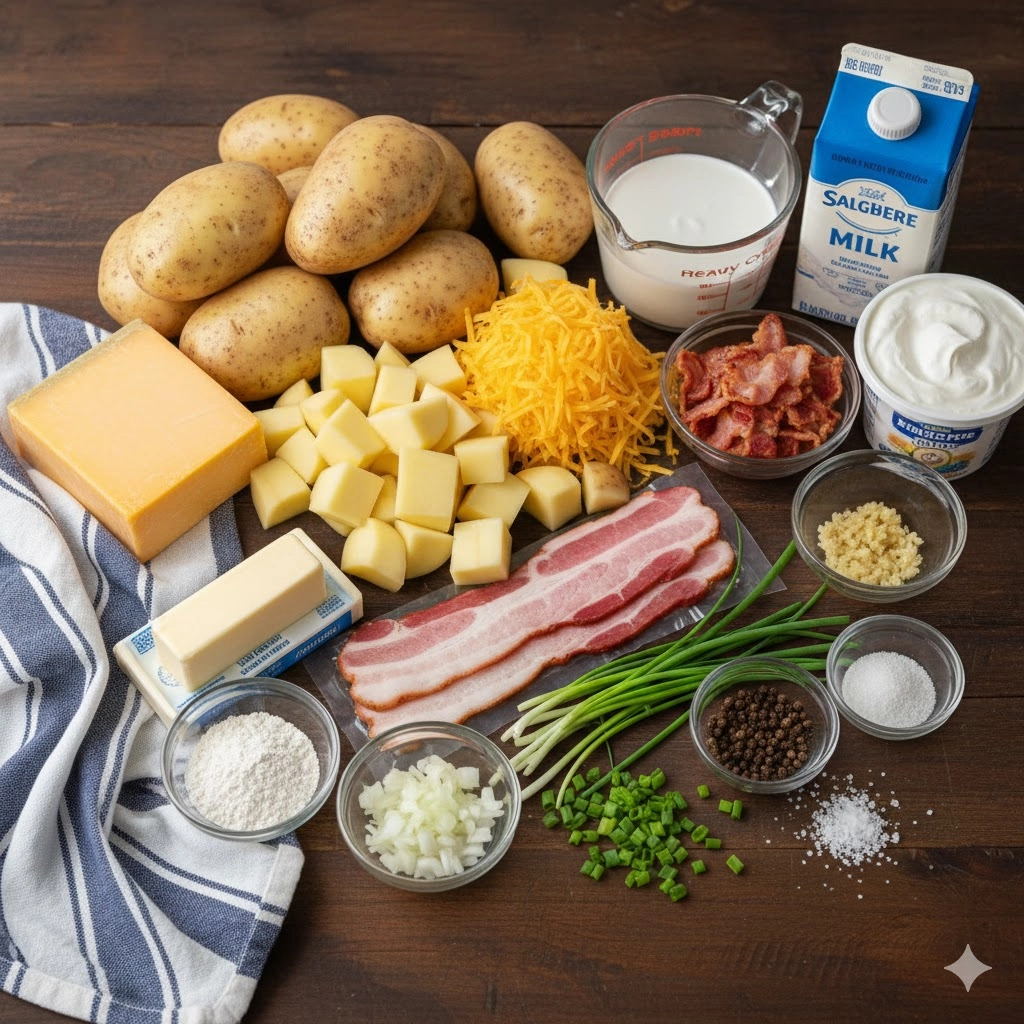
The Essential Building Blocks: Ingredients List
The quality of this soup rests entirely on the freshness of the ingredients and the precision of the measurements. Everything must be ready before the process begins.
For the Foundation:
- One pound (about four medium) Russet potatoes, peeled and diced into one-half inch pieces
- Four cups low-sodium chicken broth (or vegetable broth)
- Two cups water
- One teaspoon kosher salt, plus more for seasoning
- One-half teaspoon freshly cracked black pepper
For the Roux and Flavor Base:
- Six slices thick-cut bacon, cut into one-quarter inch lardons
- One-half cup unsalted butter
- One large yellow onion, finely diced
- Two cloves garlic, minced
- One-half cup all-purpose flour
For Creaminess and Finishing:
- Two cups whole milk (or half-and-half for extra richness)
- One cup heavy cream
- Two cups (eight ounces) sharp cheddar cheese, freshly shredded
- One cup sour cream
For Garnish (The “Loaded” Element):
- Remaining cooked bacon pieces
- Additional shredded cheddar cheese
- Thinly sliced fresh chives
Crafting the Foundation: An Overview of the Soup Process
This recipe follows a clear, three-part process: building the flavor base, thickening the liquid, and achieving the final smooth texture. This high-level summary provides the necessary roadmap before diving into the details.
- Prepare the Potatoes: Combine the diced potatoes, broth, water, and initial seasonings in a large stockpot and bring to a simmer. Cook until the potatoes are completely tender and easily mashed.
- Build the Flavor Base: While the potatoes cook, render the bacon pieces in a separate, heavy-bottomed pot. Remove the bacon, reserve the fat, and use a portion of the fat, along with the butter, to sauté the onion and garlic.
- Form the Thickener (Roux): Stir the flour into the sautéed aromatics to create a cohesive paste, cooking it briefly to eliminate the raw flour taste.
- Combine and Smooth: Slowly whisk the milk and cream into the roux. Then, using an immersion blender, blend the potato and broth mixture until it reaches the desired consistency—a mix of silky smooth and some chunky bits is usually ideal.
- Temper and Melt: Gradually add the creamy liquid to the potato mixture. Bring the soup back to a gentle simmer, then remove it from the heat before stirring in the shredded cheese and sour cream.
- Serve and Garnish: Taste and adjust the final seasoning. Ladle the soup into bowls and finish each serving generously with the reserved bacon, extra cheese, and fresh chives.

Mastering the Technique: Deep Dive into the Preparation
Success in this dish is found in paying close attention to the small details, particularly temperature control and the proper integration of fats and dairy.
Rendering the Bacon and Building the Mirepoix
Start by placing the diced bacon pieces into a cold, heavy-bottomed Dutch oven or large soup pot. The goal is to render the fat slowly, ensuring the bacon turns crisp without burning. Cook it over medium-low heat until the pieces are deeply golden and crunchy. Remove the bacon with a slotted spoon, placing it on a plate lined with paper towels to drain—this will be the crucial topping later.
Drain off all but four tablespoons of the rendered bacon fat from the pot. If you have less than that, supplement with a small amount of neutral oil. Add the one-half cup of unsalted butter to this pot and allow it to melt over medium heat. The combination of butter and bacon fat provides a depth of flavor that pure butter alone cannot match.
Once the fat is shimmering, add the finely diced yellow onion. Sauté the onion for about eight to ten minutes, stirring frequently. The onions should soften and become translucent, releasing a sweet aroma, but must not be allowed to brown. This process gently caramelizes the sugars, creating a deeper flavor in the soup base. In the final minute of cooking the onions, add the minced garlic. The garlic needs only about sixty seconds of heat; cooking it longer risks bitterness, which can taint the entire batch of soup.
The Science of the Roux
The roux is the heart of the soup’s thickness. Once the aromatics are softened, sprinkle the one-half cup of all-purpose flour over the butter and onion mixture. Stir this constantly with a wooden spoon or a whisk until a thick, cohesive, peanut butter-like paste forms. This paste should cook for approximately two minutes over the heat. As the roux cooks, you will notice a transition in aroma from raw flour to something that smells slightly nutty, like toasted bread. This is the moment when the raw starch flavor is cooked out, which is absolutely vital for a smooth, palatable soup.
Achieving the Perfect Creamy Texture
In a separate pot, the Russet potatoes should be simmering in the broth and water mixture. Russets are ideal because their high starch content breaks down beautifully, contributing naturally to the soup’s body. When a fork easily pierces the center of the potato pieces, they are ready.
Now is the crucial smoothing step. Using an immersion blender is the most convenient and effective tool here. Place the blender directly into the potato-broth pot. Blend the mixture, pulsing and moving the head of the blender slowly. The ideal texture is not completely uniform; leave about one-third of the potatoes intact and roughly mashed. These pieces provide texture and a satisfying bite, preventing the final soup from tasting like baby food. If you do not have an immersion blender, carefully scoop half of the potato mixture into a regular blender (never fill a blender more than halfway with hot liquid) and pulse until mostly smooth, then return it to the pot.
In the pot containing the roux, slowly begin whisking in the two cups of whole milk, followed by the one cup of heavy cream. Pour the liquid in gradually—a cup at a time—whisking continuously to incorporate the roux and prevent lumps. This liquid will thicken slightly almost immediately. Once smooth, pour the creamy liquid base into the potato-broth pot.
Stir the entire pot well and allow it to return to a low, gentle simmer over medium-low heat. The soup should thicken noticeably. Do not let it come to a rolling boil, as this can cause the dairy to scorch or curdle.
The Finishing Flourish
When the soup is visibly simmering lightly, remove the pot completely from the heat source. This step is non-negotiable for preserving the texture of the cheese and sour cream. Add the two cups of freshly shredded cheddar cheese in small handfuls, stirring well after each addition until the cheese is completely melted and smoothly incorporated. The cheese will melt into shimmering, glossy ribbons, adding a gorgeous orange hue to the soup.
Finally, gently fold in the one cup of sour cream. Sour cream adds a necessary tangy counterpoint that cuts through the richness of the butter, bacon fat, and cream, providing balance. Stir until the sour cream is completely blended. Taste the soup and adjust the seasoning with additional salt and pepper as needed. A final, generous grind of pepper is highly recommended.
Achieving Culinary Excellence: Expert Advice for Perfect Results
These specialized tips address common pitfalls and ensure your final product is of professional quality.
- Cheese Selection is Key: Always shred your own cheddar cheese. Pre-shredded varieties are often coated in starches (like potato starch or cellulose) to prevent clumping. This coating inhibits smooth melting and can result in a grainy, unpleasant texture in the finished soup.
- The Power of Russets: Stick with Russet potatoes. Their high starch content is what naturally binds the soup. Waxier potatoes (like red or yellow) hold their shape too well and will not break down sufficiently to create that signature thick body, requiring excessive flour or cornstarch.
- Preventing Curdling: Dairy, especially cream and sour cream, should never be boiled. Always remove the soup from the heat before adding the heavy cream, cheese, and sour cream. The residual heat from the soup is more than enough to melt the cheese and incorporate the sour cream without risk of separation.
- Enhancing Smokiness: For an even deeper, smoky profile, reserve one or two tablespoons of the bacon fat and add it to the soup just before serving, stirring gently. A tiny splash of liquid smoke (one-quarter teaspoon) can also be added, but use it sparingly.
- Seasoning in Layers: Do not rely on one seasoning moment. Season the potatoes, season the roux/aromatics, and critically, season the final soup after all liquid and cheese is incorporated. Salt dulls the raw starch flavor in the beginning and brightens the final dairy components at the end.
- Don’t Rush the Roux: The two minutes of cooking time for the roux is mandatory. If you skip this step, the resulting soup will have a distinct, unpleasant raw flour flavor that cannot be cooked out later.
Flavor Personalization: Substitutions and Culinary Swaps
This classic recipe provides an excellent canvas for creative modification, allowing you to tailor the final bowl to your specific preferences or dietary needs.
- Smoked Meats: If bacon is not available or desired, you can use one cup of diced smoked ham or pancetta. Render the fat in the same way, but use a neutral oil instead of relying on the ham fat, as it is often less abundant.
- Vegetarian Base: For a completely meat-free version, replace the bacon with one-quarter cup of olive oil or refined coconut oil. Ensure you use quality vegetable broth instead of chicken broth. For depth, add one tablespoon of white miso paste to the simmering liquid before blending.
- Dairy Alternatives: For a lighter, yet still creamy texture, replace the heavy cream with evaporated milk. For a non-dairy option, use full-fat oat milk or cashew milk. Be aware that these substitutes may separate more easily; keep the heat very low and whisk constantly. Avoid high-heat boiling entirely.
- Aromatic Depth: Introduce other root vegetables for a subtle flavor layer. Dicing and adding one-half cup of carrots and one-half cup of celery alongside the onion in the sauté step (the “mirepoix”) will create a richer, more complex aromatic base, though it shifts the focus slightly from pure potato.
- Cheese Varieties: While sharp cheddar is traditional, try a mix of cheeses. A half-cup of Monterey Jack or Gruyère can be added for superior melt-ability and nuttiness, while a small amount of Parmesan (one-quarter cup) can amp up the savory, umami notes.

The Complete Meal: Serving Suggestions for Loaded Potato Soup
Given the richness and substantial nature of this dish, pairing it with something light, crisp, and fresh is the best approach to creating a balanced meal.
- Classic Bread Pairings: Serve the soup with a hearty, crusty bread like a homemade sourdough or a thick-cut Italian loaf. The crust is perfect for soaking up the final spoonfuls of the creamy broth. For an extra touch, grill the bread with a little butter and garlic powder to make croutons or toasts.
- A Bright, Simple Salad: The richness of the Loaded Potato Soup is wonderfully cut by a simple, clean salad. Mix baby spinach or arugula with a light vinaigrette made from lemon juice, olive oil, and Dijon mustard. A few sliced cherry tomatoes and a sprinkle of pine nuts add texture without adding heaviness.
- Sandwich Combo: For a classic lunch or dinner pairing, serve a small bowl of the soup alongside a half-sandwich. A grilled cheese made with provolone and sun-dried tomatoes, or a light turkey and avocado wrap, provides contrast in both temperature and texture.
- Roasted Green Vegetables: Balance the meal with a healthy portion of roasted vegetables. Toss asparagus, broccoli, or Brussels sprouts with salt, pepper, and olive oil, and roast them at four hundred Fahrenheit until slightly charred and tender-crisp.
Answering the Cook’s Questions: Common Loaded Potato Soup FAQs
Understanding the logistics of preparing and storing this dish can ensure both safety and enjoyment.
Can I make this soup ahead of time?
Absolutely. This soup keeps well and often tastes even better the next day after the flavors have fully melded. Prepare the entire soup, including the sour cream and cheese, then cool it completely before storing it in an airtight container in the refrigerator for up to four days.
How do I properly reheat the soup without it separating?
Reheat the soup gently over low heat on the stovetop, stirring constantly. Avoid boiling it. If the soup seems too thick after refrigeration, add a small splash of milk or broth while reheating to restore its original consistency.
Why did my soup turn out grainy?
Graininess is almost always caused by adding pre-shredded, starch-coated cheese, or by boiling the soup after the dairy (milk, cream, or sour cream) has been added. Always shred your own cheese and be sure to remove the pot from the heat before incorporating any high-fat dairy or cheese.
Is it possible to freeze this recipe?
Freezing is not recommended for this specific recipe due to the high dairy and potato content. When frozen and thawed, dairy-based soups tend to separate, and the potatoes can become gritty or mealy in texture. If you must freeze, make the base without the milk, cream, cheese, or sour cream, and add those fresh components upon reheating.
What is the best way to make this soup thicker?
If the soup is too thin, the best fix is to create a cornstarch slurry. Mix one tablespoon of cornstarch with two tablespoons of cold water in a small bowl. Whisk this mixture into the simmering soup and let it cook for one minute. The soup should visibly thicken; repeat if necessary, one slurry at a time.
Nutritional Insights for Planning
Please note that these values are estimates and are based on the full-fat ingredients listed in the recipe.
| Nutrient | Amount per Serving |
| Calories | 580 kcal |
| Protein | 25 g |
| Carbs | 45 g |
| Fat | 35 g |
| Fiber | 4 g |
| Sugar | 7 g |
| Sodium | 890 mg |
Disclaimer
Nutrition information is an estimate and may vary based on preparation and ingredients used.

The Ultimate Creamy Loaded Potato Soup
Ingredients
- 1 lb Russet potatoes, peeled and diced into ½-inch pieces
- 4 cups low-sodium chicken broth (or vegetable broth)
- 2 cups water
- 1 tsp kosher salt, plus more to taste
- 0.5 tsp freshly cracked black pepper
- 6 slices thick-cut bacon, cut into ¼-inch lardons
- 0.5 cup unsalted butter
- 1 large yellow onion, finely diced
- 2 cloves garlic, minced
- 0.5 cup all-purpose flour
- 2 cups whole milk (or half-and-half)
- 1 cup heavy cream
- 2 cups sharp cheddar cheese, freshly shredded
- 1 cup sour cream
- Reserved cooked bacon, for garnish
- Additional shredded cheddar cheese, for garnish
- Thinly sliced fresh chives, for garnish
Instructions
- In a large stockpot, combine diced Russet potatoes, broth, water, salt, and pepper. Bring to a simmer and cook until potatoes are fork-tender.
- In a separate heavy pot, render the bacon over medium-low heat until crispy. Remove bacon and set aside, reserving 4 tbsp of fat.
- Add butter to reserved fat in the pot. Once melted, sauté the diced onion for 8–10 minutes until soft and translucent. Add minced garlic and cook 1 more minute.
- Stir in flour to make a roux. Cook for 2 minutes, stirring constantly, until it smells nutty and loses raw flour taste.
- Slowly whisk milk and cream into roux. Add 1 cup at a time, whisking to avoid lumps. Mixture will thicken quickly.
- Blend the cooked potato mixture using an immersion blender until mostly smooth with some chunks remaining. Return to medium-low heat.
- Stir creamy base into potato mixture. Let soup simmer gently until thickened. Do not boil.
- Remove soup from heat. Stir in shredded cheddar cheese by handfuls until melted. Then fold in sour cream until fully blended.
- Adjust seasoning to taste. Serve hot, garnished with bacon, extra cheese, and fresh chives.
Notes
Equipment
- Large stockpot
- Heavy-bottomed soup pot or Dutch oven
- Immersion blender or regular blender
- Wooden spoon or whisk
- measuring cups and spoons
- knife and cutting board
- ladle
- serving bowls