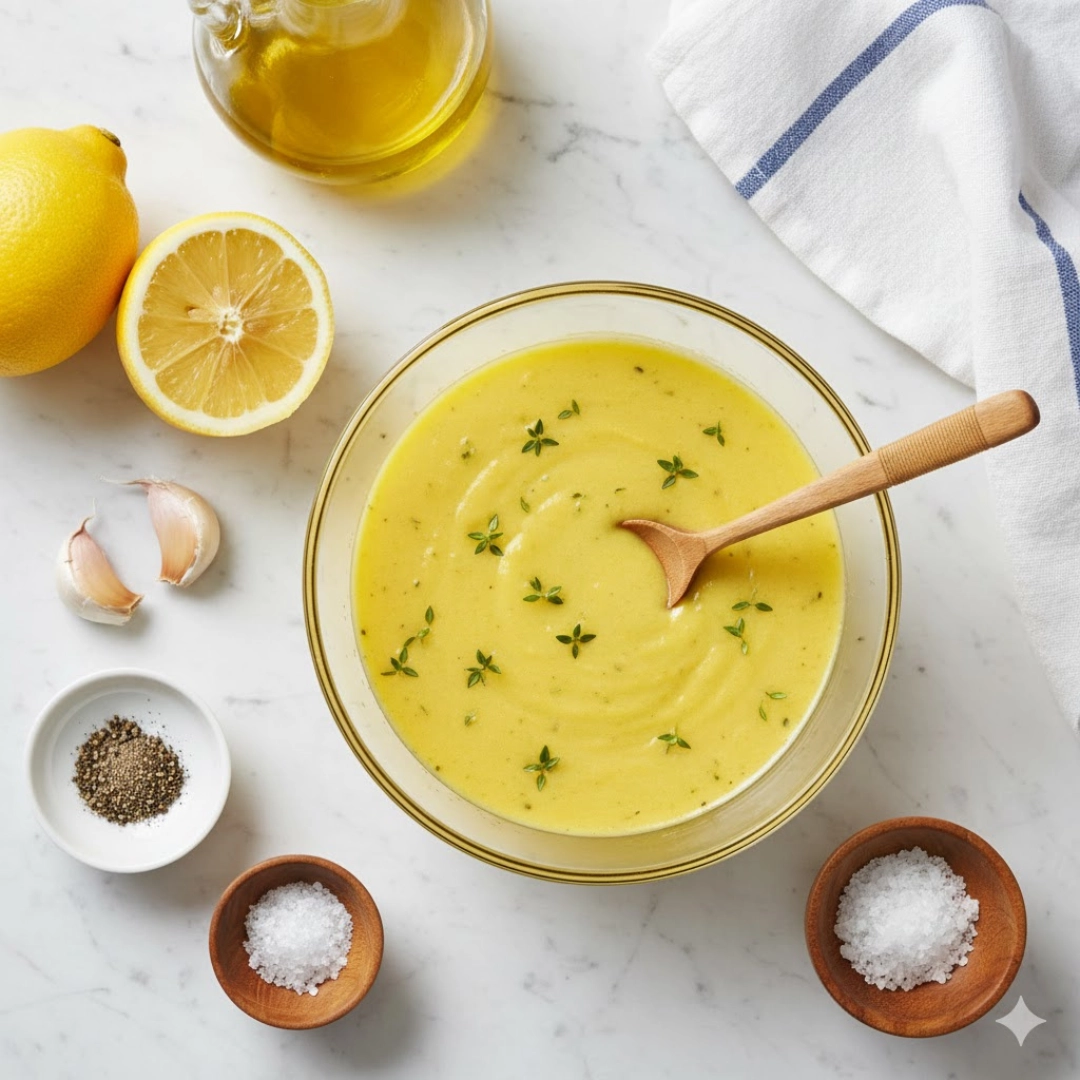
Finding that one perfect kitchen staple can transform your daily cooking from a chore into a creative joy. While many of us reach for a pre-made bottle at the grocery store, there is a secret that professional chefs and home cooks alike swear by: nothing compares to the vibrant, electric punch of a homemade lemon vinaigrette dressing. This specific recipe is more than just a topping for greens; it is a versatile tool that brings life to dull grains, adds a Mediterranean flair to roasted meats, and brightens up even the most humble bowl of steamed vegetables. By mastering this simple emulsion, you are gaining a culinary superpower that balances acidity, fat, and aromatics in a way that processed dressings simply cannot replicate.
Table of Contents
Essential Ingredients for the Perfect Batch
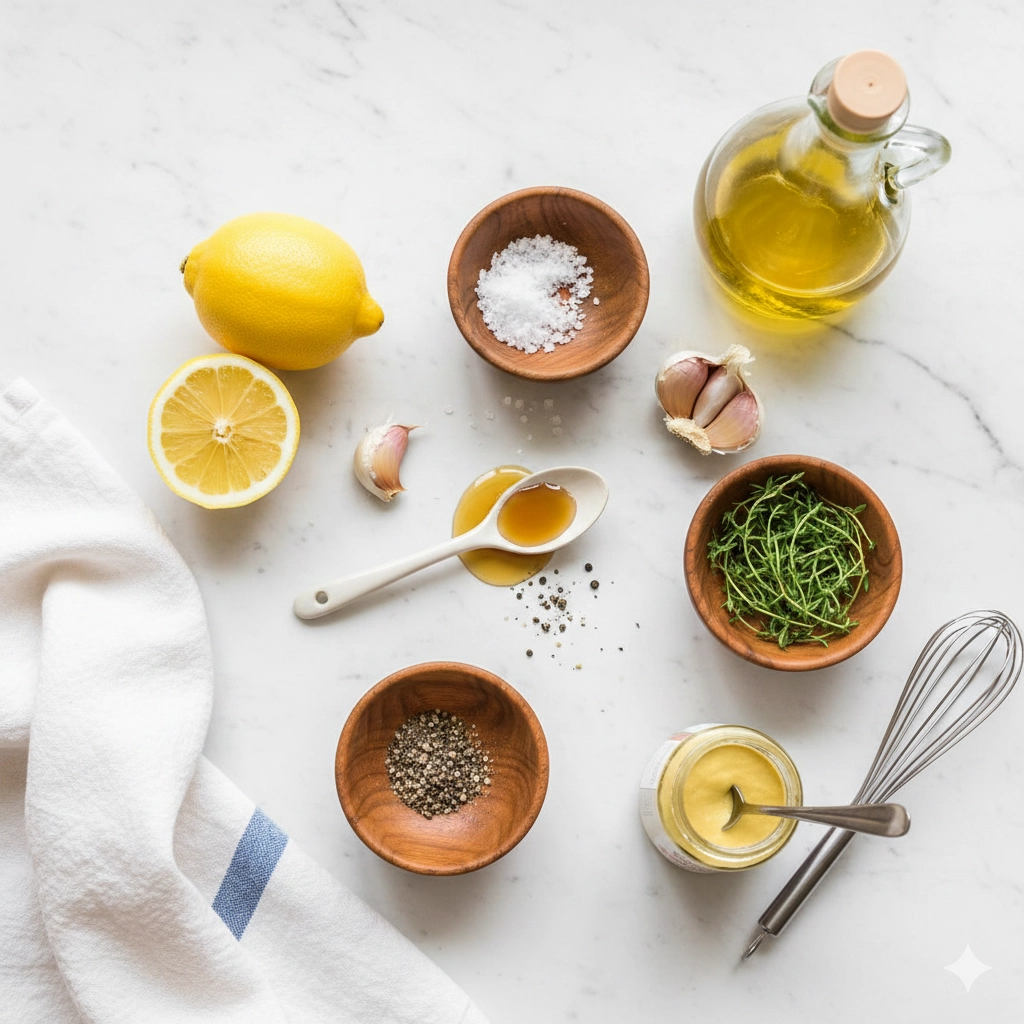
To create this signature dressing, you will need a handful of high-quality pantry staples. Because this recipe relies on so few items, the quality of each component will shine through in the final flavor profile.
- one fourth cup fresh lemon juice
- one small garlic clove, grated
- one teaspoon Dijon mustard
- one fourth teaspoon sea salt, more to taste
- Freshly ground black pepper
- one half teaspoon honey or maple syrup (optional)
- one fourth to one third cup extra virgin olive oil
- one half teaspoon fresh or dried thyme (optional)
Master Instructions for Assembly
Follow these steps to ensure your dressing reaches the perfect consistency every time. You can choose between the whisking method or the jar-shake method depending on your preference for texture.
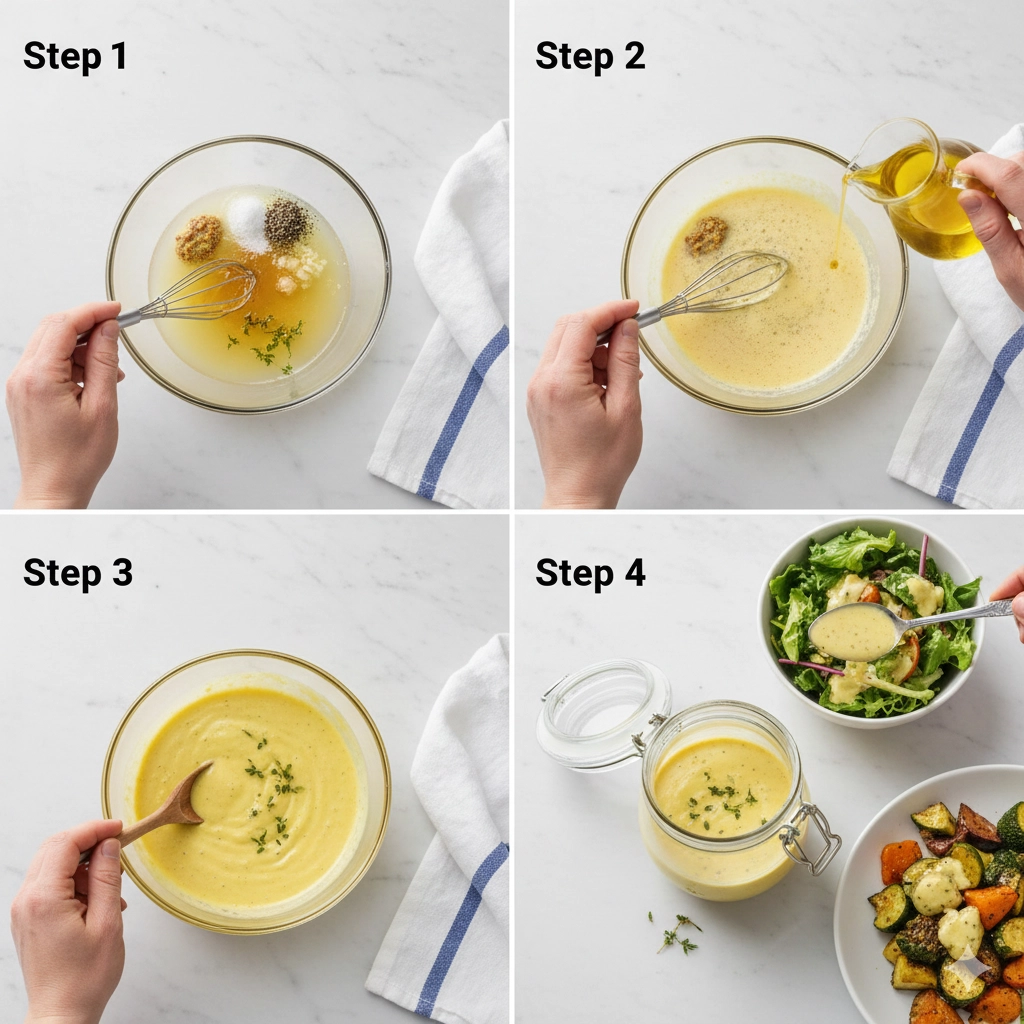
- Begin by selecting a small mixing bowl. Place your fresh lemon juice, grated garlic, Dijon mustard, sea salt, several cracks of freshly ground black pepper, and the honey or maple syrup (if you choose to use it) into the bowl.
- Using a wire whisk, blend these initial ingredients until the salt has dissolved and the mustard is fully incorporated into the citrus juice.
- While whisking continuously with one hand, slowly drizzle in the extra virgin olive oil with the other. Continue this steady motion until the liquids merge into a creamy, opaque emulsion. If you prefer a faster method, simply place all ingredients into a glass jar with a tight lid and shake vigorously for thirty seconds.
- Taste the dressing. If the acidity is too sharp for your preference, whisk in a small amount of additional olive oil until the balance feels right.
- Stir in the fresh or dried thyme if using. Taste one final time and adjust the salt or pepper to your liking. This dressing can be served immediately or stored in the refrigerator for up to one week.
Deep Dive into the Preparation Process
The beauty of a lemon vinaigrette dressing lies in its chemistry. When you combine lemon juice—a powerful acid—with olive oil—a rich fat—you are essentially trying to marry two elements that naturally want to stay apart. This is where the Dijon mustard plays a critical role. Beyond its tangy flavor, mustard acts as an emulsifier. It contains complex mucilage that helps bridge the gap between water-based lemon juice and oil, resulting in a thick, velvety texture that clings to your salad leaves rather than puddling at the bottom of the bowl.
When grating your garlic, use a microplane or a very fine grater. This turns the garlic into a paste, allowing the pungent oils to distribute evenly throughout the dressing. If you mince the garlic with a knife, you might end up with spicy “hot spots” in your salad. The addition of a sweetener like honey or maple syrup is not intended to make the dressing sweet; rather, it acts as a rounding agent. It softens the sharp edges of the lemon and garlic, creating a sophisticated palate that feels complete.
The ratio of oil to acid is the most customizable part of this journey. The standard culinary ratio is often three parts oil to one part acid, but this recipe encourages a bolder approach. For a zingy dressing that stands up to hearty kale or roasted potatoes, a one-to-one ratio provides a bright, aggressive pop. If you are dressing delicate butter lettuce or spring greens, leaning closer to the one third cup of oil will provide a gentler, more luxurious coat.
Unique Culinary Insights for Success
To take your dressing to the professional level, consider the temperature of your ingredients. Using room temperature lemons will actually yield more juice than cold ones. Before slicing your lemon, roll it firmly against the kitchen counter with the palm of your hand to break the internal membranes, making it easier to extract every last drop of gold.
Another insight involves the olive oil. Since the oil is a primary flavor carrier here, use a high-quality extra virgin olive oil that has a peppery or fruity finish. Avoid “light” olive oils which are often refined and lack the polyphenols and flavor depth needed to make the lemon shine. If you are making this ahead of time, remember that real extra virgin olive oil contains natural waxes that solidify in the cold. If your dressing looks chunky or solid after being in the fridge, do not panic. Simply set it on the counter for ten minutes and give it a quick shake or stir to bring it back to its silky state.
If you find yourself without thyme, don’t be afraid to experiment with the aromatic profile. While thyme provides an earthy, floral note that pairs beautifully with lemon, you can adjust the herbs based on what you are serving. However, for the most classic, versatile version, sticking to the dried or fresh thyme as written ensures a timeless flavor that never goes out of style.
Accompaniments and Creative Serving Suggestions
While a green salad is the most obvious home for this lemon vinaigrette dressing, its utility in the kitchen is vast. Think of it as a finishing sauce rather than just a dressing.
- Grain Bowls: Toss this dressing through warm farro, quinoa, or couscous. The warm grains will absorb the vinaigrette, flavoring the dish from the inside out.
- Roasted Root Vegetables: Drizzle the mixture over roasted carrots, parsnips, or cauliflower the moment they come out of the oven. The heat will bloom the garlic and thyme, creating an incredible aroma.
- Legume Marinade: Pour the dressing over a bowl of rinsed chickpeas or cannellini beans. Let them marinate for twenty minutes for a high-protein snack or a quick addition to a Mediterranean platter.
- Protein Finisher: It works exceptionally well as a bright finish for grilled chicken or seared white fish, cutting through the richness of the proteins.
Modifications and Substitutions
Dietary needs and pantry limitations shouldn’t stop you from enjoying a great vinaigrette. This recipe is naturally gluten free and can easily be made vegan by choosing maple syrup over honey.
If you happen to run out of lemons, you can substitute white wine vinegar or champagne vinegar in a pinch, though you will lose that specific citrus perfume. For those who find raw garlic too intense, you can substitute the grated clove with a half teaspoon of garlic powder, or even better, use garlic-infused olive oil as part of your oil measurement. If you want a creamier texture without adding more oil, you can increase the Dijon mustard to two teaspoons, which will create a much thicker, almost spoonable consistency.
Sophisticated Flavor Profiles FAQ
Why does my dressing taste too bitter?
Bitterness in a lemon vinaigrette usually comes from one of two things: the pith of the lemon or the olive oil. When juicing, ensure you aren’t squeezing so hard that you extract the bitter white pith. Additionally, some high-polynenol olive oils have a natural bitterness. If this happens, add a tiny pinch more salt or a drop more honey to mask the bitter notes.
How long can I actually keep this in my refrigerator?
While the recipe suggests one week, the high acid content from the lemon juice and the antibacterial properties of the garlic act as natural preservatives. It is best consumed within seven days for peak freshness, as the garlic flavor can become overly sharp and the fresh herbs may lose their vibrant color after that point.
Can I make a large batch and freeze it?
Freezing is generally not recommended for emulsions. The freezing and thawing process will cause the oil and juice to separate permanently, and the texture of the garlic and herbs will degrade. Since it only takes five minutes to whisk together, it is always better to make it fresh or in small weekly batches.
Is it necessary to use a glass jar?
While you can use plastic containers, glass is preferred for vinaigrettes. The acid in the lemon juice can sometimes react with lower-quality plastics, and glass is much easier to clean, ensuring no lingering garlic or onion scents from previous meals interfere with your fresh dressing.
The Beauty of Homemade Simplicity
In a world of complicated recipes and exotic ingredients, there is something profoundly satisfying about the perfection of a simple lemon vinaigrette. It represents the core of good cooking: using a few excellent ingredients and treating them with respect. Whether you are hosting a formal dinner party or just trying to make a Tuesday night salad more interesting, this recipe provides a reliable, delicious foundation. Once you taste the difference between this fresh, hand-whisked version and a shelf-stable alternative, you will likely find it hard to go back to the bottle.
Nutrition Table
| Nutrient | Amount Per Serving |
| Calories | ninety five |
| Total Fat | nine grams |
| Saturated Fat | one gram |
| Sodium | eighty five milligrams |
| Total Carbohydrates | two grams |
| Dietary Fiber | zero grams |
| Sugars | one gram |
| Protein | zero grams |
Nutrition Disclaimer
The nutritional information provided is an estimate based on standard ingredient data. Actual values may vary depending on the specific brands of olive oil or honey used and the exact size of the lemons. For those with strict dietary requirements, please calculate based on your specific ingredients.
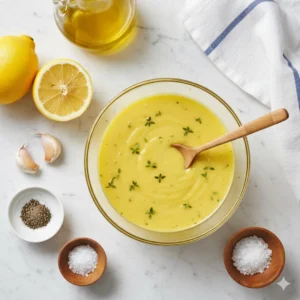
Zesty Lemon Vinaigrette Dressing
Ingredients
- 0.25 cup fresh lemon juice
- 1 small garlic clove, grated
- 1 tsp Dijon mustard
- 0.25 tsp sea salt, more to taste
- 0.5 tsp honey or maple syrup (optional)
- 0.33 cup extra-virgin olive oil
- 0.5 tsp fresh or dried thyme (optional)
- Freshly ground black pepper, to taste
Instructions
- In a small mixing bowl, combine the fresh lemon juice, grated garlic, Dijon mustard, sea salt, black pepper, and honey or maple syrup (if using).
- Whisk the mixture thoroughly until the salt is dissolved and the mustard is fully incorporated into the citrus juice.
- Slowly drizzle in the extra-virgin olive oil while whisking continuously until the dressing is fully emulsified and thickened. Alternatively, shake all ingredients in a sealed jar.
- Stir in the thyme if desired. Taste and add more olive oil if too tangy, or more salt and pepper as needed. Store in the fridge for up to 1 week.
Notes
Equipment
- Small mixing bowl or Mason jar
- Wire whisk
- Microplane or fine grater For the garlic
- measuring cups and spoons