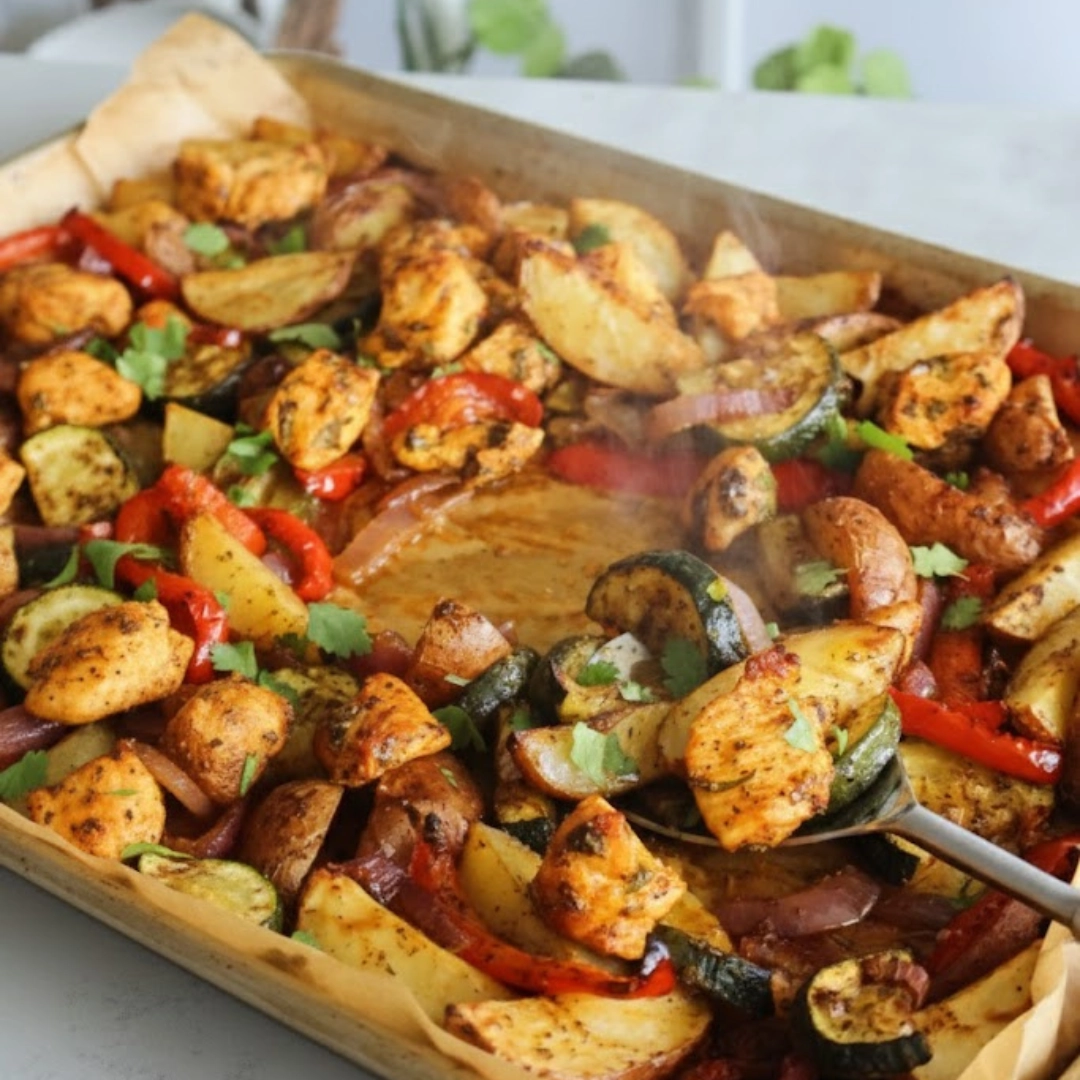
This recipe for Lemon Herb Chicken Sheet Pan is an exercise in efficiency and maximal flavor output. It represents a foundational pillar of modern home cooking: delivering a vibrant, complete, and intensely savory meal without necessitating a mountain of dishes or complicated techniques. The magic lies in the high-heat roasting that caramelizes the potatoes and peppers while transforming the chicken into tender, juicy morsels imbued with fragrant lemon and a careful blend of Mediterranean herbs. It’s a versatile preparation ideal for a satisfying weeknight dinner, and robust enough to stand up to the demands of weekend meal preparation. The single-pan approach ensures that the seasoned chicken juices naturally baste the vegetables, creating a unified flavor profile that is both bright and deeply savory.
Table of Contents
The Core Components: A Deep Dive into Ingredients
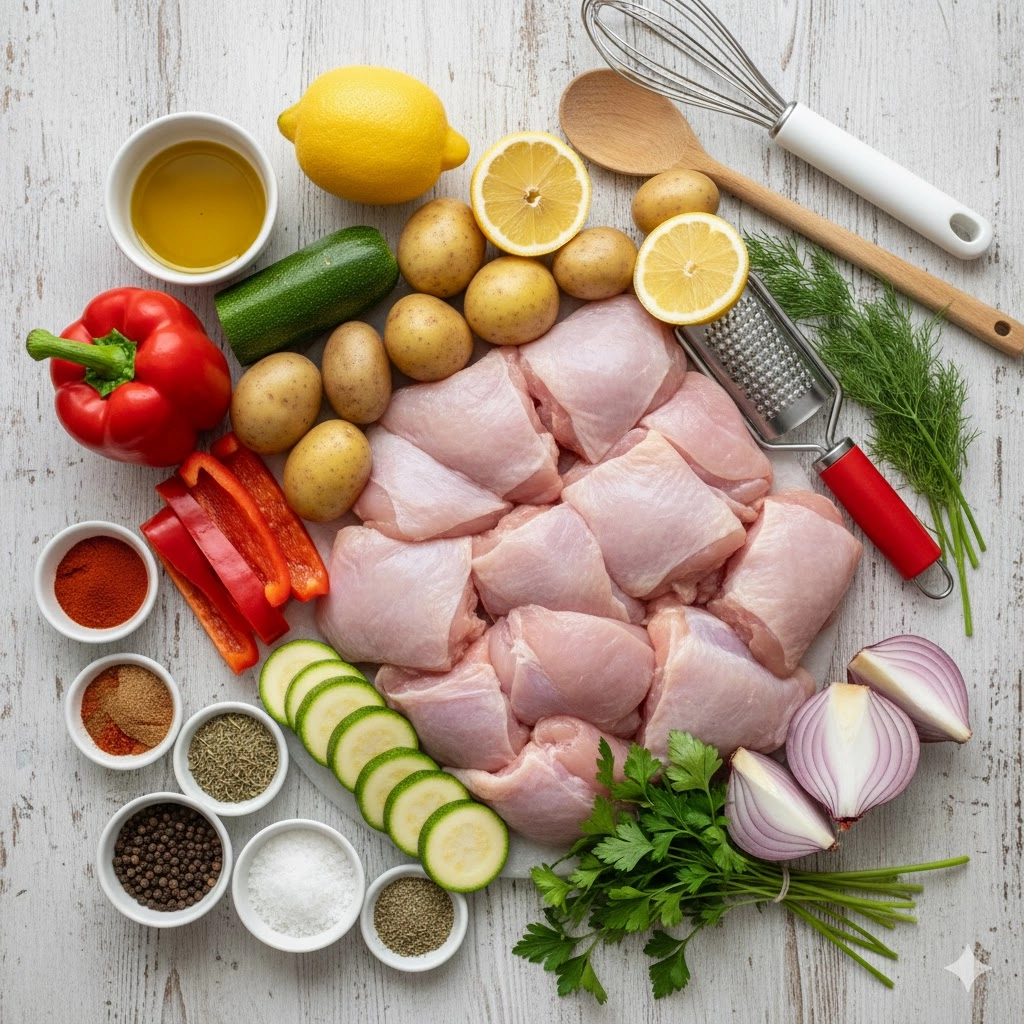
Crafting a truly exceptional sheet pan meal begins with a rigorous selection and preparation of the raw ingredients. Unlike a stew or a casserole, where disparate components meld together over a long period, sheet pan cooking demands ingredients that cook harmoniously and contribute distinct textures. This ingredient list is calibrated for balance and optimal cooking time.
For the Chicken and Marinade
- 2 pounds Boneless, Skinless Chicken Thighs or Breasts (Thighs are recommended for superior moisture retention under high heat.)
- 1/4 cup Extra Virgin Olive Oil
- Zest of 2 large Lemons (Ensure you only take the bright yellow layer, avoiding the bitter white pith.)
- Juice of 1 large Lemon
- 1 tablespoon Dried Oregano
- 1 tablespoon Dried Thyme
- 1 teaspoon Paprika (Sweet or smoked, depending on preference.)
- 1 teaspoon Garlic Powder
- 1 teaspoon Kosher Salt
- 1/2 teaspoon Freshly Cracked Black Pepper
For the Roasted Produce
- 2 pounds Baby Potatoes (Such as Yukon Gold or Red, halved or quartered depending on size.)
- 1 large Red Bell Pepper (Cut into one-inch strips.)
- 1 medium Zucchini (Cut into generous half-inch thick coins, ensuring they are not too thin.)
- 1 medium Red Onion (Cut into thick one-inch wedges, keeping the root end intact on each piece to prevent disintegration during roasting.)
- 3 tablespoons Extra Virgin Olive Oil
- 1 teaspoon Kosher Salt
- 1/2 teaspoon Freshly Cracked Black Pepper
- 1/2 teaspoon Garlic Powder
For Garnish and Finish
- 1/4 cup Fresh Parsley or Dill (Coarsely chopped.)
- Flaky Sea Salt (For finishing.)
Preparing the Sheet Pan: A High-Level Overview
This sequence is designed to ensure all components finish cooking at the same moment, maximizing texture and safety. Pre-roasting the dense vegetables is the essential step for avoiding undercooked potatoes or overcooked, dry chicken.
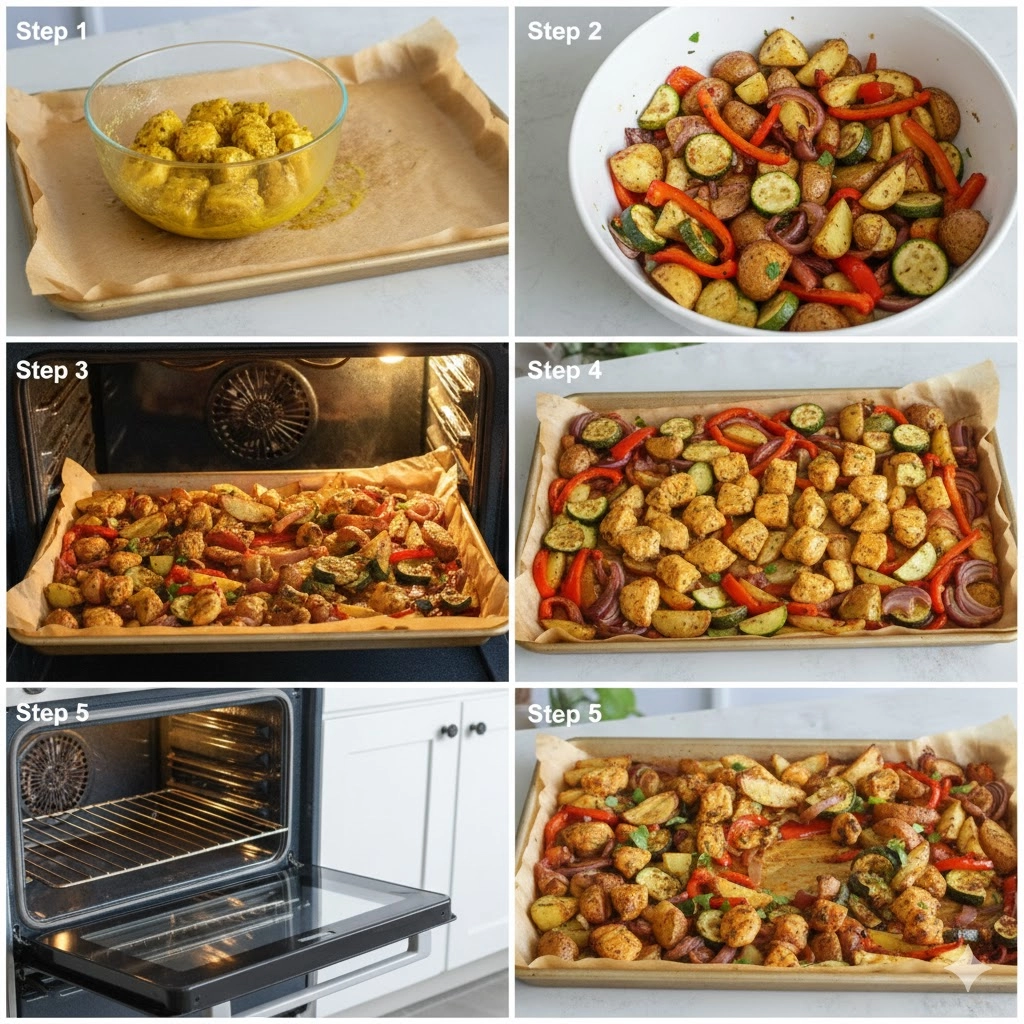
- Prepare the Roasting Surface: Preheat your oven to four hundred twenty-five Fahrenheit. Line a large, sturdy rimmed sheet pan (at least 13×18 inches) with parchment paper for easy cleanup and to prevent sticking.
- Cut and Marinate the Chicken: Cut the chicken into two-inch cubes, ensuring uniformity. Whisk together all marinade ingredients and toss the chicken until thoroughly coated. Set aside to marinate at room temperature while preparing the vegetables.
- Toss the Vegetables: Place the prepared potatoes, bell pepper, zucchini, and red onion into a large bowl. Drizzle with the three tablespoons of olive oil, salt, pepper, and garlic powder, tossing until the vegetables are lightly coated.
- Begin the Vegetable Roast: Spread the seasoned vegetables in a single, even layer across the prepared sheet pan, ensuring they are not crowded. Place the pan in the preheated oven and roast for fifteen minutes.
- Add the Chicken: After the initial vegetable roast, remove the sheet pan from the oven. Carefully push the vegetables to the sides to create space in the center. Distribute the marinated chicken pieces evenly across the cleared space.
- Complete the Cook: Return the sheet pan to the oven for an additional fifteen to twenty minutes. The meal is finished when the chicken registers an internal temperature of one hundred sixty-five Fahrenheit at its thickest point, and the potatoes yield easily when pierced with a fork.
- Rest and Garnish: Remove the pan from the oven, allow it to rest for three to five minutes directly on the pan, then finish with a scattering of fresh parsley or dill and a light sprinkle of flaky sea salt.
Mastering the Technique: Detailed Sheet Pan Roasting Method
Sheet pan dynamics are governed by thermodynamics and moisture management. The success of this dish hinges on understanding how the disparate textures of the vegetables and the density of the protein interact under sustained high heat.
The Critical Potato Head Start
The most common error in sheet pan cooking is undercooked potatoes. Potatoes require significantly more time and energy to become fully tender and develop that coveted crispy exterior than lighter vegetables like zucchini or quick-cooking protein like chicken.
By roasting the potatoes and onions for the first fifteen minutes at four hundred twenty-five Fahrenheit, we provide them with a crucial head start. This initial burst of dry heat begins the process of releasing moisture and browning the starches. It is paramount that the vegetables are spread in a single, uncrowded layer during this phase. If the ingredients overlap, they will steam rather than roast, resulting in a dull, soft exterior instead of a crisp, caramelized one. When you remove the pan to add the chicken, use a metal spatula to scrape up and flip the potatoes. This creates more surface area for crisping and ensures even browning. Listen for the slight sizzle and look for the edges of the potato pieces to just begin to turn golden before introducing the chicken.
Achieving Perfect Chicken Doneness
The chicken, especially if using thighs, requires the marinade’s acidity and aromatics to fully penetrate the meat. The lemon juice tenderizes the protein slightly, while the olive oil helps carry the fat-soluble herb flavors deep into the muscle. When adding the chicken to the partially roasted vegetables, ensure the pieces are spread out and not heaped upon one another. Crowding the chicken will trap steam, causing the meat to stew rather than roast, which impacts both texture and color.
For precise results, rely on temperature over time. While fifteen to twenty minutes is the general window, a digital thermometer is the only guaranteed way to confirm safety and prevent overcooking. Insert the thermometer into the thickest piece of chicken—one hundred sixty-five Fahrenheit is the target. The high heat of the sheet pan will cause the internal temperature to rise slightly during the brief resting period, securing maximum juiciness. Visually, the chicken exterior should exhibit a light golden-brown color, and the surface of the pan should show signs of slightly reduced, sticky chicken juices.
The Bright Finish: Citrus and Fresh Herbs
The final five minutes in the oven are often referred to as the “finishing phase.” If your chicken is cooked but the potatoes are still pale, consider moving the rack to the upper third of the oven for a final two to three minutes or utilizing the broiler. If using the broiler, exercise extreme caution; this step should last no longer than two minutes, and constant supervision is essential to prevent burning the delicate herbs and lemon zest that coat the chicken.
Upon removing the pan, the dish must be garnished immediately. The residual heat of the pan instantly revives the aromas of fresh herbs. Tossing the warm dish with a generous handful of fresh parsley or dill adds a necessary textural contrast and a layer of clean, green flavor that cuts through the richness of the oil and the savory depth of the roasted chicken. The final drizzle of fresh lemon juice, optionally included, provides that crucial acidic counterpoint that elevates the entire meal from merely roasted to truly vibrant. This small detail is the hallmark of expertly prepared, bright Mediterranean-style dishes.
Elevating the Meal: Expert Tips for Success
Achieving truly memorable results with this straightforward preparation requires attention to details often overlooked in simple instruction sets. These professional tips ensure your Lemon Herb Chicken Sheet Pan reaches its peak potential.
- Mind the Marinating Time: While the chicken can certainly be tossed with the marinade just before adding it to the pan, for superior flavor penetration, aim for a minimum of thirty minutes up to four hours. Any longer than four hours, and the lemon’s acid can begin to “cook” or denature the exterior of the protein, resulting in a slightly mealy texture.
- The Power of Parchment: Do not skip lining the sheet pan with parchment paper. Beyond simplifying cleanup, parchment paper minimizes the direct contact of the vegetables and chicken with the hot metal, which helps to prevent scorching and sticking, particularly with the potatoes. If parchment is unavailable, heavy-duty aluminum foil lightly coated with cooking spray is a reasonable substitute.
- Respect the Spacing: The single most impactful variable in sheet pan cooking is crowding. If your four servings of ingredients look jammed onto one thirteen by eighteen inch sheet, use two pans. Divided ingredients will roast and brown; crowded ingredients will steam. When using two pans, ensure they are placed on separate racks, and rotate them halfway through the cooking process to account for uneven oven heat.
- Salt in Stages: The instructions call for salting the vegetables and the chicken separately. Use Kosher salt for the initial seasoning as it dissolves readily. The final flourish of flaky sea salt, added after roasting, is non-negotiable. Its distinct crystalline crunch provides a textural element and a quick burst of clean salinity that enhances the finished dish.
- The Thickness Constraint: When cutting the vegetables, aim for thick, substantial pieces, especially the zucchini. If zucchini is sliced too thinly (less than half an inch), it will dehydrate completely and become leathery before the potatoes or chicken are finished. Thick pieces retain their structure and moisture, contributing a necessary tenderness to the final bite.
- Clean the Lemons: Since this recipe uses both the zest and the juice of the lemon, always wash the outside of the fruit thoroughly before zesting. Use a microplane or fine grater, working lightly to only remove the yellow zest. Zesting directly onto the chicken ensures the volatile oils are captured immediately by the fat in the marinade.
- Temperature Calibration: It is highly recommended to calibrate your oven with an external thermometer. Most residential ovens run ten to twenty-five Fahrenheit off their set temperature. Knowing your oven’s true temperature at the crucial four hundred twenty-five Fahrenheit setting is vital for controlling the delicate roasting balance.
Culinary Adjustments and Flavor Swaps
This basic preparation is incredibly versatile, lending itself well to a variety of seasonal vegetables and flavor profiles, provided the density and cooking time of the additions are considered.
Protein Alternatives
If chicken is unavailable or you are seeking variety, the seasoning blend works exceptionally well with other proteins.
- Pork Tenderloin: Cut into medallions approximately one inch thick. Reduce the initial vegetable roast time to ten minutes, as pork cooks slightly faster. The internal temperature target remains one hundred sixty Fahrenheit for medium, resting to one hundred sixty-five Fahrenheit.
- Firm Tofu: Use extra-firm or super-firm tofu, pressing it thoroughly to remove excess moisture. Cube the tofu and marinate as directed. Because tofu lacks the internal fat of meat, it benefits greatly from a light dusting of cornstarch after marinating to encourage crisping. Add it alongside the chicken for the final fifteen to twenty minutes.
- Halibut or Cod Fillets: For a seafood variation, skip the initial roast entirely. Roast the vegetables for thirty minutes alone. Then, add three to four-ounce fillets, brushed with the lemon-herb marinade, and cook for eight to twelve minutes, or until the fish is opaque and flakes easily. This transformation into a seafood dish demands a careful monitoring of the cooking time to avoid dry fish.
Seasonal Produce Switches
Maintain the roughly four-to-one ratio of hard to soft vegetables for optimum results.
- Winter Squash Swap: Replace the zucchini and red pepper with one pound of cubed butternut squash or peeled, cubed carrots. These are denser than the suggested vegetables and should be added with the potatoes for the full initial fifteen-minute roast.
- Cruciferous Crunch: Substitute half of the potatoes with broccoli florets or cauliflower. These should be added to the pan after the initial fifteen-minute potato roast, mixed in with the chicken, as they cook rapidly and can burn easily.
- Root Vegetable Depth: Instead of potatoes, use sweet potatoes or parsnips, cut into smaller, more uniform pieces. Due to their higher sugar content, sweet potatoes will caramelize faster and may require a slightly lower oven temperature (four hundred Fahrenheit) if browning becomes too aggressive.
Herb and Spice Variations
The current profile is distinctly Mediterranean, but it is easily adapted.
- Smoky Southwest: Replace the oregano and thyme with 1 tablespoon of chili powder, 1 teaspoon of cumin, and add a quarter teaspoon of cayenne pepper for heat. Finish with fresh cilantro instead of parsley.
- Asian Influence: Substitute the olive oil with sesame oil, replace the lemon juice with lime juice, and use a marinade blend of grated fresh ginger, garlic, and a splash of soy sauce (use low sodium). Omit the potatoes and replace them with cubes of winter squash to match the required cook time. The Lemon Herb Chicken Sheet Pan keyword is adaptable to many cuisines, proving its foundational strength.
- Pinch of Provence: Enhance the existing blend by adding dried Herbes de Provence, which often includes savory, fennel, and lavender, for a deeper floral complexity.
What to Pair: Complete Serving Ideas
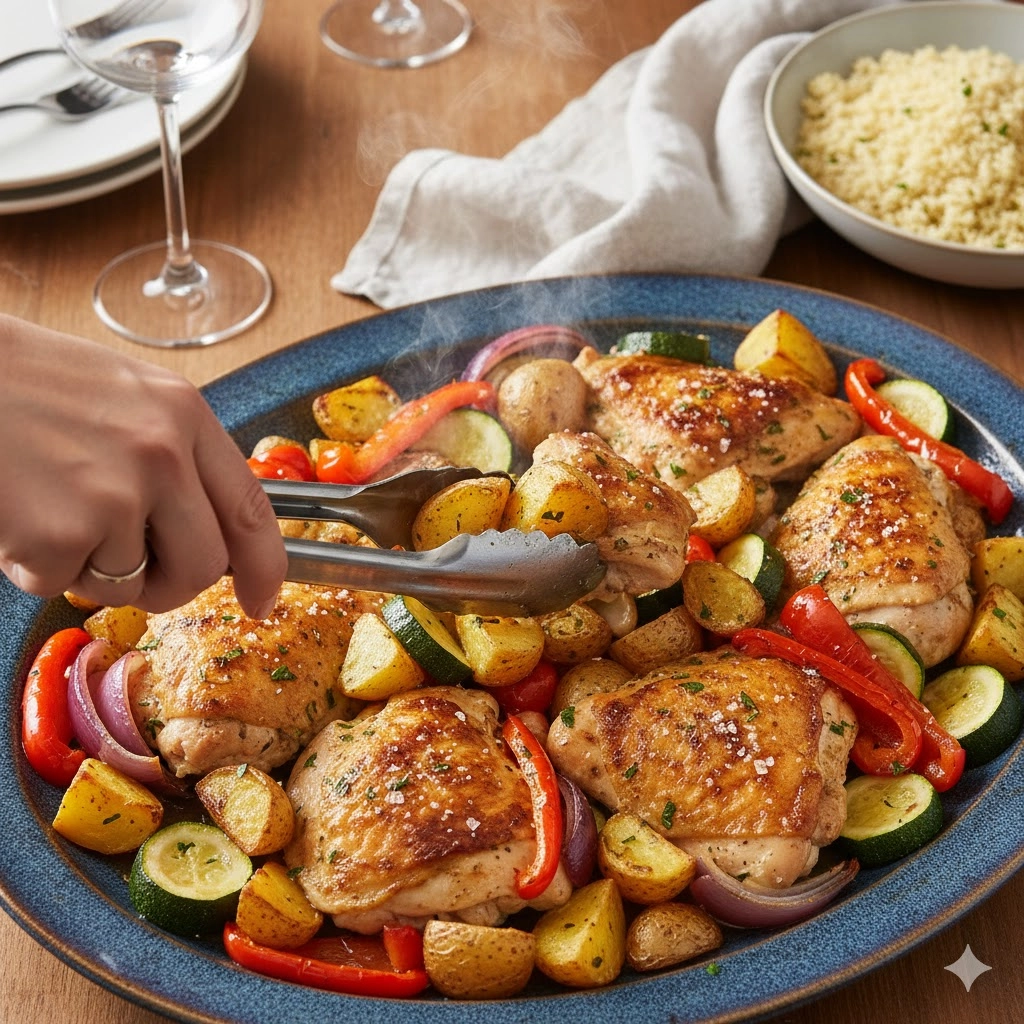
The intrinsic appeal of a sheet pan meal is its self-contained completeness. However, serving it over a complementary base or alongside a simple contrasting texture can elevate it from a simple meal to a thoughtful dining experience.
- Fluffy Steamed Grains: Serve the chicken and vegetables over a base of simply prepared basmati rice, quinoa, or pearl couscous. The grain absorbs the fragrant, savory pan juices released during the final minutes of cooking, effectively capturing the essence of the dish. This method turns the pan drippings into an instant, perfect sauce.
- Simple Side Salad: A bed of fresh, peppery arugula or mixed field greens, tossed lightly with a basic vinaigrette of red wine vinegar and olive oil, provides a cool, palate-cleansing contrast to the hot, rich roasted elements. The bitterness of the greens balances the sweetness of the caramelized vegetables.
- Yogurt Sauce: A cooling, creamy element works beautifully with the sharp acidity of the lemon and the savory herbs. Whisk together half a cup of plain, full-fat Greek yogurt with one tablespoon of finely minced garlic, one tablespoon of lemon juice, and a pinch of salt. Drizzle this rich sauce over the finished platter before serving.
- Toasted Bread accompaniment: Serve with warm, rustic bread, such as focaccia or ciabatta, for soaking up any remaining pan juices. This simple addition is particularly satisfying on a colder evening.
Common Questions Answered
Understanding the nuances of sheet pan cooking can solve many common home cooking challenges.
Can I use frozen vegetables for this recipe?
While convenient, using frozen vegetables is not recommended for this style of high-heat roasting. Frozen vegetables contain significantly more moisture than fresh. When they thaw in the oven, they release this moisture onto the sheet pan, effectively steaming all the ingredients instead of allowing them to roast and brown. This results in soft textures and bland flavors.
How do I prevent the chicken from drying out in the oven?
The key to preventing dry chicken is two-fold: cutting the chicken into uniform pieces (two inches thick) and using a meat thermometer. Uniform pieces ensure even cooking, and removing the chicken precisely at one hundred sixty-five Fahrenheit ensures it remains tender. Using bone-in, skin-on thighs, if you prefer, also adds a layer of fat protection and flavor.
Can I prepare the ingredients ahead of time?
You can certainly prep the vegetables two days in advance by washing and cutting them, storing them in an airtight container in the refrigerator. However, the chicken should not be marinated for longer than four hours due to the acid in the lemon juice. If prepping the chicken earlier, cut it and store it separately, adding the marinade no more than four hours before cooking time.
My vegetables are browning too fast; what should I do?
If your oven runs hot, or if you notice the edges of your potatoes or peppers are starting to scorch before the middle is cooked through, lower the oven temperature by twenty-five Fahrenheit. Additionally, you can tent the sheet pan loosely with aluminum foil for the last ten minutes of cooking. This traps some moisture and slows down the surface browning while allowing the ingredients to cook internally.
Is it safe to use non-marinated chicken drippings to baste the vegetables?
Yes, it is perfectly safe, and even desirable, to allow the raw chicken and vegetables to cook on the same pan, provided the final internal temperature of the chicken reaches one hundred sixty-five Fahrenheit. The heat of the oven thoroughly sanitizes the drippings as they coat the vegetables, infusing them with savory flavor.
Nutritional Snapshot
| Nutrient | Amount per Serving |
| Calories | 585 kcal |
| Protein | 45 g |
| Carbs | 40 g |
| Fat | 30 g |
| Fiber | 5 g |
| Sugar | 6 g |
| Sodium | 650 mg |
Important Dietary Note
Nutrition information is an estimate and may vary based on preparation and ingredients used.
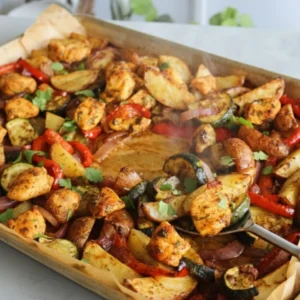
The Ultimate Lemon Herb Chicken Sheet Pan
Ingredients
- 2 pounds boneless, skinless chicken thighs or breasts
- 1/4 cup extra virgin olive oil (for marinade)
- 2 lemons, zested
- 1 lemon, juiced
- 1 tbsp dried oregano
- 1 tbsp dried thyme
- 1 tsp paprika (sweet or smoked)
- 1 tsp garlic powder
- 1 tsp kosher salt (for chicken)
- 1/2 tsp freshly cracked black pepper (for chicken)
- 2 pounds baby potatoes, halved or quartered
- 1 large red bell pepper, cut into strips
- 1 medium zucchini, sliced into thick coins
- 1 medium red onion, cut into wedges
- 3 tbsp extra virgin olive oil (for vegetables)
- 1 tsp kosher salt (for vegetables)
- 1/2 tsp freshly cracked black pepper (for vegetables)
- 1/2 tsp garlic powder (for vegetables)
- 1/4 cup fresh parsley or dill, chopped (for garnish)
- flaky sea salt (for finishing)
Instructions
- Preheat oven to 425°F (220°C). Line a large rimmed sheet pan (13×18 inches) with parchment paper.
- Cut the chicken into 2-inch cubes. Whisk all marinade ingredients and toss chicken until coated. Let marinate while prepping vegetables.
- In a large bowl, toss potatoes, bell pepper, zucchini, and red onion with 3 tbsp olive oil, salt, pepper, and garlic powder.
- Spread vegetables evenly on sheet pan without crowding. Roast for 15 minutes.
- Remove pan, push vegetables to the sides, and add marinated chicken in the center.
- Return to oven and roast for 15–20 minutes, or until chicken reaches 165°F and potatoes are tender.
- Let rest 3–5 minutes. Garnish with fresh herbs and a sprinkle of flaky sea salt before serving.
Notes
Equipment
- sheet pan (13×18 inches)
- large bowl
- whisk
- cutting board
- knife
- parchment paper
- tongs or spatula
- oven thermometer (optional but recommended)
- digital meat thermometer