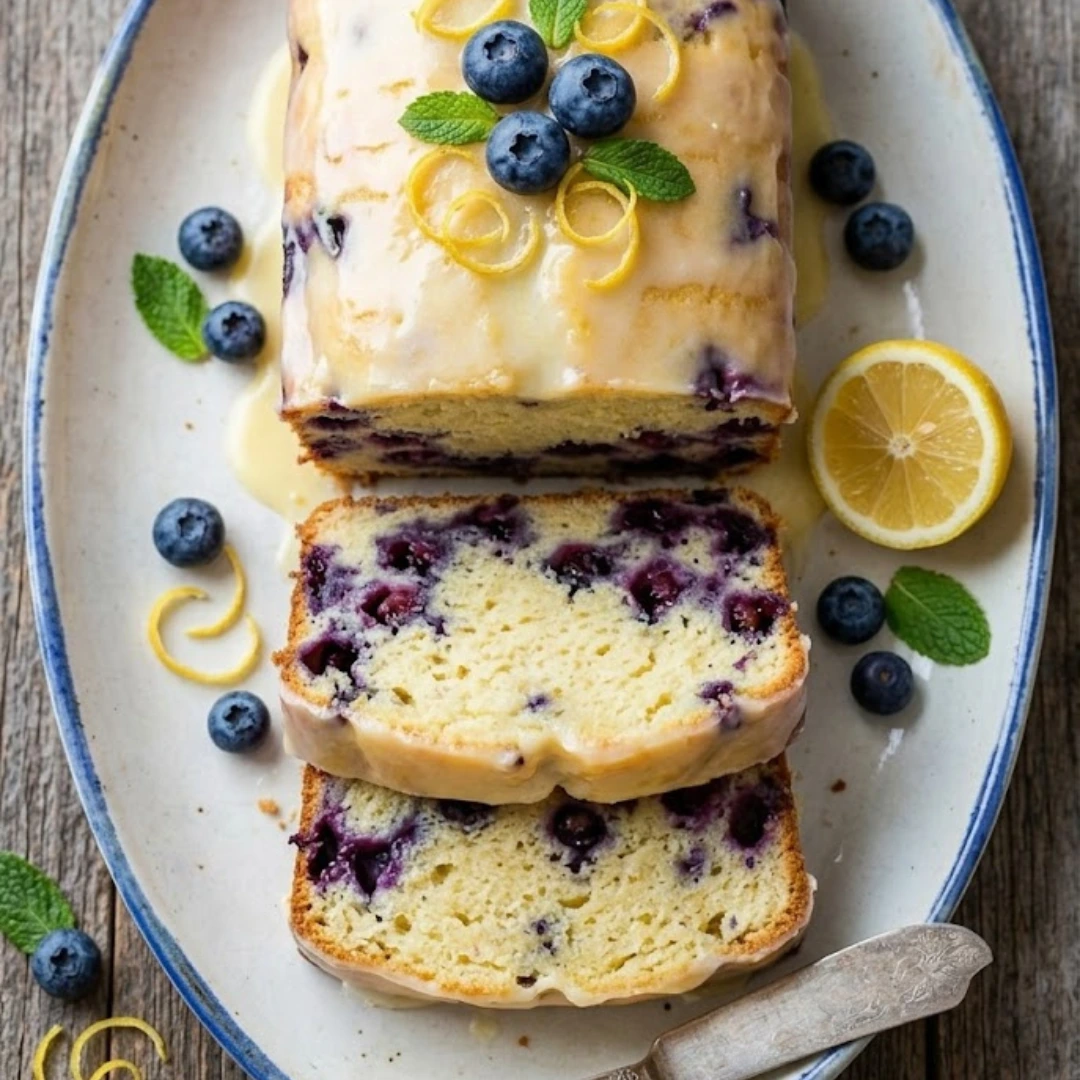
There is something inherently joyful about the combination of bright, sun-kissed citrus and the deep, jammy sweetness of a ripe blueberry. This Lemon Blueberry Bread is more than just a quick bread; it is a celebration of contrasting flavors that dance across the palate. Whether you are looking for a sophisticated addition to a weekend brunch, a thoughtful gift for a neighbor, or a simple comfort snack to enjoy with your afternoon tea, this recipe delivers a tender crumb and a vibrant zing that keeps you coming back for a second slice.
Table of Contents
Ingredients for the Perfect Loaf
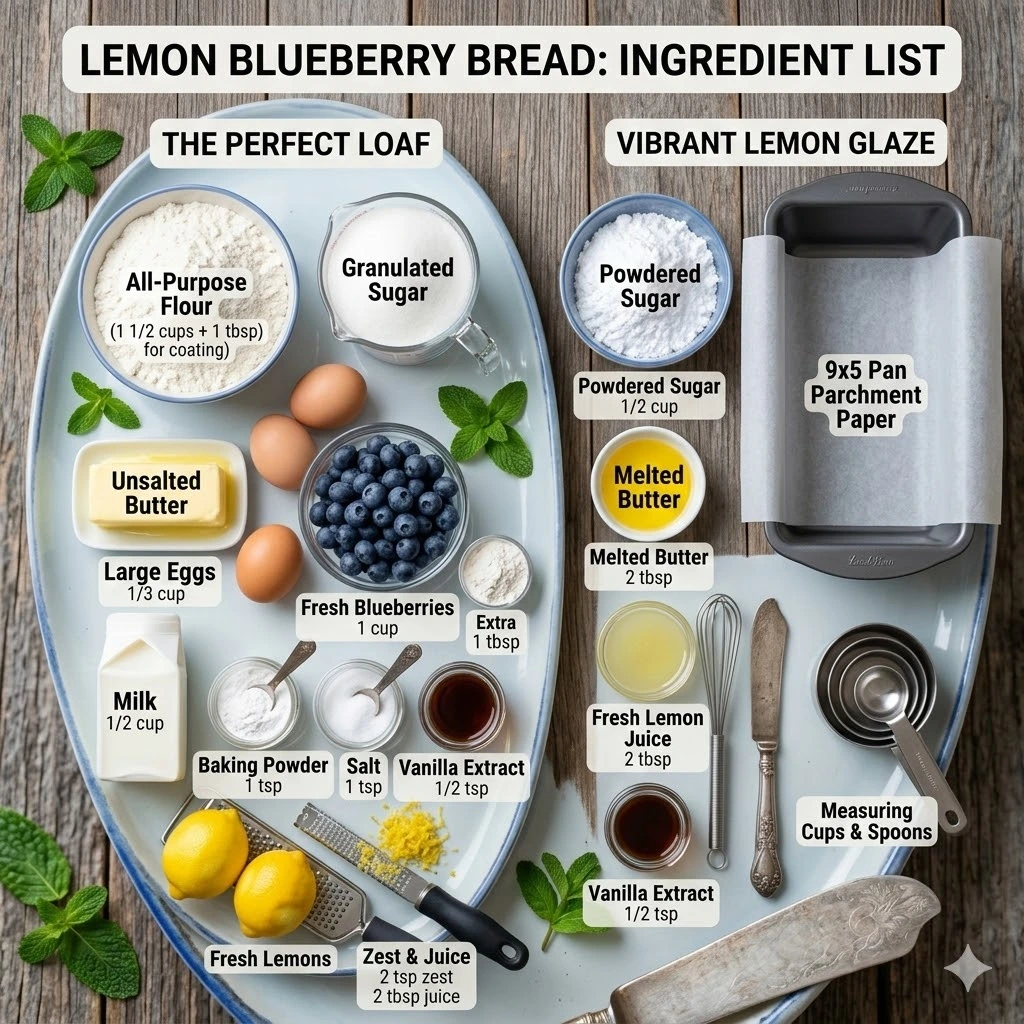
To achieve the professional-grade texture and flavor profile of this signature quick bread, ensure your ingredients are fresh and measured with precision.
- 1 1/2 cups all-purpose flour
- 1 teaspoon baking powder
- 1 teaspoon salt
- 1/3 cup unsalted butter, melted
- 1 cup granulated sugar
- 2 eggs
- 1/2 teaspoon vanilla extract
- 2 teaspoons fresh grated lemon zest
- 2 tablespoons fresh lemon juice
- 1/2 cup milk
- 1 cup fresh or frozen blueberries
- 1 tablespoon all-purpose flour (for coating berries)
For the Vibrant Lemon Glaze
- 2 tablespoons butter, melted
- 1/2 cup powdered sugar
- 2 tablespoons fresh lemon juice
- 1/2 teaspoon vanilla extract
Primary Baking Instructions
- Begin by preheating your oven to 350 Fahrenheit. Prepare a standard 9 by 5 inch loaf pan by lining it with parchment paper or lightly greasing the interior with butter to ensure an easy release.
- In a medium-sized mixing bowl, whisk together the 1 1/2 cups of all-purpose flour, the baking powder, and the salt. Set this dry mixture aside.
- Utilizing the bowl of an electric mixer, blend the melted butter, granulated sugar, eggs, vanilla extract, fresh lemon zest, and lemon juice. Mix these components until they are thoroughly combined and smooth.
- Switch the mixer to a slow speed. Incorporate the flour mixture and the milk in two alternating batches. Start with a portion of flour, followed by milk, then the remaining flour and milk. Stop the motor the moment the ingredients are just combined to avoid overworking the gluten.
- If using fresh blueberries, rinse them and leave a tiny bit of moisture on the skins. In a small separate bowl, toss the blueberries with 1 tablespoon of flour until coated.
- Fold the flour-dusted berries into the batter gently using a spatula.
- Transfer the batter into your prepared loaf pan. Bake for 55 to 65 minutes. You will know it is finished when a toothpick inserted into the center comes out clean.
- Allow the bread to rest in the pan for 30 minutes before moving it to a wire cooling rack.
- Whisk together the glaze ingredients (melted butter, powdered sugar, lemon juice, and vanilla) and pour the mixture over the slightly warm loaf. Let the glaze set before slicing.
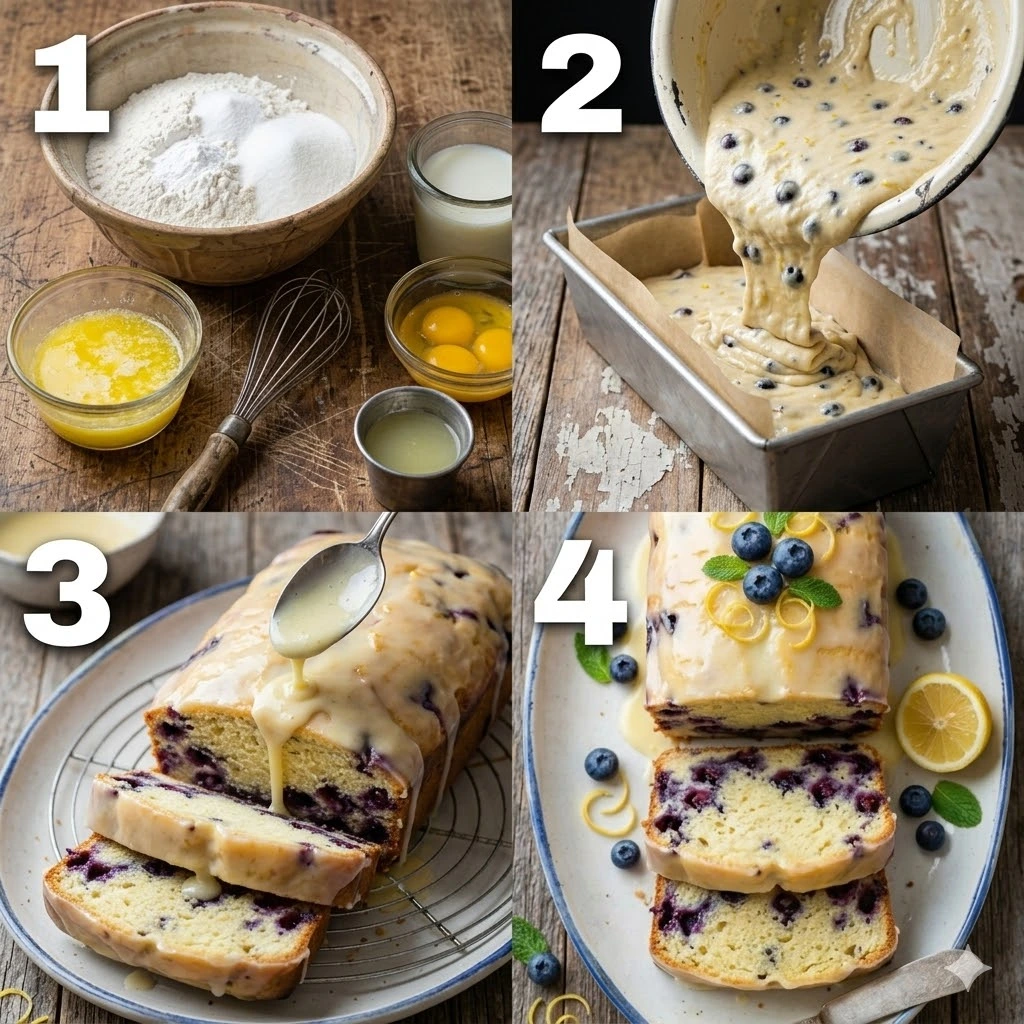
Achieving the Ultimate Creamy Consistency and Crumb
The secret to a world-class Lemon Blueberry Bread lies not just in the ingredients, but in the science of the emulsion. When you blend the melted butter with the sugar and eggs, you are creating the foundational structure of the bread. Using melted butter instead of creamed softened butter results in a denser, moister crumb that mimics the texture of a high-end pound cake while remaining light enough for a morning snack.
The inclusion of milk is vital here. It provides the necessary hydration to activate the baking powder, which is your primary leavening agent. As the bread hits the 350 Fahrenheit heat of the oven, the baking powder releases carbon dioxide gas, which gets trapped by the protein structure of the eggs and flour. This creates those beautiful tiny air pockets that define a “fluffy” bread.
Furthermore, the interaction between the lemon juice and the milk creates a subtle buttermilk-like effect. The acidity of the citrus begins to slightly tenderize the flour’s gluten, ensuring that every bite is soft rather than chewy. This is why it is imperative to stop mixing the moment the white streaks of flour disappear. Over-mixing leads to a tough, tunneled interior that loses its delicate nature.
Deep-Dive Kitchen Wisdom
One of the most common frustrations when baking with fruit is the “sunken berry syndrome,” where all the blueberries end up in a soggy layer at the very bottom of the loaf. This recipe solves that through a two-step protective process. First, the 1 tablespoon of flour used to coat the berries acts like a “grip,” allowing the fruit to cling to the batter rather than sliding through it. Second, the batter itself is formulated to be thick enough to support the weight of the fruit during the initial rise in the oven.
If you are using frozen blueberries, do not thaw them. Thawing causes the juice to bleed, which will turn your beautiful yellow lemon batter into a murky grey or purple hue. Use them straight from the freezer, toss them in the flour quickly, and fold them in at the very last second.
Temperature also plays a massive role in flavor perception. Salt is listed as a teaspoon in this recipe, which might seem high for a “sweet” bread, but it is a critical flavor enhancer. Salt suppresses bitterness and heightens our perception of sweetness and acidity. Without it, the lemon would taste flat and the blueberries would lose their punch.
Dynamic Serving and Accompaniment Ideas
While this Lemon Blueberry Bread is a star on its own, it can be elevated with the right pairings. For a sophisticated breakfast, serve a thick slice slightly toasted with a dollop of unsalted butter or a smear of mascarpone cheese. The creaminess of the cheese balances the tartness of the lemon glaze perfectly.
If you are serving this as a dessert, consider a side of lightly sweetened whipped cream flavored with a touch of lemon zest. For a summer afternoon, a glass of iced Earl Grey tea or a cold glass of lemonade creates a beautiful citrus-on-citrus experience. For those who enjoy a bit of crunch, a handful of toasted sliced almonds sprinkled over the glaze before it sets adds a wonderful textural contrast to the soft fruit and tender cake.
Essential Modifications and Substitutions
Baking is a science, but there is always room for a little artistic license depending on what you have in your pantry.
- The Fat Source: While unsalted butter provides the best flavor, you can substitute it with a neutral oil like canola or vegetable oil if you prefer a loaf that stays soft for a longer period at room temperature.
- Dairy Alternatives: If you need to avoid cow’s milk, unsweetened almond milk or oat milk work excellently in this recipe. The high fat content of oat milk, in particular, maintains the richness of the bread.
- The Citrus Factor: If you find yourself out of lemons, this recipe translates beautifully to an Orange Blueberry Bread. Simply swap the lemon juice and zest for orange equivalents. The flavor will be sweeter and less tart, making it a hit with children.
- Berry Variations: While blueberries are the classic choice, blackberries or raspberries can be used. If using raspberries, be extremely gentle during the folding process as they are much more fragile than blueberries.
Detailed Step-by-Step Evolution
The Preparation Phase
Setting the oven to 350 Fahrenheit is the sweet spot for quick breads. It is hot enough to trigger a rapid rise but low enough that the interior can cook through before the exterior becomes overly browned. Lining the pan with parchment paper is a “pro” move—leave a little overhang on the long sides to create “handles” that allow you to lift the entire loaf out of the pan effortlessly.
The Mixing Sequence
Starting with the dry ingredients ensures that the baking powder and salt are evenly distributed throughout the flour. When you move to the wet ingredients, the goal is aeration. Whisking the eggs and sugar together thoroughly creates a stable base. When adding the flour and milk, use the “folding” method if you are worried about over-mixing. A rubber spatula is your best friend here.
The Baking Window
The 55 to 65 minute window is a suggestion, as every oven calibrates differently. Start checking at the 50-minute mark. If you notice the top is browning too quickly while the center is still wobbly, loosely tent a piece of aluminum foil over the top of the pan. This allows the heat to continue penetrating the center without scorching the crust.
The Cooling and Glazing
Patience is the hardest part of this recipe. If you glaze the bread while it is piping hot, the glaze will simply melt and run off into the bottom of the pan. By waiting until the bread is just barely warm, the glaze stays thick and forms that signature crackly, opaque white finish that makes the loaf look like it came from a professional bakery.
Culinary Insights for Success
To truly master this loaf, pay attention to your lemons. Always zest the lemon before you cut it for juicing; it is nearly impossible to zest a squeezed, limp lemon half. When zesting, only take the bright yellow outer layer. The white part underneath, known as the pith, is incredibly bitter and can ruin the delicate flavor of the bread.
Also, consider the “carry-over cooking” effect. When you remove the bread from the oven, it continues to cook for several minutes from the residual heat trapped in the dense crumb. This is why we let it rest in the pan for 30 minutes. This rest period also allows the structure to set, preventing the bread from falling apart when you try to move it to the cooling rack.
Exploring the Kitchen Science: FAQ
Why did my blueberries all sink to the bottom despite the flour coating?
This usually happens if the batter is too thin or if the blueberries were very wet when added. Ensure you measure your milk accurately and only rinse the berries right before you are ready to toss them in flour. If the berries are heavy and the batter is over-mixed (making it lose its air), gravity will inevitably win.
Can I make this recipe into muffins instead of a loaf?
Absolutely. This batter translates perfectly to muffins. Simply line a muffin tin and fill each cup about three-quarters full. Reduce your baking time significantly—usually 18 to 22 minutes at the same temperature—and use the toothpick test to check for doneness.
How do I get that perfect “crack” down the middle of the loaf?
That iconic split on top of a quick bread is a sign of a job well done. It happens when the exterior sets before the interior has finished rising. As the center expands, it bursts through the top crust. To encourage a straight line, you can dip a knife in melted butter and draw a shallow line down the center of the batter before putting it in the oven.
Is it better to use fresh or frozen fruit for the flavor?
In the height of summer, fresh local blueberries are unbeatable because they have a lower water content and a more concentrated flavor. However, high-quality frozen berries are often picked at peak ripeness and frozen immediately, making them a fantastic and consistent year-round option.
Storage and Longevity
This Lemon Blueberry Bread is a rare treat that actually tastes better the second day. As it sits, the lemon juice in the glaze and the moisture from the berries permeate the crumb, making it even more flavorful.
To store, keep it in an airtight container at room temperature for up to three days. If you live in a particularly humid environment, the refrigerator is a better choice to prevent the berries from spoiling, though it may slightly firm up the butter in the cake. For long-term storage, this bread freezes beautifully. Wrap the unglazed loaf tightly in plastic wrap and then a layer of foil. It will stay fresh for up to three months. When you are ready to serve, thaw it in the fridge overnight and apply a fresh batch of glaze.
Nutritional Profile and Values
| Nutrient | Amount Per Serving |
| Calories | 259 calories |
| Total Fat | 8 grams |
| Saturated Fat | 4 grams |
| Cholesterol | 51 milligrams |
| Sodium | 298 milligrams |
| Total Carbohydrates | 44 grams |
| Dietary Fiber | 1 gram |
| Sugars | 28 grams |
| Protein | 4 grams |
| Vitamin A | 264 IU |
| Vitamin C | 4 milligrams |
| Calcium | 50 milligrams |
| Iron | 1 milligram |
Final Culinary Disclaimer
Please note that nutritional values are estimates based on standard ingredients. Actual values may vary depending on the specific brands used and the precision of measurements. Always consult with a health professional for specific dietary needs.
A Note on the Joy of Baking
This Lemon Blueberry Bread represents the best of home baking: simple ingredients, a straightforward process, and a result that feels truly special. There is a meditative quality to zesting a lemon and folding berries into a golden batter. When the scent of citrus and toasted sugar begins to waft through your kitchen, you’ll understand why this recipe is a perennial favorite. It is a reminder that you don’t need complex techniques to create something that brings a smile to the table.

Lemon Blueberry Bread
Ingredients
- 1.5 cups all-purpose flour
- 1 teaspoon baking powder
- 1 teaspoon salt
- 0.33 cup unsalted butter, melted
- 1 cup granulated sugar
- 2 eggs
- 0.5 teaspoon vanilla extract
- 2 teaspoons fresh grated lemon zest
- 2 tablespoons fresh lemon juice
- 0.5 cup milk
- 1 cup fresh or frozen blueberries
- 1 tablespoon all-purpose flour (for coating berries)
- 2 tablespoons butter, melted (for glaze)
- 0.5 cup powdered sugar
- 2 tablespoons fresh lemon juice (for glaze)
- 0.5 teaspoon vanilla extract (for glaze)
Instructions
- Preheat oven to 350 Fahrenheit and line a 9×5 inch loaf pan with parchment paper or lightly grease with butter.
- In a medium bowl, whisk the flour, baking powder and salt, and set aside.
- In the bowl of an electric mixer, blend together the melted butter, sugar, eggs, vanilla, lemon zest and lemon juice until well combined.
- While slowly mixing, add flour mixture and milk in two batches. Stop mixing as soon as it is just combined.
- Rinse off fresh blueberries (if using) and toss them with 1 tablespoon flour in a small bowl to prevent sinking.
- Gently but quickly stir the flour-coated berries into the batter by hand.
- Immediately pour batter into prepared pan and bake for 55-65 minutes, or until a toothpick comes out clean.
- Cool bread in pan for 30 minutes, then move to a wire rack. Whisk glaze ingredients together and pour over the loaf.
Notes
Equipment
- 9×5-inch loaf pan
- electric mixer
- medium mixing bowl
- wire cooling rack
- whisk