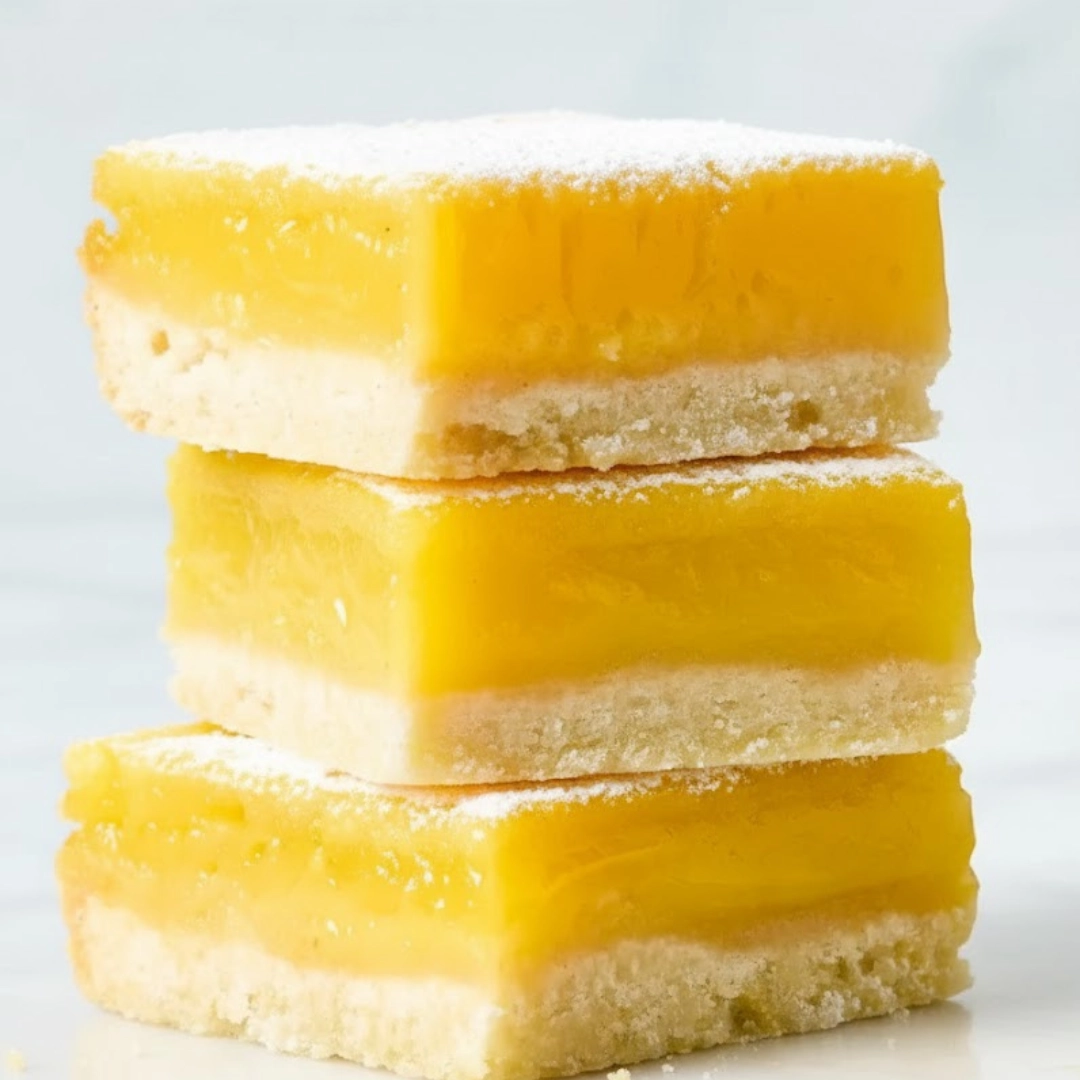
Few desserts capture the essence of sunshine quite like a perfectly executed lemon bar. This classic treat relies on the beautiful contrast between a crisp, buttery shortbread base and a silky, tart custard top. Whether you are prepping for a summer garden party, a neighborhood bake sale, or simply looking for the perfect palate cleanser after a heavy dinner, these bars are a guaranteed crowd-pleaser. By focusing on a specific ratio of crust to filling and infusing the dough with fresh citrus oils, we have elevated the traditional recipe into something truly spectacular.
Table of Contents
THE ESSENTIAL INGREDIENT LIST
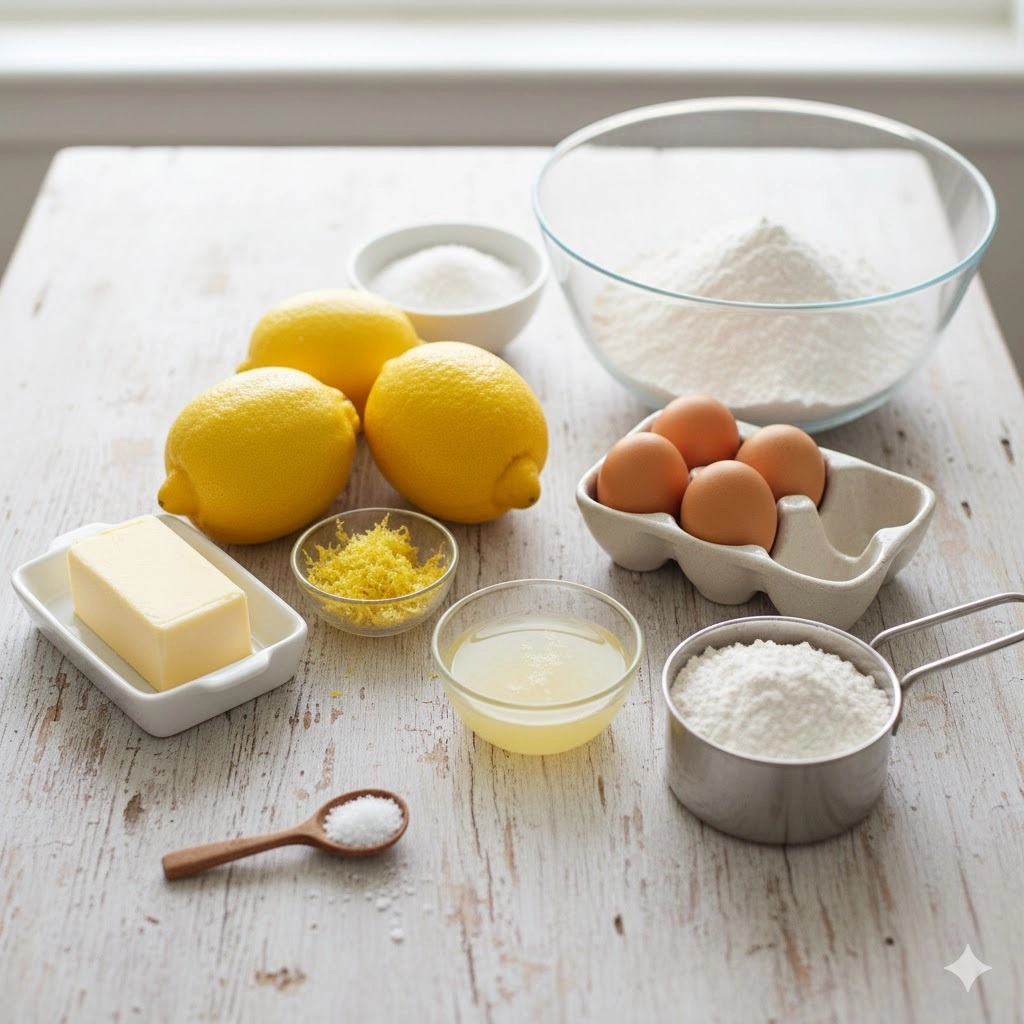
To ensure your lemon bars have the ideal texture and flavor profile, gather these specific ingredients. Quality matters here, especially with your citrus choices.
For the Shortbread Crust
- 1 tablespoon finely grated lemon zest (typically from 1 large lemon)
- 1/4 cup granulated sugar
- 12 tablespoons (which is 1 and 1/2 sticks) unsalted butter, softened to room temperature
- 1/2 teaspoon kosher salt
- 1 3/4 cups all-purpose flour
For the Tangy Filling and Final Garnish
- 4 large eggs, brought to room temperature
- 1 tablespoon finely grated lemon zest (from 1 additional large lemon)
- 3/4 cup freshly squeezed lemon juice (plan for approximately 5 large lemons)
- 1 1/2 cups granulated sugar
- 1/3 cup all-purpose flour
- 1/2 teaspoon kosher salt
- Powdered sugar, for a final decorative dusting
OFFICIAL BAKING INSTRUCTIONS
Preparing the Crust
- Begin by arranging your oven rack in the center position and preheating the oven to 350 Fahrenheit.
- Line a 9×9-inch square baking pan with two sheets of parchment paper. Place them perpendicular to one another so they hang over all four sides by at least one inch, creating a “sling” for easy removal.
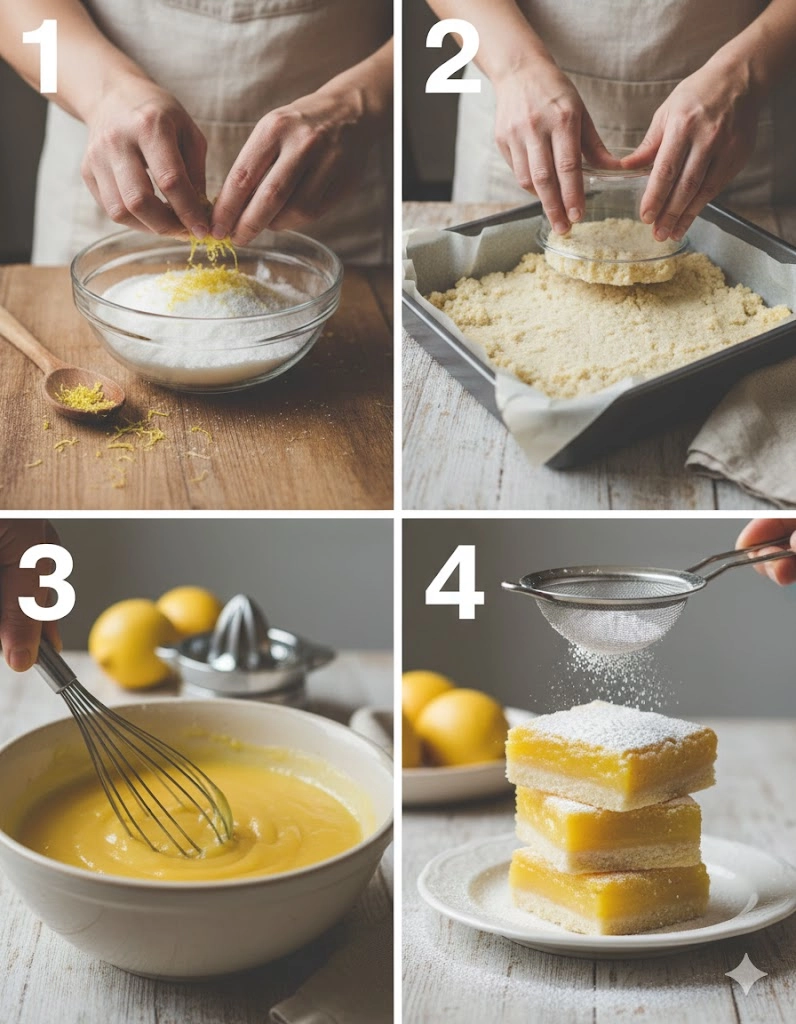
- In the bowl of a stand mixer, combine 1 tablespoon of lemon zest and 1/4 cup of granulated sugar. Use your fingertips to rub the zest into the sugar until it becomes fragrant and damp.
- Add 12 tablespoons of room-temperature butter and 1/2 teaspoon of kosher salt. Beat on medium speed for approximately 2 minutes until the mixture is creamy.
- Incorporate 1 3/4 cups of all-purpose flour. Mix on medium speed for 30 seconds to 1 minute until fine crumbs form.
- Press this dough firmly into the bottom of your prepared pan in an even layer.
- Bake for 15 to 22 minutes, or until the edges are just beginning to turn a light golden-brown.
Preparing the Filling and Finishing
- While the crust bakes, whisk 4 large eggs in a medium bowl until well beaten.
- Add 1 tablespoon of lemon zest, 3/4 cup of juice, 1 1/2 cups of sugar, and 1/2 teaspoon of salt. Whisk until the mixture is smooth.
- Sift 1/3 cup of all-purpose flour over the wet ingredients and whisk again until fully combined and no lumps remain.
- As soon as the crust comes out of the oven, immediately pour the filling over the hot crust.
- Return the pan to the oven and bake for 18 to 20 minutes, or until the filling is set but still has a very slight wiggle in the center.
- Cool on a wire rack for 1 hour, then refrigerate for at least 3 hours or overnight.
- Lift the bars out using the parchment sling. Cut into 16 squares and dust heavily with powdered sugar just before serving.
CRITICAL TEMPERATURE AND TIMING DETAILS
The secret to a professional-grade lemon bar lies almost entirely in the temperature of your components. First, let’s talk about the “Hot Crust Rule.” Many amateur bakers allow their shortbread base to cool before adding the lemon layer. This is a mistake. Pouring the cool egg mixture onto a piping hot crust creates a partial sear that prevents the filling from soaking into the shortbread, which ensures your base stays crisp rather than soggy.
Furthermore, do not rush the chilling process. While the bars may look solid after an hour on the counter, the internal structure of the citrus custard needs at least three hours in the refrigerator to fully set. If you cut into them too early, you will end up with a delicious but messy “lemon soup” rather than a clean, structural bar. For the cleanest presentation, use a sharp knife dipped in hot water and wiped dry between every single cut. This prevents the sticky filling from dragging across the beautiful white powdered sugar top.
UNIQUE CULINARY INSIGHTS FOR THE PERFECT TEXTURE
Creating a lemon bar that stands out requires a bit of kitchen science. Most recipes treat the sugar and zest as separate entities, but by rubbing the lemon zest into the granulated sugar with your fingers before mixing the dough, you are performing a mechanical extraction. The abrasive nature of the sugar crystals breaks open the tiny oil sacs in the lemon peel, releasing essential oils that provide a much deeper, more complex citrus aroma than juice alone can provide.
Another insight involves the “wiggle factor.” When you pull the bars out of the oven, the center should not be liquid, but it should jiggle slightly like firm gelatin. If the center is completely stiff, you have likely overbaked the eggs, which can lead to a rubbery texture or even a slightly “eggy” taste. Remember that carryover cooking will continue to firm up the bars as they sit on the wire rack.
ACCOMPANIMENTS AND CREATIVE SERVING IDEAS
While these bars are a powerhouse on their own, you can elevate the serving experience with a few thoughtful additions.
- Fresh Berries: A side of macerated raspberries or blueberries provides a beautiful color contrast and a different type of acidity that complements the lemon.
- Whipped Cream: A dollop of unsweetened or lightly sweetened whipped cream can help cut through the intense tartness of the lemon curd.
- Candied Citrus: For a truly professional look, top each square with a small piece of candied lemon peel or a thin, dehydrated lemon wheel.
- Herbal Infusion: Try serving these alongside a cup of iced Earl Grey tea. The bergamot in the tea mirrors the citrus in the bars for a sophisticated pairing.
NUTRITION AND DIETARY INFORMATION
This recipe makes 16 generous servings. Please note that nutritional values are estimates based on standard ingredient data.
| Nutrient | Amount Per Serving |
| Calories | 245 |
| Total Fat | 10 grams |
| Saturated Fat | 6 grams |
| Cholesterol | 65 milligrams |
| Sodium | 145 milligrams |
| Total Carbohydrates | 36 grams |
| Dietary Fiber | 1 gram |
| Sugars | 25 grams |
| Protein | 3 grams |
DISCLAIMER
The nutritional information provided is an estimate only. Actual nutritional content will vary based on the specific brands of ingredients used and the precision of your measurements.
SUCCESSFUL MODIFICATIONS AND VARIATIONS
If you want to experiment with the flavor profile while keeping the structural integrity of the recipe, consider these tested modifications. You can easily swap the lemon juice and zest for other citrus varieties. A grapefruit bar offers a sophisticated bitterness, while a lime bar (especially when using Key Limes) provides a punchy, tropical flair.
For those who prefer a more floral note, you can add a half-teaspoon of vanilla extract to the crust dough. If you are a fan of salt-sweet combinations, try a very light sprinkle of flaky sea salt on top of the powdered sugar. This helps to further temper the sweetness of the granulated sugar and highlights the brightness of the lemon.
ESSENTIAL LEMON BAR QUESTIONS ANSWERED
Why did my lemon bars develop a thin, crunchy white crust on top?
This is a very common occurrence caused by the air bubbles in the eggs rising to the surface during baking. As the moisture evaporates, the sugar and protein from the eggs form a thin, macaron-like layer. This is completely normal and does not affect the taste. This is exactly why we dust the finished product with powdered sugar—it masks any visual imperfections and adds a lovely sweetness.
How do I prevent the shortbread crust from crumbling when I cut it?
A crumbling crust usually means the dough wasn’t pressed firmly enough into the pan or the butter wasn’t fully incorporated. When pressing the dough into the 9×9-inch pan, use the bottom of a flat measuring cup to ensure a compact, even layer. Additionally, ensure your butter is truly at room temperature (supple but not melting) to create a cohesive dough.
Can I make these lemon bars in advance?
Absolutely. In fact, they often taste better on the second day once the flavors have had time to meld. You can store them in the refrigerator for up to one week. If you need to store them longer, they freeze beautifully for up to four months. Just be sure to wait until the moment of serving to add the powdered sugar, as it will dissolve into the bar if left in the fridge or freezer.
A FINAL WORD ON THIS CITRUS CLASSIC
Whether you are a seasoned baker or a novice in the kitchen, these lemon bars offer a rewarding experience with a high-impact flavor profile. By mastering the shortbread-to-filling ratio and paying close attention to the par-baking process, you ensure a dessert that is as beautiful to look at as it is to eat. The combination of fresh zest, real juice, and a buttery foundation creates a timeless treat that brings a bit of brightness to any occasion. Enjoy the process, and don’t forget to share a square with a friend.
The Ultimate Bright and Buttery Lemon Bars
Ingredients
- 1 tbsp finely grated lemon zest (from 1 large lemon)
- 0.25 cup granulated sugar
- 12 tbsp unsalted butter, at room temperature (1.5 sticks)
- 0.5 tsp kosher salt
- 1.75 cups all-purpose flour
- 4 large eggs, at room temperature
- 1 tbsp finely grated lemon zest (for filling)
- 0.75 cup freshly squeezed lemon juice (about 5 lemons)
- 1.5 cups granulated sugar (for filling)
- 0.33 cup all-purpose flour (for filling)
- 0.5 tsp kosher salt (for filling)
- 1 tbsp powdered sugar, for dusting
Instructions
- Preheat oven to 350 Fahrenheit. Line a 9×9-inch baking pan with two sheets of parchment paper perpendicular to each other, creating a sling over the edges.
- In a mixer bowl, rub 1 tbsp lemon zest into 1/4 cup sugar with your fingers until fragrant. Add butter and 1/2 tsp salt; beat on medium for 2 minutes until creamy.
- Add 1 3/4 cups flour and beat until fine crumbs form. Press firmly into the bottom of the prepared pan in an even layer.
- Bake the crust for 15 to 22 minutes until the edges are light golden-brown.
- While crust bakes, whisk 4 eggs until beaten. Add filling zest, juice, 1 1/2 cups sugar, and salt; whisk until smooth. Sift in 1/3 cup flour and whisk again.
- Immediately pour the filling over the hot crust once it leaves the oven. Bake for 18 to 20 minutes until set with a slight wiggle in the center.
- Cool on a wire rack for 1 hour, then refrigerate for at least 3 hours or overnight to set fully.
- Lift bars out using the parchment sling. Cut into 16 squares and dust generously with powdered sugar through a fine-mesh strainer.
Notes
Equipment
- 9×9-inch square baking pan
- parchment paper
- stand mixer or hand mixer
- Fine-mesh strainer For sifting flour and dusting sugar
- wire cooling rack
- Citrus zester and juicer