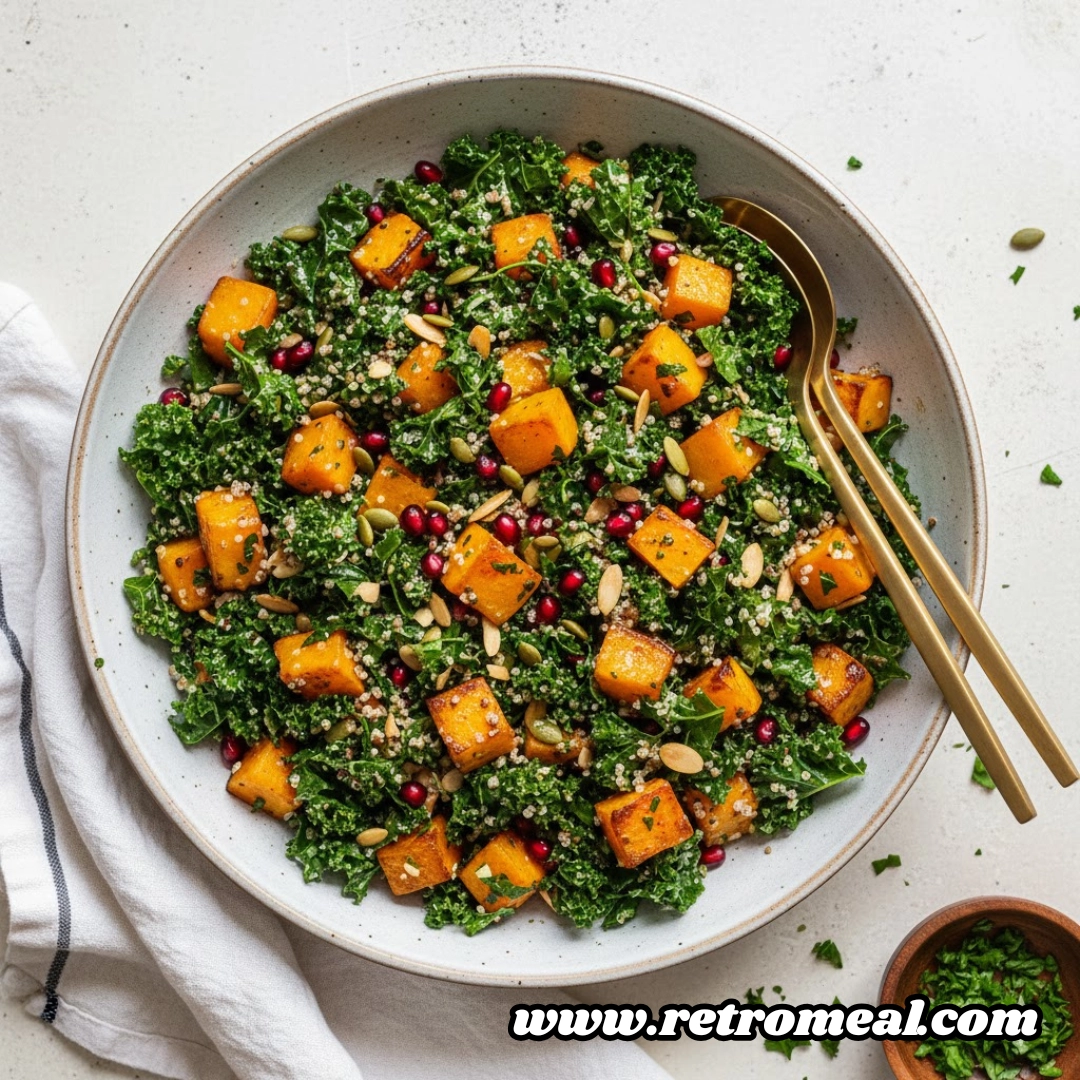
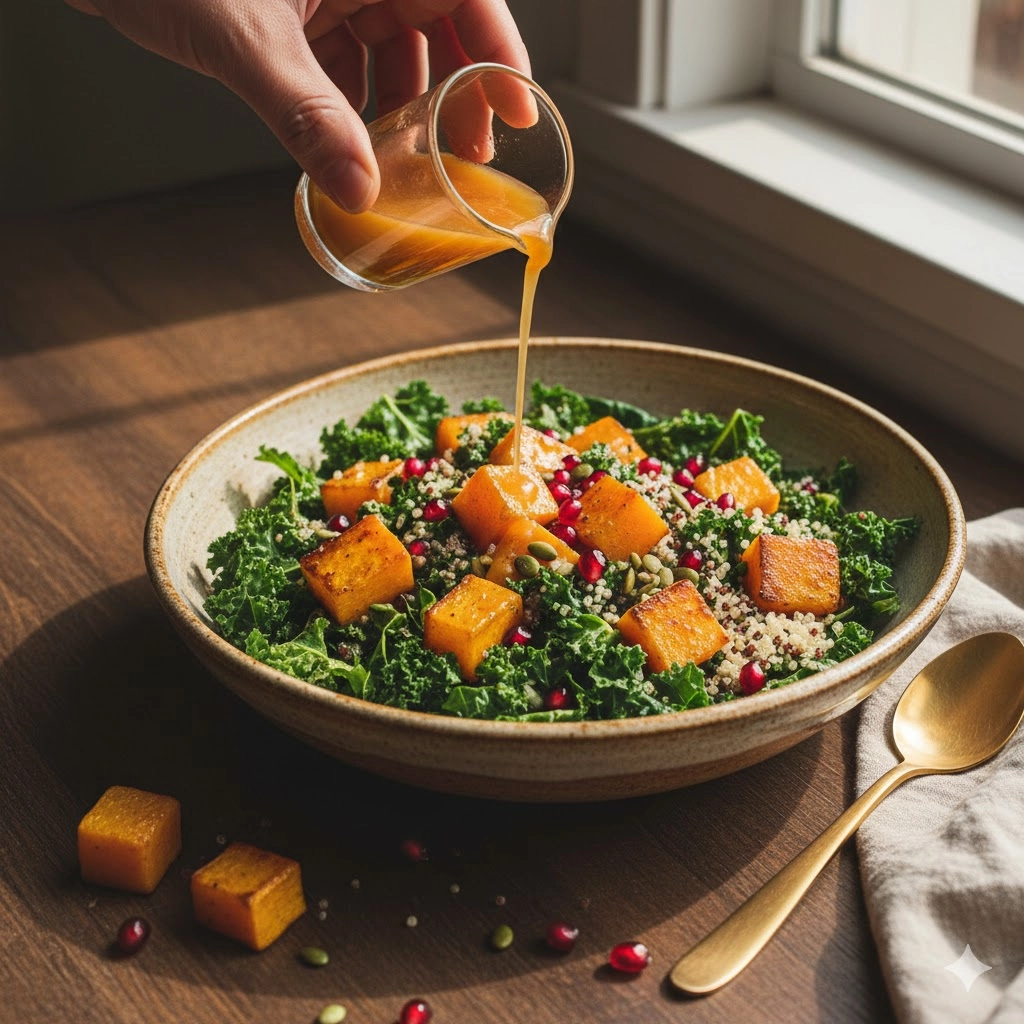
As the leaves begin to turn and the air takes on that unmistakable autumn chill, our cravings naturally shift toward hearty, grounding ingredients that celebrate the harvest. This Roasted Butternut Squash and Kale Salad is the quintessential fall dish, bringing together the earthy sweetness of caramelized squash with the robust texture of massaged kale. It is a vibrant symphony of colors and flavors, featuring jewel-toned pomegranate arils, crunchy pumpkin seeds, and nutty slivered almonds. Whether you are looking for a centerpiece for a plant-forward lunch or a sophisticated side dish for a holiday gathering, this salad offers a perfect balance of nutrition and indulgence.
Table of Contents
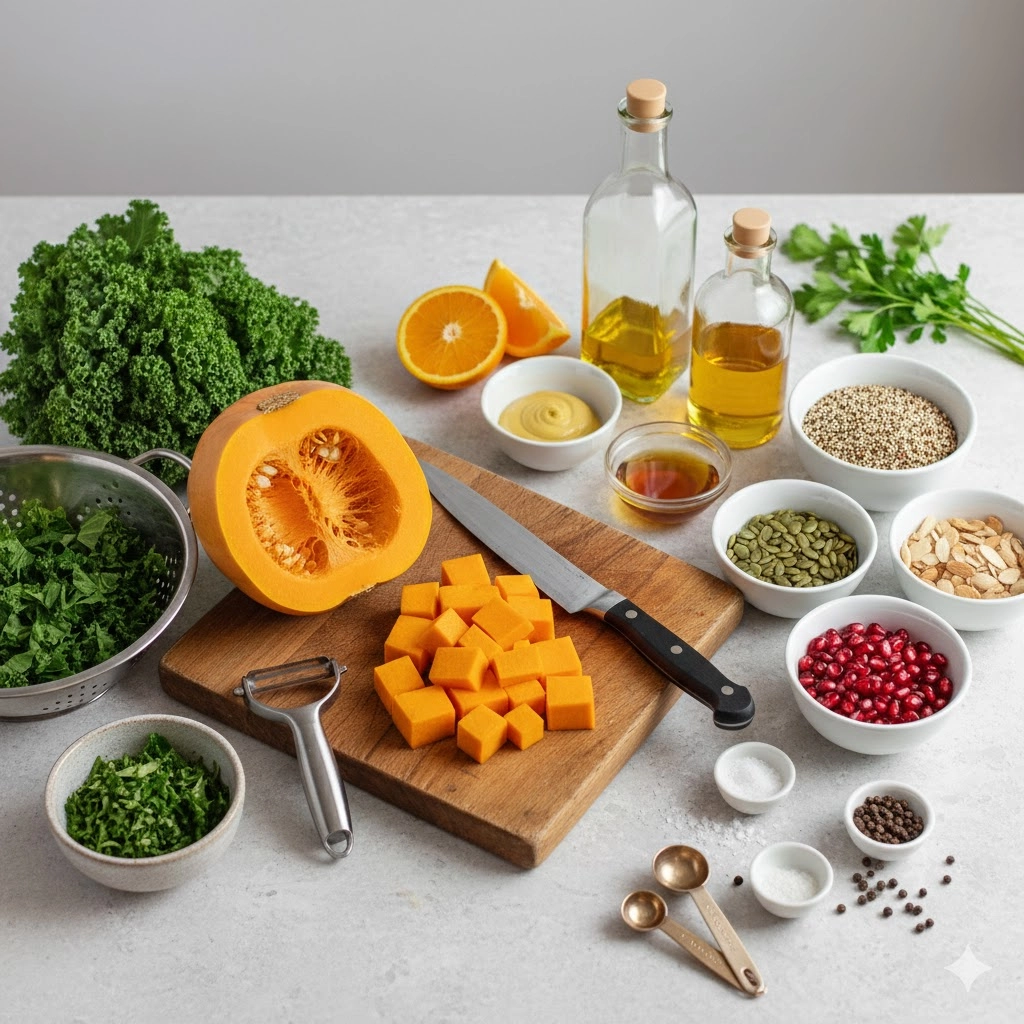
Ingredients for the Perfect Harvest Bowl
Creating a salad with this much depth requires a thoughtful selection of fresh produce and pantry staples. Each component is chosen to provide a specific texture or flavor profile, from the creamy squash to the zesty vinaigrette.
For the Roasted Squash Base
- 4 cups cubed butternut squash
- 1 tablespoon olive oil
- 1/2 teaspoon salt
- 1/2 teaspoon garlic powder
- 1/4 teaspoon black pepper
For the Salad Foundation
- 1 head kale (curly kale is highly recommended)
- 2/3 cup uncooked quinoa
- 1/4 cup pumpkin seeds
- 1/4 cup pomegranate arils
- 1/4 cup slivered almonds
For the Zesty Vinaigrette
- 1/4 cup plus 2 tablespoons olive oil
- 2 tablespoons orange juice
- 1 tablespoon apple cider vinegar
- 1 tablespoon dijon mustard
- 1 to 2 tablespoons honey or maple syrup
- 1/4 teaspoon salt
- Black pepper to taste
Step-by-Step Cooking Instructions
Follow these precise steps to ensure your squash is perfectly roasted and your kale is tender and flavorful.
- Preheat your oven to 400 degrees Fahrenheit to ensure a hot environment for roasting.
- Prepare the butternut squash by cutting off the ends, peeling the skin with a vegetable peeler, and removing the seeds. Cut the flesh into 1 inch strips and then into 1 inch cubes.
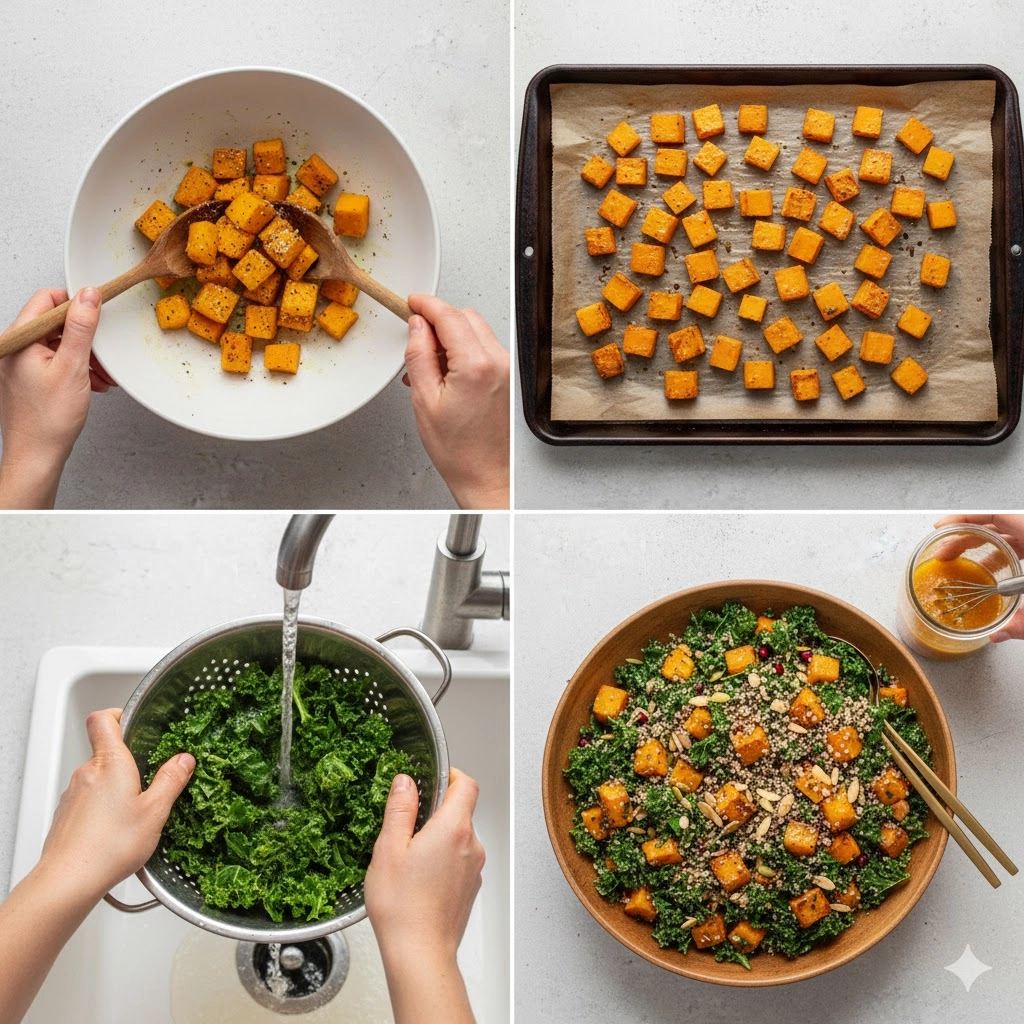
- In a large mixing bowl, toss the 4 cups of cubed squash with 1 tablespoon of olive oil, 1/2 teaspoon salt, 1/2 teaspoon garlic powder, and 1/4 teaspoon black pepper.
- Spread the seasoned squash onto a baking tray lined with parchment paper. Roast for 25 to 35 minutes until the edges are crispy and the centers are fork-tender.
- While the squash roasts, cook the 2/3 cup of quinoa according to package instructions and set aside to cool.
- Prepare the kale by removing the tough stems. Rinse the leaves in a colander under warm water for 1 to 2 minutes while massaging them vigorously with your hands to break down the fibrous structure.
- Pat the kale dry and chop it into very small, bite-sized pieces using a sharp knife or kitchen shears.
- In a small jar or bowl, whisk together the dressing ingredients: olive oil, orange juice, apple cider vinegar, dijon mustard, honey or maple syrup, salt, and black pepper.
- In a large serving bowl, combine the massaged kale, roasted squash, cooked quinoa, pomegranate arils, pumpkin seeds, and slivered almonds.
- Pour the dressing over the salad just before serving and toss well to coat every leaf and grain.
Masterful Step-by-Step Details and Techniques
To truly elevate this dish from a standard salad to a gourmet experience, one must understand the “why” behind the preparation methods. The most transformative part of this recipe is the treatment of the kale. Many people find raw kale to be bitter or difficult to chew, but the secret lies in the massage. By using warm water and physical pressure, you are essentially pre-digesting the tough cellulose walls of the leaves. This process turns the kale from a coarse green into a tender, dark emerald base that absorbs the dressing beautifully.
Roasting the butternut squash is another critical phase. High heat at 400 degrees Fahrenheit is necessary to trigger the Maillard reaction, which is the chemical reaction between amino acids and reducing sugars that gives browned food its distinctive flavor. You want those caramelized, slightly charred edges because they provide a smoky sweetness that contrasts with the acidic orange and vinegar in the dressing.
The addition of quinoa adds a layer of “fluffiness” and protein, making the salad feel like a complete meal. Using a tri-color quinoa can add even more visual appeal, though white or red varieties work just as well. When combining the ingredients, ensure the squash and quinoa have cooled slightly so they do not wilt the kale too much, though a little residual warmth can actually help the flavors meld together.
Unique Culinary Insights for Success
One of the most important tips for this recipe is the size of your chop. In a complex salad with many small ingredients like pomegranate arils and pumpkin seeds, having large chunks of kale can be off-putting. Using kitchen shears to “confetti-cut” the kale ensures that every forkful contains a bit of every ingredient.
Furthermore, consider the quality of your olive oil. Since the dressing is not cooked, the flavor of the oil will shine through. A high-quality extra virgin olive oil with a peppery finish complements the sweetness of the roasted squash and the honey in the vinaigrette. If you find your butternut squash is particularly watery, try roasting it on a dark metal baking sheet without parchment paper to encourage even more browning, though parchment is excellent for easy cleanup.
Optimal Accompaniments and Serving Suggestions
This salad is incredibly versatile. For a light lunch, it stands perfectly on its own, providing a healthy dose of fats, fiber, and complex carbohydrates. However, if you are serving this as part of a larger dinner spread, it pairs beautifully with roasted chicken, pan-seared salmon, or a hearty lentil soup.
For a holiday table, consider serving it in a wide, shallow wooden bowl to showcase the vibrant colors of the pomegranate and the golden squash. If you are hosting a party, you can serve the dressing on the side to allow guests to control their own portions, which also keeps the leftovers fresher for longer. A side of crusty sourdough bread or a warm baguette is also a fantastic way to soak up any extra vinaigrette at the bottom of the bowl.
Smart Modifications and Substitutions
While this recipe is designed to be a balanced harvest bowl, you can easily adapt it to suit your pantry or dietary needs. If you cannot find butternut squash, sweet potatoes or honeynut squash are excellent alternatives that provide a similar texture and sweetness.
For those with nut allergies, simply omit the slivered almonds and increase the amount of pumpkin seeds, or swap them for sunflower seeds. If you prefer a different grain, farro or pearled couscous can replace the quinoa, though keep in mind that farro contains gluten while quinoa is naturally gluten-free. To make the recipe strictly vegan, ensure you use maple syrup instead of honey in the dressing. For an extra punch of flavor, some people enjoy adding a sprinkle of feta cheese or goat cheese, which adds a creamy, salty element to the dish.
In-Depth Culinary FAQ
How do I prevent the kale from becoming soggy if I make this ahead of time?
Kale is much sturdier than lettuce or spinach, which makes it ideal for meal prep. However, if you plan to eat the salad over several days, it is best to store the dressing in a separate container. Only toss the portion you plan to eat immediately. If the kale is already dressed, it will actually stay quite good for about 24 hours, but by day three, it may lose its structural integrity.
Can I use frozen butternut squash for this recipe?
Yes, you can use frozen cubed butternut squash to save time. However, be aware that frozen squash often contains more moisture. To get those crispy edges, you may need to roast it for an additional 5 to 10 minutes and avoid overcrowding the pan. Do not thaw the squash before roasting; put it straight from the freezer into the oven for the best texture.
What is the best way to remove pomegranate arils without making a mess?
The “underwater method” is highly effective. Cut the pomegranate into quarters and submerge them in a large bowl of water. Use your fingers to gently nudge the arils away from the white pith. The arils will sink to the bottom while the pith floats to the top. This prevents the red juice from splashing all over your kitchen counters and clothes.
Is there a substitute for apple cider vinegar in the dressing?
If you don’t have apple cider vinegar on hand, lemon juice or white wine vinegar are the best substitutes. They provide the necessary acidity to balance the fats in the olive oil and the sweetness of the honey. Balsamic vinegar can also be used, but it will change the color of the dressing and give it a much stronger, more dominant flavor profile.
Closing Thoughts on This Seasonal Favorite
Embracing the flavors of autumn has never been easier or more delicious than with this Roasted Butternut Squash and Kale Salad. By taking the time to massage the kale and perfectly roast the squash, you create a dish that is far more than the sum of its parts. It is a nutrient-dense, flavorful, and visually stunning addition to any meal. Whether you are prepping your lunches for the week or looking for the perfect side dish for a family gathering, this recipe is sure to become a staple in your kitchen during the cooler months.
Nutritional Information
| Nutrient | Amount Per Serving |
| Calories | 285 calories |
| Total Fat | 15.4 grams |
| Carbohydrates | 28 grams |
| Protein | 6.5 grams |
| Fiber | 4.4 grams |
| Sugar | 7.2 grams |
Nutritional Disclaimer
The nutritional values provided are estimates based on standard ingredient measurements. Actual nutritional content may vary depending on the specific brands of products used and variations in the size of the produce. For those with strict dietary requirements, please calculate nutrition based on the exact items used in your preparation.
Roasted Butternut Squash and Kale Salad
Ingredients
- 4 cups butternut squash, cubed
- 1 tbsp olive oil
- 0.5 tsp salt
- 0.5 tsp garlic powder
- 0.25 tsp black pepper
- 1 head curly kale, de-stemmed and chopped
- 0.66 cup uncooked quinoa
- 0.25 cup pumpkin seeds
- 0.25 cup pomegranate arils
- 0.25 cup slivered almonds
- 0.25 cup olive oil (for dressing)
- 2 tbsp olive oil (additional for dressing)
- 2 tbsp orange juice
- 1 tbsp apple cider vinegar
- 1 tbsp dijon mustard
- 1 tbsp honey or maple syrup
- 0.25 tsp salt (for dressing)
- 1 pinch black pepper to taste
Instructions
- Preheat your oven to 400 degrees Fahrenheit. Prepare a baking tray by lining it with parchment paper for easy cleanup.
- Peel the butternut squash, remove the seeds, and cut into 1-inch cubes. You need 4 cups total.
- Toss the cubed squash with 1 tablespoon olive oil, 0.5 teaspoon salt, 0.5 teaspoon garlic powder, and 0.25 teaspoon black pepper in a bowl.
- Spread squash on the baking tray and roast for 25–35 minutes until fork-tender and edges are golden brown.
- Cook the quinoa according to package instructions. While it cooks, de-stem the kale and place in a colander.
- Run warm water over the kale for 1–2 minutes while massaging it firmly with your hands to soften the leaves.
- Finely chop the massaged kale and add it to a large mixing bowl along with the roasted squash, cooked quinoa, pomegranate arils, pumpkin seeds, and almonds.
- Whisk all dressing ingredients together in a small jar. Pour over the salad and toss well just before serving.
Notes
Equipment
- Baking tray
- parchment paper
- Vegetable Peeler
- large mixing bowl
- colander
- Kitchen shears or sharp knife