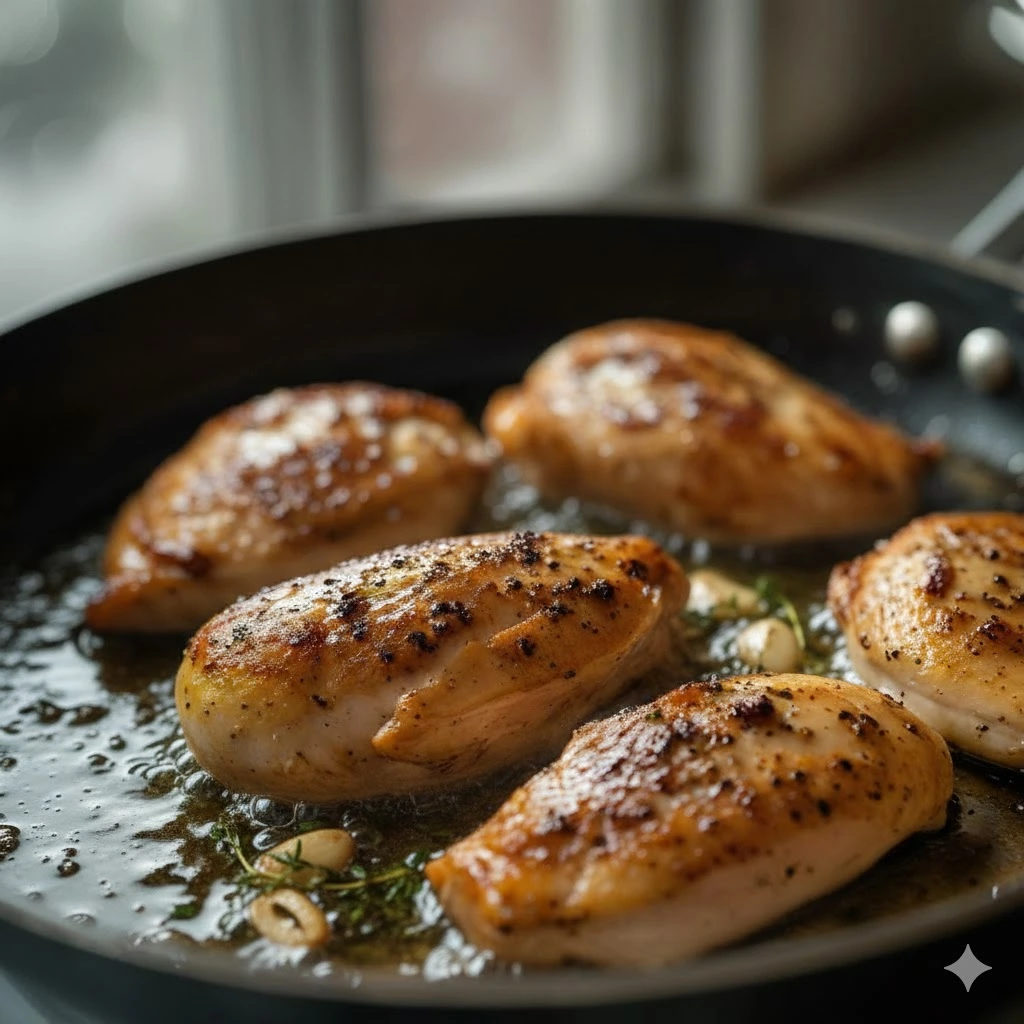
There’s a moment of culinary alchemy that occurs when chicken breast meets a hot pan—an audible sizzle that signals the transformation of simple poultry into golden greatness. Pan-roasted chicken breasts offer a masterclass in textural contrast: skin crisped to crackling perfection, flesh so tender it yields like velvet to the fork. This method coaxes whispers of nuttiness from the Maillard reaction while preserving succulence through restrained heat. As butter froths with aromatic partners—perhaps thyme sprigs or garlic cloves—it bastes the meat in a perfume that permeates every fiber. The result? A centerpiece worthy of white-tablecloth reverence yet accessible enough for Wednesday suppers. What elevates this humblest of cuts to gourmet status lies in the details: the precision of brine, the patience to let the pan work its magic undisturbed, the rhythm of turning and basting that turns routine into ritual.
Table of Contents
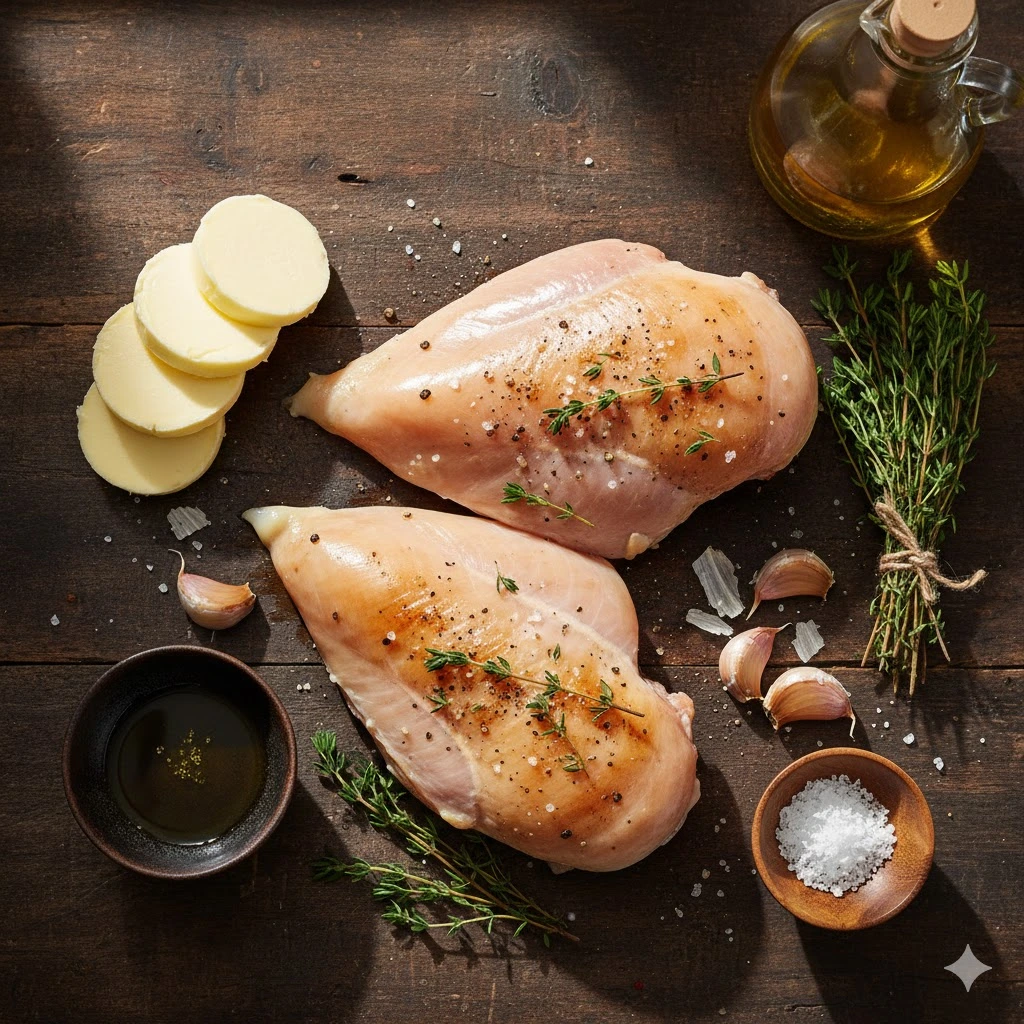
Ingredient Deep Dive
| Ingredient | Quantity | Purpose |
|---|---|---|
| Bone-in chicken breasts (8-10 oz each) | 2 pieces | Bones insulate meat; skin protects and crisps |
| Kosher salt (Diamond Crystal) | 1 tbsp | Seasoning layer penetrates via osmosis |
| Grapeseed oil | 1 tbsp | High smoke point prevents burning |
| Unsalted butter (European-style) | 3 tbsp | Milk solids brown for complex flavor |
| Garlic cloves (smashed) | 3 | Infuses fat without burning |
| Fresh thyme sprigs | 4 | Floral notes cut through richness |
Salt’s role transcends seasoning—it alters protein structure. A 12-hour dry brine draws moisture to the surface where it dissolves salt, creating a concentrated brine that gets reabsorbed, seasoning meat cells from within while improving water retention during cooking. Grapeseed oil’s neutral profile and 420°F smoke point create the ideal searing environment, unlike olive oil which breaks down at high heat.
European butter contains 82-85% butterfat (vs. American 80%), concentrating milk solids that caramelize into nocciola-toned bits. These browned solids—beurre noisette—become flavor bombs when spooned over chicken. Smashed garlic releases alliinase enzymes slowly, creating mellow, sweet notes without the acrid sharpness of minced garlic at high temperatures.
Substitutions & Swaps
For vegan adaptations, salt-brine thick slabs of king oyster mushrooms or young jackfruit. Use refined coconut oil instead of butter for basting. Gluten-free needs zero adjustments since no flour is used. Short on grapeseed oil? Safflower or avocado oil work similarly. Dairy-free cooks can replace butter with ghee or Miyoko’s vegan butter. For herb swaps, rosemary offers piney notes (use half the quantity of thyme), while tarragon lends anise nuances ideal for creamy sauces. Bone-in breasts can become skin-on boneless—reduce cooking time by 3 minutes per side.
Equipment Guide
A 12-inch cast iron skillet is non-negotiable—its heat retention ensures even browning when protein sucks thermal energy from the pan. Stainless steel works if preheated properly (water droplet should skate like mercury). Avoid non-stick; it inhibits fond development and can’t withstand oven finishing. Invest in a fish spatula—its thin edge slides under delicate skin without tearing. An instant-read thermometer prevents guesswork; probe sidewalls, avoiding bones. For basting, use a concave spoon designed for deglazing, not standard tablespoons that spill precious butter over the rim.
Step-by-Step Walkthrough
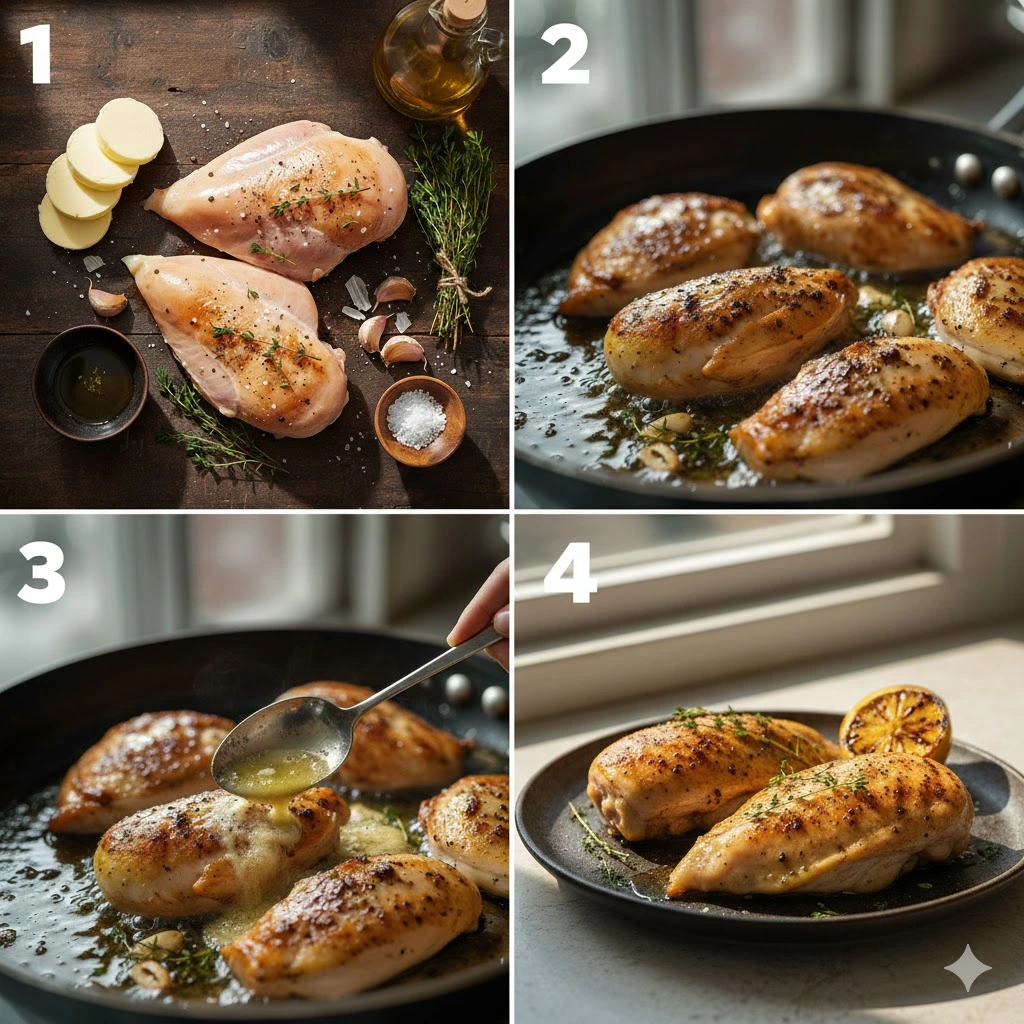
- Dry brine: 12 hours pre-cook, pat chicken dry, salt all surfaces including under skin. Refrigerate uncovered on a wire rack.
- Initial sear: Preheat skillet over medium-high 5 minutes. Add oil, lay chicken skin-down. Weigh with a foil-wrapped brick or heavy pot.
- Render fat: Cook undisturbed 8 minutes until skin pulls away cleanly. Flip, add butter, garlic, thyme.
- Baste & roast: Tilt pan, spoon butter over chicken 90 seconds. Transfer skillet to 375°F oven for 15 minutes.
- Rest: Remove at 155°F internal temp. Tent loosely 10 minutes (temp rises to 165°F).
The Flip Test: Skin releases from pan naturally when sufficiently crisped. If tearing occurs, extend cook time by 90 seconds before next attempt. Chronometer over instincts—many fail by flipping early.
Basting Physics: Butter’s water content (15%) creates steam that moistens meat. Baste upwards so butter cascades evenly off the spoon. Slanted pooling in one corner risks hot spots.
Oven Transfer Nuance: Residual heat completes cooking off direct flame. The porous cast iron mimics brick oven ambient heat for even penetration without drying edges.
Expert Tips & Troubleshooting
Crisp Fixes: If skin sticks, don’t force it—continue cooking until naturally unstuck. Patchy browning? Rotate pan 180 degrees mid-sear for even heating. For stubborn flaccid skin, finish under broiler 90 seconds, monitoring religiously.
Moisture Hacks: Brining is non-negotiable for lean breast meat. If skipped, inject 1 tbsp per breast of cooled thyme-garlic butter post-cook using a medical syringe. Prevent dryness by removing chicken at 155°F, not 165°F—residual heat completes cooking.
Flavor Boosters: After removing chicken, deglaze fond with vermouth or apple cider vinegar. Scrape vigorously, reduce by half, then mount with cold butter off-heat for a 30-second pan sauce. Never pour butter over rested chicken—it softens crust. Serve sauce underneath or on the side.
Flavor Variations
For young palates, replace thyme with maple-butter glaze (1:1 ratio) applied during last 3 oven minutes. Spicy versions thrive with three techniques: 1. Dry brine sprinkled with smoked paprika and cayenne. 2. Add 2 smashed bird’s eye chilies to basting butter. 3. Post-rest dusting with togarashi or urfa biber. Mediterranean twists: Swap thyme for za’atar, finish with lemon zest and olive oil. Umami bombs: Add shiitake powder to brine, baste with truffle butter.
Storage & Reheating
Refrigerate portions whole—never sliced—for up to 3 days in airtight containers. To reheat, place on wire rack over baking sheet in 300°F oven for 12 minutes. Never microwave; steam destroys texture. For freezing, vacuum-seal with cooled garlic-thyme butter. Thaw overnight, then roast from frozen at 325°F for 25 minutes.
FAQ Section
Q: Why bone-in?
Bones act as insulators, slowing heat penetration for juicier meat while protecting lean breast from drying.
Q: Can I skip skin?
Not advised. Skin protects during high-heat searing and provides necessary fat for basting. Remove post-cook if desired.
Q: Safe internal temperature?
165°F is standard, but pasteurization occurs instantly at 161°F. Pulling at 155°F yields supremely moist meat.
Q: Best sides?
Choose starch-heavy textures—saffron orzo, crispy polenta—to catch pan sauces. Acidic veg (roasted radicchio) cuts richness.
The Recipe Card
The ultimate weeknight luxury: bone-in chicken breasts seared in cast iron, basted with garlic-thyme butter, then oven-roasted to perfection. Crisp skin yields to impossibly moist meat infused with nutty, herbal notes. Serves 2 generously, scales effortlessly with pan size adjustments.
Nutrition Information
| Nutrient | Per Serving |
|---|---|
| Calories | 520 |
| Protein | 54g |
| Fat | 32g |
| Carbs | 1g |
| Sodium | 830mg |
Disclaimer: Nutritional data is estimated through software and intended for informational use only. Cooking techniques and ingredient brands may alter values.