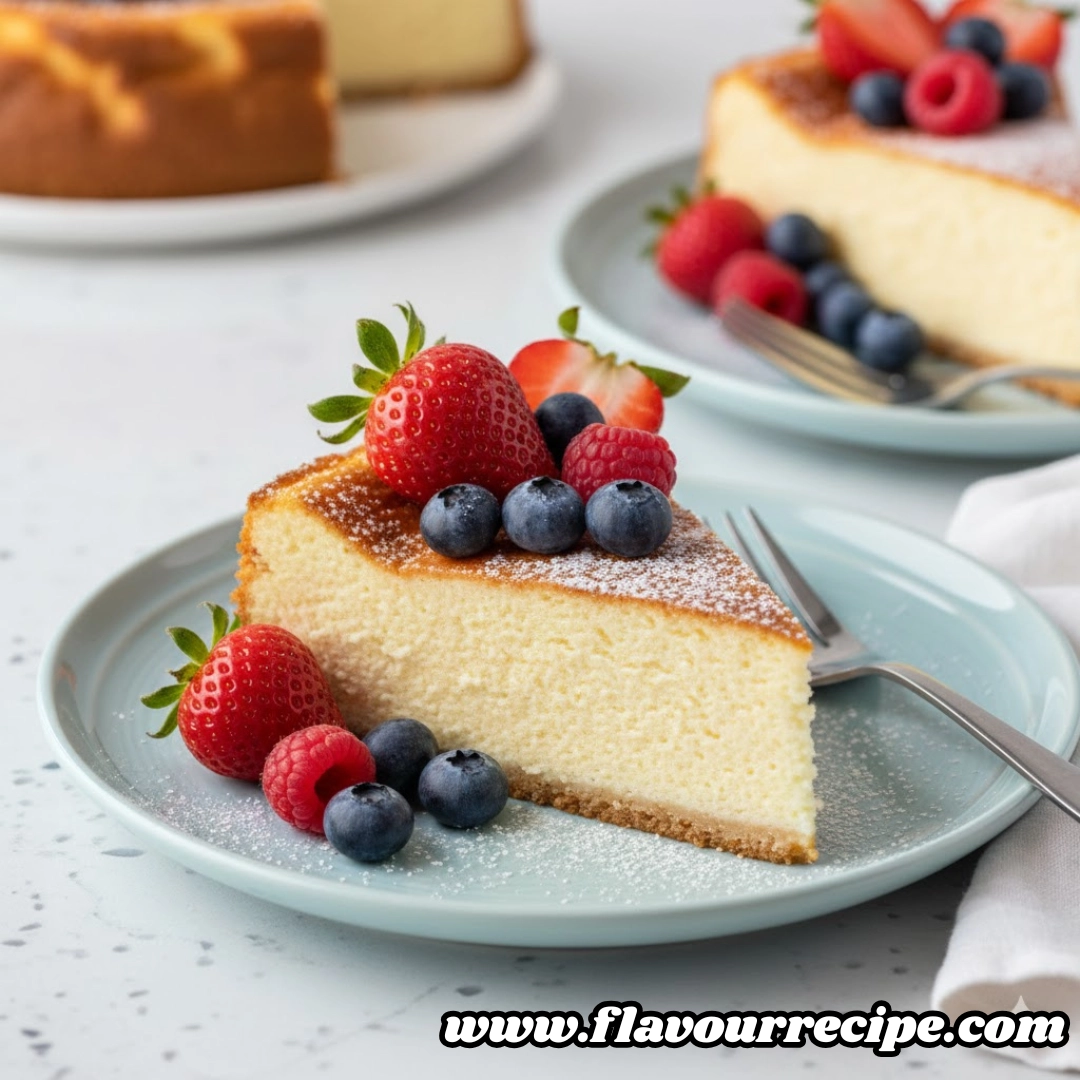
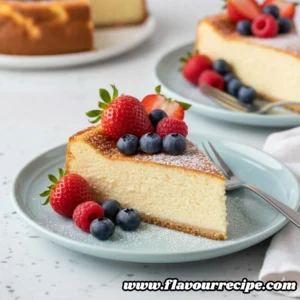
The hallmark of a truly traditional Italian dessert lies in the balance of textures, and this Italian Cream Cheese and Ricotta Cheesecake achieves a unique equilibrium that sets it apart from its denser New York counterparts. By blending the structured richness of cream cheese with the airy, slightly granular nature of ricotta, you create a cake that feels substantial yet surprisingly light on the palate. This recipe focuses on a crustless presentation, allowing the delicate crumb and citrus-kissed aroma to take center stage, making it an excellent choice for celebratory dinners or a sophisticated afternoon tea.
Whether you are hosting a formal gathering or simply looking for a reliable dessert that leans into the rustic elegance of Mediterranean baking, this Italian Cream Cheese and Ricotta Cheesecake delivers a refined sweetness. The inclusion of sour cream adds a subtle tang that cuts through the richness, while the combination of flour and cornstarch ensures a stable slice that holds its shape beautifully. It is a timeless preparation that honors the simplicity of high-quality dairy and the patience required for a perfect slow-cool finish.
Table of Contents
The Essential Components
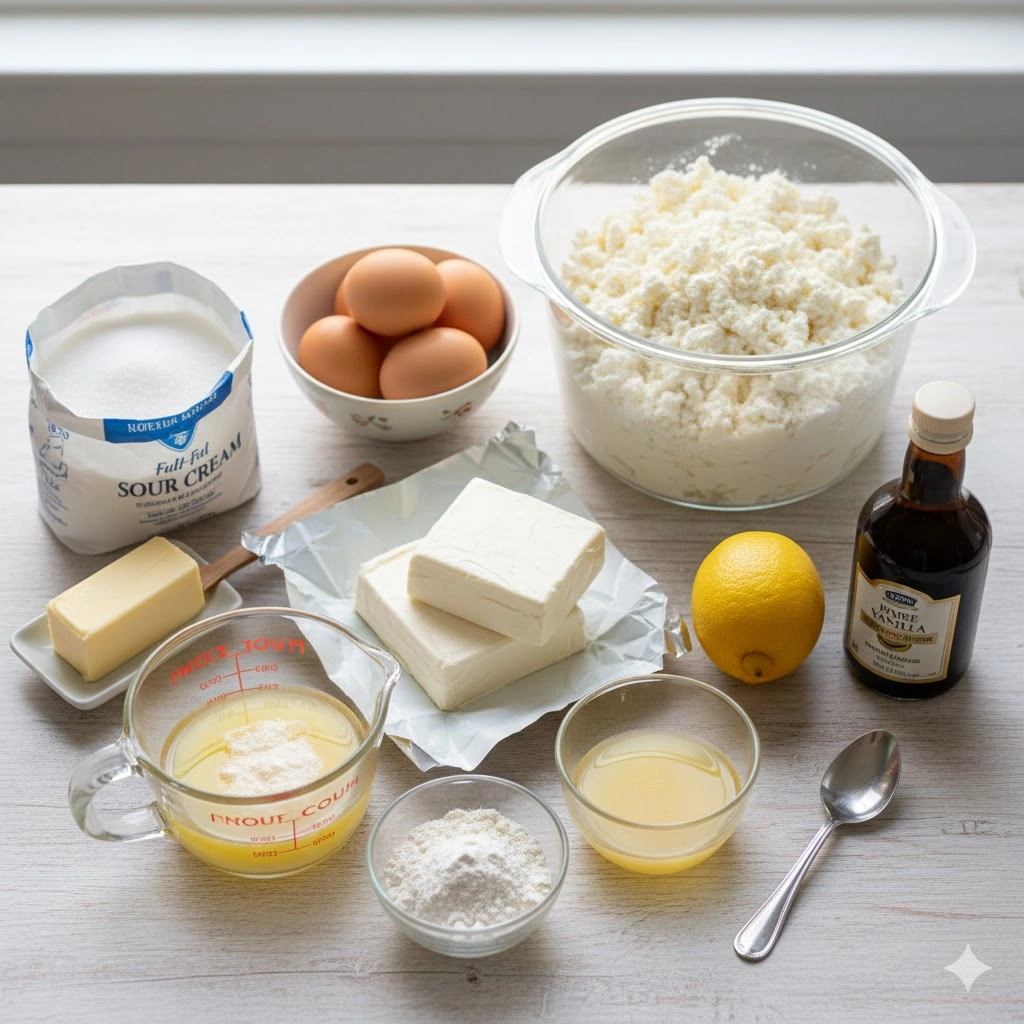
- Sixteen ounces cream cheese (two eight-ounce packages), thoroughly softened
- Sixteen ounces ricotta cheese (one full container)
- Four large eggs, room temperature
- One and one-half cups white granulated sugar
- One-half cup unsalted butter, melted and cooled to room temperature
- Three tablespoons all-purpose flour
- Three tablespoons cornstarch
- One tablespoon freshly squeezed lemon juice
- One teaspoon pure vanilla extract
- Sixteen ounces sour cream (one pint)
Preparation Summary
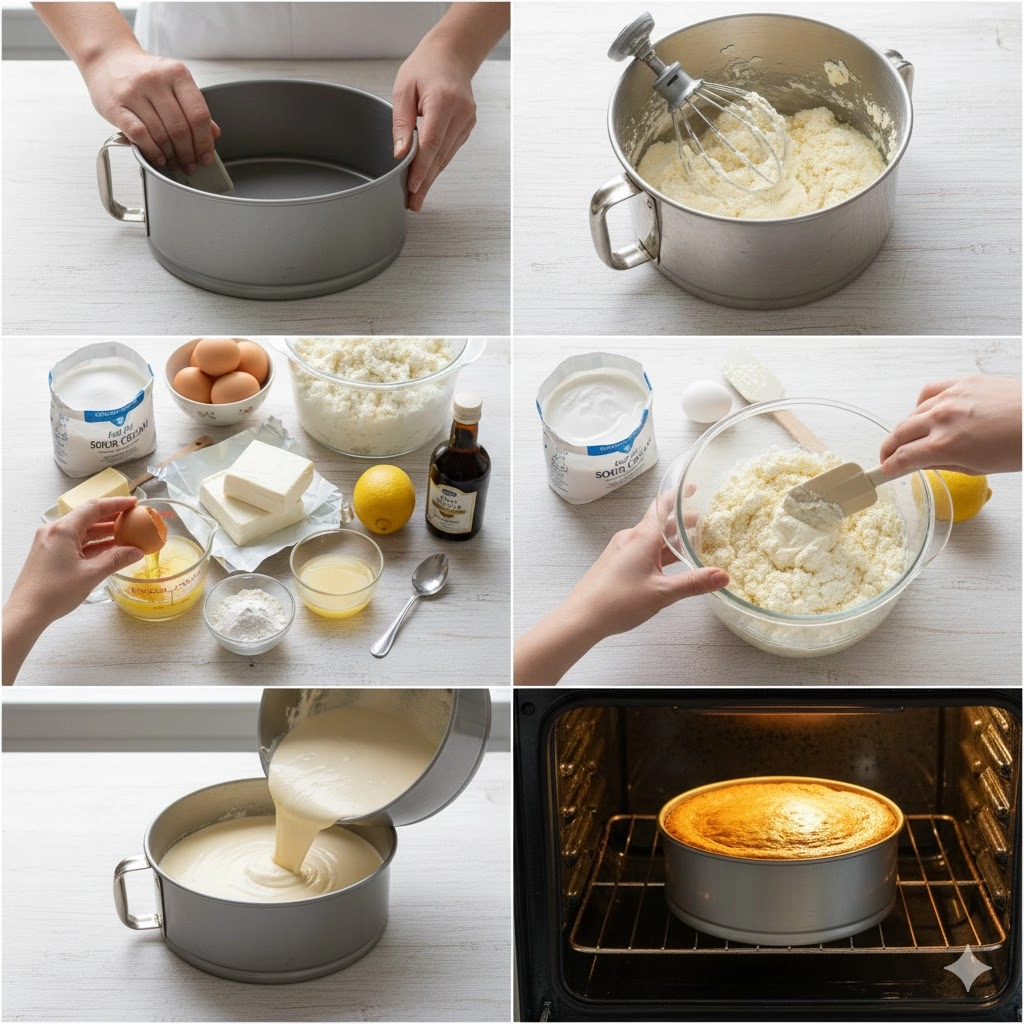
- Preheat your oven to three hundred fifty Fahrenheit and prepare a nine-inch springform pan with a light coating of grease.
- Combine the cream cheese and ricotta in a large basin until the mixture is uniform and free of large lumps.
- Incorporate the eggs, sugar, melted butter, flour, cornstarch, lemon juice, and vanilla, whisking until the batter is smooth.
- Gently fold in the sour cream until fully integrated into the base.
- Transfer the batter into the springform pan, smoothing the top with a spatula.
- Bake for sixty minutes in the center of the oven.
- Turn off the heat and let the cake remain in the closed oven for an additional sixty minutes.
- Remove from the oven and allow it to reach room temperature before refrigerating for at least four hours.
Detailed Step-by-Step Methodology
Setting the Foundation
Begin by ensuring your oven is accurately calibrated to three hundred fifty Fahrenheit. Preparation of the pan is vital for a crustless cake; use a light neutral oil or butter to grease the sides and bottom of a nine-inch springform pan. This ensures the delicate edges do not tear when the spring is released later.
Achieving the Perfect Emulsion
The first mixing stage is the most critical for texture. Use a stand mixer or a sturdy hand mixer to beat the softened cream cheese and ricotta. You are looking for a hybrid consistency—it should be creamy from the cream cheese but retain the signature tiny “beads” of the ricotta. If the cream cheese is too cold, you will end up with small white flecks that won’t bake out, so ensure it is truly soft to the touch.
Building Volume and Structure
Once the cheeses are married, add the eggs one at a time. This prevents the batter from breaking and ensures the fats and proteins emulsify properly. Stream in the melted butter slowly. The addition of both flour and cornstarch serves as a dual thickening agent; the flour provides a traditional crumb, while the cornstarch contributes to a silky, melt-in-the-mouth finish. The lemon juice acts as a brightener, lifting the heavy dairy notes.
The Sour Cream Finish
Fold in the sour cream by hand or on the lowest mixer setting. This ingredient introduces moisture and a velvet-like quality to the final bake. When you pour the batter into the pan, tap the pan firmly on the counter three or four times. This forces trapped air bubbles to the surface, preventing unsightly gaps or “tunnels” inside the baked cheesecake.
The Gentle Bake and Controlled Cool
Slide the pan into the middle rack. During the first hour of baking, the cake will rise slightly and the edges will begin to set. The center may still appear a bit jiggly—this is normal. The most important step for an Italian Cream Cheese and Ricotta Cheesecake is the “carry-over” period. By turning off the oven and leaving the door closed, you allow the residual heat to finish the cooking process gently. This prevents the sudden temperature drop that causes deep cracks on the surface.
Professional Tips for Success
- Drain the Ricotta: For a firmer, more “cake-like” texture, place your ricotta in a fine-mesh sieve lined with cheesecloth for thirty minutes before mixing. This removes excess whey which can sometimes lead to a soggy bottom in crustless recipes.
- Temperature Matters: Every single cold ingredient should be brought to room temperature. Cold eggs or cold sour cream can cause the melted butter to seize, resulting in a lumpy batter.
- The Pan Seal: If your springform pan is older and tends to leak, wrap the bottom in a single sheet of aluminum foil. This prevents any butter from dripping onto the oven floor.
- Check the Jiggle: When the hour of baking is up, the cake should have a slight “noodle-like” wobble in the center five inches. If it looks liquid, give it five more minutes before turning the oven off.
- The Knife Release: Before placing the cake in the refrigerator, run a thin, plastic knife around the edge of the pan. As the cake cools and shrinks, this prevents it from sticking to the sides and pulling itself apart.
- Slicing Precision: To get those clean, professional-looking slices, dip a long thin knife into hot water and wipe it dry between every single cut.
Variations and Adaptations
- Citrus Zest Infusion: For a more vibrant flavor profile, add the zest of two lemons or one large orange to the sugar before mixing. Rubbing the zest into the sugar releases the essential oils for a more intense aroma.
- Almond Twist: Replace the vanilla extract with one-half teaspoon of pure almond extract. This pairs exceptionally well with the ricotta and gives the cake a classic Italian pastry shop vibe.
- Berry Swirl: Before baking, you can dollop small amounts of high-quality raspberry or strawberry preserves onto the top and swirl them in with a toothpick for a marbled effect.
- Chocolate Chip Integration: Toss one-half cup of mini semi-sweet chocolate chips with a teaspoon of flour (to prevent sinking) and fold them into the batter just before pouring it into the pan.
Serving Suggestions
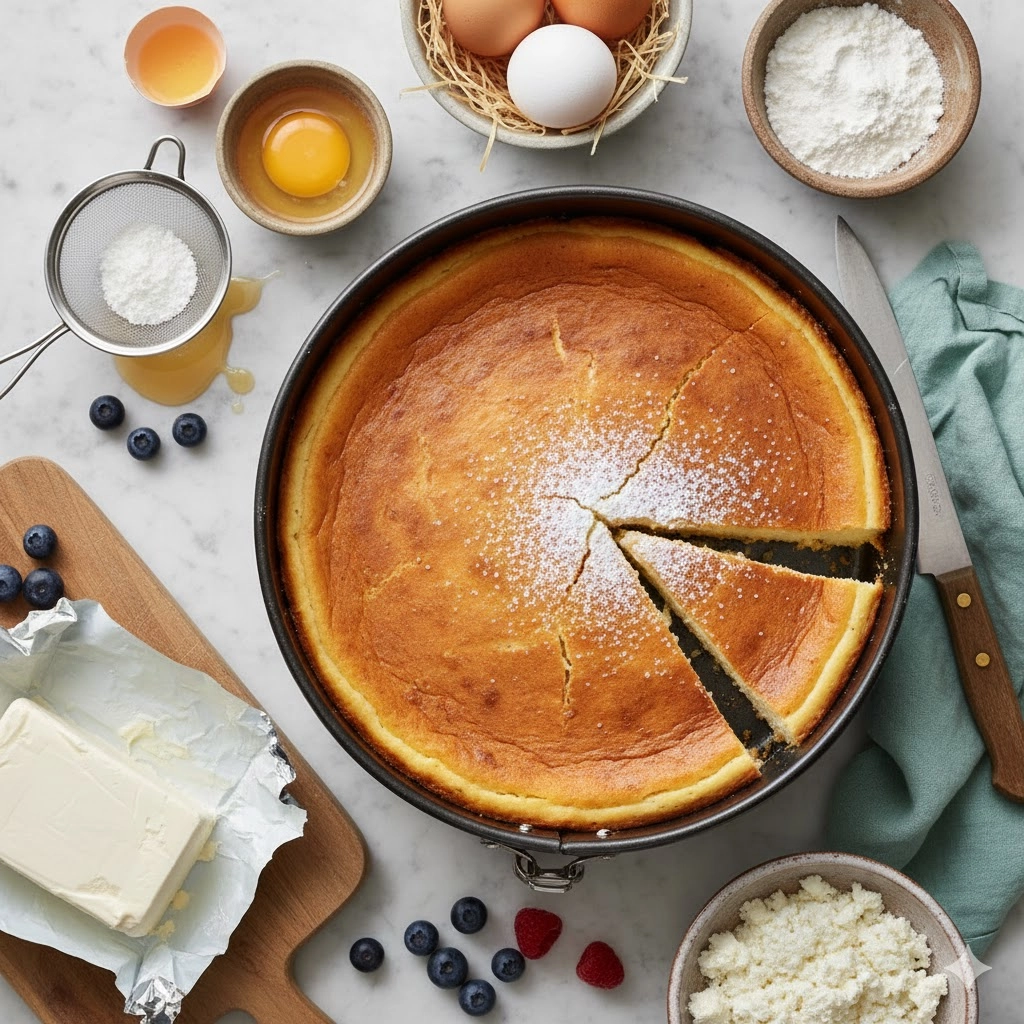
This cheesecake is traditionally served unadorned to appreciate the subtle dairy flavors, but it also acts as a perfect canvas for garnishes. A simple dusting of powdered sugar just before serving adds a touch of sweetness and hides any minor surface imperfections.
For a more plated look, serve a slice alongside a spoonful of balsamic-macerated strawberries or a tart cherry compote. The acidity of the fruit complements the creamy ricotta beautifully. In the autumn months, a light drizzle of warm honey and a sprinkle of toasted pine nuts can lean into the savory-sweet profile of the Italian tradition. Pair a slice with a glass of Vin Santo or a strong espresso for the ultimate digestive experience.
FAQs
Can I use low-fat dairy for this recipe?
It is highly recommended to use full-fat cream cheese, ricotta, and sour cream. The structural integrity and the signature mouthfeel of the cake rely on the fat content; low-fat versions contain more water and stabilizers, which can result in a weeping cake or a rubbery texture.
Why did my cheesecake crack even though I left it in the oven?
Cracking usually happens because of over-beating the eggs, which incorporates too much air. When the air expands in the heat and then collapses during cooling, the surface splits. Always mix on low to medium speed once the eggs are added.
How long will this cheesecake stay fresh?
When stored in an airtight container or tightly wrapped in the refrigerator, this cake will remain delicious for up to five days. In fact, many people find the flavor and texture actually improve after twenty-four hours of chilling.
Can I freeze this Italian cheesecake?
Yes, this cake freezes remarkably well. Wrap the completely chilled cake in plastic wrap, followed by a layer of heavy-duty aluminum foil. Thaw it slowly in the refrigerator for twenty-four hours before you plan to serve it.
Nutrition Information
| Nutrient | Amount per Serving |
| Calories | 704 kcal |
| Protein | 16 g |
| Carbs | 50 g |
| Fat | 50 g |
| Fiber | 0 g |
| Sugar | 38 g |
| Sodium | 384 mg |
Nutrition Disclaimer
Nutrition information is an estimate and may vary based on preparation and ingredients used.
Italian Cream Cheese and Ricotta Cheesecake
Ingredients
- 16 ounces cream cheese, softened (two 8-ounce packages)
- 16 ounces ricotta cheese
- 4 large eggs
- 1.5 cups white granulated sugar
- 0.5 cup butter, melted and cooled
- 3 tbsp all-purpose flour
- 3 tbsp cornstarch
- 1 tbsp lemon juice
- 1 tsp vanilla extract
- 16 ounces sour cream (one pint)
Instructions
- Preheat your oven to three hundred fifty Fahrenheit. Lightly grease a nine-inch springform pan.
- In a large mixing bowl, combine the softened cream cheese and ricotta cheese until the mixture is well blended and smooth.
- Add the eggs, sugar, cooled melted butter, flour, cornstarch, lemon juice, and vanilla extract. Mix until fully incorporated.
- Gently fold in the sour cream and pour the batter into the prepared springform pan.
- Bake in the preheated oven for sixty minutes. The edges should be set but the center will still have a slight jiggle.
- Turn off the oven. Leave the cheesecake inside with the door closed for one hour to cool gradually and prevent cracking.
- Remove from oven and let it cool completely to room temperature. Chill in the refrigerator for at least four hours before serving.
Notes
Equipment
- 9-inch springform pan
- large mixing bowl
- Electric hand mixer or stand mixer
- rubber spatula
- measuring cups and spoons