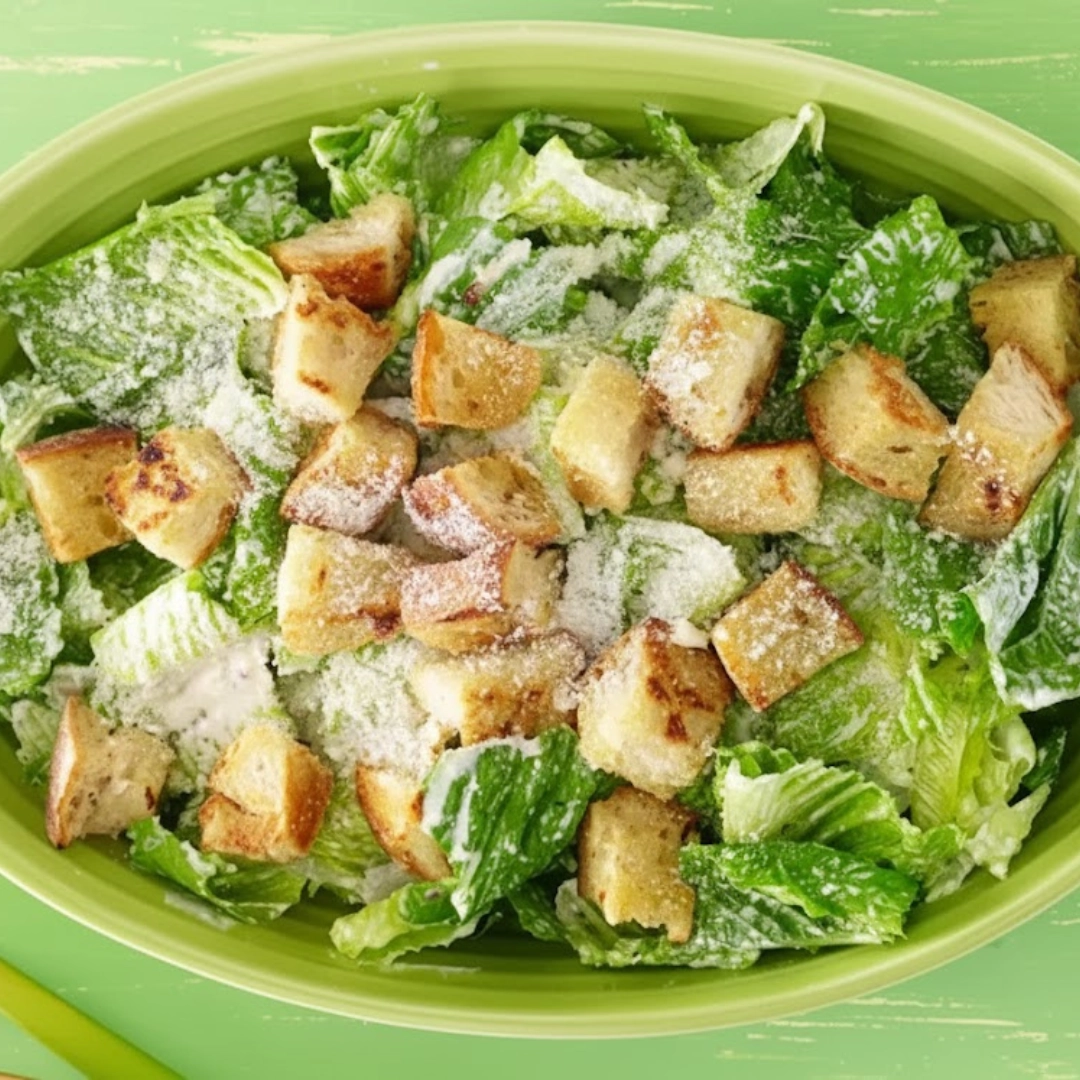
There are few culinary experiences as universally satisfying as a truly great Caesar salad, and its greatness hinges entirely on the quality of the dressing. Forget those cloyingly sweet, strangely thick bottled versions—the classic, creamy, and complex flavor of a homemade Caesar salad dressing is entirely in a league of its own. It provides that essential, balanced interplay of salty umami from anchovy, sharp citrus from lemon, a subtle bite from garlic, and richness from the egg and oil. This is the recipe you’ll reach for when you want to elevate a simple meal, adding depth and excitement to fresh, crisp romaine lettuce and crunchy croutons.
This method delivers a robust, emulsified dressing that clings beautifully to the leaves without weighing them down. It’s perfect for everything from a light dinner starter to the centerpiece of a substantial lunch. The whole process, from gathering your ingredients to the final whisk, takes only about fifteen minutes, making it an entirely worthwhile investment for your kitchen.
What You’ll Need to Blend
Getting the components right is the most important step for achieving that signature Caesar flavor. We lean into the traditional elements for maximum impact.
Building the Base
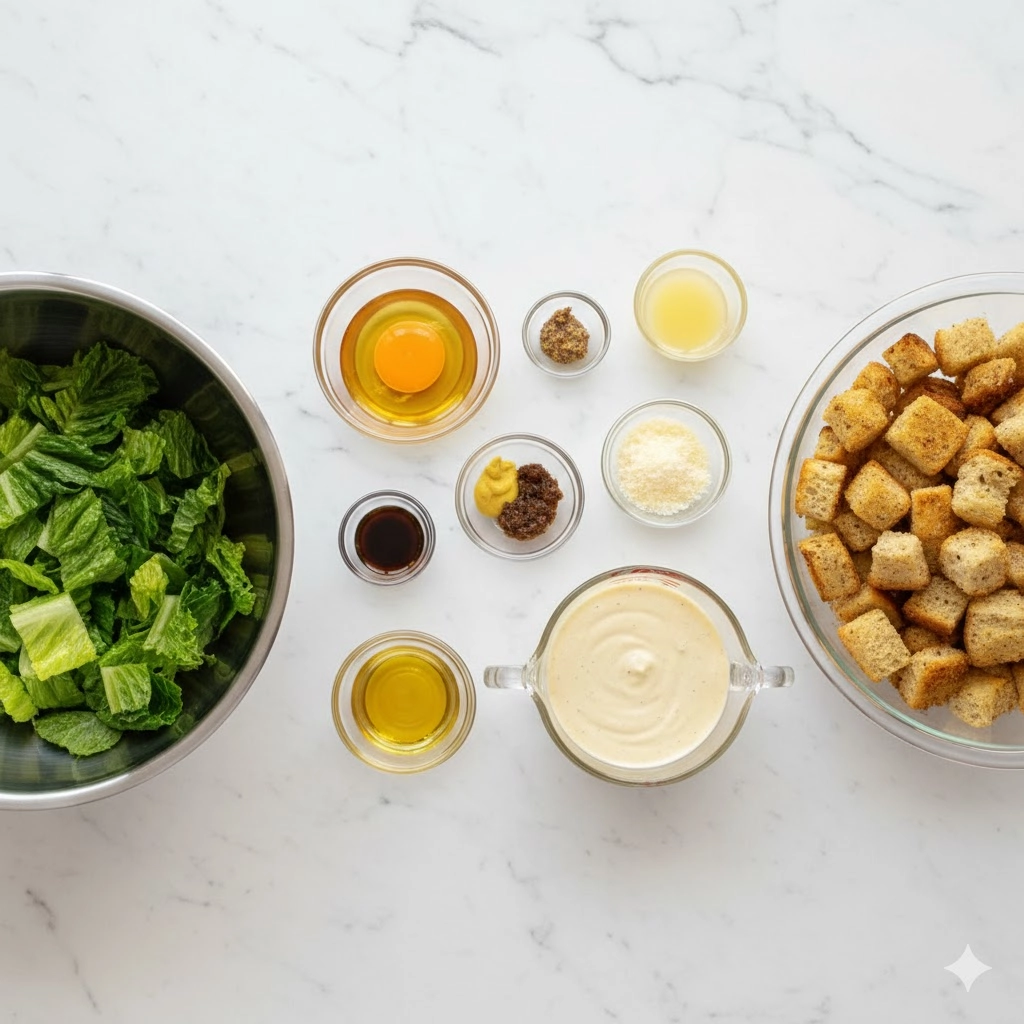
- 2 large egg yolks, room temperature
- 2 tablespoons fresh lemon juice
- 1 teaspoon Dijon mustard
- 1/2 teaspoon Worcestershire sauce
Aromatic and Umami Elements
- 2–3 cloves garlic, minced finely
- 4 anchovy fillets, oil-packed, mashed into a paste
- 1/2 teaspoon coarse sea salt
- 1/4 teaspoon freshly cracked black pepper
Emulsifying Agents
- 1 cup (237 milliliters) neutral-flavored oil, such as light olive oil, grapeseed, or canola
- 1/2 cup (50 grams) finely grated Parmigiano-Reggiano cheese, plus more for garnish
The Simple Sequence of Preparation
Follow these steps for a guaranteed, stable emulsion every single time. The key is patience with the oil.
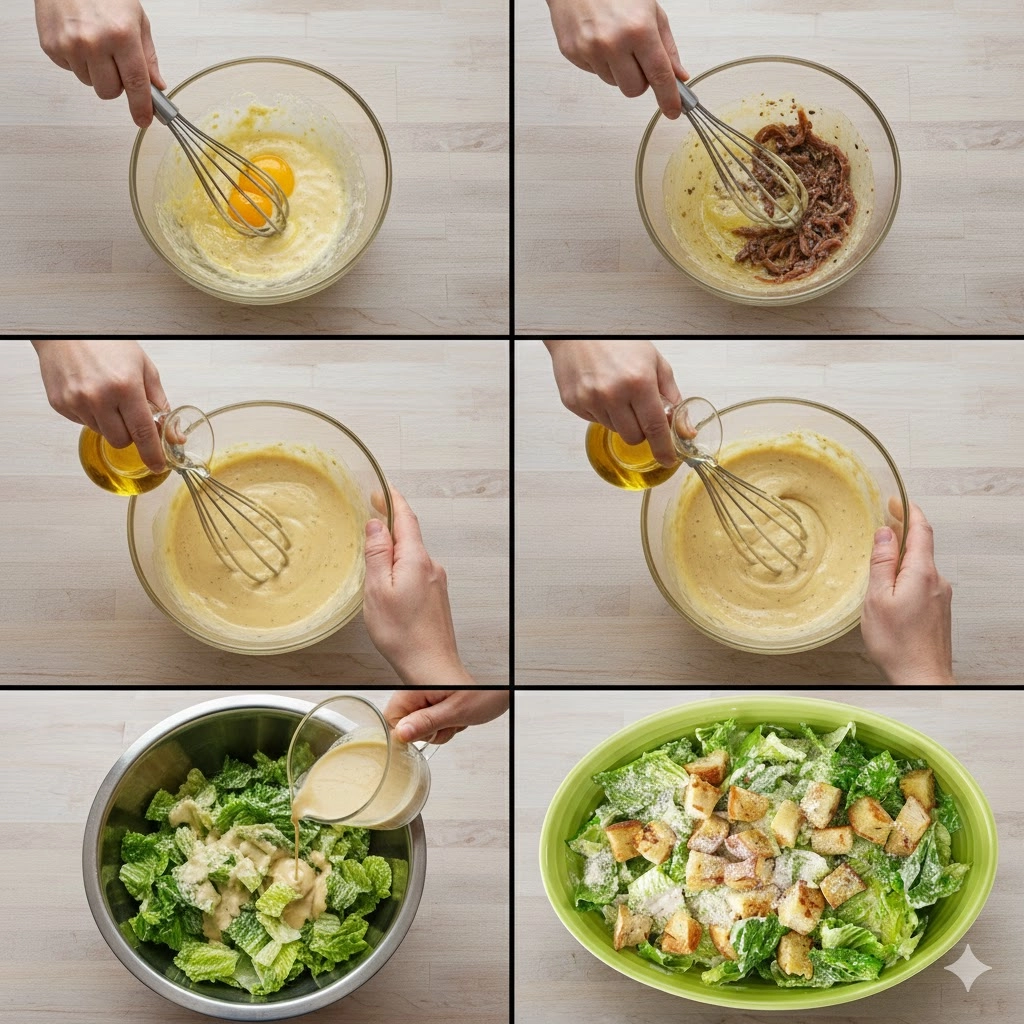
- Prep the Foundation: In a medium bowl, whisk together the egg yolks, lemon juice, Dijon mustard, and Worcestershire sauce until the mixture is pale yellow and slightly thickened.
- Infuse the Flavor: Incorporate the mashed anchovy paste, minced garlic, salt, and pepper into the yolk mixture. Whisk until all elements are fully dispersed.
- Start the Emulsion: Begin adding the oil, drop by drop, while whisking constantly and vigorously. Continue with this slow drip for the first four tablespoons.
- Increase the Flow: Once the dressing has visibly thickened, increase the oil addition to a very slow, steady stream, continuing to whisk without stopping until all the oil is incorporated.
- Finish the Dressing: Stir in the grated Parmigiano-Reggiano cheese. Taste and adjust the seasoning, adding more lemon juice, salt, or pepper as needed.
- Chill and Serve: Transfer the finished dressing to an airtight container and chill in the refrigerator for at least thirty minutes to allow the flavors to fully meld before tossing with salad greens.
Mastering the Emulsion: A Deep Dive into Texture and Flavor
Creating an emulsified dressing like this is a moment of kitchen chemistry, and understanding the sensory cues is what separates a good dressing from a truly great one.
The moment you combine the egg yolks with the lemon juice and mustard, you are activating the lecithin in the yolks, which acts as a bridge between the water and fat. When you begin whisking, the mixture should become noticeably paler and slightly foamy. This is your cue that the emulsifying agent is ready.
The addition of the anchovy and garlic is what builds the deep, savory character. Take the time to genuinely mash the anchovy fillets into a fine paste. If you use chunky pieces, the resulting dressing will have an uneven, gritty texture and a sporadic flavor profile. When you add the paste, the aroma should immediately become pungent and earthy, a sharp, savory foundation layered beneath the citrus and mustard.
The true moment of success lies in the oil addition. Starting drop by drop is critical. It allows the oil to be broken down into incredibly tiny droplets that are fully encased by the egg-mustard mixture. If you pour the oil too quickly at this stage, the droplets will be too large to integrate, and the dressing will “break,” resulting in a thin, oily liquid. As the dressing emulsifies properly, the whisking will feel heavier, and the dressing will transition from a liquid to a smooth, thick cream, resembling a mayonnaise. When this transition occurs—usually after about four tablespoons of oil—you can increase to a slow, continuous stream. The final texture should be thick and glossy, with a sheen that catches the light. If the dressing is too tight, you can loosen it with a teaspoon of cold water or a touch more lemon juice, whisking well after each small addition.
Expert Strategies for Your Best Caesar
Even a straightforward recipe benefits from a few seasoned tricks to push the results from great to exceptional.
- Mind the Temperature: Using room-temperature egg yolks is non-negotiable. Cold yolks are less receptive to binding with oil. Set them out on the counter for thirty minutes beforehand, or briefly run them under lukewarm water in their shell if you are short on time.
- The Mellow Garlic Factor: If raw garlic is too harsh for your palate, you can lightly simmer the minced garlic in a tablespoon of the oil for sixty seconds until just fragrant, then cool it completely before adding it to the yolk mixture. This mellows the bite while preserving the essential flavor.
- A Hand-Whisk Preference: While a food processor or blender can work, the control a hand-whisk offers is superior for a classic Caesar. You can better monitor the speed of the oil and the texture change, dramatically reducing the risk of a broken emulsion.
- Freshly Grated Cheese Only: Skip the pre-grated container cheese. The starches used to prevent clumping in pre-grated varieties can hinder the smoothness of the dressing. Finely grate a high-quality block of Parmigiano-Reggiano right before using it.
- Addressing a Broken Dressing: If your dressing separates, don’t panic. In a separate clean bowl, whisk one new egg yolk with a teaspoon of lemon juice. Very slowly begin whisking the broken dressing mixture into the new yolk, a teaspoon at a time, until the emulsion is re-established.
- Anchovy Quality Matters: Because anchovies are the primary flavor driver, invest in good quality, oil-packed anchovy fillets, not anchovy paste in a tube, which can sometimes be overly salty or fishy.
Creative Shifts and Substitutions
This classic recipe offers a wonderful foundation that can accommodate small tweaks based on your personal preferences or dietary needs.
- For the Egg-Free Kitchen: If you prefer to avoid raw egg, or have a dietary restriction, you can substitute the two egg yolks with two tablespoons of store-bought mayonnaise. The mayonnaise is already an emulsion and will achieve a similar thick texture, though you may need to reduce the amount of added oil slightly.
- A Vegetarian/Vegan Interpretation: To replace the umami punch from anchovy and Worcestershire (which contains anchovy), use a tablespoon of a deeply savory substitute like finely chopped capers, a teaspoon of white miso paste, or a teaspoon of tamari or soy sauce. For a vegan dressing, substitute the egg yolks with a quarter cup of cashews (soaked and blended smooth) or an equivalent amount of vegan mayonnaise.
- Aromatic Herb Infusion: While not traditional, incorporating finely chopped fresh herbs can add complexity. Try stirring in a tablespoon of finely chopped fresh tarragon, chives, or parsley right before serving. The herbal note pairs exceptionally well with the garlic and lemon.
- Spice and Heat: Introduce a very subtle warmth by adding a quarter teaspoon of smoked paprika or a dash of cayenne pepper. This should be a background note, not overpowering the essential garlic and anchovy.
How to Present Your Culinary Creation
A great dressing deserves a worthy stage. While this dressing is designed for the classic salad, it is surprisingly versatile.
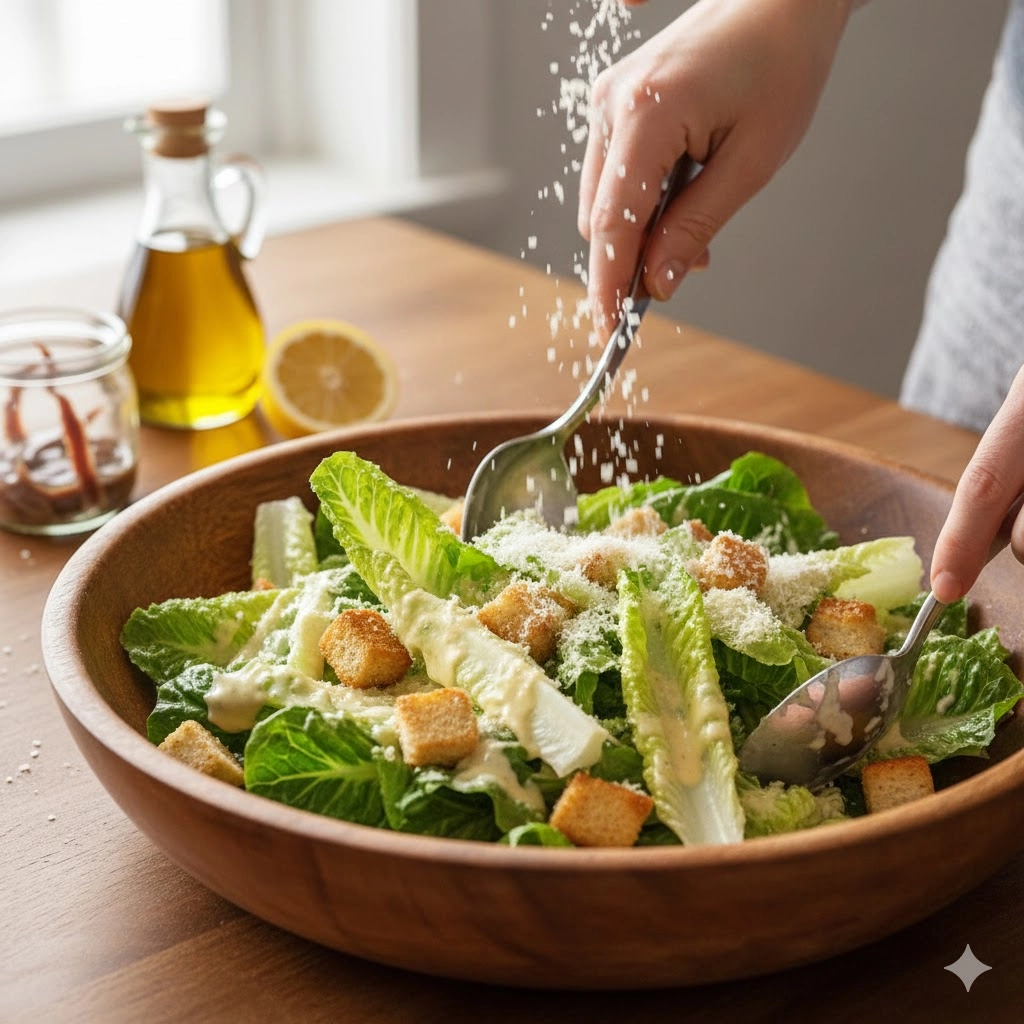
- The Quintessential Caesar: The obvious choice: use homemade Caesar salad dressing to coat two heads of crisp, washed and dried romaine lettuce, tossed with generous homemade croutons and shaved Parmigiano-Reggiano. Ensure the lettuce is completely dry before tossing, or the dressing will not cling well.
- Elevating Protein: Use this dressing as a marinade for chicken or shrimp before grilling or searing. The high acidity of the lemon and the enzymes in the egg yolks will tenderize the protein, while the savory flavors will build a beautiful crust when cooked.
- A Refined Dip: Thin the finished dressing slightly with a tablespoon of buttermilk or a teaspoon of white wine vinegar, and serve it as a dip for a crudité platter featuring sturdy vegetables like carrots, celery, and bell peppers. It’s also excellent as a dip for French fries or roasted potato wedges.
- Subbing for Mayonnaise: Apply a thin layer to a robust turkey or roast beef sandwich instead of plain mayonnaise. The depth of flavor makes an ordinary sandwich feel special and composed.
Addressing Common Questions
How long will homemade Caesar dressing stay fresh?
Because this recipe contains raw egg yolks, it is best consumed within three to four days. Always store it in an airtight container in the coldest part of your refrigerator. If you are concerned about the raw egg, look for pasteurized eggs, which are safe for immediate consumption.
Can I make this with a stick blender instead of a whisk?
Yes, a stick blender is an excellent tool, often creating an even faster and more stable emulsion. Place all ingredients except the oil and cheese into the blender cup. Submerge the blender head, turn it on, and then slowly drizzle the oil into the mixture from the top. The motion of the blades quickly combines the liquids, and you can stir in the cheese by hand after the oil is incorporated.
What’s the difference between Dijon mustard and yellow mustard in a dressing?
Dijon mustard is critical here. It adds tanginess and subtle heat, but most importantly, it contains strong emulsifying compounds that greatly assist the egg yolk in binding the oil. Standard yellow mustard does not contain the same effective stabilizers, and its flavor is too mild and vinegary for the complex profile needed in a Caesar dressing.
Why did my dressing come out too thin?
This almost always happens when the oil is added too quickly, particularly at the beginning. If the oil is not introduced slowly enough, the emulsifiers (the egg yolks) become saturated and cannot effectively break down and bind with the excess fat, leading to a thin, watery result. Always revert to the “drop by drop” technique at the start.
Can I use less oil to make a lower-fat version?
You can try reducing the oil by up to twenty percent, but this will change the final texture, making it less rich and thick. You can compensate for the lost volume and creaminess by increasing the amount of grated cheese or blending in a tablespoon of plain Greek yogurt or low-fat sour cream at the very end.
Nutrition Information
| Nutrient | Amount per Serving |
| Calories | 190 kcal |
| Protein | 4 g |
| Carbs | 1 g |
| Fat | 20 g |
| Fiber | 0 g |
| Sugar | 0 g |
| Sodium | 180 mg |
Disclaimer
Nutrition information is an estimate and may vary based on preparation and ingredients used.
The Essential, Tangy Homemade Caesar Salad Dressing
Ingredients
- 2 large egg yolks, room temperature
- 2 tbsp fresh lemon juice
- 1 tsp Dijon mustard
- 0.5 tsp Worcestershire sauce
- 2–3 garlic cloves, minced finely
- 4 anchovy fillets, mashed into paste
- 0.5 tsp coarse sea salt
- 0.25 tsp freshly cracked black pepper
- 1 cup neutral oil (light olive oil, grapeseed, or canola)
- 0.5 cup finely grated Parmigiano-Reggiano cheese
Instructions
- In a medium bowl, whisk together the egg yolks, lemon juice, Dijon mustard, and Worcestershire sauce until the mixture is pale yellow and slightly thickened.
- Add the mashed anchovy paste, minced garlic, salt, and pepper to the yolk mixture. Whisk until fully blended.
- Begin adding the oil drop by drop, whisking constantly. Continue this way for the first 4 tablespoons to ensure emulsification.
- Once the dressing thickens visibly, continue adding oil in a slow stream while whisking until fully emulsified.
- Stir in the grated Parmigiano-Reggiano cheese. Taste and adjust seasoning if needed.
- Transfer dressing to an airtight container and refrigerate for at least 30 minutes before serving.
Notes
Equipment
- medium mixing bowl
- whisk
- airtight storage container
- measuring spoons
- garlic press or knife
- grater (for Parmigiano-Reggiano)