
There is something undeniably magical about taking a humble, cruciferous vegetable and transforming it into a velvety masterpiece that rivals the richest cream-based bisques. This Healthy Roasted Cauliflower Soup is a revelation for anyone seeking a soul-warming meal that feels indulgent yet remains entirely wholesome. Unlike traditional recipes that rely on heavy creams or thickeners, this version harnesses the power of caramelization and high-speed blending to achieve a texture that is nothing short of luxurious. Whether you are hunkering down on a chilly autumn evening or looking for a sophisticated starter for a winter dinner party, this soup provides a deep, nutty complexity that proves healthy eating never has to compromise on flavor.
Table of Contents
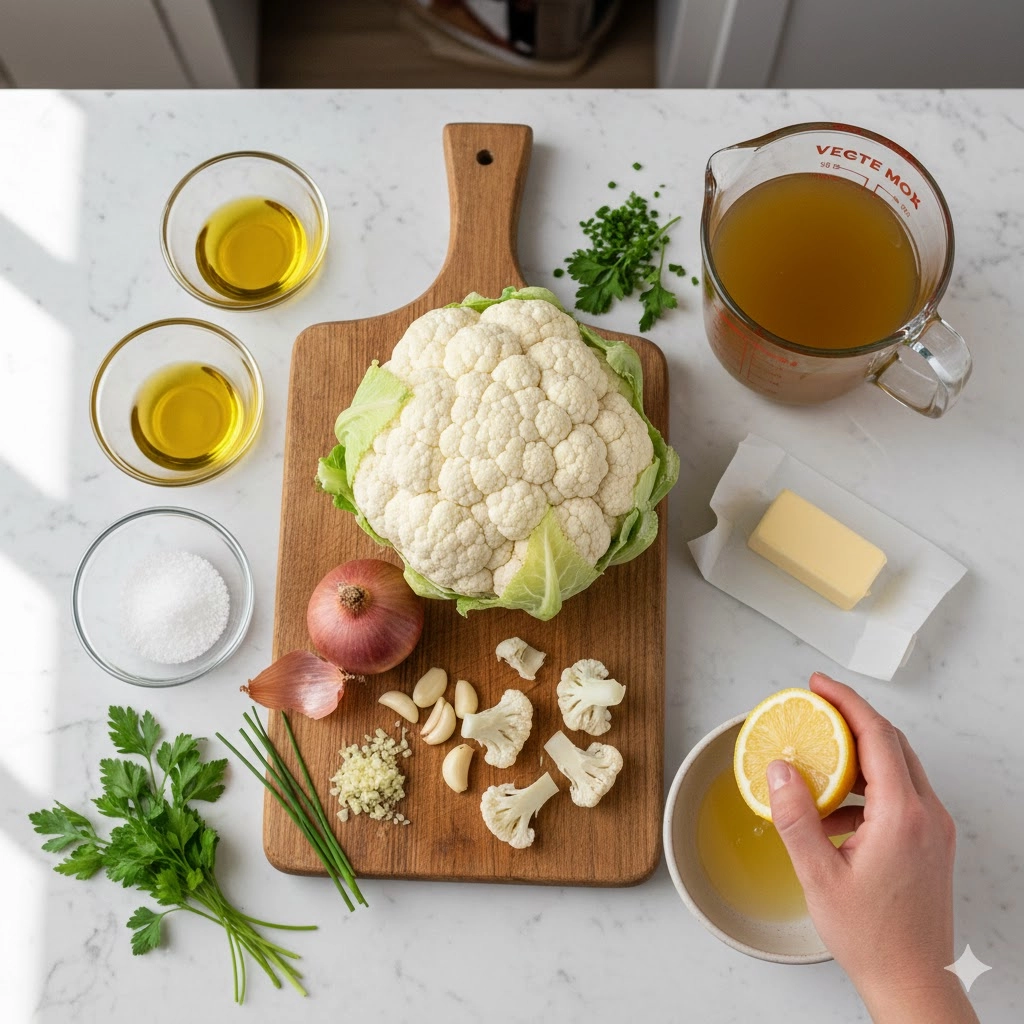
Essential Ingredients for a Richer Broth
- 1 large head cauliflower (approximately 2 pounds), meticulously cut into small, bite-size florets
- 3 tablespoons extra-virgin olive oil, divided for roasting and sautéing
- Fine sea salt, to enhance the natural sugars of the vegetables
- 1 medium red onion, finely chopped
- 2 cloves garlic, pressed or minced for maximum aromatic release
- 4 cups (32 ounces) high-quality vegetable broth
- 2 tablespoons unsalted butter, for a silky finish
- 1 tablespoon fresh lemon juice, plus additional to brighten the palate if desired
- Scant 1/4 teaspoon ground nutmeg, for a subtle earthy warmth
- 2 tablespoons finely chopped fresh flat-leaf parsley, chives, or green onions for a vibrant garnish
Step-by-Step Cooking Instructions
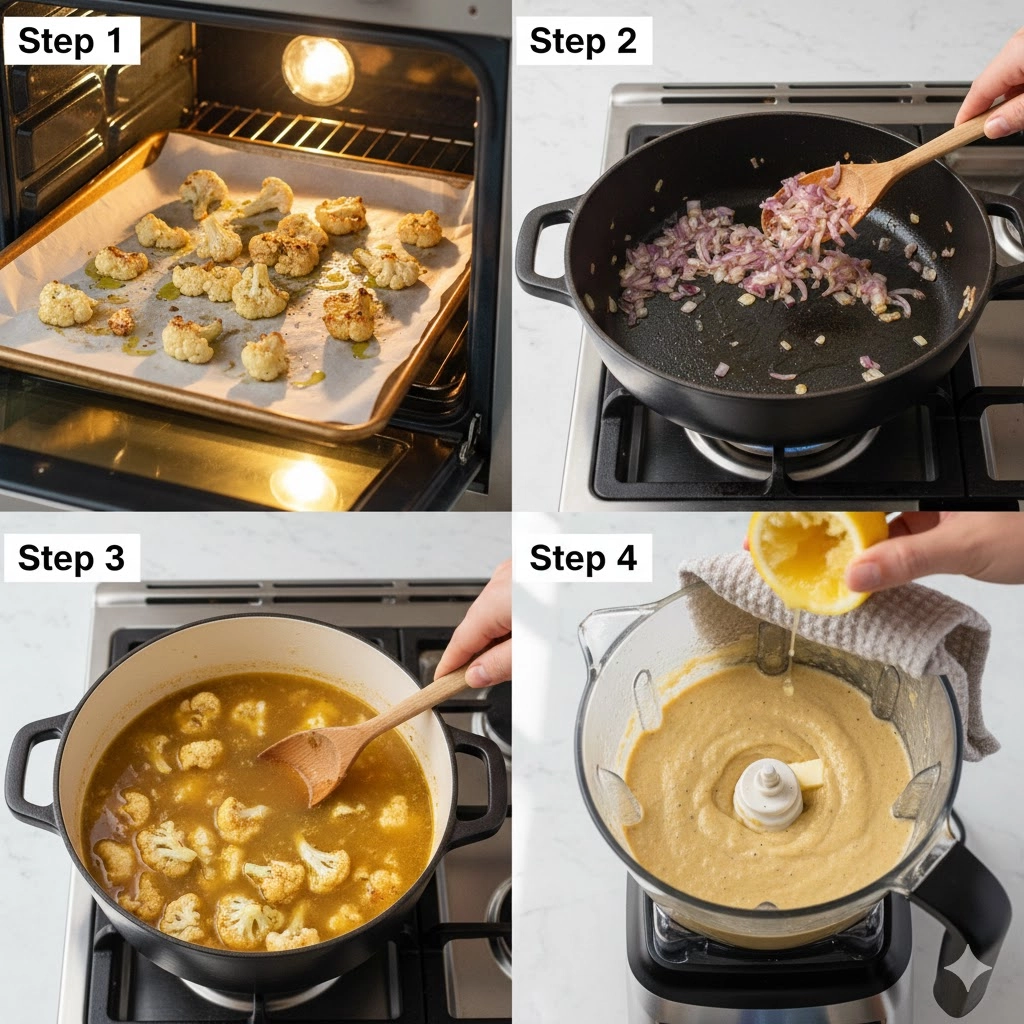
- Begin by preheating your oven to 425 degrees Fahrenheit. To make your post-cooking cleanup effortless, you may choose to line a large, rimmed baking sheet with a sheet of parchment paper.
- On the prepared baking sheet, combine the cauliflower florets with 2 tablespoons of the extra-virgin olive oil. Toss them thoroughly until every crevice is lightly coated. Arrange the florets in a single layer, ensuring they aren’t overcrowded, and sprinkle lightly with fine sea salt.
- Place the tray in the oven and bake for 25 to 35 minutes. You are looking for the cauliflower to become tender while developing deep, caramelized brown edges. Be sure to toss the florets halfway through the roasting time to ensure even browning.
- As the cauliflower nears completion, prepare your base. In a sturdy Dutch oven or a large soup pot, heat the remaining 1 tablespoon of olive oil over medium heat. Once the oil is shimmering, add the chopped red onion and 1/4 teaspoon of salt. Sauté the onion, stirring occasionally, until it becomes soft and translucent, which typically takes 5 to 7 minutes.
- Introduce the garlic to the pot, stirring constantly for about 30 seconds until it becomes fragrant but not browned. Immediately pour in the vegetable broth.
- Select 4 of the most beautiful roasted cauliflower florets and set them aside to use as a garnish later. Transfer all remaining cauliflower into the pot.
- Increase the heat to medium-high to bring the liquid to a simmer. Once bubbling, reduce the heat to maintain a gentle, steady simmer. Let the mixture cook for 20 minutes, allowing the roasted notes of the cauliflower to fully infuse into the broth.
- Remove the pot from the heat and let the soup cool for a few minutes to avoid steam pressure buildup. Carefully transfer the mixture into a stand blender, working in batches if necessary to stay below the maximum fill line.
- Add the unsalted butter to the blender and process until the consistency is completely smooth and aerated.
- Pour in the lemon juice and ground nutmeg, then blend one final time. Taste your creation; this is the moment to add more salt (typically 1/4 to 3/4 teaspoon) or a splash more lemon juice to achieve the perfect balance.
- Serve hot, topped with the reserved florets and a generous dusting of fresh herbs.
Masterful Techniques for the Perfect Roast
The secret to this soup’s depth lies entirely in the roasting process. When you subject cauliflower to the dry, intense heat of a 425 degrees Fahrenheit oven, a chemical reaction known as the Maillard reaction occurs. This transforms the vegetable’s sulfurous profile into something sweet, nutty, and savory. To maximize this, ensure your cauliflower is completely dry before tossing it with oil. Any residual water will create steam, leading to mushy cauliflower rather than the golden-brown crispness that defines this dish.
Furthermore, the choice of a stand blender over an immersion blender is a deliberate one. While immersion blenders are convenient, they often leave behind tiny fibers that prevent the soup from reaching that “restaurant-quality” silkiness. A high-speed stand blender incorporates air and completely emulsifies the fats (the butter and olive oil) into the vegetable fibers, resulting in a texture that feels like it contains heavy cream.
Deep-Dive FAQ
How can I make this recipe vegan while maintaining that signature creaminess?
To transform this into a plant-based delight, simply swap the butter for soaked cashews. Soak 1/4 cup of raw cashews in water for about 4 hours, then rinse and drain them. If you are using a high-powered blender like a Vitamix, you can even skip the soaking. Add the cashews at the same stage you would add the butter; they will emulsify into a rich, fatty cream that perfectly mimics the mouthfeel of dairy.
Can I use frozen cauliflower if I am short on time?
While fresh cauliflower is preferred for the best texture and caramelization, you can use frozen florets in a pinch. However, you must be careful during the roasting phase. Frozen cauliflower contains more moisture, so it is best to roast it directly from frozen at a slightly higher temperature or for a longer duration to ensure the water evaporates and the browning actually occurs. Note that the flavor may be slightly less intense than using a fresh, seasonal head of cauliflower.
Why is lemon juice and nutmeg included in a vegetable soup?
These two ingredients act as “flavor enhancers” rather than primary flavors. The acidity of the lemon juice cuts through the richness of the butter and the earthiness of the roasted vegetable, making the entire dish taste more vibrant. The nutmeg provides a floral, woody undertone that complements the nutty notes of the roasted cauliflower. Together, they create a balanced profile that keeps the soup from tasting “flat” or one-dimensional.
Enhancing Your Kitchen Experience: Step-by-Step Details
To truly elevate this soup, let’s look closer at the “flavor building” stage. When sautéing your red onion, do not rush the process. Red onions have a higher sugar content than white onions, and allowing them to sweat slowly over medium heat coaxes out a sweetness that acts as a foundation for the savory broth. If the onions begin to brown too quickly, add a teaspoon of water to the pot to deglaze the surface and keep them tender.
When you add the garlic, timing is everything. Garlic can turn bitter in seconds if scorched. By adding it only after the onions are soft and right before the broth, you ensure the oils in the garlic are released without the risk of burning. This 30-second window is crucial for that aromatic, sweet garlic finish that lingers in the background of every spoonful.
The simmering phase (Step 7) is where the “marriage” happens. While the cauliflower is already cooked from the oven, simmering it in the vegetable broth allows the parched, roasted florets to rehydrate with the seasoned liquid. This ensures that when you blend the soup, the flavor is uniform throughout the liquid rather than having “bits” of flavor floating in a plain broth. It is this 20-minute investment that separates a good soup from a truly great one.
Accompaniments and Serving Suggestions
This soup is incredibly versatile and serves as a fantastic canvas for various pairings. To keep things light and healthy, serve it alongside a crisp arugula salad dressed with a simple lemon vinaigrette and shaved Parmesan. The peppery bite of the arugula provides a beautiful contrast to the smooth, mild soup.
If you are looking for something more substantial, a crusty piece of sourdough bread or a grilled cheese sandwich made with sharp white cheddar and green apples is a classic pairing. For a gluten-free option, consider topping the soup with toasted pumpkin seeds (pepitas) or even crispy chickpeas for an added layer of crunch. The contrast between the velvety soup and a crunchy topping is always a crowd-pleaser.
Modifications and Ingredient Substitutions
If you find yourself without a red onion, a large shallot or a yellow onion will work perfectly fine, though the flavor will be slightly more pungent. For those who want to experiment with the spice profile, adding a teaspoon of curry powder to the onions while they sauté can transform this into a vibrant, golden Curried Cauliflower Soup.
If you prefer a thinner consistency, you can simply add an extra half-cup of vegetable broth during the blending phase. Conversely, if you want an even thicker, heartier meal, you can roast a small Yukon Gold potato along with the cauliflower. The starch from the potato will act as a natural thickener when blended, providing an even more substantial body to the soup.
Achieving a Silky Finish: A Final Note
The final texture of your soup depends heavily on the blending process. When transferring hot liquids to a blender, always remember to remove the center cap of the lid and cover it with a folded kitchen towel. This allows steam to escape safely, preventing the lid from popping off due to pressure. Start on the lowest speed and gradually increase to high, letting it run for at least 60 seconds. You will see the color lighten as air is incorporated, turning the soup into a frothy, elegant bisque.
Nutritional Information
| Nutrient | Amount Per Serving |
| Calories | 195 |
| Total Fat | 14 grams |
| Saturated Fat | 5 grams |
| Cholesterol | 15 milligrams |
| Sodium | 780 milligrams |
| Total Carbohydrates | 16 grams |
| Dietary Fiber | 5 grams |
| Sugars | 7 grams |
| Protein | 4 grams |
| Vitamin C | 110 percent |
Health Disclaimer
The nutritional information provided is an estimate based on standard ingredients. Actual values may vary depending on the specific brands of vegetable broth and butter used. Always consult with a healthcare professional or registered dietitian for personalized dietary advice, especially if you have underlying health conditions.
A Final Thought on Seasonal Comfort
Making this soup is more than just a culinary task; it is an exercise in mindfulness. From the rhythmic chopping of the florets to the comforting aroma of roasting garlic and onions that fills your home, it is a recipe designed to soothe. This Healthy Roasted Cauliflower Soup reminds us that with a little patience and the right techniques, simple vegetables can be turned into something truly extraordinary. It is a dish that honors the ingredients, providing a warm embrace in a bowl that you can feel good about serving to your family and friends time and time again.

Healthy Roasted Cauliflower Soup
Ingredients
- 1 large head cauliflower (about 2 pounds), cut into bite-size florets
- 3 tbsp extra-virgin olive oil, divided
- 1 tsp fine sea salt, plus more to taste
- 1 medium red onion, chopped
- 2 cloves garlic, pressed or minced
- 4 cups vegetable broth (32 ounces)
- 2 tbsp unsalted butter
- 1 tbsp fresh lemon juice, or more if needed
- 0.25 tsp ground nutmeg
- 2 tbsp fresh flat-leaf parsley, chives and/or green onions, chopped
Instructions
- Preheat the oven to 425 degrees Fahrenheit. Toss cauliflower with 2 tablespoons olive oil and salt on a large rimmed baking sheet.
- Bake for 25 to 35 minutes, tossing halfway through, until the cauliflower is tender and caramelized on the edges.
- In a Dutch oven, sauté onion with 1/4 teaspoon salt in the remaining 1 tablespoon olive oil over medium heat for 5-7 minutes.
- Add garlic and cook for 30 seconds until fragrant. Pour in the vegetable broth.
- Reserve 4 florets for garnish; add the rest to the pot. Simmer for 20 minutes to meld flavors.
- Transfer the soup to a blender. Add butter and blend until completely smooth and creamy.
- Season with lemon juice and nutmeg. Blend again and add more salt to taste if needed.
- Ladle into bowls and top with a reserved roasted floret and fresh chopped herbs.
Notes
Equipment
- Large rimmed baking sheet
- Dutch oven or large soup pot
- High-speed stand blender Preferred over immersion blender for silkier texture
- Garlic press