The beauty of a home-cooked meal often lies in the balance between effort and reward. When life gets busy, we frequently reach for recipes that promise speed without sacrificing the depth of flavor we crave. These Harissa-Honey Beef and Broccoli Noodles are the ultimate answer to that weeknight dilemma. By combining the earthy, smoky heat of North African harissa with the floral sweetness of honey and the bright acidity of citrus, this dish transforms humble ground beef into a gourmet-style feast. It is a one-pan wonder that hits every note on the palate: savory, sweet, tangy, and just the right amount of spicy. Whether you are a seasoned home cook or looking for a foolproof way to get dinner on the table in twenty minutes, this recipe delivers a restaurant-quality experience right in your own kitchen.
Table of Contents
Ingredients
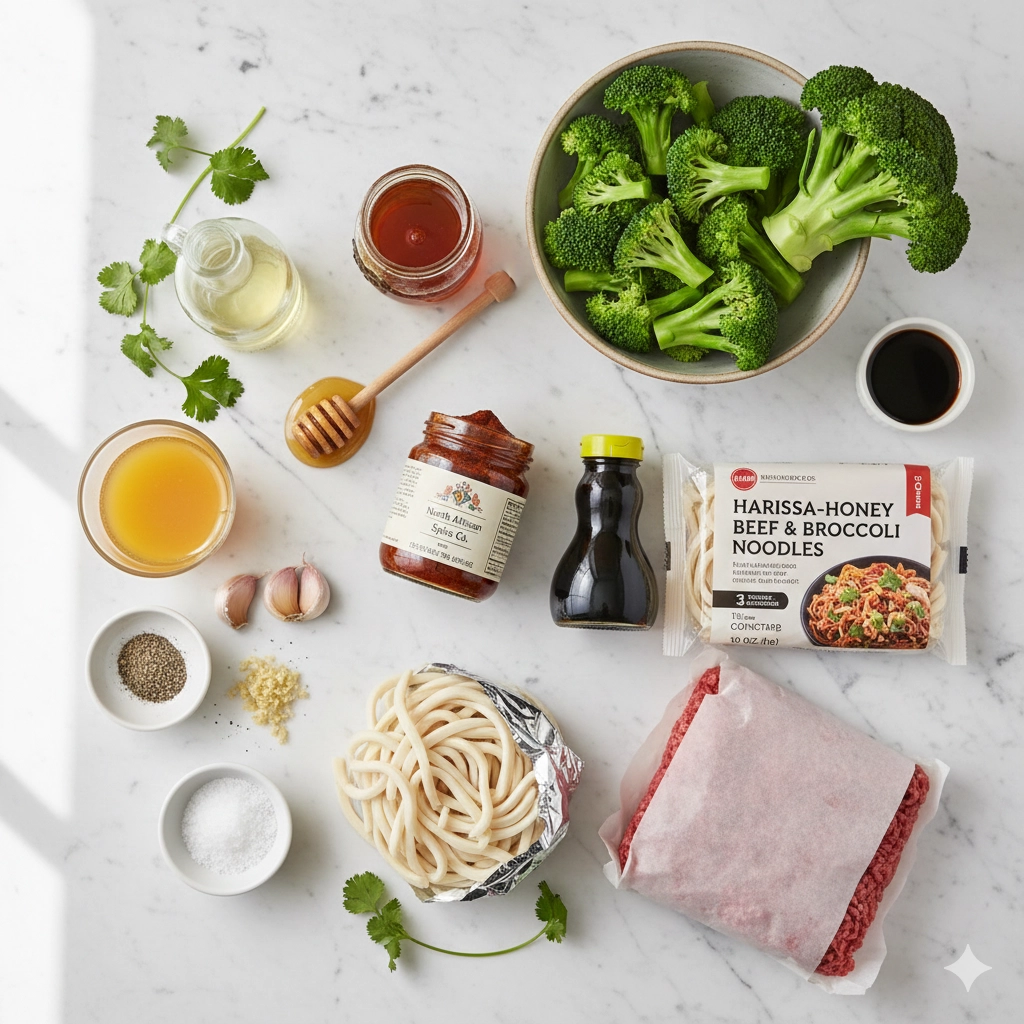
To ensure your Harissa-Honey Beef and Broccoli Noodles turn out perfectly, gather the following high-quality ingredients.
- About 10 ounces dried udon, ramen, soba, lo mein noodles, or spaghetti
- 1/3 cup orange juice
- 2 to 3 tablespoons harissa paste
- 3 tablespoons honey
- 3 tablespoons rice vinegar
- 3 tablespoons soy sauce or tamari
- 1 tablespoon cornstarch
- 3 cloves garlic, minced
- 1 teaspoon kosher salt, divided
- 1 tablespoon olive oil
- 1 pound lean ground beef
- 1/4 teaspoon freshly ground black pepper
- 10 to 12 ounces broccoli crowns (1 large), cut into 1-inch florets
- 1/2 cup water
- Chopped fresh cilantro leaves, for garnish (optional)
Instructions
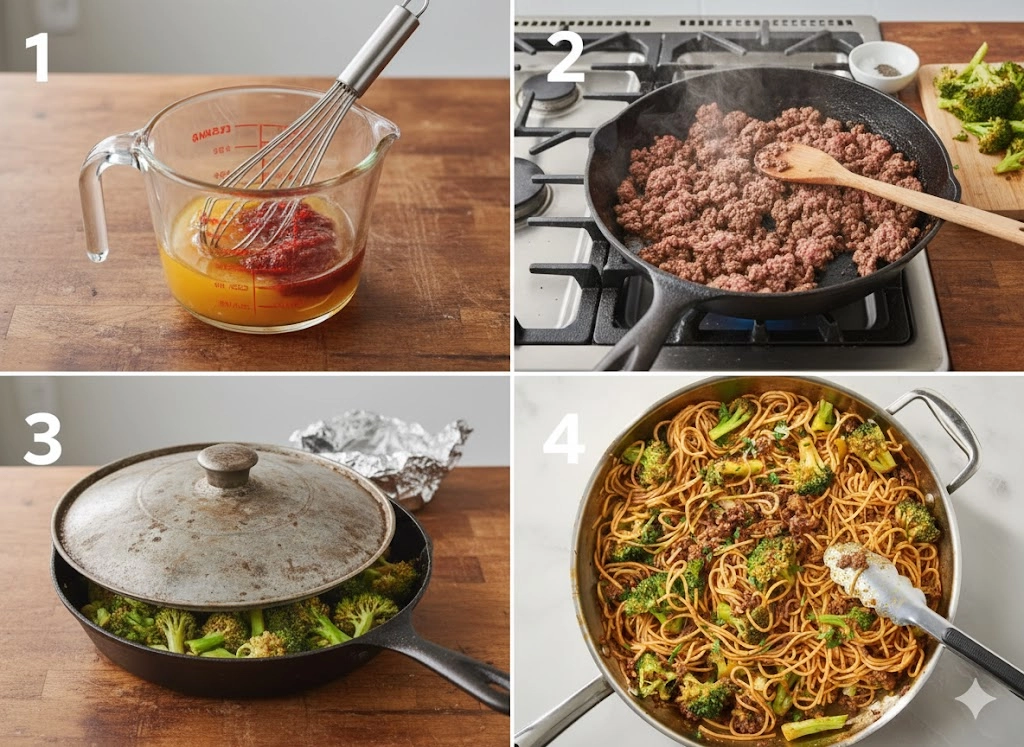
- Prepare the Noodles: Bring a large pot of heavily salted water to a rolling boil. Add about 10 ounces of your dried noodles of choice. Cook the noodles for exactly two minutes less than the package instructions suggest; they will finish softening later in the sauce. Drain the noodles and rinse them thoroughly under cool running water to stop the cooking process and remove excess starch.
- Whisk the Signature Sauce: In a medium bowl or a large liquid measuring cup, combine 1/3 cup orange juice, 2 to 3 tablespoons harissa paste (depending on your preferred heat level), 3 tablespoons honey, 3 tablespoons rice vinegar, 3 tablespoons soy sauce, 1 tablespoon cornstarch, 3 minced garlic cloves, and 1/2 teaspoon of the kosher salt. Whisk vigorously until the cornstarch is fully dissolved and the honey is incorporated.
- Brown the Beef: Heat 1 tablespoon of olive oil in a large skillet over medium-high heat. Once the oil is shimmering, add 1 pound of lean ground beef. Season the meat with the remaining 1/2 teaspoon of kosher salt and 1/4 teaspoon of black pepper. Use a wooden spoon to break the meat into medium-sized pieces. Cook until the beef is browned and cooked through, which should take approximately 5 to 7 minutes.
- Steam the Vegetables: Add the 10 to 12 ounces of broccoli florets and 1/2 cup of water directly into the skillet with the beef. Cover the pan with a tight-fitting lid. Cook for about 3 minutes, stirring once halfway through, until the broccoli turns a vibrant green and reaches a “crisp-tender” texture.
- Emulsify and Finish: Give your sauce mixture one final whisk to ensure the cornstarch hasn’t settled at the bottom. Pour the sauce into the skillet and add the drained noodles. Toss everything together continuously over the heat. Cook for 2 to 3 minutes until the sauce thickens into a glossy glaze that coats every strand of noodle and piece of beef. Garnish with fresh cilantro if desired and serve immediately.
Achieving the Perfect Skillet Texture
The secret to a truly spectacular noodle dish lies in the interaction between the starch and the heat. When you cook the noodles for two minutes less than the package directions, you are leaving room for “carry-over cooking.” Once those noodles hit the hot skillet filled with the harissa-honey sauce, they act like a sponge, soaking up the liquids rather than just being coated by them. This ensures that every bite is infused with the garlic and citrus notes of the sauce.
Furthermore, the use of cornstarch is a critical technical step. Cornstarch requires a specific temperature to gelatinize and thicken. By whisking it into the cold liquids first, you prevent clumping. Once it hits the pan with the beef and broccoli, the heat triggers a transformation, turning a thin liquid into a rich, mahogany-colored glaze that clings to the ingredients. The result is a silky mouthfeel that mimics the best takeout noodles but with a much cleaner flavor profile.
Navigating Heat and Flavor Profiles
Harissa is a complex condiment that varies significantly from one producer to the next. Some versions are heavy on the smoked chili flavor, while others are brighter with notes of rose petals or lemon. When making these Harissa-Honey Beef and Broccoli Noodles, the choice of paste will dictate the soul of the dish. If you are sensitive to spice, look for a mild variety or stick to the lower measurement of two tablespoons. The honey in this recipe acts as a natural heat-buffer; it rounds out the sharp edges of the chili, creating a “hot honey” effect that is incredibly addictive.
The addition of orange juice provides a hidden layer of complexity. While many stir-fry style noodles rely solely on vinegar for acidity, the natural sugars and citric acid in orange juice offer a fruity undertone that complements the earthiness of the cumin and caraway often found in harissa. This citrus element also helps to cut through the richness of the ground beef, ensuring the dish feels light and balanced rather than heavy.
Mastering the Broccoli Steam Method
One common mistake in skillet meals is overcooking the vegetables until they become mushy and grey. To avoid this, we utilize a rapid-steam method within the beef drippings. By adding a small amount of water and covering the pan, you create a high-pressure steam environment. This cooks the broccoli florets from the outside in, locking in the chlorophyll (the pigment that makes them green) and maintaining the structural integrity of the vegetable. You want the broccoli to have a slight “snap” when you bite into it, providing a textural contrast to the soft, chewy noodles and the tender ground beef.
Selecting the Right Noodle for the Job
This recipe is incredibly versatile when it comes to the starch component. If you prefer a chewy, dense texture, dried udon is an excellent choice as the thick strands provide a substantial surface area for the sauce. For a lighter, more traditional stir-fry feel, lo mein or ramen noodles work beautifully. Even common pantry staples like spaghetti can be used in a pinch; the key is the “al dente” preparation. Because the sauce is so robust, it can stand up to the nuttiness of buckwheat-based soba noodles as well. Regardless of the type you choose, the rinsing step is non-negotiable. Rinsing with cool water removes the surface starch that causes noodles to stick together in a gummy clump, allowing them to remain distinct and slippery in the skillet.
Smart Swaps and Recipe Modifications
While lean ground beef is the traditional protein for this dish, the flavor profile is remarkably adaptable. Ground pork is an excellent substitute, offering a slightly sweeter, fattier profile that pairs exceptionally well with the honey and orange juice. For those looking for a leaner option, ground turkey or chicken can be used. If you use poultry, you may want to add an extra teaspoon of olive oil to the pan, as these meats have less natural fat to help with the browning process.
For a vegetarian twist, you can replace the beef with finely chopped mushrooms or a plant-based meat crumble. If you find yourself without fresh broccoli, a bag of frozen florets is a perfect substitute. You do not even need to steam them separately; simply toss them into the skillet with the noodles and sauce. The heat of the pan will thaw and warm them through in the final three minutes of cooking, making this an even faster option for those “emergency” dinner nights.
Pairing and Serving Suggestions
To elevate this meal into a full dining experience, consider what you serve alongside it. A simple cucumber salad dressed with rice vinegar and sesame oil provides a cool, refreshing contrast to the spicy harissa. If you want to lean into the citrus notes, a side of charred bok choy with a squeeze of fresh lime juice is a fantastic accompaniment.
For beverages, the sweet and spicy nature of the dish pairs beautifully with an off-dry Riesling or a crisp, cold lager. If you prefer non-alcoholic options, a sparkling water with a splash of orange juice and a sprig of mint echoes the flavors within the noodles. When serving, don’t forget the importance of the garnish. Fresh cilantro adds a burst of herbal freshness, but if you aren’t a fan, sliced scallions or toasted sesame seeds add a lovely visual and textural finish.
Culinary Logic and Common Inquiries
Can I use harissa powder instead of paste?
While harissa powder contains many of the same spices, it lacks the oil and moisture of the paste. If you only have the powder, mix two tablespoons of the powder with one tablespoon of olive oil to create a slurry before adding it to your sauce mixture. This ensures the spices are “bloomed” and won’t leave a gritty texture in your noodles.
How do I adjust the sweetness without losing the glaze consistency?
The honey plays two roles: flavor and thickness. If you want to reduce the sweetness, you can cut the honey back to two tablespoons, but you might need to add an extra half-teaspoon of cornstarch to compensate for the lost viscosity. Alternatively, you can use maple syrup for a more woody sweetness, though honey is preferred for its ability to create a shiny, professional-looking sauce.
Is it possible to make this dish gluten-free?
Absolutely. To make this recipe gluten-free, use tamari in place of the soy sauce and select a gluten-free noodle option such as rice noodles or gluten-free spaghetti. Ensure your harissa paste is certified gluten-free, as some brands use thickening agents that contain wheat.
Why did my sauce turn out thin?
If the sauce hasn’t thickened after three minutes in the pan, it usually means the temperature wasn’t high enough. Cornstarch needs to reach a simmer to activate its thickening properties. Increase the heat slightly and continue tossing; the sauce should transform quite rapidly once it hits the right temperature.
Storing and Reheating for Best Results
Leftovers of these Harissa-Honey Beef and Broccoli Noodles store exceptionally well, making them a prime candidate for meal prep. Place any remaining portions in an airtight container and refrigerate for up to three days. When it comes time to reheat, the noodles may have absorbed more of the sauce, potentially making them appear dry. To fix this, add a splash of water or orange juice to the bowl before microwaving or reheating in a pan. This will re-emulsify the sauce and restore that glossy, silky texture.
Nutritional Information
| Serving Size: 1/4 of recipe | Amount Per Serving |
| Calories | 545 |
| Total Fat | 18 grams |
| Saturated Fat | 5 grams |
| Cholesterol | 70 milligrams |
| Sodium | 1150 milligrams |
| Total Carbohydrates | 65 grams |
| Dietary Fiber | 4 grams |
| Sugars | 14 grams |
| Protein | 32 grams |
Disclaimer
The nutritional values provided are estimates based on standard ingredient measurements. Actual nutritional content may vary depending on specific brands used and individual preparation methods.
Bringing it All Together
This Harissa-Honey Beef and Broccoli Noodles recipe is a testament to the power of bold ingredients and simple techniques. By taking twenty minutes to layer flavors—from the savory beef to the spicy harissa and the sweet honey—you create a meal that feels intentional and sophisticated. It proves that you don’t need a long list of groceries or hours in the kitchen to produce something truly memorable. The next time you find yourself reaching for a takeout menu, try this skillet meal instead. Your taste buds, and your family, will thank you for the vibrant, home-cooked alternative.
Harissa-Honey Beef and Broccoli Noodles
Ingredients
- 10 ounces dried udon, ramen, soba, lo mein noodles, or spaghetti
- 0.33 cup orange juice
- 2-3 tbsp harissa paste
- 3 tbsp honey
- 3 tbsp rice vinegar
- 3 tbsp soy sauce or tamari
- 1 tbsp cornstarch
- 3 cloves garlic, minced
- 1 tsp kosher salt, divided
- 1 tbsp olive oil
- 1 pound lean ground beef
- 0.25 tsp freshly ground black pepper
- 10-12 ounces broccoli crowns, cut into 1-inch florets
- 0.5 cup water
- Chopped fresh cilantro leaves, for garnish (optional)
Instructions
- Bring a large pot of heavily salted water to a boil. Add dried noodles and cook for 2 minutes less than the package instructions. Drain and rinse well under cool water.
- In a medium bowl, whisk together orange juice, harissa paste, honey, rice vinegar, soy sauce, cornstarch, minced garlic, and 1/2 teaspoon of the kosher salt.
- Heat olive oil in a large skillet over medium-high heat. Add ground beef and season with the remaining 1/2 teaspoon salt and black pepper. Cook, breaking into medium pieces, until browned (5-7 minutes).
- Stir in broccoli florets and 1/2 cup water. Cover and cook for about 3 minutes, stirring halfway through, until vibrant and crisp-tender.
- Whisk the sauce one more time, then add it to the skillet along with the cooked noodles. Toss regularly until the sauce thickens and coats everything (2-3 minutes).
- Remove from heat and garnish with chopped fresh cilantro if desired. Serve immediately.
Notes
Equipment
- large pot For boiling noodles
- large skillet or wok
- whisk
- colander
- wooden spoon