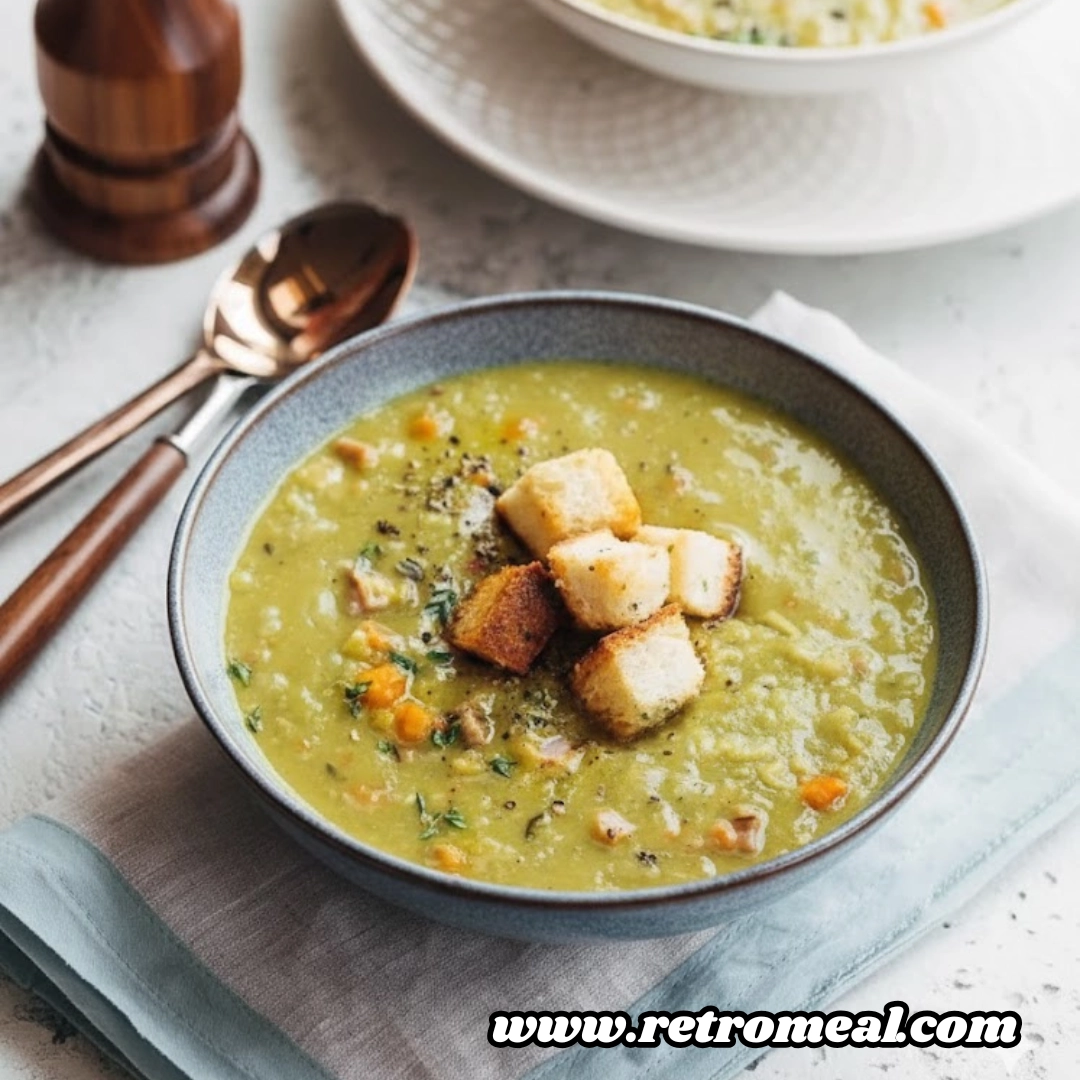
When the temperatures drop and the kitchen becomes the warmest room in the house, few dishes offer the same level of satisfaction as a pot of slow-simmered legumes and savory aromatics. This Ham and Split Pea Soup Recipe represents a timeless approach to resourcefulness, transforming a simple pantry staple and a meaty bone into a thick, velvety meal that feels both rustic and refined. It is the sort of dish that benefits from patience, allowing the peas to dissolve naturally into a rich base without the need for modern machinery.
Whether you are looking for a way to utilize the remnants of a large festive meal or simply want a high-protein lunch that sustains you through a busy afternoon, this recipe delivers deep, smoky nuances. The combination of earthy green peas and the salty depth of the meat creates a balance that has made this a staple in American households for generations. It is best enjoyed when the steam is rising thick from the bowl, paired with something crunchy to contrast the creamy texture of the soup.
Table of Contents
The Essential Components
The Vegetable Base
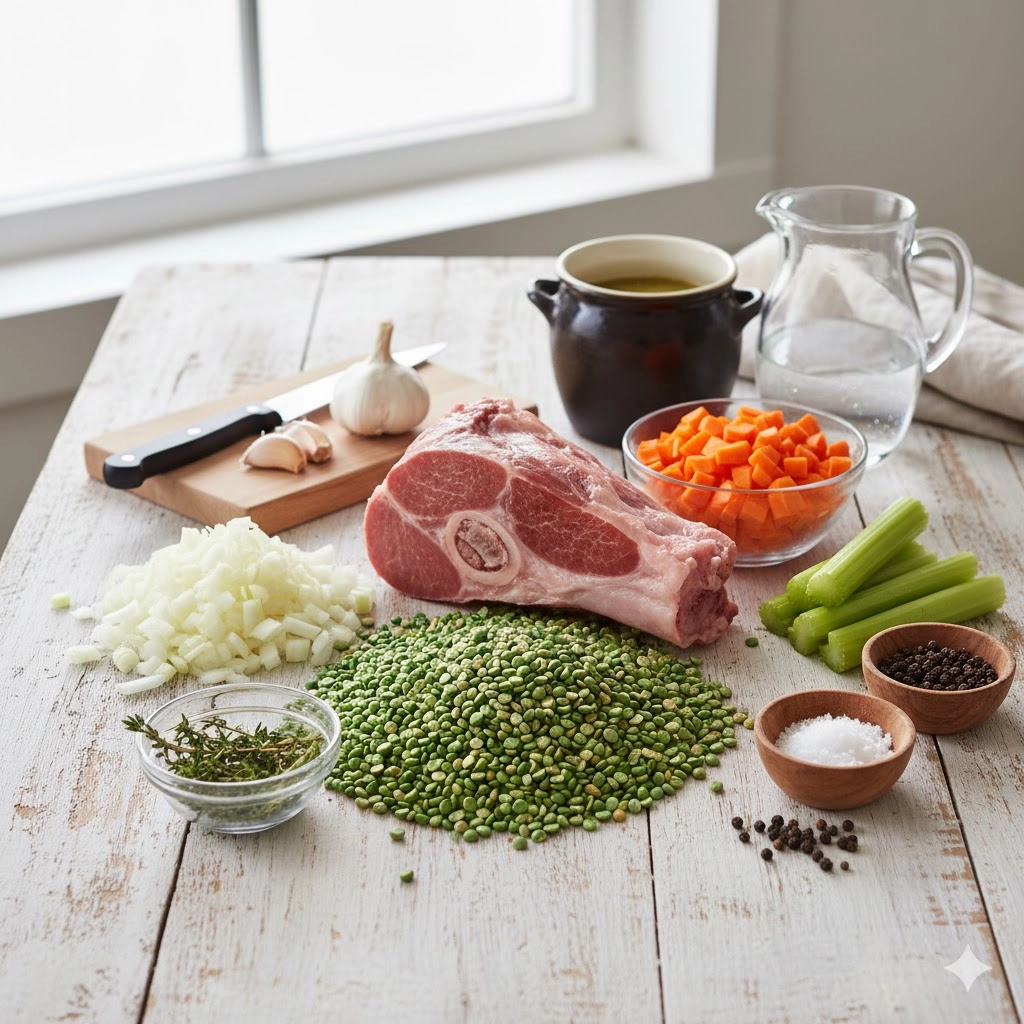
- One fourth cup unsalted butter
- Two cups yellow onion, finely chopped
- One cup carrots, peeled and diced into small cubes
- One cup celery stalks, diced small
- Two cloves fresh garlic, minced
The Soup Body
- One pound dried green split peas, thoroughly rinsed and sorted
- One meaty bone from a baked ham
- One cup cooked ham, diced into bite-sized pieces
- One large dried bay leaf
- Two teaspoons fresh thyme leaves, minced and divided
- Six cups low-sodium chicken stock
- Two cups filtered water
For Seasoning and Finishing
- One fourth teaspoon kosher salt (adjust only at the end)
- One half teaspoon freshly cracked black pepper
- Gourmet garlic croutons for garnish
Culinary Instructions
- In a heavy-bottomed Dutch oven or stockpot, melt the butter over medium heat until the bubbling subsides.
- Sauté the onions, carrots, and celery with a pinch of pepper until the vegetables soften, roughly eight minutes.
- Incorporate the minced garlic and cook for sixty seconds until the aroma is released.
- Add the rinsed split peas, the ham bone, the bay leaf, and half of the fresh thyme to the pot.
- Pour in the chicken stock and water, stirring to combine all ingredients.
- Bring the liquid to a rolling boil, then immediately reduce the heat to a low simmer.
- Cook uncovered for sixty to ninety minutes, stirring occasionally to prevent the bottom from scorching.
- During the final fifteen minutes, stir in the diced ham pieces to warm them through.
- Remove the bone and bay leaf, stir in the remaining thyme, and adjust seasoning before serving hot.
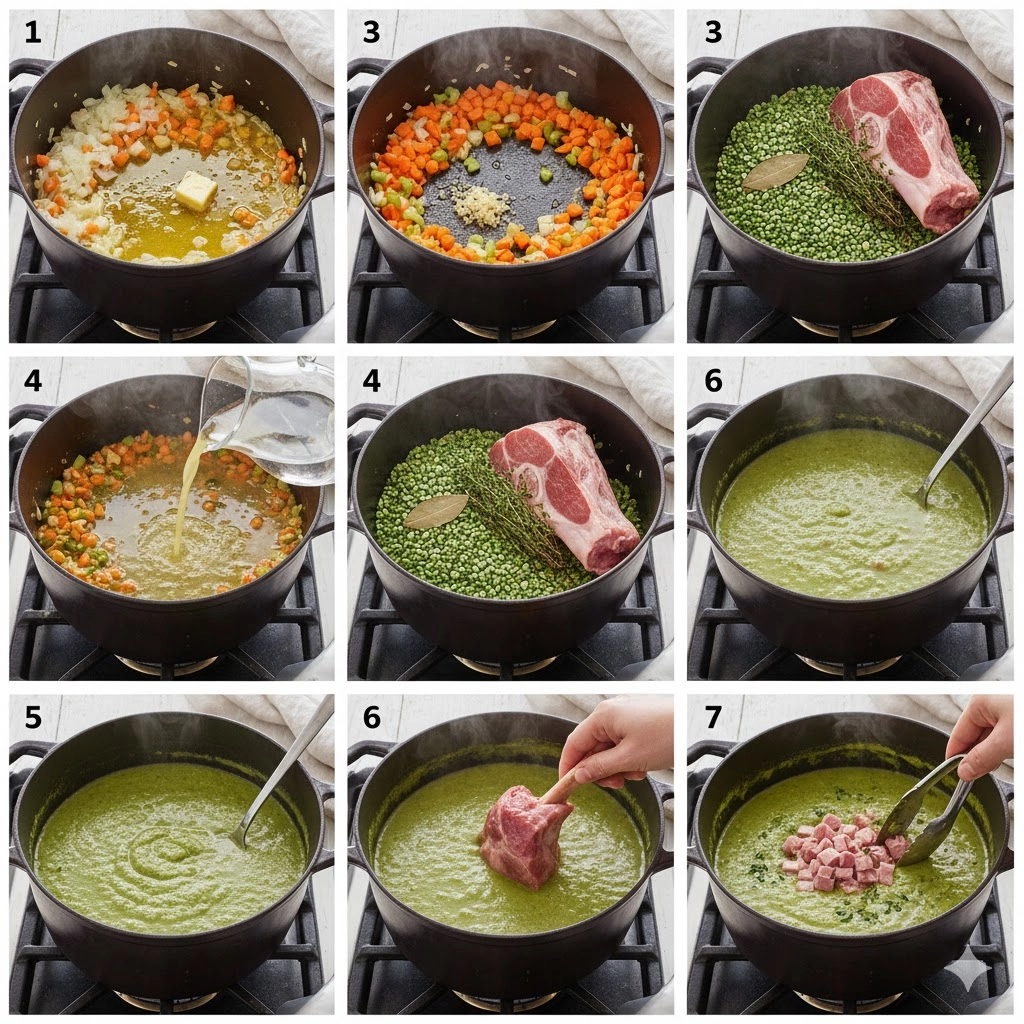
Detailed Preparation and Sensory Cues
Building the Aromatic Foundation
The first step is about more than just softening vegetables; it is about building a flavor floor. When you melt the butter, wait for the foam to disappear before adding your mirepoix. You are looking for the onions to become translucent and the carrots to take on a slightly vibrant, matte appearance. If the garlic begins to turn dark brown, it will become bitter, so ensure you only cook it until it smells fragrant—usually about one minute.
Simmering and Texture Development
As the split peas simmer, they undergo a physical transformation. Initially, they will look like small green pebbles in a clear broth. As the clock hits the forty-minute mark, you will notice the broth turning opaque and thickening. By the end of the cooking time, the peas should have almost entirely surrendered their shape, creating a self-thickened puree. If you prefer a completely smooth consistency, you can use a whisk to break up the remaining peas, but most enthusiasts prefer the slight texture of the softened legumes.
Managing the Salt Profile
The most common error in this specific Ham and Split Pea Soup Recipe is over-salting early in the process. Because the bone and the diced meat release salt as they simmer, the broth concentrates in salinity over time. Always wait until the very end to do your final taste test. If it tastes flat, add a tiny pinch of salt; if it feels too salty, a small splash of water or a squeeze of fresh lemon juice can help balance the intensity.
Professional Tips for Success
- Rinse and Sort: Always pour your dried peas into a colander and run cold water over them. While modern processing is excellent, it is not uncommon to find a small pebble or a hardened piece of earth that looks exactly like a pea.
- The Bone Factor: If your bone has a lot of fat on it, the soup will be richer. If you prefer a leaner soup, trim excess fat from the bone before placing it in the pot.
- Stirring Frequency: As the soup thickens, the density increases at the bottom of the pot. Stir every ten minutes during the final half-hour of cooking to ensure the starches do not stick and burn.
- Fresh vs. Dried Herbs: While dried thyme can be used in a pinch, fresh thyme provides a bright, floral top note that cuts through the heavy, smoky flavors of the ham.
- Aging Peas: If your split peas have been in the pantry for more than a year, they may take significantly longer to soften. If they remain hard after ninety minutes, continue simmering and add a cup of water.
Creative Variations
The Smoky Hocking Method
If a leftover bone is unavailable, you can achieve a similar depth by using two smoked hocks. These are typically smaller and contain more connective tissue, which adds a silky mouthfeel to the broth. Once the soup is finished, remove the hocks, shred the small bits of meat from them, and return that meat to the pot.
Root Vegetable Expansion
To make the dish even heartier, consider adding two medium gold potatoes, peeled and diced. Add them thirty minutes before the end of the cooking process. The potatoes will absorb the smoky flavors and provide a different textural element against the creaminess of the peas.
The Lean Turkey Alternative
For those avoiding red meat, a smoked turkey leg or wing can be substituted for the traditional bone. This provides the necessary smokiness with a slightly different flavor profile. Use diced smoked turkey breast at the end instead of the cubed ham.

Suggested Accompaniments
The richness of this soup calls for a textural counterpart. A thick slice of toasted sourdough rubbed with a raw garlic clove is a classic choice. Alternatively, a simple side salad with a sharp vinaigrette helps cleanse the palate between spoonfuls of the dense soup. For a more modern presentation, try garnishing with a swirl of heavy cream or a sprinkle of fresh chives and lemon zest to brighten the visual appeal.
Frequently Asked Questions
Why did my peas stay hard even after boiling?
This usually happens if the peas are very old or if the cooking water is extremely hard/alkaline. Occasionally, adding salt too early can also toughen the outer skin of the pulses. Ensure you check the “best by” date on your package and save the salt for the final steps.
Can I make this in a slow cooker?
Yes, you can combine all ingredients (using two fewer cups of liquid) and cook on low for seven to eight hours. However, you will miss out on the flavor development that comes from sautéing the vegetables in butter first, so it is recommended to do that step on the stove before transferring to the slow cooker.
How do I fix soup that has become too thick in the fridge?
Split peas are high in starch and will continue to absorb liquid as they cool. When reheating, the soup may look like a thick paste. Simply add a half-cup of stock or water as you heat it on the stove, and it will return to its original creamy consistency.
Nutrition Information
| Nutrient | Amount per Serving |
| Calories | 468 kcal |
| Protein | 29 g |
| Carbs | 62 g |
| Fat | 12 g |
| Fiber | 21 g |
| Sugar | 13 g |
| Sodium | 1025 mg |
Nutrition Information Disclaimer
Nutrition information is an estimate and may vary based on preparation and ingredients used.

Traditional Smoked Ham and Split Pea Soup
Ingredients
- 0.25 cup unsalted butter
- 2 cups yellow onion, finely chopped
- 1 cup carrots, peeled and diced
- 1 cup celery stalks, diced
- 2 cloves fresh garlic, minced
- 1 pound dried green split peas, rinsed and sorted
- 1 meaty bone from a baked ham
- 1 cup cooked ham, diced into bite-sized pieces
- 1 large dried bay leaf
- 2 teaspoons fresh thyme leaves, minced and divided
- 6 cups low-sodium chicken stock
- 2 cups filtered water
- 0.25 teaspoon kosher salt (adjust to taste at end)
- 0.5 teaspoon freshly cracked black pepper
- 1 serving Gourmet garlic croutons for garnish
Instructions
- In a heavy-bottomed Dutch oven, melt the butter over medium heat. Sauté the onions, carrots, and celery with a pinch of pepper until the vegetables soften, about 8 minutes.
- Add the minced garlic and cook for 60 seconds until fragrant, being careful not to let it brown or burn.
- Stir in the rinsed split peas, the meaty ham bone, the bay leaf, and 1 teaspoon of the fresh thyme.
- Pour in the chicken stock and water. Bring the mixture to a rolling boil.
- Reduce the heat to low. Simmer uncovered for 60 to 90 minutes, stirring occasionally to prevent the bottom from sticking.
- Add the diced ham during the final 15 minutes of cooking to warm it through.
- Remove the ham bone and bay leaf. Stir in the remaining 1 teaspoon of fresh thyme and season with salt if needed.
- Ladle into bowls and garnish with crunchy garlic croutons and extra black pepper.
Notes
Equipment
- Heavy-bottomed Dutch oven or stockpot
- Wooden spoon or heat-resistant spatula
- Colander or fine-mesh strainer For rinsing peas
- Chef’s knife and cutting board
- ladle