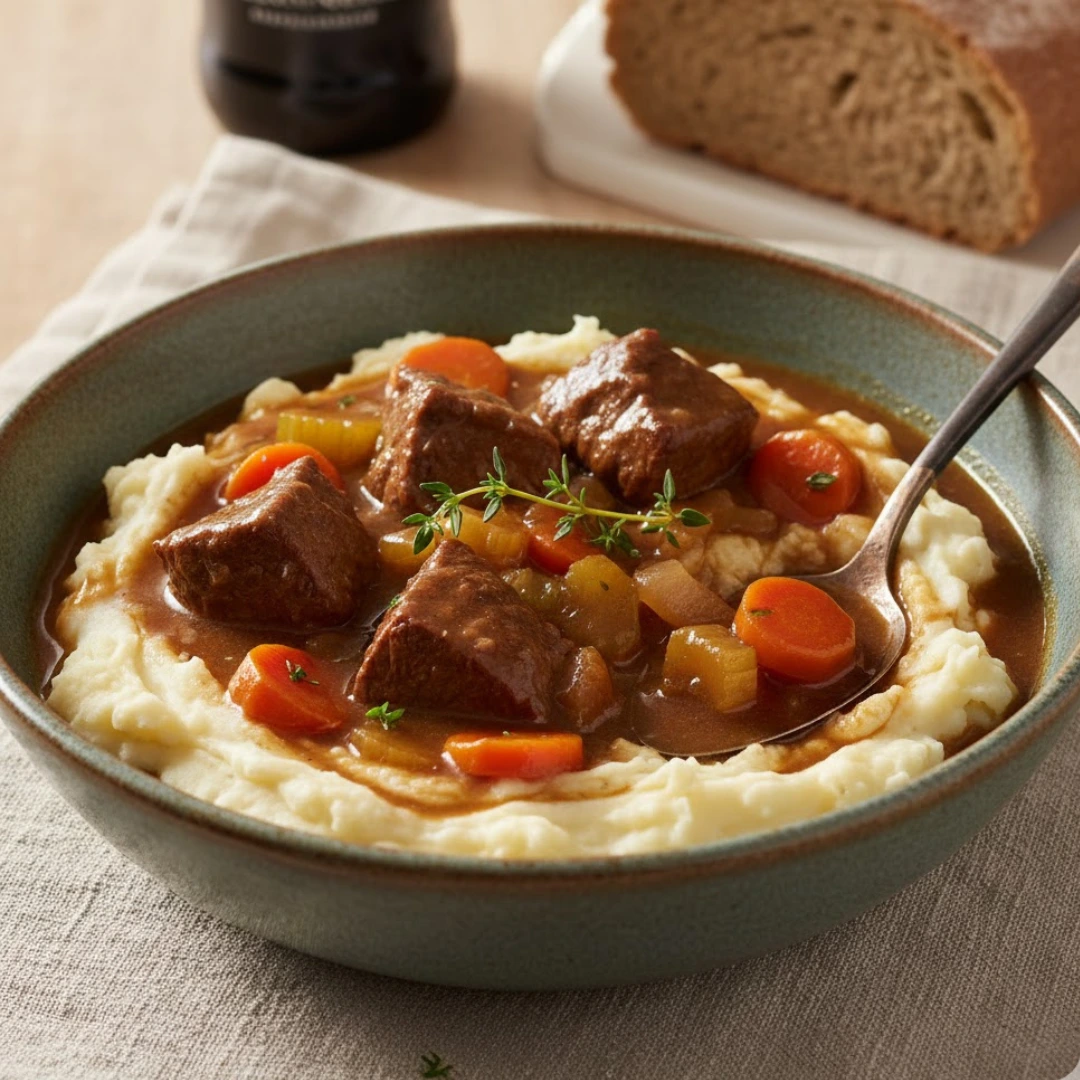
There is something profoundly soul-warming about a heavy pot bubbling away on the stove, filling the entire home with the scent of toasted malt, earthy root vegetables, and seared beef. This specific rendition of Guinness Beef Stew is designed for those who appreciate the patience of a slow braise. By allowing the ingredients to mingle over several hours, the natural sugars in the vegetables caramelize while the beef fibers break down into buttery perfection. Whether you are seeking a weekend project or a centerpiece for a gathering, this dish represents the pinnacle of rustic, high-quality home cooking that feels both sophisticated and deeply familiar.
Table of Contents
Necessary Components for the Perfect Stew
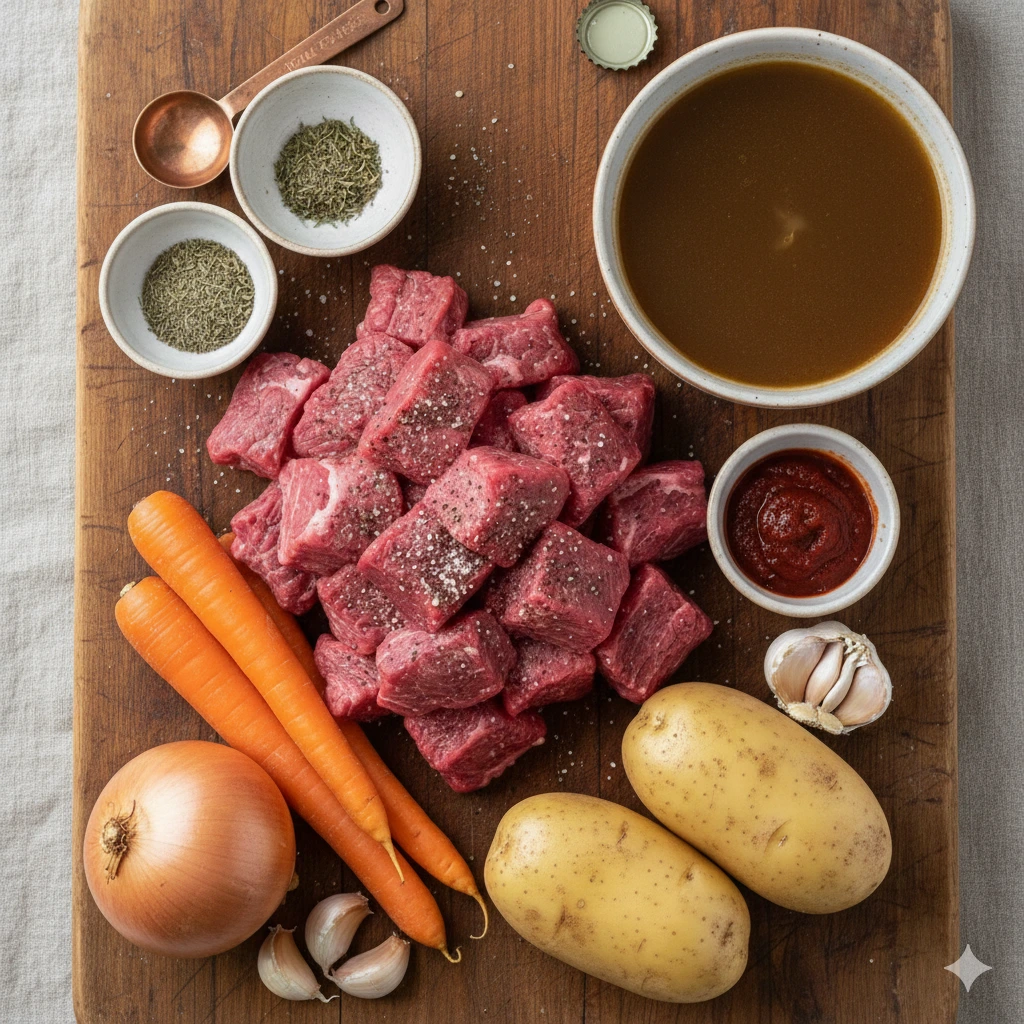
To create this masterpiece, you will need to gather the following ingredients. Ensure your beef is room temperature before you begin the searing process to achieve the best possible crust.
- Two tablespoons of vegetable oil
- One pound of beef chuck, cut into one inch cubes
- One teaspoon of salt
- One half teaspoon of black pepper
- One large yellow onion, chopped
- One clove of garlic, minced
- Two carrots, peeled and sliced into rounds
- One half cup of beef broth
- One can (fourteen point nine ounces) of Guinness Draught stout
- One tablespoon of tomato paste
- One half teaspoon of dried thyme
- One half teaspoon of dried rosemary
- Two large Russet potatoes, peeled and cubed
Step-by-Step Cooking Instructions
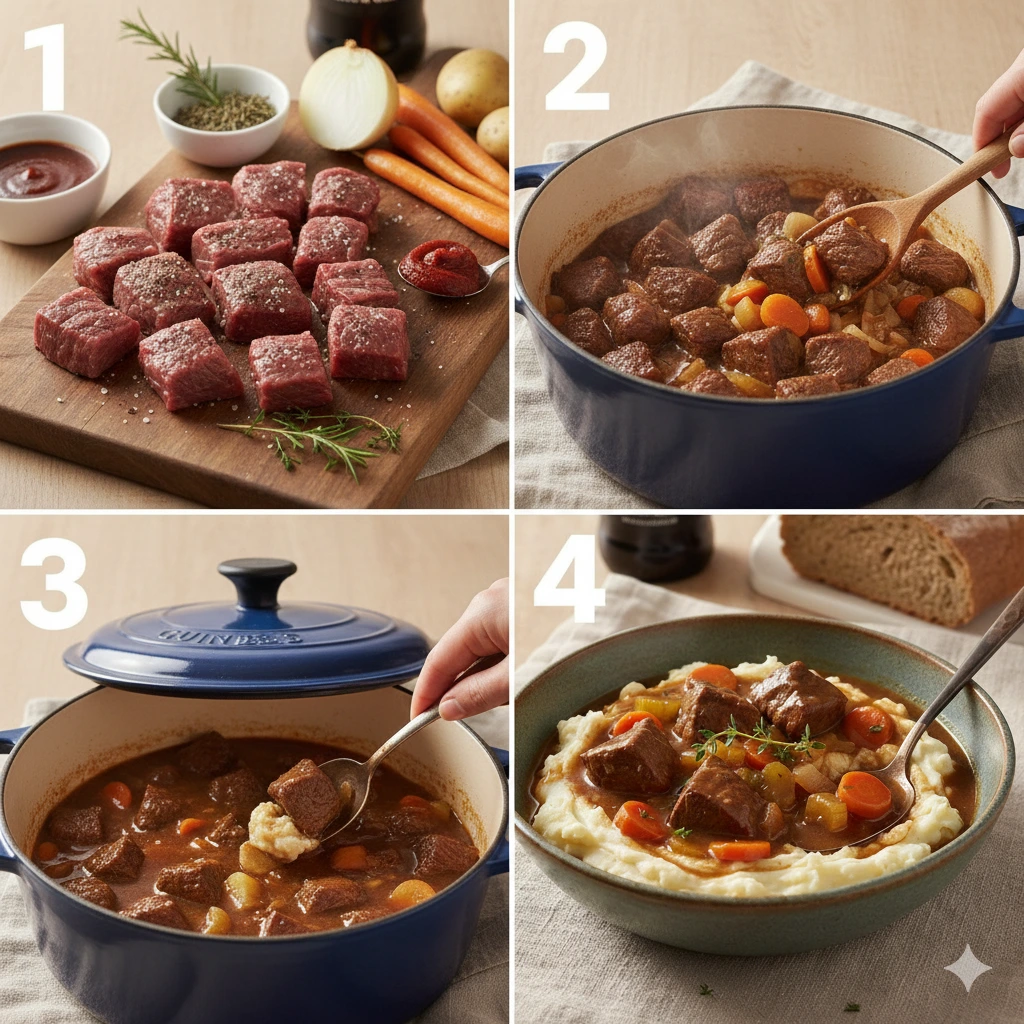
- Heat the vegetable oil in a large pot or Dutch oven over medium-high heat. Season the beef cubes thoroughly with salt and black pepper.
- Working in batches if necessary, brown the beef on all sides until a deep crust forms. Remove the beef from the pot and set it aside on a plate.
- In the same pot, add the chopped onion and cook until it becomes translucent and soft. Stir in the minced garlic and cook for an additional minute until fragrant.
- Return the browned beef and any accumulated juices back into the pot. Add the sliced carrots.
- Pour in the beef broth and the full can of Guinness Draught. Stir in the tomato paste, dried thyme, and dried rosemary, ensuring the tomato paste is fully incorporated into the liquid.
- Bring the mixture to a gentle boil, then reduce the heat to low. Cover the pot with a tight-fitting lid and simmer for one hour.
- After one hour, stir in the cubed potatoes. Cover again and continue to simmer for an additional forty-five minutes to one hour, or until the beef and potatoes are completely tender.
- Taste the gravy and adjust the seasoning with extra salt or pepper if desired before serving hot.
Deep-Dive into the Searing and Simmering Process
The magic of this recipe lies in the initial interaction between the beef and the hot oil. When you place the cubed chuck into the Dutch oven, you are initiating the Maillard reaction. This is not merely browning; it is a chemical transformation that creates hundreds of different flavor compounds. It is vital not to crowd the pan during this stage. If the beef is too close together, it will steam in its own moisture rather than sear, resulting in a gray color and a less complex flavor profile. Take the time to do this in two or three batches, ensuring every side of every cube has a dark, mahogany crust.
Once the beef is removed, the “fond”—those brown bits stuck to the bottom of the pot—becomes the foundation of your sauce. When you add the onions and garlic, their moisture helps lift these bits. When the Guinness and beef broth hit the hot surface, they deglaze the pan, incorporating all that concentrated beef flavor back into the liquid. This is why the stew tastes so much richer than a simple soup.
The long simmer is the second pillar of success. Beef chuck is a hardworking muscle filled with collagen. At high heat, this meat is tough and chewy. However, when held at a low simmer (around one hundred ninety to two hundred degrees Fahrenheit) for two hours, that collagen slowly converts into gelatin. This process is what gives the meat its “melt-in-your-mouth” texture and provides the gravy with a silky, lip-smacking thickness without needing excessive amounts of flour or starch.
Exploring Optimal Accompaniments and Presentation
While this stew is a complete meal in a bowl thanks to the heavy inclusion of potatoes and carrots, the way you serve it can elevate the dining experience. In traditional Irish settings, a thick slice of soda bread is the standard companion. The dense, crumbly texture of soda bread is ideal for mopping up the dark, malty gravy that remains at the bottom of the bowl. If you prefer something lighter, a crusty sourdough baguette or even a simple side of buttered peas can provide a nice textural contrast.
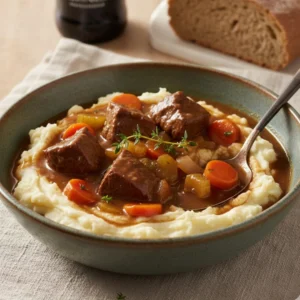
For presentation, consider serving this in wide, shallow bowls rather than deep soup mugs. This allows the various components—the vibrant orange carrots, the rustic cubes of potato, and the dark beef—to be visible. A final sprinkle of fresh parsley or even a few chives can add a pop of green that cuts through the visual richness of the dark brown sauce. If you are serving this for a dinner party, placing the Dutch oven directly in the center of the table allows guests to appreciate the rustic aesthetic of the one-pot meal.
Understanding Ingredient Substitutions and Variations
Though the recipe calls for specific cuts and vegetables, there is room for minor adjustments depending on what is available in your pantry. If you cannot find beef chuck, a bottom round roast or even beef shanks can work, though shanks may require a slightly longer cooking time to soften. Regarding the vegetables, while Russet potatoes are preferred for their starchiness which helps thicken the stew, Yukon Gold potatoes are an excellent alternative if you prefer a potato that holds its shape a bit more firmly.
If you find yourself without beef broth, a high-quality bouillon base mixed with water is perfectly acceptable. The Guinness is the star of the show, providing the bitterness and deep color, but if you absolutely must substitute it, a very dark, non-alcoholic malt beverage can mimic some of the depth, though the flavor profile will shift toward the sweeter side. For the herbs, if you have fresh thyme and rosemary on hand, use three times the amount listed for the dried versions to ensure the aromatic presence remains strong throughout the long cooking process.
Science-Backed Culinary Insights for Success
One of the most frequent questions regarding stew is how to achieve the perfect thickness. In this recipe, we rely on the potatoes. As the Russets cook, their outer edges soften and shed starch into the liquid. This creates a natural thickening agent. If you find your stew is still too thin for your liking after the full cooking time, you can take a few of the potato cubes and mash them against the side of the pot with a wooden spoon, then stir them back in. This releases a concentrated burst of starch that will tighten the gravy almost instantly.
Another tip involves the timing of the garlic. Many recipes suggest adding garlic at the same time as the onions, but because garlic has a much lower burning point, it can turn bitter if sautéed for too long. By adding it only in the last sixty seconds of the onion sauté, you preserve its sweetness and aromatic qualities. Additionally, always remember that the flavor of a stew often improves the next day. As the mixture cools, the beef reabsorbs some of the seasoned liquid, making the leftovers perhaps even more delicious than the initial serving.
Frequently Asked Questions
Can I make this recipe in a slow cooker instead of on the stove?
Yes, you certainly can adapt this for a slow cooker. You should still perform the initial searing of the beef and the sautéing of the onions in a pan on the stove, as the slow cooker cannot reach the temperatures necessary for the Maillard reaction. Once seared, transfer everything to the slow cooker and cook on low for six to eight hours.
Why is my beef still tough after two hours of simmering?
If the beef is tough, it almost always means it hasn’t cooked long enough. While it sounds counterintuitive, “overcooking” chuck in a liquid environment actually makes it softer. If your meat is chewy, simply put the lid back on and give it another thirty minutes; the collagen just needs a little more time to break down into gelatin.
Is it necessary to peel the potatoes and carrots?
While not strictly necessary for safety, peeling provides a more refined texture. Potato skins can sometimes become papery or detach in the liquid, which can be distracting. Carrot skins can sometimes carry a slight bitterness. For the most “velvety” stew experience, peeling is highly recommended.
Can I freeze Guinness Beef Stew for later use?
This stew freezes exceptionally well. The only caveat is that potatoes can sometimes become a bit grainy after being frozen and thawed. If you plan on making a massive batch specifically for freezing, you might consider leaving the potatoes out and adding fresh ones when you reheat the stew.
Summary of the Savory Experience
This Guinness Beef Stew is more than just a meal; it is a celebration of slow cooking and deep, resonant flavors. By following the precise steps of searing, deglazing, and low-temperature simmering, you transform humble ingredients into a dish that feels luxurious and restorative. The combination of the iconic Irish stout with earthy root vegetables and tender beef creates a harmony of flavors that is difficult to match with quicker cooking methods. It is a testament to the idea that some of the best things in life simply take a little bit of time and a heavy-bottomed pot.
Nutritional Information (Per Serving)
| Nutrient | Amount |
| Calories | Four hundred fifty |
| Total Fat | Eighteen grams |
| Saturated Fat | Seven grams |
| Cholesterol | Eighty-five milligrams |
| Sodium | Eight hundred twenty milligrams |
| Total Carbohydrates | Thirty-two grams |
| Dietary Fiber | Five grams |
| Sugars | Four grams |
| Protein | Thirty-four grams |
Disclaimer
The nutritional information provided is an estimate based on standard ingredient measurements. Individual results may vary depending on the specific brands of ingredients used and the exact trimming of the beef. Always consult with a nutrition professional if you have specific dietary requirements.
Guinness Beef Stew
Ingredients
- 2 tbsp vegetable oil
- 1 pound beef chuck, cut into 1-inch cubes
- 1 tsp salt
- 0.5 tsp black pepper
- 1 large yellow onion, chopped
- 1 clove garlic, minced
- 2 carrots, peeled and sliced into rounds
- 0.5 cup beef broth
- 14.9 ounces Guinness Draught stout (1 can)
- 1 tbsp tomato paste
- 0.5 tsp dried thyme
- 0.5 tsp dried rosemary
- 2 large Russet potatoes, peeled and cubed
Instructions
- Heat vegetable oil in a large pot or Dutch oven over medium-high heat. Season beef cubes with salt and black pepper.
- Brown beef in batches until a crust forms on all sides. Remove beef from the pot and set aside.
- In the same pot, sauté the chopped onion until soft. Add minced garlic and cook for 1 minute until fragrant.
- Return beef to the pot. Add carrots, beef broth, Guinness, tomato paste, thyme, and rosemary. Stir to combine.
- Bring to a boil, then reduce heat to low. Cover and simmer for 1 hour.
- Stir in cubed potatoes. Cover and simmer for another 45 to 60 minutes until beef and potatoes are tender.
- Taste and adjust seasoning with salt and pepper. Serve hot in shallow bowls.
Notes
Equipment
- Dutch oven or large heavy pot
- wooden spoon For deglazing and stirring
- chef’s knife
- Vegetable Peeler
- measuring cups and spoons