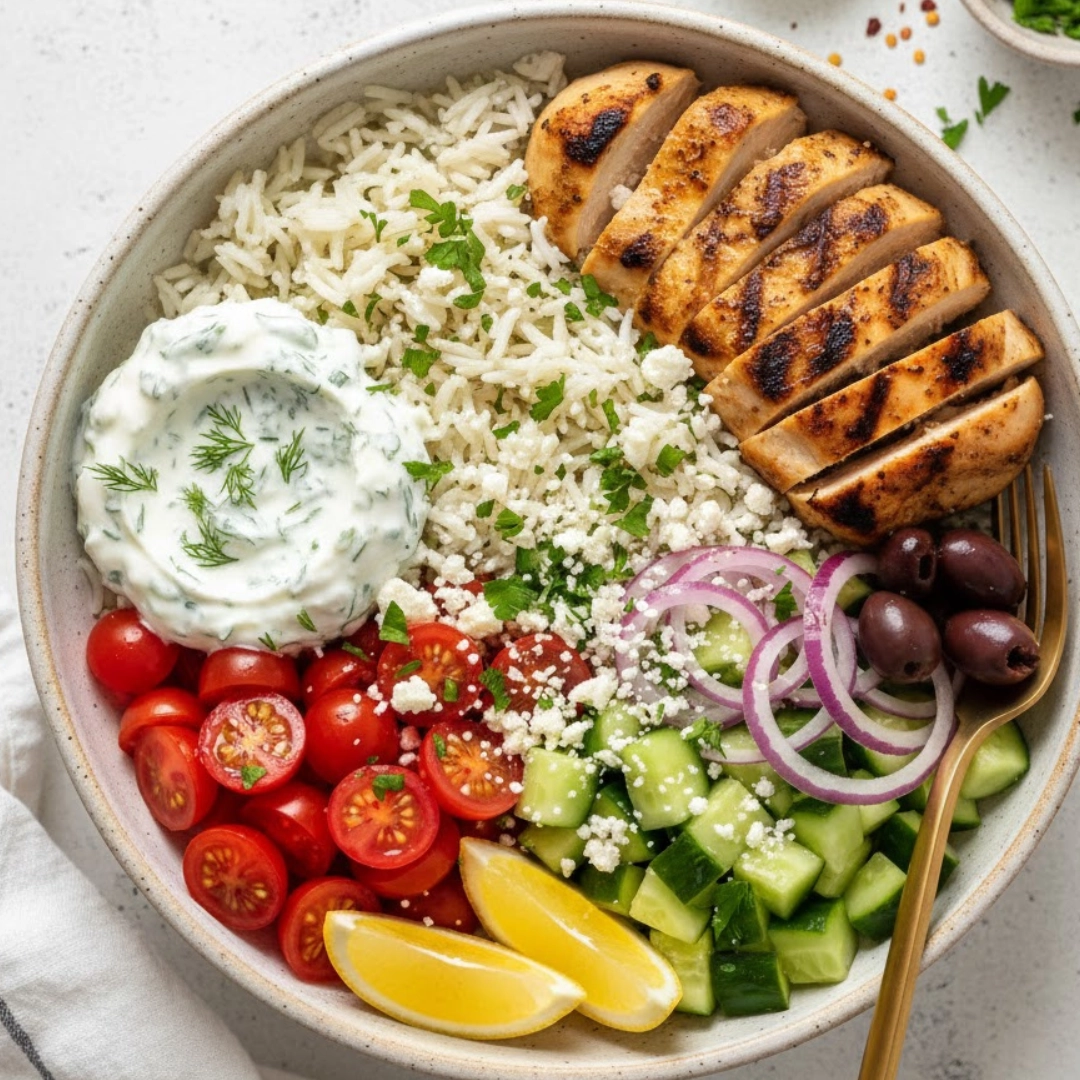
The Mediterranean kitchen is defined by its bright, sun-drenched flavors, where simple, high-quality ingredients are treated with respect. This dish, the Greek Chicken Bowl, is a perfect encapsulation of that philosophy, offering a complete, nourishing meal that is incredibly satisfying yet feels light and fresh. It combines perfectly marinated, succulent chicken with a medley of crisp vegetables, briny olives, tangy feta, and a refreshing yogurt-based sauce, all served over a bed of warm, herbed grain. This is a meal that works equally well for a quick weeknight dinner or as a centerpiece for casual weekend entertaining, bringing the vibrant colors and tastes of the Aegean straight to your table. The preparation is straightforward, designed to maximize flavor with minimal fuss, making this a true kitchen triumph.
The Essential Components and Ingredients
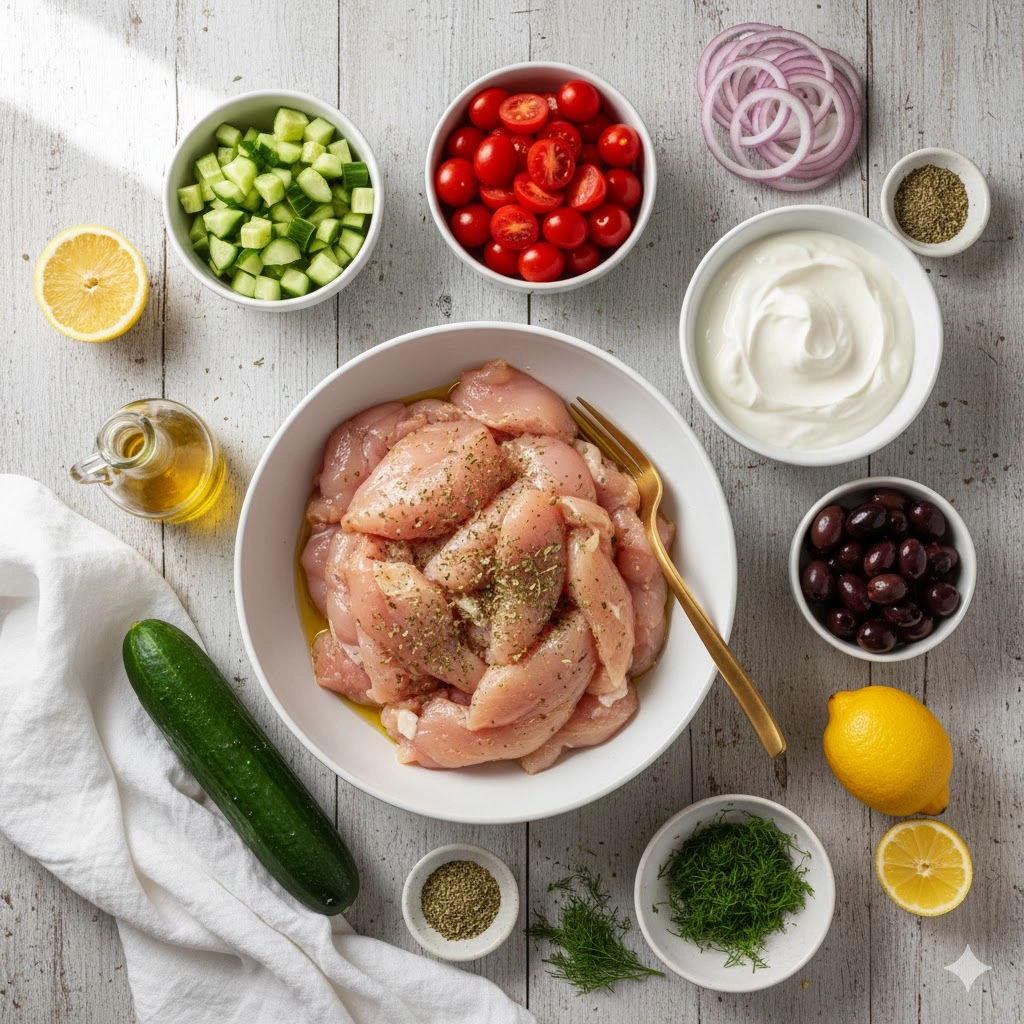
A great bowl is built on contrast—warm and cool, tender and crisp, tangy and savory. These components are listed for four substantial servings, divided into the marinade, the chicken and grain, and the fresh bowl assembly.
For the Greek Chicken Marinade
- Extra Virgin Olive Oil: One half cup
- Fresh Lemon Juice: One quarter cup
- Red Wine Vinegar: Two tablespoons
- Dried Oregano: Two teaspoons
- Minced Garlic: Four cloves, finely minced
- Salt: One teaspoon, or to taste
- Black Pepper: One half teaspoon, freshly ground
- Boneless, Skinless Chicken Breast: One and one half pounds (about 680 grams), sliced into one-inch strips or cubes
For the Tzatziki Sauce
- Plain Full-Fat Greek Yogurt: One cup
- English Cucumber: One half, grated and squeezed dry
- Minced Garlic: One clove
- Fresh Lemon Juice: One tablespoon
- Fresh Dill: One tablespoon, chopped
- Salt: To taste
For the Bowl Assembly
- Cooked Quinoa or Brown Rice: Three cups, warm
- Cherry or Grape Tomatoes: One and one half cups, halved
- English Cucumber: One half, diced
- Red Onion: One quarter cup, thinly sliced
- Kalamata Olives: One half cup, pitted and halved
- Feta Cheese: One half cup, crumbled
Culinary Blueprint: The Workflow for Assembly
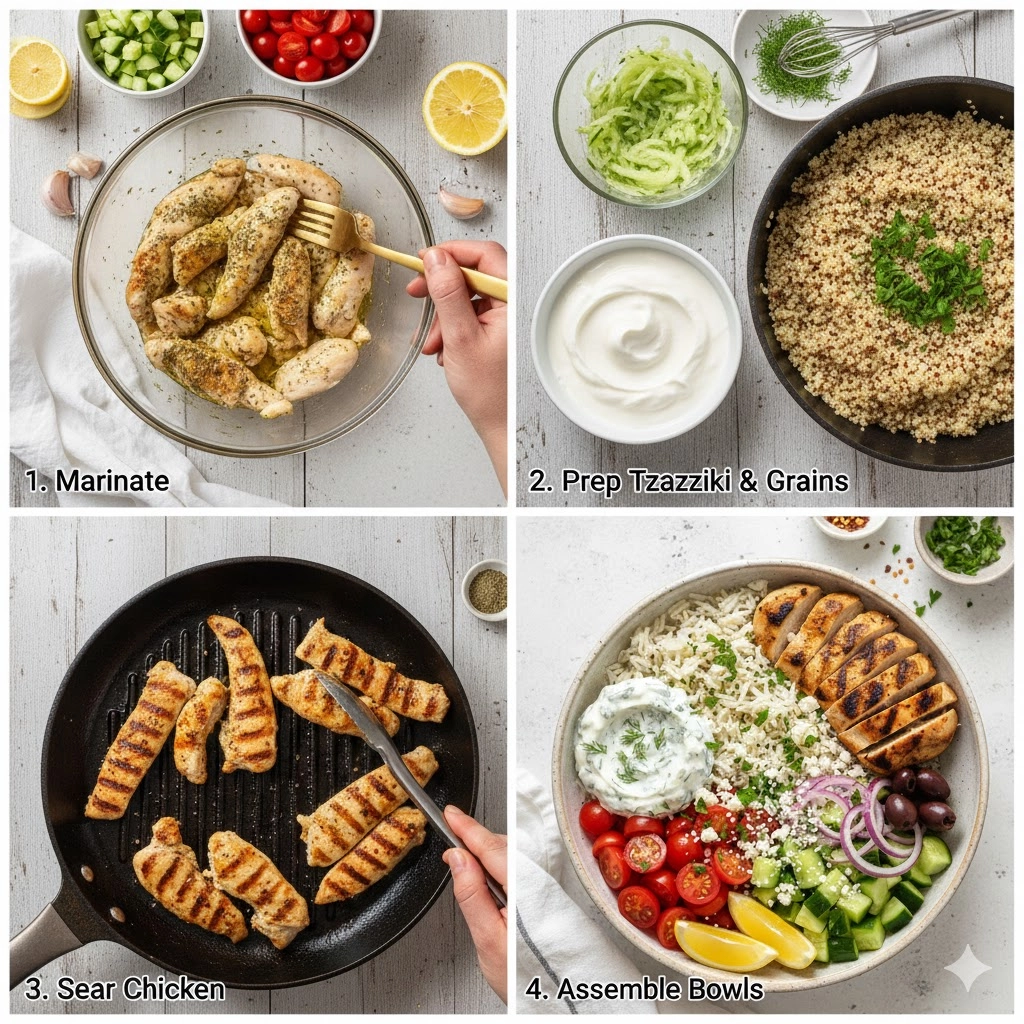
The construction of the Greek Chicken Bowls involves three main cooking tasks that can largely happen concurrently: the marinade and cooking of the chicken, the preparation of the grain, and the assembly of the toppings and sauce.
- Marinate the Chicken: In a non-reactive dish or sealed bag, combine the marinade ingredients. Add the sliced chicken, ensuring every piece is well coated. Let this marinate in the refrigerator for at least one hour but no more than four hours.
- Prepare the Grain and Sauce: While the chicken marinates, cook your chosen grain (quinoa or rice) according to package directions. Separately, whisk together all ingredients for the Tzatziki sauce and refrigerate to allow the flavors to meld.
- Cook the Chicken: Preheat a large skillet or grill pan over medium-high heat. Remove the chicken from the marinade, allowing any excess liquid to drip off, and discard the marinade. Cook the chicken strips in a single layer until fully browned and cooked through.
- Prep the Toppings: As the chicken cooks, chop and prepare the fresh vegetables—halve the tomatoes, dice the cucumber, slice the onion, and halve the olives.
- Build the Bowls: Divide the warm grain among four bowls. Top the grain with the cooked chicken, followed by the prepared vegetables and olives.
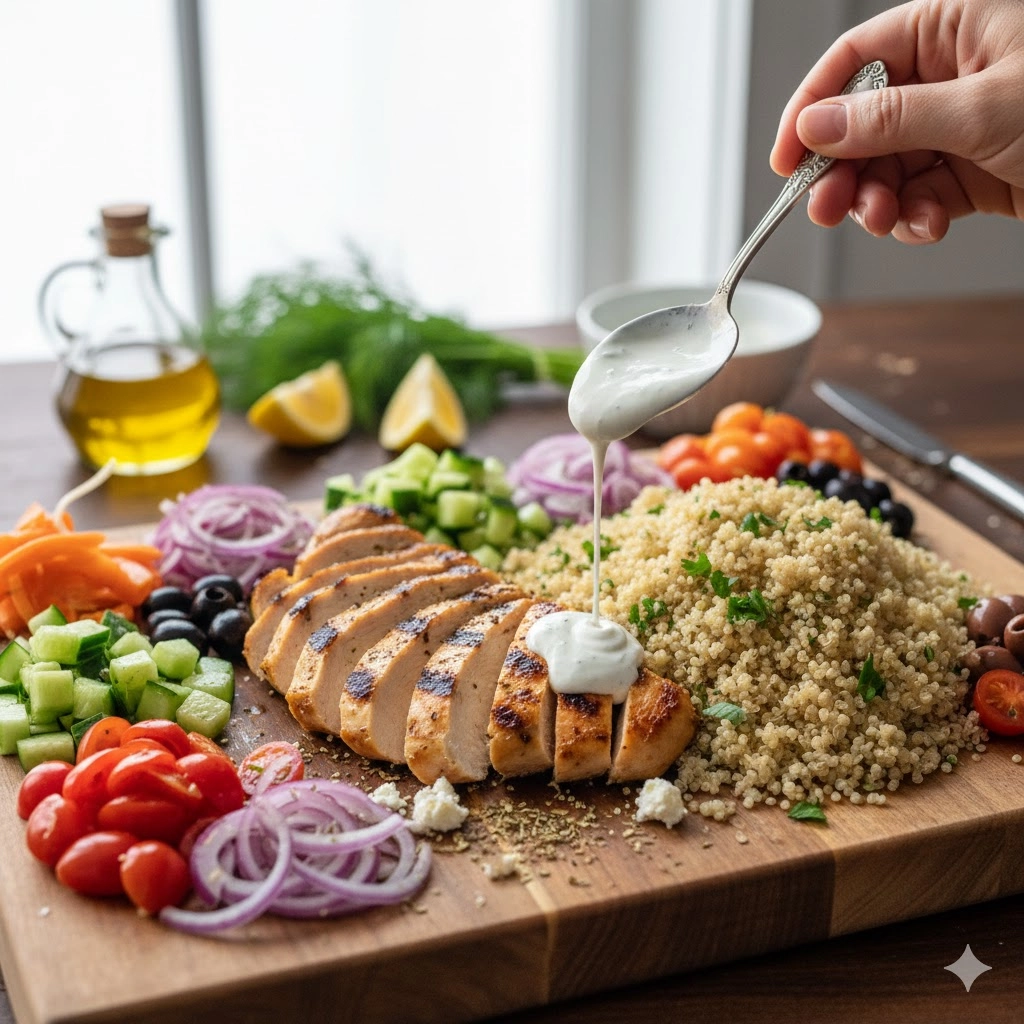
- Finish and Serve: Generously crumble the feta cheese over the toppings and finish each bowl with a substantial dollop or drizzle of the prepared Tzatziki sauce.
The Details of Execution: Achieving Peak Flavor
The difference between a good dish and a truly memorable one lies in the details of the process.
The Marinade and Its Crucial Timing
The marinade is the soul of the chicken. It’s an acidic blend of lemon juice and red wine vinegar, designed to tenderize the muscle fibers and carry the aromatic charge of the oregano and garlic. The oil ensures the flavors adhere and helps the chicken sear properly later.
- Texture Check: We slice the chicken into one-inch strips or cubes because this increases the surface area for maximum flavor absorption and drastically cuts down on cooking time, minimizing the risk of a dry final product.
- The Acid Limit: Do not marinate the chicken for more than four hours. The high acidity in the lemon juice will begin to “cook” the protein, resulting in a slightly mushy, chalky exterior rather than a tender, juicy one. The goal is flavor penetration, not protein denaturation.
Cooking the Mediterranean Chicken
The cook surface must be hot enough to achieve a deep, caramelized sear on the outside while the inside reaches a juicy endpoint.
- Heat Level and Searing: Preheat your skillet or grill pan to medium-high until a drop of water sizzles away instantly. If the pan is not hot enough, the chicken will steam rather than sear, leeching out moisture.
- Crowding is the Enemy: Work in batches if necessary. Overcrowding the pan lowers the temperature dramatically and traps steam, preventing the necessary maillard reaction that creates a savory crust. Give the pieces space to breathe and brown.
- Doneness Indicator: Cook the strips for about three to five minutes per side, depending on thickness, until the exterior is deeply golden brown. The surest check is a quick read thermometer, aiming for an internal temperature of one hundred sixty-five Fahrenheit. The chicken will carry over cook slightly after removal. Once cooked, let the chicken rest for five minutes on a cutting board before slicing or assembling to redistribute the internal juices.
Crafting the Tzatziki
Tzatziki is the cooling counterpoint to the seasoned, warm chicken. Its texture is as important as its flavor.
- Moisture Management: The cucumber must be grated and then squeezed of excess water. If you skip this step, the sauce will be thin, watery, and slide off the chicken and toppings. Wrap the grated cucumber in a clean paper towel or cheesecloth and wring it out firmly over the sink.
- The Garlic Balance: Use raw garlic sparingly. One small clove is plenty to give the sauce a sharp kick without overpowering the clean, fresh taste of the cucumber and dill.
Advanced Kitchen Techniques and Pro Tips
This simple framework allows for a few clever additions that elevate the bowl experience.
- The Olive Oil Emulsion: When preparing the dressing, whisk the olive oil and lemon juice aggressively until the liquid turns slightly cloudy. This temporary emulsion helps the dressing cling to the vegetables better than a simple layered mix.
- Toasting the Quinoa: If using quinoa as your base, toast the dry grains in the saucepan with a drizzle of olive oil for two minutes before adding the water. This imparts a subtle, nutty aroma and helps prevent the final cooked quinoa from becoming waterlogged.
- Layering the Herbs: Introduce fresh herbs at two stages. Use the dried oregano in the marinade, but finish the bowls with a light scatter of fresh mint and parsley. The heat transforms dried herbs, while the fresh ones provide an essential aromatic pop just before serving.
- The Brine Splash: Use a single tablespoon of the brine from the jar of Kalamata olives in your finished Tzatziki sauce. The subtle salt and savory depth from the brine provides an unexpected layer of complexity.
- Red Onion Soak: To take the sharp, biting edge off the raw red onion slices, soak them in a small bowl of cold water for ten minutes while you prep other components. Drain and pat dry before adding to the bowls. This retains the crunch without the aggressive pungency.
- Make-Ahead Sauce: Tzatziki sauce actually improves if made several hours ahead of time. The flavors deepen, and the cucumber essence thoroughly permeates the yogurt. Be sure to keep it sealed tightly in the refrigerator.
Customizing Your Mediterranean Palette
The beauty of a bowl meal is its inherent flexibility. You can easily adapt this dish to different preferences or dietary needs without sacrificing the authentic Greek flavor profile.
- Alternative Proteins: Swap the chicken for cubed lamb shoulder or firm tofu. Lamb should be marinated for longer (up to eight hours) and seared hard. Tofu should be pressed to remove excess moisture before marinating and then baked or pan-fried.
- Grain Alternatives: For a low-carb version, use cauliflower rice, which should be lightly sautéed with a pinch of oregano, or a base of mixed baby spinach and arugula. Pearl barley or farro also make excellent, hearty substitutions for quinoa or rice.
- Adding Greens: Introduce a handful of chopped romaine or baby kale under the cooked grain layer. The slight warmth of the grain will lightly wilt the greens, giving them a softer texture.
- Pita Bread Croutons: For added crunch and a nod to traditional Greek cuisine, cube day-old pita bread, toss it with a tablespoon of olive oil, salt, and oregano, and bake at three hundred fifty Fahrenheit until crisp. Add these to the top of the bowl instead of a side of bread.
Pairing the Bowls: Complementary Dishes
The Greek Chicken Bowl is a complete meal, but a simple accompaniment can round out the table for a more substantial spread.
- Simple Lemon-Dill Hummus: A smooth, classic hummus served with fresh crudités or warm pita wedges provides another layer of Mediterranean flavor and a creamy texture to contrast the crisp vegetables in the bowl.
- Grilled Halloumi Cheese: Skewers of halloumi, brushed with olive oil and grilled until marked, can be added directly to the top of the bowl alongside the chicken for a salty, squeaky boost of protein.
- Watermelon and Mint Salad: On a warm evening, a simple salad of cubed fresh watermelon, a crumble of extra feta, and a generous chiffonade of mint offers a sweet, cooling, and palate-cleansing side dish.
Frequently Asked Questions
Can I prepare the chicken ahead of time?
Yes, the chicken can be cooked up to three days in advance. Cool it completely, slice it, and store it in an airtight container in the refrigerator. When assembling the bowl, you can serve the chicken cold, or quickly warm it in a skillet for a minute or two before adding it to the warm grain base.
What is the best way to store leftovers?
To maintain the best texture, store the main components separately. Keep the cooked chicken, the prepared grain, and the fresh vegetable toppings in individual, airtight containers. Store the Tzatziki sauce separately as well. Assemble the bowls right before eating. This prevents the vegetables from getting soggy and the sauce from soaking into the grain.
Can I use a different type of yogurt for the Tzatziki?
While traditional Tzatziki calls for Greek yogurt for its thickness and tang, you can substitute strained plain whole milk yogurt. Avoid thin, watery yogurts. If using a thinner yogurt, line a sieve with cheesecloth and let it strain over a bowl in the refrigerator for an hour or two to achieve a thicker consistency.
Is it okay to substitute dried herbs for fresh ones in the Tzatziki?
It is strongly advised to use fresh dill in the Tzatziki. Dried dill loses its bright, refreshing flavor, which is key to the sauce’s character. If you cannot find fresh dill, it is better to omit it than to use the dried version, perhaps substituting a small amount of fresh parsley instead.
Can I grill the chicken instead of using a pan?
Absolutely. Grilling is an excellent method that adds a smoky depth of flavor. Prepare the grill for medium-high heat. Place the marinated chicken strips directly on the oiled grates and grill for approximately three to five minutes per side until the internal temperature reaches one hundred sixty-five Fahrenheit.
Nutrition Information
| Nutrient | Amount per Serving |
| Calories | 645 kcal |
| Protein | 55 g |
| Carbs | 58 g |
| Fat | 24 g |
| Fiber | 7 g |
| Sugar | 6 g |
| Sodium | 890 mg |
Disclaimer
Nutrition information is an estimate and may vary based on preparation and ingredients used.
Greek Chicken Bowl
Ingredients
- 0.5 cup extra virgin olive oil
- 0.25 cup fresh lemon juice
- 2 tbsp red wine vinegar
- 2 tsp dried oregano
- 4 cloves garlic, minced
- 1 tsp salt
- 0.5 tsp black pepper
- 1.5 lb boneless skinless chicken breast, cut into 1-inch strips
- 1 cup plain full-fat Greek yogurt
- 0.5 English cucumber, grated and squeezed dry
- 1 clove garlic, minced (for tzatziki)
- 1 tbsp fresh lemon juice (for tzatziki)
- 1 tbsp fresh dill, chopped
- salt to taste (for tzatziki)
- 3 cups cooked quinoa or brown rice, warm
- 1.5 cups cherry or grape tomatoes, halved
- 0.5 English cucumber, diced
- 0.25 cup red onion, thinly sliced
- 0.5 cup Kalamata olives, pitted and halved
- 0.5 cup feta cheese, crumbled
Instructions
- In a dish or sealed bag, combine olive oil, lemon juice, vinegar, oregano, garlic, salt, and pepper. Add chicken and coat well. Marinate in refrigerator 1–4 hours.
- While chicken marinates, cook quinoa or rice per package instructions. In a bowl, mix all tzatziki ingredients. Chill.
- Heat skillet or grill pan over medium-high. Remove chicken from marinade and discard excess liquid. Cook in batches until browned and cooked through.
- Prep toppings: halve tomatoes, dice cucumber, slice onion, halve olives.
- Divide warm grain into 4 bowls. Top with chicken, vegetables, and olives.
- Crumble feta on top and add a generous dollop or drizzle of tzatziki sauce.
Notes
Equipment
- non-reactive dish or sealable bag
- skillet or grill pan
- cutting board
- knife
- mixing bowl
- grater or box grater
- paper towels or cheesecloth