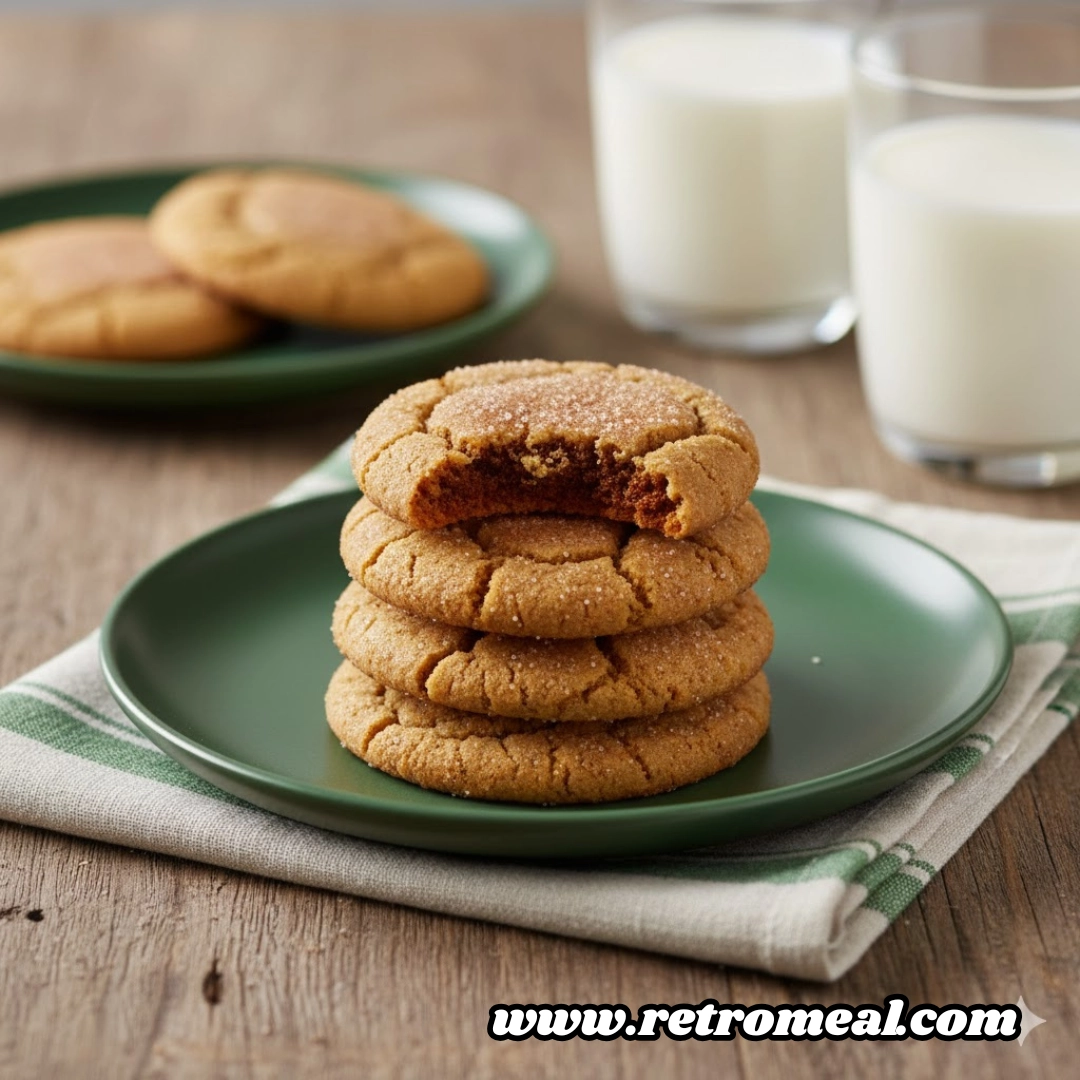
The art of the holiday cookie tin often begins and ends with a truly exceptional ginger biscuit. While many modern variations lean toward a soft, cake-like texture, the authentic appeal of Grandma’s Gingersnap Cookies lies in that characteristic “snap”—a crisp exterior that gives way to a slightly chewy, molasses-rich center. These cookies represent a culinary lineage dating back over a century, relying on the deep, earthy sweetness of dark molasses and a sharp hit of ground ginger to create a flavor profile that is both nostalgic and sophisticated. Whether served alongside a warm cup of tea or shared during a festive gathering, these cookies offer a timeless taste of heritage baking.
Table of Contents
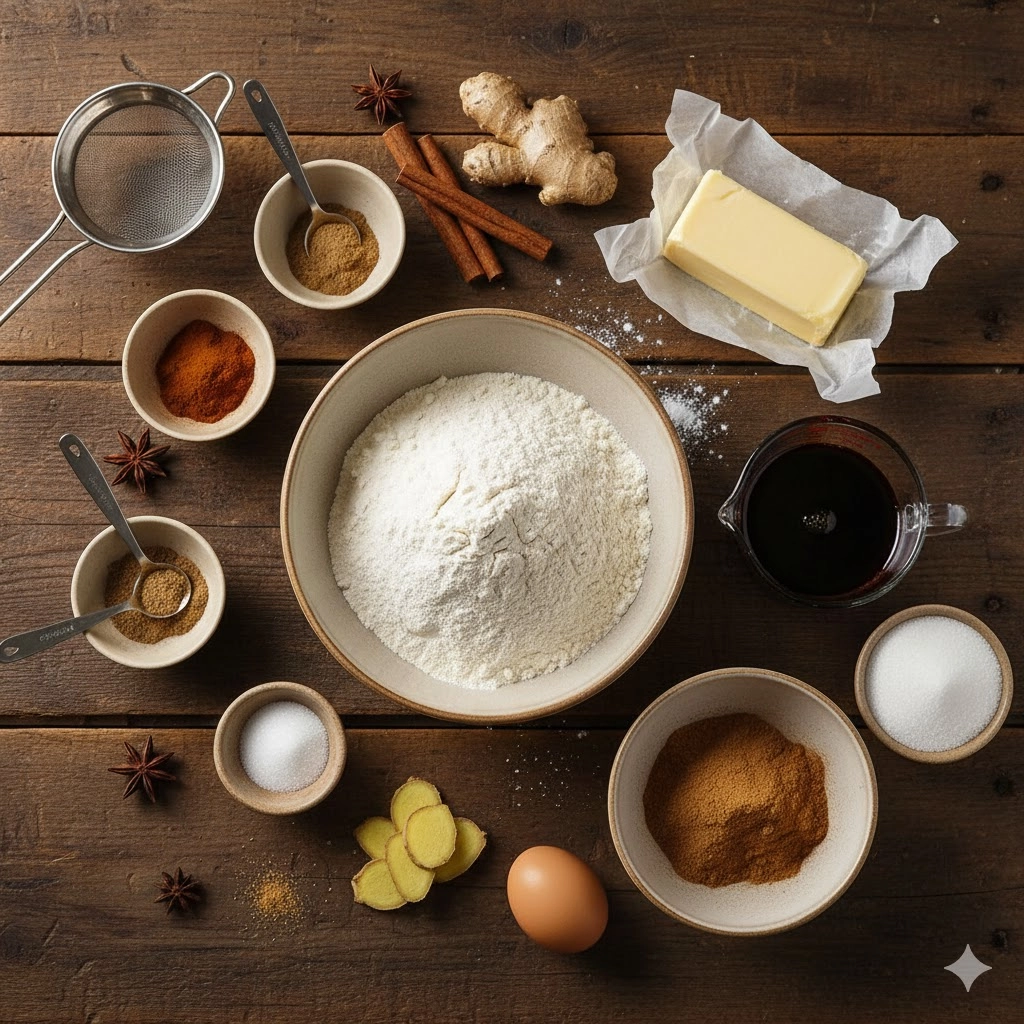
Ingredients
The Dry Base
- 2 cups all-purpose flour, meticulously sifted
- 1 tablespoon ground ginger
- 2 teaspoons baking soda
- 1 teaspoon ground cinnamon
- 1/2 teaspoon fine sea salt
The Creamed Mixture
- 3/4 cup unsalted butter, softened to room temperature
- 1 cup granulated white sugar
- 1 large egg, room temperature
- 1/4 cup dark molasses (unsulphured)
The Coating
- 1/3 cup cinnamon sugar (a blend of granulated sugar and ground cinnamon)
Instructions
- Begin by preheating your oven to three hundred fifty Fahrenheit and preparing your workspace with a small bowl containing the cinnamon sugar.
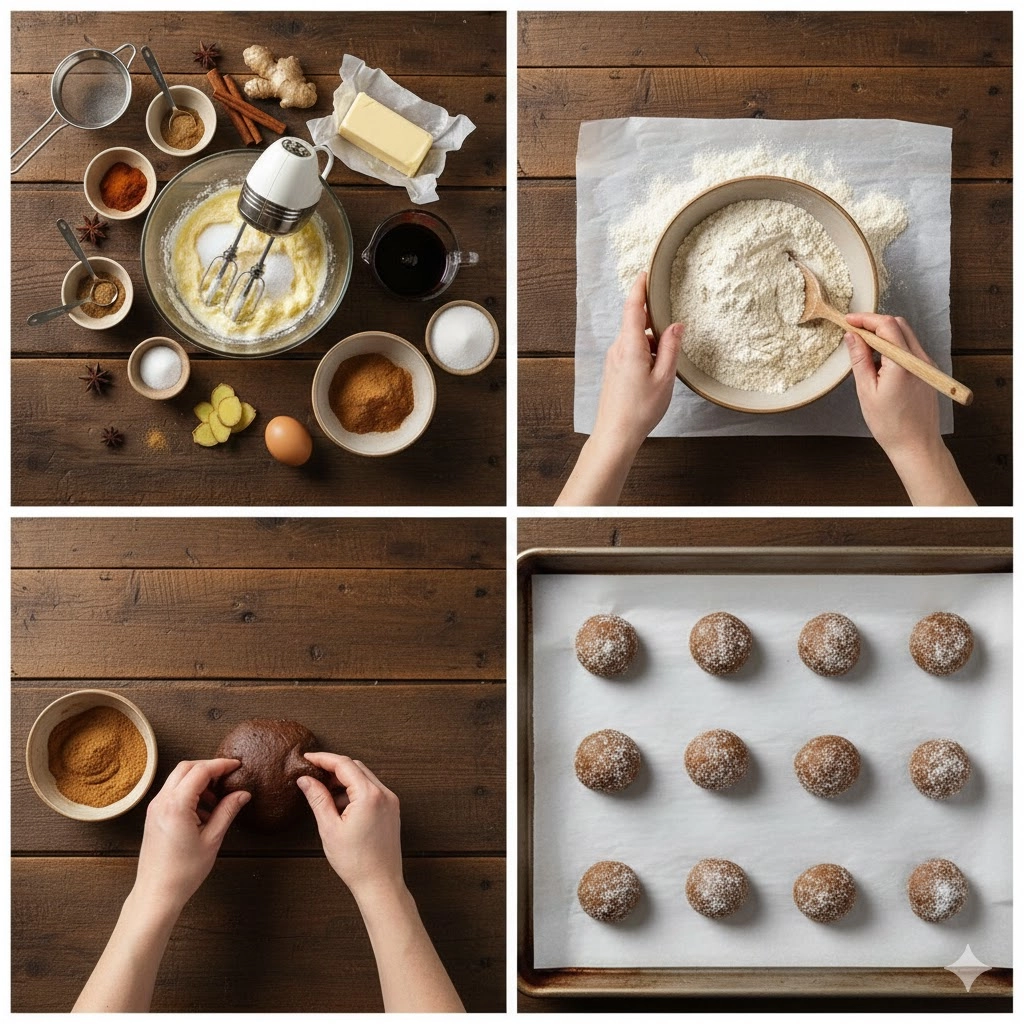
- Sift the flour, ginger, baking soda, cinnamon, and salt into a bowl, then repeat the sifting process once more to ensure total aeration.
- In a separate large basin, cream the butter using an electric mixer until it reaches a smooth, pale consistency.
- Slowly incorporate the granulated sugar into the butter, followed by the egg and the dark molasses, beating until the mixture is light and aerated.
- Introduce the dry ingredients to the wet batter in three distinct stages, stirring by hand or on low speed until a cohesive, soft dough forms.
- Portion the dough into small pieces and roll them between your palms to create uniform one-inch spheres.
- Thoroughly coat each sphere in the cinnamon sugar mixture before arranging them on ungreased baking sheets.
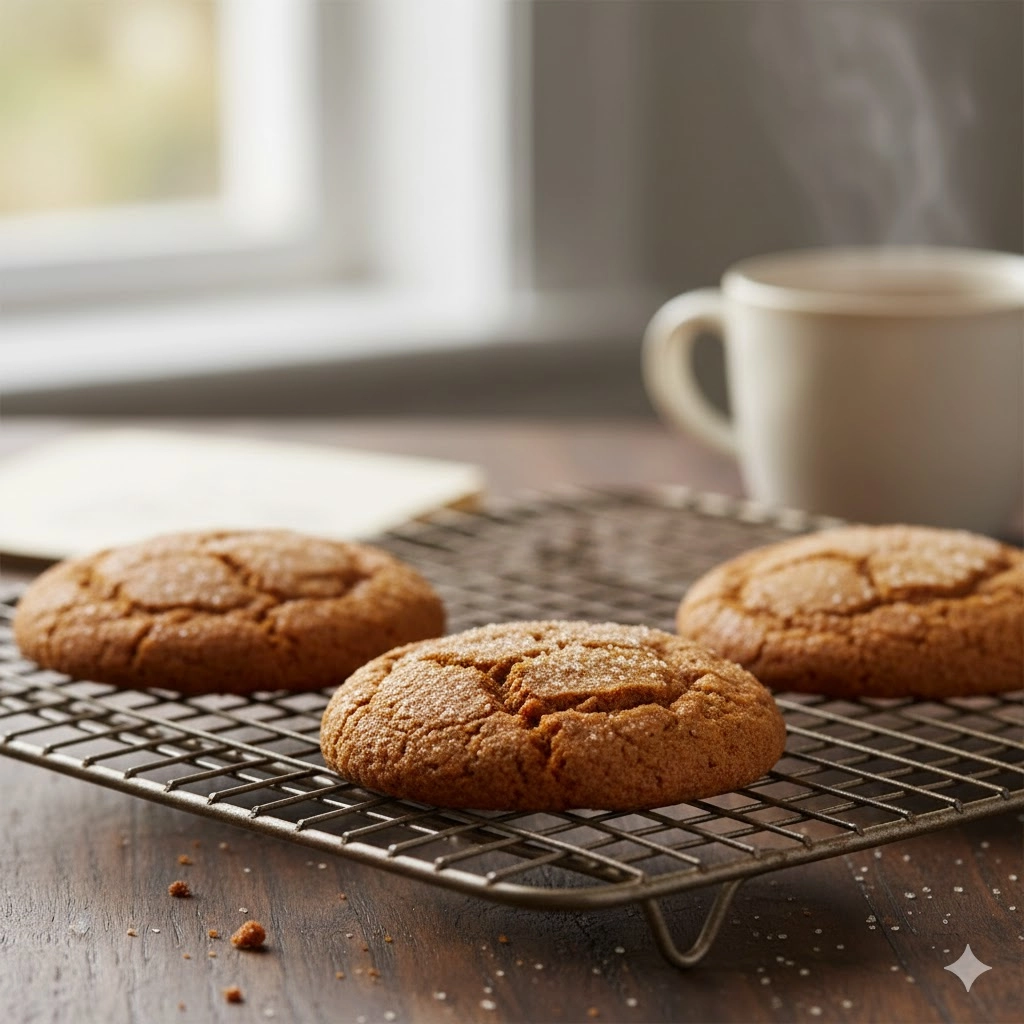
- Bake for ten minutes, or until the surfaces have risen and developed delicate cracks, then transfer to a wire rack to cool completely.
The Science of the Snap: Step-by-Step Details
Preparing the Flour and Spices
Sifting is not a step to be overlooked in this recipe. By passing the flour and spices through a fine-mesh sieve twice, you are not just removing clumps; you are distributing the baking soda and ginger with absolute precision. This ensures that every cookie rises evenly and carries a consistent level of spice. When you finish sifting, the mixture should look like a pale, uniform powder with a fragrant, peppery scent of ginger.
The Creaming Process
When beating your butter and sugar, aim for a texture that resembles wet sand that has become fluffy. Adding the molasses and egg will transform the mixture into a glossy, mahogany-colored cream. The smell at this stage is incredible—the sulfurous depth of the molasses cutting through the richness of the butter. Avoid over-beating once the egg is in, as too much air can cause the cookies to puff and then deflate too rapidly.
Forming the Cookies
When rolling the dough into balls, aim for the size of a large marble or a small walnut. If the dough feels too tacky, you can chill it for fifteen minutes, but generally, a soft dough yields the best “crack” on the surface. As you roll them in the cinnamon sugar, ensure the coating is even; this sugar caramelizes in the oven, contributing to the crisp outer shell that defines Grandma’s Gingersnap Cookies.
Monitoring the Bake
Placement on the baking sheet is vital. Give each cookie at least two inches of space, as they will spread. Watch for the “cracking” phenomenon: as the baking soda reacts with the acidic molasses, the cookies rise and the surface stretches, creating those beautiful, rustic fissures. The cookies are done when the edges feel set to the touch, even if the center still looks a bit soft. They will firm up significantly as they cool on the wire rack.
Pro Tips for the Perfect Batch
- The Sifting Secret: Sift your dry ingredients into a large piece of parchment paper instead of a bowl for the second pass; it makes pouring the mixture into the mixer much cleaner.
- Temperature Matters: Ensure your egg and butter are truly at room temperature. Cold ingredients will not emulsify properly with the molasses, leading to a greasy cookie texture.
- Molasses Choice: Use “Original” or “Dark” molasses. Avoid “Blackstrap” molasses, as it is too bitter and salty for this delicate balance of flavors.
- Measuring Flour: Always use the “spoon and level” method for your flour. Tapping the measuring cup or packing the flour down will result in too much starch, making the cookies tough and dry.
- Shortening Swap: For an even crunchier, more traditional “snap,” you can replace half of the butter with vegetable shortening. This increases the melting point and creates a sturdier crumb.
- Oven Calibration: If your cookies aren’t cracking, your oven might be too cool. Use an oven thermometer to verify it is exactly three hundred fifty Fahrenheit.
Variations and Substitutions
- Extra Spice: If you prefer a “hotter” cookie, add one-quarter teaspoon of finely ground white pepper or a pinch of ground cloves to the dry ingredients.
- Citrus Twist: Rub the zest of one orange into the granulated sugar before creaming it with the butter to add a bright, floral note to the deep molasses.
- Crystallized Ginger: For a modern texture, fold in two tablespoons of very finely minced crystallized ginger into the dough just before rolling.
- Gluten-Free Option: A high-quality one-to-one gluten-free flour blend can be substituted for the all-purpose flour, though the cookies may spread slightly more.
Serving Suggestions
These gingersnaps are best enjoyed with beverages that complement their spice profile. A cold glass of whole milk is the classic choice, providing a creamy contrast to the sharp ginger. For a more formal setting, serve them alongside a dish of lemon posset or vanilla bean panna cotta; the acidity of the lemon cuts through the richness of the molasses beautifully. They also make an excellent base for an ice cream sandwich—try a scoop of pumpkin or salted caramel ice cream pressed between two cooled cookies.
FAQs
Why did my gingersnaps turn out flat?
This usually happens if the butter was too melted rather than just softened, or if the dough was handled too much, making it too warm. Try chilling the dough balls for ten minutes before placing them in the oven.
Can I make the dough ahead of time?
Yes, the dough holds up very well in the refrigerator. Wrap it tightly in plastic wrap and store for up to three days. Let it sit at room temperature for twenty minutes before rolling so it doesn’t crack your hands.
How do I get that perfect cracked look on top?
The cracks are caused by the surface of the cookie drying out and setting before the middle has finished rising. Rolling the dough in sugar helps create this dry surface. Ensure your baking soda is fresh, as old leavening won’t provide the “lift” needed to break the surface.
How long do these cookies stay fresh?
Because of the high sugar and molasses content, these cookies have an excellent shelf life. In an airtight container at room temperature, they will maintain their snap for five to seven days.
Nutrition Information
| Nutrient | Amount per Serving |
| Calories | 58 kcal |
| Protein | 1 g |
| Carbs | 9 g |
| Fat | 2 g |
| Fiber | 0 g |
| Sugar | 5 g |
| Sodium | 45 mg |
Nutrition Disclaimer
Nutrition information is an estimate and may vary based on preparation and ingredients used.
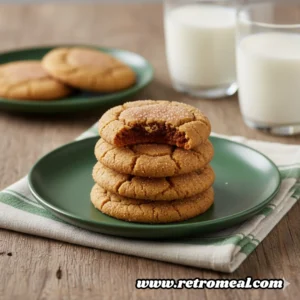
Grandma’s Gingersnap Cookies
Ingredients
- 2 cups all-purpose flour, sifted
- 1 tbsp ground ginger
- 2 tsp baking soda
- 1 tsp ground cinnamon
- 0.5 tsp fine sea salt
- 0.75 cup unsalted butter, softened
- 1 cup granulated white sugar
- 1 large egg, room temperature
- 0.25 cup dark molasses
- 0.33 cup cinnamon sugar (for rolling)
Instructions
- Preheat your oven to three hundred fifty Fahrenheit. Place the cinnamon sugar in a small bowl and set it aside for coating.
- Sift the flour, ginger, baking soda, cinnamon, and salt into a bowl. Repeat the sifting process a second time into a separate bowl to ensure aeration.
- In a large mixing bowl, beat the softened butter until creamy. Gradually add the white sugar and continue beating until light.
- Add the egg and molasses to the butter mixture. Beat at medium speed until the mixture is light and fluffy.
- Gradually incorporate the dry flour mixture into the wet ingredients, stirring until a soft, uniform dough forms.
- Roll small portions of dough between your palms to form one-inch diameter balls.
- Roll each ball thoroughly in the cinnamon sugar and place them two inches apart on ungreased baking sheets.
- Bake for 10 minutes until the tops are rounded and cracked. Transfer to a wire rack to cool completely for maximum snap.
Notes
Equipment
- Electric hand mixer or stand mixer
- fine mesh sieve Crucial for the double-sifting process.
- Baking sheets Use ungreased for best results.
- wire cooling rack
- mixing bowls