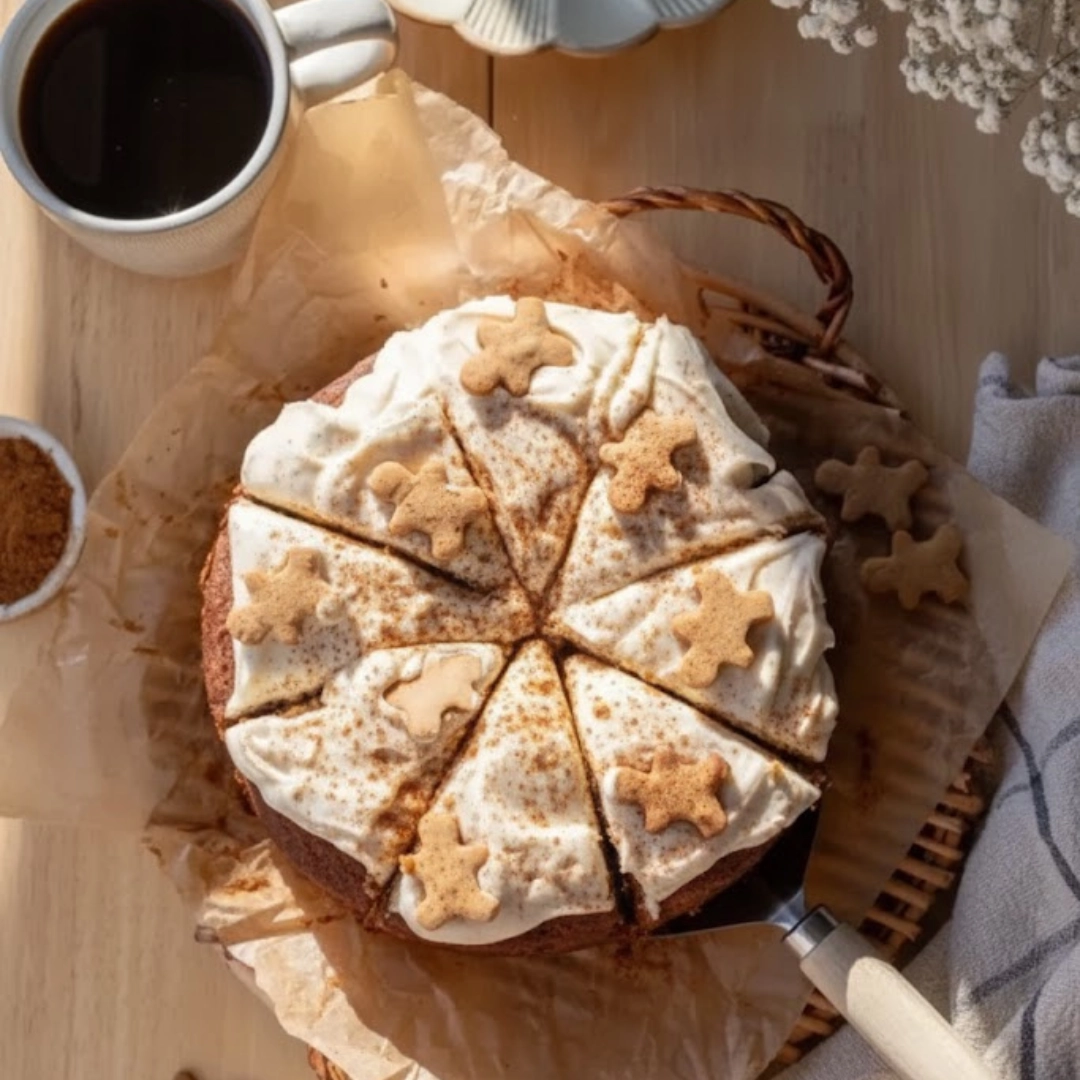
The essence of the holidays, captured in a slice—that’s the promise of a Gingerbread Latte Cake. It’s the perfect marriage of two seasonal favorites: the warmly spiced, molasses-rich tenderness of gingerbread and the deep, slightly bitter, creamy kick of a classic espresso latte. This towering treat is far more sophisticated than a simple sheet cake, offering complex layers of flavor and texture that make it an instant centerpiece for any winter gathering, from a casual weekend brunch to the grand finale of a festive dinner party. The cake itself is incredibly moist, laced with coffee and dark sugars, while the frosting is a lighter-than-air cloud of coffee and vanilla.
This recipe is designed to deliver maximum impact with manageable steps. It yields a three-layer cake, where each component—the spiced cake, the espresso soak, and the buttercream—works in harmony to build a spectacular dessert. Whether you’re an experienced baker looking for a new challenge or simply craving that unmistakable taste of the season, this recipe is guaranteed to become a cherished addition to your holiday baking repertoire.
Table of Contents
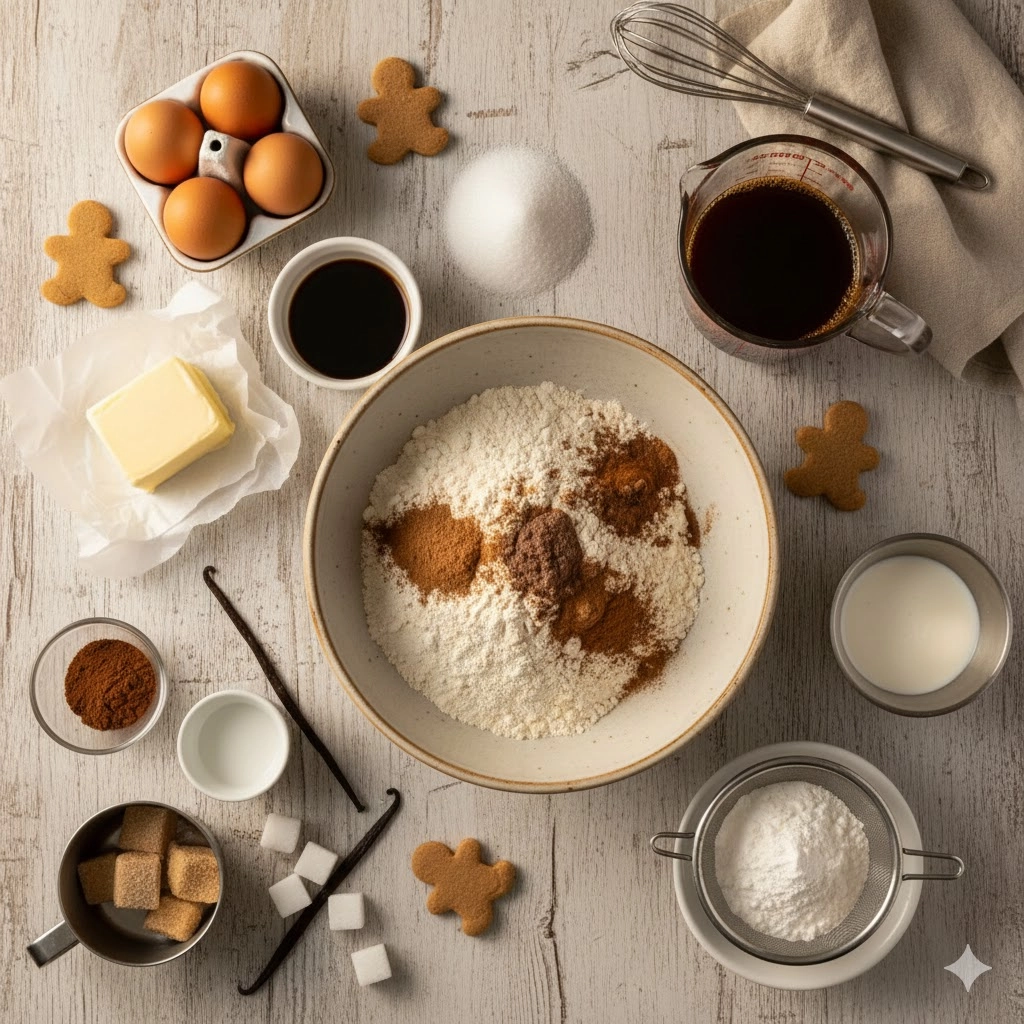
The Foundation: Ingredients for the Spiced Coffee Cake
For the Cake Layers (Three 8-inch rounds):
- 2 and three-quarters cups (340 grams) all-purpose flour
- 2 teaspoons baking soda
- 1 and one-half teaspoons ground ginger
- 1 teaspoon ground cinnamon
- one-half teaspoon ground cloves
- one-half teaspoon fine sea salt
- 1 cup (227 grams) unsalted butter, softened
- 1 cup (200 grams) granulated sugar
- three-quarters cup (180 grams) packed dark brown sugar
- 3 large eggs, room temperature
- one-half cup (120 milliliters) unsalted, full-strength brewed coffee or espresso, cooled
- three-quarters cup (180 milliliters) unsulfured molasses
For the Espresso Syrup Soak:
- one-half cup (100 grams) granulated sugar
- one-quarter cup (60 milliliters) water
- one-quarter cup (60 milliliters) unsalted, full-strength brewed coffee or espresso
For the Espresso Vanilla Buttercream:
- 1 cup (227 grams) unsalted butter, softened
- 4 cups (480 grams) confectioners’ sugar, sifted
- 1 teaspoon pure vanilla extract
- 3 tablespoons heavy cream
- 1 tablespoon unsalted, full-strength brewed coffee or espresso, cooled
The Method: A High-Level Overview
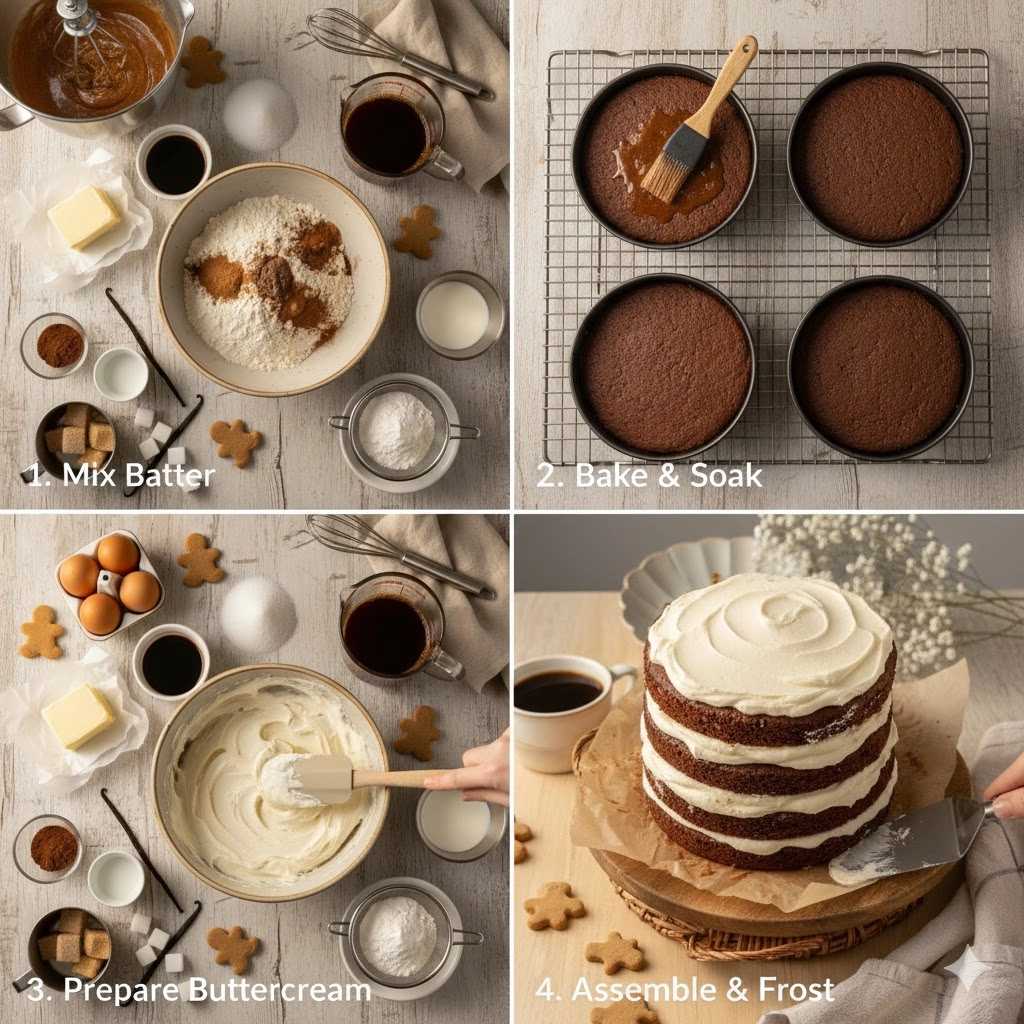
- Prepare the Cake Layers: Whisk all dry ingredients together in a bowl. In a separate large bowl, cream the butter and sugars until light and fluffy. Beat in the eggs, then mix in the cooled coffee and molasses. Gradually add the dry mixture to the wet mixture, stopping just when combined.
- Bake the Cakes: Divide the batter evenly among three prepared 8-inch round cake pans. Bake at three hundred fifty Fahrenheit for twenty-five to thirty minutes, or until a toothpick inserted into the center comes out clean. Cool the cakes completely on a wire rack.
- Make the Espresso Soak: Combine the sugar and water in a small saucepan and heat over medium until the sugar dissolves. Remove from heat and stir in the strong brewed coffee. Set aside to cool to room temperature.
- Prepare the Buttercream: Beat the softened butter until smooth. Gradually add the sifted confectioners’ sugar, beating until light and fluffy. Blend in the vanilla extract, heavy cream, and the tablespoon of cooled coffee/espresso until the frosting is smooth and spreadable.
- Assemble the Cake: Place the first layer on a serving plate. Brush the top with one-third of the espresso soak. Spread a generous layer of buttercream evenly over the top. Repeat with the second and third layers. Frost the sides and top of the assembled cake, then decorate as desired.
The Baker’s Eye: Mastering the Sensory Details
The true artistry of this Gingerbread Latte Cake lies in the subtle cues and precise execution of each step. Paying attention to texture and aroma will elevate your finished product from good to exceptional.
Achieving the Perfect Cake Batter
The first and most critical step is creaming the butter and sugars. This process, known as aeration, is what gives the cake its lift and tender crumb. You are looking for a visible change: the mixture should lighten in color, becoming almost pale yellow, and should increase slightly in volume, taking on a fluffy, cloud-like texture. This takes a full four to five minutes with a stand mixer on medium-high speed. Do not rush this step.
When incorporating the wet ingredients—the coffee and molasses—the mixture may appear slightly curdled or separated. This is normal and a result of the temperature difference and liquid content. Do not worry; the flour will bring it all back together. When adding the dry ingredients, switch to the lowest speed on your mixer, or ideally, fold them in by hand. Stop mixing the very moment you see no more streaks of flour. Overmixing develops the gluten, resulting in a tough, dense cake, which we absolutely want to avoid with this delicate gingerbread crumb. The final batter should be thick, smooth, and strongly fragrant with spice and molasses.
The Tell-Tale Signs of Doneness
Baking at three hundred fifty Fahrenheit is standard, but ovens vary. The twenty-five to thirty minute range is a guideline. Around the twenty-minute mark, your kitchen should be flooded with the unmistakable scent of warm spice and sweet coffee. This is your first sensory check. For your second, physical check, gently press the center of a cake layer. If the indentation springs back immediately, the cake is likely done. The final, definitive check is the toothpick test: a toothpick inserted into the center must come out with only a few moist crumbs attached, but no wet batter.
Once the cakes are out, the edges will pull away slightly from the pan. Let them cool in the pans for ten minutes, which allows them to firm up slightly before you attempt to turn them out. Cooling completely on a rack prevents steam from becoming trapped, which can lead to gummy, dense spots.
Building the Flavor: The Espresso Soak
The espresso soak is the secret weapon for ensuring an incredibly moist, deeply flavored cake. It not only keeps the cake from drying out but infuses that essential latte flavor directly into the gingerbread layers. The soak must be cool before you apply it. A hot syrup on a warm cake will melt the cake structure. Once the cakes are fully cooled, use a pastry brush to lightly saturate the top of each layer. You want the cake to feel noticeably damp, but not soggy or dripping. The sponge should wick up the liquid immediately. This is the moment when the aromas of coffee and spice truly mingle and become one.
Perfecting the Buttercream
The espresso vanilla buttercream should be light and stable. Ensure your butter is truly softened—it should yield easily to a gentle finger press. If it’s too cold, your frosting will be lumpy; if it’s too warm, it will be greasy and runny. The key to that ethereal lightness is incorporating the confectioners’ sugar slowly. Sifting the sugar first removes any clumps and ensures a smoother final texture. Beat the finished frosting on high speed for a full two minutes. This whips air into the mixture, making it light, fluffy, and perfectly white (or slightly tan, depending on your coffee strength) before you begin the assembly.
Expert Strategies for an Impeccable Cake
- Flour Measurement Precision: When measuring flour, always use the ‘spoon and level’ method. Do not scoop the measuring cup directly into the bag, as this compacts the flour, resulting in up to twenty-five percent more flour than needed, leading to a dry cake. Lightly spoon the flour into the cup, then sweep a flat edge across the top.
- The Room Temperature Rule: Ensure your butter and eggs are at true room temperature. Cold ingredients do not emulsify properly, which means the fat and liquid molecules won’t combine to create a stable batter. Take them out at least one hour before starting.
- For the Darkest Color: Use unsulfured molasses. Sulfured molasses is lighter in color and contains preservatives that can alter the flavor. Dark, unsulfured molasses gives the rich color and deeper flavor characteristic of classic gingerbread.
- Preventing the Dome: To achieve flat cake layers without leveling, you can use a simple trick: place a folded, soaked kitchen towel strip around the outside of the pan. This insulates the edge and forces the cake to bake more evenly across the center.
- Chilling for Stability: Once the cake is fully assembled but before the final outer layer of frosting is applied, chill it for twenty to thirty minutes. This “crumb coat” chill sets the frosting, locking in any loose crumbs and making the final layer of frosting much smoother and easier to apply.
- Sourcing the Coffee: Use high-quality, full-strength brewed coffee or a proper espresso shot. Instant coffee, or weak drip coffee, will not provide the necessary depth of flavor to stand up to the strong spices and molasses.
- Clean Cuts: To slice the assembled cake cleanly, use a long, sharp serrated knife. Dip the knife in hot water and wipe it clean between each cut. This prevents the frosting from sticking and ensures every slice is beautiful.
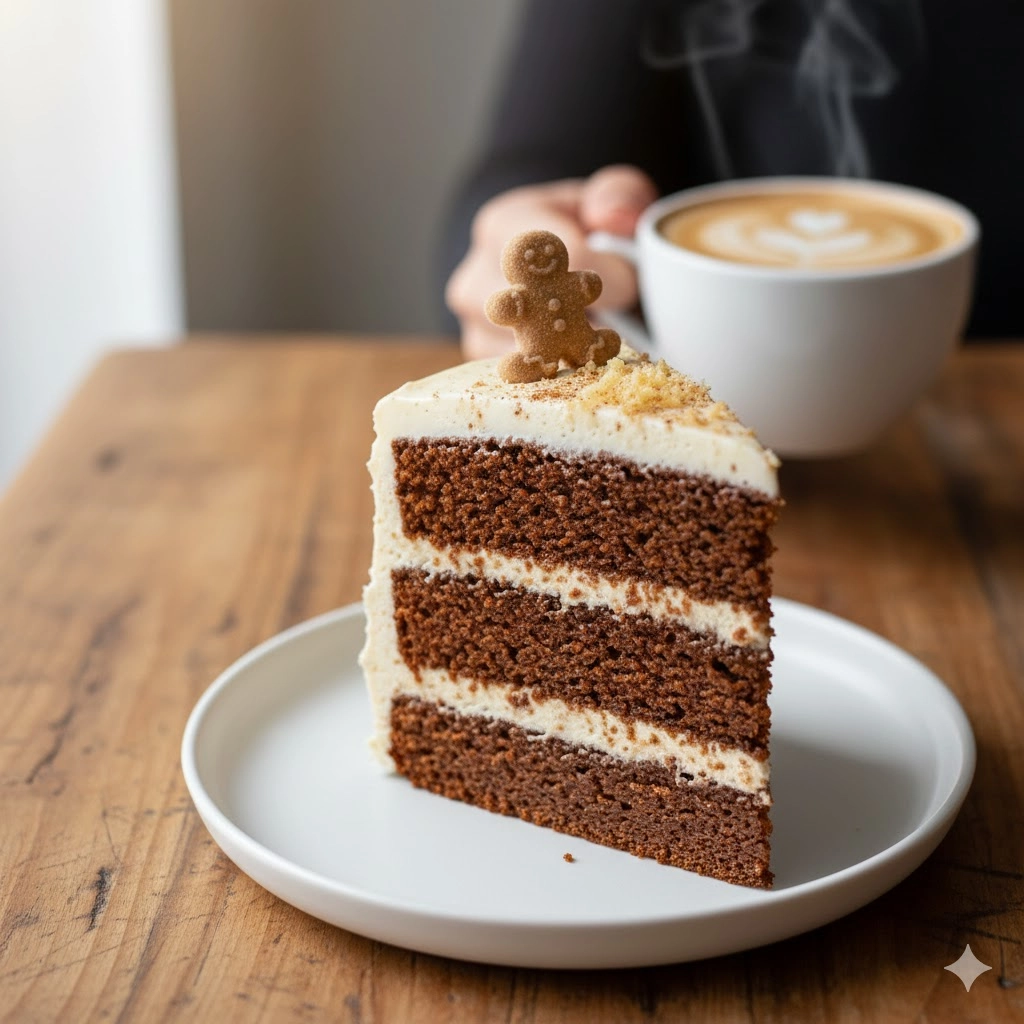
Modifying and Personalizing Your Cake
Flavor Variations for Depth
- Chai Spice Blend: Instead of the classic gingerbread spices (ginger, cinnamon, cloves), use a full teaspoon of a quality chai spice blend (which often includes cardamom, black pepper, and fennel) for a more complex, layered flavor profile.
- Brown Butter Buttercream: Brown the butter for the frosting before chilling it completely and using it in the buttercream recipe. This adds a nutty, toasted depth that complements the molasses perfectly.
- Boozy Soak: Replace one-third of the water/coffee in the espresso soak with dark rum or brandy for a noticeable, but not overwhelming, warmth and depth.
Ingredient Substitutions
- Dairy-Free Adaptation: Substitute the dairy butter for a high-quality, plant-based butter alternative (like Miyoko’s or Earth Balance) and use a plant-based heavy cream substitute (like full-fat canned coconut cream) in the buttercream.
- Gluten-Free Flour: Use a one-to-one gluten-free flour blend that contains xanthan gum. The cake’s moistness and strong flavors mask the typical slight bitterness often found in GF blends.
- Egg Replacement: For a vegan cake, use flax eggs (1 tablespoon flaxseed meal mixed with 3 tablespoons water per egg) or a commercial egg replacer like Bob’s Red Mill.
Presenting the Cake: Serving Suggestions
The height and flavor complexity of this cake demand a thoughtful presentation and accompaniment.
- A Simple Drizzle: Finish the cake with a simple, thin drizzle of melted white chocolate or a quick glaze made from confectioners’ sugar and milk. This adds a clean visual contrast and a complementary sweetness.
- Candied Ginger Garnishes: Use thin slices of candied ginger and arrange them artfully around the top edge or press them gently into the sides of the cake. The texture provides a pleasant chewiness and the spice intensifies the gingerbread notes.
- The Hot Beverage Pairing: Serve slices alongside a small espresso cup of strong, unsweetened black coffee, or a glass of cold, whole milk. The simple, clean beverage provides a welcome contrast to the richly spiced cake.
- Whipped Cream Alternative: Offer a side of lightly sweetened, freshly whipped cream—not to be confused with the dense buttercream—to dollop alongside the slice. The added lightness and dairy contrast cut through the density of the cake nicely.
Questions from the Baker’s Bench
Can I make the cake layers ahead of time?
Absolutely. The cake layers can be baked, cooled, and individually wrapped tightly in plastic wrap, then stored at room temperature for up to two days. For longer storage, freeze them for up to one month. Thaw them overnight in the refrigerator, then bring them to room temperature before assembling.
Why did my buttercream split or curdle?
This is usually a temperature issue. If the buttercream looks broken or curdled, it means the butter was either too cold or too warm when combined with the sugar. Try adding a tablespoon of very hot water (boiling is fine) while beating the mixture on high speed. This often helps the fat and sugar re-emulsify instantly.
How do I store leftover cake?
The frosted cake should be stored under a dome or in an airtight container at room temperature for up to two days. For longer storage, refrigerate for up to five days. Note that chilling can slightly firm the buttercream. Always let refrigerated cake sit at room temperature for at least thirty minutes before serving for the best flavor and texture.
Can I use store-bought instant espresso instead of brewed coffee?
You can, but the flavor will not be as robust or authentic. If you must use instant, dissolve one and one-half teaspoons of quality instant espresso powder in one-half cup of hot water for the cake, and a strong concentration for the soak and buttercream.
Comprehensive Nutrition Information
| Nutrient | Amount per Serving |
| Calories | 485 kcal |
| Protein | 4 g |
| Carbs | 75 g |
| Fat | 20 g |
| Fiber | 1 g |
| Sugar | 58 g |
| Sodium | 280 mg |
Disclaimer
Nutrition information is an estimate and may vary based on preparation and ingredients used.
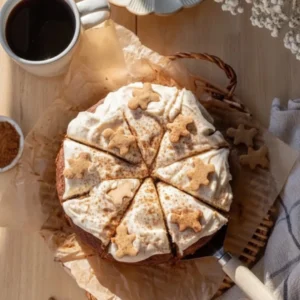
Gingerbread Latte Cake
Ingredients
- 2 3/4 cups all-purpose flour
- 2 tsp baking soda
- 1 1/2 tsp ground ginger
- 1 tsp ground cinnamon
- 1/2 tsp ground cloves
- 1/2 tsp fine sea salt
- 1 cup unsalted butter, softened
- 1 cup granulated sugar
- 3/4 cup dark brown sugar, packed
- 3 large eggs, room temperature
- 1/2 cup strong brewed coffee or espresso, cooled
- 3/4 cup unsulfured molasses
- 1/2 cup granulated sugar (for espresso syrup)
- 1/4 cup water (for espresso syrup)
- 1/4 cup strong brewed coffee or espresso (for espresso syrup)
- 1 cup unsalted butter, softened (for buttercream)
- 4 cups confectioners’ sugar, sifted
- 1 tsp pure vanilla extract
- 3 tbsp heavy cream
- 1 tbsp strong brewed coffee or espresso, cooled (for buttercream)
Instructions
- Whisk all dry ingredients (flour, baking soda, spices, salt) in a medium bowl.
- In a large bowl, cream the butter, granulated sugar, and brown sugar until light and fluffy (about 4-5 minutes).
- Beat in the eggs one at a time. Add the cooled coffee and molasses and mix until combined (mixture may look curdled).
- Gradually mix in the dry ingredients, stopping when just combined. Do not overmix.
- Divide batter evenly into three greased 8-inch round pans. Bake at 350°F for 25–30 minutes. Cool completely on a wire rack.
- Make the espresso soak: Heat sugar and water until dissolved, remove from heat, stir in coffee. Cool completely.
- Make buttercream: Beat softened butter until smooth. Add sifted sugar gradually. Add vanilla, cream, and espresso. Beat 2 minutes until fluffy.
- Assemble cake: Place one layer on plate. Brush with 1/3 of espresso soak. Add buttercream. Repeat with remaining layers. Frost outside and decorate as desired.
Notes
Equipment
- stand mixer or hand mixer
- mixing bowls
- measuring cups and spoons
- 8-inch round cake pans (x3)
- whisk
- spatula
- wire rack
- pastry brush