
A Primer on Holiday Glazing: Why This Icing Works
The signature spicy warmth of a gingerbread cookie is truly incomplete without the snap of a perfectly set glaze. Far beyond just a decorative flourish, the right icing introduces a necessary textural contrast and a balancing sweetness that completes the holiday bite. This classic Gingerbread Cookie Icing recipe focuses on achieving two critical textures: a thick, pipeable consistency for fine detail, and a thinner, flowable consistency for smooth, professional-looking flooding. Achieving this balance is the key to elevating homemade gingerbread from simple baked goods to stunning edible art. It is a deceptively simple concoction that, when prepared correctly, yields a brilliant white finish that hardens beautifully, allowing for easy stacking and transport of your festive creations.
Table of Contents
The Essential Mis en Place
The beauty of this simple icing lies in the quality and precise measurement of its minimal ingredients. A scale is always recommended for measuring confectioners’ sugar, but volumetric measurements are provided here for convenience.
For the Icing Base:
- 4 cups (450 grams) Confectioners’ Sugar (sifted)
- 1/2 teaspoon Vanilla Extract (clear, if possible, to maintain whiteness)
- 1/4 teaspoon Almond Extract (optional, for flavor complexity)
- 3 tablespoons Milk (or water, starting quantity)
- Pinch of Kosher Salt
For Adjusting Consistency (as needed):
- Additional Milk or Water (added drop by drop)
- Additional Confectioners’ Sugar (added by the teaspoon)
Master the Method: A Quick Guide
This process ensures a lump-free, workable icing ready for detailing and flooding.
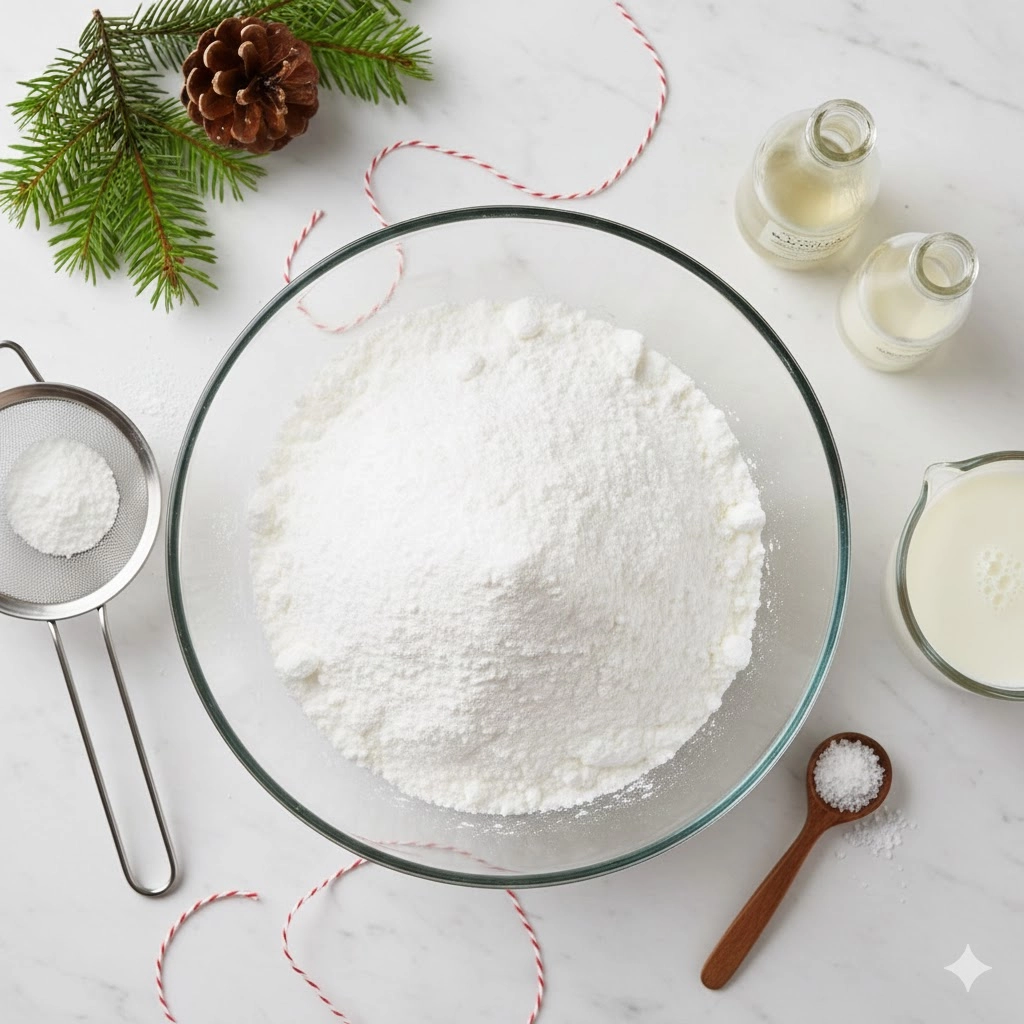
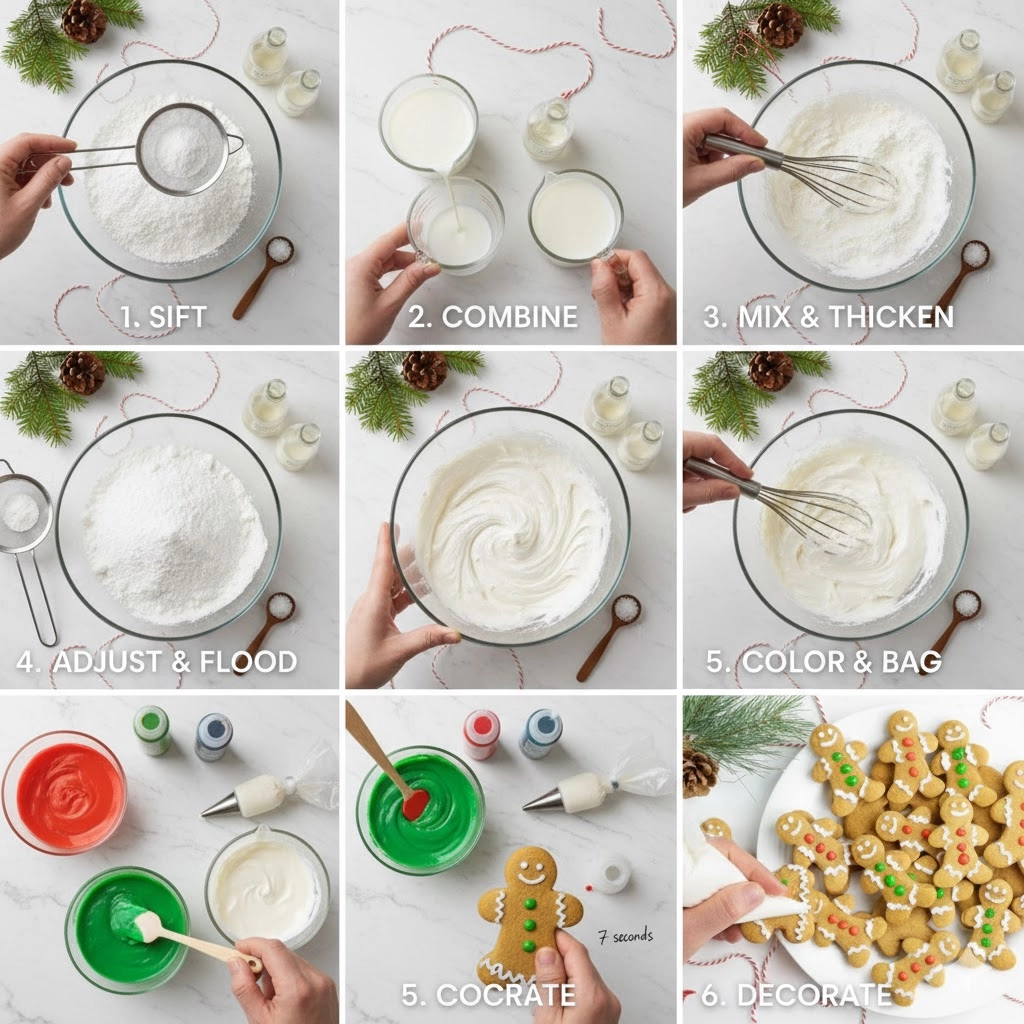
- Sift the Sugar: Measure and sift the four cups of confectioners’ sugar directly into a large mixing bowl. This is a non-negotiable step for a smooth finish.
- Combine the Flavorings: In a separate small container, combine the three tablespoons of milk, the vanilla extract, the almond extract, and the pinch of salt. Stir gently.
- Incorporate Liquid: Pour two tablespoons of the liquid mixture into the sugar bowl. Begin stirring using a whisk or rubber spatula, working from the center outwards until a thick, paste forms.
- Achieve Piping Consistency: Gradually add the remaining liquid, one teaspoon at a time, mixing thoroughly after each addition, until the icing is a stiff, yet pliable consistency, similar to firm peanut butter. This is your foundation.
- Adjust for Flooding: Transfer about one-third of the icing to a separate bowl. To this portion, add milk, half a teaspoon at a time, mixing gently until it reaches a “seven-second” consistency (see detailed section below).
- Color and Store: Divide the icing into separate bowls for coloring, using gel-based food coloring for the best saturation. Transfer the prepared icing into piping bags fitted with small round tips or simple squeeze bottles.
Deep Dive into Consistency and Finish
The difference between a basic sugar glaze and a professional-grade icing is entirely in the preparation, particularly the delicate balance of liquid to sugar. This section breaks down the crucial steps for a flawless finish.
Sifting for Silky Smoothness
Many cooks skip sifting confectioners’ sugar, arguing that modern products are lump-free. This is a mistake. Confectioners’ sugar contains cornstarch to prevent clumping, and even fine sugar will settle and compact over time. Sifting breaks up these micro-clumps and, more importantly, aerates the sugar, allowing it to dissolve into the liquid more smoothly and create a truly homogeneous texture. For optimal results, pass the sugar through a fine-mesh sieve twice. The resulting powder should feel almost like snow. If you introduce lumps here, they will persist in the final product, leading to blockages in your piping tips.
Titrating the Liquid: Achieving Flooding vs. Piping
The consistency of the icing determines its use. There are two primary phases:
1. The Outline (Piping) Consistency:
This is the thicker, stiffer icing needed for the structural elements—the lines, borders, and fine details. It should be thick enough to hold a sharp, defined edge without slumping. When you pull a spoon through it, the trench should hold its shape for longer than ten seconds before the surface begins to level. This is often achieved by using only three to four teaspoons of liquid per cup of sugar. When stirring, you should feel significant resistance. If it’s too stiff, add liquid drop by drop. If it becomes too loose, add a tiny pinch of sifted confectioners’ sugar. Precision is paramount.
2. The Fill (Flooding) Consistency:
This thinner consistency is used to fill in the areas outlined by the piping icing. It must flow smoothly and self-level to create a glassy, even surface. The standard test for perfect flow is the “seven-second rule.” To perform this, use a spoon to scoop up some icing and drizzle it back into the bowl, creating a trail across the surface. Count how long it takes for that trail to completely disappear and merge back into the main body of the icing. A perfect flooding consistency should take approximately seven seconds to fully smooth out. If it levels faster than five seconds, it is too thin and risks running off the sides of the cookie. If it takes longer than ten seconds, it will not self-level and will show brush marks. Achieving the right consistency is the key to successful gingerbread cookie icing.
The Importance of Cure Time
Many amateur bakers rush this stage. Once a cookie is fully decorated, it must be allowed to cure, or dry, completely before handling or storage. This hardening process gives the icing its desirable, crisp texture and prevents smudging.
- Initial Set: The surface of the icing will develop a thin crust within thirty minutes to an hour, especially in dry conditions.
- Full Cure: For total hardness, which is necessary for stacking cookies, the icing requires twelve to twenty-four hours at room temperature. This process should happen in a dry, room-temperature environment, away from humidity. Never attempt to speed up the drying process by placing iced cookies in the refrigerator; the sudden drop in temperature and increased moisture can cause condensation, leading to dull, sticky, or splotchy icing.
Elevated Flavor and Texture Techniques
While the basic recipe is delicious, these techniques introduce professional-level depth and texture.
- Emulsifying with Meringue Powder: For maximum structural integrity and a brighter white color, consider substituting one tablespoon of the confectioners’ sugar with one tablespoon of meringue powder. This adds stability, helps the icing dry harder and faster, and gives it a subtle marshmallow-like sheen, making your finished cookies more resilient to minor temperature fluctuations.
- Using Citrus Zest Oil: Instead of water or milk, use freshly squeezed lemon, orange, or lime juice as your liquid base. More than just tang, the oils in the juice—when strained—add a wonderfully complex brightness that cuts through the intense sweetness of the sugar and complements the ginger and molasses notes in the cookie.
- Warming the Liquid Slightly: Use milk or water that is barely lukewarm (not hot). Mixing warm liquid into the sugar helps the fine granules dissolve quicker and more completely, resulting in an even glossier and smoother final icing, reducing the time needed to achieve a perfectly smooth paste.
- Deepening the Vanilla Note: Instead of standard vanilla extract, use pure vanilla bean paste. The tiny flecks of vanilla bean add an upscale visual element and a deeper, more rounded vanilla flavor that provides an excellent counterpoint to the spice. Be aware that the specks will affect the aesthetic of a pure white icing.
- Achieving Stencil-Ready Icing: For flawless use with cookie stencils, you need an ultra-stiff paste. Mix your piping-consistency icing with a few drops of light corn syrup. The corn syrup makes the icing incredibly elastic and sticky, allowing it to hold shape perfectly when spread over a stencil with a thin offset spatula.

Beyond the Basics: Expert Flavor Profiles
Move past plain vanilla with these simple, effective flavor swaps that pair brilliantly with gingerbread.
- Brown Butter Icing: Before mixing, gently melt four tablespoons of unsalted butter and cook it over medium-low heat until the milk solids turn a rich golden brown and the butter smells nutty. Strain this brown butter, let it cool slightly, and use it to replace two tablespoons of the milk in the recipe. The toasted, caramel notes of the brown butter add incredible depth and complexity.
- Cardamom Orange: Replace the vanilla and almond extracts entirely. Instead, use one teaspoon of finely grated orange zest (ensure it is zest only, no white pith) and a quarter teaspoon of ground cardamom, mixing them directly into the confectioners’ sugar before sifting. Use orange juice instead of milk for the liquid base.
- Peppermint White Icing: For a classic winter profile, replace the vanilla extract with a half teaspoon of pure peppermint extract. The peppermint adds a refreshing, cool contrast to the warm spices. This is best done using only water, not milk, to avoid any unintended textural changes from the added fat.
- Espresso Glaze: For a sophisticated, less saccharine icing, dissolve one teaspoon of high-quality instant espresso powder into the milk before mixing it with the sugar. The coffee provides a subtle bitterness that balances the sweetness and highlights the caramelized molasses flavor of the gingerbread.
Presentation and Pairing
While the iced cookie is the star, thoughtful serving ensures the presentation is just as impressive as the flavor.
- The Layered Cookie Tower: Use the piped and flooded cookies to build a stacked holiday arrangement. Ensure the icing is fully cured (twenty-four hours minimum) before stacking. Alternate between large, medium, and small cookies, or use a few simple layers to create a small centerpiece.
- Gifting in Tins: For transportation or gifting, line airtight tins with parchment paper and stack the fully cured cookies with a piece of waxed paper or baking parchment between each layer. The cured icing prevents sticking, and the airtight container keeps the cookies fresh for up to a week.
- Hot Drink Garnish: Serve a decorated cookie alongside a mug of hot cocoa, steamed milk, or a festive chai latte. The slight warmth and steam from the drink enhance the spice aroma of the gingerbread, making for a multi-sensory experience.
- Creating a Cookie Decorating Station: If hosting, prepare the Gingerbread Cookie Icing in various colors and consistencies and transfer them to small, disposable piping bags or squeeze bottles. Lay out sprinkles, sanding sugars, and edible glitter, allowing guests to decorate their own cookies.
Solving Common Icing Dilemmas
This simple composition of sugar and liquid can be temperamental. Here are solutions to the most frequent issues encountered by home bakers.
Q: My icing is dull and grainy, not shiny. What went wrong?
A: Graininess is usually a sign that the confectioners’ sugar did not fully dissolve. This happens if the liquid was too cold, or if the icing was whisked too vigorously, incorporating air bubbles that lead to a matte finish. To fix this, place the bowl over a pan of barely simmering water (a gentle double boiler) and stir continuously until the sugar is fully dissolved and the mixture is warm to the touch, but not hot. A pinch of corn syrup (half a teaspoon) can also help boost the shine.
Q: The icing is running off the sides of my cookies.
A: The icing is too thin; it has fallen below the critical seven-second consistency. Stop immediately. If it is already on the cookie, you must scrape it off before it sets. Mix a few teaspoons of sifted confectioners’ sugar into the main batch until the proper consistency is restored. Remember to always adjust the consistency using very small amounts of liquid or sugar.
Q: My icing is cracking after it dries.
A: This usually occurs when the initial piping line (the border) and the flooding layer dry at very different rates. If the border dries too fast and contracts, and the flood is applied too thickly, the flood layer will crack as it sets. The best solution is to ensure your piping and flooding consistencies are not drastically different, and to apply the flood layer in a smooth, thin coating. Drying the cookies in a slightly humid environment (like a covered container before they dry) can help the layers cure together evenly, though this takes practice.
Q: Can I make this with powdered sugar that isn’t confectioners’ sugar?
A: No, confectioners’ sugar is essential. Unlike granulated sugar, it is milled into a fine powder and contains a small amount of starch (typically cornstarch), which is necessary for thickening and helping the final icing set hard and hold its shape. Using regular powdered or granulated sugar will result in a runny, crystalline glaze that will not cure properly for stacking.
Nutritional Snapshot
| Nutrient | Amount per Serving |
| Calories | 145 kcal |
| Protein | 0 g |
| Carbs | 36 g |
| Fat | 0 g |
| Fiber | 0 g |
| Sugar | 35 g |
| Sodium | 5 mg |
Disclaimer
Nutrition information is an estimate and may vary based on preparation and ingredients used.

The Ultimate Gingerbread Cookie Icing
Ingredients
- 4 cups Confectioners’ Sugar (sifted)
- 0.5 tsp clear Vanilla Extract
- 0.25 tsp Almond Extract (optional)
- 3 tbsp Milk (or water, starting quantity)
- 1 pinch Kosher Salt
Instructions
- Measure and sift the four cups of confectioners’ sugar directly into a large mixing bowl to eliminate lumps and ensure a silky-smooth icing.
- In a separate small container, combine the three tablespoons of milk, the vanilla extract, the almond extract (if using), and the pinch of salt. Stir gently.
- Pour two tablespoons of the liquid mixture into the sifted sugar bowl. Begin stirring using a whisk or rubber spatula, working from the center outwards until a thick, paste forms.
- Gradually add the remaining liquid, one teaspoon at a time, mixing thoroughly after each addition, until the icing is a stiff, yet pliable consistency, similar to firm peanut butter. This is the structural ‘piping’ consistency.
- Transfer about one-third of the stiff icing to a separate bowl. To this portion, add milk, half a teaspoon at a time, mixing gently until it reaches a “seven-second” consistency (it should self-level smoothly in about seven seconds).
- Divide the icing portions into separate containers for coloring, using gel-based food coloring. Transfer the prepared icing into piping bags fitted with small round tips or simple squeeze bottles for decoration.
Notes
Equipment
- fine mesh sieve For sifting the sugar
- mixing bowls Two are needed for different consistencies
- Rubber spatula or whisk For mixing
- Piping bags or squeeze bottles For decorating