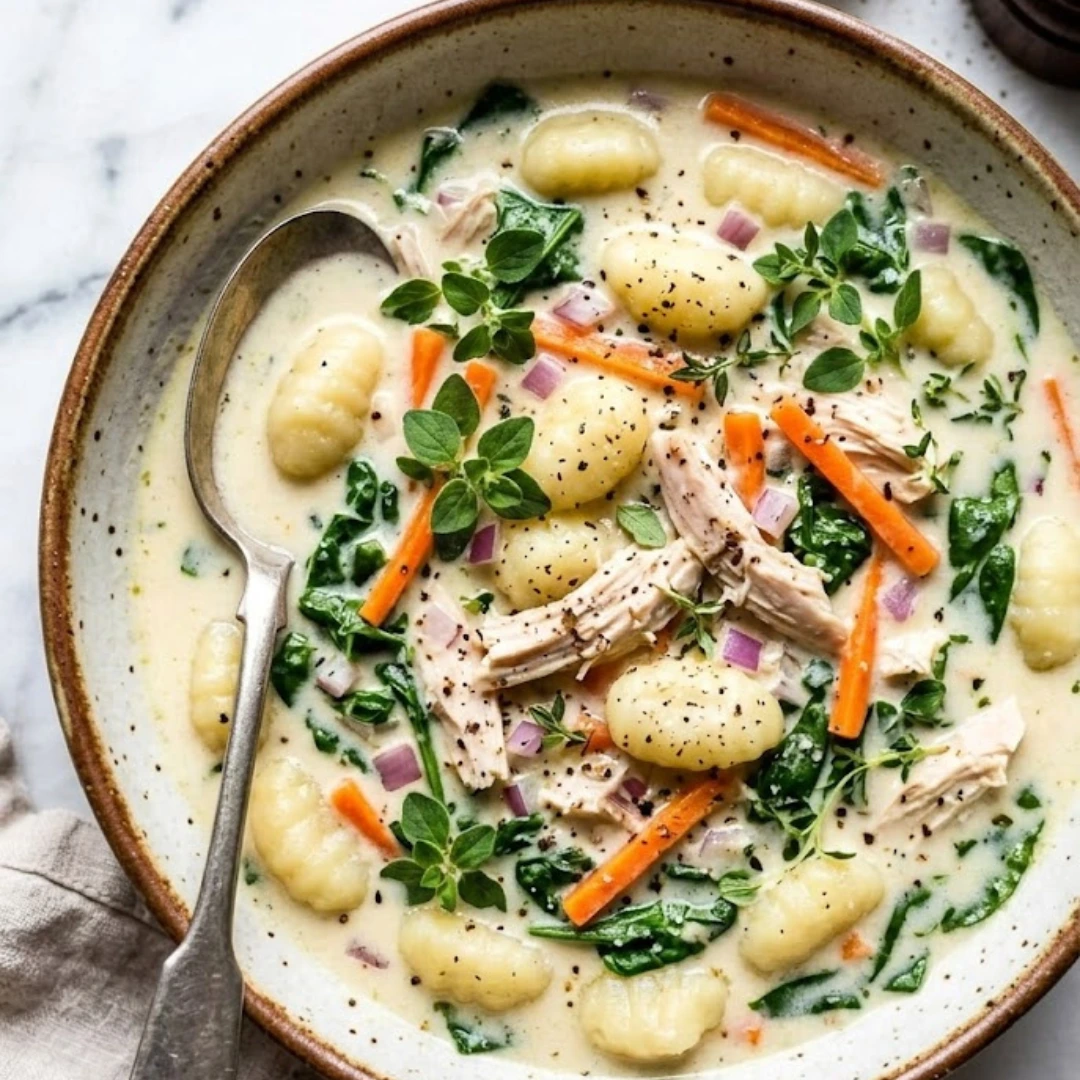
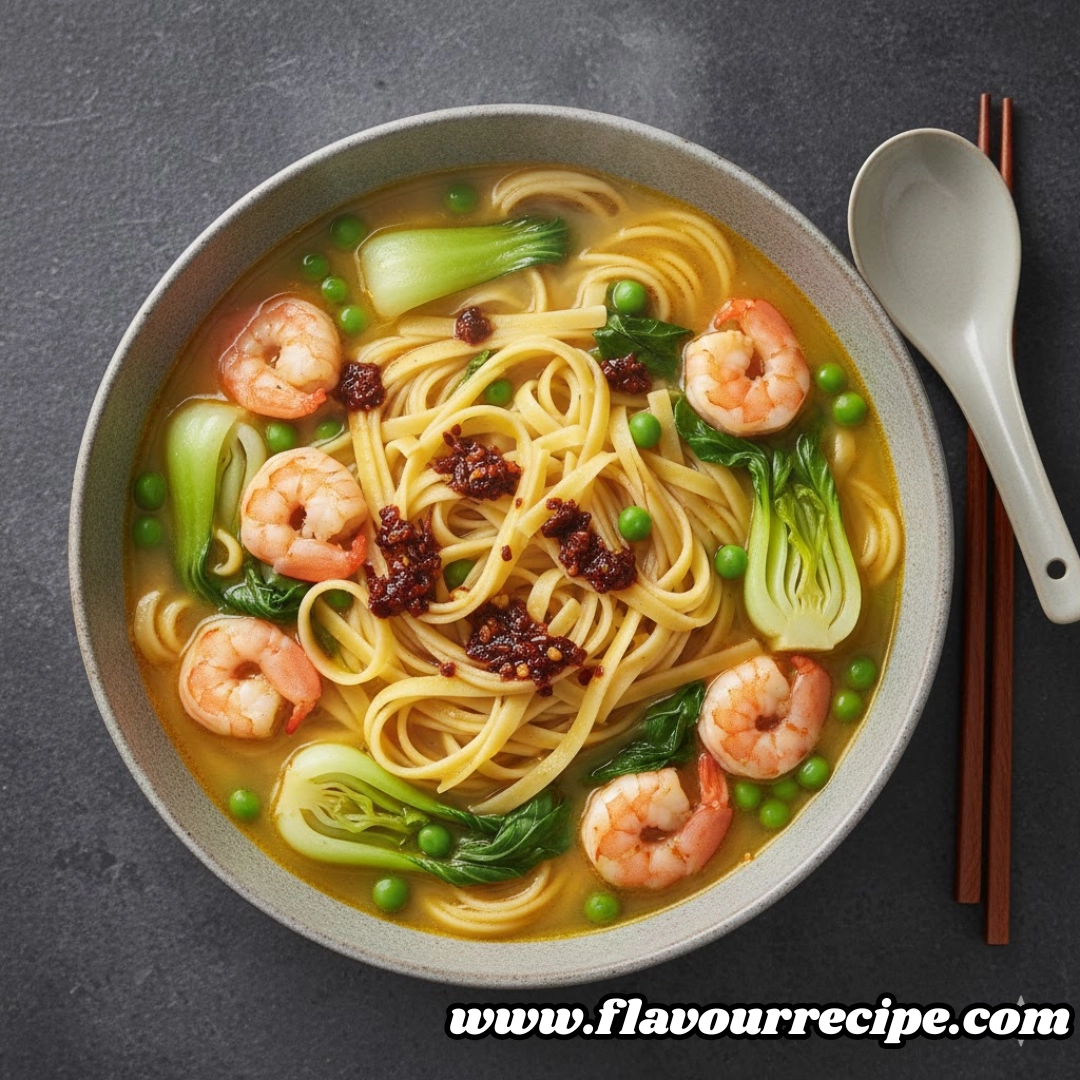
A steaming bowl of Ginger Soy Shrimp Noodle Soup offers a refined balance of citrus brightness and deep umami notes, making it an excellent choice for a light yet satisfying dinner. This dish relies on the marriage of fresh aromatics and pantry staples to create a layered broth that tastes as though it has been simmering for hours, despite coming together in under half an hour. It is particularly well-suited for chilly evenings when you need something restorative or for those busy afternoons when a wholesome, restaurant-quality meal feels out of reach.
The beauty of this soup lies in its textural contrasts. The snap of the shrimp, the tender bite of pasta, and the slight crunch of bok choy provide a multi-dimensional eating experience. By utilizing frozen shrimp and peas, the preparation remains streamlined without sacrificing nutritional value or flavor. Whether you are serving a family or looking for a sophisticated solo meal, this recipe adapts beautifully to the modern kitchen’s pace while maintaining a classic flavor profile that appeals to both adventurous and traditional palates.
Table of Contents
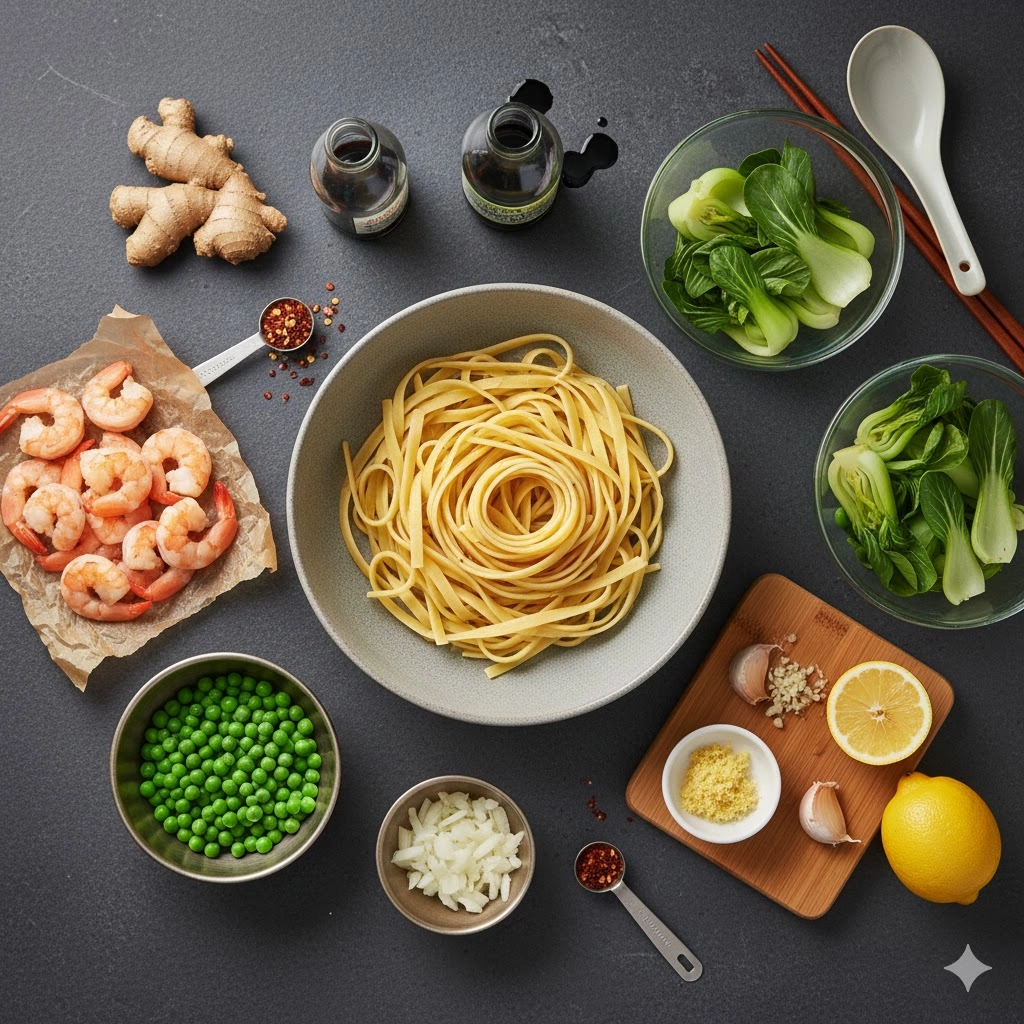
Ingredients
- 1 tablespoon vegetable oil
- Half cup yellow onion, finely chopped
- 2 teaspoons fresh ginger, finely grated
- 2 cloves garlic, minced
- 2 tablespoons fresh lemon juice
- 4 cups low-sodium vegetable broth
- 2 tablespoons low-sodium soy sauce
- One quarter teaspoon crushed red pepper flakes
- 4 ounces dry linguine pasta, broken into two-inch pieces
- 1.5 cups baby bok choy, coarsely chopped
- 1 pound large shrimp, frozen, thawed, peeled, and deveined
- 1 cup frozen sweet peas
- Chili crisp for garnish
Instructions
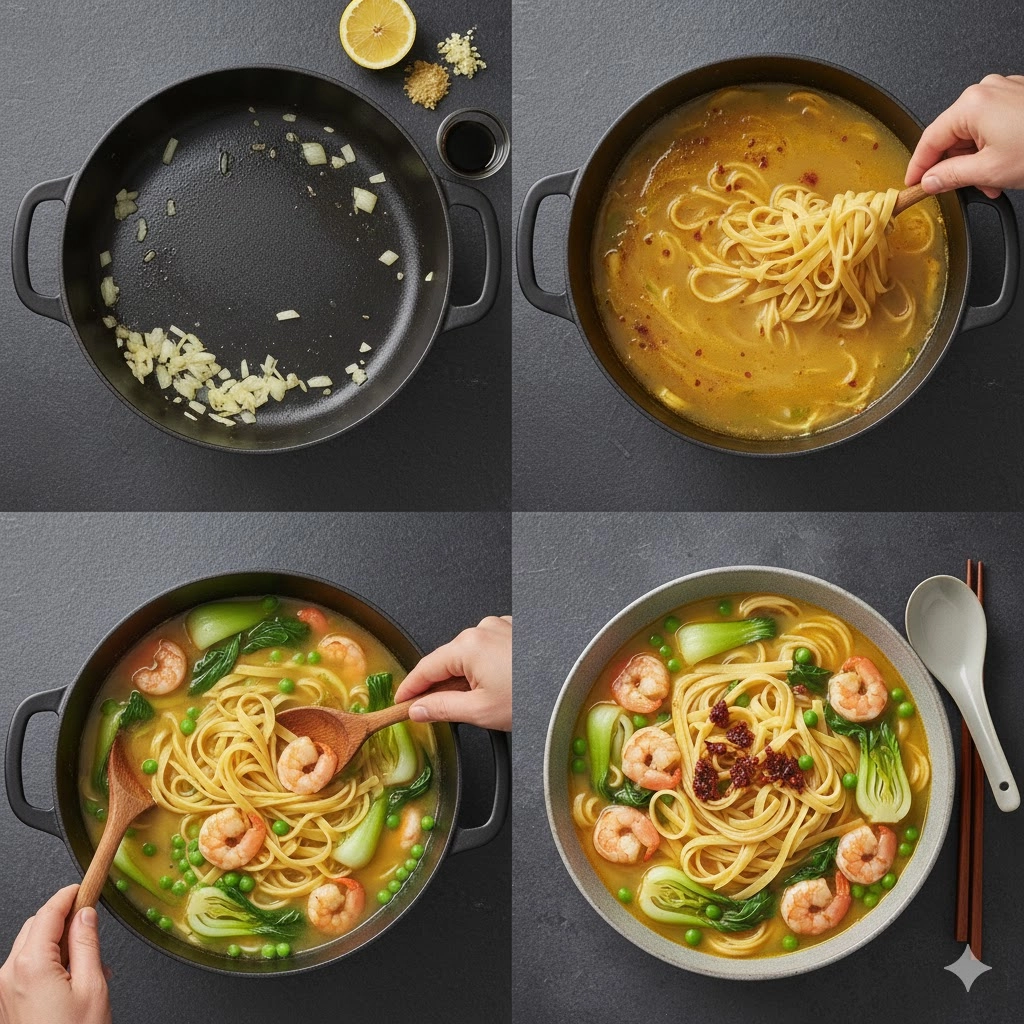
- Heat the vegetable oil in a large heavy-bottomed saucepan or Dutch oven over medium heat.
- Sauté the chopped onion until it becomes translucent and soft, which should take roughly five minutes.
- Incorporate the grated ginger and minced garlic, stirring constantly for one minute until the aroma is released.
- Deglaze the pan with lemon juice, scraping the bottom to release any caramelized bits.
- Pour in the vegetable broth and soy sauce, then add the red pepper flakes and bring the liquid to a rolling boil.
- Submerge the broken linguine pieces into the boiling broth and cook according to the package timing instructions.
- Three minutes before the pasta reaches al dente, add the shrimp, chopped bok choy, and frozen peas.
- Simmer until the shrimp are opaque and pink and the vegetables are bright green.
- Ladle into deep bowls and top with a spoonful of chili crisp if desired.
Technical Execution and Sensory Cues
The foundation of any great Ginger Soy Shrimp Noodle Soup is the initial aromatic base. When you begin sautéing the onion, look for a change from opaque white to a shimmering translucency. You are not looking for dark browning here; instead, aim for a gentle softening that provides a sweet, subtle background. When the ginger and garlic hit the oil, the scent should be immediate and pungent. Be careful not to let the garlic turn brown or bitter, as this will permeate the entire broth.
As the lemon juice hits the hot pan, it will hiss and lift the “fond”—those tiny concentrated bits of flavor stuck to the bottom. This step is crucial for adding acidity that cuts through the saltiness of the soy sauce. Once the broth is added and reaches a boil, the timing of the pasta becomes the priority. Because we are using linguine, which has a flatter surface area than spaghetti, it holds onto the broth’s seasoning effectively.
When you introduce the shrimp and greens in the final three minutes, watch for the shrimp to curl into a “C” shape. If they curl tightly into an “O,” they are likely overcooked and may become rubbery. The bok choy should wilt just enough to be tender while the stalks retain a watery, refreshing crunch. The frozen peas will thaw almost instantly, adding a pop of sweetness that balances the heat from the red pepper.
Pro Tips for Culinary Success
- Grate Ginger Correctly: Use a microplane or the finest side of a box grater for the ginger. This ensures the fibers are broken down so you get the juice and oils without woody chunks in your soup.
- Pasta Prep: Breaking the linguine into smaller pieces is not just for ease of eating; it prevents the noodles from clumping together in the pot, ensuring each strand is evenly coated in the ginger-soy infusion.
- Shrimp Selection: Always opt for “tail-off” shrimp for this specific soup. It makes the dining experience much smoother when you don’t have to fish tails out of a hot broth.
- Manage Sodium: If you find the soup too salty, even with low-sodium broth, add a splash of water or an extra squeeze of lemon juice at the end to brighten the flavors and dilute the salt.
- Temperature Control: Keep the broth at a gentle simmer once the shrimp are added. A violent boil can toughen the delicate seafood and break the noodles apart.
- Freshness Check: If your bok choy looks wilted before cooking, soak the cut pieces in ice water for ten minutes to crisp them up before adding them to the pot.
Variations and Substitutions
If you do not have linguine on hand, thin spaghetti or even ramen noodles work exceptionally well in this broth. For those seeking a gluten-free alternative, rice noodles are a natural fit; just be sure to adjust the cooking time as rice noodles soften much faster than wheat-based pasta.
For a protein swap, thin slices of firm tofu can replace the shrimp. If using tofu, add it at the same time you would add the shrimp to allow it to heat through and absorb the ginger and soy flavors. If baby bok choy is unavailable, chopped Napa cabbage or even fresh spinach leaves can be substituted for the greens. Spinach should be added in the final sixty seconds of cooking as it wilts almost instantly.
Serving Suggestions
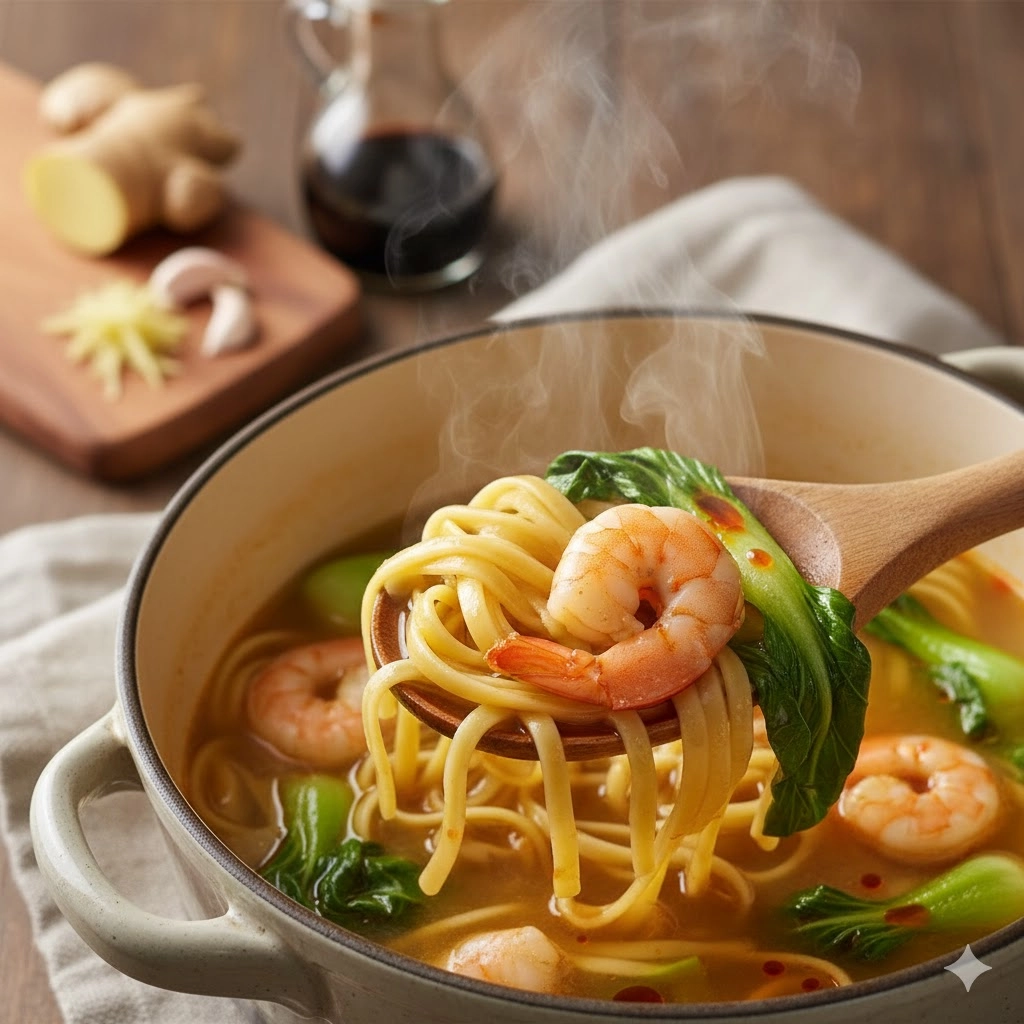
This soup is best served in wide, deep ceramic bowls that retain heat. To elevate the presentation, garnish with thinly sliced scallions or a sprinkle of toasted sesame seeds alongside the chili crisp. A side of crusty bread or even a few gyoza (potstickers) can turn this into a more substantial multi-course feast.
For a brighter finish, serve with extra lemon wedges on the side, allowing each person to customize the acidity of their bowl. If you enjoy a bit more texture, a handful of fresh bean sprouts added right before serving provides a cool, raw crunch that contrasts beautifully with the warm, savory liquid.
Frequently Asked Questions
Can I use pre-cooked shrimp for this recipe?
Yes, you can use pre-cooked shrimp, but you must change the timing. Add them during the very last minute of simmering just to warm them through; otherwise, they will become tough and lose their sweetness.
How should I store leftovers?
Store leftovers in an airtight container in the refrigerator for up to two days. Note that the noodles will continue to absorb the broth as they sit, so you may need to add a splash of extra stock when reheating to maintain the soup’s consistency.
Is there a substitute for chili crisp?
If you don’t have chili crisp, a drizzle of toasted sesame oil mixed with a pinch of red pepper flakes or a dash of Sriracha can provide a similar depth and heat.
Can I make this soup spicy?
While the recipe includes a small amount of red pepper flakes, you can easily increase the heat by adding a teaspoon of sambal oelek or fresh sliced serrano peppers during the aromatic sauté stage.
Nutrition Information
| Nutrient | Amount per Serving |
| Calories | 333 kcal |
| Protein | 33 g |
| Carbs | 30 g |
| Fat | 9 g |
| Fiber | 5 g |
| Sugar | 6 g |
| Sodium | 1482 mg |
Nutrition information is an estimate and may vary based on preparation and ingredients used.
Ginger Soy Shrimp Noodle Soup
Ingredients
- 1 tbsp vegetable oil
- 0.5 cup yellow onion, finely chopped
- 2 tsp fresh ginger, finely grated
- 2 cloves garlic, minced
- 2 tbsp fresh lemon juice
- 4 cups low-sodium vegetable broth
- 2 tbsp low-sodium soy sauce
- 0.25 tsp crushed red pepper flakes
- 4 oz dry linguine pasta, broken into 2-inch pieces
- 1.5 cups baby bok choy, coarsely chopped
- 1 lb large shrimp, thawed, peeled, and deveined
- 1 cup frozen sweet peas
- chili crisp, for garnish
Instructions
- Heat vegetable oil in a large heavy-bottomed saucepan or Dutch oven over medium heat.
- Add chopped onion and sauté until translucent and soft, approximately 5 minutes.
- Stir in grated ginger and garlic. Cook for 1 minute until highly fragrant, being careful not to burn the garlic.
- Add lemon juice to the pan, using a spoon to scrape up any browned bits (deglazing).
- Pour in vegetable broth and soy sauce. Add red pepper flakes and bring the mixture to a rolling boil.
- Add the broken linguine pieces. Cook according to package directions for al dente texture.
- Three minutes before the pasta is finished, stir in the shrimp, bok choy, and frozen peas.
- Simmer until shrimp are opaque and pink. Ladle into bowls and garnish with chili crisp.
Notes
Equipment
- Large saucepan or Dutch oven
- Microplane or fine grater For the ginger
- wooden spoon
- Soup ladle