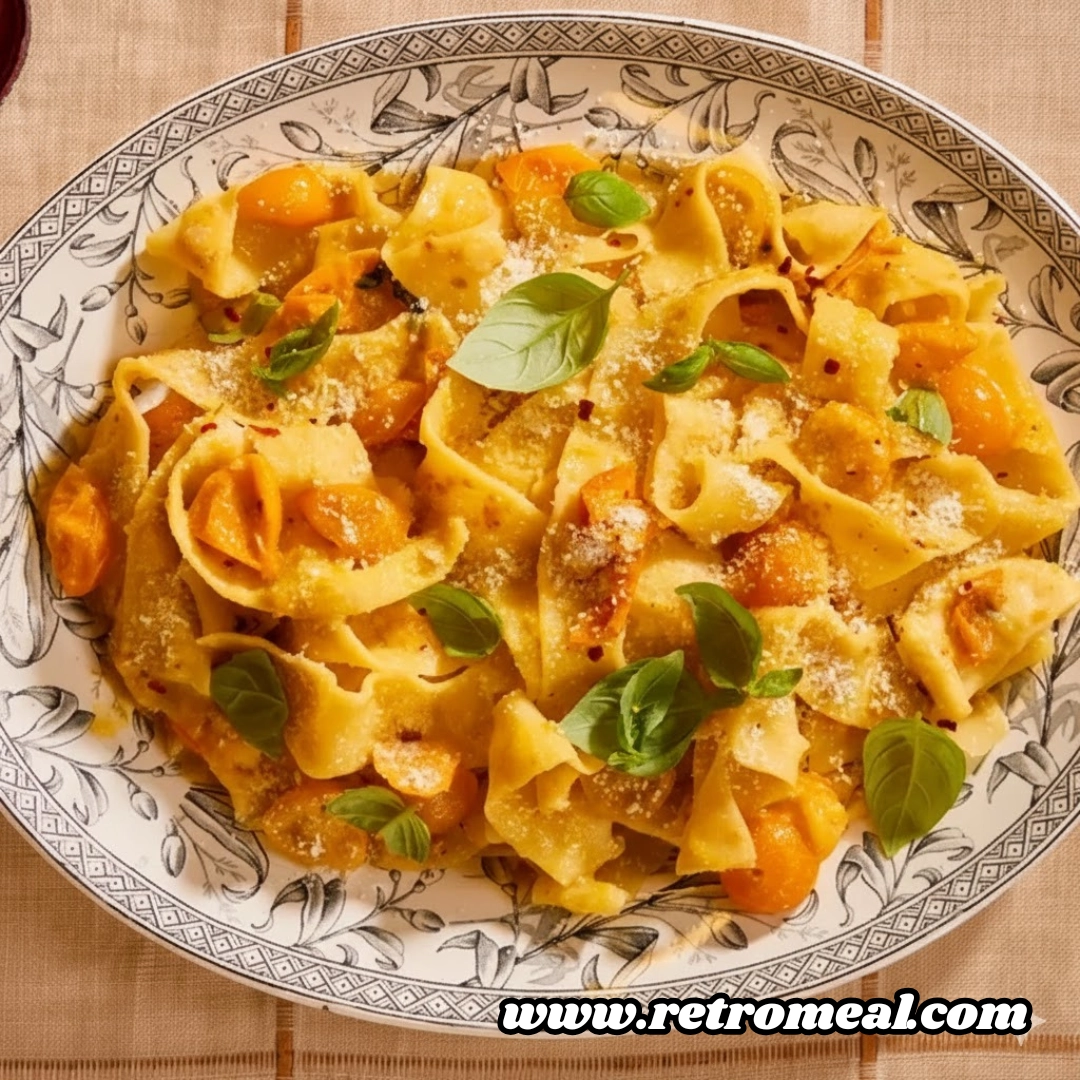
There is a specific kind of kitchen magic that happens when you realize that the most luxurious meals often come from the humblest beginnings. This recipe for Fresh Pasta with Buttered Tomatoes is the perfect embodiment of that philosophy. Forget the complex egg-yolk-heavy doughs or the expensive machinery typically associated with artisanal noodles. This dish celebrates the southern Italian tradition of “pasta bianca,” or white pasta, which relies on the elemental combination of semolina flour and water. Paired with a vibrant, velvety sauce made from late-summer tomatoes and rich butter, this meal is a testament to the power of high-quality ingredients and patient technique.
Table of Contents
Ingredients
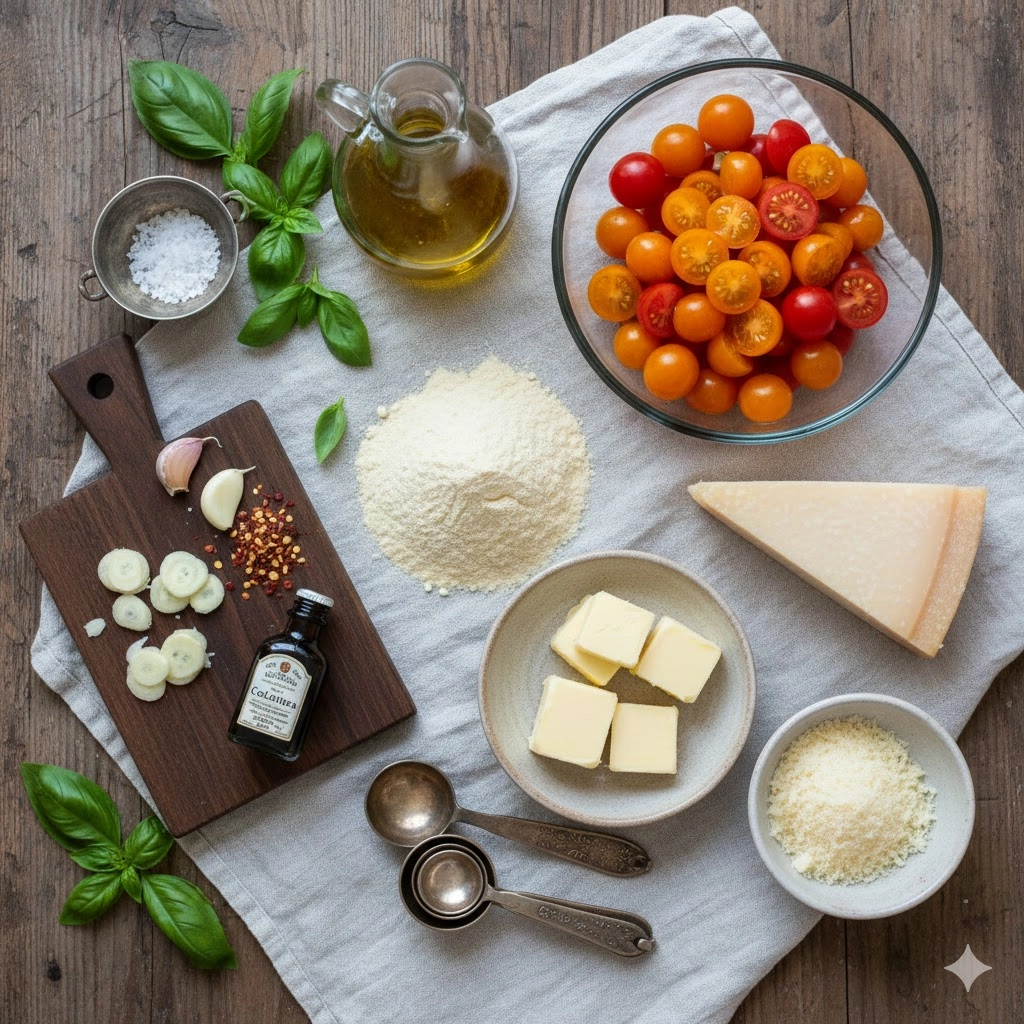
To ensure the success of this dish, it is essential to use the exact measurements and types of ingredients listed below. The chemistry of semolina pasta depends on the protein structure of the flour and the temperature of the water.
- 2 and 1/3 cups (300 grams) semolina flour, plus additional for dusting your work surface
- 1/4 cup extra-virgin olive oil
- 4 garlic cloves, sliced into thin, translucent slivers
- 1/2 teaspoon crushed red pepper flakes
- 2 pints Sun Gold or cherry tomatoes, halved and divided into two portions
- Kosher salt, to taste
- 4 tablespoons unsalted butter, cut into small cubes
- 1 teaspoon colatura (Italian anchovy sauce) or high-quality fish sauce
- 2 ounces Parmesan cheese (approximately 1 and 1/2 cups), finely grated, plus more for the final garnish
- 4 tablespoons fresh basil, torn into rustic pieces and divided
Instructions
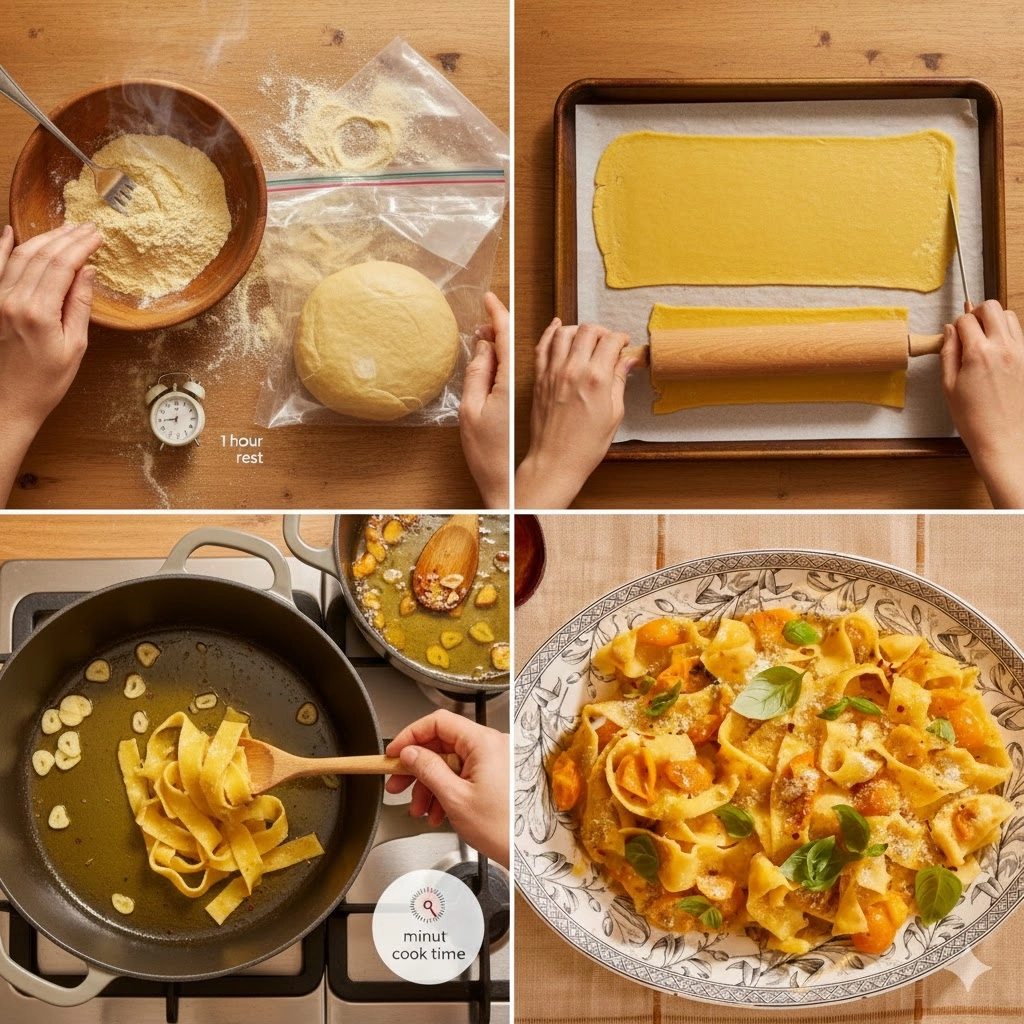
- Begin by preparing the dough. In a medium mixing bowl, use a fork to combine 2 and 1/3 cups of semolina flour with 2/3 cup of just-boiled water. Mix until the flour is moistened and the texture appears pebbly. If the mixture remains excessively dry with large patches of loose flour, add up to 1 tablespoon of additional water. Knead the dough directly in the bowl for about 3 minutes until it becomes smooth and cohesive. Place the dough into a resealable plastic bag, press out all the air, and let it rest at room temperature for 1 to 4 hours.
- Once rested, divide the dough into 4 equal pieces. Work with one piece at a time, keeping the others sealed in the bag to prevent drying. On a clean surface (no flour is usually necessary), roll the dough out into a long, narrow rectangle that is 1/16 inch thick. Lightly dust the surface with semolina, then fold the sheet into thirds starting from the short end. Using a sharp knife, cut the dough into ribbons approximately 3/4 inch wide. Gently unfurl the ribbons and move them to a lightly floured baking sheet. Repeat for the remaining pieces.
- For the sauce, heat 1/4 cup of extra-virgin olive oil in a large Dutch oven over medium heat. Add the sliced garlic and red pepper flakes, stirring frequently for about 2 minutes until the garlic is a pale golden hue and highly fragrant.
- Add 1 pint of the halved tomatoes, a generous pinch of kosher salt, and 1/4 cup of water to the Dutch oven. Cover the pot and reduce the heat to medium-low. Cook, stirring occasionally, for 6 to 8 minutes until the tomatoes have burst and created a thick, saucy base.
- While the sauce simmers, bring a large pot of heavily salted water to a boil. Cook the fresh pasta for about 1 minute, or until it is just barely tender.
- Use tongs to transfer the pasta directly from the boiling water into the Dutch oven with the tomato sauce. Add the 4 tablespoons of cubed butter, 1 teaspoon of colatura or fish sauce, the remaining pint of halved tomatoes, 2 ounces of grated Parmesan, and 2 tablespoons of the torn basil.
- Cook over medium heat for about 2 minutes, stirring constantly with tongs or a wooden spoon. If the sauce seems too thick, add a few tablespoons of the pasta cooking water to create a glossy, emulsified coating. Season with salt to taste.
- Serve the pasta in shallow bowls, finished with an extra sprinkling of Parmesan and the remaining 2 tablespoons of basil.
Deep Dive into the Pasta Making Process
Creating fresh pasta without a machine is a tactile and rewarding experience. The transition from a dry, shaggy mess of semolina and water into a silk-smooth dough is purely a function of hydration and mechanical energy. When you first mix the just-boiled water into the semolina flour, you are initiating a rapid hydration process. The heat from the water helps to soften the starch granules and begin the development of gluten, which is the protein network that gives pasta its “bite.”
It is important to resist the urge to add too much water during the initial mixing phase. The dough should look somewhat crumbly at first. As you knead it for those 3 minutes, the moisture will distribute more evenly. The real transformation happens during the resting period. By sealing the dough in a plastic bag for 1 to 4 hours, you allow the moisture to fully penetrate every particle of flour. This creates a dough that is incredibly elastic and easy to roll out by hand. You will find that after the rest, the dough feels almost like playdough—supple, smooth, and resistant to sticking, which is why you can often roll it out without needing any extra flour on your counter.
When rolling the dough to a 1/16 inch thickness, you are aiming for translucency. When you hold a sheet of dough up to the light, you should almost be able to see the shadow of your hand through it. This ensures that the finished noodles are light and delicate rather than dense and chewy. The hand-cutting process adds a “fatto a mano” (handmade) charm to the dish, where slight irregularities in the width of the ribbons allow the sauce to cling to the pasta in different ways.
Unique Insights for Culinary Success
The success of this dish lies in the details of the sauce emulsification. Using a Dutch oven is a strategic choice; the wide surface area and heavy bottom provide even heat distribution, which is crucial for bursting the tomatoes without burning the garlic. When the tomatoes break down, they release pectin and natural sugars. When these elements meet the fat from the butter and the starchy pasta water, they form an emulsion—a smooth, creamy sauce that coats the noodles rather than pooling at the bottom of the bowl.
Another key factor is the timing of the tomatoes. By adding half of the tomatoes at the beginning, you create a cooked-down, jammy base. By adding the second pint at the very end with the pasta, you maintain the structural integrity and fresh, acidic pop of the fruit. This duality of cooked and raw-ish tomatoes provides a complex flavor profile that feels both deeply savory and remarkably fresh.
The addition of colatura or fish sauce is the “secret weapon” of this recipe. Colatura di alici is a traditional Italian funky, salty liquid made from fermenting anchovies. It provides a massive hit of umami that mimics the depth of a slow-cooked meat sauce but in a fraction of the time. It doesn’t make the dish taste like fish; instead, it amplifies the sweetness of the tomatoes and the richness of the butter.
Achieving the Perfect Emulsion and Texture
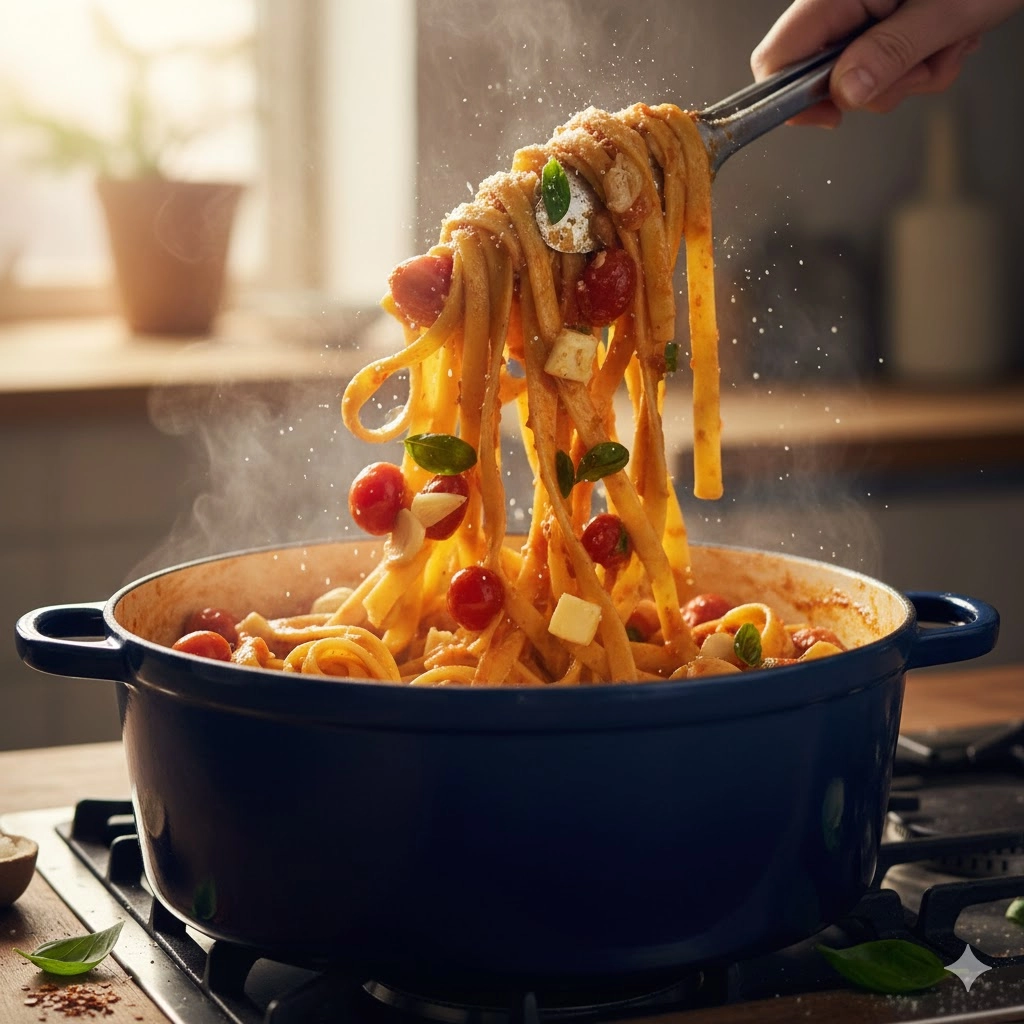
To get that restaurant-quality “glossy” finish on your pasta, you must master the “mantecatura” phase. This is the final step where the pasta, sauce, butter, and cheese are vigorously tossed together. The heat must be high enough to melt the cheese and butter rapidly, but not so high that the fats separate.
If you notice the sauce looking “broken” or oily, a splash of the starchy pasta water is your best friend. The starches in the water act as a stabilizer, helping the oil and water-based liquids to bind together. The goal is a sauce that looks like a shimmering velvet coat over every strand of semolina ribbon.
Enhancing Your Dining Experience: Accompaniments
While this Fresh Pasta with Buttered Tomatoes is a complete meal on its own, it pairs beautifully with light, crisp side dishes that balance the richness of the butter sauce. A simple arugula salad with a sharp lemon vinaigrette and shaved radishes provides a peppery bite that cuts through the fat of the Parmesan and butter.
For a more substantial spread, consider serving this alongside a platter of grilled zucchini or charred broccolini seasoned with lemon zest and flaky sea salt. In terms of beverages, a high-acid white wine such as a Vermentino or a dry Rosé from Provence will complement the acidity of the Sun Gold tomatoes perfectly. If you prefer red wine, a light-bodied chilled Schiava or a young Chianti offers the right balance without overwhelming the delicate fresh pasta.
Understanding Ingredient Variations
While the recipe is optimized for semolina flour and cherry tomatoes, understanding the role of each ingredient helps you navigate the kitchen with more confidence. Semolina flour, made from durum wheat, has a higher protein content and a coarser texture than all-purpose flour. This is what gives the pasta its signature “al dente” snap. Using all-purpose flour in this specific water-only recipe would result in a dough that is too soft and lacks the structural integrity to withstand boiling.
If you cannot find Sun Gold tomatoes, which are prized for their exceptional sweetness, look for the highest quality cherry or grape tomatoes available. The key is ripeness; the tomatoes should feel slightly soft to the touch, indicating that their sugars have fully developed. For the fat component, high-fat European-style butter can add an even deeper level of creaminess to the sauce compared to standard American butter.
Essential Kitchen Knowledge FAQ
Can I make the dough in advance to save time on a weeknight?
Absolutely. The pasta dough can be prepared up to 1 day in advance. After kneading the dough and placing it in the resealable bag, store it in the refrigerator. However, it is vital to bring the dough back to room temperature before you attempt to roll it out. If the dough is cold, the gluten will be too tight, making it nearly impossible to roll into the required thin sheets.
Why is my pasta dough too tough or difficult to roll out?
If the dough feels like it is fighting back or snapping back when you roll it, it likely hasn’t rested long enough. The resting period is not just for hydration; it allows the gluten network to relax. If you’ve rested it for the full hour and it’s still tough, try letting it sit for another 30 minutes. Also, ensure you are using just-boiled water, as the heat is essential for pre-gelatinizing the starches.
What if I cannot find colatura or fish sauce?
While these ingredients provide a specific depth of flavor, you can substitute them with two finely minced anchovy fillets. Add the anchovies at the same time as the garlic and red pepper flakes, allowing them to melt into the olive oil. This will provide a similar savory backbone to the sauce. If you require a vegetarian option, a teaspoon of white miso paste or a splash of soy sauce can provide a similar umami effect, though the flavor profile will shift slightly.
Is it necessary to use a Dutch oven for the sauce?
While not strictly mandatory, a Dutch oven is highly recommended. The heavy walls of the pot retain heat exceptionally well, which helps the tomatoes burst quickly and evenly. Furthermore, the large capacity allows you to toss the long pasta ribbons vigorously without them breaking or flying out of the pan. A large, deep skillet or a heavy-bottomed stainless steel pot can work as a secondary option.
Final Thoughts on This Seasonal Classic
This recipe is more than just a meal; it is a lesson in the beauty of simplicity. By taking the time to hand-roll and hand-cut your own noodles, you transform basic pantry staples into a gourmet experience. The contrast between the silky, springy pasta and the bright, buttery tomato sauce creates a dish that feels sophisticated yet deeply comforting. Whether you are cooking for a quiet weeknight or hosting a summer dinner party, this Fresh Pasta with Buttered Tomatoes is sure to become a staple in your culinary repertoire.
Nutrition Information
| Nutrients | Amount Per Serving |
| Calories | 640 kcal |
| Total Fat | 32 g |
| Saturated Fat | 12 g |
| Cholesterol | 35 mg |
| Sodium | 850 mg |
| Total Carbohydrates | 68 g |
| Dietary Fiber | 5 g |
| Sugars | 6 g |
| Protein | 18 g |
Disclaimer
The nutritional values provided are estimates based on standard ingredient data and should not be considered a substitute for professional nutritional counseling. Actual values may vary depending on specific brands used and individual preparation methods.
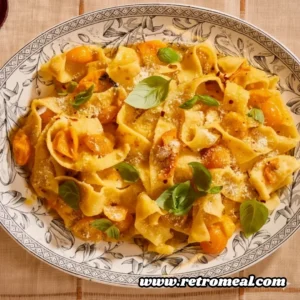
Fresh Pasta With Buttered Tomatoes
Ingredients
- 2.33 cups semolina flour (300 g), plus more for dusting
- 0.66 cup just-boiled water
- 0.25 cup extra-virgin olive oil
- 4 cloves garlic, thinly sliced
- 0.5 tsp crushed red pepper flakes
- 2 pints Sun Gold or cherry tomatoes, halved and divided
- 1 pinch Kosher salt, to taste
- 4 tbsp unsalted butter, cut into pieces
- 1 tsp colatura (anchovy sauce) or fish sauce
- 2 oz Parmesan cheese (1.5 cups), finely grated, plus more for serving
- 4 tbsp fresh basil, torn and divided
Instructions
- Mix semolina flour and just-boiled water in a bowl until pebbly. Knead for 3 minutes until smooth. Seal in a plastic bag and rest at room temperature for 1–4 hours.
- Divide dough into 4 pieces. Roll each into a 1/16-inch thick rectangle. Fold into thirds and cut into 3/4-inch ribbons. Unfurl and place on a floured sheet.
- Heat olive oil in a Dutch oven. Sauté garlic and red pepper flakes for 2 minutes until pale golden and fragrant.
- Add 1 pint of halved tomatoes, salt, and 1/4 cup water. Cover and cook over medium-low for 6–8 minutes until tomatoes burst into a sauce.
- Boil fresh pasta in salted water for about 1 minute until barely tender.
- Transfer pasta to the Dutch oven. Add butter, colatura, remaining tomatoes, Parmesan, and half the basil.
- Stir for 2 minutes over medium heat, adding pasta water as needed for a glossy coating. Season with salt.
- Serve in shallow bowls topped with extra Parmesan and the remaining torn basil.
Notes
Equipment
- Large Dutch Oven Essential for even heat and enough space to toss pasta.
- Rolling Pin
- sharp knife For hand-cutting the ribbons.
- tongs
- Resealable plastic bag Used for resting the dough to ensure hydration.