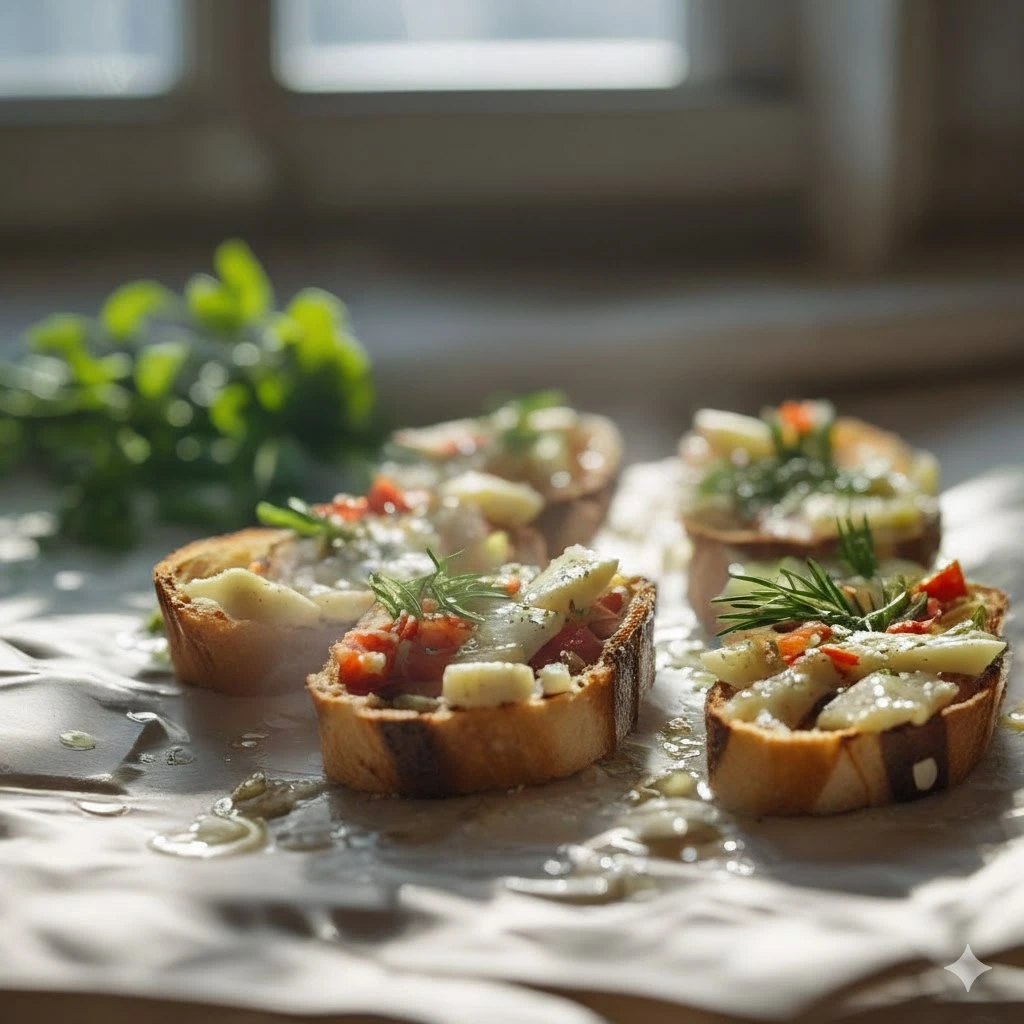
The crunch of crusty bread yielding to olive oil. The bright explosion of sun-ripened tomatoes. The salty kiss of Kalamata olives. This isn’t Italy calling – it’s Greece whispering from a sun-drenched cliffside taverna. Greek Bruschetta replaces basil with oregano, trades mozzarella for feta, and transports your taste buds to the Aegean Sea through every audibly crisp bite.
Imagine warm Ionian Sea breezes carrying aromas of garlic rubbed vigorously on charred edges of sourdough bread. Visualize ruby-red tomatoes bleeding into golden pools of peppery Kalamata olive oil, their juices mingling with briny feta crumbles and sharp red onions. This is peasant food elevated to art – where the acidity of lemon zest cuts through rich olive oil, where cucumbers add cooling relief amidst aromatic dill, and where every component serves a purpose in the Mediterranean flavor symphony.
A true symphony conductor knows the magic lies not in individual notes but in their harmony. So too with this dish: The bread must sing with texture (crisp exterior, yielding interior), the tomatoes must weep with summer ripeness, and the feta must crumble with confidence. When executed properly, each bite delivers a geographical teleportation – suddenly you’re sitting on a whitewashed terrace overlooking Santorini’s caldera, turquoise waters sparkling below as this humble-yet-sophisticated appetizer steals the culinary show.
Table of Contents
Ingredient Deep Dive
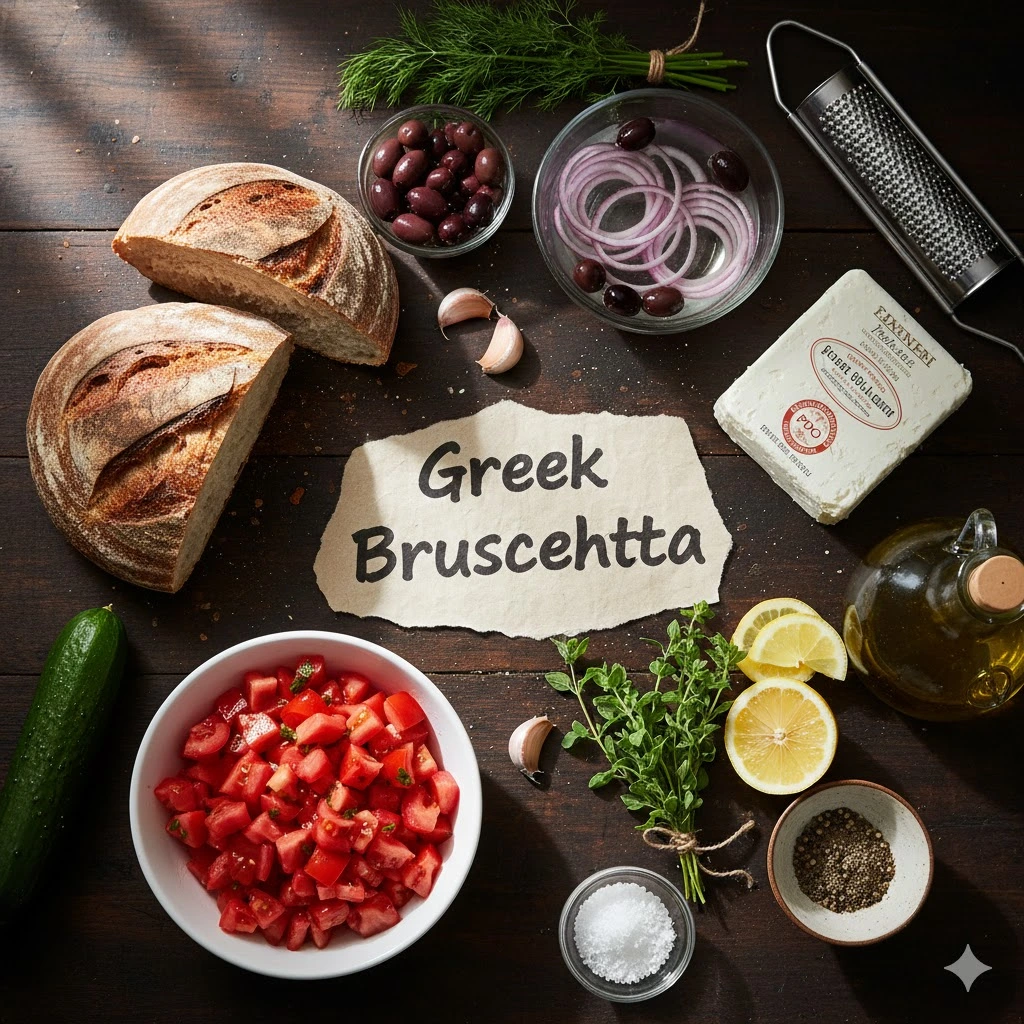
| Ingredient | Quantity | Purpose |
|---|---|---|
| Sourdough boule | 1 (14 oz) | Structural foundation providing crisp texture and tangy flavor |
| Heirloom tomatoes | 1.5 lbs | Sweet acidity and umami depth (better than beefsteak) |
| Greek feta (PDO) | 7 oz | Salty creaminess balancing acidity |
| Cucumber | 1 medium | Cooling crunch and hydration |
| Kalamata olives (pitted) | 3/4 cup | Brine-forward umami bombs |
| Red onion | 1/2 small | Pungent sharpness (soaking reduces bite) |
| Extra virgin olive oil (cold-pressed) | 1/3 cup | Fat conductor carrying flavor molecules |
Quality of fat determines the dish’s soul. Cold-pressed extra virgin olive oil possesses polyphenols that bind fat-soluble flavor compounds from tomatoes and herbs, delivering them efficiently to your palate receptors. The PDO designation on feta guarantees authentic brining in wooden barrels – this traditional method develops peptides that enhance umami perception differently than industrial production.
Acid balance is non-negotiable. Heirloom tomatoes contain 40% more glutamic acid than greenhouse varieties, naturally amplifying savory depth. When combined with the acetic acid from lemon juice, they create a pH balance (3.8-4.2) that brightens flavors without overwhelming bitterness. The sourdough’s acetic bacteria (from starter) mirror this acidity, creating harmony between bread and topping – a scientific duet discovered empirically in Greek village kitchens centuries ago.
Substitutions & Swaps
For gluten-free needs, substitute sourdough with a dense rye or seeded gluten-free loaf – texture matters more than flavor here. Bread must withstand juicy toppings without disintegration. Vegan diners should replace feta with marinated almond slices: Soak almonds overnight in lemon juice, olive oil, and nutritional yeast to mimic tangy creaminess.
No fresh oregano? Use 1/3 quantity of dried Greek mountain oregano (rigani) combined with fresh dill. Dry herbs intensify upon cooking while fresh shine raw – this hybrid approach maintains complexity. If heirloom tomatoes aren’t available, standard vine-ripened tomatoes boosted with 1/8 tsp sugar and 1/2 tsp balsamic vinegar can emulate sweetness without resorting to under-ripe specimens.
Emergency olive replacements happen with capers (brinier, less earthy) or artichoke hearts (meatier), though Kalamatas remain irreplaceable. For dairy-free needs, pressed tofu marinated in olive brine creates serviceable texture, but expect flavor concessions. If fresh lemon juice eludes you, switch to red wine vinegar—start with halved quantity and adjust to avoid overpowering acidity.
Equipment Guide
A cast iron skillet is non-negotiable for authentic bruschetta. Unlike aluminum or non-stick pans, cast iron delivers aggressive dry heat creating a caramelized crust while leaving interiors tender – essential for sourdough’s 40% moisture content. For serving, wooden boards absorb condensation, preventing dreaded sogginess.
Three critical tools elevate this dish: A serrated bread knife creates cleaner slices than smooth blades, preserving structural integrity. Use a garlic rocker (not press) to distribute garlic oils evenly without bitterness from crushed fibers. Finally, a wire-mesh strainer prevents tomato juice floods: Macerate diced tomatoes with salt for 15 minutes, then drain – your bread will thank you.
Bonus equipment: Microplane for lemon zest, amplifying volatile oils without pith bitterness. Food-grade tweezers arrange feta crumbles artistically. And always have kitchen tongs with silicone tips to flip bread safely in scorching-hot pans – splash protection is better than ER visits.
Step-by-Step Walkthrough
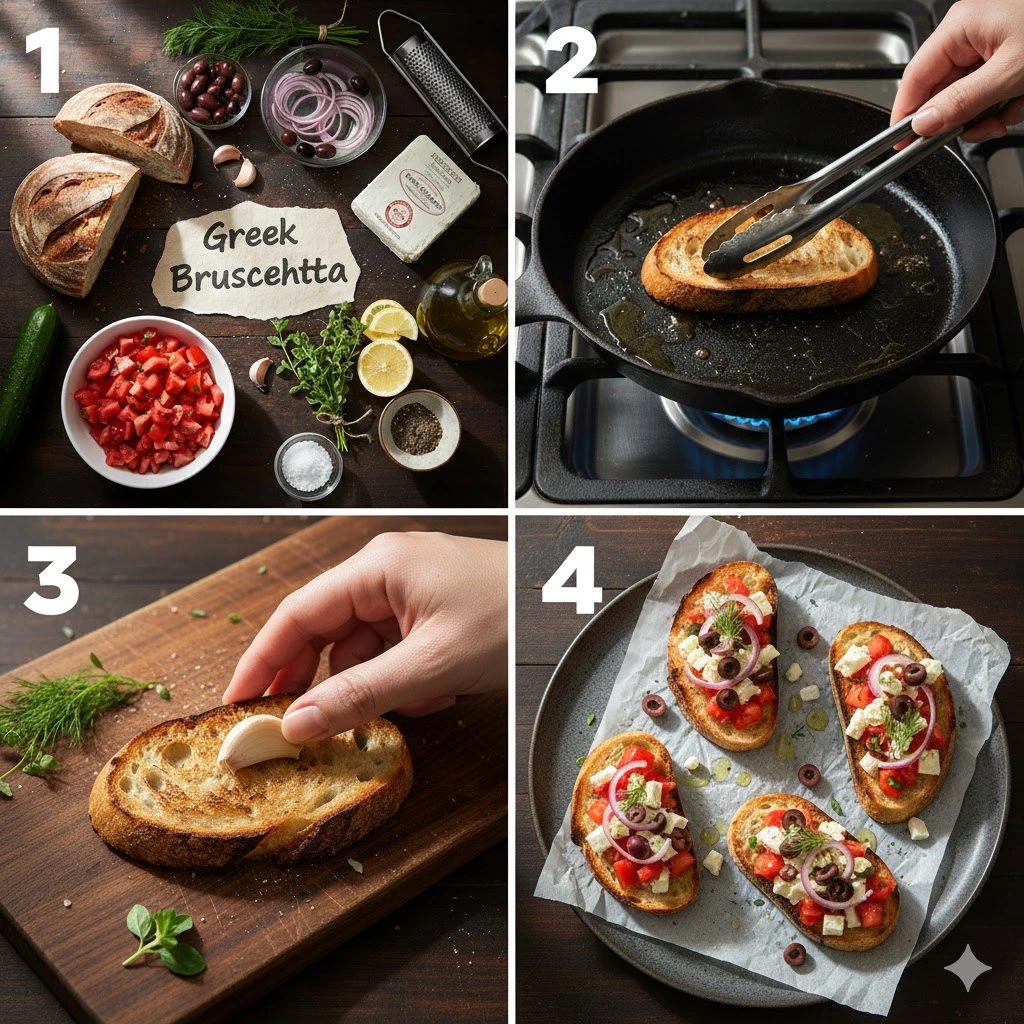
- Tomato Prep: Core tomatoes, squeeze out seeds, juice discard. 1/4″ dice.
- Salting: Toss tomatoes with 1/2 tsp sea salt. Drain 15 mins in strainer.
- Onion Soak: Thinly slice red onion, soak in ice water 10 mins to mellow.
- Bread Logic: Cut sourdough into 3/4″ slabs diagonally for max surface area.
- Oil Application: Brush olive oil ONLY on one side of bread before toasting.
- Char Generation: Sear bread oil-side-down in smoking cast iron 90 seconds per side.
- Garlicking: Rub raw garlic clove on hot bread post-toast – friction releases alliaceous oils.
- Assembly: Layer drained tomatoes first as flavor base, then other toppings.
- Cheese Protocol: Crumble feta with fingers (not knife) for irregular texture.
- Final Flourish: Drizzle premium olive oil and fresh oregano post-assembly.
Texture Warfare: Combat sogginess by toasting bread until almost burnt around edges – residual heat finishes cooking. Salt tomatoes first to expel up to 20% liquid, dramatically improving structural stability. Never assemble more than 15 minutes before serving; bread acts like a sponge.
The Umami Cascade: Layer ingredients strategically. Tomatoes always form the base – their glutamates boost olives and feta. Olives come next as oleic acid bonds with tomato oils. Feta sits atop the pyramid – salt downward diffusion ensures every bite contains seasoning.
Temperature Play: Serve bread warm (120°F) but toppings chilled (45°F). This contrast excites trigeminal nerves, enhancing crunch perception. Chill mixing bowl in freezer 10 minutes before combining tomatoes, cucumbers and onions for amplified refreshment.
Expert Tips & Troubleshooting
Bread Betrayal: If your bruschetta turns soggy, you’re either under-toasting or over-dressing. For rescue operations, place soggy slices in 300°F oven 4 minutes to reconstitute. Prevent future disaster by oiling pre-toasted sides only – un-oiled backsides act as moisture barriers.
Acid Overload: Too much lemon? Neutralize with 1/4 tsp honey or grated carrot (hidden sweetness). Dish tasting flat despite seasoning? Add a pinch of MSG or anchovy paste (invisible umami) to wake up lingering flavors.
Sad Herb Syndrome: Wilting dill? Submerge stems in ice water 10 minutes to restore rigidity. Burned garlic aroma lingering? Serve with lemon wedge squeezed over top – citral binds with unpleasant sulfur compounds.
Olive Obstinacy: Kalamatas tasting metallic? Rinse under cold water, soak 10 minutes in milk (calcium neutralizes tannins). No fresh herbs? Finish with dried Greek oregano crushed between palms – heat from friction releases dormant essential oils.
Feta Issues: Crumbling too finely? Freeze 15 minutes before handling. Stick to block feta in brine, never pre-crumbled – cellulose anti-caking agents mute flavor and alter texture.
Flavor Variations
Spinoff 1: “Aegean Fire” Add 1 tbsp harissa paste to olive oil base. Substitute sheep milk feta with smoked mizithra. Garnish with pickled pepperoncini rings and chili oil drizzle.
Spinoff 2: “Kid-Friendly Zeus Bites” Omit raw onions entirely. Substitute Kalamatas with oven-roasted sweet red peppers. Mix feta into cream cheese (50/50) for milder taste. Use soft brioche slices toasted lightly.
Fusion Temptations: Japanese Edomae: Add bonito flakes and yuzu zest. Mexican Mashup: Substitute oregano with epazote, add black beans. Nordic Twist: Replace feta with gravlax, dill with chervil.
Breakfast Edition: Top with soft-poached egg. Add crispy pancetta. Swap lemon for orange zest. Serve on grilled olive bread.
Storage & Reheating
Never refrigerate assembled bruschetta – bread becomes leathery. Store components separately for up to 48 hours: Sliced tomatoes (drained, in airtight container), toasted bread (room temp paper bag), pre-mixed other veggies (no oil added).
To refresh: Reheat bread in 375°F oven 90 seconds with olive oil spritz. Assemble cold toppings instantly before serving. Feta maintains best texture at 50-55°F – store submerged in brine liquid in door shelves, never freezer (crumbles ruin structure).
FAQ Section
Q: Can Greek bruschetta be made ahead?
A: Components prepped up to 36 hours in advance, but assemble maximum 15 minutes pre-serving for optimal texture.
Q: Best bread alternatives?
A: Dense breads handling moisture: Focaccia, ciabatta, or Turkish pide work. Avoid baguettes (too porous).
Q: How to serve this for parties?
A: Prepare bread toasts and toppings buffet-style. Let guests assemble their own to prevent sogginess.
Q: Is this vegan adjustable?
A: Yes – substitute feta with marinated almond slices and omit honey if using. Ensure no dairy-contaminated knives.
The Recipe Card
Greek Bruschetta Elegance Yield: 8 servings | Active: 25 min | Total: 40 min
Crispy sourdough rubbed with garlic hosts a vibrant mix of heirloom tomatoes, Greek olives, cool cucumber, and briny feta. Finished with lemon-fused olive oil and oregano. A Mediterranean jewel perfect for appetizers or light meals.
Print Options: PDF/Image
Nutrition Information
| Nutrient | Per Serving (1 slice) |
|---|---|
| Calories | 312 kcal |
| Carbohydrates | 28g |
| Protein | 7g |
| Fat | 19g |
| Saturated Fat | 4.9g |
| Fiber | 2.5g |
| Sodium | 643mg |
| Vitamin C | 22% DV |
*Nutrition calculated using standard USDA data. Actual values may vary based on ingredient brands and preparation methods. This information is not medical advice—consult a nutritionist for specialized dietary needs.