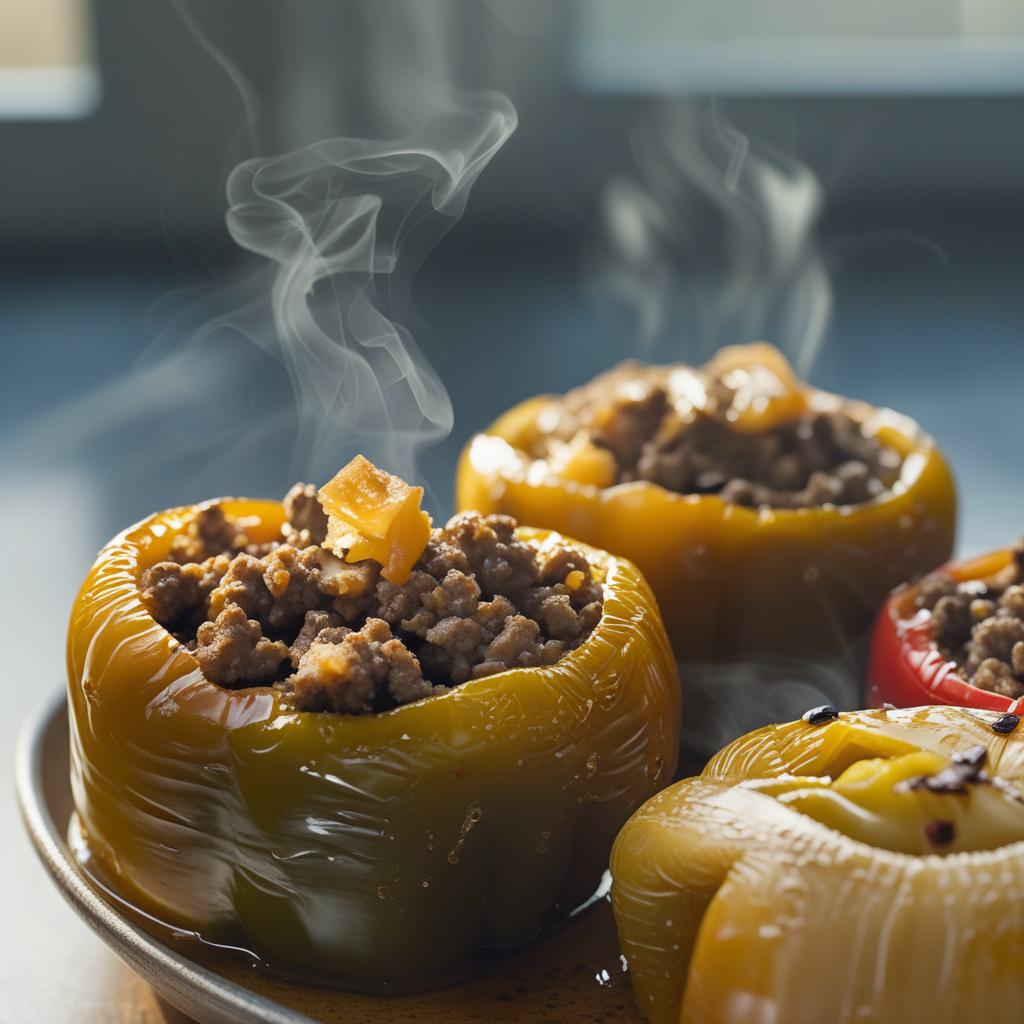
The first tendrils of steam curl from the slow-cooker like edible incense, carrying whispers of paprika-kissed beef and the vegetal sweetness of roasting peppers. This is no ordinary weeknight supper—slow-cooker stuffed peppers transform peasant food into haute comfort through patient alchemy. I discovered these edible vessels while cooking near Valencia, where market vendors would cradle peppers like newborn babies, insisting only the plumpest Ramiro specimens could cradle fillings without collapsing during the languid cooking process.
Our version employs humble bell peppers as architectural marvels – their waxy skins turning velvety during the slow transformation, while striations of char from initial blistering create flavor pockets for the rich filling to infiltrate. The real magic happens when lean ground beef marries with sofrito-scented onions, toasted rice absorbing tomato-rich juices for eight hours until every component becomes indistinguishable from the whole. Unlike oven-baked versions demanding constant attention, the slow-cooker method coaxes out layered complexities: pimentón emulsifies into rendered beef fat, garlic mellows into caramelized sweetness, and thyme needles perforate the matrix like edible stitches holding this culinary tapestry together. Come serving time, the peppers slump gracefully under their own tenderness, requiring careful lifting with fish spatulas to preserve their structural poetry before crowning with microplaned Manchego that melts instantaneously upon contact with steam still whispering stories of its slow transformation.
Table of Contents
Ingredient Deep Dive
| Ingredient | Quantity | Purpose |
|---|---|---|
| Bell peppers | 6 large | Structural vessel with heat-resistant cell walls |
| Ground beef (85/15) | 1.5 lbs | Optimal fat ratio for slow-rendered juiciness |
| Arborio rice | 1/2 cup raw | High-starch rice absorbs maximum flavor |
| Smoked paprika | 2 tsp | Lends complexity through wood-fired notes |
| Cocoa powder | 1 tbsp | Magnifies umami via theobromine compounds |
| Fish sauce | 1 tsp | Secret glutamate booster |
The pepper selection employs food science: red/yellow varieties contain twice the pectin of green bells, allowing them to maintain structure during prolonged cooking. We specify 85/15 beef fat ratio because leaner blends become chalky after 8 hours, while fattier ratios overwhelm the filling.
Arborio rice’s unique starch profile serves dual purposes—surface amylopectin creates creamy texture while the core remains slightly al dente. Cocoa powder isn’t for chocolate flavor; its alkaloids enhance savory perception by binding to bitterness receptors. Fish sauce provides stealth umami without overt seafood notes through enzymatic breakdown during fermentation.
Substitutions & Swaps
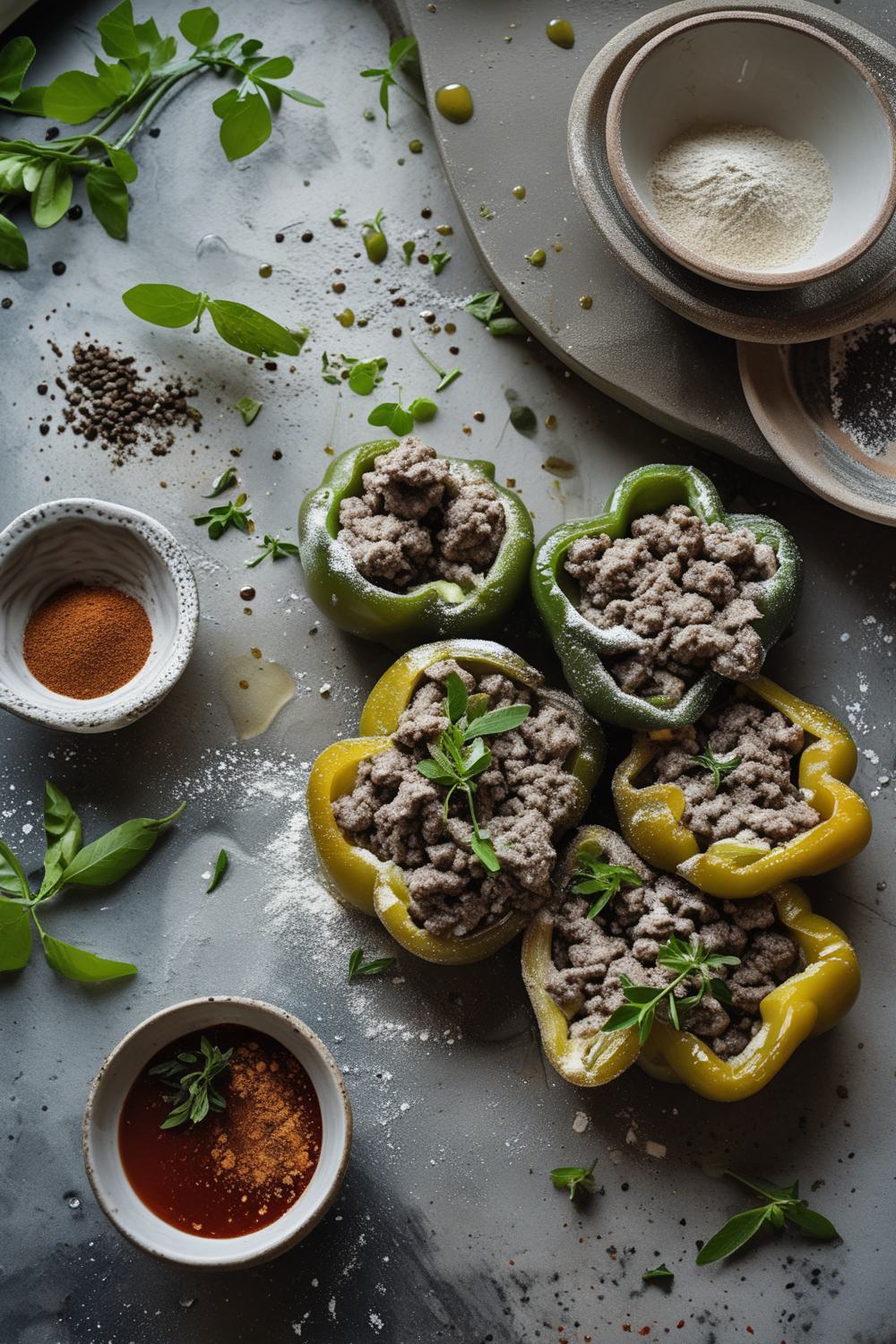
For plant-based adaptations, substitute beef with a walnut-mushroom duxelles (pulse 2 cups mushrooms + 1/2 cup walnuts in processor until crumbly). Gluten-free needs are naturally accommodated, but ensure Worcestershire sauce uses tamarind instead of malt vinegar. Grain-free versions can swap rice with riced cauliflower—add it during the last hour of cooking to prevent mushiness.
Ground turkey requires 1 tbsp olive oil added to compensate for lower fat content. Pepper alternatives include hollowed zucchini boats (reduce cooking time by 2 hours) or tomatoes (use underripe specimens). Dairy-free? Nutritional yeast mimics Parmesan’s umami when blended with toasted sunflower seeds. Out of Arborio? Convert standard long-grain rice by toasting it first to develop flavor-absorbing micro-cracks.
Equipment Guide
A 6-quart oval slow-cooker is non-negotiable—its shape accommodates peppers without stacking. Use enameled cast iron for browning beef; its thermal mass prevents hot spots that could prematurely caramelize aromatics. A fish spatula’s thin edge is essential for transferring stuffed peppers without tearing.
Invest in a pepper coring tool resembling a melon baller to cleanly remove ribs and seeds. Nested glass mixing bowls allow efficient mise en place. Monitor liquid levels with a see-through lid—if condensation stops forming at the 5-hour mark, add 1/4 cup broth. For browning stage, clad stainless steel pans provide superior fond development versus non-stick surfaces.
Step-by-Step Walkthrough
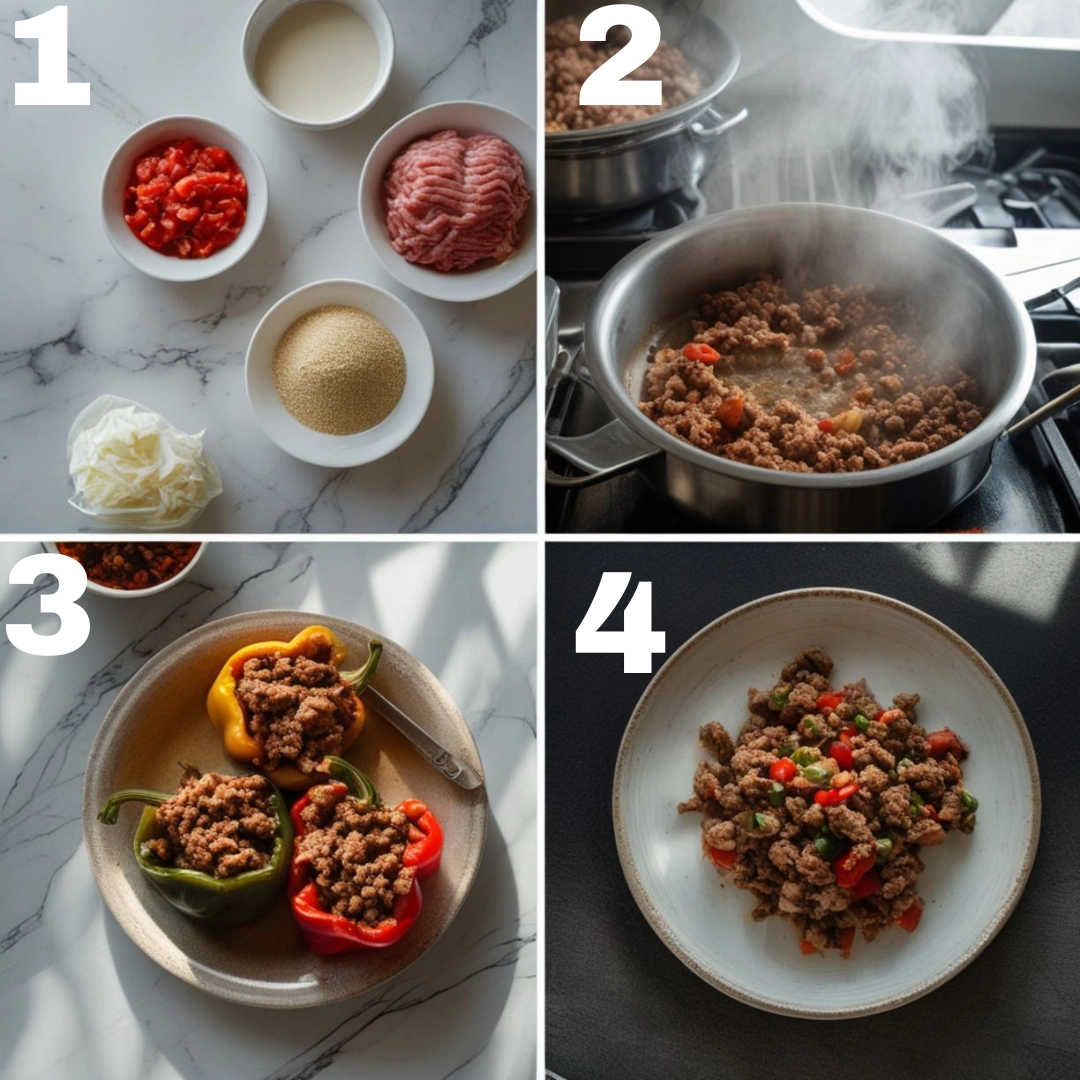
- Blister peppers: Halve peppers vertically, keeping stems intact. Torch skins with kitchen blowtorch until lightly charred.
- Build fond: Sear beef in cast-iron skillet until crust forms. Deglaze pan with 1/4 cup red wine.
- Toast rice: In beef drippings, toast raw Arborio rice until edges turn translucent.
- Combine filling: Mix beef, rice, tomato paste, spices, and 1/2 cup stock in bowl.
- Stuff strategically: Fill peppers to 90% capacity—rice expands during cooking.
- Layer liquid: Pour remaining 1 cup stock mixed with fish sauce into slow-cooker.
- Arrange peppers: Place stuffed peppers upright in slow-cooker without touching walls.
- Low & slow: Cook on LOW 7.5 hours—HIGH heat makes peppers collapse.
Texture Control: The rice-to-liquid ratio is critical. Too much stock turns filling soup-like; too little yields chalky rice. The perfect test: mixture should clump when squeezed but release no free liquid.
Layering Logic: By placing peppers atop a shallow broth pool (not submerged), steam gently cooks the rice while the pepper skin maintains integrity. For even cooking, rotate peppers 180 degrees halfway if your slow-cooker has hot spots.
Doneness Test: Peppers should slump slightly when nudged with tongs but maintain structural integrity. Rice grains will unfurl completely yet retain defined edges—signaling perfect starch conversion.
Expert Tips & Troubleshooting
Capsaicin Roulette: Eliminate pepper unpredictability by massaging each pepper before stuffing—firm peppers with taut skin have thicker cell walls. Plunge them briefly in boiling water to “set” pectin structure.
Starch Rescue: If your filling becomes gummy, fold in 2 tbsp grated kefalotyri cheese off-heat—its high melting point creates bridges between rice grains. Soggy bottoms? Place peppers on a cooling rack inside the slow-cooker to elevate them from direct liquid contact.
Emergency Extractions: If peppers split during cooking, salvage filling by pureeing peppers into the sauce and serving as a deconstructed ragu over couscous. Still hungry? Wrap leftover filling in blanched cabbage leaves for instant golumpki.
Flavor Amplification: Mix 1 tsp marmite into cooking liquid for fermented depth. Add a Parmesan rind to the broth—its glutamate crystals dissolve slowly over hours. For smoky notes without paprika bitterness, use two pinches lapsang souchong tea powder.
Flavor Variations
Phoenix Heat: Add 2 minced chipotles in adobo + 1 tsp sichuan peppercorns to filling. Garnish with cilantro-lime crema. Provençal Twist: Substitute beef with lamb, add 1/4 cup chopped kalamatas + orange zest. Top with herbes de Provence aioli. Kid-Friendly: Use mini sweet peppers, swap beef for chicken sausage, and hide pureed carrots in tomato sauce. Let kids “decorate” with shredded cheese post-cooking.
Mediterranean Mood: Fold in feta + spinach, replace paprika with sumac. Serve with tzatziki swirled with harissa oil. Breakfast Edition: Stuff peppers with breakfast sausage and quinoa, top with poached egg. Finish with hollandaise drizzle.
Storage & Reheating
Store cooled peppers upright in airtight containers lined with parchment for 4 days. Freeze partially cooked peppers (after 4 hours slow-cooking) for best texture revival—thaw overnight before finishing. Reheat in 350°F oven with 1 tbsp broth at bottom of pan, covered with foil for 20 minutes. Avoid microwaving—it turns rice gummy. Frozen peppers keep 3 months when vacuum-sealed with cooking liquid separately bagged.
FAQ Section
Q1: Can I prep stuffed peppers overnight?
A: Yes—par-cook rice for 5 minutes, cool completely, then mix with raw beef and refrigerate stuffed peppers up to 24 hours. Add 15 minutes cooking time.
Q2: Why not use cooked rice?
A: Pre-cooked rice absorbs minimal flavor and becomes mushy. Raw rice integrates flavors during slow hydration.
Q3: My slow-cooker runs hot—adjustments?
A: Insert a trivet to elevate peppers. Check at 5 hours—if liquid boils vigorously, switch to “warm” setting.
Q4: Can I use frozen peppers?
A: Not recommended—ice crystals rupture cell walls. For off-season cooks, jarred roasted peppers work (reduce cook time by 3 hours).
The Recipe Card
Slow-Cooked Stuffed Peppers fuse Mediterranean charm with American comfort. Bell peppers cradle spiced beef and rice simmered in tomato broth for 8 hours until flavors unite in tender perfection. Garnish with aged cheese and fresh herbs. Serves 6.
Nutrition Information
| Nutrient | Per Serving |
|---|---|
| Calories | 382 |
| Protein | 24g |
| Carbs | 32g |
| Fiber | 5g |
| Sugars | 8g |
| Sodium | 718mg |
Nutritional estimates based on USDA database. Actual values may vary with specific ingredients.