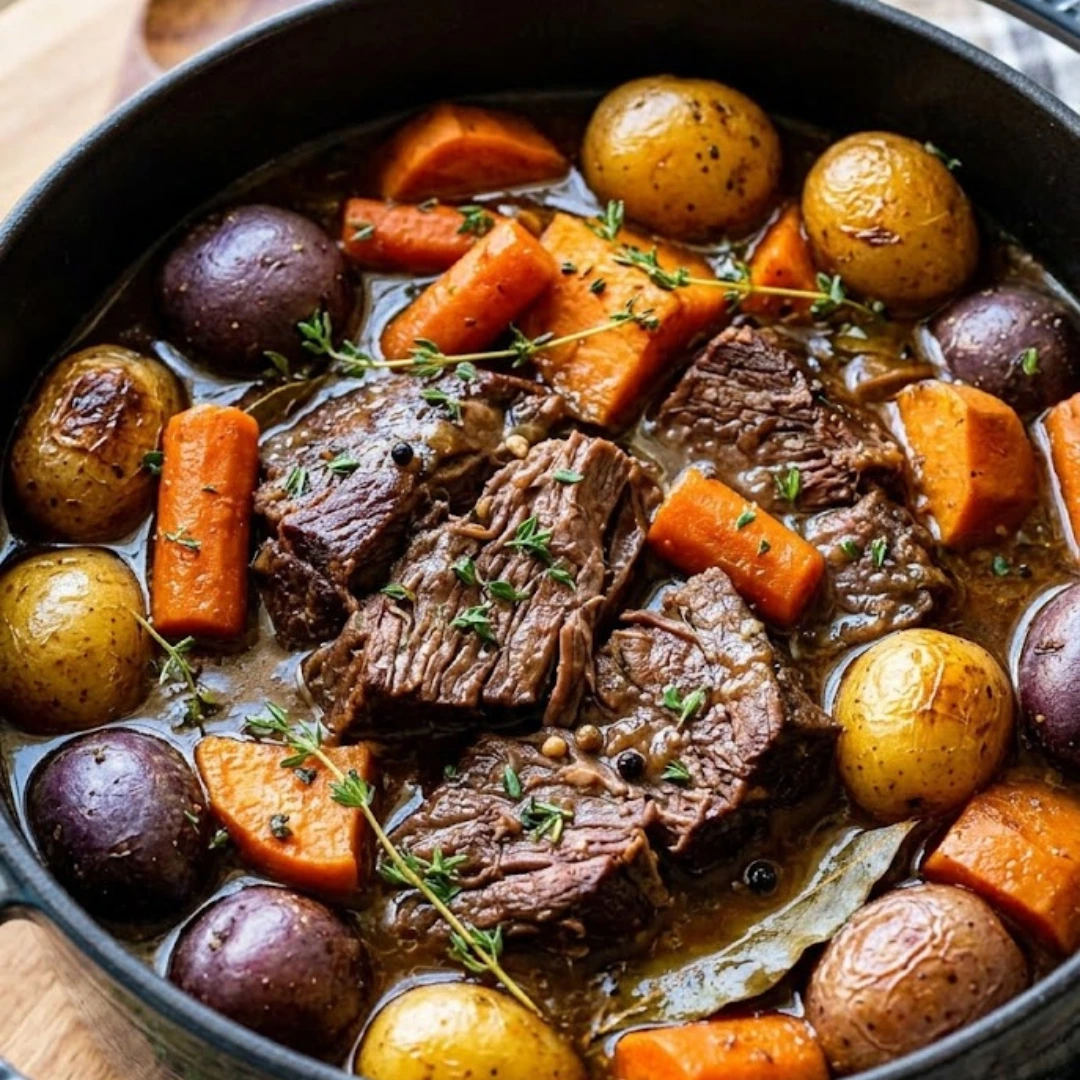
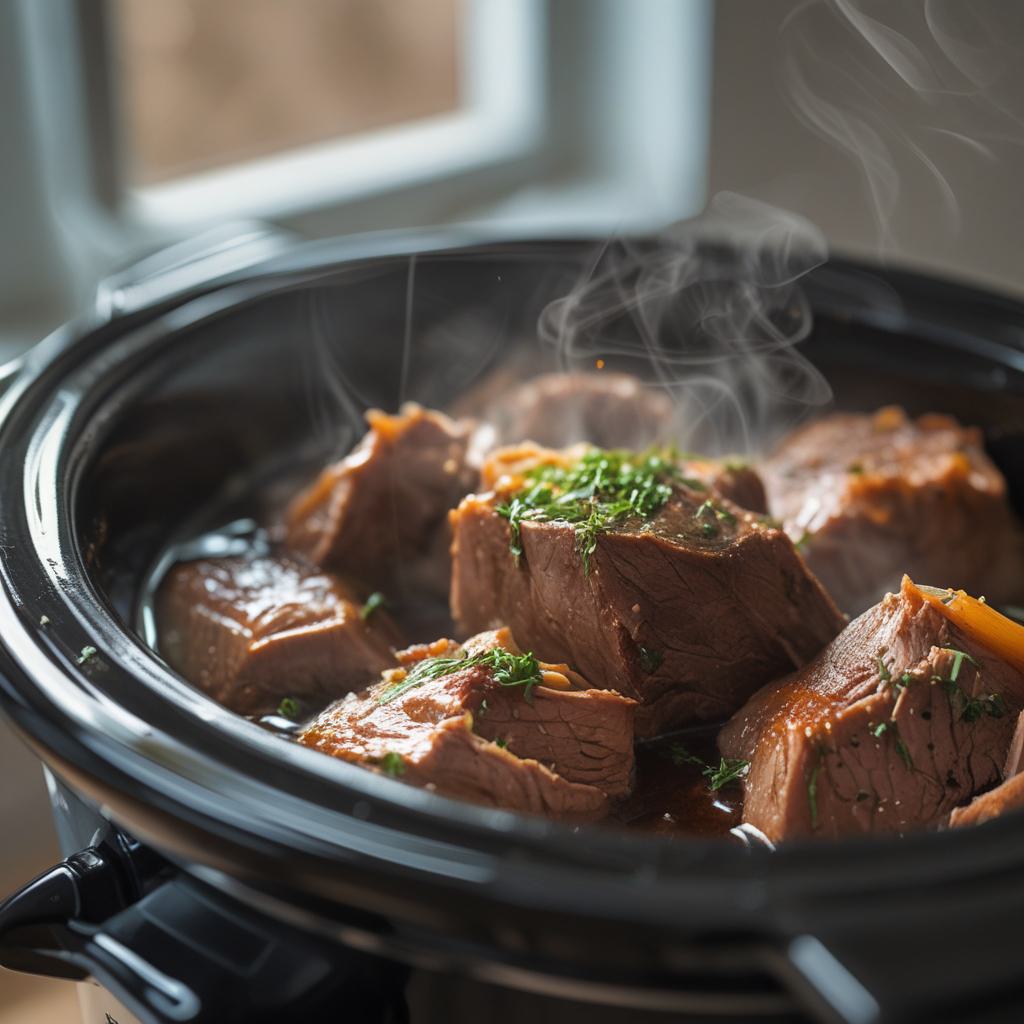
Picture this: it’s a crisp autumn afternoon, and your kitchen fills with the perfume of rosemary and seared beef as you slide a ruby-glazed chuck roast into the slow cooker. Over the next eight hours, that unassuming cut undergoes a metamorphosis. Collagen dissolves into liquid gold, carrots become sunset-orange jewels, and potatoes absorb the essence of thyme and garlic like culinary sponges. This slow cooker pot roast isn’t mere comfort food—it’s alchemy. The moment you lift the lid, steam carries an orchestra of scents: caramelized onion harmonics, earthy root vegetable bass notes, and the bright treble of red wine reduction. Your fork glides through meat so tender it resembles butter sculpted by a master fromager. This dish turns weekday dinners into ceremonial feasts, proving patience is the ultimate gourmet ingredient.
Table of Contents
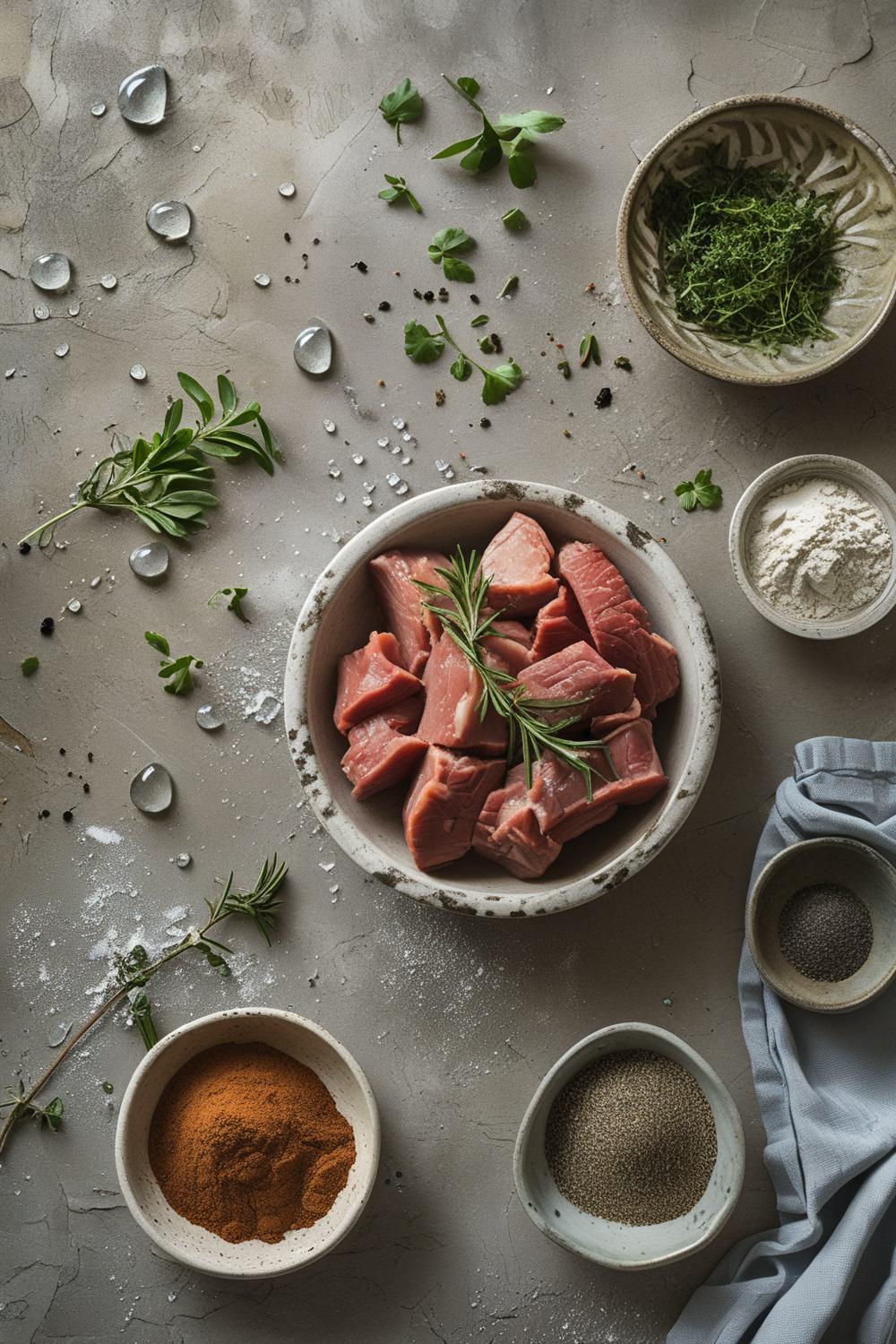
Ingredient Deep Dive
| Ingredient | Quantity | Purpose |
|---|---|---|
| Chuck roast (bone-in) | 3.5 lbs | Collagen-rich cut that melts into gelatin |
| Dry red wine (Cabernet) | 1.5 cups | Acidity breaks down fibers; tannins add depth |
| Tamari sauce | 3 tbsp | Gluten-free umami bomb (soy sauce alternative) |
| Cipollini onions | 8 oz | Higher sugar content for better caramelization |
| Black garlic cloves | 6 | Fermented complexity without sharpness |
Selecting chuck roast over pricier cuts leverages muscle anatomy: its abundant connective tissue hydrolyzes into silky mouthfeel during extended cooking. Bone-in varieties yield more profound savoriness as marrow permeates the braising liquid. The Cabernet’s malic acid acts as a meat tenderizer while its fruity esters volatilize, leaving behind concentrated berry undertones.
Black garlic’s Maillard-derived compounds—particularly S-allyl cysteine—integrate with tamari’s glutamates for layered umami. Cipollini onions dominate standard yellows with 12% sugar content versus 6%, accelerating the browning reactions that create fond—the flavor foundation of your jus.
Substitutions & Swaps
Vegans: Substitute portobello mushroom caps (gills removed) using the same searing technique. For “beef” essence, add 1 tbsp marmite to vegetable broth. Gluten-sensitive cooks can retain texture by swapping all-purpose flour with potato starch or arrowroot powder during thickening. No red wine? Brew strong black tea with a splash of pomegranate molasses to mimic tannins and acidity. In austerity moments, swap cipollinis with standard onions plus 1 tsp honey to compensate for sugar differential.
Equipment Guide
Mandatory: 6-quart oval slow cooker (oval shape accommodates roast geometry better). A 12-inch cast iron skillet is non-negotiable for fond development—its thermal mass achieves professional-grade searing where non-stick pans fail. Use a fish spatula for flawless meat flipping; its thin edge prevents shredding. Gravy separator (not a mere fat skim) ensures pristine jus by isolating lipids without waste. Inadequate tools sabotage results: thin pots scorch, flimsy spatulas tear crusts, wrong-sized cookers overcrowd.
Step-by-Step Walkthrough
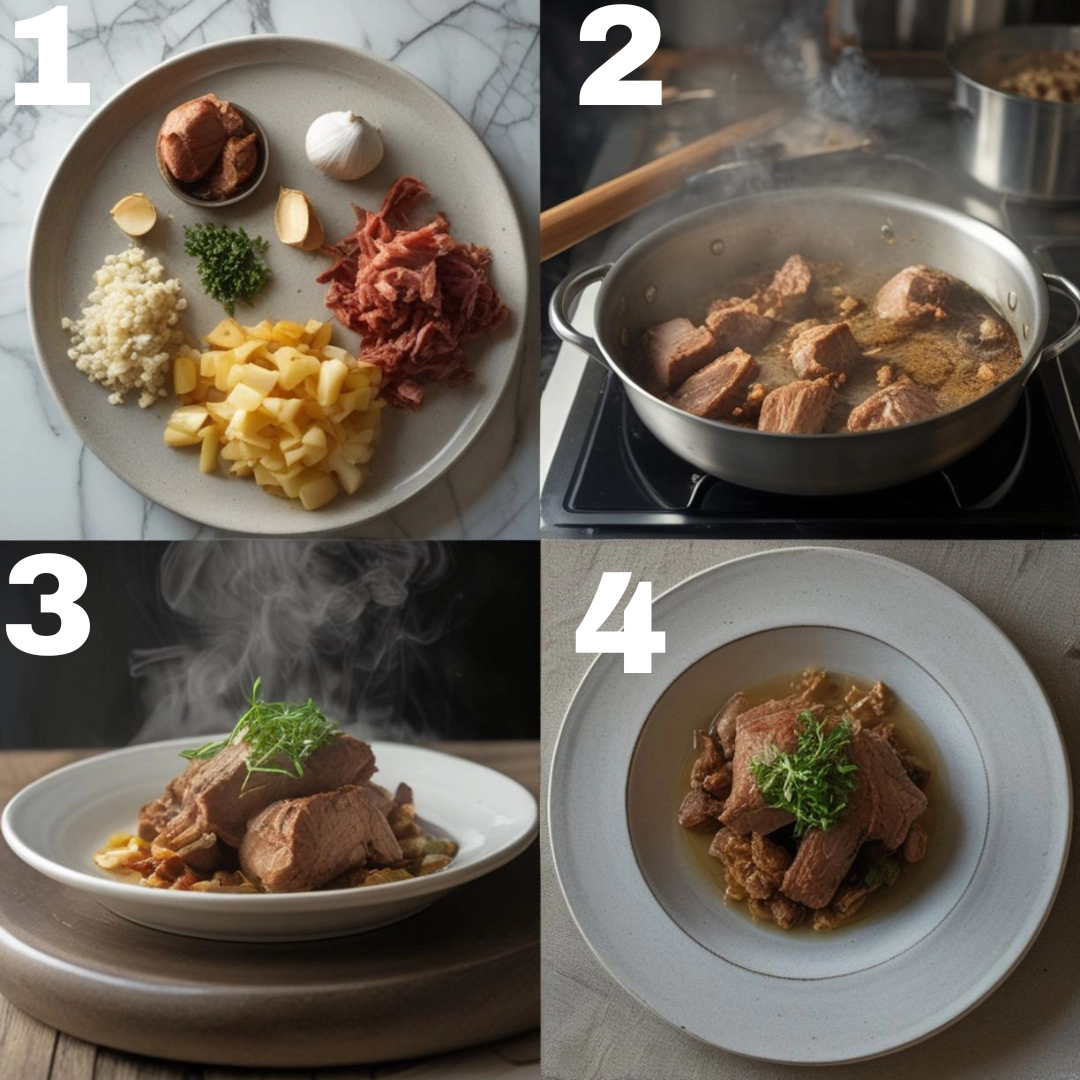
- Salt roast 24h ahead: refrigerate uncovered on wire rack to desiccate surface
- Sear in smoking skillet 6min/side until mahogany crust forms
- Deglaze with wine, scraping skillet with wooden flat-edge spatula
- Layer carrots, celeriac, onions in cooker with roast atop vegetables
- Pour deglazed liquid, tamari, and black garlic around (never over) meat
- Cook on LOW 8h—NO PEEKING (15°F loss per lid lift)
- Rest meat 20min before slicing against grain
Critical insight: Vegetables must remain submerged while meat stays above liquid. This dual-zone cooking prevents over-softening produce while allowing beef to braise in vapor instead of boiling. Deglazing isn’t optional—it’s where 30% of your flavor resides.
Follow thermal discipline: Never add cold liquid to hot cooker (thermal shock toughens proteins). When thickening jus, remove meat first; boiling collagen-dense liquid makes meat stringy.
Expert Tips & Troubleshooting
Pro Secrets: Add gelatin (1 tbsp dissolved in broth) if using leaner cuts—it mimics collagen effects. For sheen, finish jus with 1 tsp cocoa butter. ‘Tomato Water’ Trick: Nestle perforated pouch of cherry tomatoes in cooker—their osmosis-released liquid brightens the rich sauce without seeds.
Troubleshooting: Dry meat? Cooker ran too hot—use thermometer to verify 190°F internal (lower makes shreddable). Greasy jus? Chill then peel solidified fat before reheating. No time to salt-brine? Inject 3% saline solution via meat syringe in grid pattern.
Flavor Variations
Spicy Korean Twist: Replace wine with gochujang-thinned beef broth, garnish with kimchi puree. Sicilian Lighter: Use fennel instead of carrots, finish with lemon zest and green olive tapenade. Kid-Friendly: Substitute wine with unsweetened cranberry juice, add parsnip coins dusted with cinnamon sugar.
Storage & Reheating
Store components separately: meat submerged in strained jus (prevents oxidation), vegetables in airtight containers chilled below 40°F. Reheat meat sous-vide at 135°F for texture preservation or microwave in 30-sec bursts with broth splash. Freeze jus as ice cubes for instant pan sauces—they last 4 months.
FAQ Section
Can I cook it faster on HIGH?
No. Collagen breakdown (195°F) requires time, not temperature—HIGH yields stringy results.
Why no potatoes in main cook?
They turn gummy after 4+ hours. Add par-cooked fingerlings last 90 minutes.
Best sides?
Polenta absorbs jus beautifully; crispy Brussels sprouts cut richness.
Can I skip searing?
You sacrifice 300+ flavor compounds from Maillard reactions. Don’t.
Nutrition Information
| Nutrient | Per Serving |
|---|---|
| Calories | 610 |
| Protein | 48g |
| Carbs | 22g |
| Iron | 27% DV |
*Nutrition estimated via USDA database; actuals vary by ingredient brands. Consult dietitian for medical needs.