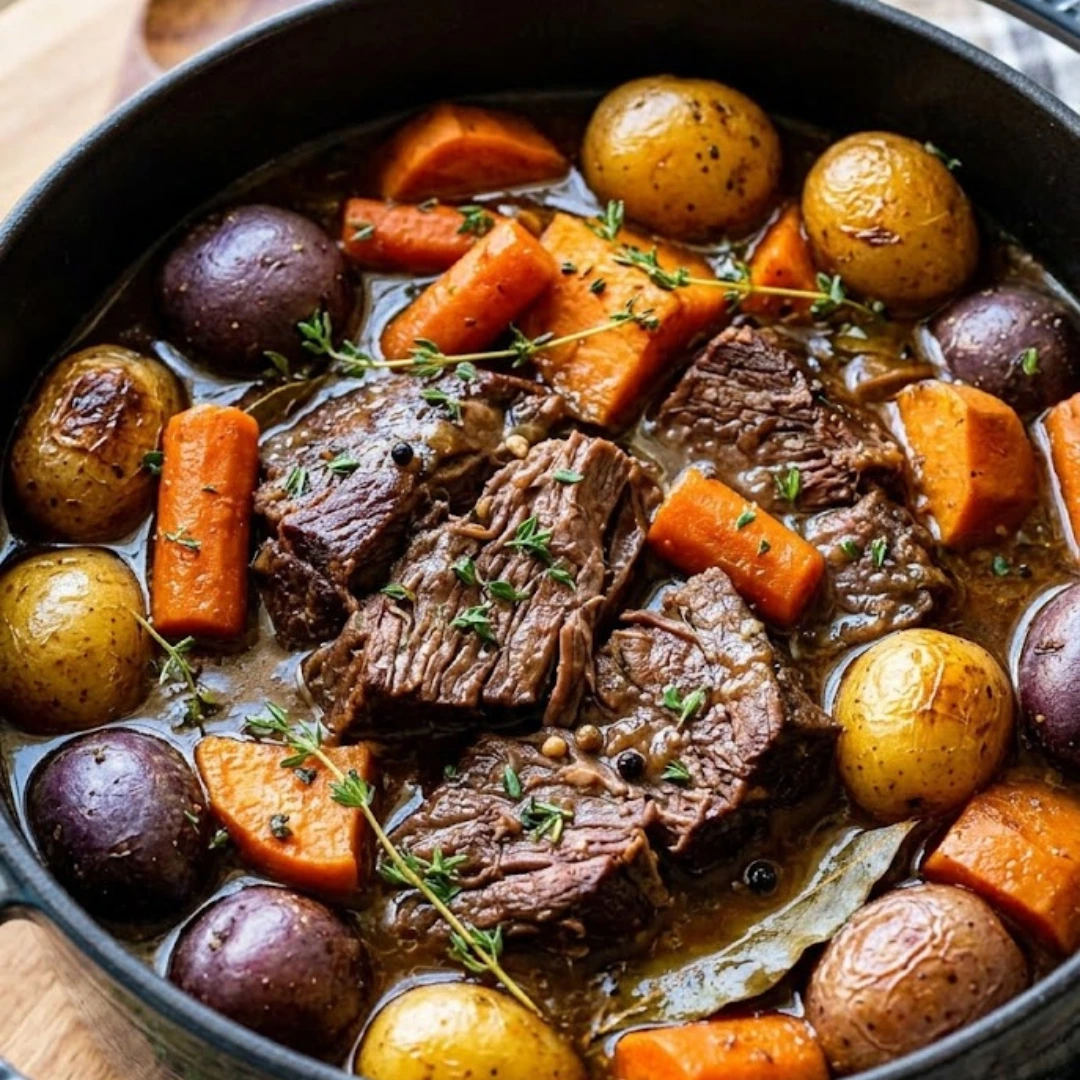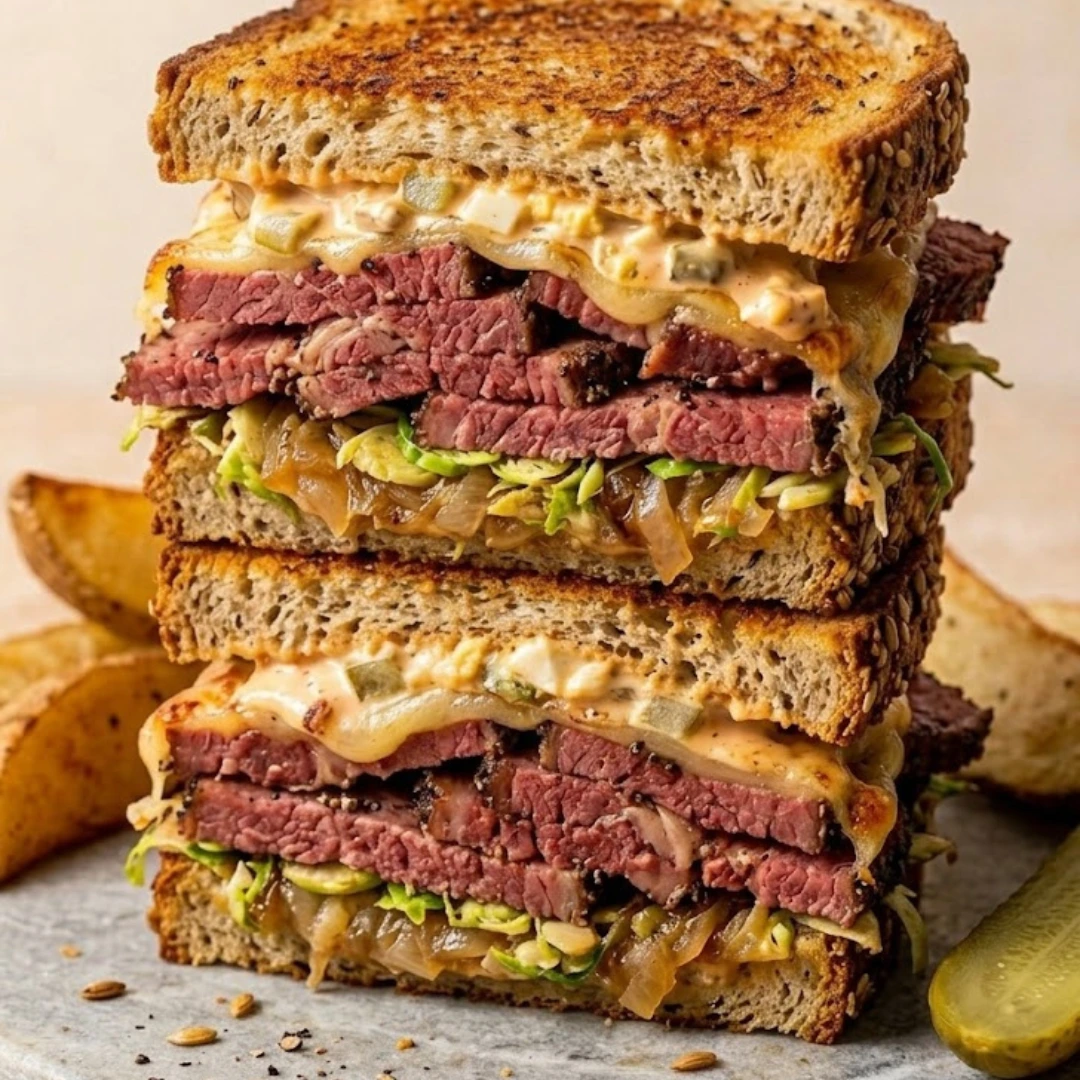
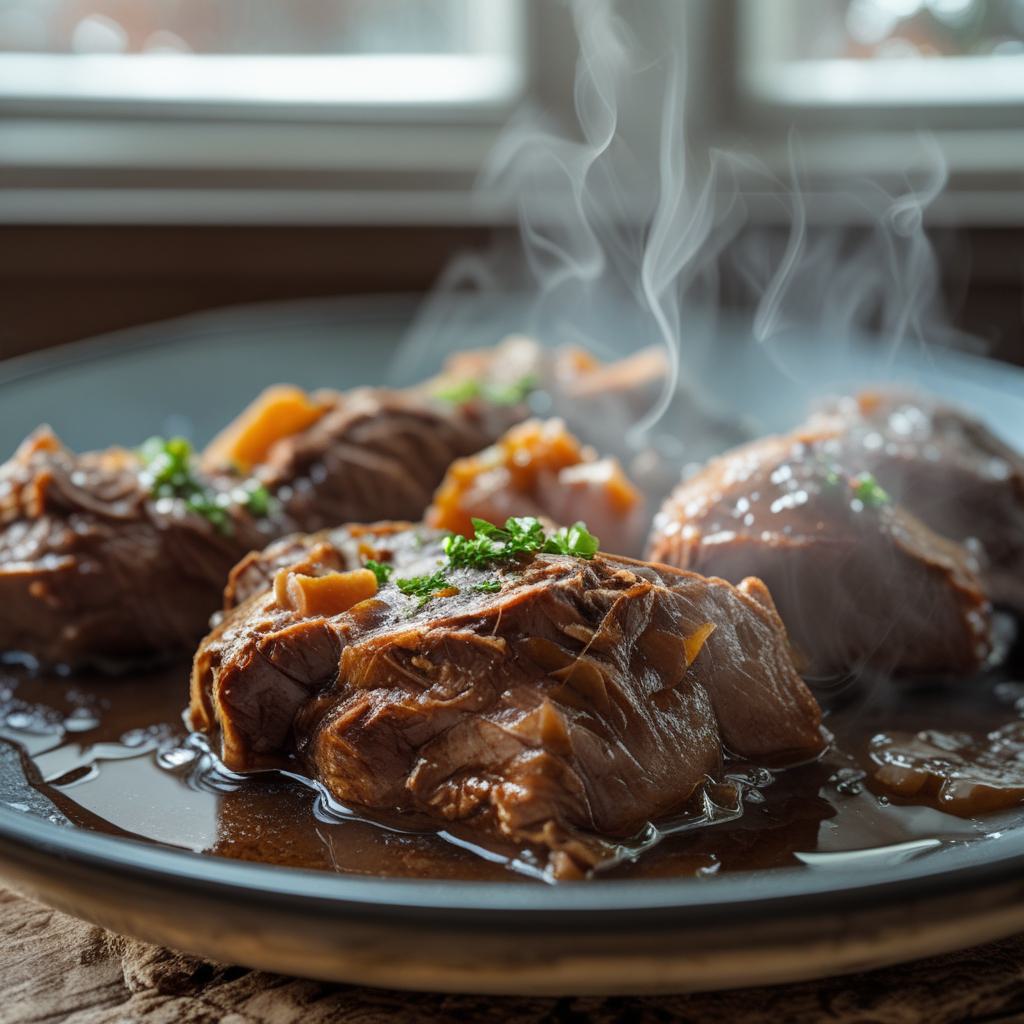
The moment you lift the slow cooker lid, time collapses. Eight hours of patient anticipation erupts in a volcanic plume of steam carrying whispers of caramelized onion, toasted garlic, and the profound depth of well-braised beef. This isn’t mere cooking; it’s alchemy—the transformation of tough chuck roast into fork-tender poetry through the gentle persuasion of low heat and time. Like a well-aged Bordeaux, slow cooker pot roast achieves complexity through prolonged simplicity. The beef’s collagen surrenders to liquid warmth, becoming unctuous gelatin that coats root vegetables in a glossy, protein-rich embrace. Carrots emerge sweeter, potatoes profoundly earthy, and pearl onions translucent with absorbed jus. This dish comforts like a leather-bound book by the fire—an edible heirloom passed through generations yet perpetually reinvented in modern kitchens.
Table of Contents
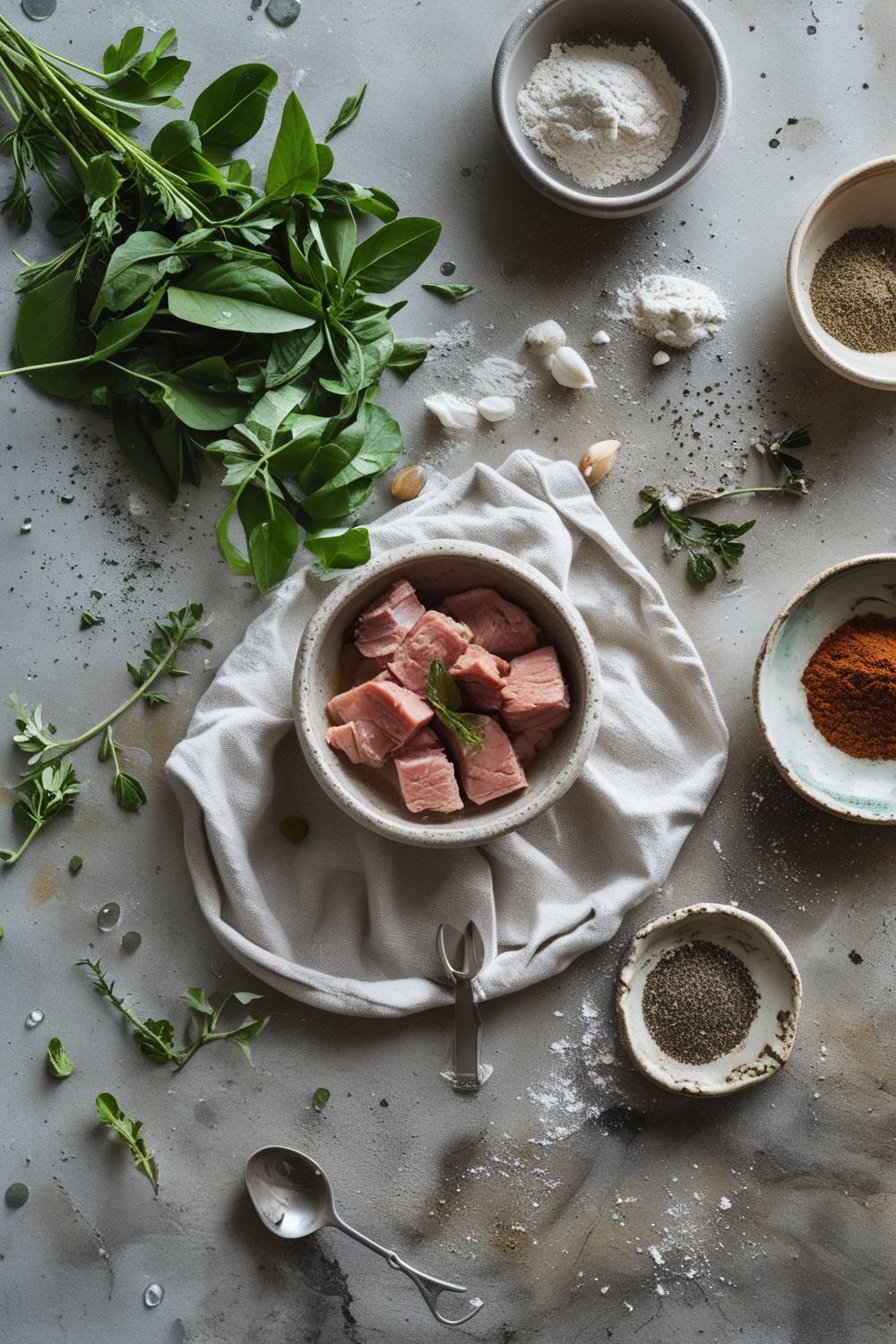
Ingredient Deep Dive
| Ingredient | Quantity | Purpose |
|---|---|---|
| Chuck Roast (bone-in) | 3-4 lbs | Collagen-rich cut ideal for low-and-slow breakdown |
| Yellow Onions | 2 large | Creates fond depth through Maillard reaction during searing |
| Full-bodied Red Wine | 1 cup | Tannins bind with fat molecules for refined mouthfeel |
| Tomato Paste | 2 tbsp | Glutamic acid source enhancing umami perception |
| Beef Demi-Glace | 1/4 cup | Concentrated collagen adds viscosity to braising liquid |
| King Trumpet Mushrooms | 8 oz | Provides textural contrast to melting beef fibers |
The choice of bone-in chuck roast isn’t arbitrary. The bone conducts heat evenly while releasing marrow—nature’s emulsifier—into the braising liquid. When selecting wine, avoid overly oaked varieties; the slow cooker’s prolonged heat amplifies tannic bitterness. Instead, opt for fruit-forward Cabernet Franc or Tempranillo whose acidity balances richness without overwhelming.
Tomato paste undergoes strategic caramelization before deglazing, converting its natural sugars into pyrazines—compounds responsible for “meaty” aromas. Demi-glace provides concentrated gelatin that standard broth lacks, essential for creating a sauce that coats the back of a spoon. King trumpets are chosen over button mushrooms for their dense, scallop-like texture that withstands extended cooking.
Substitutions & Swaps
For gluten-free adaptations, replace standard flour with rice flour for the initial meat dredge. The starch molecules create similar surface dehydration for superior browning. Vegan chefs can substitute jackfruit soaked in beet juice and liquid smoke for beef, though texture will differ significantly—maintain umami with shiitake mushrooms and fermented black bean paste.
No wine? Combine tart cherry juice with 1 tsp apple cider vinegar to approximate wine’s acidity. Cannot find demi-glace? Simmer 2 cups beef broth with 1 unflavored gelatin packet until reduced by half. Root vegetables can flex seasonally: parsnips in autumn, baby turnips in spring. Avoid watery vegetables like zucchini that disintegrate during braising.
Equipment Guide
The 6-quart slow cooker is non-negotiable—crowding prevents proper braise circulation but excessive space causes evaporation. Before slow cooking, achieve the critical Maillard reaction in a thick-bottomed stainless steel skillet (not non-stick), which withstands high searing temperatures without chemical degradation. Use tongs with silicone grips to flip the roast without piercing its precious crust.
A fat separator is mandatory for degreasing the jus before serving. For herb sachets, employ cheesecloth tied with untreated kitchen twine—metal tea balls constrict flavor release. Digital probe thermometers ensure perfect doneness; analog models lack precision in low-heat environments.
Step-by-Step Walkthrough
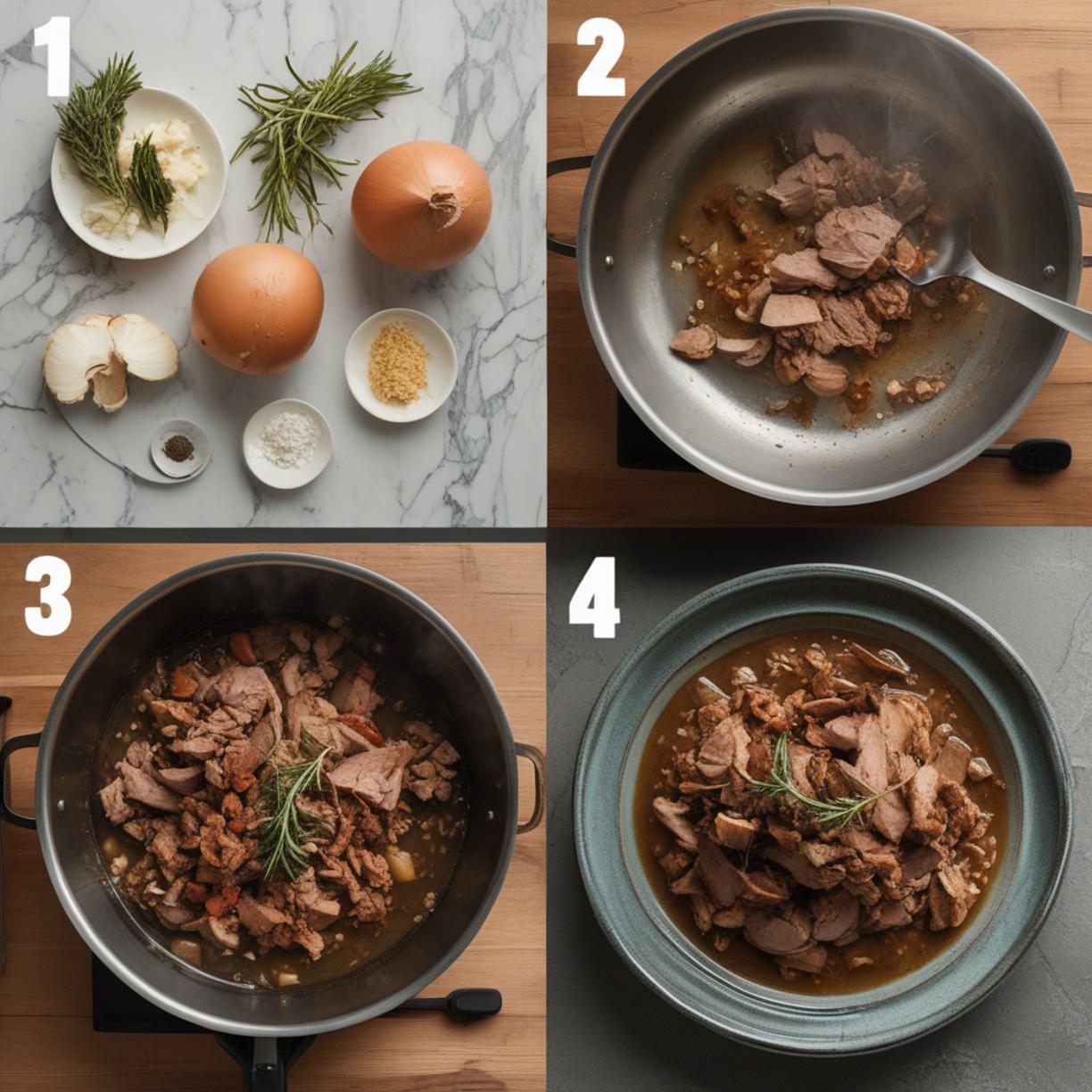
1. Remove roast from fridge 90 minutes pre-cooking to equalize temperature
2. Pat dry thoroughly with paper towels (moisture impedes browning)
3. Generously salt all surfaces—1 tsp per lb—to begin osmotic breakdown
4. Heat 2 tbsp grapeseed oil (high smoke point) in skillet until shimmering
5. Sear roast 6 minutes per side until mahogany crust forms
6. Deglaze skillet with wine, scrape fond into slow cooker
7. Layer vegetables beneath roast to elevate meat above direct heat
8. Pour broth mixture until 2/3 submerged (prevents steaming)
9. Cook on LOW 8 hours—no peeking—to maintain thermal equilibrium
Professional Advice: The sear creates flavor through the Maillard reaction (140-165°C), producing hundreds of new aromatic compounds. Underseared meat leads to flat, boiled flavors.
Thermodynamics Matter: Lifting the lid causes a 10-15°C temperature drop, adding 45 minutes to cooking time. Trust the process.
Resting Protocol: Remove roast 30 minutes before serving. Tent loosely with foil as residual heat relaxes muscle fibers, allowing reabsorption of juices.
Expert Tips & Troubleshooting
Taming Acidity: If sauce tastes sharp after cooking, stir in 1 tsp unsalted butter off-heat—milk proteins bind harsh compounds. For oversalted jus, add peeled potato wedges during last hour to absorb excess sodium.
Texture Rescue: Mushy vegetables indicate overcooking. Add carrots and potatoes during the final 3 hours next time. Tough meat? Check cooker temperature—many models run cooler than settings imply. Use thermometer to verify 85-90°C internal temp.
Jus Perfection: Strain braising liquid through chinois twice. First pass removes solids, second aerates the sauce for velvety texture. For glossy finish, mount with 2 tsp chilled butter while warm.
Garnish Genius: Finish with gremolata (lemon zest, parsley, garlic) to cut richness. Microplaned horseradish adds pleasant heat without overwhelming.
Flavor Variations
Provence: Replace rosemary with herbes de Provence, add niçoise olives and orange zest
Korean BBQ: Substitute red wine with gochujang broth, finish with toasted sesame oil
Tex-Mex: Ancho chili powder in rub, epazote in braise, serve with avocado crema
Kid-Friendly: Omit wine for apple cider, add honey-glazed cipollini onions
For adventurous palates, infuse braising liquid with Szechuan peppercorns or star anise. Chocolate stout adds malty depth—reduce initial salt by 25% to balance sweetness.
Storage & Reheating
Refrigerate in airtight container (up to 4 days) with jus fully submerging meat to prevent oxidation. Freeze portions in vacuum-sealed bags for 3 months. Reheat sous vide at 63°C for texture integrity or use oven at 120°C with broth bath. Never microwave—rapid heat toughens proteins.
FAQ Section
Why is my roast dry despite slow cooking?
Likely overcooked or incorrect cut. Chuck or brisket only. Verify slow cooker temp with thermometer—should never exceed 95°C.
Can I cook on HIGH for faster results?
Textural suicide. Collagen requires 6+ hours below 100°C to hydrolyze into gelatin.
Why sear if it’s getting braised?
Browning creates flavor compounds (pyrazines, furans) that boiling cannot reproduce.
Safe to leave unattended?
Modern cookers auto-shift to WARM after programmed time. Avoid leaving near flammables.
The Recipe Card
Gourmet Slow Cooker Pot Roast
Sear 4lb chuck roast. Deglaze with Cabernet Franc. Slow cook 8hrs with onions, carrots, tomato paste, demi-glace. Strain and reduce jus. Garnish with horseradish gremolata. Serves 6.
Nutrition Information
| Nutrient | Per Serving |
|---|---|
| Calories | 620 |
| Protein | 58g |
| Fat | 34g |
| Carbs | 18g |
| Sodium | 890mg |
Disclaimer: Nutrition calculated using USDA database. Values may vary based on ingredient brands and substitutions. Consuming raw or undercooked meat may increase risk of foodborne illness.