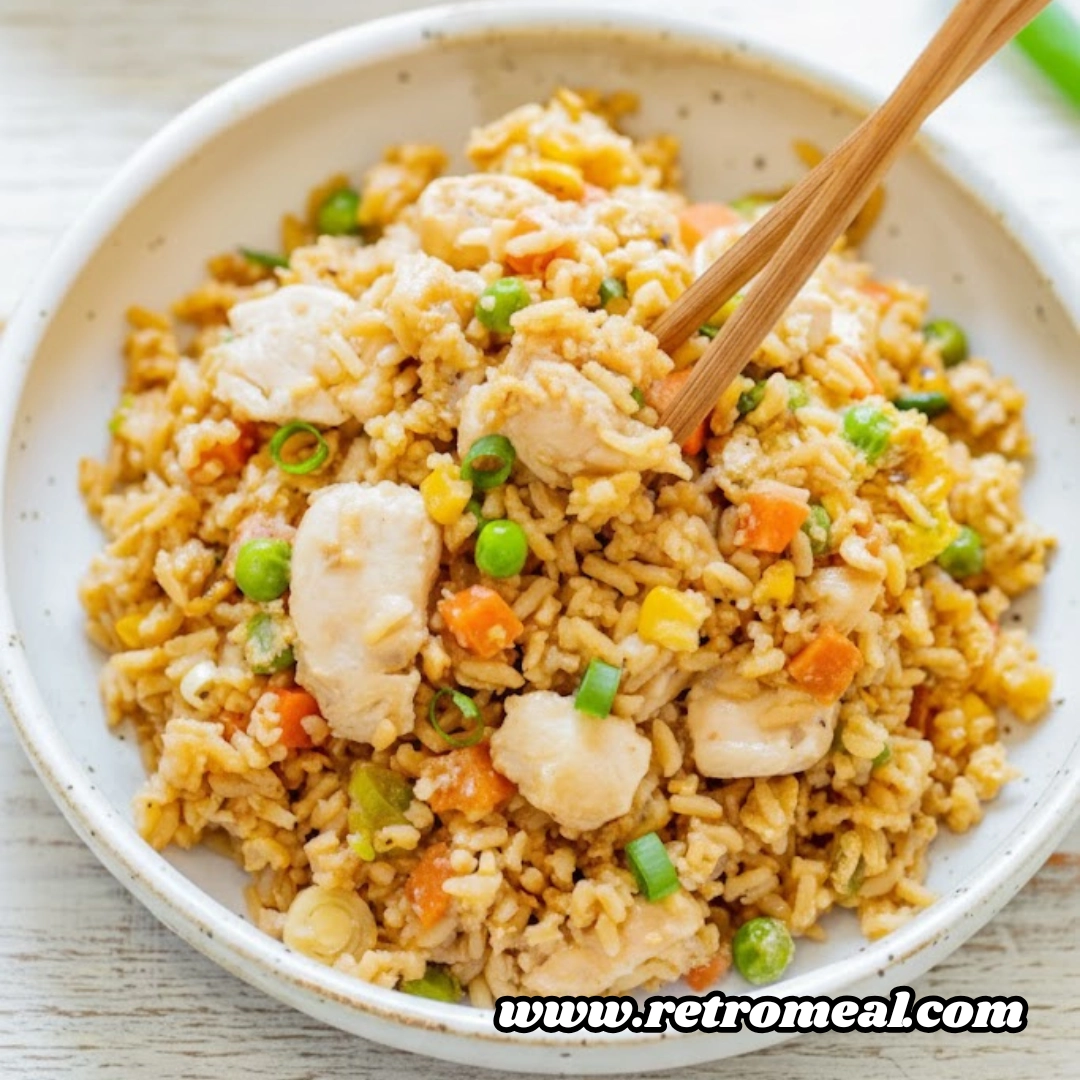
There is a specific kind of magic that happens when a hot skillet meets chilled rice and savory soy sauce. Many of us grew up associating fried rice with those iconic white cardboard containers, but once you realize how simple it is to achieve that authentic flavor in your own kitchen, those takeout menus might start gathering dust. This Easy One-Pan Chicken Fried Rice is a weeknight lifesaver, combining the protein of juicy chicken breasts with the comforting texture of seasoned grains and the snap of garden-fresh vegetables.
The beauty of this dish lies in its speed and its soul. In less time than it takes for a delivery driver to navigate traffic, you can have a steaming bowl of rice on the table that is significantly less greasy and far more vibrant than the restaurant alternative. It is a meal that appeals to everyone from picky toddlers to busy professionals seeking a wholesome, flavor-packed dinner. By focusing on a few key techniques, like using cold rice and a screaming hot pan, you can transform humble pantry staples into a culinary masterpiece.
Table of Contents
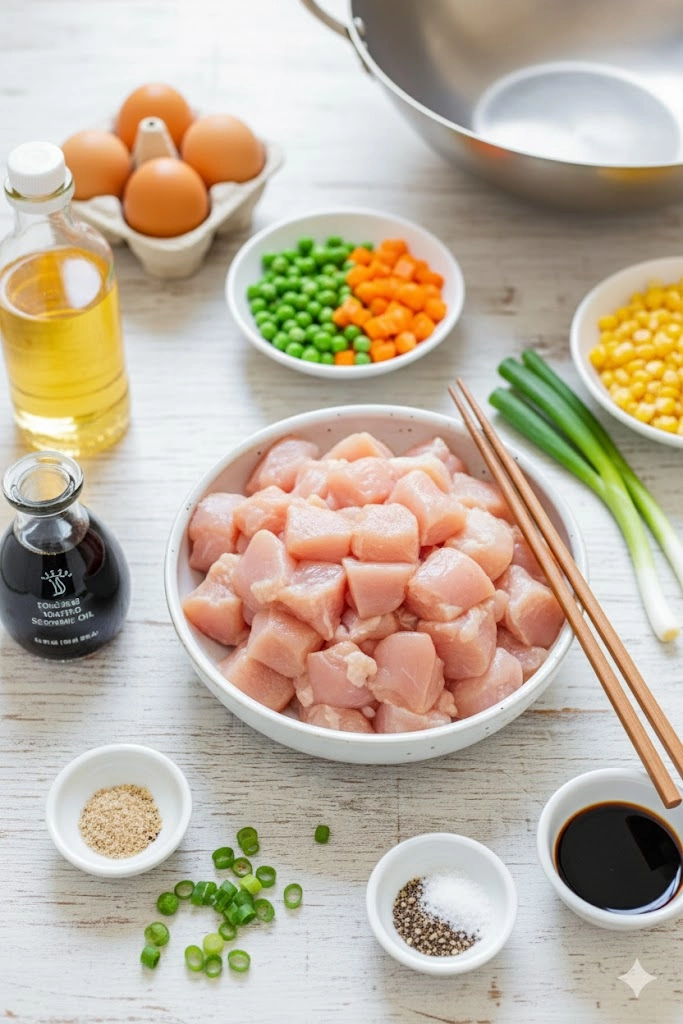
Ingredients for Your Skillet Creation
- 2 tablespoons sesame oil
- 2 tablespoons canola or vegetable oil (olive oil may also be used)
- 1 pound boneless skinless chicken breasts, diced into 1/2-inch pieces
- 1 1/2 cups frozen peas and diced carrots blend (do not thaw; optionally add 1/2 cup frozen corn)
- 3 green onions, trimmed and sliced into thin rounds
- 2 to 3 garlic cloves, finely minced
- 3 large eggs, lightly beaten
- 4 cups cooked rice (white long-grain is preferred; chilled leftover rice works best)
- 3 to 4 tablespoons low-sodium soy sauce
- Salt and pepper, optional and to taste
Instructions for Perfect Stir-Fry
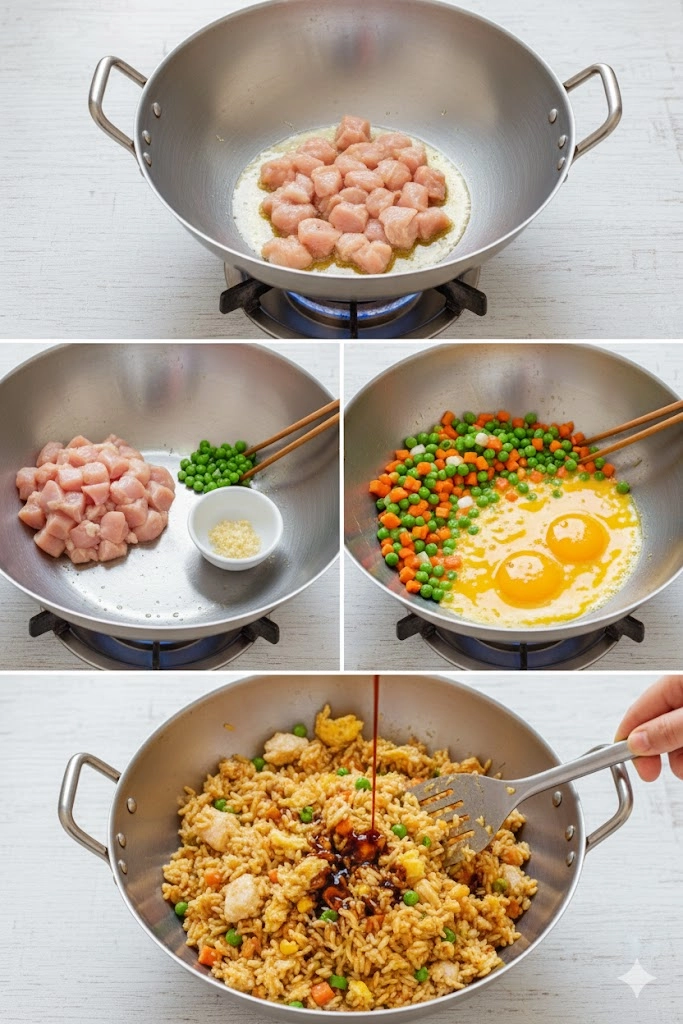
- Prepare a large non-stick skillet or a wok by placing it over medium-high heat. Add both the sesame oil and the neutral canola or vegetable oil. Once the oil is shimmering, add your diced chicken pieces. Cook the chicken for approximately 3 to 5 minutes. Use a spatula to flip the pieces intermittently, ensuring they are golden on the outside and no longer pink in the center.
- Using a slotted spoon, carefully remove the cooked chicken from the pan and set it aside on a plate. It is vital to leave the remaining oils and the flavorful chicken juices in the skillet for the next stage of cooking.
- Into that same hot skillet, toss in the frozen peas and carrots, the optional corn, and the sliced green onions. Sauté these for about 2 minutes. You are looking for the vegetables to soften and become vibrant in color, but they should still retain a bit of their structural integrity.
- Add the minced garlic to the vegetable mixture. Stir constantly for about 1 minute. The goal here is to release the aromatic oils of the garlic without letting it brown or turn bitter.
- Use your spatula to push the vegetable mixture to one side of the skillet, creating an empty space on the other side. Pour the lightly beaten eggs into the cleared area. Scramble them gently, stirring as they set, until they are fully cooked but still tender.
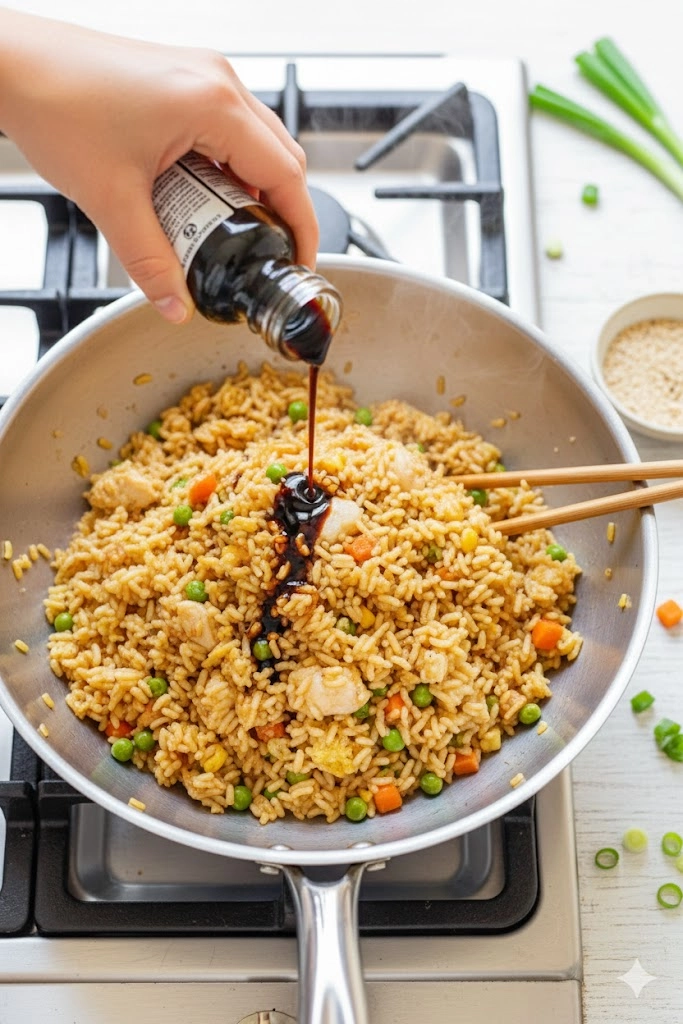
- Return the cooked chicken to the skillet and add the 4 cups of rice. Drizzle the low-sodium soy sauce evenly over the entire mixture. Using a folding motion, toss and flip the rice with the other ingredients. This ensures every grain is coated in the savory sauce and the heat is distributed evenly.
- Continue to cook for approximately 2 minutes until the rice and chicken are heated through and the flavors have melded. Give the dish a final taste test. If you prefer more seasoning, add the optional salt and pepper or an extra splash of soy sauce before serving immediately.
Mastering the Texture and Heat
The secret to a world-class fried rice isn’t just the ingredients; it is the science of the pan. When you are working with a one-pan meal like this, heat management is your best friend. The reason we cook the chicken first and then remove it is to prevent it from becoming tough and rubbery while the vegetables and rice undergo their transformation. By searing the chicken at a high temperature, you lock in the juices. When it is reintroduced at the very end, it stays succulent and tender.
The rice itself is the most important variable in this equation. If you use freshly cooked, steaming hot rice, the moisture content will likely turn your stir-fry into a gummy, mushy mess. By using rice that has been chilled in the refrigerator overnight, the grains have had time to dehydrate slightly and firm up. This allows them to “fry” in the oil rather than steam, resulting in those distinct, individual grains that define a great fried rice. If you find yourself in a pinch and must use fresh rice, spread it out on a baking sheet and place it in front of a fan or in the freezer for 15 minutes to mimic the drying process.
Furthermore, do not be afraid of the high heat. A true stir-fry requires a sizzle. When the rice hits the oil, you should hear a distinct popping sound. This is where the “fried” in fried rice comes from. It creates a slight crust on the exterior of the rice grains, providing a delightful textural contrast to the soft scrambled eggs and the tender bits of chicken.
Accompaniments and Creative Serving Suggestions
While this Easy One-Pan Chicken Fried Rice is a complete meal on its own, you can elevate the dining experience by pairing it with thoughtful sides. If you want to lean into the takeout-at-home theme, consider serving this alongside crispy spring rolls or steamed edamame sprinkled with sea salt. A simple cucumber salad dressed in rice vinegar and a pinch of sugar can provide a refreshing, acidic brightness that cuts through the savory richness of the soy and sesame oils.
For those who enjoy a bit of heat, serving the rice with a side of chili garlic sauce or sriracha is a must. You can also garnish the final dish with toasted sesame seeds or a few extra slivers of fresh green onion for a pop of color and a bit of crunch. If you are serving a larger crowd, this rice makes an excellent base for a broader Asian-inspired feast, sitting comfortably next to beef and broccoli or a tray of honey garlic shrimp.
Modifications and Ingredient Substitutions
One of the greatest strengths of this recipe is its inherent flexibility. If you do not have chicken breasts on hand, boneless skinless chicken thighs are a fantastic substitute. They offer a slightly higher fat content which results in an even juicier bite. For those looking to clear out the refrigerator, this recipe is a “kitchen sink” favorite. You can swap the chicken for diced ham, crumbled bacon, or even leftover pork roast.
Vegetarians can easily adapt this dish by omitting the chicken and adding extra vegetables like diced bell peppers, baby corn, or snap peas. Firm tofu that has been pressed and seared until golden makes an excellent protein replacement. If you are watching your carbohydrate intake, you can replace the white rice with cauliflower rice, though you should reduce the cooking time slightly to prevent the cauliflower from becoming too soft. For a gluten-free version, simply substitute the soy sauce for tamari or liquid aminos, both of which provide that essential umami depth without the wheat.
Essential Insights for Recipe Success
To achieve that signature mahogany color and deep savory flavor, the type of soy sauce you choose matters. While this recipe calls for low-sodium soy sauce to keep the salt levels manageable, you can experiment with adding a teaspoon of dark soy sauce for a richer color or a dash of oyster sauce for a more complex, slightly sweet undertone.
When it comes to the garlic, fresh is always superior to the jarred variety. The pungent, spicy bite of freshly minced garlic mellows into a sweet nuttiness as it hits the oil, which jarred garlic often lacks. If you want to add an extra layer of authenticity, try adding half a teaspoon of freshly grated ginger at the same time you add the garlic. The combination of garlic, ginger, and green onions is the “holy trinity” of many Asian cuisines and will provide an unmistakable depth to your fried rice.
Lastly, remember that the “one-pan” aspect is meant to make your life easier. If you feel the pan is getting too crowded at any point, don’t be afraid to cook in batches. Overcrowding a pan drops the temperature, which leads to steaming rather than frying. If your skillet isn’t large enough to handle 4 cups of rice at once, fry half the rice, remove it, fry the other half, and then toss everything back together at the very end.
Frequently Asked Questions
Can I use brown rice instead of white rice for this recipe?
Yes, brown rice is an excellent substitute for white rice if you are looking for a more fiber-rich, nutty flavor. However, because brown rice is naturally denser and more fibrous, it is even more important that the rice is cold and dry before you begin. It may require a slightly longer “fry” time in the skillet to ensure the grains are fully heated through and have absorbed the soy sauce evenly.
How do I prevent my eggs from disappearing into the rice?
The key to those beautiful, yellow “treasures” of egg is to ensure the eggs are fully scrambled and set before you mix them with the rest of the ingredients. By pushing the vegetables to the side and cooking the eggs in their own space, you allow large curds to form. Once they are no longer liquid, you can then fold them into the rice, which preserves their texture and visibility.
What is the best way to reheat leftovers without the rice getting hard?
Rice has a tendency to dry out when stored in the refrigerator. To restore its moisture when reheating, place the fried rice in a microwave-safe bowl and sprinkle a teaspoon of water over the top. Cover the bowl with a damp paper towel and microwave in 30-second intervals. The steam trapped under the paper towel will rehydrate the grains, making them tender again. Alternatively, you can toss the leftovers back into a hot skillet with a tiny splash of oil for a few minutes.
A New Weeknight Tradition
This Easy One-Pan Chicken Fried Rice is more than just a quick dinner; it is a testament to how simple ingredients can be transformed through heat and timing. Whether you are cooking for a hungry family or prepping lunches for the week, this dish provides a satisfying, nutrient-dense option that never feels like a compromise. The balance of salty soy, aromatic sesame, and sweet vegetables creates a flavor profile that is both nostalgic and fresh. Once you master the rhythm of the stir-fry, you will find yourself reaching for this recipe time and time again, confident that a delicious, home-cooked meal is only twenty minutes away.
Nutrition Information
| Nutrient | Amount Per Serving |
| Calories | 355 calories |
| Total Fat | 14 grams |
| Saturated Fat | 2 grams |
| Trans Fat | 0.04 grams |
| Cholesterol | 130 milligrams |
| Sodium | 458 milligrams |
| Total Carbohydrates | 34 grams |
| Dietary Fiber | 3 grams |
| Sugars | 0.3 grams |
| Protein | 22 grams |
| Vitamin A | 3525 IU |
| Vitamin C | 6 milligrams |
| Calcium | 39 milligrams |
| Iron | 1 milligram |
Nutritional Disclaimer
The nutritional values provided are calculated based on standard ingredient measurements and should be considered an approximation. Individual results may vary based on specific brands of ingredients used and portion sizes.
Easy One-Pan Chicken Fried Rice
Ingredients
- 2 tbsp sesame oil
- 2 tbsp canola or vegetable oil (or olive oil)
- 1 pound boneless skinless chicken breasts, diced into 1/2-inch pieces
- 1.5 cups frozen peas and diced carrots blend (not thawed)
- 3 green onions, trimmed and sliced into thin rounds
- 2 to 3 cloves garlic, finely minced
- 3 large eggs, lightly beaten
- 4 cups cooked white long-grain rice (chilled leftover rice is best)
- 3 to 4 tbsp low-sodium soy sauce
- salt and pepper, to taste (optional)
Instructions
- To a large non-stick skillet or wok, add the oils and chicken. Cook over medium-high heat for about 3 to 5 minutes, flipping intermittently so all sides cook evenly until no longer pink.
- Remove the chicken with a slotted spoon and set aside on a plate, leaving the oils and juices in the skillet.
- Add the frozen peas, carrots, and green onions to the skillet. Cook for about 2 minutes until vegetables begin to soften.
- Add the minced garlic and cook for 1 minute until fragrant, stirring intermittently.
- Push the vegetables to one side of the skillet. Pour the beaten eggs into the other side and scramble them until fully cooked.
- Add the cooked chicken and the chilled rice back into the pan.
- Drizzle the soy sauce evenly over the mixture. Stir and toss for about 2 minutes to combine and heat through, ensuring the rice absorbs the sauce.
- Taste and add optional salt and pepper if desired. Serve immediately while hot.
Notes
Equipment
- Large non-stick skillet or Wok
- slotted spoon
- spatula
- Mixing bowl for eggs