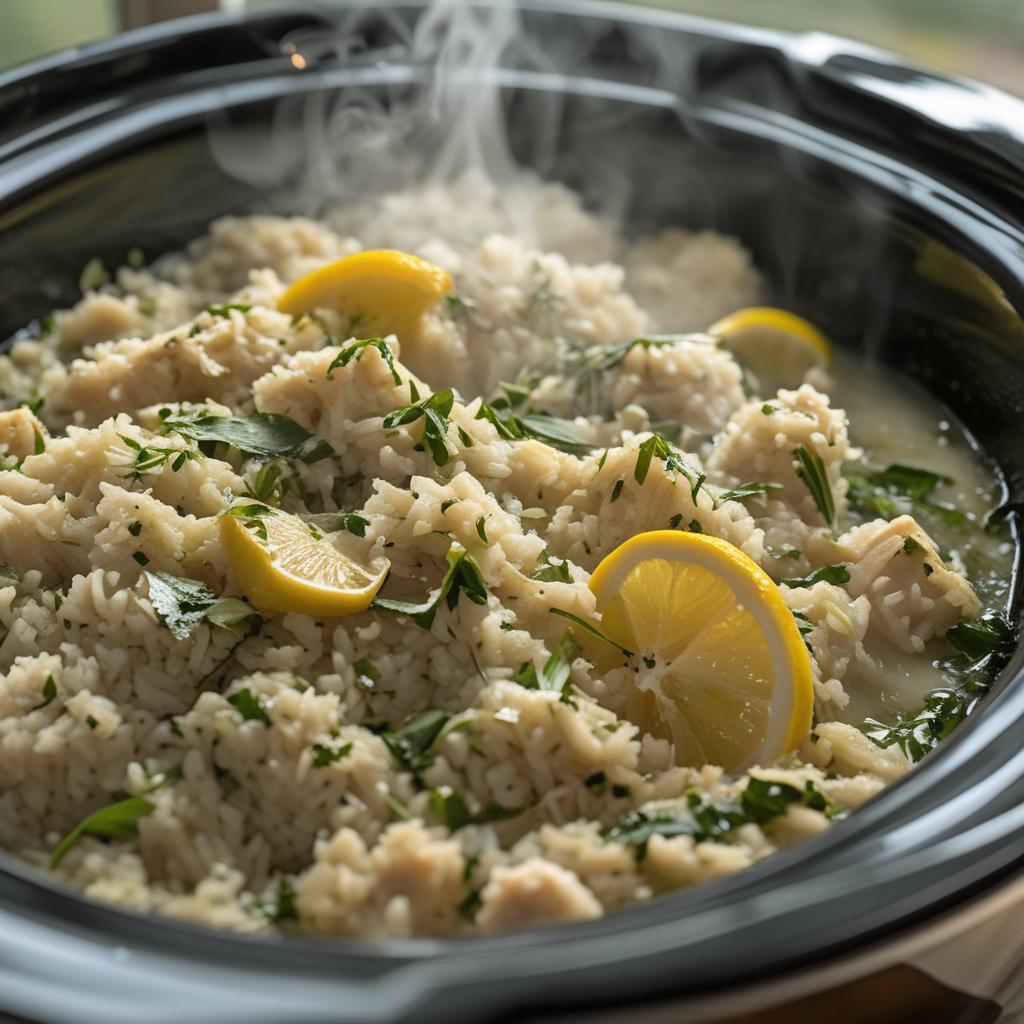
There’s a particular alchemy that happens when citrus, herbs, and slow heat collide in a crockpot. As lemon zest dissolves into golden chicken fat and thyme sprigs surrender their essence to pearled rice, your kitchen becomes a sensory temple. This Lemon Herb Chicken Rice Dinner isn’t mere sustenance—it’s aromatherapy with a fork. The initial citrus punch mellows into honeyed warmth as garlic caramelizes at the edges of the pot, while rosemary needles perform a slow striptease, releasing piney vapors that cling to your curtains like edible perfume. For eight glorious hours, anticipation builds as steam lifts this bright Mediterranean orchestra through every room—a culinary crescendo denied to oven-roasted weeknight dinners.
Table of Contents
Ingredient Deep Dive
| Ingredient | Quantity | Purpose |
|---|---|---|
| Chicken thighs (bone-in) | 6 pieces | Fat content prevents drying during slow cooking |
| Arborio rice | 1.5 cups | Starch creates creamy texture without stirring |
| Preserved lemons | 3 wedges | Fermented depth balances fresh lemon juice |
| Dry vermouth | 1/2 cup | Alcohol-soluble flavors release herb oils |
| Fennel pollen | 1 tsp | Umami booster replaces msg |
The chicken thigh’s collagen breaks down into gelatin over six hours, creating a self-saucing effect that binds the rice. Unlike breast meat, the dark meat’s higher fat content emulsifies with acidic elements (lemon juice, vermouth), preventing the protein fibers from seizing up. Arborio rice serves dual purposes—its surface starch thickens the cooking liquid into velvety consistency while the grain’s core remains al dente despite prolonged heat exposure.
Citrus components work in layers: fresh lemon juice provides upfront brightness, zest adds aromatic oils without acidity, and preserved lemons contribute fermented complexity. Fennel pollen—often called “spice rack truffles”—contains glutamic acid compounds that enhance savoriness without overwhelming other herbs. Vermouth’s fortified wine structure withstands long cooking better than standard white wine, while its botanicals (commonly chamomile, coriander) reinforce the herbal profile.
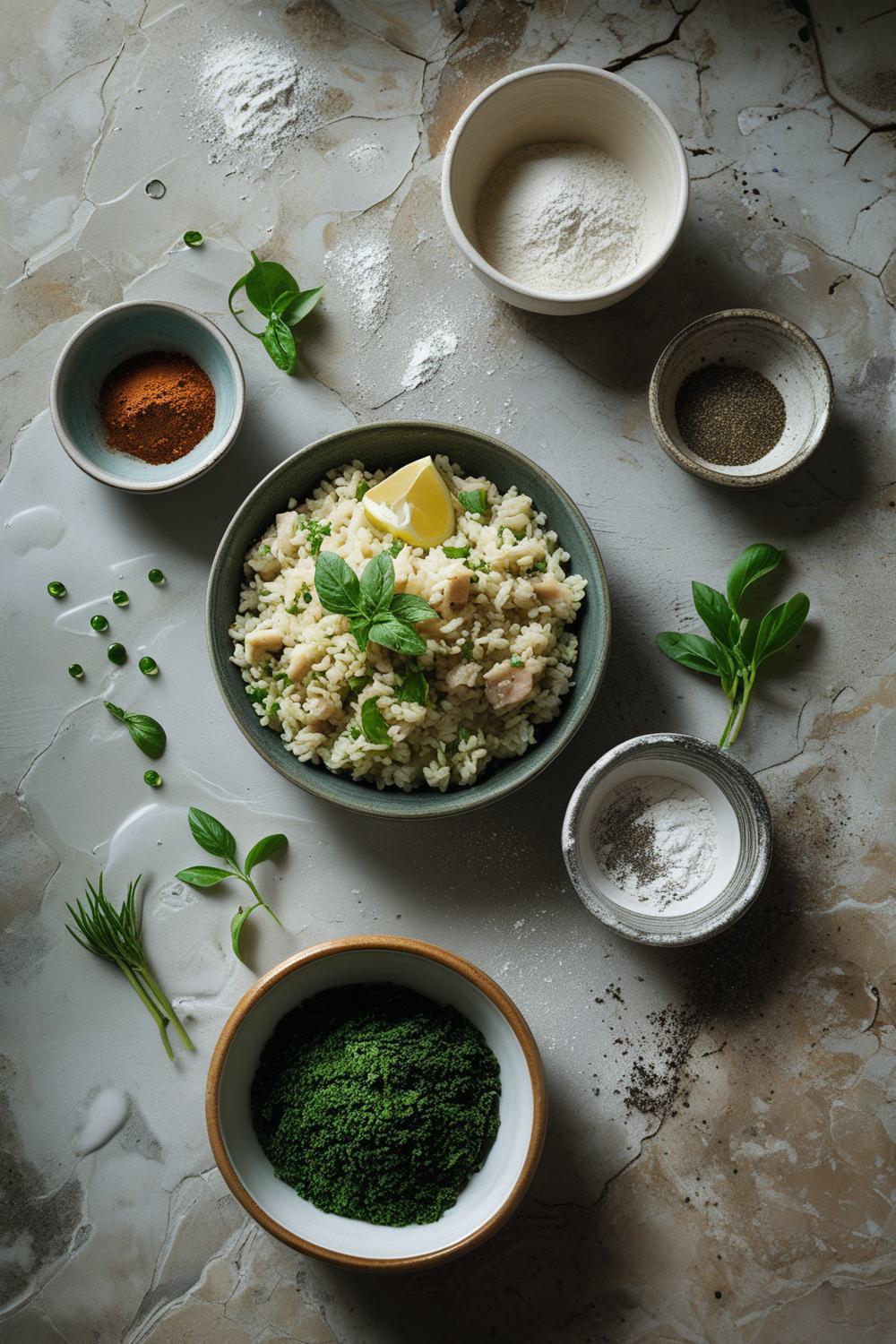
Substitutions & Swaps
For gluten-free needs, replace vermouth with Chinese rice wine (Shaoxing) or dry cider—both provide acidity without wheat-derived alcohols. Vegan adaptations require careful layering: king oyster mushrooms braised in kombu broth mimic chicken’s texture, while cashew cream mixed with lemon creates dairy-free richness. Pantry swaps could include capers for preserved lemons (briny but less floral) or dry tarragon instead of fresh herbs (use 1/3 quantity). Rice alternatives have consequences—jasmine rice turns mushy, while brown rice requires adding 1/2 cup extra broth and 45 minutes longer cooking. Those avoiding alcohol can substitute verjus (unfermented grape juice) mixed with 1 tsp vinegar, though the flavor profile will lean more sharply acidic.
Equipment Guide
A 6-quart oval slow cooker is non-negotiable—the shape accommodates chicken pieces in single layer without overcrowding. Ceramic inserts distribute heat more evenly than metal pots, preventing rice from scorching at edges. Use rubber-tipped tongs when arranging chicken; metal utensils can scratch ceramic glaze, creating microscopic pits where bacteria breed. For herb prep, invest in a stainless steel channel knife—the tool removes lemon zest in wide ribbons without bitter pith. If finishing under broiler (optional crisp step), enameled cast iron pans work better than non-stick surfaces for developing fond. A probe thermometer is essential—chicken must reach 165°F internally before rice addition to prevent salmonella risk in starchy environment.
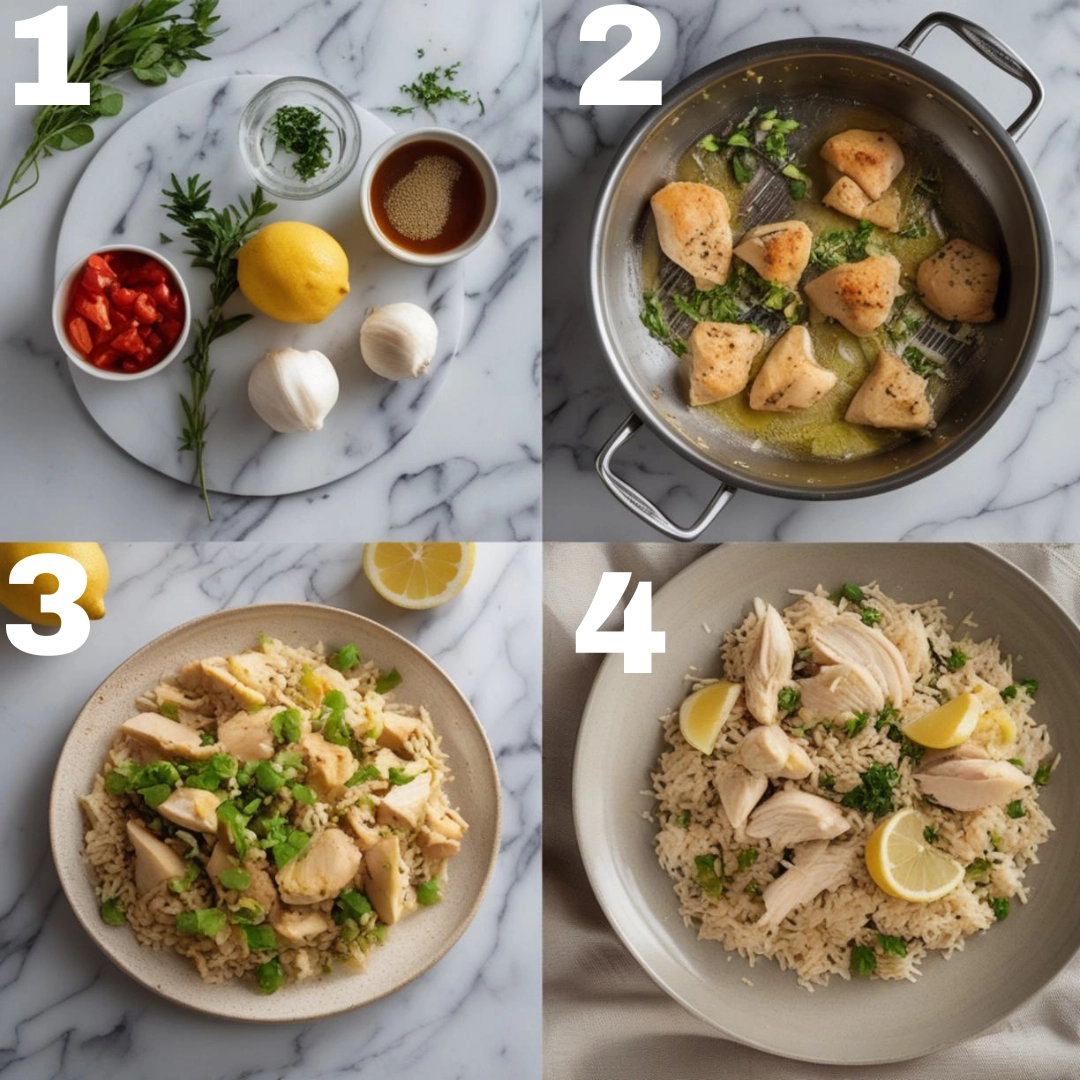
Step-by-Step Walkthrough
- Pat chicken thighs dry with paper towels—moisture prevents maillard reaction
- Mix zest, vermouth, and minced garlic in bowl—let sit 10 minutes to extract oils
- Season chicken aggressively with salt (1 tsp per pound)—osmosis draws out interior moisture
- Sear skin-side down in skillet 5 minutes until golden—don’t flip (crockpot will finish cooking)
- Layer rice, broth, herb sprigs in slow cooker—stir once to distribute
- Nestle chicken on rice mixture skin-up—immersion breaks crispy skin
- Cook on low 6 hours—high heat causes grain explosion
- Rest 15 minutes with lid ajar—rice completes absorption phase
- Fluff rice with fork vertically—preserves grain structure
- Finish with lemon juice and fennel pollen—heat destroys volatile oils
The sear isn’t for doneness—it’s a flavor insurance policy. By browning chicken skin first, you create lipid compounds (mainly pyrazines and thiazoles) that survive slow cooking. Fat-soluble flavor molecules bind with rice starches, distributing chicken essence throughout the pot. Resist stirring during cooking—Arborio releases amylopectin starch incrementally, and agitation makes gluey textures.
Timing the acidic components is critical. Early lemon juice additions turn poultry tough by denaturing proteins before collagen melts, but adding it post-cooking brightens without toughening. The 15-minute rest isn’t negotiable—as the pot cools from 209°F to 185°F, rice completes its absorption phase. Opening the lid prematurely releases steam needed for final grain expansion.
Expert Tips & Troubleshooting
If rice sticks to ceramic, you have insufficient liquid—add 1/4 cup warm broth and let sit 10 minutes. Soggy bottoms mean your slow cooker runs hot—place a heat diffuser (ceramic tile) underneath. For intense herb flavor without bitterness, tie sprigs in cheesecloth—remove after 4 hours. Skin turned rubbery? Transfer chicken to broiler for 3 minutes—the concentrated heat re-crisps without overcooking. If acidity overwhelms, stir in 1 tsp honey off-heat—it binds excess citric acid molecules. Never use bottled lemon juice—it contains preservatives that create metallic aftertastes when cooked.
Grain separation issues stem from three sins: over-stirring, incorrect rice variety (always use medium-grain), or adding cold broth (shocks grains). For creamier textures, swap 1/2 cup broth for coconut milk—its saturated fats embrace starch molecules. If traveling all day, layer vegetables (carrots, celery) beneath rice as moisture barrier—they prevent overcooked mush during extended cook times.
Flavor Variations
North African Twist: Replace thyme with harissa paste and preserved lemon with green olives—add chickpeas in last hour. Kid-Friendly Version: Swap vermouth for apple juice, mix peas into rice after cooking—use chicken drumsticks for fun handheld option. Spicy Upgrade: Add Calabrian chiles to vermouth marinade—their oil-soluble capsaicin infuses entire dish without searing heat. Japanese-Style: Substitute yuzu for lemon, add shiitake mushrooms—finish with togarashi instead of fennel pollen.
Storage & Reheating
Store components separately if possible—rice absorbs chicken juices and becomes soggy overnight. In airtight containers, chicken keeps 3 days refrigerated, rice up to 5 days. Freezing not recommended—citrus becomes bitter upon thawing. To reheat, place rice in skillet with 1 tbsp broth—steam under lid 5 minutes. Chicken revives best in air fryer (370°F x 4 min). Microwave use creates rubbery textures—only suitable for rice with damp paper towel cover.
FAQ Section
Can I use chicken breasts?
Not advised—they’ll dry out. If necessary, add 30 mins before end and monitor temp.
Why won’t my rice cook through?
Old rice has hardened starches—soak grains in warm water 30 mins before using.
Can I double the recipe?
Only in 8-quart cooker—overcrowding drops temperature, causing unsafe meat temps.
Is boneless chicken faster?
Bone acts as insulator—boneless thighs may overcook in 6 hours. Reduce time by 1.5 hrs.
The Recipe Card
Lemon Herb Chicken Rice Dinner: Bone-in chicken thighs slow-cooked with Arborio rice in vermouth-lemon broth with fresh thyme and rosemary. Finishes with preserved lemon and fennel pollen. Serves 6. Active prep 25 mins, cook time 6 hours. Gluten-free adaptable.
Nutrition Information
| Nutrient | Per Serving |
|---|---|
| Calories | 610 |
| Protein | 38g |
| Carbs | 55g |
| Fiber | 2g |
| Sugars | 3g |
Nutritional values are estimates only. Actual values may vary based on ingredient brands and portion sizes. Consult a nutritionist for dietary needs.