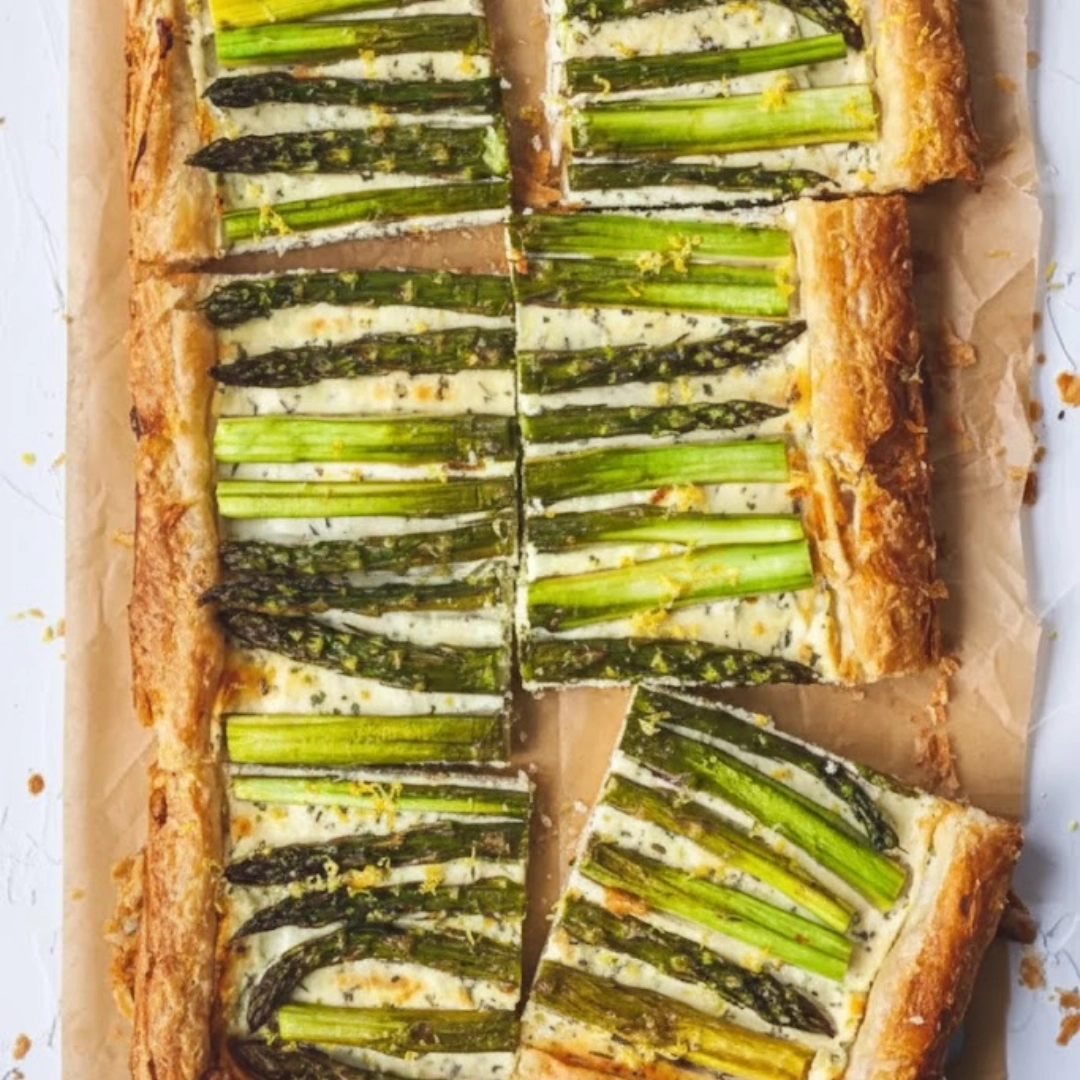
The arrival of spring brings a certain magic to the kitchen, and nothing captures that seasonal transition quite like an Easy Asparagus Tart. This recipe is the epitome of sophisticated simplicity, combining the buttery, shattering layers of high quality puff pastry with a tangy, herbaceous cheese base and the earthy snap of fresh green asparagus. Whether you are hosting a festive weekend brunch, looking for a light weeknight dinner that feels like a treat, or need a stunning appetizer that comes together with minimal effort, this tart is a showstopper. It looks like something from a high end French bakery, yet relies on smart kitchen shortcuts that ensure success every single time.
Table of Contents
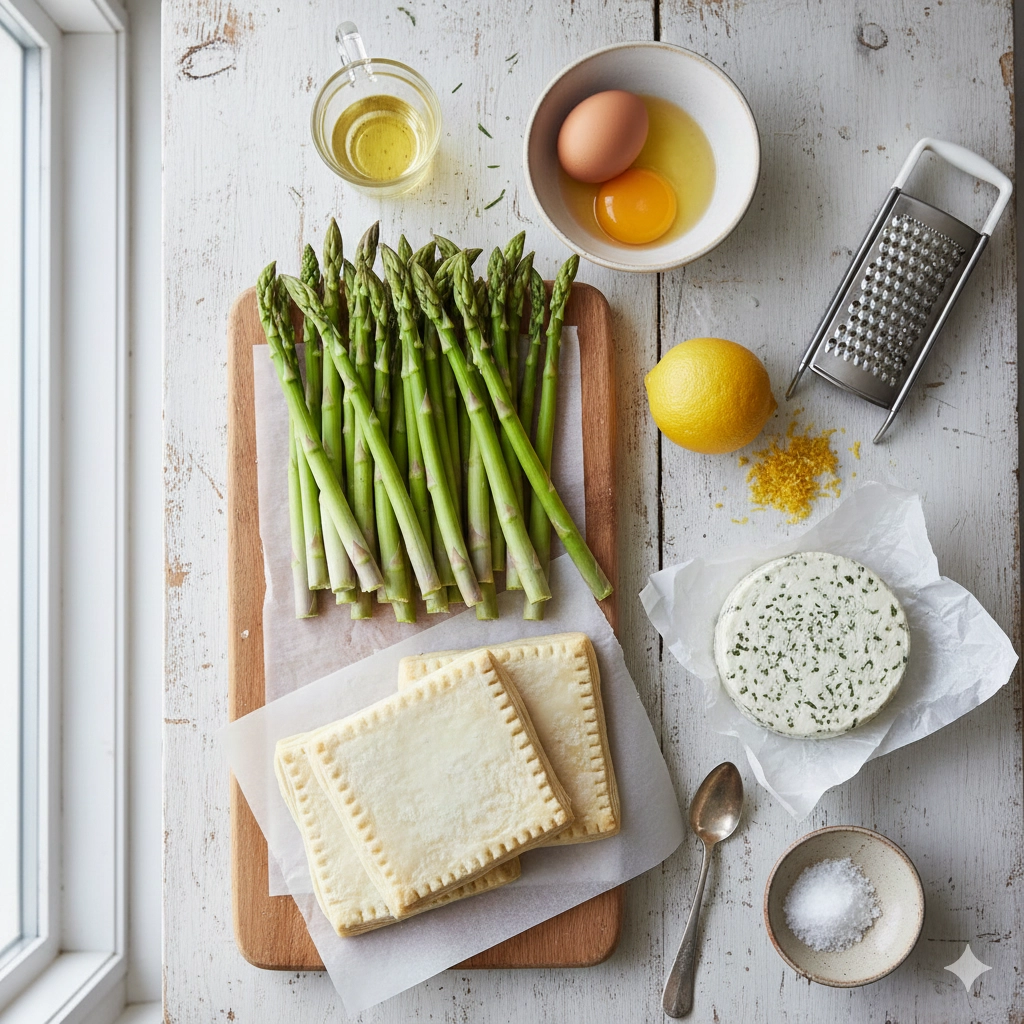
Ingredients
- 2 sheets frozen puff pastry
- 2 eggs, at room temperature
- 8 ounces herbed goat cheese, at room temperature
- 1 ounce (approximately 3/4 cup grated) Pecorino Romano cheese
- 1 pound asparagus, trimmed and peeled as needed
- 1 teaspoon vegetable oil
- 1/4 teaspoon kosher salt
- Zest of 1 lemon
Instructions
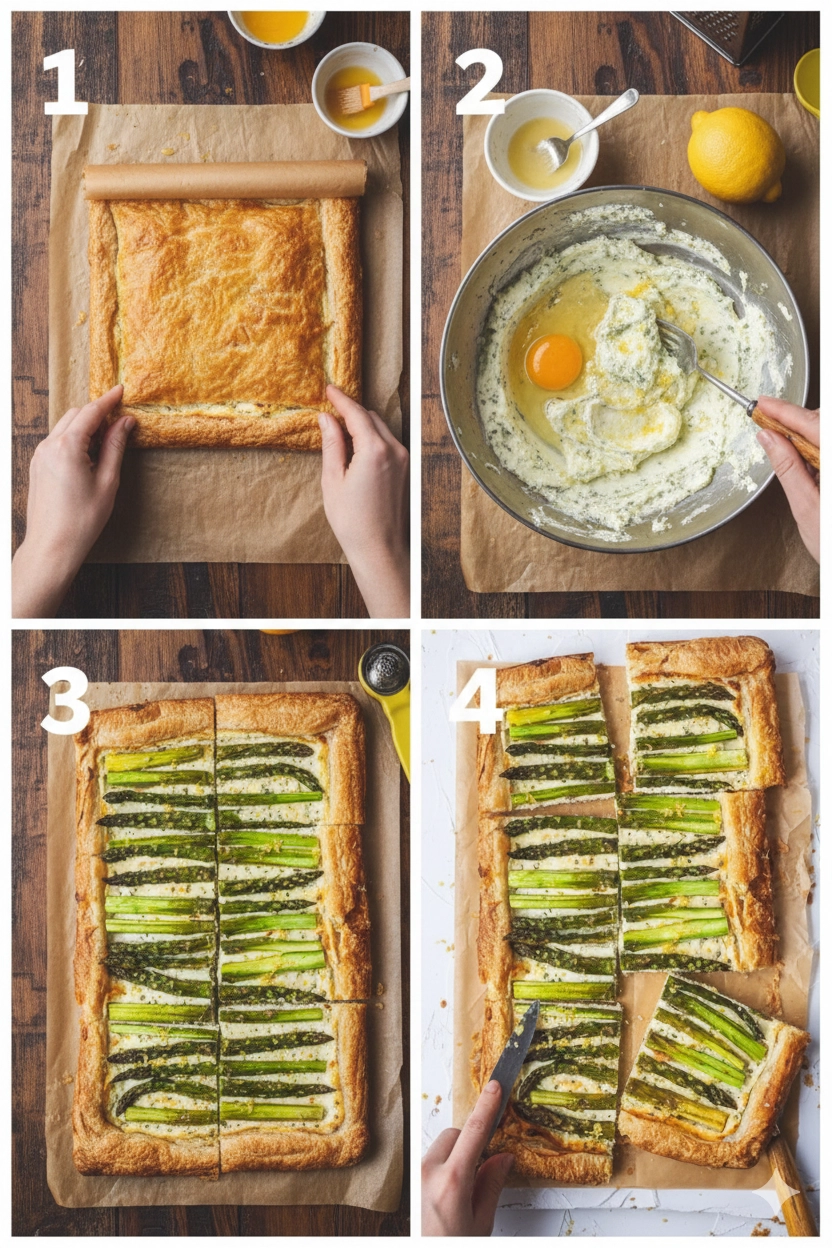
- Prepare the Oven and Pastry: Place a cookie sheet on a rack in the center of the oven. Preheat your oven to 400 Fahrenheit (or according to the specific puff pastry package instructions). Remove the puff pastry from the freezer and let it stand at room temperature to thaw until pliable but still cool.
- Mix the Filling: Zest your lemon into a small bowl and set it aside for the final garnish. In a medium mixing bowl, beat 1 egg with the room temperature herbed goat cheese, the grated Pecorino Romano, and 1 tablespoon of freshly squeezed lemon juice until smooth and combined.
- Construct the Shell: Unfold both thawed pastry sheets onto a large sheet of parchment paper. Overlap the short ends of the two sheets by 1 inch to form a long rectangle roughly 17 inches by 9 inches. Press the seam firmly to seal.
- Create the Border: Beat the second egg with 1 teaspoon of water to create an egg wash. Brush a 1-inch rim of this wash around the entire pastry rectangle. Fold the edges inward 1 inch to create a raised border, pressing down so the egg wash acts as a sealant. Use extra egg wash on the corners and brush the top of the folded rim for a glossy finish.
- Assemble the Toppings: Spread the prepared goat cheese mixture evenly within the pastry border. In a separate bowl, toss the trimmed asparagus stalks with the vegetable oil and kosher salt. Arrange the asparagus in a single layer over the cheese filling.
- Bake to Perfection: Carefully slide the parchment paper with the tart onto the preheated hot cookie sheet. Bake for 30 to 35 minutes, or until the pastry is deeply golden brown and the asparagus is tender.
- Finish and Serve: Sprinkle the reserved lemon zest over the hot asparagus. Slice into squares or triangles and serve immediately while warm or at room temperature.
Masterclass in Asparagus Selection and Preparation
When you are making a dish where the vegetable is the undisputed star, your selection process at the grocery store or farmers market is paramount. For this tart, you want asparagus that screams freshness. Look for stalks that are smooth to the touch and firm to the handle. The tips should be tightly closed and dry; if they look “flowered” or feel mushy, the asparagus is past its prime. Avoid any stems that appear shriveled or wrinkled, as this is a sign of dehydration which leads to a stringy, unpleasant texture after baking.
In terms of thickness, try to find a bundle where the stalks are relatively uniform. This ensures that every piece of asparagus on your tart cooks at the same rate. If you end up with a mix of “jumbo” and “pencil” asparagus, don’t worry—simply slice the thicker stalks in half lengthwise so they match the thinner ones.
Preparation is where you can really elevate the texture. Many people simply snap the ends off, but the “natural snap” method can sometimes waste perfectly good, tender vegetable. Instead, use a knife to trim off the bottom inch where the color fades to white or woody brown. For thicker stalks, use a vegetable peeler to gently remove the outer skin from the bottom two-thirds of the spear. This reveals a pale, tender core that melts in your mouth and prevents that “woody” bite that can ruin a delicate puff pastry experience.
The Science of Working with Puff Pastry
Puff pastry is a marvel of culinary engineering, relying on hundreds of layers of dough and butter to create a towering rise. To get the best results for your tart, temperature management is your most important task. You want the pastry to be thawed enough to unfold without cracking, but it must remain cold to the touch. If the butter inside the dough melts before it hits the oven, you will lose those distinct, flaky layers.
When joining the two sheets together, remember that less is more. You only need a 1-inch overlap to create a secure bond. Pressing too hard or rolling the dough out too thin can “bruise” the pastry, compressing the layers and preventing them from puffing.
The egg wash serves a dual purpose here. Beyond providing a beautiful, professional mahogany sheen, it acts as a culinary “glue.” By brushing the 1-inch border before folding it over, you are ensuring that the rim stays upright during the baking process, creating a structural wall that keeps your creamy goat cheese filling from bubbling over the sides. Just be careful not to let the egg wash drip down the cut edges of the pastry, as this can actually “weld” the layers together and stop the rise.
Deep Dive into the Baking Process
The secret to a crisp bottom crust—avoiding the dreaded “soggy bottom”—is the preheated cookie sheet. By placing the baking sheet in the oven while it preheats to 400 Fahrenheit, you create a searing hot surface. The moment the cold parchment and pastry hit that hot metal, the bottom of the tart begins to set and crisp immediately.
As the tart bakes for those 30 to 35 minutes, several things happen simultaneously. The water in the butter layers turns to steam, forcing the dough upward. The proteins in the eggs and cheese set into a custardy, savory filling. Meanwhile, the asparagus undergoes a quick roasting process, concentrating its sugars and developing a slightly charred, nutty flavor that complements the tang of the goat cheese. If you notice the edges browning too quickly, you can tent the rim with small strips of foil, but generally, at 400 Fahrenheit, the timing aligns perfectly with the cooking of the vegetable.
Flavor Variations and Creative Substitutions
While the combination of herbed goat cheese and Pecorino Romano is a classic, this tart is an incredible canvas for whatever you have in your refrigerator. The fundamental “formula” is a soft, spreadable cheese mixed with a sharp, aged cheese and a fresh topping.
- The Mediterranean Twist: Replace the goat cheese with a thick ricotta and the Pecorino with shredded fontina. Top with sun-dried tomatoes and thinly sliced zucchini instead of asparagus.
- The Earthy Alternative: Use a base of cream cheese mixed with a bit of gorgonzola. Top with sautéed cremini mushrooms and a drizzle of balsamic glaze after baking.
- The Protein Boost: If you want a heartier meal, tuck thin ribbons of prosciutto or cooked pancetta under the asparagus spears before sliding the tart into the oven. The salty meat pairs beautifully with the lemon zest and goat cheese.
Perfect Pairings and Serving Suggestions
This tart is remarkably versatile. For a sophisticated brunch, serve it alongside a crisp arugula salad tossed with a simple lemon and olive oil vinaigrette. The peppery bite of the greens cuts through the richness of the puff pastry perfectly. If you are serving this as a light dinner, it pairs wonderfully with roasted chicken or even grilled salmon.
For those using this recipe as a party appetizer, the trick is in the slicing. Use a very sharp chef’s knife or a pizza cutter to create small, two-bite triangles. Because the pastry is so flaky, a quick, decisive cut is better than a sawing motion to keep the layers intact. It can be served piping hot, but many enthusiasts argue that it is actually best at room temperature, which allows the flavors of the herbed cheese to fully develop.
Essential Culinary Insights for Success
- Parchment is Non-Negotiable: Do not attempt to bake this directly on the pan. The parchment paper allows for easy transfer to the hot cookie sheet and ensures the cheese doesn’t stick if any leaks occur.
- Room Temperature Ingredients: Ensure your eggs and goat cheese are truly at room temperature. Cold goat cheese is difficult to whip, and you want a perfectly smooth, spreadable consistency to avoid tearing the delicate pastry.
- Lemon Precision: When zesting the lemon, be careful to only take the yellow outer layer. The white pith underneath is quite bitter and can overwhelm the delicate flavor of the asparagus.
- The Oil Coating: Don’t skip tossing the asparagus in oil. This prevents the spears from drying out in the high heat of the oven and helps the salt adhere to the vegetable.
Frequently Asked Questions
Can I make this tart in advance for a dinner party?
You can certainly prepare the cheese filling and trim the asparagus up to twenty-four hours in advance. However, for the best texture, I recommend assembling and baking the tart just before you plan to serve it. Puff pastry is at its absolute peak of crispness within the first hour of leaving the oven. If you must make it ahead, you can reheat it briefly in a 350 Fahrenheit oven for five minutes to restore the crunch.
What should I do if my puff pastry gets too soft while I am working?
If the dough starts to feel sticky, limp, or overly greasy, stop immediately. Slide the parchment paper with the pastry onto a flat tray and pop it into the refrigerator for ten minutes. Working with warm puff pastry is the primary reason tarts fail to rise properly. Once it feels firm and cold again, you can resume the assembly.
Is there a way to make this recipe without Pecorino Romano?
Yes, if you find Pecorino too salty or sharp, you can easily substitute it with freshly grated Parmesan or even a sharp white cheddar. The goal is to provide a savory counterpoint to the creamy, tangy goat cheese, so any aged cheese with a bit of “bite” will work beautifully in its place.
Final Culinary Thoughts
This Easy Asparagus Tart proves that you don’t need a long list of ingredients to create a meal that feels truly special. By focusing on the quality of your produce and understanding a few simple techniques regarding pastry management, you can produce a dish that is as beautiful to look at as it is delicious to eat. It captures the essence of spring on a plate—bright, fresh, and elegantly simple. Once you master the basic method, you’ll find yourself reaching for this recipe year-round, swapping vegetables with the changing seasons.
Nutrition Facts
| Nutrient | Amount Per Serving |
| Calories | 621 |
| Total Fat | 43 grams |
| Saturated Fat | 18 grams |
| Cholesterol | 115 milligrams |
| Sodium | 680 milligrams |
| Total Carbohydrates | 41 grams |
| Dietary Fiber | 3 grams |
| Sugars | 4 grams |
| Protein | 18 grams |
Disclaimer
Nutrition information is calculated using an ingredient database and should be considered an estimate. For those with specific dietary restrictions, please calculate values based on the exact brands and measurements used in your kitchen.
Easy Asparagus Tart with Goat Cheese
Ingredients
- 2 sheets frozen puff pastry
- 2 large eggs, at room temperature
- 8 ounces herbed goat cheese, at room temperature
- 1 ounce Pecorino Romano cheese, grated (about 0.75 cup)
- 1 pound fresh asparagus, trimmed and peeled
- 1 tsp vegetable oil
- 0.25 tsp kosher salt
- 1 lemon, zested (save zest for garnish)
- 1 tbsp fresh lemon juice
- 1 tsp water (for egg wash)
Instructions
- Place a cookie sheet on the center rack and preheat oven to 400 Fahrenheit. Thaw puff pastry at room temperature for 20 to 30 minutes until pliable.
- Zest the lemon and set aside. In a bowl, beat 1 egg with the goat cheese, Pecorino Romano, and 1 tablespoon of lemon juice until smooth.
- Unfold pastry sheets on parchment paper. Overlap the ends by 1 inch to form a 17×9 inch rectangle; press the seam to seal.
- Whisk the remaining egg with 1 teaspoon of water. Brush a 1-inch rim around the pastry, fold the edges in to create a border, and brush the top with egg wash.
- Spread the cheese mixture inside the border. Toss asparagus with oil and salt, then arrange in a single layer over the cheese.
- Slide the parchment with the tart onto the hot cookie sheet. Bake for 30 to 35 minutes until golden brown and flaky.
- Sprinkle the reserved lemon zest over the hot asparagus. Slice into triangles or squares and serve warm or at room temperature.
Notes
Equipment
- Cookie sheet
- parchment paper
- mixing bowls
- Microplane or zester
- pastry brush