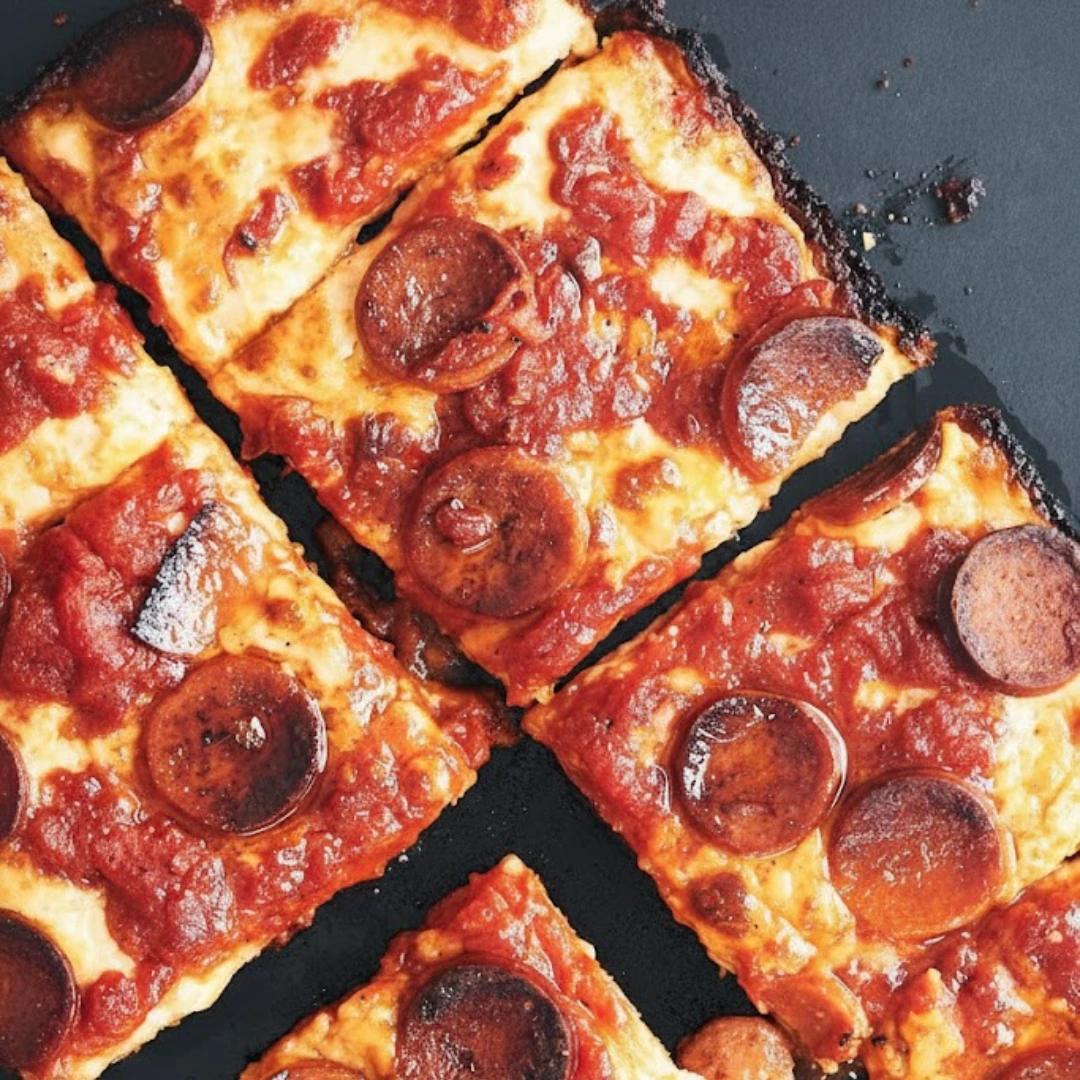
There is something undeniably magnetic about a pizza that defies the standard circular geometry of the delivery box. Enter the Detroit Style Pepperoni Pizza: a thick, airy, focaccia-like masterpiece defined by its rectangular silhouette and those legendary “frico” edges—where cheese meets the scorching heat of a steel pan and transforms into a lacy, caramelized perimeter of pure flavor.
If you have ever felt underwhelmed by a soggy crust or disappointed by pepperoni that lies flat and lifeless, this recipe is your redemption. We are diving deep into the Motor City tradition to bring you a pizza that features a light, bakery-style crumb, tangy brick cheese, and that quintessential cupped pepperoni that holds little pools of savory oil in every bite. This is not just dinner; it is a culinary project that yields professional-grade results right in your own kitchen.
Table of Contents
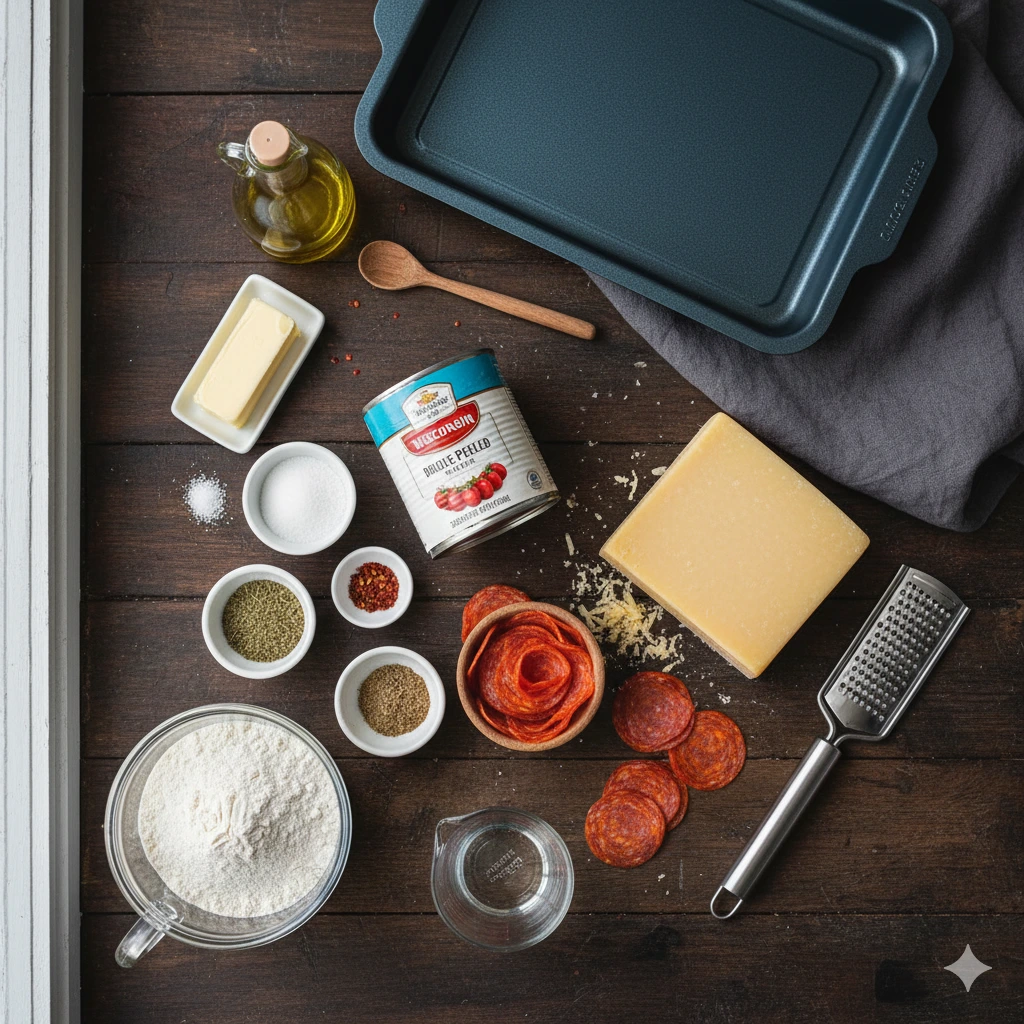
Ingredients for the Ultimate Pan Pizza
To achieve the authentic texture and flavor profile of a true Michigan classic, the quality and type of ingredients are paramount. This recipe utilizes a high-hydration dough and specific regional cheeses to ensure the final product is both light and indulgent.
For the Dough
- 400 grams bread flour (approximately 3 cups)
- 12 grams instant yeast
- 12 grams granulated sugar
- 290 grams water
- 12 grams kosher salt
For the Zesty Pizza Sauce
- 28 ounces canned tomatoes (whole peeled or crushed)
- 2 teaspoons dried oregano
- 1 teaspoon garlic powder
- 1 teaspoon onion powder
- 1/2 teaspoon kosher salt
- Red pepper flakes (optional, to taste)
The Toppings and Pan Prep
- 1 pound brick cheese, freshly grated
- 6 ounces natural casing pepperoni, sliced thin (such as Boar’s Head)
- 2 tablespoons unsalted butter (for the pan)
- 2 tablespoons extra virgin olive oil (for the pan)
- Fresh oregano for serving (optional)
Detailed Cooking Instructions
Preparing the Dough Foundation
- In a large mixing bowl, combine the bread flour and water. Stir until a shaggy mass forms and no dry flour remains. Cover and let this rest for 10 minutes. This autolyse period allows the flour to fully hydrate, making the dough easier to work with.
- After the rest, stir in the instant yeast and sugar. Once integrated, add the salt.
- Knead the dough by hand on a floured surface for about 5 minutes, or use a stand mixer with a dough hook on medium-low speed until the dough is smooth and elastic. It will remain somewhat sticky.
- Place the dough in a clean bowl, cover tightly with plastic wrap, and allow it to ferment at room temperature for 8 to 24 hours.
Crafting the Signature Sauce
- In a small saucepan over medium heat, add the canned tomatoes. Use a potato masher or a blender to break them down into a slightly chunky puree.
- Stir in the oregano, garlic powder, onion powder, salt, and red pepper flakes.
- Simmer the mixture for 15 minutes until it thickens slightly and the flavors meld. Remove from heat and allow it to cool completely before using.
Pan Assembly and Baking
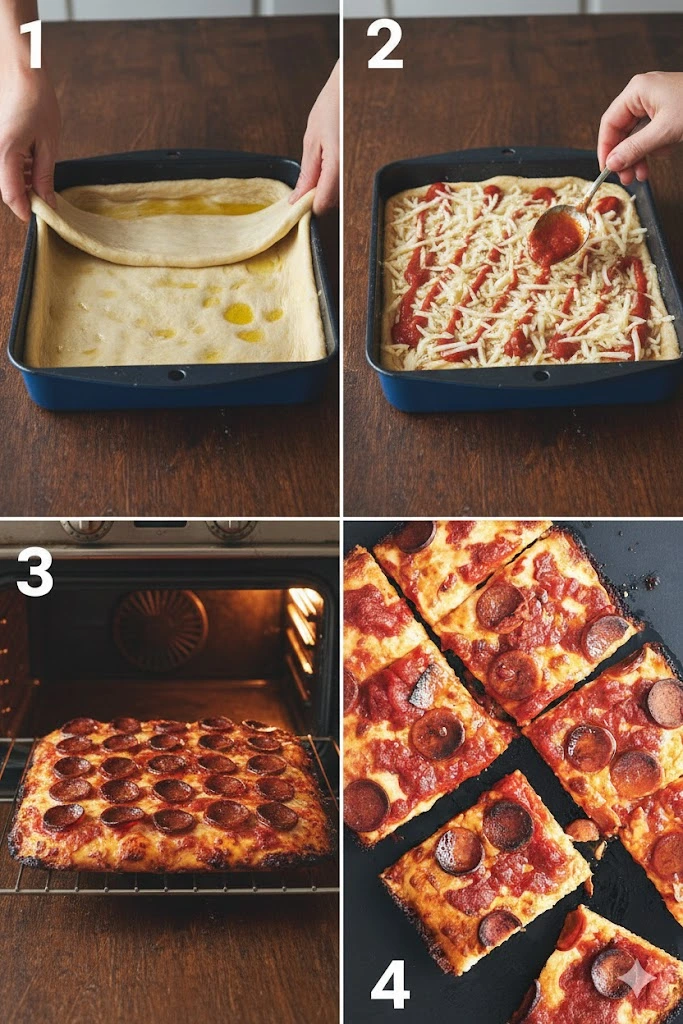
- Approximately 2 hours before you plan to bake, prepare your Detroit-style steel pan by smearing 2 tablespoons of butter across the bottom and drizzling with 2 tablespoons of olive oil.
- Place the fermented dough into the center of the pan. Gently stretch it toward the corners. If it snaps back, let it rest for 10 minutes and try again. Cover and let it rise in the pan for 1 hour.
- Preheat your oven to 475 Fahrenheit.
- Par-bake the empty crust for 5 minutes. Remove from the oven and briefly lift the crust to ensure it isn’t sticking, then set it back in the pan.
- Increase the oven temperature to 500 Fahrenheit.
- Sprinkle the grated brick cheese generously across the dough, paying special attention to the edges. Tuck plenty of cheese down between the dough and the sides of the pan to create the caramelized crust.
- Spoon the sauce over the cheese in two or three thick diagonal rows.
- Layer the sliced pepperoni across the top.
- Bake on a rack positioned just below the center of the oven for 10 to 15 minutes, or until the cheese is bubbling, the pepperoni has cupped and charred, and the edges are a deep, golden brown.
Achieving the Ultimate Motor City Crust
The secret to a world-class Detroit style pepperoni pizza lies in the marriage of hydration and heat. When we talk about a 72 percent hydration dough, we are referring to the ratio of water to flour. This high water content is what creates those massive air pockets within the crust, preventing it from becoming a dense, heavy brick of bread. During the long 8 to 24-hour fermentation, enzymes break down starches into sugars, which not only improves the flavor but also aids in the browning process.
The pan itself is the second hero of this story. Traditional blue steel pans were originally used as industrial drip trays in Detroit automotive factories. Their high sides and excellent heat conduction allow the fat from the butter and the cheese to basically “fry” the bottom and sides of the dough. This is why we par-bake the crust for 5 minutes at 475 Fahrenheit. That initial blast of heat sets the structure of the bread before the heavy toppings are added, ensuring that the center of the pizza remains light and airy rather than being compressed by the weight of the cheese and sauce.
When you apply the brick cheese, do not be afraid to be aggressive with the perimeter. The “frico” edge is formed when the cheese melts down the sides of the pan and undergoes the Maillard reaction against the hot steel. This creates a crunchy, savory, almost burnt-cheese lace that is the hallmark of this style. If the cheese stays only on top of the dough, you are just making a deep-dish pizza; if it hits the steel, you are making a Detroit masterpiece.
Unique Culinary Insights for Success
To take your pizza from “good” to “legendary,” consider the science of the pepperoni. The reason we specify natural casing pepperoni is due to the way the heat interacts with the casing. As the pizza bakes, the casing shrinks faster than the meat inside, causing the edges to curl upward into a “cup.” This cup then traps the rendered fat, concentrating the spice and flavor into a tiny pool of deliciousness. If you use standard deli-sliced pepperoni without a casing, it will simply lay flat and crisp up like a cracker, missing that essential textural contrast.
Another vital tip is the temperature of your sauce. Never put hot sauce on top of unbaked or par-baked dough. Doing so can “cook” the top layer of the dough prematurely, creating a gummy, wet interface known in the industry as a “gum line.” By simmering your sauce ahead of time and letting it cool to room temperature, you maintain the integrity of the dough’s crumb.
Lastly, the cheese selection is non-negotiable if you want authenticity. Wisconsin brick cheese has a high fat content and a mild, slightly tangy flavor that is distinct from mozzarella. It melts into a buttery consistency that pairs perfectly with the acidity of the tomato sauce. If you cannot find brick cheese, look for a “mild” version rather than an “aged” one, as aged brick cheese can be quite pungent and may overpower the other components of the pizza.
Modifications and Creative Substitutions
While the classic pepperoni is the gold standard, this platform is incredibly versatile for various dietary needs or flavor preferences.
- Cheese Alternatives: If brick cheese is unavailable in your local deli, a 50/50 blend of whole-milk mozzarella and Monterey Jack is the closest substitute. The Jack provides the creaminess and meltability, while the mozzarella provides the classic stretch. You can also add a touch of white cheddar to the edges for extra sharpness.
- Vegetarian Adjustments: Swap the pepperoni for thinly sliced cremini mushrooms or pickled jalapeños. To replicate the “cup” effect, try using very thinly sliced zucchini coins that have been lightly patted dry.
- Flour Variations: While bread flour is preferred for its high protein content (which provides the necessary structure for the rise), you can use all-purpose flour in a pinch. However, you may need to reduce the water by 10 to 15 grams, as all-purpose flour does not absorb liquid as efficiently as bread flour.
- Sauce Swaps: For a different profile, try a “white” Detroit style by replacing the red sauce with a garlic confit oil or a thick béchamel, though you should still apply it in the traditional stripes over the cheese.
Optimal Accompaniments and Serving Suggestions
Because Detroit style pepperoni pizza is incredibly rich and savory, it benefits from pairings that offer acidity or freshness to cleanse the palate. A crisp green salad with a sharp lemon vinaigrette or a classic Italian sub-style salad with shredded iceberg, red onions, and pepperoncini is the perfect side dish.
When it comes to beverages, the high fat content of the brick cheese and the spicy pepperoni demand something with carbonation. A cold lager or a sparkling mineral water with a squeeze of lime works beautifully. If you prefer wine, an acidic red like a Barbera or a chilled Lambrusco provides a refreshing counterpoint to the caramelized cheese edges.
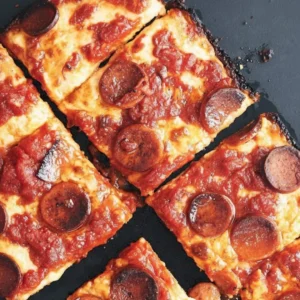
For the final presentation, do not cut the pizza into wedges. Authenticity dictates that a rectangular pan pizza should be sliced into squares or rectangular strips. This ensures that everyone gets a portion of the “corner” or “edge,” which are the most coveted pieces. Serve immediately while the cheese is still molten and the crust retains its maximum crunch.
Understanding the Process: FAQ
Why does my dough keep shrinking back when I try to push it into the corners?
This is a common issue caused by tight gluten. Gluten is like a rubber band; the more you pull it, the more it wants to snap back. If the dough is resisting, simply cover it and walk away for 10 to 15 minutes. This allows the gluten to relax, making it much more pliable. You may need to do this two or three times to get the dough perfectly into the corners of the pan.
Can I make the dough faster than the 8 to 24 hour recommendation?
While you can technically increase the yeast and let the dough rise in 2 hours, you will sacrifice a significant amount of flavor and texture. The long fermentation is what creates the complex, yeasty aroma and the light, digestible crumb. If you are in a rush, use warm water (around 105 Fahrenheit) to speed up the yeast, but the overnight method is truly the secret to success.
What should I do if I don’t have a specific Detroit-style steel pan?
While a Lloyd’s dark steel pan is the gold standard, you can use a heavy 9×13 inch metal baking pan or even a cast-iron skillet. Avoid glass or ceramic dishes, as they do not conduct heat quickly enough to create the necessary caramelized cheese crust on the sides. If using a standard cake pan, ensure it is well-greased with butter to prevent sticking.
Is it necessary to grate the cheese by hand?
Yes, this is highly recommended. Pre-shredded cheese found in bags is coated in potato starch or cellulose to prevent clumping. These additives interfere with the melting process and can prevent the cheese from forming that beautiful, cohesive lacy edge against the pan. Grating a block of brick cheese yourself ensures a superior melt and better flavor.
Essential Nutrition Information
The following values are estimates based on a single serving (one-fourth of the large 10×14 inch pizza).
| Nutrient | Amount Per Serving |
| Calories | 645 |
| Total Fat | 38 grams |
| Saturated Fat | 21 grams |
| Cholesterol | 95 milligrams |
| Sodium | 1420 milligrams |
| Total Carbohydrates | 48 grams |
| Dietary Fiber | 3 grams |
| Sugars | 5 grams |
| Protein | 28 grams |
Nutritional Disclaimer
The nutritional information provided is an estimate based on standard ingredient measurements and should be used for general informational purposes only. Actual values may vary based on specific brands used and individual preparation methods. If you have specific dietary requirements, please consult a professional nutritionist.
Bringing the Motor City to Your Kitchen
Mastering the Detroit style pepperoni pizza is a rewarding journey that turns a few simple ingredients—flour, water, cheese, and spice—into a structural marvel of the culinary world. By respecting the long fermentation of the dough and the specific placement of the brick cheese against the steel, you create a texture that is simultaneously crunchy, chewy, and airy. Whether you are hosting a lively pizza party or looking for the ultimate weekend comfort food, this recipe provides the blueprint for a perfect pie every single time.
Detroit Style Pepperoni Pizza
Ingredients
- 400 grams bread flour
- 12 grams instant yeast
- 12 grams granulated sugar
- 290 grams water
- 12 grams kosher salt
- 1 lb brick cheese, grated
- 6 oz natural casing pepperoni, sliced thin
- 28 oz canned tomatoes
- 2 tsp dried oregano
- 1 tsp garlic powder
- 1 tsp onion powder
- 0.5 tsp kosher salt (for sauce)
- 2 tbsp unsalted butter (for pan)
- 2 tbsp extra virgin olive oil (for pan)
Instructions
- Stir flour and water in a large bowl. Let sit for 10 minutes (autolyse) to hydrate the flour.
- Stir in yeast and sugar, then add salt. Knead by hand or with a stand mixer for 5 minutes until smooth. Cover and let rise at room temperature for 8 to 24 hours.
- In a saucepan, mash tomatoes and stir in oregano, garlic powder, onion powder, and salt. Simmer for 15 minutes until thickened, then cool.
- Butter and oil the pizza pan. Stretch dough to the edges, let rest if it snaps back. Cover and rise for 1 more hour.
- Preheat oven to 475 Fahrenheit. Par-bake the crust for 5 minutes, then remove briefly to ensure it isn’t sticking.
- Increase oven to 500 Fahrenheit. Spread grated cheese to the very edges of the pan. Drizzle sauce in diagonal rows over the cheese.
- Top with pepperoni slices. Bake for 10–15 minutes until edges are dark and pepperoni is charred and cupped.
Notes
Equipment
- Detroit Style Pizza Pan (10×14 inch) Dark steel is preferred for crispy edges
- Box grater
- small saucepan
- stand mixer or mixing bowl
- Potato Masher For crushing tomatoes