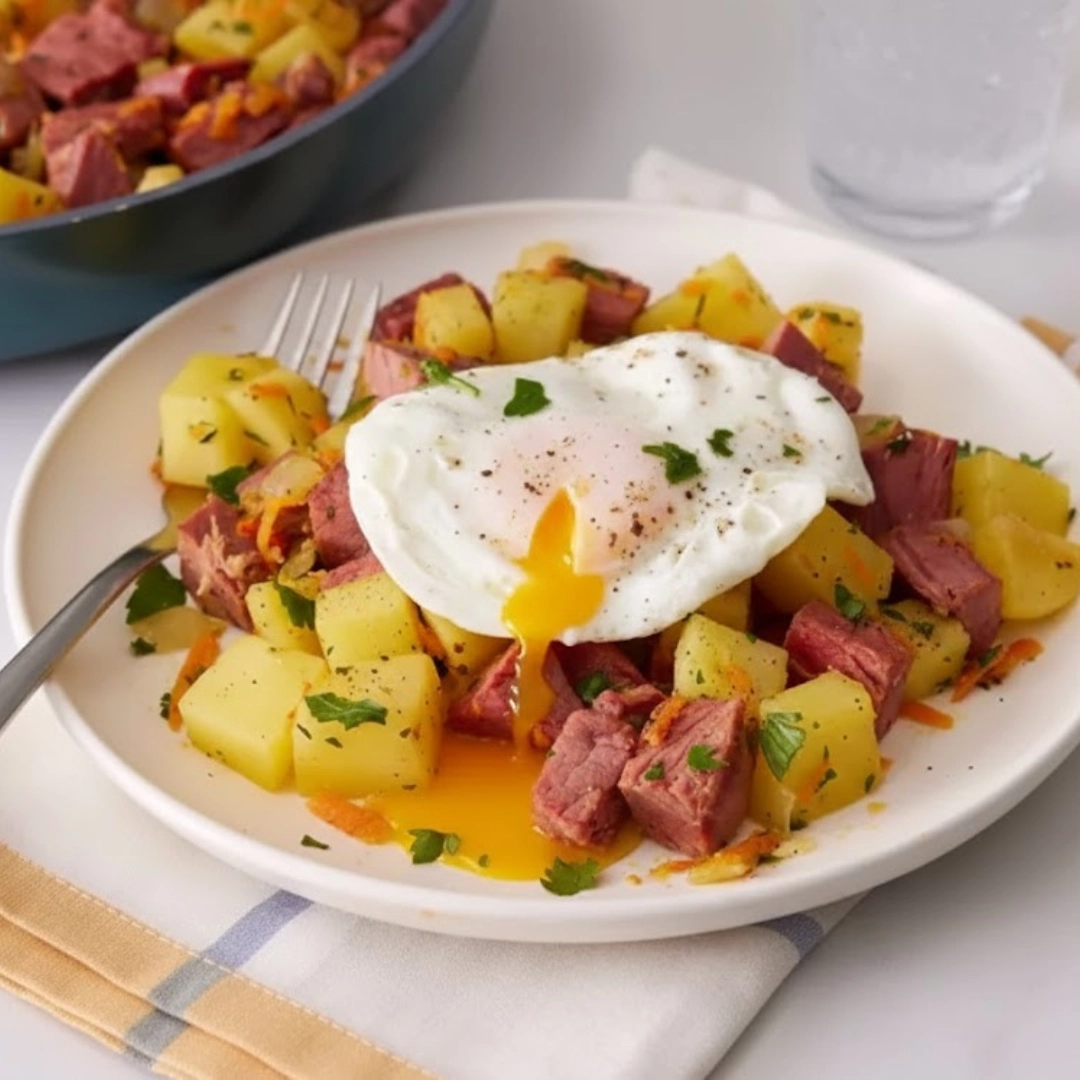
There is something profoundly comforting about a heavy cast-iron skillet sizzling on the stovetop as the aroma of salty beef and earthy potatoes fills the kitchen. While many people associate corned beef exclusively with Saint Patrick’s Day festivities, the true magic happens the morning after. This deluxe corned beef hash is not just a clever way to utilize leftovers; it is a destination meal in its own right. By combining tender cubes of salt-cured brisket with golden Yukon Gold potatoes and a surprise hint of sweetness from shredded carrots, you create a breakfast that is miles ahead of anything found in a tin can. It is savory, crispy, and deeply satisfying.
Table of Contents
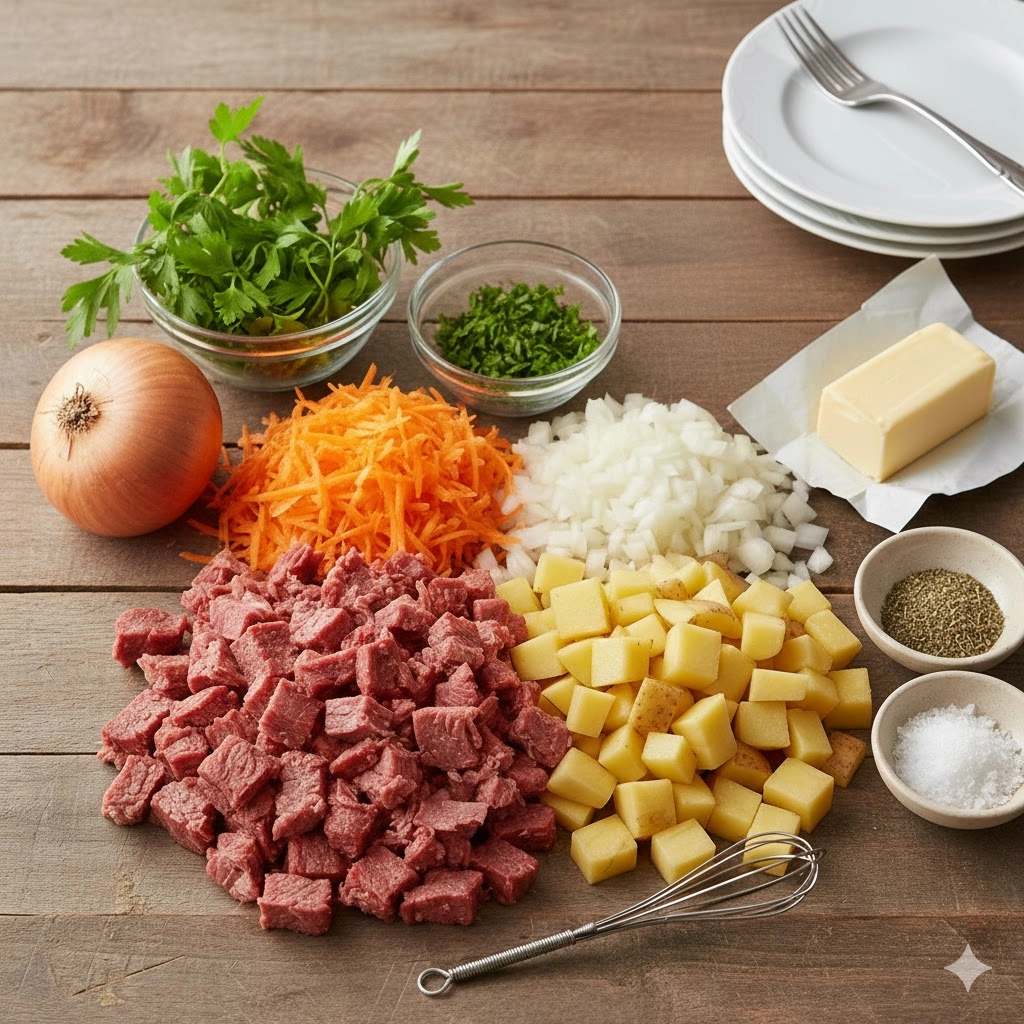
Ingredients
- 2 tablespoons butter
- 2 tablespoons extra-virgin olive oil
- 1 large onion, chopped
- 5 large Yukon Gold potatoes, peeled and cut into 1/4-inch cubes
- 1 large carrot, coarsely shredded
- 2 pounds cooked corned beef, cubed
- 2 tablespoons chopped fresh parsley
- 1/2 teaspoon ground black pepper, or to taste
- 1/4 teaspoon dried thyme leaves
- 1 pinch salt to taste
Instructions
- Prepare your workspace: Begin by gathering all your prepped ingredients to ensure a smooth cooking process.
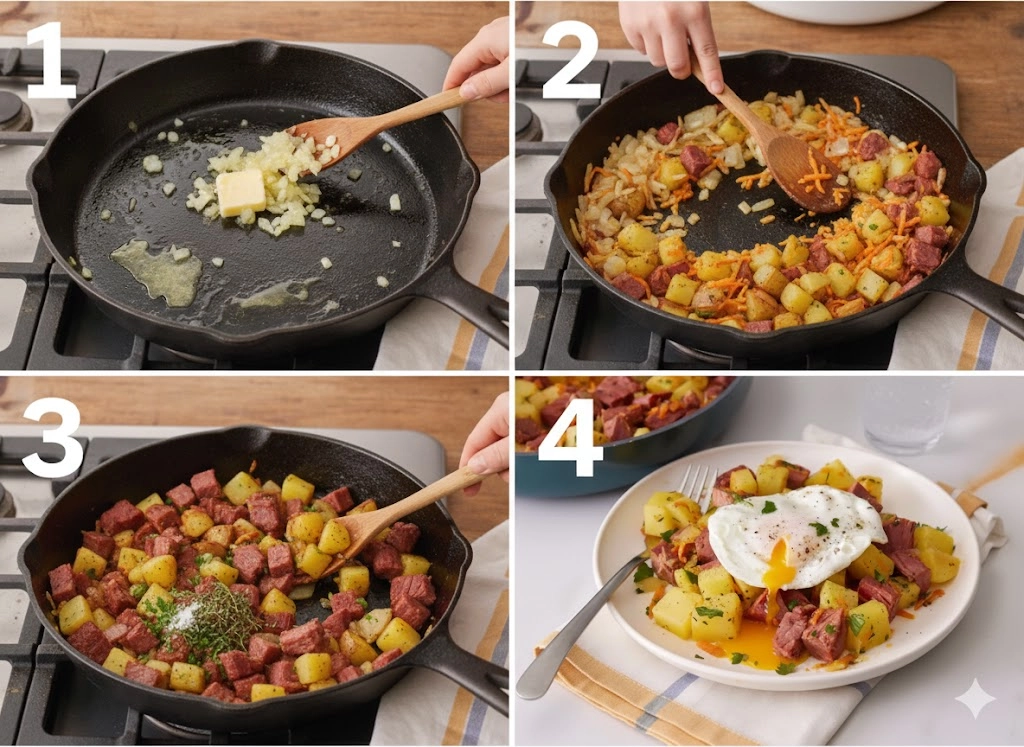
- Sauté the aromatics: In a large, heavy-duty skillet, melt the butter along with the extra-virgin olive oil over medium heat. Add the chopped onion and cook, stirring frequently, until the pieces are soft and have taken on a light brown, caramelized hue. This should take approximately 8 minutes.
- Cook the vegetables: Add the cubed Yukon Gold potatoes and the shredded carrot to the skillet. Continue to cook the mixture, stirring occasionally to prevent sticking. You want the potatoes to become fork-tender, which usually requires about 15 minutes of consistent heat.
- Incorporate the beef and herbs: Stir in the cubed corned beef, fresh parsley, ground black pepper, dried thyme, and a pinch of salt.
- Crisp to perfection: Increase the frequency of your stirring and continue cooking for another 10 to 15 minutes. The goal is for the hash to become significantly browned and developed a delightful crispiness on the edges of the beef and potatoes.
- Final touch: Serve the hash immediately while hot, ideally with eggs prepared to your preference.
Achieving the Ultimate Crispy Texture
The hallmark of a superior hash is the contrast between the tender interior of the potato and the crunchy, lacquered exterior of the beef. To achieve this, the choice of fats is paramount. By using a combination of butter and extra-virgin olive oil, you get the rich, dairy flavor of the butter with the higher smoke point of the oil. This prevents the butter from burning during the long browning process.
When you reach the final stage of cooking—after the beef and herbs have been added—resist the urge to stir constantly. While the instructions mention stirring often, the real secret to “leprechaun gold” browning is allowing the mixture to sit undisturbed against the hot metal for 2 or 3 minutes at a time. This creates a “crust” that you then flip and incorporate. If the pan seems dry, don’t be afraid to add a tiny splash more oil; the potatoes act like sponges and need that fat to achieve a golden-brown finish.
Mastering the Component Preparation
The success of this dish lies in the uniformity of your knife work. When dicing the Yukon Gold potatoes, aim for a precise 1/4-inch cube. If the pieces are too large, the exterior will burn before the middle softens; if they are too small, they will turn into mashed potatoes rather than distinct, crispy nuggets. Yukon Golds are specifically recommended here because they occupy the middle ground between starchy and waxy. They hold their shape better than Russets but have a creamier mouthfeel than red potatoes.
The shredded carrot is the “secret weapon” in this specific deluxe version. While it provides a beautiful fleck of orange color, its sugar content also aids in the caramelization of the entire pan. As the finely shredded carrot melts into the fats, it coats the potatoes and beef, helping them brown more deeply while providing a very subtle sweetness that balances the heavy salt of the corned beef.
Accompaniments and Serving Suggestions
While this skillet is a meal in itself, it truly shines when paired with the right partners. The most iconic addition is a fried egg, specifically one with a runny yolk. When the yolk breaks over the hot hash, it creates a rich, velvety sauce that binds the salty beef and crispy potatoes together.
If you are looking to round out a full brunch spread, consider these options:
- Toasted Rye Bread: The caraway seeds in rye bread complement the spices used in the corned beef curing process perfectly.
- Irish Soda Bread: A thick slice of dense, buttermilk-based soda bread is excellent for mopping up any leftover bits of hash.
- Acidic Brightness: Because this dish is quite rich, a side of pickled red onions or a small dollop of grainy Guinness mustard can provide a necessary sharp contrast.
- Beverage Pairings: A strong Irish breakfast tea or a well-poured stout is the traditional way to wash down such a hearty feast.
Modifications and Creative Substitutions
Cooking is an art, and while the core of this recipe is traditional, there is room for minor adjustments based on what you have in your pantry.
- The Protein: If you find yourself short on corned beef, many home cooks have successfully supplemented the meat with cooked ham or even thick-cut bacon. While the flavor profile shifts, the salty-savory balance remains intact.
- The Herbs: While dried thyme and fresh parsley provide a classic earthiness, you can experiment with fresh rosemary or chives for a more modern herbal note.
- Potato Variations: If you don’t have Yukon Golds, red-skinned potatoes are a fine substitute. Leave the skins on for extra texture and a more rustic “farmhouse” appearance.
- Adding Heat: For those who prefer a spicy start to their morning, a dash of hot sauce or a sprinkle of crushed red pepper flakes during the final browning stage adds a welcome kick.
Deep-Dive Kitchen Wisdom
Why use cooked corned beef instead of raw?
Corned beef is a tough cut of brisket that requires a long, slow braise to break down the connective tissues. If you were to try and cook raw corned beef in a skillet alongside potatoes, the meat would remain rubbery and unpalatable while the potatoes turned to ash. Using pre-cooked or leftover beef ensures the meat is already “melt-in-your-mouth” tender, allowing the skillet time to be focused entirely on texture and flavor integration.
Is peeling the potatoes necessary?
For this specific deluxe recipe, peeling is recommended to ensure the most consistent “hash” texture. Without the skins, the potatoes can better absorb the butter and oil, leading to a more uniform golden color. However, if you prefer a more rustic, fiber-rich dish, you can certainly leave the skins on; just ensure you scrub the Yukon Golds thoroughly before dicing.
Can this be made ahead of time?
While hash is best served fresh from the flame, you can do all the prep work in advance. You can peel and dice the potatoes and store them in a bowl of cold water in the fridge overnight to prevent browning. You can also dice the beef and onions ahead of time. This reduces the morning-of labor to just the actual frying, making it much easier to serve a crowd.
Frequently Asked Questions
How do I prevent the potatoes from sticking to the bottom of the pan?
The key to a non-stick experience in a standard skillet is heat management and fat. Ensure your butter and oil are shimmering and hot before adding the onions and potatoes. If the potatoes seem to be sticking stubbornly, it often means they haven’t formed a crust yet. Wait another minute for the starches to crisp up, and they should release from the pan naturally. Using a well-seasoned cast-iron skillet is also highly effective.
Can I use canned corned beef if I don’t have leftovers?
While this recipe is designed for the superior texture of home-cooked, cubed corned beef, you can use the canned variety in a pinch. Be aware that canned corned beef is much softer and has a higher fat content. It will not maintain distinct cubes and will instead melt into the potatoes, creating a more cohesive, “mash-like” hash. You may want to reduce the added salt if using canned beef, as it tends to be extremely high in sodium.
Is it possible to make this dish dairy-free?
Yes, you can easily adapt this by replacing the 2 tablespoons of butter with additional olive oil or a plant-based butter substitute. The butter is primarily for flavor and browning, so choose a substitute that has a pleasant taste. Using duck fat or beef tallow is another gourmet way to keep it dairy-free while actually increasing the savory depth of the dish.
A Satisfying Conclusion to Your Morning
This deluxe corned beef hash is more than just a meal; it is a celebration of simple, high-quality ingredients transformed by heat and time. By moving away from the salty, mushy canned versions and embracing fresh potatoes, vibrant carrots, and tender brisket, you elevate a humble breakfast staple into a gourmet experience. Whether you are recovering from a long night or simply fueling up for a busy day, this skillet provides the warmth and sustenance that only a home-cooked meal can offer. Grab your favorite spatula and enjoy the process of creating something truly delicious from the simplest of components.
Nutritional Information
| Nutrient | Amount Per Serving |
| Calories | 320 |
| Total Fat | 14 grams |
| Saturated Fat | 6 grams |
| Cholesterol | 85 milligrams |
| Sodium | 1150 milligrams |
| Total Carbohydrates | 25 grams |
| Dietary Fiber | 3 grams |
| Sugars | 2 grams |
| Protein | 25 grams |
Disclaimer
Nutrition facts are provided as an estimate only. The exact values may vary depending on the specific brand of corned beef used and the precision of your vegetable measurements. For those on a sodium-restricted diet, please note that corned beef is naturally high in salt due to the curing process.

Deluxe Corned Beef Hash
Ingredients
- 2 tbsp butter
- 2 tbsp extra-virgin olive oil
- 1 large onion, chopped
- 5 large Yukon Gold potatoes, peeled and cut into 1/4-inch cubes
- 1 large carrot, coarsely shredded
- 2 pounds cooked corned beef, cubed
- 2 tbsp chopped fresh parsley
- 0.5 tsp ground black pepper
- 0.25 tsp dried thyme leaves
- 1 pinch salt to taste
Instructions
- Melt the butter with the olive oil in a large skillet over medium heat. Add the onions and cook, stirring frequently, until they are lightly browned and aromatic, about 8 minutes.
- Stir the cubed potatoes and shredded carrot into the skillet. Cook, stirring occasionally, until the potatoes are tender and cooked through, approximately 15 minutes.
- Add the cubed corned beef, parsley, pepper, thyme, and salt. Mix thoroughly to combine all flavors.
- Continue cooking, stirring often, for 10 to 15 more minutes. Allow the hash to sit long enough between stirs to develop a crisp, browned exterior on the meat and potatoes.
- Serve immediately while hot. For a traditional finish, top each serving with a fried or poached egg.
Notes
Equipment
- Large heavy skillet (preferably cast iron)
- wooden spoon or spatula
- Vegetable Peeler
- Box grater
- chef’s knife