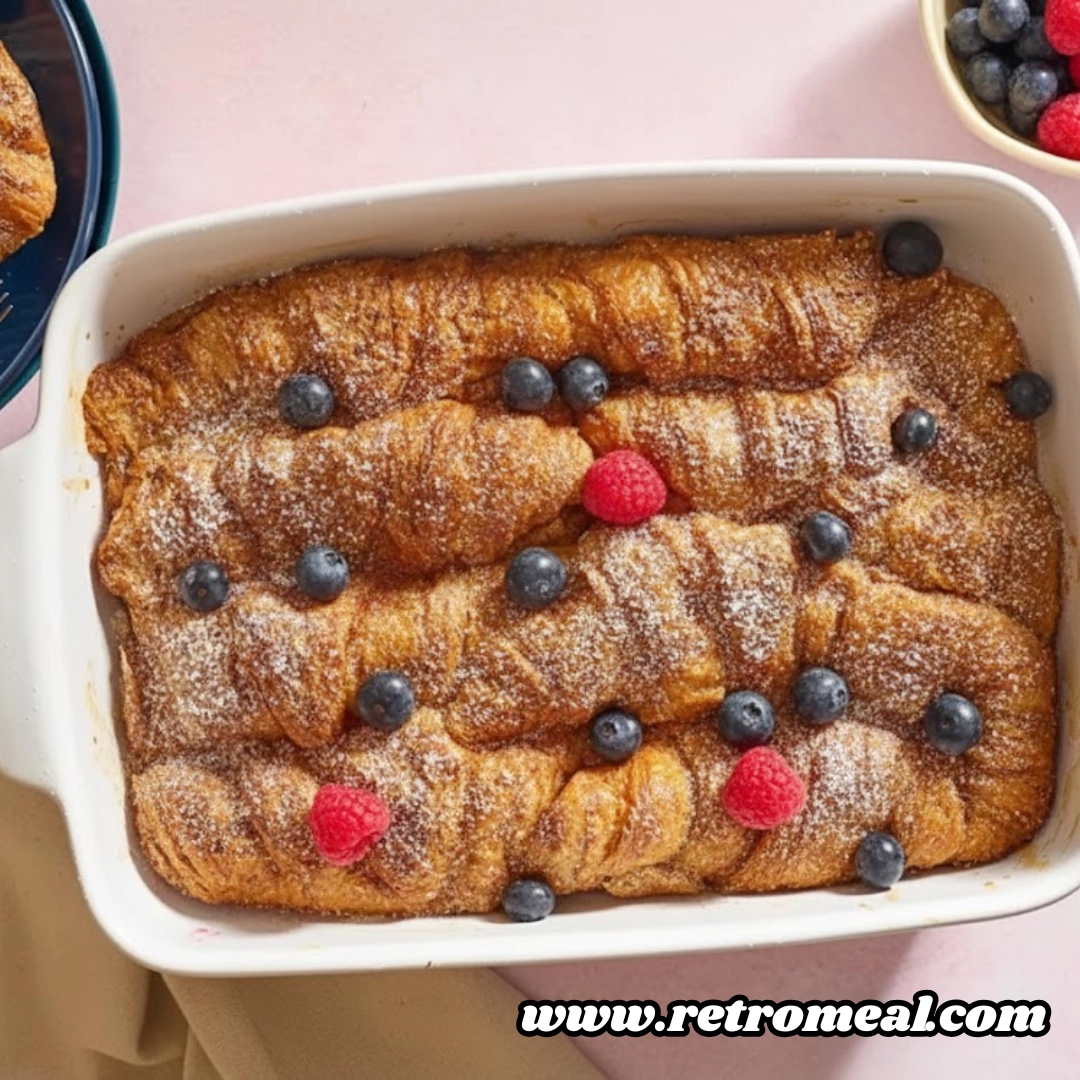
There is something inherently luxurious about a breakfast that manages to be both incredibly simple to prepare and visually stunning enough for a high-end brunch spread. This Croissant French Toast Bake is exactly that—a sophisticated upgrade to the traditional overnight casserole that swaps standard sandwich bread for the buttery, flaky layers of French patisserie. Whether you are hosting a festive holiday gathering, a quiet family Sunday, or looking for a grander version of breakfast pudding, this dish delivers a contrast of textures that is hard to beat. With a custard-soaked center and crispy, toasted peaks, it is a recipe that looks like it took all day to master but comes together in just a fraction of the time.
Table of Contents
Essential Components for Success
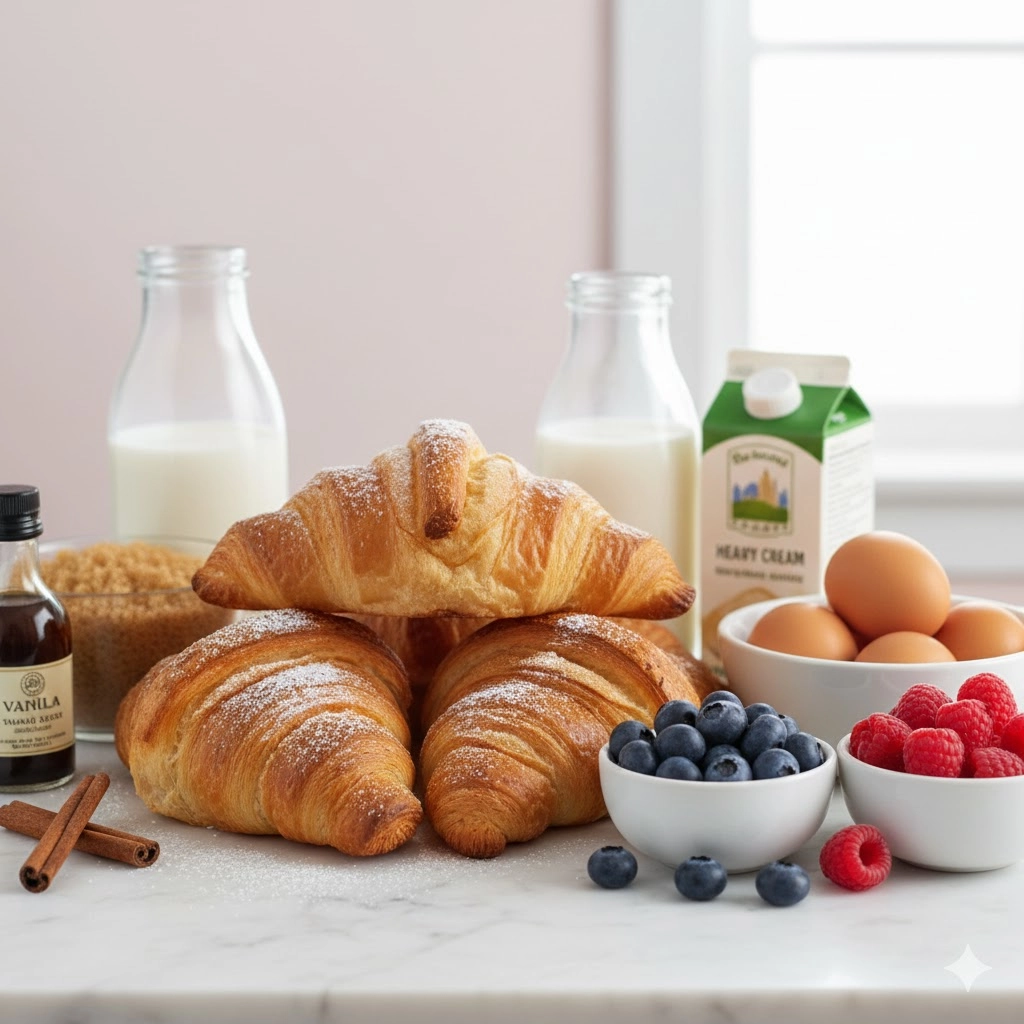
To create this decadent breakfast masterpiece, you will need a handful of pantry staples paired with high-quality bakery items. The key to the richness of this dish lies in the combination of whole eggs and heavy cream, which creates a velvety custard that permeates every layer of the pastry.
- Cooking spray (for pan preparation)
- 6 large eggs
- 1 cup milk
- 1/2 cup heavy cream
- 2 tablespoons brown sugar
- 2 teaspoons vanilla extract
- 2 teaspoons ground cinnamon
- 1/4 teaspoon salt
- 8 large croissants (approximately 1 and 1/4 pounds), halved horizontally
- Confectioner’s sugar, fresh berries, or maple syrup for serving
Master the Baking Process
Follow these precise steps to ensure your bake achieves the perfect balance of a set custard and a golden, crispy exterior.
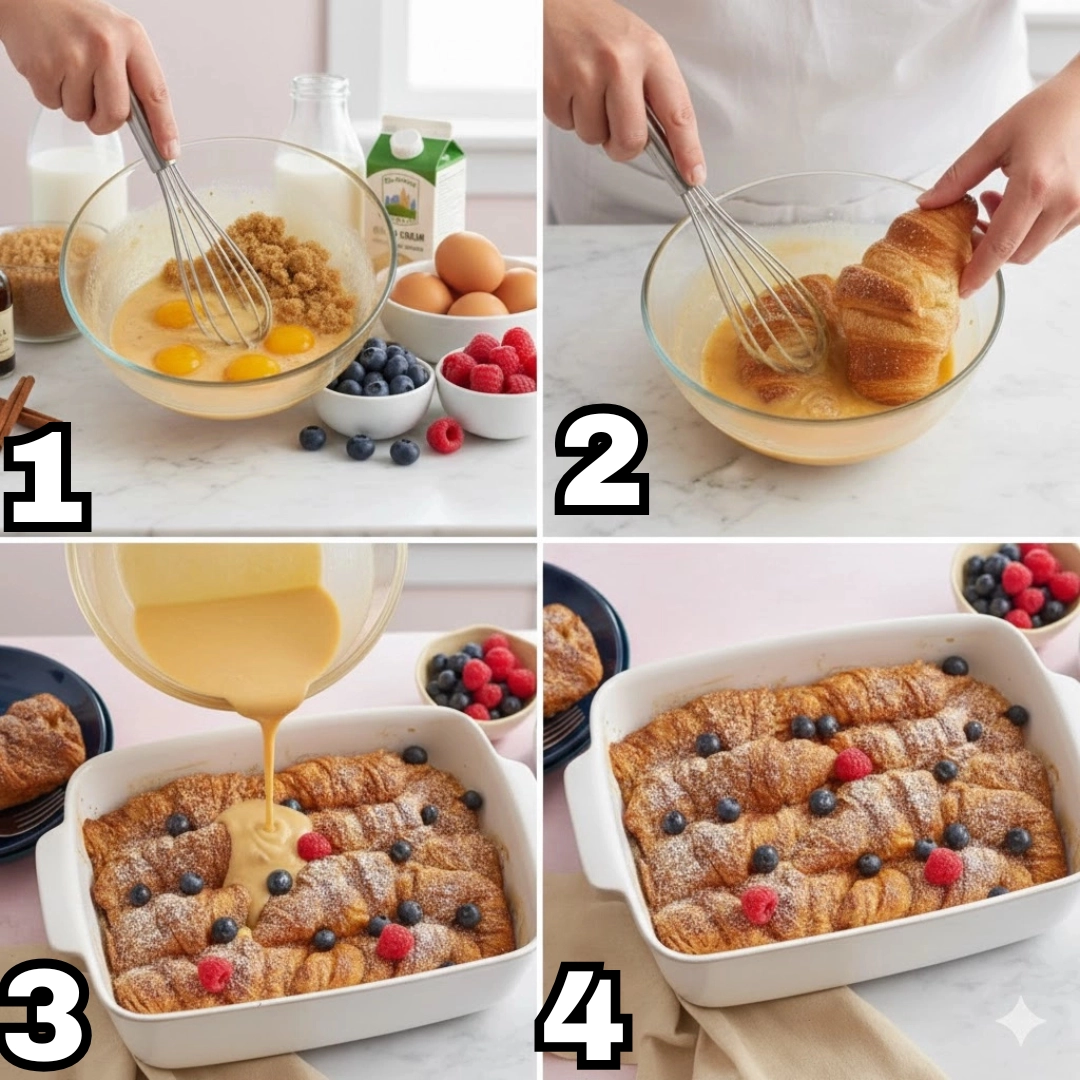
- Begin by gathering all your ingredients on your workstation. Preheat your oven to 350 degrees Fahrenheit (175 degrees Celsius). Take a 9×13-inch baking dish and coat it generously with nonstick cooking spray to ensure easy serving later.
- In a large mixing bowl, combine the 6 large eggs, 1 cup of milk, 1/2 cup of heavy cream, 2 tablespoons of brown sugar, 2 teaspoons of vanilla extract, 2 teaspoons of ground cinnamon, and 1/4 teaspoon of salt. Whisk these ingredients together vigorously until the sugar is dissolved and the mixture is completely homogenous.
- Take your halved croissants and dip each piece individually into the egg mixture. Ensure that every nook and cranny of the croissant is fully soaked in the custard.
- Arrange the dipped croissant halves into your prepared baking dish. You should overlap them slightly to fit all 8 croissants, creating a shingled effect. Once the dish is full, pour any remaining egg mixture evenly over the top of the croissants.
- Place the dish in the preheated oven. Bake for approximately 30 minutes. You are looking for a beautiful golden brown color on the tops. To ensure it is finished, insert a knife into the center; it should come out clean, indicating the custard has fully set.
- Remove the dish from the oven and let it stand for 15 minutes. This resting period is crucial as it allows the pudding-like center to firm up. Serve warm with your choice of confectioner’s sugar, fresh berries, or maple syrup.
Elevating Your Side Dish Selection
While this Croissant French Toast Bake is a powerhouse on its own, the right accompaniments can turn a simple meal into a multi-course experience. Because the bake is rich, buttery, and sweet, you want to balance the plate with different flavor profiles.
Salty proteins are the natural partner for French toast. Thick-cut smoked bacon or savory breakfast sausage links provide a necessary counterpoint to the maple syrup and cinnamon. If you prefer something lighter, a bowl of Greek yogurt topped with a squeeze of lemon and a sprig of mint can help cut through the richness of the heavy cream and butter.
For those hosting a brunch, consider a bright citrus salad. Thinly sliced oranges, grapefruit segments, and a drizzle of honey provide a refreshing acidity that cleanses the palate between bites of the decadent croissants. If you are serving this during the autumn months, a side of sautéed apples with a touch of nutmeg can enhance the warm cinnamon notes already present in the bake.
Understanding the Science of Custard and Pastry
The magic of this recipe lies in the interaction between the high fat content of the croissants and the protein structure of the eggs. Unlike a standard bread pudding that uses dense brioche or challah, croissants are “laminated.” This means they have dozens of paper-thin layers of dough and butter. When you soak these in a mixture of milk and heavy cream, the custard fills those gaps, creating a texture that is simultaneously airy and dense.
Using a 350 degree Fahrenheit oven is intentional. This temperature is high enough to caramelize the brown sugar and crisp the tops of the croissants (the Maillard reaction), but low enough that the egg proteins don’t curdle or “weep.” If the oven is too hot, the outside will burn before the center has time to set. The 15-minute resting period is also a scientific necessity; as the bake cools slightly, the steam trapped between the layers is reabsorbed, ensuring the final product is moist rather than soggy.
Customizing Your Breakfast Experience
While the base recipe is perfection, there are many ways to adapt this dish to suit your personal preferences or what you have available in your pantry.
If you find yourself wanting a more “dessert-like” breakfast, you can sprinkle a handful of semi-sweet chocolate chips or toasted pecans between the layers of croissants before pouring the custard over. For those who enjoy a bit of zest, adding the grated rind of one orange to the egg mixture provides a bright, floral note that pairs exceptionally well with the dark brown sugar.
If you are out of heavy cream, you can use more milk, though the result will be slightly less silky. Conversely, if you want even more decadence, using half-and-half in place of the milk and cream combination is a seamless transition. For a deeper flavor, try replacing the vanilla extract with almond extract or a splash of bourbon for a more “grown-up” holiday brunch.
Deep-Dive Kitchen Wisdom
Achieving the ultimate consistency requires a bit of attention to detail regarding your bread choice. If possible, use croissants that are a day or two old. Fresh croissants are very soft and can sometimes disintegrate if soaked too long. Stale croissants have lost some moisture, making them like a dry sponge that is ready to soak up every drop of the spiced custard without falling apart.
When arranging the croissants in the 9×13-inch dish, don’t be afraid to pack them in. The overlapping “shingle” method isn’t just for aesthetics; it creates different levels of texture. The parts of the croissant submerged in the liquid will become soft and custard-like, while the points sticking out will become incredibly crunchy and caramelized. This contrast is what separates a good French toast bake from a great one.
Finally, pay attention to your cinnamon. If your spices have been sitting in the back of the cabinet for more than a year, they likely have lost their punch. Freshly ground cinnamon or a high-quality Saigon cinnamon will make a noticeable difference in the aromatic quality of the finished dish.
Managing Your Leftovers
In the unlikely event that you have leftovers, this bake holds up surprisingly well. Because of the high butter content in the croissants, the dish doesn’t dry out as quickly as traditional bread-based casseroles.
To reheat, avoid the microwave if possible, as it can make the pastry chewy. Instead, place a slice on a baking sheet and pop it into a 325 degree Fahrenheit oven for about 10 minutes. This will revive the crispy exterior while gently warming the center. If you must use a microwave, heat it in short 30-second bursts at 50 percent power to maintain as much texture as possible.
Commonly Asked Questions
Can I prepare this recipe the night before?
Many home cooks find success by assembling the entire dish, covering it tightly with plastic wrap, and letting it sit in the refrigerator overnight. This allows the croissants to fully absorb the custard. If you do this, you may need to add 5 to 10 minutes to the baking time since the dish will be starting from a much colder temperature.
What is the best way to tell if the center is fully cooked?
Aside from the knife test, you can look for the “jiggle.” When you gently shake the pan, the center should have a slight wobble but should not look liquid or runny. If the tops are browning too quickly but the center is still wet, loosely tent the dish with aluminum foil for the final 10 minutes of baking.
Can I use mini croissants instead of large ones?
You certainly can! If using mini croissants, you will likely need 16 to 20 to fill the 9×13-inch pan. You do not necessarily need to halve them; you can simply tear them into large chunks or leave them whole if they are small enough. The soaking and baking times will remain largely the same.
Why did my French toast bake turn out soggy?
Sogginess usually occurs if the ratio of liquid to bread is too high or if the oven temperature was too low. Ensure you are using approximately 1 and 1/4 pounds of croissants. If your croissants were very small or airy, you might need to add one or two more to soak up the excess liquid. Also, never skip the resting period, as the structure sets while it cools.
A Perfect Ending to Your Morning
This Croissant French Toast Bake is more than just a meal; it is an experience of comfort and elegance. It bridges the gap between a rustic home-cooked breakfast and a sophisticated pastry-shop treat. By following these steps and paying attention to the small details—like the quality of your cinnamon and the texture of your croissants—you will create a dish that guests will be asking for year after year. It is a reliable, delicious, and undeniably impressive addition to any recipe repertoire.
Nutritional Profile
The following values are estimates based on a single serving (one-tenth of the recipe).
| Nutrient | Amount Per Serving |
| Calories | 325 |
| Total Fat | 19 grams |
| Saturated Fat | 11 grams |
| Cholesterol | 155 milligrams |
| Sodium | 340 milligrams |
| Total Carbohydrates | 29 grams |
| Dietary Fiber | 1 gram |
| Sugars | 8 grams |
| Protein | 9 grams |
Dietary Disclaimer
Nutritional information provided is an estimate and can vary based on the specific brands of ingredients used and the accuracy of measurements. For those with specific medical dietary requirements, please consult with a professional nutritionist or use a verified nutrition calculator with your exact ingredients.
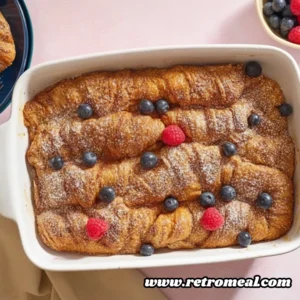
Croissant French Toast Bake
Ingredients
- 1 nonstick cooking spray
- 6 large eggs
- 1 cup milk
- 0.5 cup heavy cream
- 2 tbsp brown sugar
- 2 tsp vanilla extract
- 2 tsp ground cinnamon
- 0.25 tsp salt
- 8 large croissants (about 1.25 pounds), halved horizontally
- confectioner’s sugar, fresh berries, or maple syrup for serving
Instructions
- Preheat your oven to 350 degrees Fahrenheit (175 degrees Celsius). Coat a 9×13-inch baking dish generously with nonstick cooking spray.
- In a large mixing bowl, whisk together the eggs, milk, heavy cream, brown sugar, vanilla extract, ground cinnamon, and salt until smooth.
- Individually dip each halved croissant into the egg mixture until it is thoroughly soaked through.
- Arrange the soaked croissants in the prepared baking dish, overlapping them as necessary to fit. Pour any remaining custard over the top.
- Bake in the preheated oven for 30 minutes, or until the top is golden brown and a knife inserted in the center comes out clean.
- Remove from oven and let stand for 15 minutes before serving. Garnish with berries or syrup as desired.
Notes
Equipment
- 9×13-inch baking dish
- large mixing bowl
- whisk