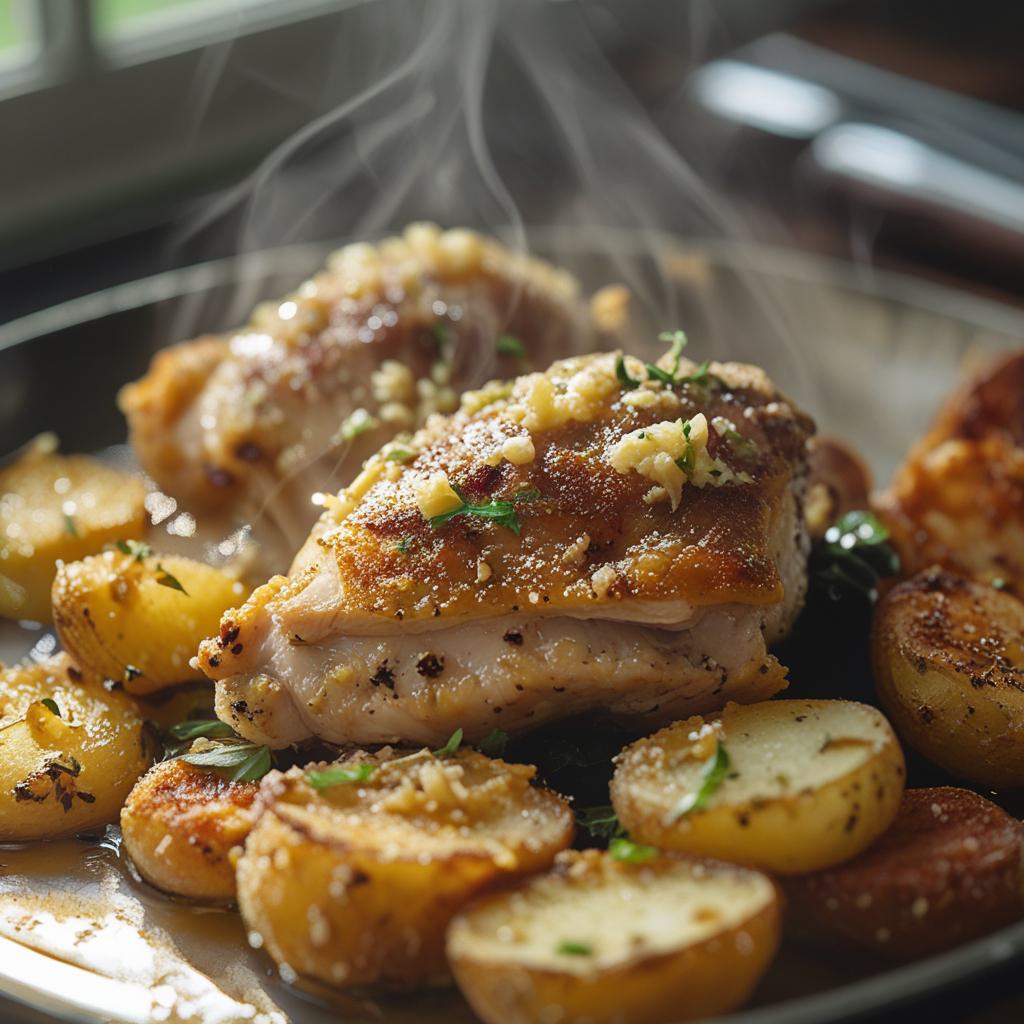
Golden-brown chicken thighs sizzle in a haze of garlic-infused olive oil, their crisp skin glistening with melted parmesan as the aroma hits you in three distinct waves: first the nutty punch of aged cheese, then the earthy breath of roasted garlic, finally the primal allure of perfectly caramelized poultry. Beside them, potatoes crunch audibly even before your teeth make contact – these aren’t mere side dishes but textural conspirators, their craggy surfaces trapping pools of herb-flecked oil. The magic unfolds in your heaviest skillet, where chicken renders fat to fry its own potato bed, each ingredient elevating the other through culinary alchemy. These aren’t weeknight scraps but bistro-worthy morsels where humble ingredients achieve nobility: chicken thighs stay succulent beneath their armor-like crust, potatoes absorb roasting juices while maintaining structural integrity, and the garlic transforms from pungent raw to sweet golden paste. It’s the crunch that seals your commitment – that audible snap when fork meets potato wedge, the shower of parmesan crust as knife breaches chicken skin, the way steam escapes carrying promises of umami depths. This dish understands contrast like a maestro conducts orchestra – creamy/crunchy, savory/rich, robust/delicate – all united on a single platter demanding to be devoured immediately, no ceremony beyond a wedge of lemon and rough-chopped parsley.
Table of Contents
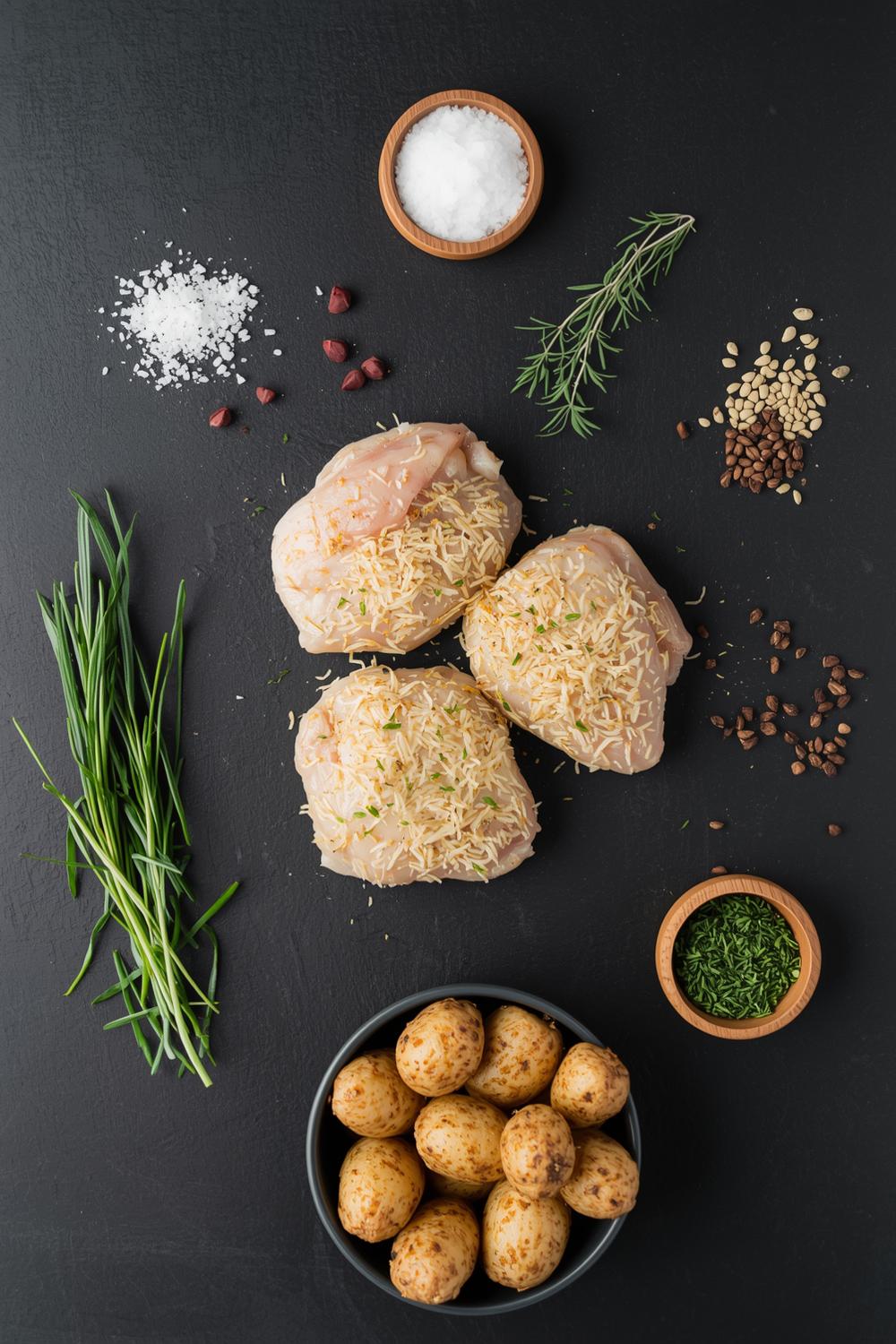
Ingredient Deep Dive
| Ingredient | Quantity | Purpose |
|---|---|---|
| Bone-in, skin-on chicken thighs | 6 pieces | Provides self-basting richness and develops crackling crust |
| Yukon Gold potatoes | 2 lbs | Waxy texture holds shape while developing crispy edges |
| Grated Parmigiano-Reggiano | 1/2 cup | Creates umami-rich crunchy topping (avoid pre-grated anti-caking agents) |
| Fresh garlic cloves | 8 large | Dual-use: minced for marinade, whole confited cloves for garnish |
| Extra virgin olive oil | 1/3 cup | High smoke point fat for frying and flavor carrier |
| Fresh rosemary | 2 sprigs | Piney aroma counters richness without bitterness |
| Unsalted butter | 2 tbsp | Promotes Maillard reaction for deeper browning |
| Lemon zest | 1 tbsp | Bright acidity cuts through fat |
| Fennel seeds | 1 tsp | Licorice notes amplify chicken’s savory depth |
The chicken thigh’s bone acts as a heat conductor, ensuring even cooking while collagen slowly converts to gelatin – an insurance policy against dryness. Skin side down, the dense fat cap renders slowly, creating a frying medium for the potatoes below while leaving behind microscopic pores for the parmesan crust to anchor. Yukon Golds contain just enough starch (18-20%) to develop crisp exteriors without becoming mealy, their thin skins adding textural contrast.
Parmigiano-Reggiano’s tyrosine crystals create nucleation sites for browning; its low moisture content prevents steaming the crust. The enzymatic action of fresh garlic (alliinase converting alliin to allicin) mellows during cooking but requires olive oil’s fat-soluble compounds to evenly distribute flavor. Cold butter added late in cooking provides milk solids that brown at lower temperatures than oil, creating layered caramelization without burning.
Substitutions & Swaps
For gluten-free needs, replace breadcrumbs (if used) with crushed rice cereal or almond flour. Vegan adaptations require separate approaches: use cauliflower steaks brushed with white miso paste for umami, and replace parmesan with nutritional yeast blended with ground cashews. Dairy-free diners can substitute refined coconut oil for butter – its neutral flavor won’t clash with herbs. If lacking fresh rosemary, toasted coriander seeds provide similar woodsy notes. Chicken substitutions carry risks: boneless thighs cook 25% faster, while breasts lack sufficient fat for basting. Purple potatoes offer colorful alternatives but require parboiling to soften their denser flesh. Emergency garlic replacement? One tablespoon of granulated garlic plus half a teaspoon of onion powder mimics baseline flavor, though freshness is irreplaceable.
Equipment Guide
A 12-inch cast iron skillet proves indispensable – its dense mass maintains steady heat during the chicken’s initial sear and potato roasting phase. Unlike thin non-stick pans that scorch cheese crusts unevenly, cast iron’s natural seasoning prevents sticking while withstanding oven transitions. Pair this with an infrared thermometer to monitor pan temperature; 375°F creates ideal browning conditions. Avoid silicone spatulas that might disturb the developing crust – instead, use fish spatulas for their thin edge when flipping proteins. A proper garlic press matters: horizontal roller types preserve pungent oils better than vertical crushers. Finally, invest in a stainless steel roasting rack to elevate chicken during resting, preventing sogginess from residual steam.
Step-by-Step Walkthrough
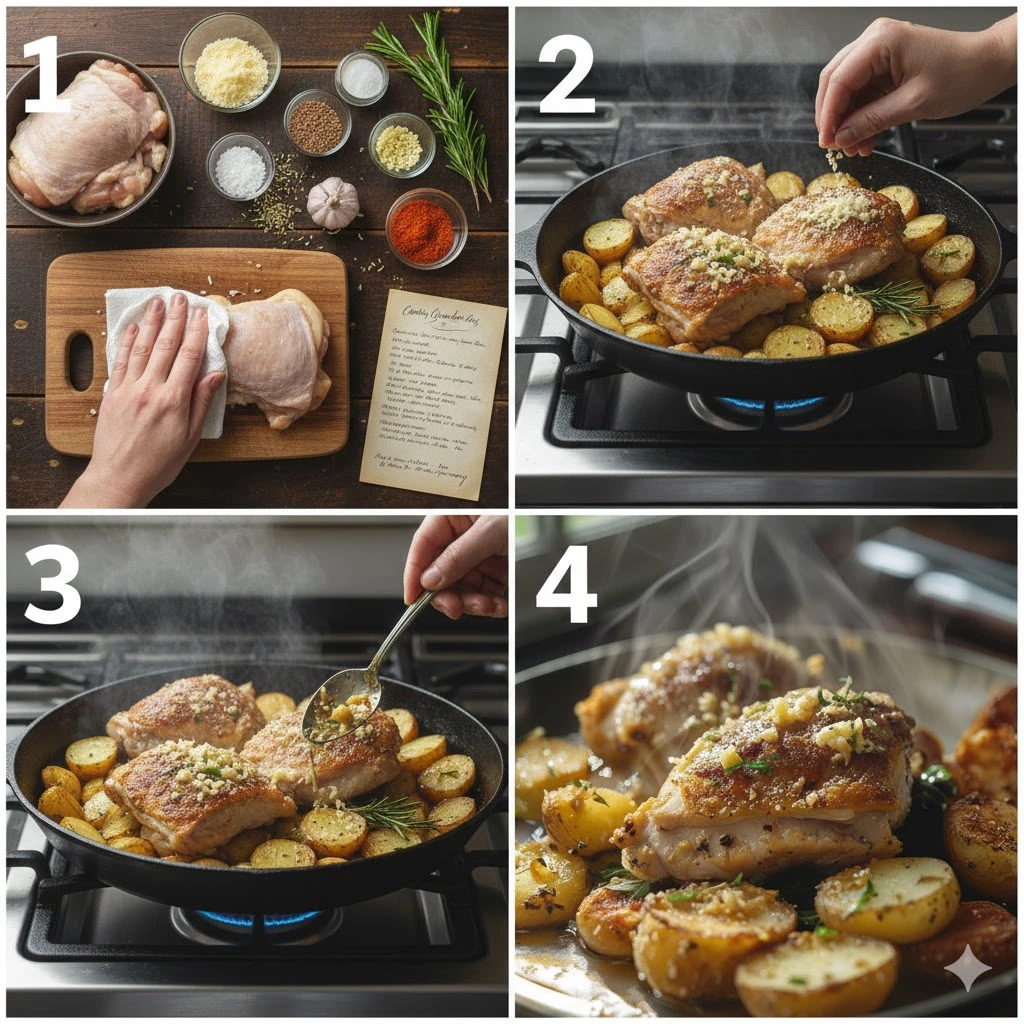
- Pat chicken thighs aggressively dry – moisture prevents crust formation
- Season flesh side with 70% salt allocation (skin gets remainder before searing)
- Arrange potatoes in cold skillet, sprinkling with fennel seeds beneath chicken placement
- Place thighs skin-down on potatoes; cold-start method renders fat slowly
- Cook undisturbed 8 minutes over medium to establish crust foundation
- Flip thighs, add garlic and rosemary; spoon hot fat over aromatics
- Transfer skillet to 425°F oven; roast 18 minutes until potatoes pierce easily
- Remove skillet, sprinkle parmesan directly onto chicken skins and exposed potatoes
- Broil 90 seconds until cheese forms molten armor – watch continuously
- Rest 7 minutes before serving; residual heat finishes carryover cooking
Pro Insight 1: The cold-start technique (placing chicken in room temp skillet) allows gradual fat rendering – rushing this with high heat tightens skin proteins prematurely, trapping unrendered fat beneath. Likewise, adding potatoes beneath the chicken harnesses seasoned drippings that would otherwise burn, turning them into flavor sponges.
Pro Insight 2: Cheese adherence depends on surface hydration. After flipping, dab chicken skin dry with paper towels before applying parmesan. The residual heat from this step creates a tacky surface for cheese adhesion, while the subsequent blast under the broiler both melts and dehydrates the crust simultaneously.
Pro Insight 3: Observe the bubble pattern – small, rapid bubbles around chicken indicate ideal oil temperature (375-385°F). Larger, sluggish bubbles mean too cold; aggressive splattering means too hot. Adjust flame accordingly during initial sear for maximum energy transfer without scorching.
Expert Tips & Troubleshooting
Salt chicken thighs 45 minutes before cooking – this brief dry-brine seasons deeper layers while drawing out surface moisture for superior browning. If cheese clumps instead of crisping, you’ve overloaded; use a microplane for snow-like coverage allowing even melting. Soggy potatoes? Increase surface area by cutting halves at 45-degree angles and rinse to remove excess surface starch before drying thoroughly.
Undercooked chicken with dark crust signals pan-to-oven transition at too high temperature – lower initial sear heat. Burnt garlic? Tuck whole cloves beneath chicken after flipping, shielded from direct heat. For extra-crispy skin, dust thighs lightly with cornstarch or baking powder (1/4 tsp per thigh) – their alkalinity accelerates Maillard reaction. If fat smokes excessively, briefly remove skillet from heat while maintaining bubbling action. Never overcrowd – cook in batches if necessary, reserving rendered fat for subsequent batches.
Flavor Variations
Spice enthusiasts should thread red pepper flakes through the parmesan crust and add smoked paprika to the potato seasoning. For Mediterranean flair, replace rosemary with za’atar and finish with preserved lemon. Kid-friendly versions benefit from mixing parmesan with panko for extra crunch and substituting garlic powder for 50% fresh garlic to soften potency. Umami bombers can add anchovy paste to the oil during searing – it dissolves into the fat, amplifying savoriness without fishiness. Brine thighs in pickle juice overnight for tangy crunch reminiscent of fried chicken.
Storage & Reheating
Store components separately: chicken on wire racks to prevent steam softening, potatoes in single layers between parchment. Refrigerate up to 3 days. Rehat chicken skin-side up at 375°F for 8 minutes to refresh crispness. Potatoes regain crunch when refried in leftover chicken fat for 3-4 minutes. Freezing discouraged – thawing compromises garlic’s flavor integrity and cheese texture. Best consumed fresh.
FAQ Section
Can I use pre-shredded parmesan?
Not recommended – cellulose additives prevent proper melting and crisping.
Why won’t my skin get crispy?
Common culprits: inadequate drying, overcrowded pan, or moving chicken too soon during searing.
Can I substitute sweet potatoes?
Yes, but blanch first to remove excess sugar that burns, and reduce oven time by 5 minutes.
Is brining necessary?
Not if properly salted, but 2-hour brine in 4% salt solution enhances juiciness for thicker thighs.
The Recipe Card
Garlic Parmesan Chicken Thighs with Crispy Potatoes: Bone-in chicken thighs roast atop garlic-infused Yukon Golds, skin rendered to crackling perfection under a parmesan crust. Potatoes emerge as crispy flavor bombs glistening with herb-flecked chicken fat. Total cook time: 55 minutes. Serves 3-4. Ideal paired with arugula salad dressed in lemon vinaigrette.
Nutrition Information
| Nutrient | Per Serving |
|---|---|
| Calories | 720 |
| Protein | 38g |
| Carbohydrates | 35g |
| Dietary Fiber | 4g |
| Sugars | 2g |
| Fat | 45g |
| Saturated Fat | 13g |
| Cholesterol | 190mg |
Disclaimer: Nutritional estimates based on ingredients entered via MyFitnessPal API. Actual values may vary with ingredient brands and preparation methods. Consult a nutritionist for dietary concerns.