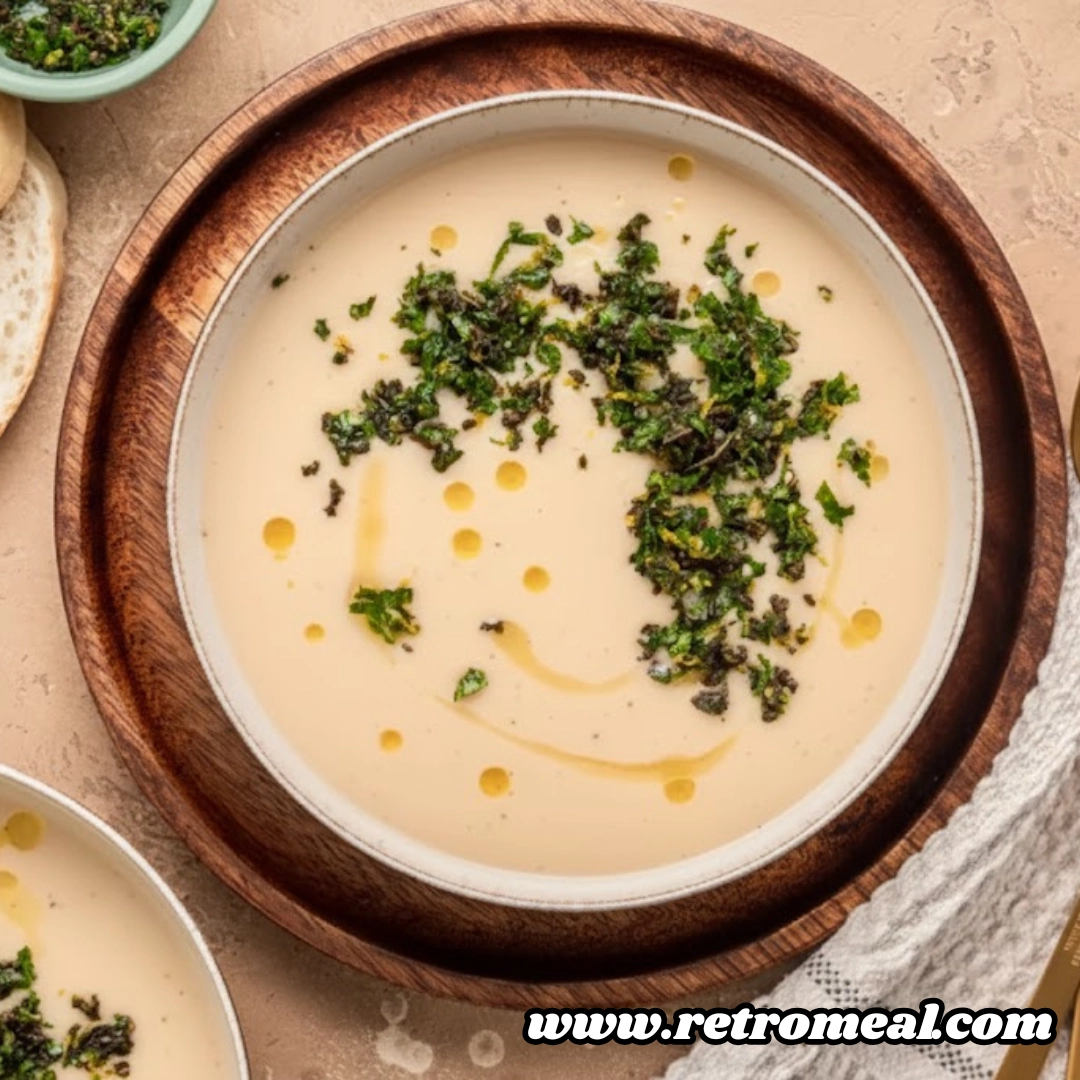
There is something profoundly comforting about a bowl of soup that manages to feel incredibly indulgent while remaining entirely plant-based. This Creamy White Bean Soup with Sage Gremolata is a masterclass in culinary alchemy, transforming humble pantry staples into a sophisticated, restaurant-quality meal. By leveraging the natural starches of the beans rather than relying on heavy dairy, we create a texture that is silky, rich, and deeply satisfying. This recipe is designed for those chilly evenings when you crave warmth and substance, but it carries a refined brightness thanks to a unique twist on a classic Italian condiment.
Table of Contents
Essential Components for the Soup
- 3 tablespoons olive oil
- 1 large yellow onion, chopped
- 5 cloves garlic, roughly chopped
- 1/4 teaspoon red pepper flakes (this is optional but highly recommended for a subtle back-of-the-throat warmth)
- 2 cups low sodium vegetable broth (keep a little extra on hand to adjust the thickness to your preference)
- 3 cans (14 ounce each) white beans, such as cannellini, navy, or Great Northern, including all of their canning liquid
- 1/2 teaspoon kosher salt, plus more to taste for final adjustments
- 1/4 teaspoon freshly ground black pepper, plus more to taste
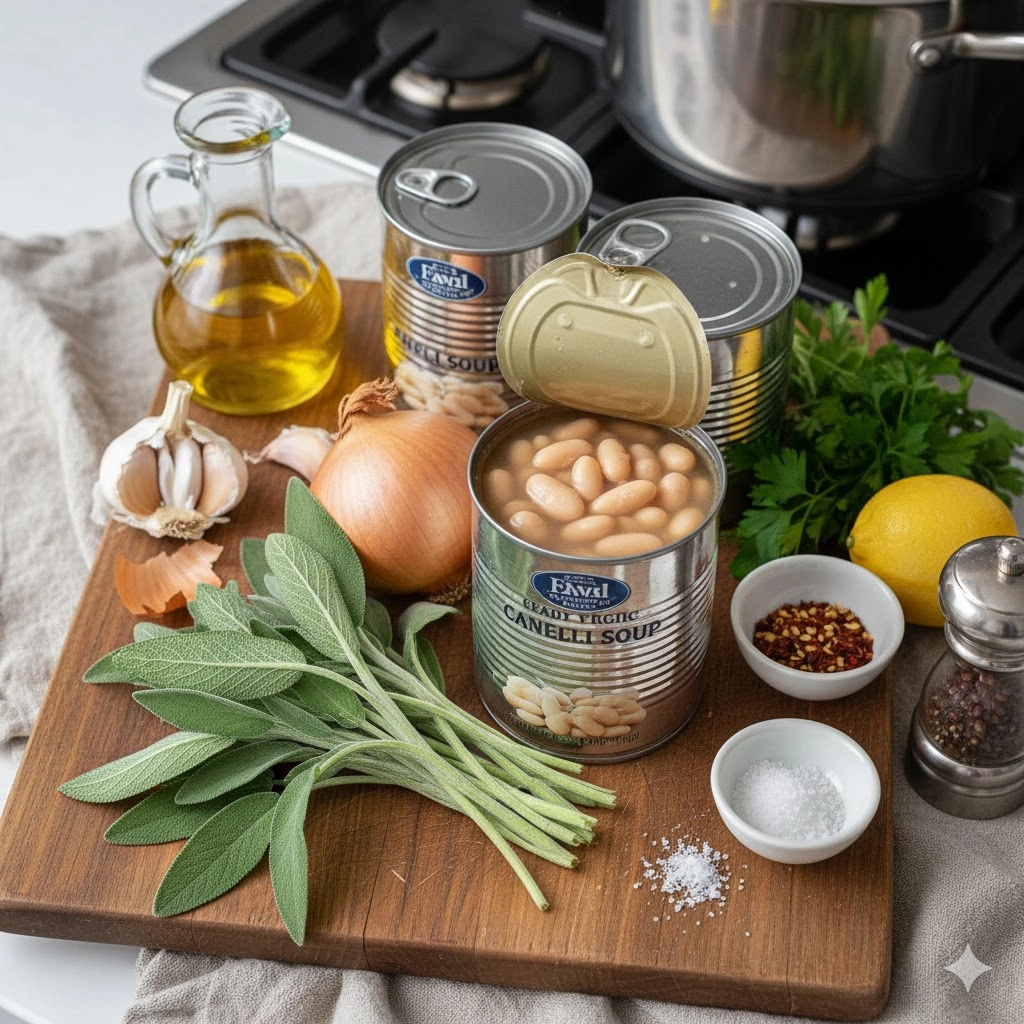
Ingredients for the Sage Gremolata and Finishing Touches
- 3 tablespoons olive oil
- 35 fresh sage leaves (this usually comes from about 5 medium sprigs)
- 1/2 cup loosely packed fresh parsley, finely chopped
- 1 clove garlic, minced into a fine paste
- Finely grated zest of 1 medium lemon (this should yield approximately 1 tablespoon)
- 1/8 teaspoon kosher salt
Step-by-Step Preparation Method
Laying the Aromatic Foundation
Begin by selecting a large, heavy-bottomed pot or Dutch oven. Place it over medium heat and add the three tablespoons of olive oil. Once the oil shimmers, introduce the chopped yellow onion, the five cloves of roughly chopped garlic, and the red pepper flakes if you are using them. Sauté this mixture steadily, stirring occasionally. You are looking for the onions to become completely translucent and very soft. This process takes about seven to nine minutes. Aim for a pale golden hue; this caramelization provides the base sweetness for the entire dish.
Developing the Body and Flavor
Pour the two cups of low sodium vegetable broth into the pot. Following the broth, add all three cans of white beans, ensuring you include every drop of the liquid from the cans. This liquid is packed with bean starch, which is the secret to a thick, creamy finish. Stir in the half teaspoon of kosher salt and the quarter teaspoon of black pepper. Increase the heat to high and bring the mixture to a full boil. Once boiling, reduce the heat to medium-low. Simmer the soup uncovered for thirty minutes. This allows the broth to reduce slightly and the flavors of the garlic and onion to fully penetrate the beans.
Crafting the Sage Gremolata
While the beans are simmering, prepare your garnish. Line a small plate with paper towels. In a small saucepan, heat three tablespoons of olive oil over medium-high heat. Test the oil by dropping in one sage leaf; if it sizzles immediately, it is ready. Fry the sage leaves in two batches to avoid crowding. They only need about forty-five seconds to one minute to become crisp and for the edges to curl. Use a slotted spoon to move the leaves to the paper towels. Crucial Step: Do not discard the oil in the saucepan. Pour it into a small heat-proof bowl and save it. Once the fried sage is cool, crumble the leaves into a small bowl with the chopped parsley, minced garlic, lemon zest, and an eighth of a teaspoon of salt. Mix well with a fork.
Achieving the Perfect Consistency
Once the thirty-minute simmer is complete, remove the pot from the stove. Use an immersion blender directly in the pot to process the soup until it is completely smooth and velvety. If you prefer a stand blender, work in small batches and be careful with the hot liquid. If the soup feels too thick, stir in a splash more vegetable broth. Give it a final taste and add more salt or pepper if the flavors need to pop.
The Final Presentation
Ladle the hot, creamy soup into deep bowls. Sprinkle a generous amount of the sage gremolata over the center of each serving. To finish, drizzle the reserved sage-infused frying oil over the top. This adds a final layer of earthy aroma and a beautiful sheen to the dish.
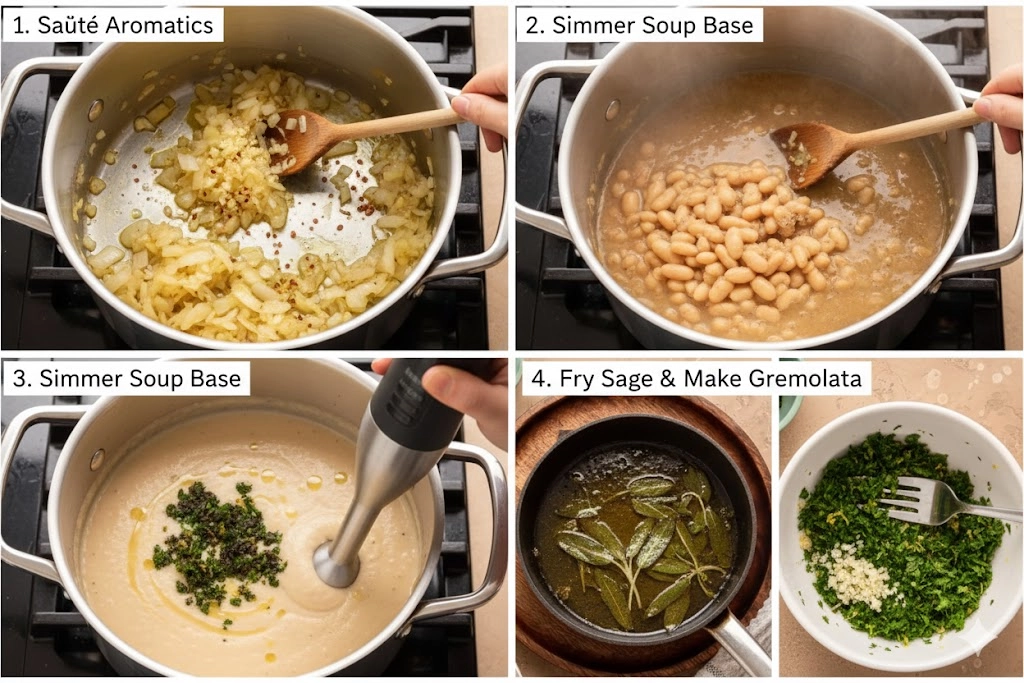
The Art of the Perfect Simmer: Step-by-Step Details
Creating a soup this creamy without a drop of cream requires attention to the simmering process. When you add the beans with their liquid, you are introducing a natural thickening agent. As the pot simmers uncovered for those thirty minutes, the water content in the vegetable broth evaporates slowly, concentrating the flavors. This is not a step to be rushed. The “bean liquor”—the liquid from the can—is often discarded in other recipes, but here it is the star. It contains proteins and starches that emulsify with the olive oil to create a mouthfeel that mimics heavy cream.
During the simmering phase, the garlic cloves, which were only roughly chopped, begin to break down and lose their sharp bite, turning mellow and buttery. This allows them to blend seamlessly into the soup later. If you notice the liquid level dropping too low or the soup appearing “muddy,” don’t be afraid to add a quarter cup of broth at a time. The goal is a consistency that coats the back of a spoon elegantly.
The frying of the sage is equally delicate. Sage has a high water content in its leaves, and frying them quickly dehydrates them while crisping the cell walls. This transforms the texture from fuzzy and soft to brittle and shatteringly crisp. This texture contrast against the smooth soup is what makes the dish feel truly professional.
Enhancing Your Kitchen Results: Unique Culinary Insights
To elevate this dish from a standard bean soup to a signature meal, consider the quality of your olive oil. Since olive oil is used both for sautéing and as a finishing drizzle, using a high-quality extra virgin olive oil with peppery notes will significantly enhance the final flavor profile. The oil used to fry the sage becomes an “infused oil,” picking up the volatile compounds of the herb. Using this as a garnish ensures that the earthy scent of sage hits the diner’s nose before they even take the first bite.
Another tip involves the lemon zest in the gremolata. When zesting, ensure you only take the bright yellow outer layer. The white pith underneath is bitter and can ruin the brightness of the condiment. The gremolata acts as a “brightener”—it cuts through the density of the beans. If you find the soup tastes “flat” even after salting, it likely needs acidity. The lemon zest provides this, but a tiny squeeze of the lemon juice into the pot right before serving can also work wonders.
Lastly, regarding the beans: Cannellini beans are the gold standard here because of their thin skins and exceptionally creamy interiors. However, if you use Navy beans, be aware they are smaller and may require slightly less blending time. If you choose to cook beans from scratch, you will need approximately four and a half cups of cooked beans along with their cooking liquid to match the ratios of the three cans specified in the recipe.
Creative Modifications and Substitutions
While the recipe as written is a vegan powerhouse, there are many ways to adapt it to your pantry or dietary needs. If veganism is not a requirement, you can substitute the vegetable broth with a low-sodium chicken broth for a deeper, more savory backbone. For those who want to experiment with different herbs, rosemary makes an excellent substitute for sage. Simply strip the needles from five sprigs and fry them in the same manner as the sage.
If you want to add more vegetables to the base, you can sauté finely diced celery and carrots alongside the onions. This creates a traditional mirepoix base that adds complexity, though it may slightly change the snowy white color of the final soup. For a bit of added protein or texture, you can set aside half a cup of the whole beans before blending and stir them back in at the end for a “chunky-creamy” hybrid.
Optimal Accompaniments and Serving Suggestions
This soup is hearty enough to stand alone, but it truly shines when paired with the right sides. A thick slice of toasted sourdough or a crusty baguette is almost mandatory for dipping. To keep the meal light and vibrant, serve a bitter green salad on the side—think arugula or radicchio—dressed with a sharp lemon vinaigrette. The bitterness of the greens balances the earthy sweetness of the white beans perfectly.
For a more substantial winter feast, consider serving this as a starter to a roasted vegetable platter or a light pasta dish. When plating, try to serve the soup in pre-heated bowls. Because the soup is blended and thick, it holds heat well, but a cold bowl can sapphire that warmth quickly. If you are hosting a dinner party, a few extra whole fried sage leaves placed on top of the gremolata adds a beautiful, visual “wow” factor.
In-Depth Kitchen Wisdom: FAQ
Why shouldn’t I drain the canned beans for this specific soup?
In most recipes, the liquid in canned beans is discarded to reduce sodium or to avoid a “tinny” taste. However, in this creamy soup, that liquid is essential. It is full of starch released by the beans during the canning process. When simmered for thirty minutes, any metallic or “canned” flavor evaporates, leaving behind a natural thickener that creates a luxurious, dairy-free creaminess that broth alone cannot achieve.
How do I store and reheat leftovers without losing the texture?
This soup stores beautifully in an airtight container in the refrigerator for up to five days. As it sits, the starch will continue to thicken the liquid, so it may look like a thick paste when cold. When reheating, place it in a saucepan over low heat and add a splash of water or broth to loosen it back to its original consistency. Store the gremolata and the sage oil in separate small containers; the oil may solidify in the fridge, so let it come to room temperature before drizzling.
Can I freeze this soup for long-term meal planning?
Yes, this soup is very freezer-friendly. You can freeze the blended soup for up to three months. However, it is best to freeze the soup alone, without the gremolata garnish. The fresh parsley and fried sage in the gremolata will lose their vibrant texture and color if frozen. When you are ready to eat, thaw the soup in the fridge overnight and prepare a fresh batch of gremolata to bring the dish back to life.
What if I don’t own an immersion blender?
Not a problem! You can use a standard countertop blender. The key is to work in small batches and never fill the blender more than halfway with hot liquid. Remove the center piece of the blender lid and cover it with a folded kitchen towel; this allows steam to escape safely so the pressure doesn’t blow the lid off. Blend until smooth and return each batch to a clean pot.
A Final Note on This Comforting Classic
This Creamy White Bean Soup with Sage Gremolata is more than just a quick weeknight dinner; it is a testament to how simple ingredients can be transformed through technique. By taking the time to slowly soften aromatics and frying fresh herbs to a crisp, you create a layer of flavor that feels intentional and sophisticated. Whether you are looking for a healthy vegan option or simply a delicious, warming meal, this soup delivers on every level. It is a bowl of pure, unadulterated comfort that invites you to slow down and savor every spoonful.
Nutritional Profile
| Nutrient | Amount Per Serving |
| Calories | 367 |
| Total Fat | 14 grams |
| Saturated Fat | 2 grams |
| Cholesterol | 0 milligrams |
| Sodium | 840 milligrams |
| Total Carbohydrates | 47 grams |
| Dietary Fiber | 12 grams |
| Sugars | 4 grams |
| Protein | 15 grams |
Important Dietary Disclaimer
The nutritional information provided is an estimate calculated using a third-party ingredient database. These figures should be used as a general guide. Actual nutritional content may vary based on specific brands of beans, broth, and the exact amount of olive oil used during the frying process. If you have specific medical dietary requirements, please consult with a professional.
Creamy White Bean Soup with Sage Gremolata
Ingredients
- 3 tbsp olive oil
- 1 large yellow onion, chopped
- 5 cloves garlic, roughly chopped
- 0.25 tsp red pepper flakes (optional)
- 2 cups low-sodium vegetable broth
- 3 14-ounce cans white beans (cannellini, navy, or Great Northern), including liquid
- 0.5 tsp kosher salt, plus more to taste
- 0.25 tsp freshly ground black pepper, plus more to taste
- 3 tbsp olive oil (for gremolata)
- 35 fresh sage leaves (from about 5 sprigs)
- 0.5 cup loosely packed finely chopped fresh parsley
- 1 clove garlic, minced
- 1 tbsp finely grated zest of 1 medium lemon
- 0.125 tsp kosher salt (for gremolata)
Instructions
- Heat 3 tablespoons olive oil in a large pot over medium heat. Add onion, chopped garlic, and red pepper flakes. Sauté until onion is translucent and very soft, about 7–9 minutes.
- Add vegetable broth and the beans with their liquid. Season with 1/2 tsp salt and 1/4 tsp pepper. Stir to combine.
- Cover and bring to a boil over high heat. Uncover, reduce heat to medium-low, and maintain a gentle simmer for 30 minutes.
- While soup simmers, heat 3 tbsp oil in a small saucepan. Fry sage leaves in batches until crisp (45-60 seconds). Drain on paper towels and reserve the oil.
- In a small bowl, combine parsley, minced garlic, lemon zest, and 1/8 tsp salt. Crumble the cooled fried sage into the mixture and stir with a fork.
- Remove soup from heat. Use an immersion blender to process until completely smooth. Add more broth if a thinner consistency is desired.
- Taste and adjust seasoning with additional salt and pepper as needed.
- Ladle into bowls. Garnish with the sage gremolata and a generous drizzle of the reserved sage-frying oil.
Notes
Equipment
- large pot or Dutch oven
- Immersion Blender Or a standard countertop blender
- small saucepan For frying sage
- slotted spoon
- paper towels