
There is something inherently restorative about a bowl of vegetable soup. It represents simplicity, nourishment, and a warmth that settles deep into the soul. While a broth-based version certainly has its place, introducing a gentle touch of richness transforms the dish into something truly luxurious. This particular Creamy Vegetable Soup Recipe strikes the perfect balance—it’s packed with seasonal flavor from aromatic root vegetables and greens, yet finished with a smooth, velvety texture that makes it feel like an indulgence. It’s the ideal main course for a chilly evening or a satisfying, light lunch served with crusty bread for dipping. It’s approachable for the novice cook and comforting for the experienced one.
Table of Contents
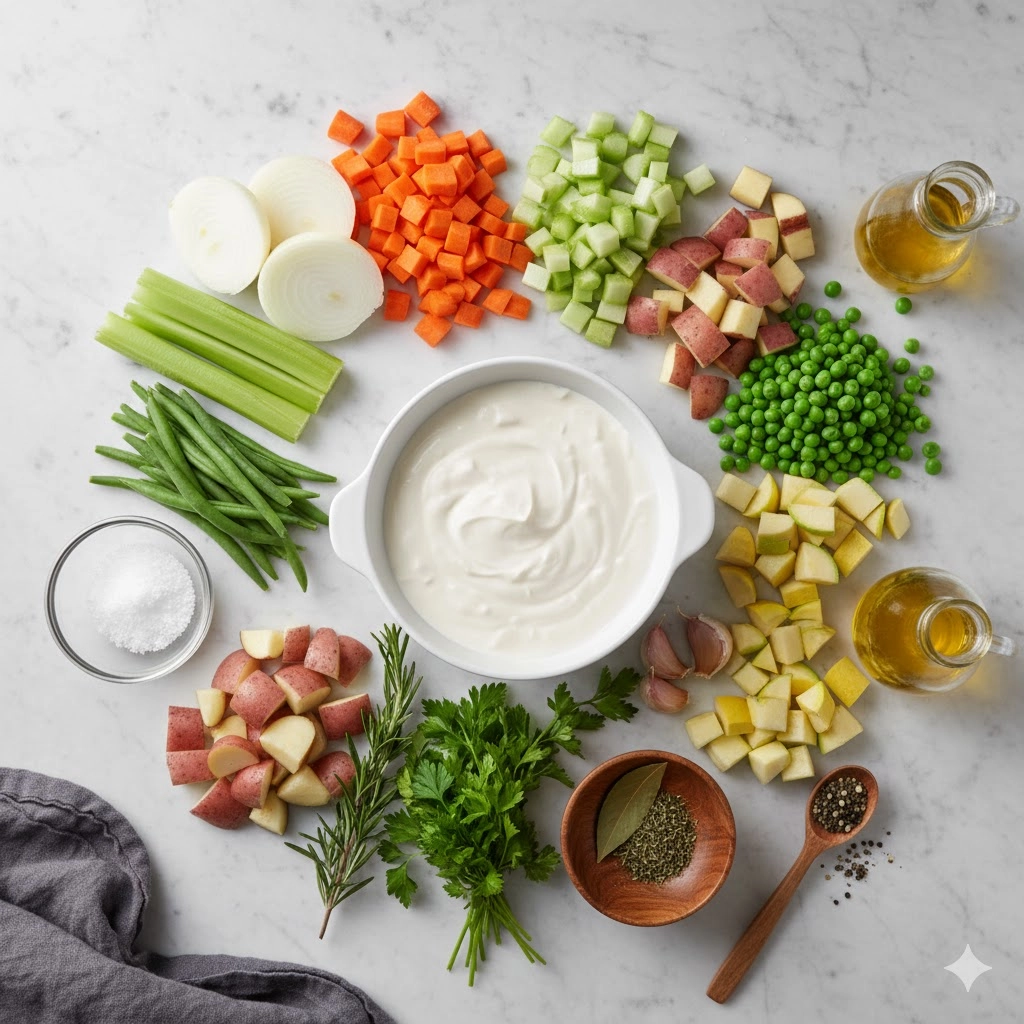
Essential Elements: What You’ll Need
When preparing soup, the quality of your base ingredients truly shines through. While you can certainly vary the vegetables, this combination offers a classic, deeply satisfying flavor profile.
For the Vegetable Base:
- 2 tablespoons extra virgin olive oil
- 1 large yellow onion, finely diced
- 3 medium carrots, peeled and diced
- 2 stalks celery, diced
- 4 cloves garlic, minced
- 1 medium yellow potato (about 8 ounces), peeled and cut into half-inch pieces
- 1 cup frozen peas
- 1 cup green beans, trimmed and cut into one-inch pieces
- 1 cup zucchini, diced (optional)
The Liquid and Seasoning:
- 8 cups vegetable or chicken broth (low sodium is recommended)
- 1 teaspoon dried thyme
- 1/2 teaspoon dried rosemary
- 1/2 cup finely chopped fresh parsley
- 1 bay leaf
- Fine sea salt and freshly cracked black pepper to taste
For Creaminess:
- 1 cup heavy cream, half-and-half, or full-fat evaporated milk
The Process: High-Level Preparation Steps
Creating this soup is a straightforward journey involving layering flavors, simmering, and finally, enriching the texture. This quick-reference guide provides the core actions needed for success.
- Build the Foundation: Heat the olive oil in a large stockpot or Dutch oven over medium heat. Sauté the diced onion, carrots, and celery until they begin to soften and become fragrant, about eight to ten minutes.
- Aromatics and Spice: Stir in the minced garlic, dried thyme, and dried rosemary. Cook for one minute until the garlic is fragrant and the spices are toasted, then season lightly with salt and pepper.
- Simmer and Soften: Pour in the broth. Add the potato pieces and the bay leaf. Bring the liquid to a boil, then immediately reduce the heat to maintain a steady, gentle simmer. Cook for ten to twelve minutes, or until the potatoes are almost fork-tender.
- Add Remaining Vegetables: Introduce the green beans, zucchini (if using), and frozen peas. Continue to simmer for five to seven minutes, allowing all the vegetables to reach the desired tenderness.
- Achieve Creaminess: Remove the bay leaf. Reduce the heat to the lowest setting and stir in the heavy cream or chosen dairy product. Allow the soup to warm through gently for two minutes, ensuring it does not boil after the cream is added.
- Final Seasoning: Taste the soup and adjust the salt, pepper, and fresh parsley as necessary. Ladle into bowls and serve immediately.

Deep Dive into Technique: Mastering the Flavor Layers
The difference between a good soup and a truly spectacular one often lies in the technique of the initial sauté and the final texture adjustment. Here is a closer look at the critical steps in the kitchen.
The Art of the Mirepoix
When Step One instructs you to “Build the Foundation,” you are engaging in the most crucial part of soup making: creating the mirepoix (the French term for the combination of onion, carrot, and celery). This stage cannot be rushed. Heat the oil until it shimmers gently, then add the vegetables. You are not looking for browning; you are looking for sweating. This means cooking the vegetables slowly over medium heat until their cellular structure breaks down, releasing their natural sugars and deep, savory essence. When the onions turn translucent and the carrots soften enough to be easily pierced with a fork but still hold their shape, you know the foundation is solid. This process usually takes the full eight to ten minutes—patience here is non-negotiable.
Blooming the Aromatics
Step Two involves adding the dried herbs and garlic. This technique is often called “blooming” the spices. When dried herbs and spices hit warm oil, their essential oils are rapidly released, significantly intensifying their flavor and aroma. Cook the garlic for exactly one minute. Garlic burns quickly, and once it is browned or bitter, it will ruin the entire batch of soup. The kitchen should fill with a beautiful, savory scent—a sensory indicator that you’ve successfully integrated the aromatics.
Managing the Simmer and Vegetable Texture
The introduction of the broth (Step Three) and the potato dictates the first simmering period. Potatoes are dense and require the longest cooking time of all the fresh vegetables listed. By adding them early, they infuse the broth with their starch, which contributes a slight natural thickening. After the initial ten to twelve minutes of simmering, check the potatoes. They should be just shy of tender.
We then add the quicker-cooking vegetables like green beans and zucchini (Step Four). If you were to add all the vegetables at once, the potatoes would be perfectly cooked, but the green beans would be mushy and the zucchini would disintegrate. By staggering the additions, you ensure that every vegetable in the final product retains its own distinct texture and bite—what we call al dente for vegetables.
The Final Velvety Touch
The critical moment for achieving the signature creamy texture is Step Five. After removing the bay leaf, you must reduce the heat to the lowest setting possible. Dairy, especially heavy cream, is sensitive to high heat and can easily curdle or separate if boiled. Stir the cream in slowly and thoroughly, and only allow the soup to heat through for a couple of minutes. The goal is to raise the cream’s temperature to match the soup’s without allowing it to bubble. This final addition introduces richness without requiring a complicated flour or roux-based thickening agent, keeping the preparation light and simple. The soup will go from a clear broth to a beautifully opaque, uniform liquid.
Essential Kitchen Insights for the Best Creamy Vegetable Soup
Even experienced cooks can benefit from fine-tuning the details. These tips address common issues and help elevate your homemade soup to a professional level.
- Mind the Sodium Levels: Broth is often the primary source of sodium in soup. Start with a low-sodium broth, especially if you plan to reduce the soup slightly during simmering. It is far easier to add salt at the end than to try and mitigate an overly salty batch. Wait until the very end, after the cream has been added, to perform your final seasoning check.
- The Power of Fresh Herbs: While we use dried herbs (thyme, rosemary) in the cooking process to build the foundational flavor, fresh herbs, specifically the parsley added at the end, provide essential brightness. Stirring in fresh parsley just before serving prevents it from wilting completely and delivers a vibrant, clean contrast to the creamy richness.
- Preventing Graininess with Dairy: If you are using milk or half-and-half instead of heavy cream (which is higher in fat and more stable), temper it first. Before adding the cup of dairy to the soup, scoop out a small ladleful of the hot broth and stir it into the cold dairy in a separate bowl. This gradually warms the dairy, making it less likely to shock and curdle when added to the main pot.
- Achieving Ultra-Smoothness: For an even more velvety consistency, you have two options. You can use an immersion blender to briefly blend about one-third of the soup directly in the pot, just enough to break down some of the potatoes and carrots. Alternatively, scoop out about two cups of the soup and purée it in a regular blender until perfectly smooth, then stir it back in. This uses the vegetables themselves as the thickening agent.
- Handling Leftovers: This soup stores beautifully. However, if you find the soup has thickened too much overnight in the refrigerator, simply whisk in an extra splash of broth or water when reheating it on the stovetop to restore the original consistency. Avoid boiling leftovers, which can encourage the cream to separate.
Flavor Modifications and Alternatives for This Creamy Vegetable Soup Recipe
This recipe is incredibly flexible and allows for numerous substitutions based on dietary needs or what you have available in your pantry or garden.
Dairy-Free Creaminess
To make this soup completely dairy-free, substitute the heavy cream with one cup of full-fat canned coconut milk or unsweetened cashew cream. The coconut milk will lend a very subtle, pleasant sweetness that pairs well with the root vegetables, while cashew cream offers a neutral flavor. Note that neither option requires tempering, but they should still be warmed slowly to prevent separation.
Protein Boost
To transform this into a heartier, full-meal soup, consider adding shredded cooked chicken or turkey breast during the last five minutes of simmering. For a vegetarian protein, a drained can of cannellini beans or a cup of cooked lentils can be stirred in alongside the peas and green beans in Step Four. They add substance and body to the finished dish.
Seasonal Swaps
- Spring: Use asparagus pieces and fresh dill in place of the green beans and rosemary.
- Autumn: Swap the zucchini for butternut squash or sweet potato. Both of these should be added with the yellow potato in Step Three, as they require a similar simmering time.
- Spice Level: Introduce a very small pinch of red pepper flakes during the blooming of the aromatics (Step Two) for a pleasant warmth, or a quarter teaspoon of ground nutmeg when adding the cream for a classic, sophisticated depth often used in creamy vegetable dishes.
Using Different Fats
If you prefer a richer flavor base, you can substitute the olive oil with four tablespoons of unsalted butter to start the mirepoix. The butter will brown slightly and add a nutty, deeper flavor to the finished soup.

What to Serve Alongside this Creamy Soup
While satisfying on its own, pairing this luxurious soup with a simple side dish can turn it into a memorable meal.
Crusty Bread and Compound Butter
A classic, simple accompaniment. Serve thick slices of a high-quality sourdough or French baguette. The best move is to prepare a compound butter by whipping two parts softened butter with one part fresh chopped herbs (like chives and parsley) and a pinch of salt. Serve this herb butter alongside the bread for dipping into the warm broth.
Half a Grilled Cheese Sandwich
Elevate the experience by creating a gourmet grilled cheese. Use a sharp cheddar and Gruyère mixture on thick-cut rustic white bread, grilled until golden brown and gooey. The slight acidity and saltiness of the cheese sandwich, combined with the creamy nature of the soup, is a perfect textural and flavor contrast.
A Simple, Bright Salad
A vibrant side salad provides the necessary lift and freshness to cut through the richness of the cream. Toss mixed greens (like baby spinach or arugula) with a simple vinaigrette made from lemon juice, olive oil, and a dash of Dijon mustard. The acidity of the dressing will complement the savory soup beautifully.
Common Questions Answered
Can I freeze this soup?
Yes, but with an important caveat. Dairy-based soups have a tendency to separate or become grainy after thawing. To freeze successfully, prepare the soup completely through Step Four (before adding the cream). Freeze the vegetable and broth base in airtight containers. When you are ready to serve, thaw the soup, heat it on the stovetop, and then stir in the heavy cream according to Step Five.
How long will leftovers last in the refrigerator?
When properly sealed in an airtight container, the leftover soup can be safely stored in the refrigerator for up to four days. It is important to cool the soup relatively quickly after serving, transferring it to the container once it stops steaming before refrigerating.
Do I have to peel the potatoes and carrots?
While peeling the carrots is largely a matter of texture preference (leaving the skin can result in a slightly tougher bite), peeling the potato is highly recommended. Potato skin contains starches and compounds that can sometimes affect the soup’s overall texture and may separate from the flesh during the long cooking time, making the final presentation less desirable.
What is the best way to cut the vegetables?
Uniformity is key. Aim to cut all the root vegetables (carrots, potatoes, celery) into roughly half-inch dice. Consistent sizing ensures that all the vegetables cook at the same rate and finish at the same time. Irregular chunks will lead to some pieces being mushy while others remain hard.
Nutrition Information
This table provides an estimate. The values will fluctuate depending on the fat content of the dairy chosen (heavy cream vs. evaporated milk) and the sodium level of the broth used.
| Nutrient | Amount per Serving |
| Calories | 320 kcal |
| Protein | 11 g |
| Carbs | 30 g |
| Fat | 18 g |
| Fiber | 6 g |
| Sugar | 8 g |
| Sodium | 450 mg |
Disclaimer
Nutrition information is an estimate and may vary based on preparation and ingredients used.

Creamy Vegetable Soup Recipe
Ingredients
- 2 tbsp extra virgin olive oil
- 1 large yellow onion, finely diced
- 3 medium carrots, peeled and diced
- 2 stalks celery, diced
- 4 cloves garlic, minced
- 1 medium yellow potato, peeled and diced
- 1 cup frozen peas
- 1 cup green beans, trimmed and cut
- 1 cup zucchini, diced (optional)
- 8 cups vegetable or chicken broth (low sodium)
- 1 tsp dried thyme
- 0.5 tsp dried rosemary
- 0.5 cup fresh parsley, chopped
- 1 bay leaf
- to taste fine sea salt and freshly cracked black pepper
- 1 cup heavy cream, half-and-half, or evaporated milk
Instructions
- Heat olive oil in a large pot over medium heat. Sauté onion, carrots, and celery for 8–10 minutes until softened.
- Add garlic, thyme, and rosemary. Cook for 1 minute until aromatic. Season lightly with salt and pepper.
- Pour in the broth. Add potatoes and bay leaf. Bring to boil, then simmer for 10–12 minutes until potatoes are nearly tender.
- Add peas, green beans, and optional zucchini. Simmer for another 5–7 minutes until all vegetables are tender.
- Remove bay leaf. Reduce heat and stir in cream. Warm gently for 2 minutes without boiling.
- Taste and adjust seasoning. Stir in fresh parsley. Serve hot.
Notes
Equipment
- large stockpot or Dutch oven
- wooden spoon
- cutting board
- chef’s knife
- measuring cups and spoons
- ladle