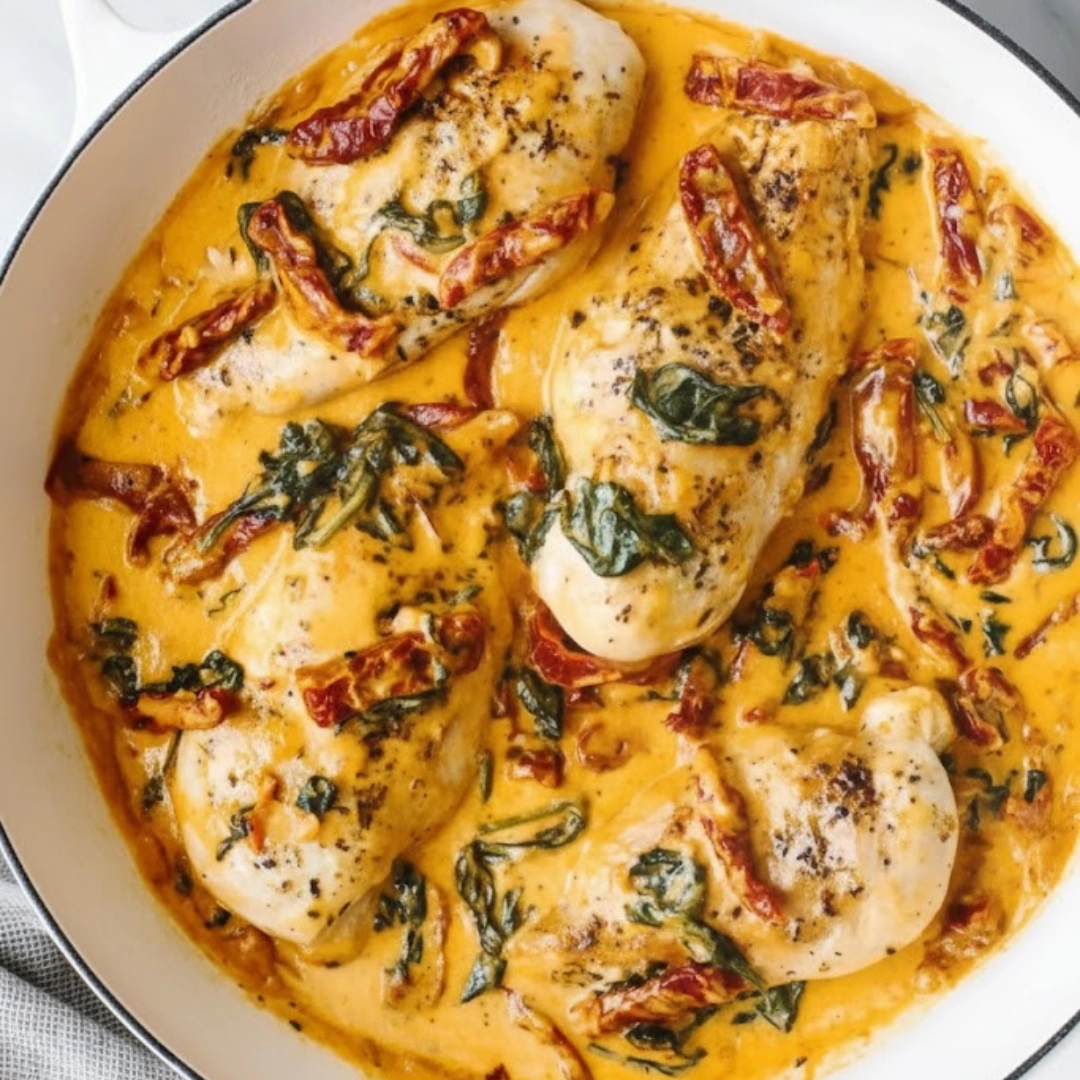
The essence of rustic, comfortable dining is captured perfectly in a single skillet of Creamy Tuscan Chicken. This dish is an inspired blend of rich, succulent pan-seared chicken breast, sun-dried tomatoes bursting with concentrated flavor, and fresh spinach, all bathed in an impossibly lush, savory sauce. It’s the kind of meal that feels luxurious enough for a special occasion yet comes together quickly enough to anchor a satisfying midweek table. What sets this recipe apart is its careful balance—the sweetness of the tomatoes and the slight bitterness of the spinach cut through the richness of the cream base, creating a balanced, vibrant culinary experience that speaks of the Italian countryside.
Table of Contents
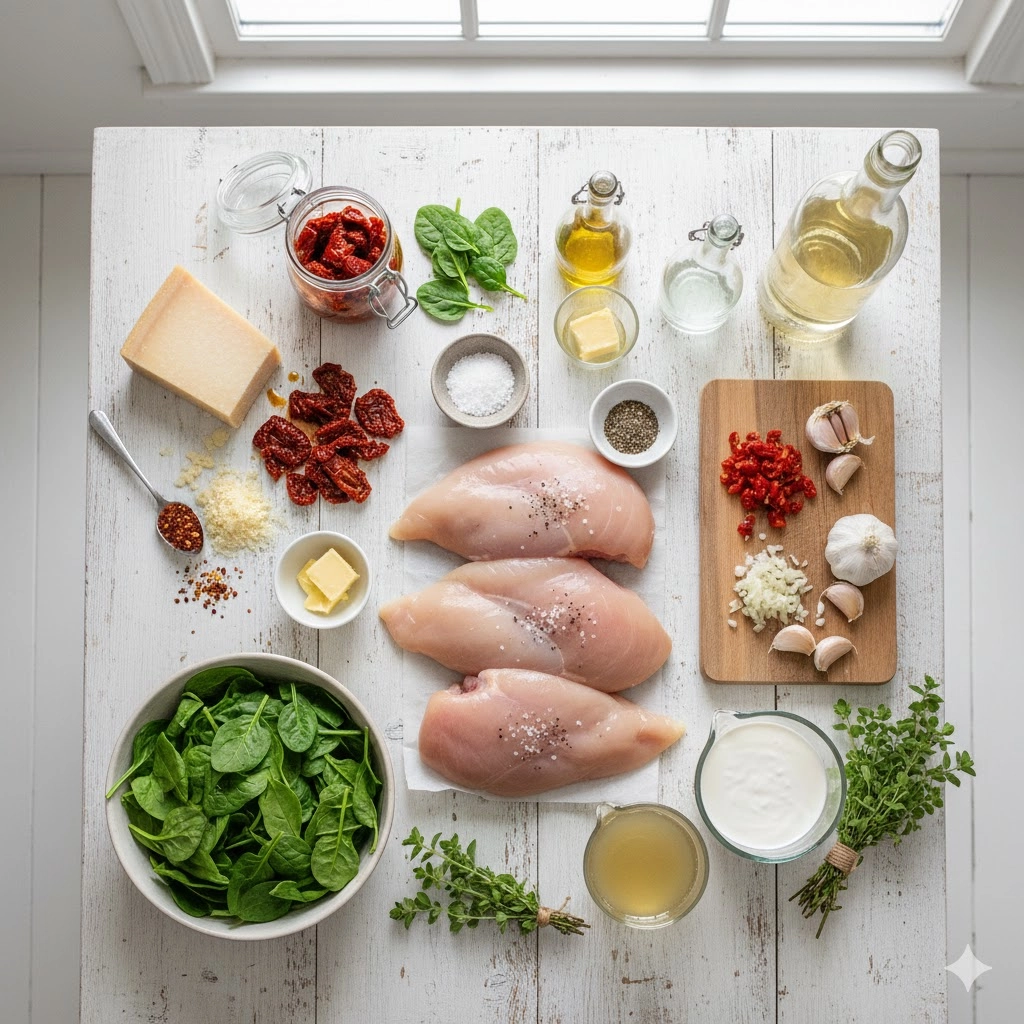
The Essential Ingredients for a Rich Sauce
Achieving that signature depth and texture requires a thoughtful selection of components. The quality of your aromatics and the fat you use for searing the chicken will dramatically influence the final taste profile.
For the Chicken:
- 4 boneless, skinless chicken breasts (about 6 ounces each)
- 1 teaspoon kosher salt
- 1 half teaspoon black pepper
- 2 tablespoons olive oil
- 2 tablespoons unsalted butter
For the Sauce Base and Aromatics:
- 1 large shallot, finely minced
- 4 cloves garlic, minced
- 1 half cup oil-packed sun-dried tomatoes, drained and chopped (reserve 1 tablespoon of the oil)
- 1 half teaspoon dried oregano
- 1 half cup dry white wine (such as Pinot Grigio) or low-sodium chicken broth
For the Creaminess and Greens:
- 1 cup heavy cream
- 1 half cup grated Parmesan cheese
- 4 cups fresh baby spinach
- 1 half cup chicken broth
- 1 half teaspoon red pepper flakes (optional)
Bringing the Dish to Life: Core Preparation Steps
This workflow is designed to ensure the chicken is cooked through and the sauce builds its layers of flavor efficiently, maximizing your time in the kitchen for a truly impactful result.
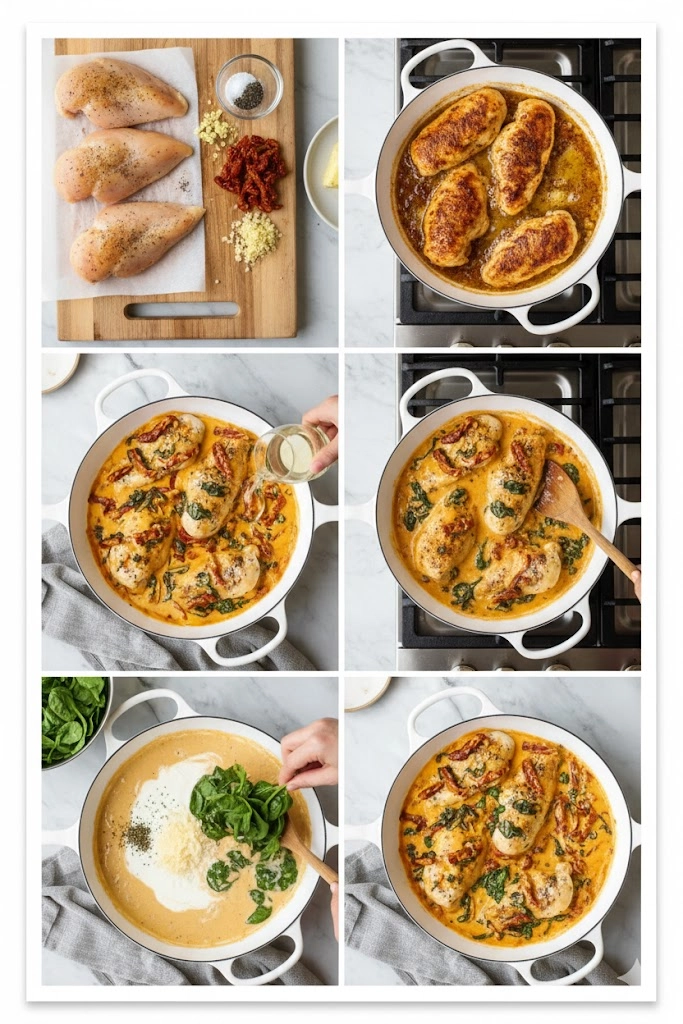
- Prepare the Chicken: Pat the chicken breasts completely dry. Season generously with salt and pepper.
- Sear the Chicken: Heat the olive oil and butter in a large skillet over medium-high heat. Sear the chicken for about five to seven minutes per side until deeply golden-brown and cooked through to an internal temperature of one hundred sixty-five Fahrenheit. Remove the chicken and set aside.
- Build the Aromatics: Reduce the heat to medium. Add the reserved tablespoon of sun-dried tomato oil (or a fresh tablespoon of olive oil) to the skillet. Sauté the minced shallot and garlic until fragrant, about two minutes.
- Deglaze and Enhance: Pour the white wine (or broth) into the pan, scraping up any browned bits on the bottom. Allow the liquid to reduce by half, which should take about three minutes.
- Create the Sauce: Stir in the chicken broth, heavy cream, oregano, and red pepper flakes. Bring the mixture to a gentle simmer.
- Incorporate Greens and Cheese: Stir in the chopped sun-dried tomatoes and slowly sprinkle in the Parmesan cheese, stirring constantly until the cheese is melted and the sauce is smooth.
- Wilt the Spinach: Add the fresh spinach in batches, stirring until it wilts completely into the sauce.
- Recombine and Finish: Return the seared chicken breasts to the pan. Spoon the sauce over the chicken and allow it to simmer gently for one to two minutes to reheat and absorb the flavors before serving immediately.
Mastering the Technique: Depth and Detail in Every Phase
The difference between a good dish and a great one lies in paying attention to the small details in texture, aroma, and visual indicators. Here is a deeper dive into the cooking process.
Searing the Chicken Breast
The searing step is crucial, as it provides the flavor foundation for the entire dish. The chicken must be thoroughly dry before it hits the hot fat; moisture creates steam, which prevents browning. Heat the pan until a drop of water sizzles and evaporates immediately. The mixture of olive oil and butter is intentional: the oil raises the smoke point, and the butter provides a depth of flavor and facilitates that beautiful, mahogany crust. Do not crowd the pan. If necessary, sear the chicken in two batches to maintain a high heat. You are looking for a deep, even caramelization on the exterior—a sign of the Maillard reaction—before you flip it. The internal temperature must reach one hundred sixty-five Fahrenheit, confirmed with an instant-read thermometer inserted into the thickest part of the breast.
Building the Aromatic Base
Once the chicken is removed, the pan is left with fond, which are those dark, flavor-packed particles stuck to the bottom. These are your most valuable resource. Before deglazing, reduce the heat and add the shallots first. Shallots cook slightly slower than garlic and provide a milder, sweeter onion base. Cook them until they soften and become translucent, which usually takes about one minute. Then, add the minced garlic. Garlic must only cook for about thirty to forty-five seconds—just until you can smell its distinct perfume. If the garlic begins to turn brown, it will taste bitter, and you must start over. The residual heat in the pan is usually enough to cook the garlic without burning it.
The Cream Sauce Transformation
Deglazing with white wine (or broth) lifts the fond from the pan, incorporating those deep chicken flavors directly into your sauce. Scrape vigorously with a flat-edged wooden spoon. Once the liquid is reduced and slightly thickened, you introduce the dairy. It is vital to use heavy cream, which has a higher fat content and is less prone to curdling than half-and-half or milk. Bring the heavy cream and broth to a gentle, lazy simmer—never a rolling boil. When adding the Parmesan, lower the heat further or even remove the pan from the heat entirely. Grated cheese should be stirred in gradually, a pinch at a time, to ensure it melts smoothly into the emulsion rather than clumping into a tough mass. The sauce will visibly thicken as the cheese melts and the mixture warms.
Finishing Touches in the Pan
The chopped sun-dried tomatoes are added now. If you are using oil-packed, the texture is softer and more luxurious. They need only a minute to warm through and release their savory-sweet oil into the sauce. When adding the spinach, do not panic about the sheer volume; it will reduce dramatically. Add a handful, stir until it collapses, and then add the next. This ensures even cooking and prevents the pan temperature from dropping too low. Once the chicken is returned to the sauce, it’s a brief marriage. The goal is simply to warm the chicken completely, allowing its residual juices to mingle with the surrounding sauce. A final spoonful of sauce poured over the chicken before serving adds visual appeal and ensures maximum flavor penetration.
Culinary Secrets for Next-Level Results
Making this dish exceptional is often about anticipating common pitfalls and enhancing specific ingredients.
- Marinate the Chicken (Optional): For an even juicier breast, consider a quick fifteen-minute dry brine with salt before patting it dry and searing. The salt begins to break down the proteins, resulting in a more tender, moisture-retaining cut.
- Use Quality Sun-Dried Tomatoes: Opt for the ones packed in oil, not the dry, dehydrated variety. The oil itself is a potent flavoring agent, which is why reserving a tablespoon for the sautéing stage is an excellent practice.
- Adjust the Sauce Viscosity: If the sauce becomes too thick during the simmering process, whisk in a tablespoon of extra chicken broth until the desired coating consistency is achieved. If it is too thin, let it simmer uncovered for a few extra minutes, stirring frequently.
- Fresh Herbs Finish: While oregano is used in the sauce, a chiffonade of fresh basil or parsley sprinkled over the finished dish introduces a vibrant, herbaceous aroma that elevates the plate just before serving.
- Achieve Uniform Chicken Thickness: If your chicken breasts are very thick, slice them horizontally into thinner cutlets, or gently pound the thickest end down to create a more even thickness. This ensures they cook in the same amount of time and dry out less.
- Parmesan Rinds: If you happen to have a leftover Parmesan rind, toss it into the simmering sauce before adding the grated cheese. Let it simmer for about ten minutes, then discard. This infuses the sauce with deep, salty umami that is incomparable.
Creative Twists and Ingredient Swaps
While the original is perfect as-is, this versatile dish can be adapted to fit different preferences or dietary needs with just a few simple adjustments.
- Protein Alternatives: The sauce is robust enough to pair beautifully with other proteins. Consider substituting large shrimp (cook them for only two to three minutes per side) or firm white fish like cod. For a red meat option, thinly sliced pork tenderloin is an excellent, quick-cooking substitute.
- Greens Swap: If you prefer a milder vegetable, substitute the spinach with baby kale. Since kale is tougher, you will need to stir it into the sauce and let it simmer for about five minutes to soften completely before serving.
- Dairy-Free Creaminess: To make the dish lactose-free, substitute the heavy cream with full-fat coconut milk (the kind in a can, not a carton) or a high-quality cashew cream blend. The flavor profile will change slightly, but the texture remains luxurious. You will need to omit the Parmesan cheese or use a vegan alternative.
- Spice Profile Enhancement: Introduce a half cup of roasted red bell peppers, sliced into thin strips, along with the sun-dried tomatoes. This adds a smoky sweetness and a burst of color, complementing the Italian flavors perfectly.
Pairing and Presentation
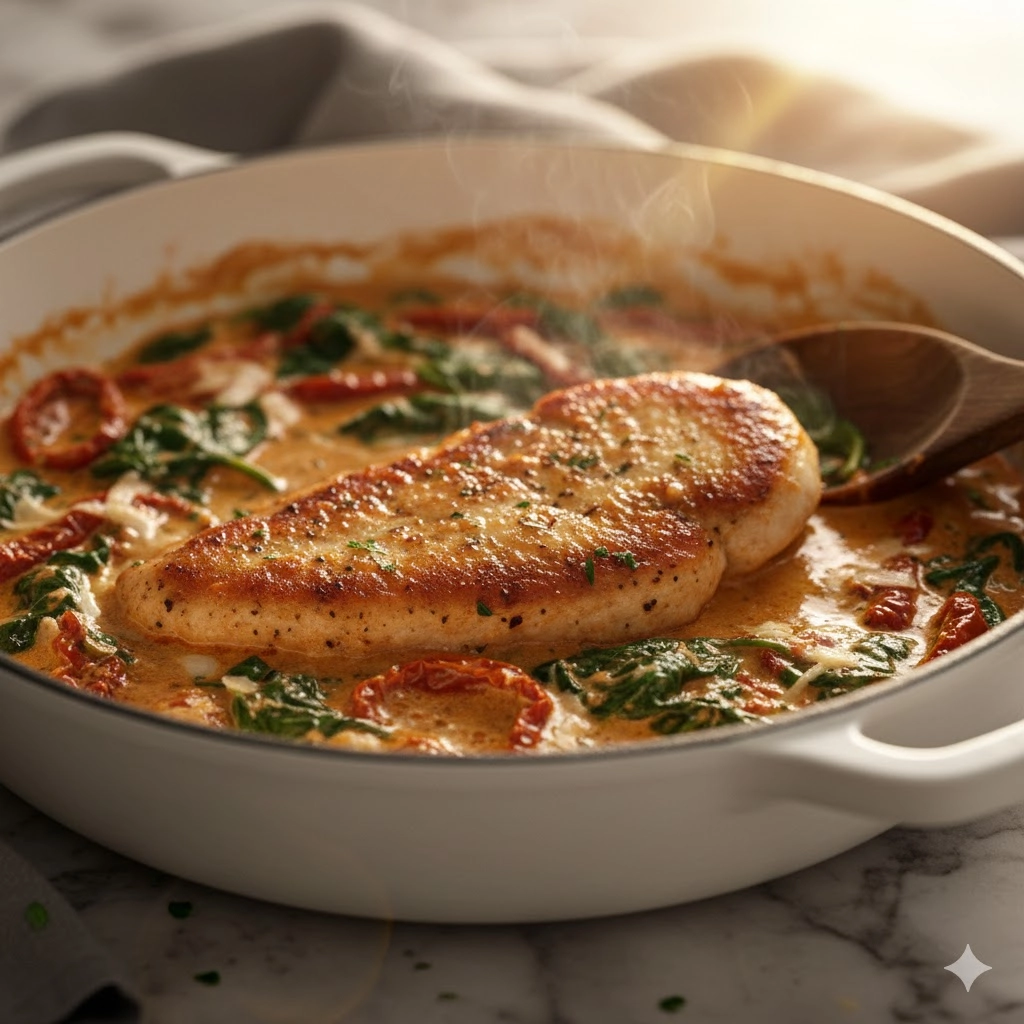
The richness of the Creamy Tuscan Chicken naturally calls for accompaniments that can absorb the sauce or provide a slight textural contrast.
- Simple Starches: The sauce clings beautifully to strands of pasta, such as linguine or fettuccine, making it an instant pasta dinner. Alternatively, serving it over a bed of creamy polenta or mashed potatoes turns it into a comforting, stick-to-your-ribs meal, perfect for colder evenings.
- Bread for Dipping: A large, crusty loaf of artisanal bread, like a ciabatta or sourdough boule, is non-negotiable. It allows every last bit of the exquisite sauce to be enjoyed, transforming your plate-wiping into a satisfying part of the meal.
- Light Side Salad: To balance the richness, serve a simple, bright side salad. Arugula tossed with a lemon vinaigrette and a sprinkle of pine nuts offers the perfect acidic and peppery contrast that cleanses the palate between bites.
Your Questions Answered
We’ve gathered the most common questions about preparing this exceptional skillet dinner.
Can I use frozen spinach instead of fresh?
Yes, but you must thaw the frozen spinach completely and squeeze out as much excess liquid as possible using a clean kitchen towel. If you skip this step, the excess water will thin out and dilute the flavor of your luxurious cream sauce, leading to a much less satisfying texture.
How do I store leftovers and reheat this dish?
Store leftovers in an airtight container in the refrigerator for up to three days. To reheat, the best method is gently on the stovetop over low heat, adding a splash of chicken broth or extra cream to loosen the sauce, which tends to tighten up when cold. Microwaving can cause the sauce to separate.
What causes my cream sauce to split or curdle?
Splitting is usually caused by cooking the dairy at too high a heat, especially after adding the cheese. Always keep the sauce at a gentle simmer, never a rolling boil. Additionally, adding cold, refrigerated cheese directly into a hot liquid can shock the sauce, so ensure the heat is low and the cheese is incorporated slowly and evenly.
Can I prepare the chicken ahead of time?
You can sear the chicken up to one day in advance, let it cool completely, and store it in the refrigerator. When you are ready to serve, simply make the sauce from step three onward, and then slice the chicken and gently warm it in the sauce at the end of the process.
What is the best way to handle thick chicken breasts?
If the chicken breasts are very thick, gently slice them in half horizontally to create four thinner cutlets. This ensures quicker, more even cooking and increases the surface area for a better crust. Alternatively, pounding them lightly with a meat mallet will also create uniformity.
Estimated Nutritional Breakdown
This table provides an estimate for one serving of Creamy Tuscan Chicken without any accompanying sides like pasta or bread.
| Nutrient | Amount per Serving |
| Calories | 550 kcal |
| Protein | 45 g |
| Carbs | 10 g |
| Fat | 38 g |
| Fiber | 2 g |
| Sugar | 3 g |
| Sodium | 550 mg |
Disclaimer
Nutrition information is an estimate and may vary based on preparation and ingredients used.

Creamy Tuscan Chicken
Ingredients
- 4 boneless, skinless chicken breasts (about 6 ounces each)
- 1 tsp kosher salt
- 0.5 tsp black pepper
- 2 tbsp olive oil
- 2 tbsp unsalted butter
- 1 large shallot, finely minced
- 4 cloves garlic, minced
- 0.5 cup oil-packed sun-dried tomatoes, drained and chopped
- 1 tbsp reserved sun-dried tomato oil
- 0.5 tsp dried oregano
- 0.5 cup dry white wine or low-sodium chicken broth
- 1 cup heavy cream
- 0.5 cup grated Parmesan cheese
- 4 cups fresh baby spinach
- 0.5 cup chicken broth
- 0.5 tsp red pepper flakes (optional)
Instructions
- Pat the chicken breasts completely dry. Season generously with salt and pepper.
- Heat olive oil and butter in a large skillet over medium-high heat. Sear the chicken for 5–7 minutes per side until golden-brown and cooked through (165°F). Remove and set aside.
- Reduce heat to medium. Add reserved sun-dried tomato oil to the skillet. Sauté shallot and garlic until fragrant, about 2 minutes.
- Pour in white wine or broth to deglaze, scraping up browned bits. Reduce liquid by half (about 3 minutes).
- Stir in chicken broth, heavy cream, oregano, and red pepper flakes. Bring to a gentle simmer.
- Add chopped sun-dried tomatoes and Parmesan cheese, stirring constantly until cheese melts and sauce is smooth.
- Stir in baby spinach in batches until wilted.
- Return chicken to the pan. Spoon sauce over and simmer 1–2 minutes to reheat.
Notes
Equipment
- large skillet
- tongs
- cutting board
- chef’s knife
- wooden spoon
- measuring cups and spoons
- Instant-read thermometer