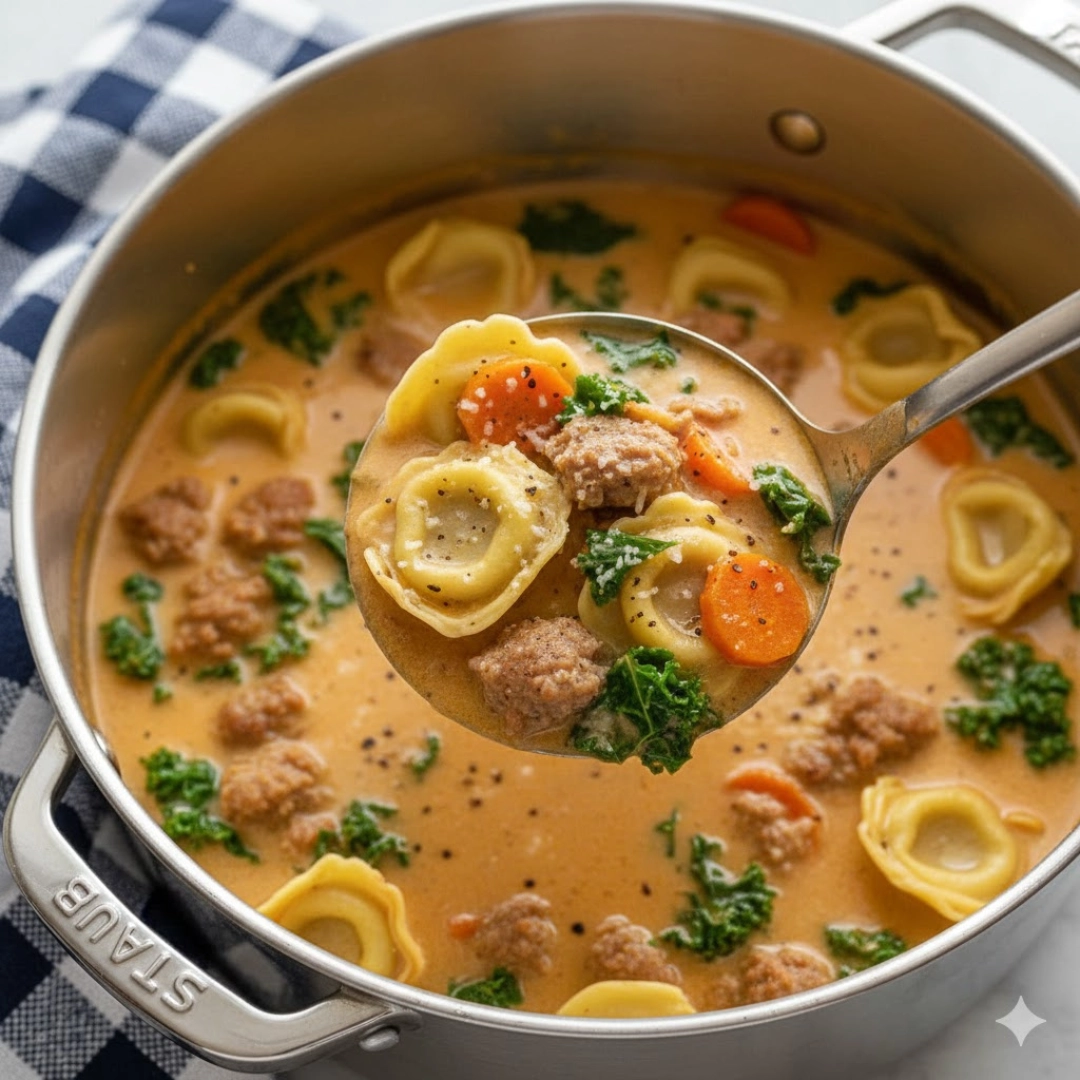
A Note on Richness and Texture
There is something inherently soul-soothing about a hearty soup that delivers both richness and complexity in a single bowl. This recipe for Creamy Tortellini Sausage Soup achieves that perfect balance, leveraging the savory intensity of Italian pork sausage and the familiar, satisfying chew of plump three-cheese tortellini. Unlike thinner, acidic broths, this version utilizes a creamy, fortified tomato base that clings beautifully to every piece of pasta and vegetable, making it an ideal choice for a cold evening or a weekend gathering. It is a substantial main course that requires minimal effort for maximum flavor payoff. This soup provides a deeply satisfying experience, moving beyond the standard fare to deliver something truly memorable.
Table of Contents
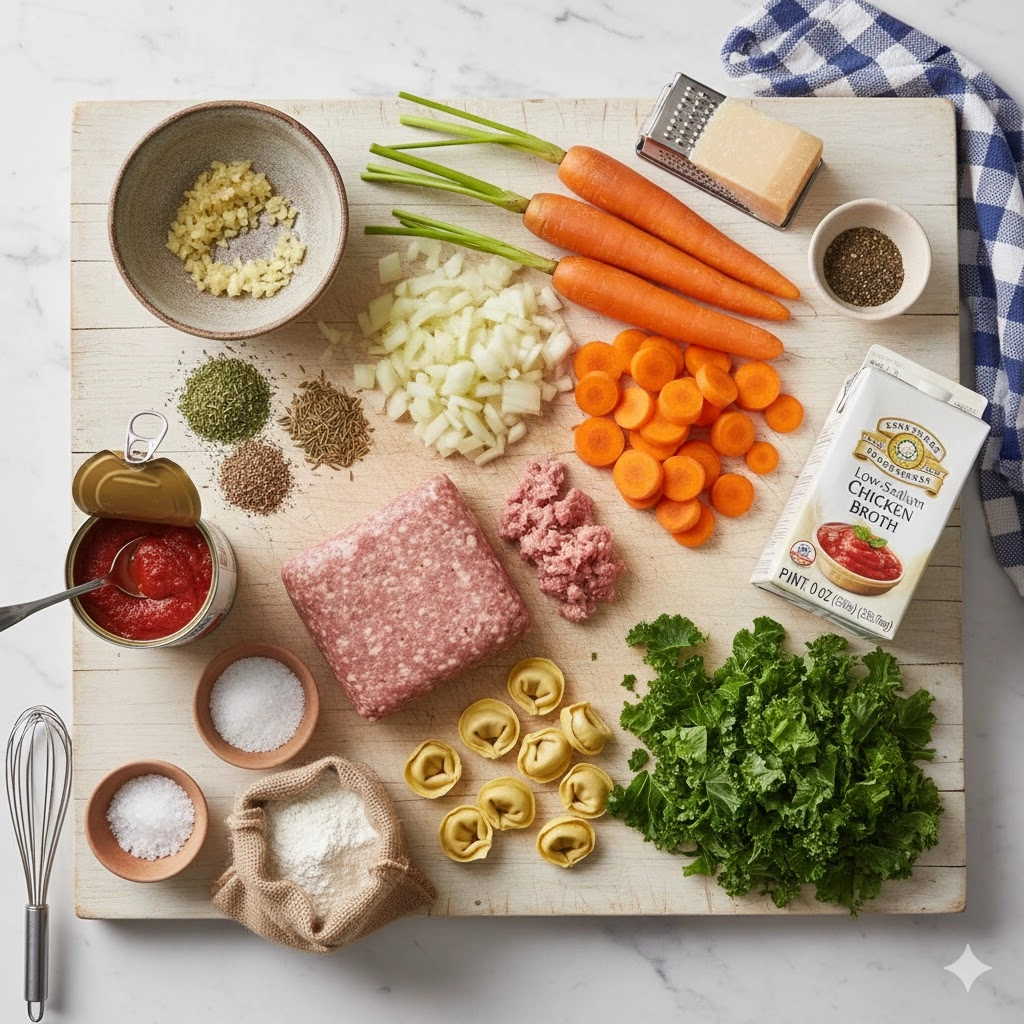
Culinary Blueprint: The Ingredients
Achieving deep flavor requires high-quality components, grouped here by their role in the finished soup.
For the Flavor Base and Protein:
- One pound (450 grams) bulk hot or mild Italian sausage (pork or turkey)
- One medium yellow onion, finely diced
- Three large carrots, peeled and sliced into half-moon shapes
- Four cloves garlic, minced
- Two teaspoons dried Italian seasoning
- One-half teaspoon dried fennel seeds (optional, for enhancing the sausage flavor)
- Kosher salt and freshly ground black pepper, to taste
For the Broth and Creaminess:
- One-quarter cup all-purpose flour
- Six cups low-sodium chicken broth or stock
- One six-ounce can (170 grams) tomato paste
- One cup heavy cream (or half-and-half for a slightly lighter result)
For the Finish:
- Nine ounces (255 grams) refrigerated or frozen three-cheese tortellini
- Three cups fresh kale, roughly chopped, stems removed
- One-quarter cup freshly grated Parmesan cheese, plus more for serving
Essential Technique: Creating the Broth Base
This soup moves quickly once the initial sauté is complete. Read all steps before beginning.
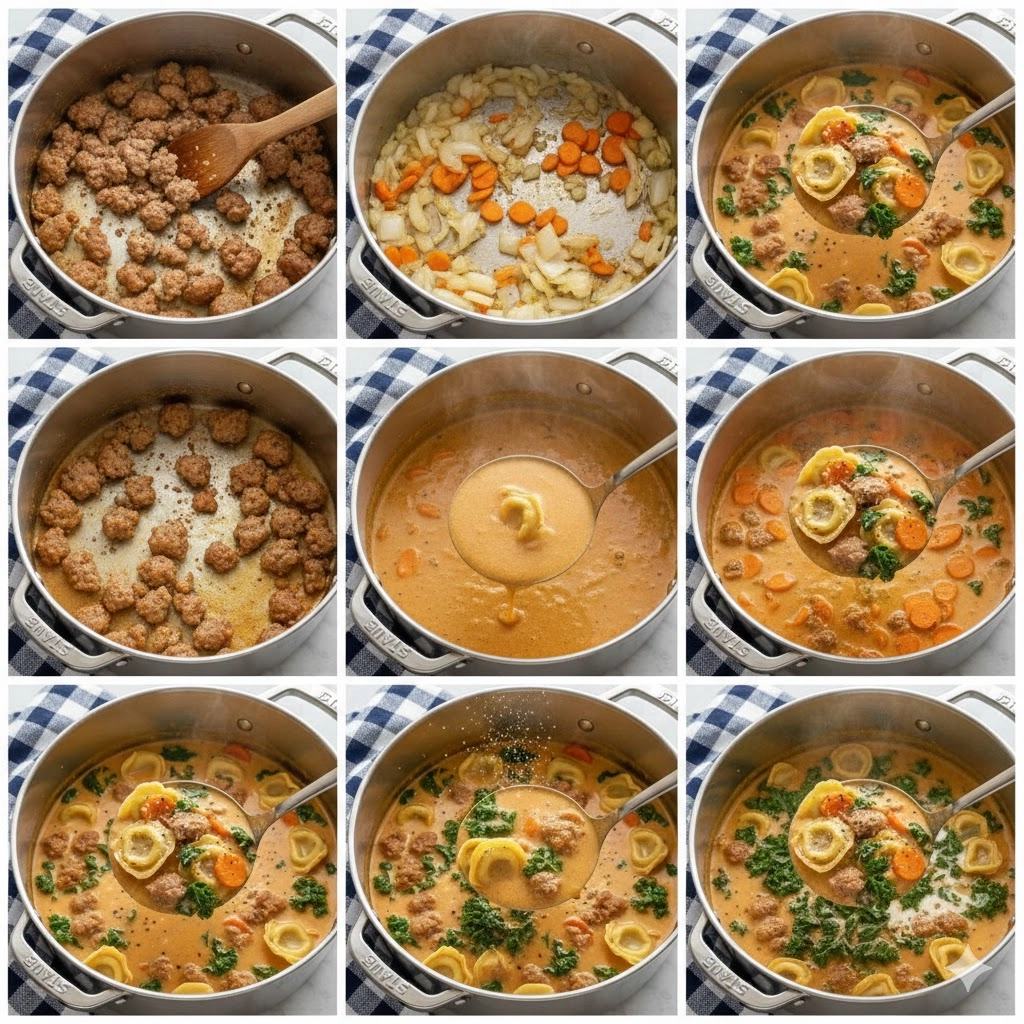
- Brown the Sausage: In a large Dutch oven or stockpot, brown the sausage over medium-high heat, breaking it up as it cooks. Once no pink remains, transfer the cooked sausage to a bowl, leaving about two tablespoons of rendered fat in the pot.
- Soften the Aromatics: Reduce the heat to medium. Add the diced onion and carrots to the remaining fat in the pot. Sauté gently until the onions are translucent and the carrots begin to soften, approximately five to seven minutes.
- Bloom the Spices: Add the minced garlic, Italian seasoning, and fennel seeds (if using) to the pot. Cook for sixty seconds, stirring constantly, until the garlic is fragrant and the spices are darkened slightly.
- Build the Rôux: Sprinkle the flour over the vegetables and stir continuously for one minute. This step cooks the raw taste out of the flour and creates the thickening agent (rôux).
- Develop the Broth: Whisk in the chicken broth slowly, ensuring no lumps form. Stir in the tomato paste until fully dissolved. Return the cooked sausage to the pot, bring the mixture to a simmer, and let it thicken slightly for ten minutes.
- Simmer the Tortellini: Increase the heat to bring the soup to a gentle boil, then add the tortellini. Reduce the heat back to a simmer and cook for seven to ten minutes, or according to the package directions, until the pasta is tender.
- Finish with Cream: Remove the pot from the heat. Stir in the heavy cream and the chopped kale. Season the entire pot generously with salt and pepper.
- Serve: Ladle the soup into bowls immediately. Garnish each serving with fresh Parmesan cheese.
Deep Dive into the Cook: Perfecting Every Component
Truly exceptional soup is not just about combining ingredients; it is about treating each element with respect to maximize its contribution. We focus here on texture, aroma, and the crucial moments of the process.
Sausage Browning and Degreasing:
The first step of browning the sausage is critical for flavor depth. You want browning, not steaming. Use medium-high heat and give the sausage time to develop a dark crust before crumbling it completely. Once browned, transfer it to a separate bowl. This prevents the fat from rendering out completely and keeps the sausage pieces distinct. If your sausage yields more than two tablespoons of fat, spoon the excess out; too much fat can separate the final creamy broth, resulting in a greasy mouthfeel that diminishes the overall dining experience. The goal is a complex, meaty caramelization that sets the tone for the entire pot.
The Foundation of Aromatics:
The carrot and onion form the traditional mirepoix base, creating the savory backdrop. By sweating these vegetables slowly over medium heat, you release their sugars and soften their cell walls without browning them. When the carrots look slightly glistening and the onions are translucent, you know they are ready to proceed. Adding the garlic and dry spices (Italian seasoning, fennel) right after the vegetables are softened, and cooking for just sixty seconds—a process known as blooming—activates the volatile oils in the spices, significantly amplifying their aroma and flavor contribution to the final dish. The kitchen should fill with a warm, herbaceous perfume at this stage.
The Flour and Thickening Mechanism:
The flour acts as a binding agent, creating a gentle rôux when mixed with the remaining sausage fat. Once added, it must cook for a full minute; this removes the unpleasant, pasty taste of raw flour that can ruin the soup’s finish. The slow, gradual whisking in of the cold chicken broth prevents the formation of lumps. The tomato paste, besides adding a lovely color, provides a concentrated umami tang and slight acidity, which balances the richness of the sausage and cream. Allowing this fortified broth to simmer for ten minutes gives the flour (now a fully incorporated thickener) time to hydrate fully and thicken the soup to the proper, velvety consistency, ensuring every spoonful is luscious.
Pasta Integration and Timing:
Tortellini is unique because of its delicate filling. It cooks rapidly, usually within six to eight minutes. If you add it too early or simmer it too vigorously, the pasta will burst, releasing the cheese and starch into the soup, making the broth cloudy and the pasta mushy. The key is to add the tortellini only after the broth has reached the desired thickness. Maintain a gentle simmer—just enough bubbling to keep the pasta moving—and cook only until the tortellini floats and is tender to the bite. This is the step that defines the Creamy Tortellini Sausage Soup as hearty and satisfying.
The Fresh Green Finish:
Kale is introduced at the very end, off the heat. By adding the kale after removing the pot from the burner, you are allowing the residual heat of the soup to gently wilt the leaves. This maintains the kale’s vibrant green color, its slightly sturdy texture, and its nutritional integrity. Overcooked kale turns a dull, olive green and develops a sulfurous flavor, which we want to avoid. The final seasoning with salt and pepper is crucial: heavy cream dulls the perceived salinity of a dish, so a final generous seasoning ensures the overall flavor profile is bright and sharp, balancing the heavy richness.
Mastering the Finish: Expert Tips for Creamy Soup Success
- Use a High-Quality Tomato Paste: Since the paste is a major flavor component, invest in a tube instead of a can. Tube paste is generally richer, less metallic-tasting, and seals better for long-term storage, preventing waste. Store the open tube in the refrigerator for easy access.
- Pre-Soak Dried Tortellini: If you are using dried tortellini (the shelf-stable kind), consider soaking it in a bowl of warm water for fifteen minutes before adding it to the soup. This slightly rehydrates the pasta, shortening the cooking time in the broth and minimizing the risk of it absorbing too much liquid and swelling excessively, preserving the soup’s consistency.
- Adjust Broth for Consistency: If your soup is too thick after simmering, add a half cup of chicken broth or water at a time until the desired flow is achieved. If it is too thin, create a small cornstarch slurry (one tablespoon cornstarch mixed with two tablespoons cold water) and whisk it into the simmering soup, cooking for two minutes. Never add dry flour or cornstarch directly to hot liquid, as it will clump immediately.
- Manage Spicy Heat: If you used hot Italian sausage and find the soup too spicy, the remedy is more dairy. Stir in one to two tablespoons of unsalted butter or an extra splash of heavy cream at the end. The fat coats the tongue and neutralizes some of the capsaicin heat, mellowing the overall profile. A small amount of sugar (about a half teaspoon) can also help tame aggressive heat.
- Optimal Storage Timing: For the best quality leftovers, prepare the soup completely without the tortellini and kale. Store the broth and sausage mixture separately, then cook the tortellini and add the kale just before reheating and serving the individual portion. Pasta absorbs liquid rapidly, and this trick ensures the pasta retains its shape and the soup remains thick and satisfying.
- Grate Your Own Parmesan: Pre-grated Parmesan contains cellulose to prevent clumping, which can give your broth a slightly grainy texture. Freshly grated cheese melts seamlessly into the broth and provides a superior, salty, nutty depth that is essential for a true Italian flavor profile. Grating it fresh also releases far more aroma.
- The Acid Brightener: A final, optional burst of flavor can be achieved by stirring in one teaspoon of red wine vinegar or a squeeze of fresh lemon juice right before serving. This acid cuts through the richness of the cream and fat, making the entire soup taste brighter and more vibrant without sacrificing its comforting quality.
- Avoid Boiling the Cream: Once the heavy cream has been added in Step Seven, the soup should not be brought back to a boil. Simmering is acceptable, but a full boil can cause the cream to scorch or separate, compromising the smooth, velvety texture of the broth. Keep the temperature moderated.
Adapting the Pot: Flavor Swaps and Substitutions
The beauty of this soup is its flexibility. It is easily modified to suit dietary needs or simply to change up the flavor profile, allowing the home cook endless opportunities for customization.
- Lighter Cream Base: For a reduced fat content, swap the heavy cream for evaporated milk. Evaporated milk provides equivalent richness and thickness without the high fat content, and it will not curdle under high heat like regular milk, making it a stable substitute. Do not use milk or low-fat cream, as they lack the necessary stabilizers and will likely separate when introduced to the acidic tomato base.
- Vegetable Overhaul: Substitute the carrots with peeled and cubed sweet potato or butternut squash for a sweeter, more autumnal depth. Instead of kale, use spinach, stirring it in off-heat; it will wilt instantly and offers a less structured bite than kale. You can also add chopped zucchini alongside the carrots and onion, or introduce a cup of finely sliced mushrooms when blooming the spices.
- Protein Shift: If avoiding pork, ground chicken or turkey Italian sausage works perfectly, though they are leaner and may require adding an extra tablespoon of olive oil when browning to prevent sticking. For a truly vegetarian version, replace the sausage with one pound of drained, crumbled mushrooms (cremini or shiitake), sautéing them until deeply browned and the liquid has evaporated. You can also use plant-based ground meat alternatives that mimic Italian sausage.
- Broth Enhancements: While chicken broth is standard, try beef broth for a deeper, richer, almost French-onion-soup-like undertone. Alternatively, a mushroom or vegetable broth maintains a lighter base while catering to dietary restrictions. Always taste and adjust salt if switching broths, as sodium levels vary wildly.
- Pasta Alternatives: If tortellini is unavailable or you prefer a different texture, substitute it with one cup of dried orzo, small shells, or ditalini pasta. Note that smaller pasta shapes will require less cooking time and will absorb liquid much faster than the large tortellini. Always monitor the total cooking time closely to prevent mushiness.
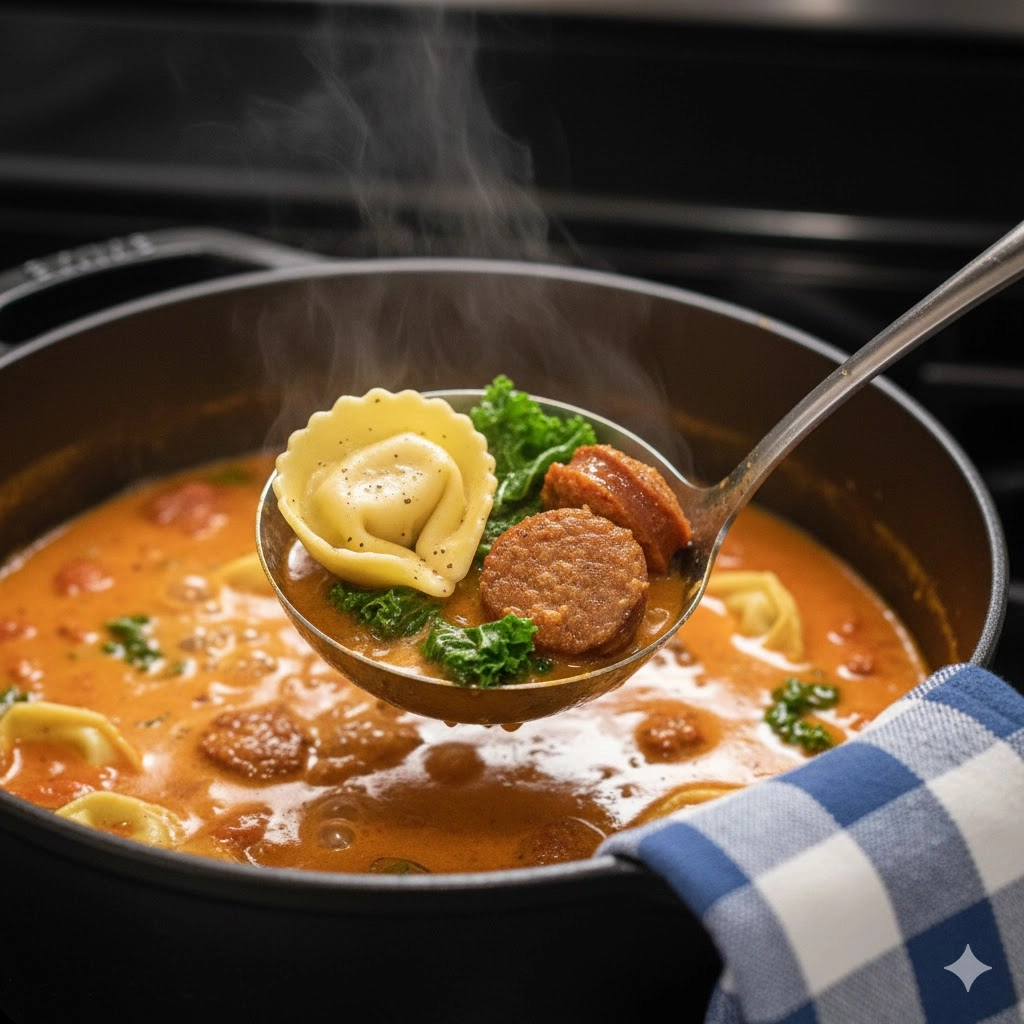
Companions on the Plate: Serving Pairings
This soup is robust enough to stand on its own, but a few simple additions can elevate the entire meal experience, providing complementary textures and flavors.
- Crusty Bread and Focaccia: A slice of warm, rustic Italian bread or rosemary focaccia is ideal for dipping into the creamy tomato broth. The crust provides a necessary textural counterpoint to the soft pasta and smooth liquid, making it a functional and delicious accompaniment. A drizzle of olive oil over the bread prior to serving adds a nice aroma.
- A Simple Green Salad: Pair the richness of the Creamy Tortellini Sausage Soup with a crisp, bitter green salad. Arugula or baby spinach dressed simply with olive oil, lemon juice, and a pinch of salt provides a palate-cleansing acidity that cuts through the creaminess, refreshing the palate between spoonfuls.
- Garlic Knots: If you are seeking something more substantial, warm garlic knots brushed with butter and herbs are a classic Italian-American pairing that echoes the garlic and seasoning flavors already present in the soup. They are fantastic for wiping the bowl clean.
- Roasted Asparagus with Balsamic: The slight bitterness and sweet acidity of balsamic-glazed roasted asparagus serve as a fantastic, light vegetable side. The high heat of roasting keeps the asparagus crisp, offering another welcome texture contrast to the soft soup components.
The Home Cook’s Questions Answered (FAQs)
Q: Can I make this soup ahead of time?
A: Yes, you can prepare the sausage and broth base up to three days in advance and store it, covered, in the refrigerator. The broth flavors will meld beautifully. When ready to serve, bring the soup back to a simmer and then add the tortellini and kale to cook fresh. This prevents the pasta from turning soggy.
Q: Why did my heavy cream curdle when I added it?
A: Cream rarely curdles, but it can if the broth is boiling rapidly or if the acid content (from the tomato paste) is too high and the cream is very cold. The safest way to incorporate the cream is to remove the pot from the heat first and let the vigorous boiling subside before stirring the heavy cream in. You can also temper the cream by whisking a small amount of hot soup into it before adding the mixture back to the pot.
Q: What is the best way to freeze this soup?
A: To freeze this soup, omit the tortellini and heavy cream entirely. Freeze the cooled broth and sausage mixture in an airtight container for up to three months. When thawing, reheat the base, then add the heavy cream and fresh tortellini to finish the recipe. Freezing the pasta or cream results in poor texture upon reheating.
Q: I only have canned tomatoes, not paste. Can I use them?
A: Canned tomatoes contain significantly more liquid and are less concentrated than paste. For one six-ounce can of tomato paste, you would need to reduce and mash about one and a half cups of crushed or puréed canned tomatoes to achieve the same flavor intensity and texture. This will require a longer simmering time to cook down the excess liquid.
Q: Can I use vegetable broth instead of chicken broth?
A: Absolutely. Vegetable broth makes this a lovely meatless option when paired with a meat-free sausage or mushroom substitute. Choose a high-quality, flavorful vegetable broth to ensure the final soup doesn’t taste too thin or watery, as some store-bought varieties can be quite mild in flavor.
Nutritional Snapshot
| Nutrient | Amount per Serving |
| Calories | 485 kcal |
| Protein | 21 g |
| Carbs | 35 g |
| Fat | 29 g |
| Fiber | 4 g |
| Sugar | 6 g |
| Sodium | 1250 mg |
Disclaimer
Nutrition information is an estimate and may vary based on preparation and ingredients used.

The Ultimate Creamy Tortellini Sausage Soup
Ingredients
- 1 pound bulk hot or mild Italian sausage (pork or turkey)
- 1 medium yellow onion, finely diced
- 3 large carrots, peeled and sliced into half-moons
- 4 cloves garlic, minced
- 2 tsp dried Italian seasoning
- 0.5 tsp fennel seeds (optional)
- Kosher salt and freshly ground black pepper, to taste
- 0.25 cup all-purpose flour
- 6 cups low-sodium chicken broth or stock
- 6 oz tomato paste
- 1 cup heavy cream or half-and-half
- 9 oz refrigerated or frozen three-cheese tortellini
- 3 cups fresh kale, chopped, stems removed
- 0.25 cup freshly grated Parmesan cheese, plus more for serving
Instructions
- In a large Dutch oven or stockpot, brown the sausage over medium-high heat, breaking it up as it cooks. Once no pink remains, transfer to a bowl, leaving 2 tbsp of fat in the pot.
- Reduce heat to medium. Add onion and carrots to the pot. Sauté until onions are translucent and carrots begin to soften, about 5–7 minutes.
- Add garlic, Italian seasoning, and fennel seeds (if using). Stir constantly for 1 minute until garlic is fragrant.
- Sprinkle flour over vegetables. Stir for 1 minute to cook the flour and create a roux.
- Gradually whisk in chicken broth to avoid lumps. Stir in tomato paste until dissolved. Return sausage to pot and simmer for 10 minutes to thicken.
- Bring soup to gentle boil, add tortellini, then reduce to simmer. Cook for 7–10 minutes or until pasta is tender.
- Remove from heat. Stir in heavy cream and chopped kale. Season with salt and pepper to taste.
- Serve immediately in bowls and top with extra Parmesan cheese.
Notes
Equipment
- Dutch oven or stockpot
- cutting board
- chef’s knife
- wooden spoon or spatula
- whisk
- measuring cups and spoons
- serving bowls