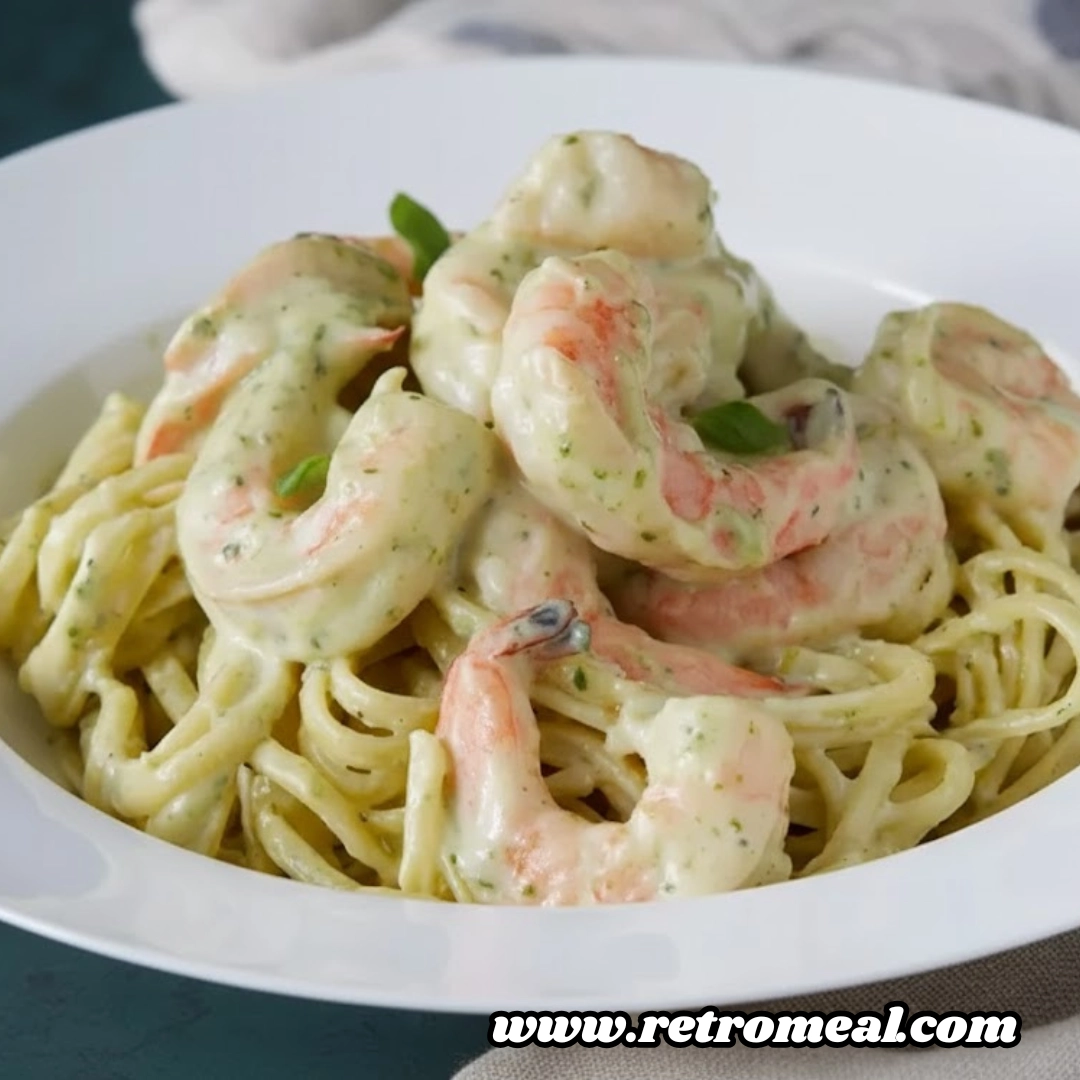
The intersection of vibrant herbaceous basil and velvety dairy creates a culinary profile that is both sophisticated and deeply satisfying. This recipe for Creamy Pesto Shrimp focuses on the delicate balance between the punchy garlic and pine nut notes of traditional pesto and a rich, Parmesan-infused cream base. By simmering large, succulent shrimp directly within the sauce, the seafood remains tender while infusing the liquid with a light sweetness. Whether you are hosting a formal gathering or seeking a refined meal for a quiet evening, this dish offers a professional-quality result with straightforward preparation.
Table of Contents
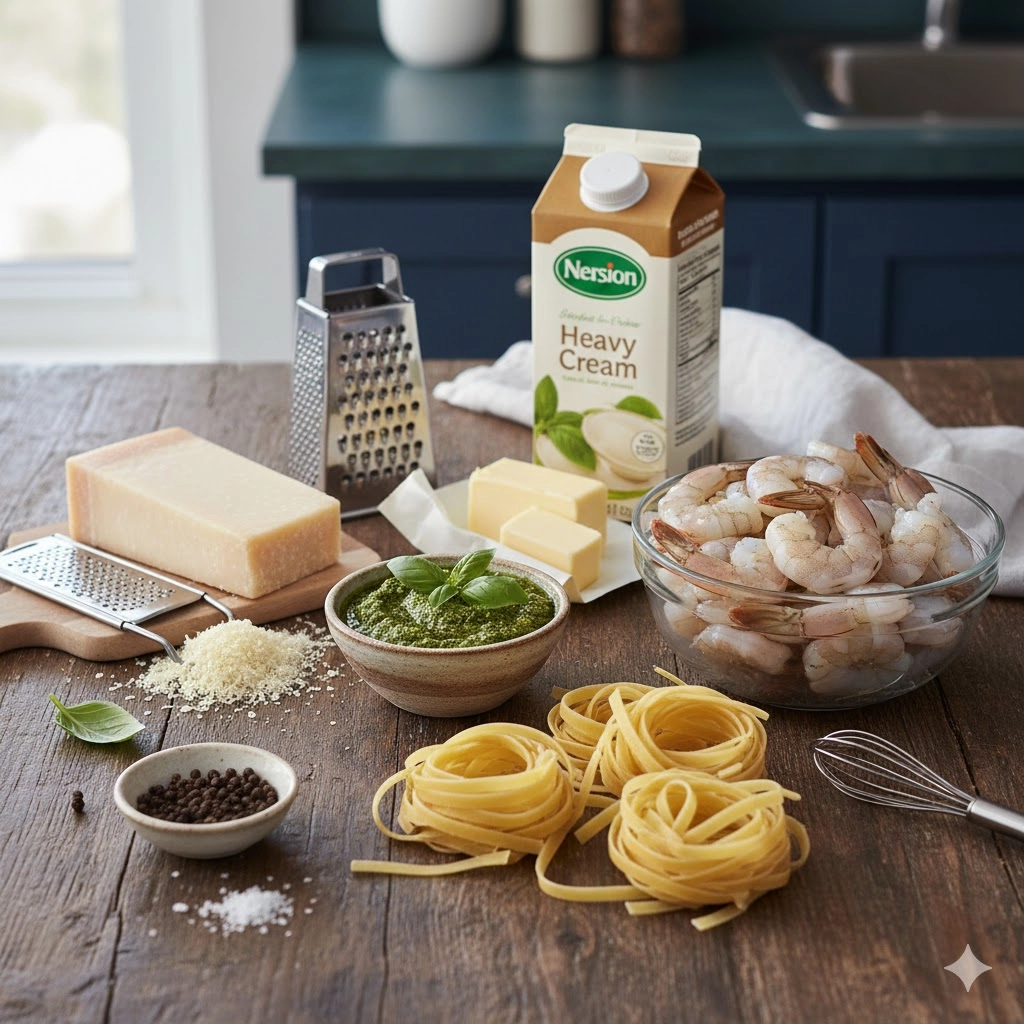
Necessary Ingredients
For the Pasta Base
- One pound dried linguine (alternatively, fettuccine or spaghetti)
- Two tablespoons sea salt for the boiling water
For the Pesto Cream Sauce
- One half cup unsalted butter
- Two cups heavy whipping cream
- One third cup high-quality basil pesto (homemade or premium store-bought)
- One cup freshly grated Parmesan cheese
- One half teaspoon freshly cracked black pepper
The Protein
- One pound large shrimp (peeled and deveined, tails removed or left on based on preference)
High-Level Preparation Steps
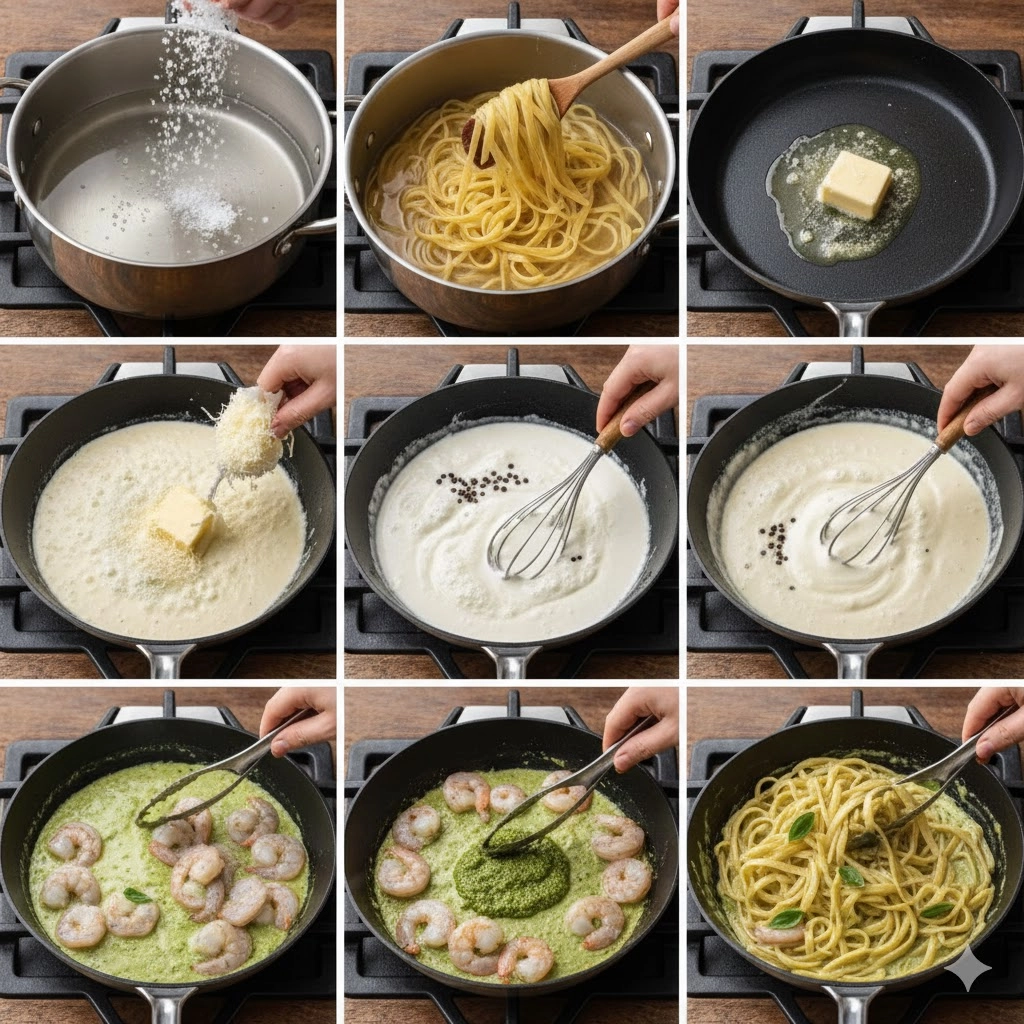
- Prepare a large pot of salted water and boil the linguine until it reaches an al dente state.
- Melt the butter in a wide skillet over a medium heat setting.
- Whisk in the heavy cream and black pepper, simmering until the liquid reduces slightly.
- Incorporate the Parmesan cheese, stirring until the texture is completely smooth.
- Blend the basil pesto into the cream mixture until the color is uniform.
- Add the raw shrimp to the simmering sauce.
- Cook the shrimp for approximately five minutes until opaque and curled.
- Toss the drained pasta with the sauce or ladle the shrimp and sauce over individual portions.
Detailed Culinary Process
Perfecting the Pasta
Begin by using a pot large enough to allow the linguine to move freely. This prevents clumping and ensures even hydration. The water should be seasoned heavily with salt; it should taste like the sea. Once the water reaches a rolling boil, add the pasta and stir immediately. Aim for “al dente,” which literally means “to the tooth.” The pasta should have a slight resistance when bitten. Drain the pasta, but do not rinse it, as the natural starches on the surface help the sauce adhere.
Building the Emulsion
In a heavy-bottomed skillet, melt the butter slowly. High heat will brown the milk solids, which we want to avoid for this specific white sauce. Pour in the heavy cream and maintain a steady simmer. You will notice small bubbles forming around the edges. As the water content evaporates, the sauce will naturally thicken. Constant whisking during this stage ensures the fat from the butter and the proteins in the cream remain emulsified, preventing a greasy finish.
Incorporating the Flavors
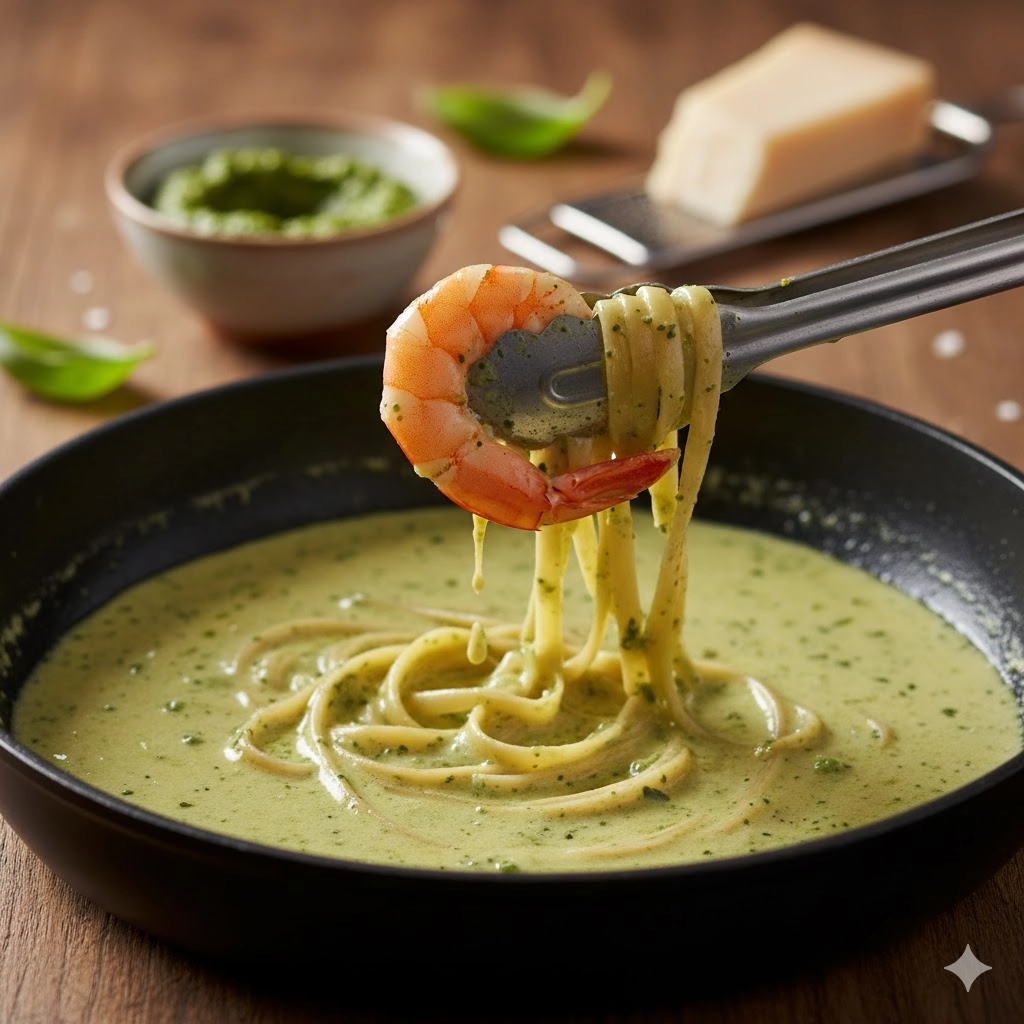
Lower the heat slightly before adding the Parmesan. Finely grated cheese melts more efficiently than thick shreds. Stir in a circular motion until the cheese disappears into the cream. Once smooth, fold in the pesto. The sauce will transform into a beautiful pale green. The aroma of basil and garlic should become prominent at this stage.
Poaching the Shrimp
The shrimp should be patted dry before being added to the pan. When you submerge them in the warm pesto cream, they undergo a gentle poaching process. Watch for the color transition from translucent gray to a vibrant, matte pink. The shrimp are finished when they form a “C” shape. If they tightly curl into an “O,” they are likely overcooked and may become rubbery.
Expert Culinary Tips
- Temperature Control: Never allow the cream sauce to reach a violent boil once the cheese and pesto are added. Excessive heat can cause the cheese to become stringy or the pesto to lose its bright green hue.
- Freshness Matters: If using store-bought pesto, look for “refrigerated” versions rather than shelf-stable jars. The flavor profile of refrigerated pesto is significantly more vibrant and less acidic.
- The Pasta Water Reserve: Before draining your linguine, save a small cup of the starchy cooking water. If your sauce becomes too thick while waiting for the shrimp to finish, a splash of this water will loosen it while maintaining a silky texture.
- Cheese Quality: Avoid pre-shaken canisters of cheese. The cellulose used to prevent clumping in those products will stop the sauce from becoming truly smooth. Grate a block of Parmesan Reggiano for the best melt.
- Shrimp Sizing: Use “sixteen to twenty” count shrimp for the best visual appeal and juiciness. Smaller shrimp cook too quickly and can get lost in the richness of the cream.
- Uniformity: Ensure your shrimp are all of similar size so they finish cooking at the exact same moment.
Creative Variations
- Sun-Dried Tomato Twist: Replace half of the basil pesto with sun-dried tomato pesto for a Mediterranean “Red and Green” flavor profile that adds a slight tang to the heavy cream.
- Added Garden Greens: Fold in two cups of fresh baby spinach during the final two minutes of cooking the shrimp. The heat of the sauce will wilt the greens perfectly without overcooking them.
- The Crunch Element: Toasted pine nuts or panko breadcrumbs sautéed in a little garlic butter make an excellent topping to provide a textural contrast to the soft pasta and shrimp.
Professional Serving Suggestions
For a classic presentation, use a carving fork to twirl a large nest of linguine in the center of a shallow pasta bowl. Spoon the Creamy Pesto Shrimp and extra sauce generously over the top. Garnish with a few whole small basil leaves and a final dusting of micro-planed Parmesan.
This dish pairs exceptionally well with a crisp, acidic side salad featuring arugula and a lemon vinaigrette to cut through the richness of the cream. A side of warm, crusty ciabatta bread is also highly recommended for capturing any leftover sauce at the bottom of the plate.
Frequently Asked Questions
Can I use frozen shrimp for this recipe?
Yes, frozen shrimp are often fresher than “fresh” counter shrimp as they are flash-frozen at sea. Ensure they are completely thawed and patted dry with paper towels before adding them to the sauce to prevent excess water from thinning your cream.
How do I store and reheat leftovers?
Store in an airtight container in the refrigerator for up to two days. When reheating, do so gently over low heat on the stovetop, adding a tablespoon of milk or water to help the sauce reconstitute without separating.
Can I substitute half-and-half for the heavy cream?
While possible, the sauce will be significantly thinner and may not coat the pasta as effectively. Heavy cream provides the necessary fat content to create a stable emulsion with the Parmesan and pesto.
Is it necessary to remove the shrimp tails?
This is a matter of preference. Leaving tails on provides a more rustic, “restaurant-style” look and can add a bit more flavor to the sauce, but removing them makes the dish much easier to eat with a fork.
Nutrition Information
| Nutrient | Amount per Serving |
| Calories | 645 kcal |
| Protein | 24 g |
| Carbs | 44 g |
| Fat | 42 g |
| Fiber | 3 g |
| Sugar | 2 g |
| Sodium | 440 mg |
Nutrition Disclaimer
Nutrition information is an estimate and may vary based on preparation and ingredients used.
Creamy Pesto Shrimp
Ingredients
- 1 pound linguine pasta
- 0.5 cup unsalted butter
- 2 cups heavy whipping cream
- 0.5 tsp freshly ground black pepper
- 1 cup freshly grated Parmesan cheese
- 0.33 cup prepared basil pesto
- 1 pound large shrimp, peeled and deveined
Instructions
- Bring a large pot of salted water to a boil. Add linguine and cook for 8 to 10 minutes until tender yet firm (al dente). Drain well.
- While the pasta cooks, melt the butter in a large skillet over medium heat.
- Pour in the heavy cream and season with black pepper. Cook, stirring constantly, for 6 to 8 minutes until slightly reduced.
- Whisk the Parmesan cheese into the hot cream mixture until it is fully melted and the sauce is smooth.
- Stir in the basil pesto and continue to cook for 3 to 5 minutes until the sauce has thickened slightly.
- Gently add the raw shrimp to the simmering sauce. Cook for about 5 minutes until they turn pink and opaque.
- Ladle the creamy pesto shrimp and sauce over the hot linguine and serve immediately.
Notes
Equipment
- Large pasta pot
- colander
- Large heavy skillet
- whisk
- Cheese grater