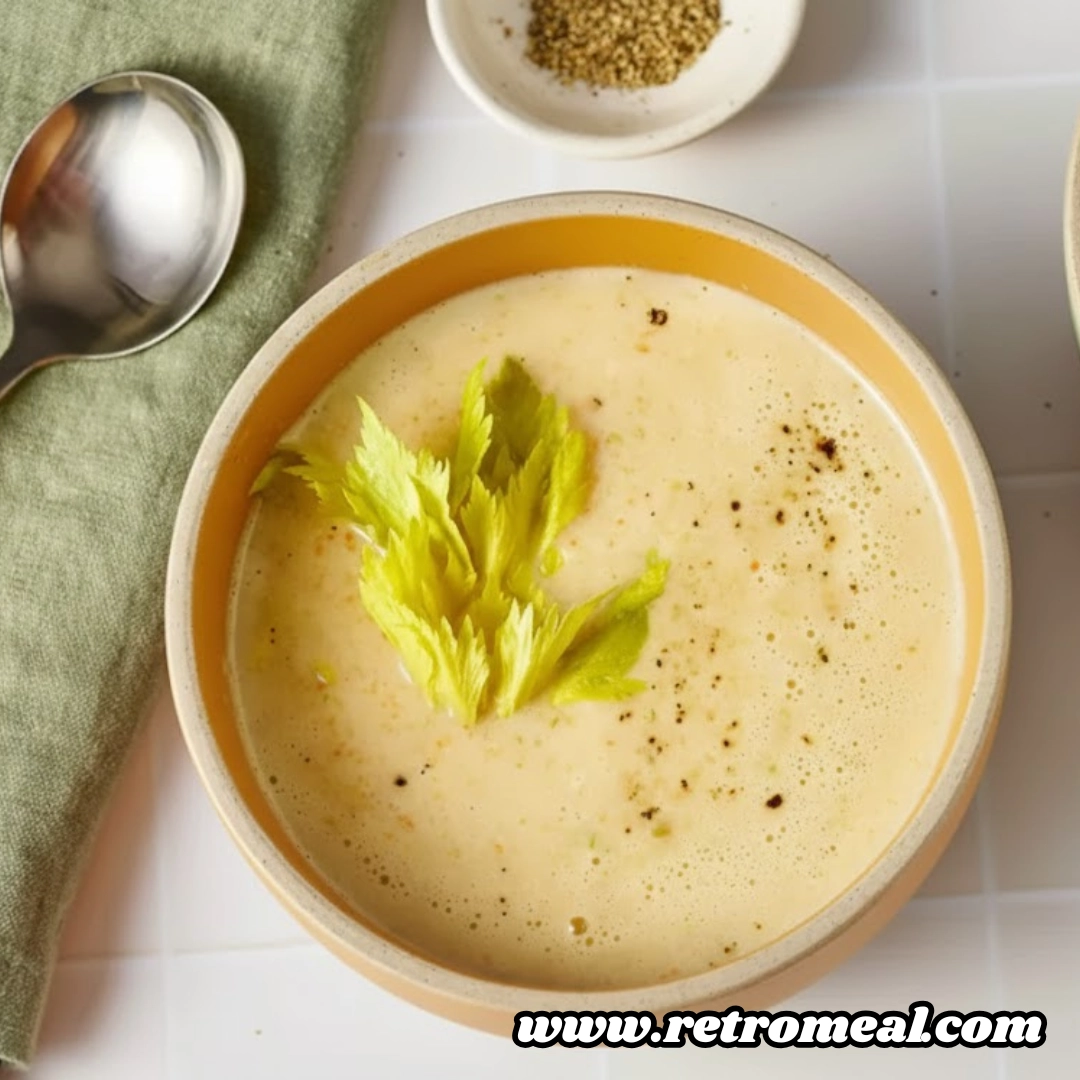
There is something profoundly comforting about a bowl of soup that manages to be both light and incredibly indulgent. This Cream of Celery Soup is a masterclass in balanced flavors, taking a humble, crunchy garden staple and transforming it into a luxurious, silk-like puree. While many of us grew up with the condensed canned versions used primarily as a binder for casseroles, this scratch-made version stands entirely on its own. It is a vibrant, aromatic, and deeply satisfying dish that proves celery can be the star of the show when given the proper culinary treatment.
Whether you are looking for a sophisticated starter for a dinner party or a massive batch of soul-warming comfort to feed a crowd, this recipe delivers. By simmering fresh mirepoix vegetables in a savory chicken stock and finishing the pot with a rich, buttery milk base, we create a profile that is earthy, salty, and wonderfully creamy. The addition of julienned carrots provides a subtle sweetness that rounds out the vegetal notes of the celery, resulting in a soup that even those who claim to dislike celery will find themselves asking for seconds.
Table of Contents
Essential Components for the Perfect Batch
To achieve the specific depth of flavor and texture required for this recipe, you will need to gather high-quality ingredients. Because this recipe is designed to yield a generous thirty-two servings, it is perfect for large gatherings or for those who enjoy meal prepping for the week ahead.
- 3 quarts chicken stock: This serves as the savory foundation of your soup. Using a high-quality stock ensures a rich mouthfeel and a complex salt profile.
- 3 pounds celery: You will want to coarsely chop these stalks. Do not worry about perfect uniformity, as the entire mixture will eventually be pureed.
- 1/2 pound carrots: These should be julienned. The thin strips allow the sugars in the carrots to release quickly into the simmering stock, balancing the bitterness of the celery.
- 1/2 pound onions: Finely chopped onions provide the necessary aromatic backbone that ties the stock and the cream together.
- 1 cup butter: We use real butter here for that unmistakable richness and to help create a smooth emulsion with the flour.
- 1 cup all-purpose flour: This acts as our thickening agent, ensuring the soup has body and a “velouté” style finish.
- 3 quarts hot milk: Ensure your milk is heated before adding it to the pot to prevent the temperature from dropping and to ensure a smooth integration with the thickeners.
- 1 tablespoon salt: Essential for heightening the natural flavors of the root vegetables.
- 1 teaspoon ground white pepper: We use white pepper specifically to maintain the clean, pale aesthetic of the cream soup while providing a gentle, floral heat.

The Art of Crafting Cream of Celery Soup
Following the correct sequence is vital when working with such a large volume of liquid. This process ensures that the vegetables are tender enough to disappear into the cream, while the dairy remains stable and thick.
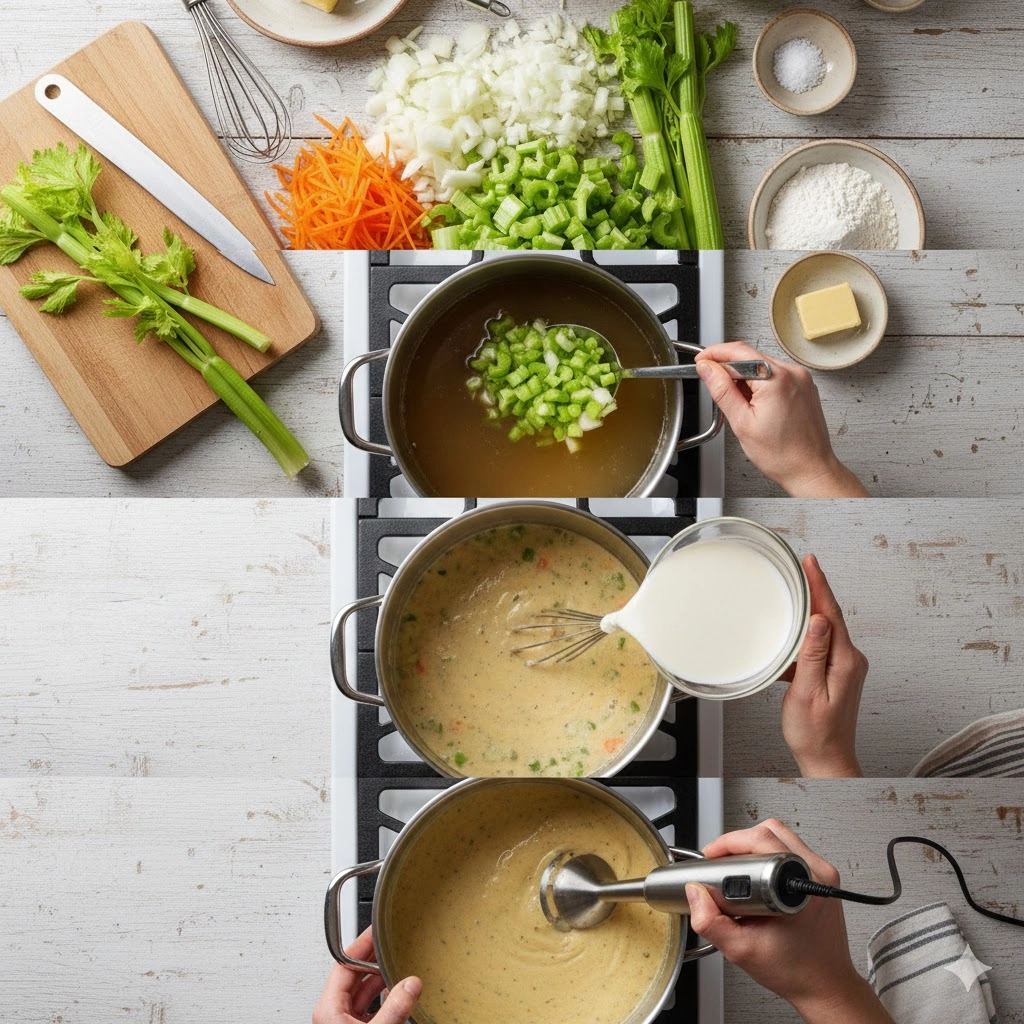
- Prepare the Base: Begin by taking a very large stockpot—one capable of holding at least twelve quarts—and pouring in your three quarts of chicken stock. Place the pot over high heat and bring the liquid to a rolling boil.
- Softening the Aromatics: Once the stock is boiling, carefully add your three pounds of chopped celery, the half-pound of julienned carrots, and the half-pound of chopped onions. Reduce the heat slightly to maintain a steady simmer. You want these vegetables to become completely soft and translucent, which allows their cellular structures to break down for a smoother puree later.
- Integrating the Thickener: In a separate large mixing bowl, whisk together your one cup of all-purpose flour, the tablespoon of salt, and the teaspoon of white pepper. Gradually pour the three quarts of hot milk into the flour mixture, whisking constantly to ensure there are no lumps.
- Emulsifying the Soup: Slowly pour the milk and flour mixture into the large pot with the simmering vegetables. Add the one cup of butter directly into the liquid.
- The Thickening Phase: Allow the entire mixture to simmer. You will notice the consistency change as the flour hydrates and the butter melts. Continue simmering for about ten minutes, stirring frequently to prevent the bottom from scorching.
- The Final Puree: Once the soup has thickened and the vegetables are fork-tender, remove the pot from the heat. Use an immersion blender (handheld blender) directly in the pot. Process the mixture until the celery, carrots, and onions are completely pulverized and the soup is perfectly smooth and creamy.
Comprehensive Step-by-Step Culinary Details
Creating a soup of this magnitude requires attention to detail, particularly regarding the physics of the ingredients. When you are working with three pounds of celery, the water content of the vegetable becomes a factor. As the celery simmers in the chicken stock, it releases its own juices, which are packed with natural sodium and earthy aromatics. This is why we boil the vegetables in the stock first; we are essentially creating a fortified vegetable broth before we even introduce the dairy.
The julienned carrots are a secret weapon in this specific recipe. While “Cream of Celery” implies a single-note flavor, the carrots act as a corrective. Celery can sometimes have a sharp, almost astringent quality. The natural carotene and sugars in the carrots melt into the stock, providing a golden hue and a mellow sweetness that softens the celery’s edge.
When it comes to the dairy component, the temperature is your biggest ally. Adding cold milk to a boiling pot of stock can cause the proteins to seize or the butter to separate. By using hot milk and whisking it with the flour beforehand, you are creating a “slurry” that is thermally compatible with the soup. This technique prevents the flour from clumping into small dough balls, ensuring that every spoonful of the thirty-two servings is as silky as the last.
Finally, the immersion blending stage is where the magic happens. Many older recipes suggest straining out the vegetables, but that is a mistake. By pureeing the celery and carrots back into the liquid, you are not only thickening the soup naturally with vegetable fiber, but you are also ensuring that every drop of flavor extracted during the simmer remains in the final dish.
Mastering the Texture and Consistency
To truly elevate this dish, you must understand the science of the simmer. The ten-minute window after adding the milk and flour is crucial. This is when the starch granules in the flour reach their gelatinization point. If you stop too early, the soup will feel thin and watery; if you go too long, the milk may begin to scald.
Watch for the “coat the back of a spoon” test. Dip a metal spoon into the pot and run your finger through the coating. If the line remains clear and the soup doesn’t run back into the path, you have achieved the perfect viscosity. If the soup feels too thick after pureeing, you can easily adjust it with a splash of extra stock or a bit of warm water. Remember that as the soup cools, it will naturally thicken further due to the butter and flour content.
Enhancing the Experience: Serving and Accompaniments
Because this soup is so rich and velvety, it pairs exceptionally well with textures that offer a distinct crunch. A classic choice is a sourdough grilled cheese sandwich, where the acidity of the bread cuts through the creaminess of the celery. Alternatively, serving this in a hollowed-out sourdough bread bowl turns a simple lunch into a rustic, filling feast.
For a more elegant presentation, consider garnishing the individual bowls. A few reserved celery leaves, finely chopped, add a bright pop of green and a fresh herbal hit. A drizzle of high-quality olive oil or a few cracks of fresh black pepper can also add visual appeal and a layer of complexity. If you want to lean into the savory side, crispy bacon bits or homemade garlic croutons are spectacular additions that provide a salty contrast to the smooth puree.
Adapting the Recipe: Modifications and Substitutions
While the original recipe is a classic, there are several ways to tweak the ingredients to suit different dietary needs or pantry availability.
- Vegetarian Option: Simply swap the three quarts of chicken stock for a high-quality vegetable broth. To keep the flavor deep, look for a roasted vegetable base.
- Gluten-Free Adjustment: If you need to avoid wheat, you can replace the one cup of all-purpose flour with a gluten-free all-purpose blend or use a cornstarch slurry (though the ratio will change; usually half as much cornstarch is needed compared to flour).
- Dairy-Free Alternatives: While this changes the traditional profile, you can use a full-fat oat milk or cashew milk. Use a vegan butter substitute to maintain that essential fat content that carries the celery flavor.
- Adding Protein: For a heartier meal, you can stir in shredded rotisserie chicken or sautéed shrimp after the pureeing process is complete.

Culinary Insights for Success
One of the best things about this soup is its versatility as a kitchen staple. Many home cooks use this recipe as a “mother sauce” for other dishes. Because it is so thick and flavorful, it can be used in place of canned “Cream of” soups in green bean casseroles, pot pies, or over baked chicken breasts.
If you find that your celery is particularly stringy, don’t worry. The immersion blender is powerful enough to break down those fibrous strands. However, if you are using a standard countertop blender, be sure to work in small batches and hold the lid down with a towel to prevent steam pressure from blowing the top off.
Another tip for flavor depth: if you have time, sauté the onions and celery in a bit of the butter before adding the chicken stock. This creates a Maillard reaction, caramelizing the natural sugars in the vegetables and adding a deeper, golden-brown undertone to the finished soup.
Common Questions About Cream of Celery Soup
Can I freeze this soup for later use?
Yes, you can freeze this soup, though dairy-based soups can sometimes change texture slightly upon thawing. To ensure the best results, let the soup cool completely before transferring it to airtight freezer bags. When you are ready to eat it, thaw it in the refrigerator overnight and reheat it slowly on the stove, whisking constantly to re-incorporate the fats and liquids.
What is the best type of celery to use?
Standard Pascal celery found in most grocery stores works perfectly for this recipe. However, if you can find Chinese celery or celery hearts, they offer a more intense flavor. Do not discard the leaves! The leaves contain a high concentration of celery oil and add a wonderful punch of flavor to the simmer.
Why use white pepper instead of black pepper?
The choice of white pepper is primarily aesthetic. In a pale, creamy soup like this, black pepper can look like tiny specks of dust. White pepper blends in visually while providing a sharp, fermented heat that is traditional in French-style cream soups. It has a slightly different flavor profile—more earthy and less floral than black pepper—which complements the celery perfectly.
How long will this soup stay fresh in the refrigerator?
When stored in an airtight container, this Cream of Celery Soup will stay fresh for three to four days. Because it contains a high volume of milk and butter, it is important to chill it quickly after cooking. If you are making the full thirty-two-serving batch, consider dividing it into smaller containers so it cools down faster.
A Final Note on This Comforting Classic
This Cream of Celery Soup is more than just a simple meal; it is a versatile, crowd-pleasing staple that brings a touch of gourmet flair to the everyday table. By focusing on fresh vegetables and a traditional roux-based thickening method, you create a dish that is light-years ahead of anything found in a can. It is warm, inviting, and surprisingly complex, making it the perfect addition to your recipe repertoire for chilly autumn evenings or as a sophisticated starter for your next big family gathering.
Nutritional Profile
The following values are estimated per serving based on the standard recipe yielding thirty-two servings.
| Nutrient | Amount per Serving |
| Calories | 126 |
| Total Fat | 8 grams |
| Saturated Fat | 5 grams |
| Cholesterol | 22 milligrams |
| Sodium | 540 milligrams |
| Total Carbohydrates | 10 grams |
| Dietary Fiber | 1 gram |
| Sugars | 5 grams |
| Protein | 4 grams |
Nutritional Disclaimer
Nutritional information is provided as a courtesy and is an estimate only. Variations may occur based on the specific brands of chicken stock, milk, and butter used. For those with specific dietary restrictions, please calculate values based on the exact ingredients used in your kitchen.

Homemade Cream of Celery Soup
Ingredients
- 3 quarts chicken stock
- 3 pounds celery, coarsely chopped
- 0.5 pound carrots, julienned
- 0.5 pound onions, chopped
- 1 cup all-purpose flour
- 1 tbsp salt
- 1 tsp ground white pepper
- 3 quarts hot milk
- 1 cup butter
Instructions
- Gather all ingredients and prepare the vegetables. Coarsely chop the celery and onions, and julienne the carrots into thin strips.
- Pour the chicken stock into a large stockpot and bring it to a rolling boil over high heat. Carefully add the prepared celery, carrots, and onion.
- In a large separate bowl, whisk together the flour, salt, and white pepper. Gradually whisk in the hot milk until the mixture is smooth and lump-free.
- Pour the milk mixture into the pot with the stock and vegetables. Add the butter directly into the pot.
- Reduce heat and simmer the mixture for about 10 minutes, stirring frequently, until the liquid has thickened significantly.
- Remove the pot from the heat. Use an immersion blender to puree the vegetables into the liquid until the soup is completely smooth and creamy.
Notes
Equipment
- 12-quart stockpot
- Immersion Blender Handheld blender
- large mixing bowl
- whisk
- chef’s knife