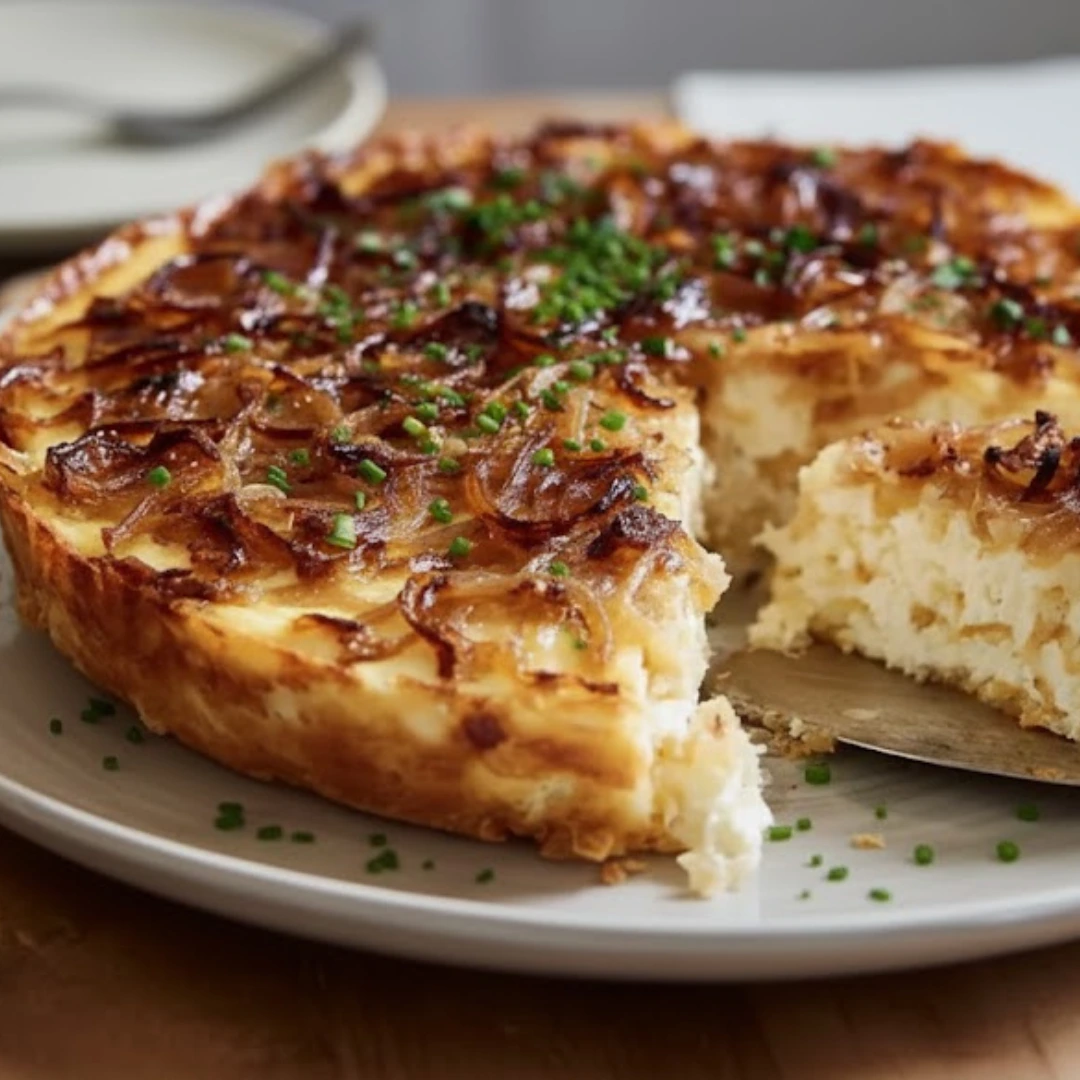
Whether you are navigating a busy work week or hosting a slow, sun-drenched Sunday brunch, finding a dish that balances sophisticated flavor with genuine nutritional density can feel like a culinary scavenger hunt. We often find ourselves choosing between the indulgent richness of a traditional quiche and the utilitarian nature of a high-protein meal prep staple. This Caramelized Onion and Gruyère Cottage Cheese Bake bridge that gap perfectly. It offers the deep, jammy sweetness of slow-cooked onions and the nutty, sophisticated melt of Alpine cheese, all built upon a foundation that provides substantial protein. This isn’t just a healthy substitute for a classic casserole; it is a gourmet experience that happens to align with your wellness goals. The texture is remarkably custard-like, slicing into clean, elegant wedges that look as beautiful on a porcelain plate as they do in a glass storage container for tomorrow’s lunch.
Table of Contents
Ingredients
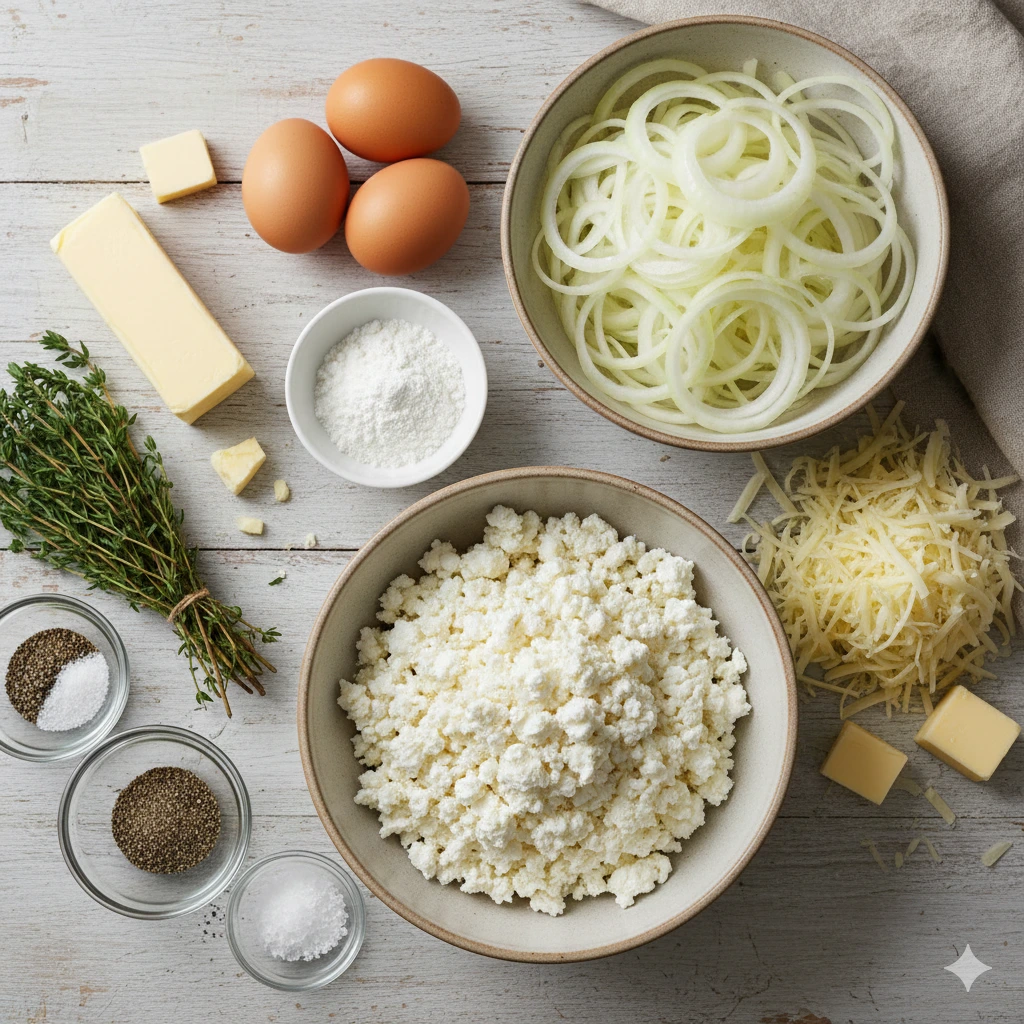
To achieve the best results with this savory bake, ensure your ingredients are fresh and high-quality. The synergy between the sharp Gruyère and the sweet onions is the heart of this dish.
- 2 cups small-curd cottage cheese (well-drained)
- 2 large yellow onions (thinly sliced)
- 3 large eggs
- 1 tablespoon cornstarch
- 1 cup shredded Gruyère cheese (divided)
- 1 teaspoon fresh thyme leaves
- 1 tablespoon butter
- 1/2 teaspoon salt
- 1/4 teaspoon black pepper
Instructions
- Begin by melting the butter in a large skillet over medium-low heat. Incorporate the thinly sliced yellow onions into the pan. Cook them slowly for 30 to 40 minutes, stirring occasionally at the start and more frequently as they begin to take on color. You are aiming for a deep amber brown and a jammy consistency. Once finished, set them aside to cool slightly.
- While the onions are undergoing their transformation, place the cottage cheese in a fine-mesh strainer set over a bowl. Allow it to drain for at least 20 minutes. Periodically press down gently with a spoon to remove excess whey. Discard the liquid.
- Preheat your oven to 375 Fahrenheit. Grease a 9-inch pie dish thoroughly to ensure easy slicing later.
- In a high-speed blender, combine the drained cottage cheese, the three large eggs, and the tablespoon of cornstarch. Blend for 45 to 60 seconds until the mixture is perfectly smooth, frothy, and entirely free of lumps.
- Transfer the blended mixture into a large mixing bowl. Stir in the fresh thyme leaves, salt, and black pepper. Gently fold in the cooled caramelized onions and 3/4 cup of the shredded Gruyère cheese.
- Pour the mixture into your prepared pie dish, spreading it evenly to the edges. Sprinkle the remaining 1/4 cup of Gruyère over the top.
- Bake for 35 to 40 minutes. The edges should be set and golden brown, while the center should have only a very slight wobble when shaken. A knife inserted one inch from the center should come out clean.
- Remove from the oven and place on a wire rack to cool for 10 to 15 minutes. This resting period is vital for the proteins to set, allowing for clean, professional-looking slices.

Achieving the Ultimate Creamy Consistency
The secret to turning cottage cheese into a sophisticated, custard-like base lies entirely in the mechanical breakdown of the curds. Many people are hesitant to use cottage cheese because of its distinct “lumpy” texture, which can be polarizing. By utilizing a blender for a full 60 seconds, you are not just mixing ingredients; you are creating an emulsion. The eggs and the proteins in the cheese aerate, resulting in a batter that looks more like a heavy cream or a thin cheesecake filling. This aeration, supported by the stabilizing power of the cornstarch, ensures that as the bake heats up, it rises slightly and sets into a firm yet velvety crumb.
Furthermore, the draining process is the most frequent point of failure for home cooks. Cottage cheese varies significantly in moisture content by brand. Some are packed in a very fluid dressing, while others are “dry curd” style. If you skip the 20-minute draining period, that excess whey will release during the baking process. This leads to a “weeping” casserole where a pool of liquid forms at the bottom of the dish, compromising the structural integrity of your slices. By pressing the cheese through a fine-mesh sieve, you ensure that the only moisture in the dish is what is chemically bound to the proteins and fats, resulting in a much more luxurious mouthfeel.
Strategic Modifications and Ingredient Substitutions
While the combination of Gruyère and caramelized onions is a classic French-inspired profile, this recipe is a versatile canvas for other flavor explorations. If you cannot find Gruyère, the best substitute is a high-quality Swiss cheese or an Emmental. For those who prefer a sharper, more aggressive profile, an extra-sharp white cheddar works beautifully, though it will lack the specific nutty melt of the Alpine cheeses.
For a Mediterranean twist, you could replace the thyme with dried oregano and swap the Gruyère for a mixture of crumbled feta and mozzarella. If you want to add more bulk or fiber to the dish without compromising the protein-to-carb ratio, folding in a handful of sautéed spinach (squeezed very dry) or finely chopped roasted red peppers can add vibrant color and additional micronutrients. If you are looking for a dairy-free alternative, this specific recipe is difficult to replicate due to the heavy reliance on the specific proteins in cottage cheese, but for those who are gluten-sensitive, the use of cornstarch already makes this a naturally gluten-free option.
The Science of the Slow-Cooked Onion
Caramelization is not merely “browning” or “sautéing.” It is a complex chemical reaction known as pyrolysis, where the natural sugars in the yellow onions break down under consistent, low heat. This process transforms a sharp, pungent vegetable into a sweet, savory, and almost candy-like component. When you rush this process by turning up the heat, you run the risk of the Maillard reaction happening too quickly, leading to charred edges and a bitter aftertaste.
To get the most out of your two large onions, use a heavy-bottomed skillet—cast iron or stainless steel is ideal—to ensure even heat distribution. If the onions begin to stick or the pan looks too dry before they have reached that deep amber hue, add a teaspoon of water or dry white wine to deglaze the pan. This lifts the flavorful browned bits (the fond) from the bottom of the pan and redistributes them back into the onions, deepening the overall color and flavor profile of the bake.
Sophisticated Accompaniments and Serving Suggestions
This bake is a powerhouse of flavor, which means its side dishes should play a supporting role, offering contrast in both texture and acidity. A simple arugula salad is perhaps the most effective partner. The peppery notes of the greens and a sharp lemon vinaigrette provide a necessary “cut” through the richness of the cheese and the sweetness of the onions.
If you are serving this as a centerpiece for dinner, consider roasted root vegetables or charred asparagus. The earthiness of these vegetables complements the woody notes of the fresh thyme. For a more traditional brunch setting, a side of fresh berries or sliced melon provides a refreshing palate cleanser between bites of the savory, dense bake. If you aren’t strictly monitoring your carbohydrate intake, a warm, crusty baguette is the perfect vessel for any stray bits of melted Gruyère, adding a crunch that provides a delightful sensory contrast to the soft, custard-like interior of the dish.
Mastering the Art of the High-Protein Bake
When working with egg and cheese-based dishes, temperature control is everything. Baking at 375 Fahrenheit allows the exterior to develop a beautiful golden crust while the interior cooks through gently. If the oven is too hot, the eggs may “scramble” or toughen, leading to a rubbery texture. You are looking for the “slight wobble”—a term often used in cheesecake baking. This indicates that the residual heat (carry-over cooking) will finish the job once the dish is removed from the oven.
The inclusion of cornstarch is a small but mighty detail. In a crustless bake like this, cornstarch acts as a secondary binder. It helps to absorb any remaining moisture and provides a “short” texture to the bake, making it feel more like a traditional quiche and less like an omelet. This structural support is exactly what allows you to cut the bake into squares or wedges that hold their shape perfectly on a buffet line or in a lunch box.
Deep-Dive Culinary Questions
Why does my cottage cheese bake sometimes turn out watery even after draining?
The wateriness is often a result of “syneresis,” where the protein structures in the eggs and cheese contract too tightly and squeeze out moisture. This usually happens if the bake is overcooked or if the cottage cheese used had a very high moisture content. To prevent this, ensure you are using the cornstarch as a stabilizer and avoid leaving the bake in the oven past the point where the edges are set.
Can I use dried thyme instead of fresh thyme in this recipe?
You certainly can, but because dried herbs are more concentrated, you should reduce the amount. Use about one-third of a teaspoon of dried thyme to replace the one teaspoon of fresh leaves. Keep in mind that fresh thyme offers a bright, floral note that beautifully balances the heavy fats of the Gruyère, whereas dried thyme has a more muted, earthy presence.
Is it possible to make this dish ahead of time for meal prep?
Absolutely. This is one of those rare dishes that arguably tastes better the next day. As the bake sits in the refrigerator, the flavors of the caramelized onions and the thyme continue to permeate the cheese base. You can slice it while cold for very clean lines and then reheat individual portions in the oven or an air fryer to maintain the texture of the top crust.
What is the best way to slice the bake without it falling apart?
The most important factor in getting clean slices is the resting time. You must wait at least 15 minutes after taking it out of the oven. During this time, the internal temperature stabilizes and the proteins firm up. Using a sharp, non-serrated knife and wiping the blade between each cut will also help you achieve those picture-perfect wedges seen in professional kitchens.
Nutritional Profile and Dietary Information
This recipe is designed to be a high-protein, relatively low-carbohydrate meal that fits into various dietary frameworks.
| Nutrient | Amount Per Serving |
| Calories | 245 |
| Total Fat | 14 grams |
| Saturated Fat | 8 grams |
| Cholesterol | 125 milligrams |
| Sodium | 480 milligrams |
| Total Carbohydrates | 9 grams |
| Dietary Fiber | 1 gram |
| Sugars | 4 grams |
| Protein | 21 grams |
Dietary Disclaimer
Please note that nutritional values are estimates based on standard ingredient measurements. Actual nutritional content may vary depending on specific brands of cottage cheese and the size of the onions used. Always consult with a healthcare professional or registered dietitian for specific dietary needs.
A Final Word on This Savory Creation
Bringing this Caramelized Onion and Gruyère Cottage Cheese Bake to your table is more than just serving a meal; it is a testament to the idea that healthy eating can be deeply flavorful and incredibly satisfying. The effort you put into the patient caramelization of the onions pays dividends in every sweet and savory bite. Whether you are looking to hit a specific protein target or simply want to enjoy a sophisticated, French-inspired brunch, this dish delivers on every front. The combination of simple pantry staples like eggs and onions with the luxury of Gruyère creates a finished product that is far greater than the sum of its parts. It is cozy, elegant, and guaranteed to become a recurring favorite in your kitchen.
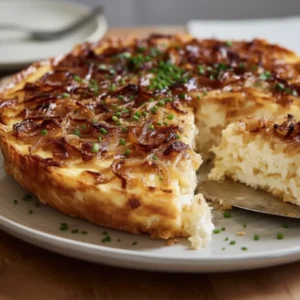
Caramelized Onion and Gruyère Cottage Cheese Bake
Ingredients
- 2 cups small-curd cottage cheese, well-drained
- 2 large yellow onions, thinly sliced
- 3 large eggs
- 1 tbsp cornstarch
- 1 cup shredded Gruyère cheese, divided
- 1 tsp fresh thyme leaves
- 1 tbsp butter
- 0.5 tsp salt
- 0.25 tsp black pepper
Instructions
- Melt butter in a large skillet over medium-low heat. Add sliced onions and cook slowly for 30-40 minutes until deep amber brown and jammy. Set aside to cool.
- Place cottage cheese in a fine-mesh strainer over a bowl. Let drain for 20 minutes, pressing gently with a spoon to remove excess whey. Discard liquid.
- Preheat oven to 375 Fahrenheit (190 Celsius). Grease a 9-inch pie dish thoroughly.
- In a blender, combine drained cottage cheese, eggs, and cornstarch. Blend for 45-60 seconds until perfectly smooth and frothy.
- Pour blended mixture into a mixing bowl. Stir in thyme, salt, and pepper. Gently fold in cooled onions and 3/4 cup of the Gruyère cheese.
- Pour mixture into the prepared dish. Sprinkle the remaining 1/4 cup Gruyère on top.
- Bake for 35-40 minutes until edges are set and golden brown, and the center has a slight wobble. A knife inserted 1 inch from center should come out clean.
- Let cool on a wire rack for 10-15 minutes before slicing. This allows the bake to set for clean cuts.
Notes
Equipment
- large skillet For caramelizing onions
- Fine-mesh strainer To drain cottage cheese
- blender To ensure a smooth custard texture
- 9-inch pie dish
- mixing bowl
- wire cooling rack