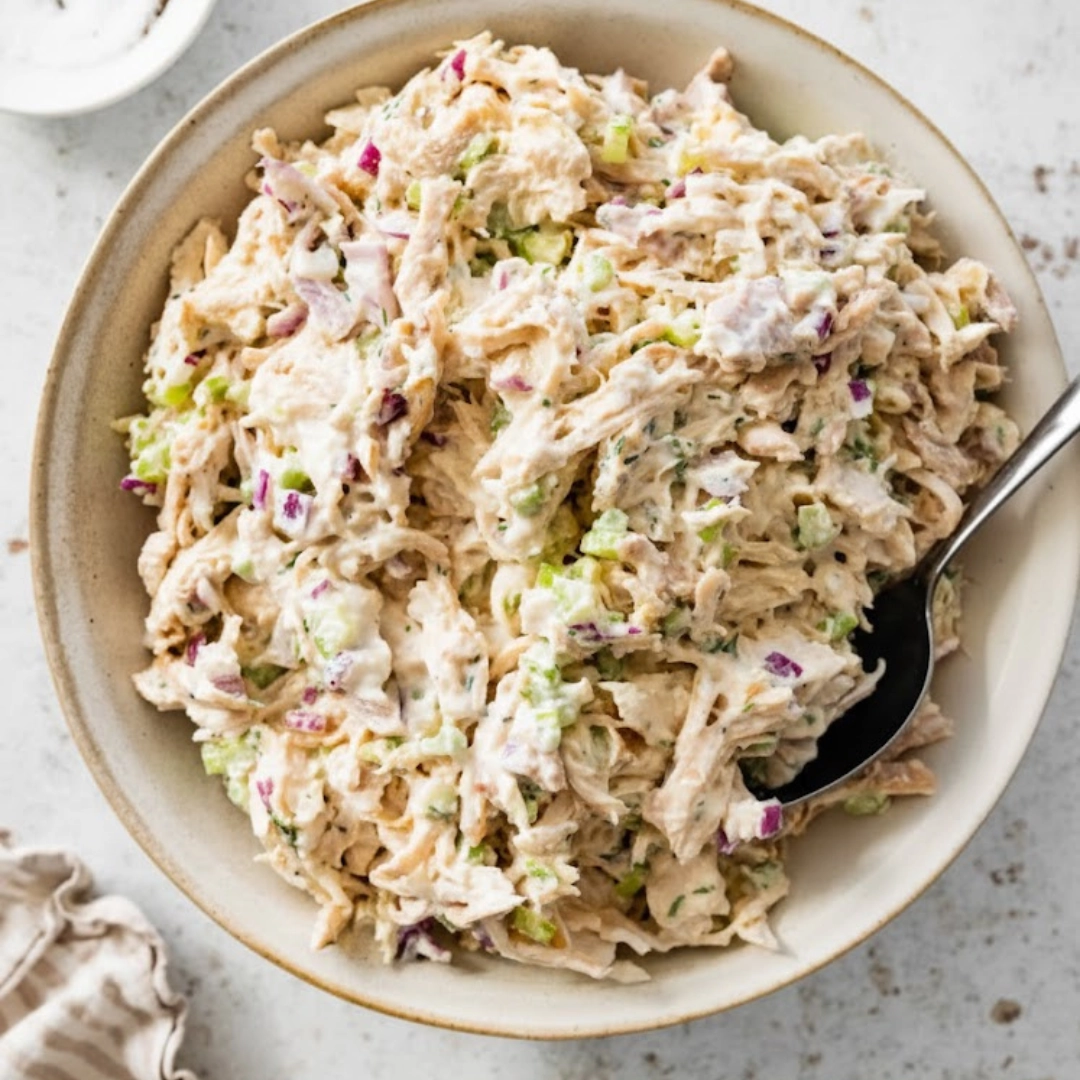
Chicken salad is a classic, foundational dish in American deli cuisine, built on a simple premise: cooked chicken bound by a creamy emulsion and punctuated by complementary textures. However, the traditional application—often heavy on mayonnaise—can sometimes overshadow the fresh, savory quality of the poultry itself. This recipe seeks a superior outcome by utilizing a high-protein, nutritionally dense base: Cottage Cheese Chicken Salad. The use of whipped or blended cottage cheese provides an incredible texture that mimics the mouthfeel of mayonnaise while delivering a boost of protein and dramatically reducing the overall fat content. It’s a bright, satisfying preparation that is equally suited for a light weekday lunch or a sophisticated addition to an appetizer spread. This is a chicken salad that truly feels modern and expertly balanced.
Table of Contents
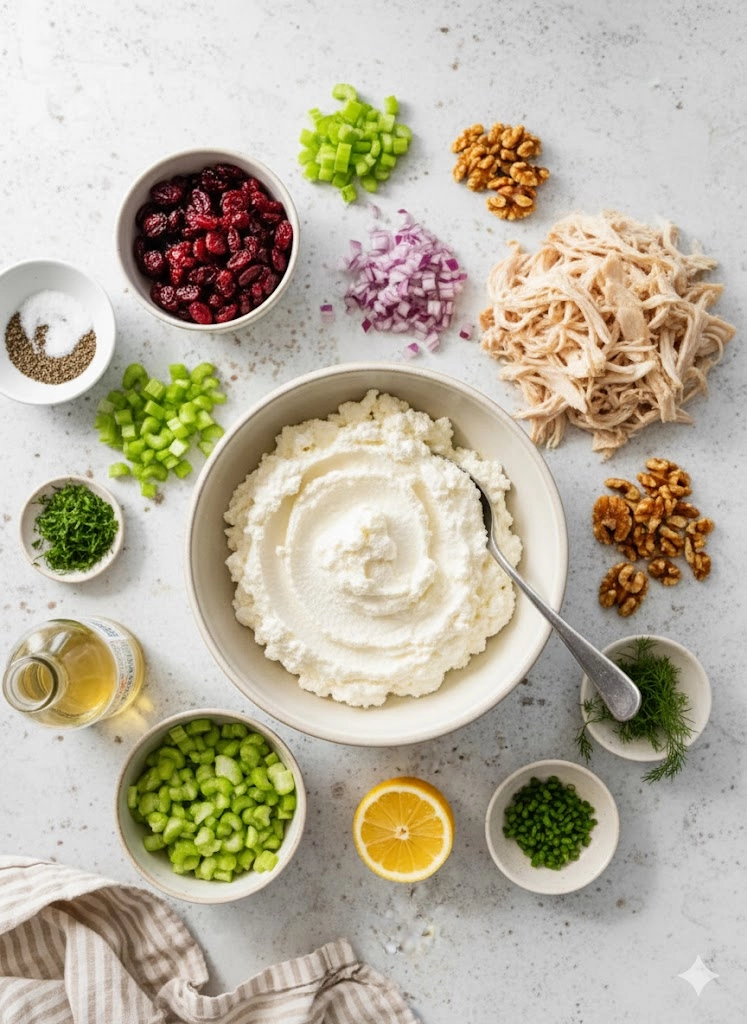
The Components of a Superior Chicken Salad
Achieving an exceptional chicken salad is less about a single secret ingredient and more about the quality and preparation of the core components. We are moving beyond the basic dump-and-stir approach toward one that maximizes flavor and textural contrast in every bite. The foundation must be robust, the binder must be light yet satisfying, and the inclusions must be fresh and vibrant.
Selecting and Preparing Your Poultry Base
The chicken itself is the most important element, dictating both the final texture and the primary flavor profile. While using leftover rotisserie chicken is convenient, taking the time to prepare fresh chicken yields the best result. Poaching is the preferred method here, as it maintains moisture and creates a tender, easily shredded product.
Use boneless, skinless chicken breasts or a combination of breasts and thighs for a richer flavor. For poaching, submerge the chicken in cold, salted water (or a light stock) along with a few aromatics like bay leaves, black peppercorns, and half an onion. Bring the liquid to a gentle simmer, reduce the heat to maintain a sub-boil, and cook until the internal temperature reaches one hundred sixty-five Fahrenheit. The key is to avoid boiling rapidly, which can cause the muscle fibers to seize and become tough. Allow the chicken to cool slightly in the liquid before shredding or chopping; this ensures maximum juiciness is retained. If roasting, use a simple seasoning of salt and pepper, roasting at four hundred Fahrenheit until fully cooked, then cooling completely.
The Creamy Binder: Why Cottage Cheese Works
Cottage cheese acts as the sophisticated binder in this preparation, providing the necessary creaminess without the heavy oil content of traditional mayonnaise. To achieve the perfect consistency, the curds must be transformed. Simply mixing curds into the chicken will result in a chunky, undesirable texture.
The required technique involves processing the cottage cheese. Place the full amount of small-curd cottage cheese into a food processor or high-speed blender. Process for sixty to ninety seconds, or until it becomes perfectly smooth, silken, and completely uniform—the texture should resemble thick sour cream or a very dense Greek yogurt. This blending step is non-negotiable. It releases the whey and protein structures, creating an emulsified-like base that adheres beautifully to the shredded chicken. This smooth base allows us to incorporate other foundational flavors, such as a touch of Dijon mustard and a splash of fresh lemon juice, ensuring a vibrant and appealing flavor from the start.
Essential Ingredients for the Perfect Mix
(Yields 4–6 servings)
For the Chicken Base:
- Two pounds boneless, skinless cooked chicken (poached or roasted), cooled
- One teaspoon kosher salt
- Half teaspoon freshly ground black pepper
For the Cottage Cheese Dressing:
- One and one half cups small-curd cottage cheese (full-fat or two percent milkfat preferred)
- Two tablespoons fresh lemon juice
- One tablespoon Dijon mustard
- One teaspoon apple cider vinegar
- Half teaspoon garlic powder
For the Textural Elements:
- One cup celery, finely diced
- Half cup red onion, finely minced
- Half cup dried cranberries or golden raisins
- Half cup toasted walnuts or pecans, coarsely chopped
- One quarter cup fresh dill, chopped
- One quarter cup fresh chives, finely snipped
The Master Process: A Guided Assembly
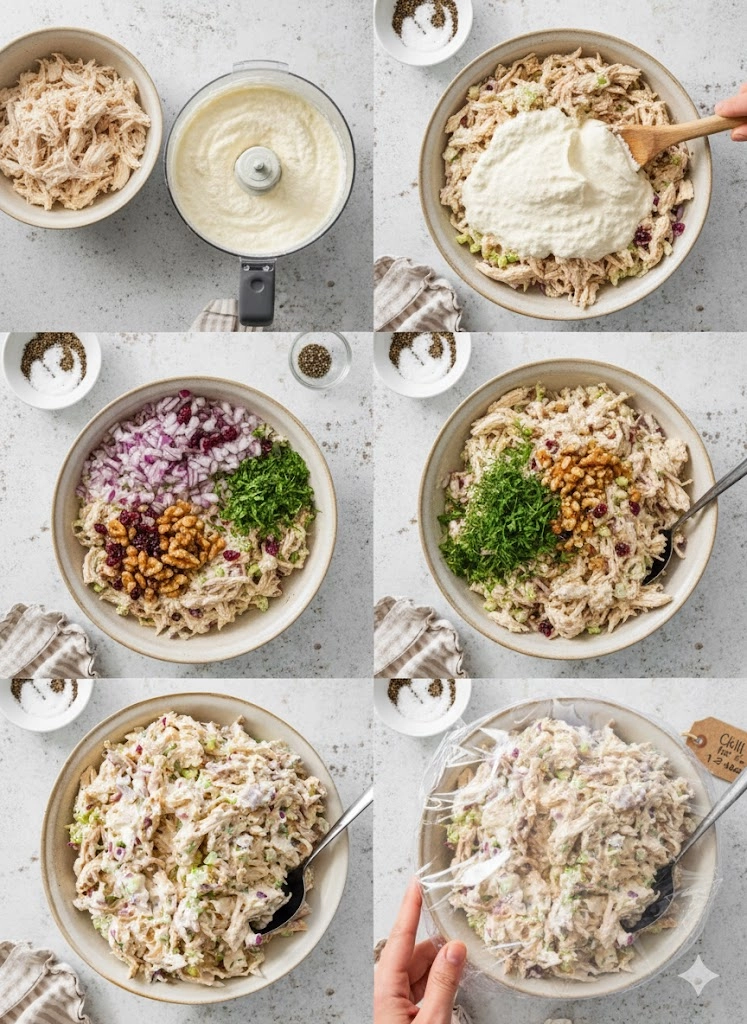
Follow these high-level steps for the seamless construction of your Cottage Cheese Chicken Salad.
- Prepare the Chicken: Ensure the cooked chicken is completely cool. Shred or chop the poultry into uniform, bite-sized pieces and set aside in a large mixing bowl.
- Blend the Dressing: Place the cottage cheese, lemon juice, Dijon mustard, vinegar, and garlic powder into a food processor and blend until perfectly smooth and creamy.
- Combine the Base: Pour the blended dressing over the prepared chicken in the mixing bowl. Stir gently to coat all the chicken pieces evenly.
- Incorporate Aromatics and Crunch: Add the diced celery, minced red onion, dried fruit, and toasted nuts to the mixture. Fold them in carefully to distribute them throughout the salad.
- Season and Herb: Add the salt, pepper, fresh dill, and chives. Taste the mixture and adjust the seasoning as necessary, often requiring a final pinch of salt or a squeeze of lemon.
- Chill for Flavor Fusion: Cover the bowl tightly and refrigerate the chicken salad for a minimum of one hour, or ideally two hours, before serving. The chilling period allows the flavors to truly meld and deepen.
Elevating the Experience: Technique and Doneness
The difference between a good chicken salad and a truly remarkable one lies entirely in the attention paid to detail during the mixing and resting process. This section breaks down the finer points of technique for a professional-grade result.
Achieving the Ideal Chicken Consistency
The way the chicken is prepared and sized directly impacts the textural harmony of the final salad. If the pieces are too large, the dressing won’t adhere properly; if they are too fine, the salad will become mushy. For the best mouthfeel, the chicken should be torn or chopped into pieces approximately one half inch to three quarters of an inch in size.
- Shredding: Shredding cooked chicken while still warm (but not hot) yields the most uneven, appealing texture. Use two forks or a stand mixer with the paddle attachment on low speed for rapid shredding.
- Chopping: If you prefer a cleaner, more geometric look, use a sharp chef’s knife to chop the cooled chicken. The pieces must be uniform. Be careful not to mince; you want distinct pieces of poultry, not a mash.
Tempering the Cottage Cheese Dressing
As noted, blending the cottage cheese is crucial. After blending, the dressing will be slightly warmer than room temperature due to the friction of the blades. It is important to mix the dressing with the cooled chicken before adding the dry inclusions. This allows the protein-rich dressing to properly coat the chicken fibers, maximizing flavor penetration.
The blended dressing has a slightly higher moisture content than mayonnaise. If your cottage cheese was particularly wet, you may wish to let the dressing sit in a fine-mesh sieve for five to ten minutes after blending to allow any excess whey to drain off. This small step ensures a supremely thick, creamy, and non-weeping final product.
The Critical Chilling Period
Many cooks rush the chilling process, but it is indispensable for flavor development. When the chicken, dressing, and aromatics are initially mixed, they are distinct flavors. During the one-to-two-hour rest period in the refrigerator, a process called osmosis occurs, wherein the flavors equalize. The dried cranberries absorb a little moisture, plumping up, while the minced red onion and fresh herbs begin to release their essential oils into the creamy binder.
Doneness Check: The salad is “done” not when it’s mixed, but when it is properly chilled. When you test it after chilling, the flavors should taste cohesive, mellowed, and balanced—no single ingredient should stand out aggressively. The texture should be firm but not stiff. If it appears too thick, stir in a teaspoon of cold water or a splash of whole milk until the desired creaminess is restored.
Crafting Flavor Layers: Expert Add-Ins and Variations
This recipe is highly adaptable. Once the foundational elements of cooked chicken and smooth cottage cheese binder are established, the remaining flavor profile is a canvas for customization. Varying the fruit, nuts, and herbs allows this one base recipe to rotate through countless seasonal or personal preferences.
The Fruit Component:
While dried cranberries offer a tart, slightly chewy contrast, they can be swapped for:
- Golden Raisins: Offer a honeyed sweetness that pairs well with curry powder.
- Finely Diced Apple: Use a crisp variety like Honeycrisp or Granny Smith for a textural pop and a refreshing acidity.
- Seedless Grapes: Halved or quartered, they bring a burst of fresh, juicy sweetness that works exceptionally well in summer.
The Nut Component:
The toasted walnuts or pecans contribute essential depth and a fatty richness that helps balance the lightness of the cottage cheese.
- Toasted Sliced Almonds: These offer a milder, flatter crunch and are visually appealing.
- Toasted Pepitas (Pumpkin Seeds): A great option for a nut-free substitution, adding a distinctly earthy flavor.
- Curry Powder: Incorporate one teaspoon of high-quality Madras curry powder alongside the garlic powder for a fully flavored Indian-inspired preparation.
The Herb Profile:
The combination of fresh dill and chives is bright and savory. For an entirely different character, consider these swaps:
- Tarragon and Parsley: Tarragon’s subtle anise flavor is classical in chicken salad and lends a sophisticated French twist.
- Cilantro and Lime: Substitute the lemon juice with lime juice and swap the dill/chives for fresh cilantro and a pinch of cumin for a Southwest/Mexican flavor profile.
Beyond the Sandwich: Creative Serving Applications
Chicken salad is often relegated to being a filling for bread, but its versatility extends far beyond that. The lower fat and higher protein content of this cottage cheese version makes it an excellent choice for lighter, carb-conscious meals or elegant appetizers.
The Classic Update:
Serve a generous scoop on toasted whole-wheat bread or a buttery croissant. To elevate the experience, layer the salad with a large leaf of crisp butter lettuce and a thin slice of beefsteak tomato, ensuring the bread is toasted to prevent any possibility of sogginess.
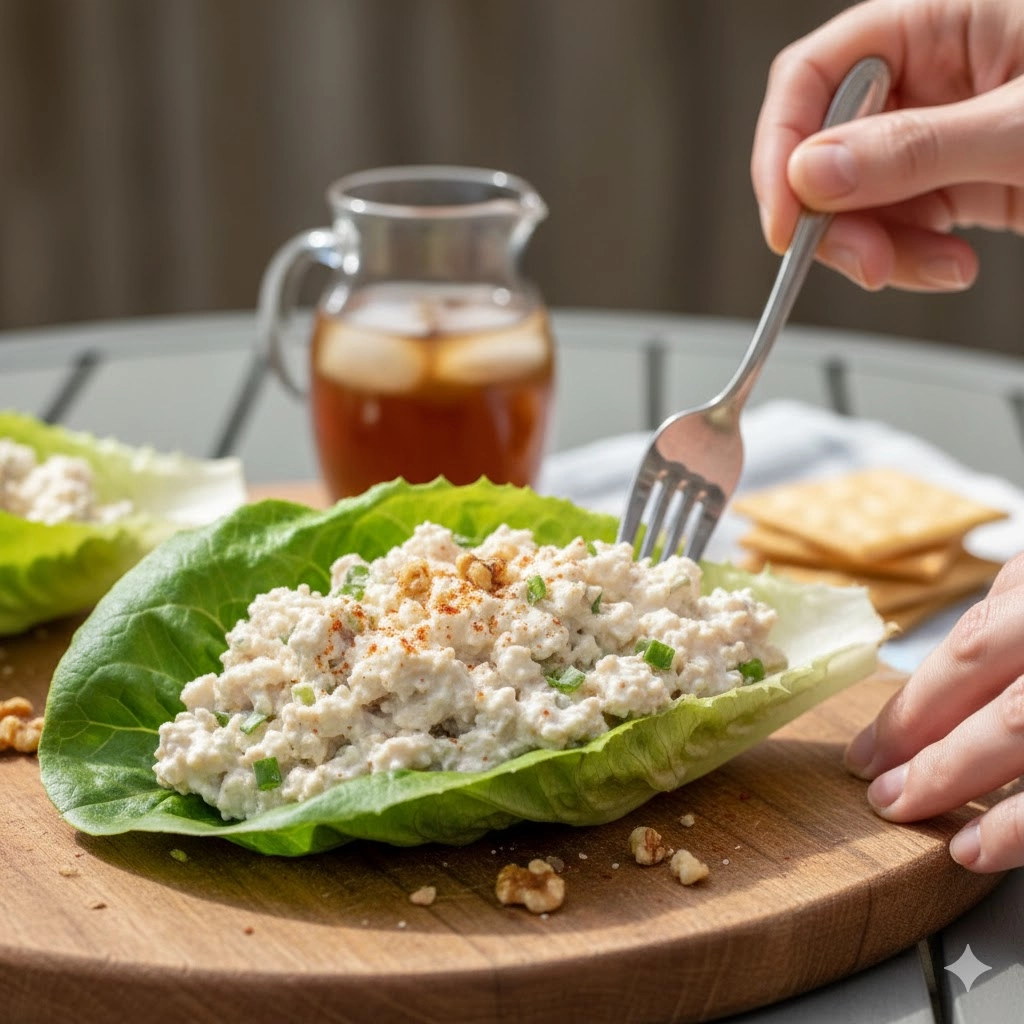
High-Protein Lettuce Wraps:
Use large, sturdy leaves of Romaine, Bibb, or butter lettuce as edible cups. This delivers all the flavor and texture of the salad without any bread or filler. Garnish with a sprinkle of smoked paprika for color and depth.
Stuffed Avocados or Tomatoes:
This is an incredibly easy and visually appealing way to serve the salad. Cut firm avocados in half, remove the pit, and fill the well with a scoop of the salad. Alternatively, hollow out medium-sized tomatoes and fill them—the acidity of the tomato cuts beautifully through the creamy richness of the salad.
Cracker and Crudité Platter:
Serve the Cottage Cheese Chicken Salad as a dip or spread. Arrange a platter with crisp, sturdy crackers (rice crackers or water biscuits are excellent), along with a variety of fresh crudités like sliced bell peppers, cucumber spears, carrots, and radishes. This format works perfectly for entertaining guests and ensures everyone can customize their bite.
Culinary Q&A: Addressing Common Preparation Puzzles
A few common questions arise when incorporating a new binder like cottage cheese into a classic recipe. These expert answers should preempt any confusion and ensure a smooth preparation.
Can I use low-fat or fat-free cottage cheese?
While you technically can, full-fat or two percent milkfat cottage cheese is highly recommended for the best results. The fat content contributes to the desired smooth mouthfeel and helps the blended dressing hold together. Lower-fat versions tend to have a higher water content and may result in a thinner, less luxurious final salad.
How do I prevent the red onion from tasting too sharp?
Red onion can be overwhelming when raw. To mellow its sharp, sulfurous flavor, mince it finely and place it in a small bowl. Cover it with cold water and let it sit for ten minutes. Drain the water completely, pat the onion dry with a paper towel, and then add it to the salad. This simple technique removes the harsh bite without sacrificing the onion’s essential flavor.
Can I use canned chicken for this recipe?
Yes, canned chicken (or canned tuna) can be used, but it must be meticulously drained and patted dry to remove all excess liquid, which could cause the cottage cheese dressing to thin out excessively. The flavor will be milder, so you might need to increase the amount of lemon juice and seasoning to compensate for the lack of freshly cooked poultry flavor.
Why did my cottage cheese dressing curdle or separate after blending?
A separated dressing usually indicates that the cottage cheese was over-processed in a blender that ran too hot, or it was not high-quality. Ensure the cottage cheese is completely cold when you start, and blend only until the desired smooth texture is reached—don’t run the machine for several minutes. If it separates, often a teaspoon of cold water added while pulsing can bring it back together.
Mastering Storage and Make-Ahead Strategy
Proper handling and storage are essential for maximizing the life and flavor of any deli-style salad, especially one made with a fresh dairy binder. This recipe is an excellent make-ahead option if a few simple storage principles are followed.
The Cottage Cheese Chicken Salad stores exceptionally well when kept in an airtight container in the refrigerator. Due to the high-protein dairy base, the shelf life is approximately three to four days. Always use your best judgment regarding freshness, noting any changes in aroma or texture after day three.
To maximize freshness, always ensure the salad is mixed and stored in a glass or non-reactive container. The lemon juice and vinegar can sometimes react subtly with metal, potentially imparting a slight off-flavor over time. If you plan to make a large batch, consider keeping the crunchy elements (celery, nuts, and fruit) separate. The chopped nuts and celery can soften over the course of the three-day storage period. Mixing these in just before serving maintains their maximum crispness and integrity, which is vital for the texture of the dish.
Never allow the salad to remain at room temperature for more than two hours total, including the time spent during mixing and serving. If you are transporting the salad or serving it outdoors, keep the container nestled in a bed of ice to maintain a safe temperature below forty Fahrenheit.
Nutritional Breakdown
| Nutrient | Amount per Serving |
| Calories | 310 kcal |
| Protein | 35 g |
| Carbs | 12 g |
| Fat | 13 g |
| Fiber | 3 g |
| Sugar | 7 g |
| Sodium | 480 mg |
Disclaimer
Nutrition information is an estimate and may vary based on preparation and ingredients used.
Nutritional Disclaimer
The nutritional information provided is an estimate based on standard ingredient data. Actual values may vary depending on the specific brands of protein powder, milk, and oats used, as well as any additional toppings or substitutions made during the preparation process For more on the benefits of protein in a balanced diet, visit the World Health Organization .
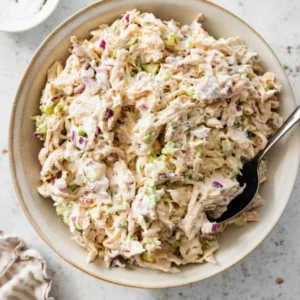
Low-Carb Cottage Cheese Chicken Salad
Ingredients
- 2 pounds boneless, skinless cooked chicken (poached or roasted), cooled
- 1 teaspoon kosher salt
- 0.5 teaspoon freshly ground black pepper
- 1.5 cups small-curd cottage cheese (full-fat or 2% preferred)
- 2 tablespoons fresh lemon juice
- 1 tablespoon Dijon mustard
- 1 teaspoon apple cider vinegar
- 0.5 teaspoon garlic powder
- 1 cup celery, finely diced
- 0.5 cup red onion, finely minced
- 0.5 cup dried cranberries or golden raisins
- 0.5 cup toasted walnuts or pecans, coarsely chopped
- 0.25 cup fresh dill, chopped
- 0.25 cup fresh chives, finely snipped
Instructions
- Prepare the Chicken: Ensure the cooked chicken is completely cool. Shred or chop the poultry into uniform, bite-sized pieces and set aside in a large mixing bowl.
- Blend the Dressing: Place the cottage cheese, lemon juice, Dijon mustard, vinegar, and garlic powder into a food processor and blend until perfectly smooth and creamy.
- Combine the Base: Pour the blended dressing over the prepared chicken in the mixing bowl. Stir gently to coat all the chicken pieces evenly.
- Incorporate Aromatics and Crunch: Add the diced celery, minced red onion, dried fruit, and toasted nuts to the mixture. Fold them in carefully to distribute them throughout the salad.
- Season and Herb: Add the salt, pepper, fresh dill, and chives. Taste the mixture and adjust the seasoning as necessary, often requiring a final pinch of salt or a squeeze of lemon.
- Chill for Flavor Fusion: Cover the bowl tightly and refrigerate the chicken salad for a minimum of one hour, or ideally two hours, before serving.
Notes
Equipment
- large mixing bowl
- food processor or high-speed blender
- chef’s knife
- cutting board
- spoon or spatula