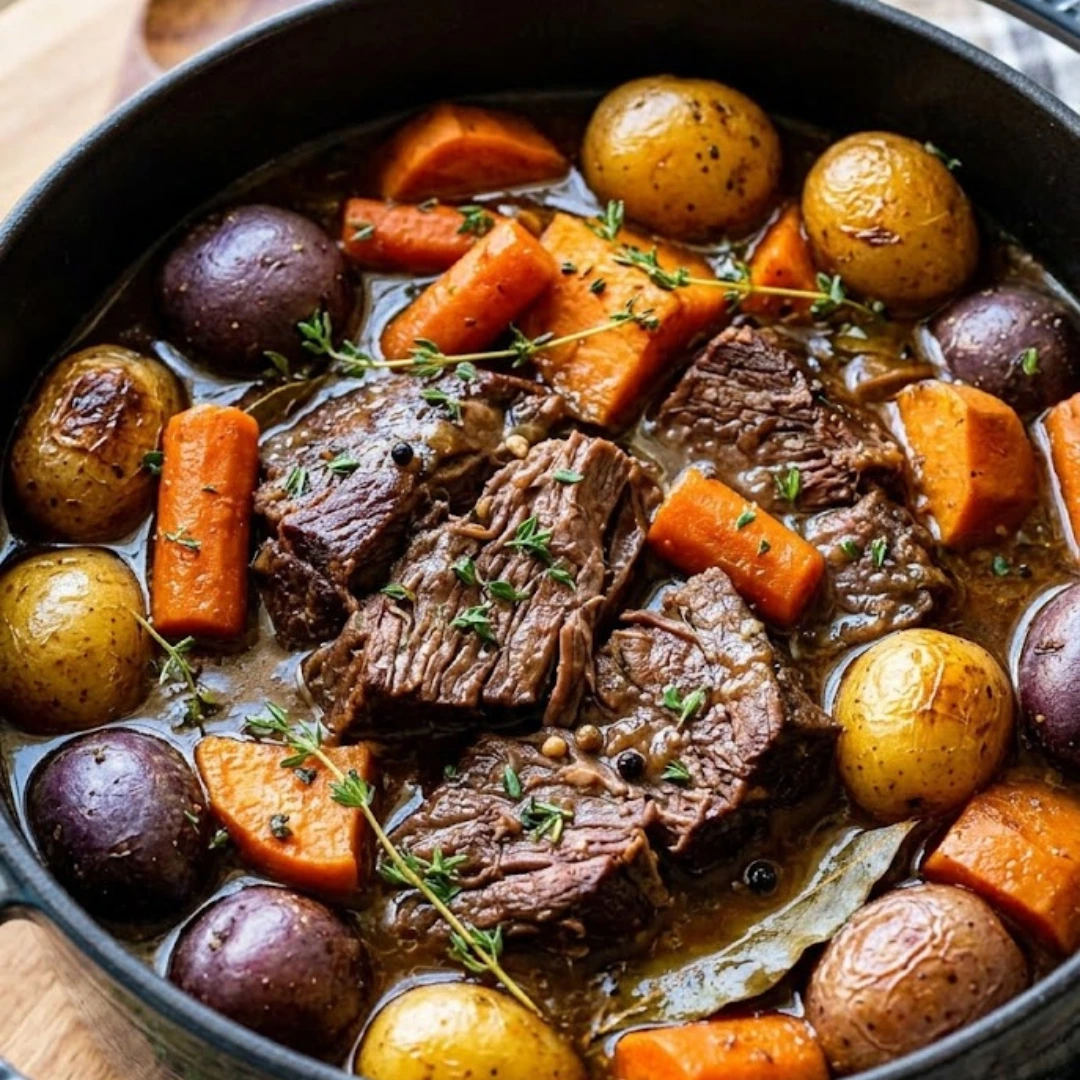
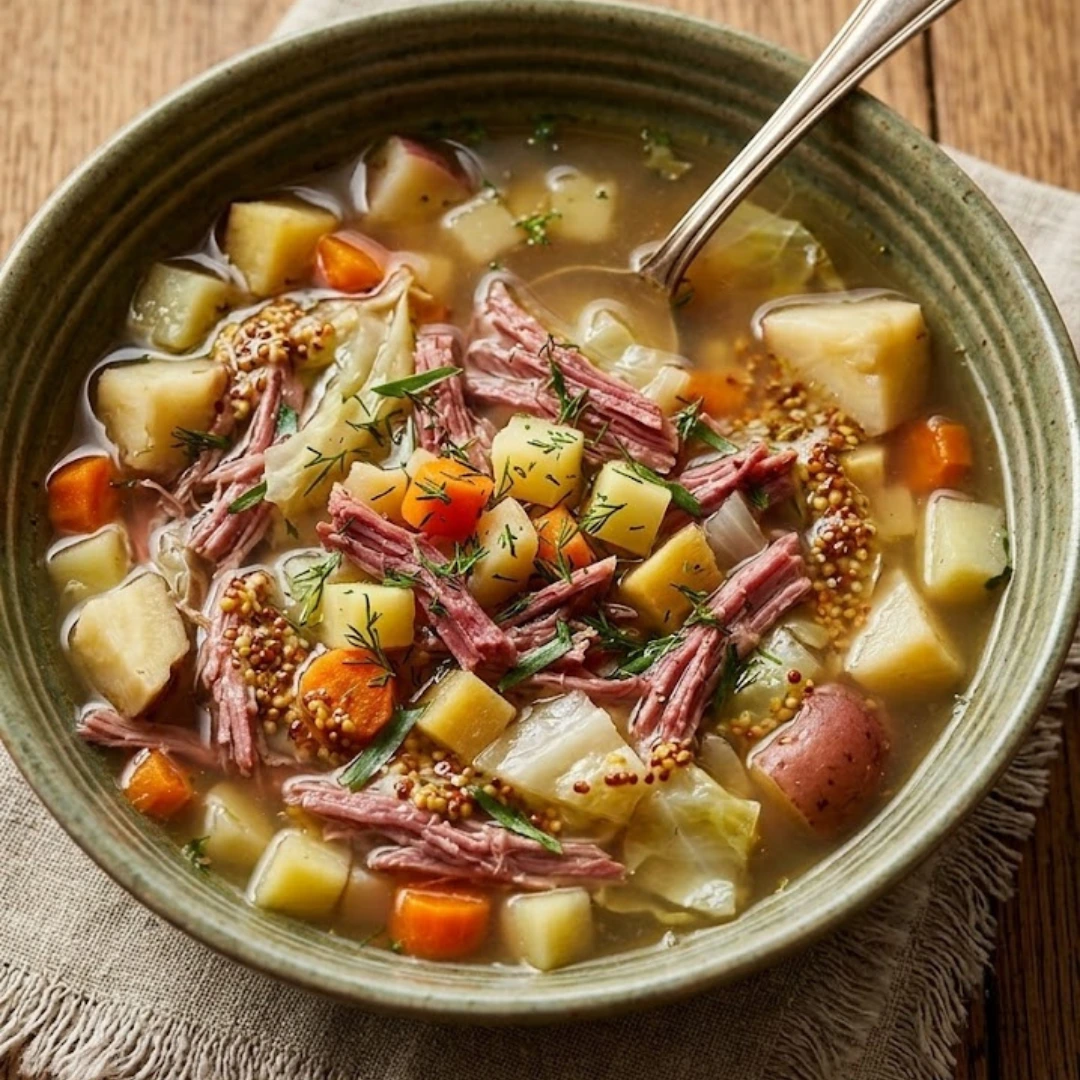
There is something inherently soul-warming about a pot of soup simmering on the stove, especially when it carries the aromatic promise of a traditional Irish celebration. This Corned Beef Cabbage Soup is a masterful twist on the classic boiled dinner, transforming those iconic flavors into a refined, broth-based masterpiece. Whether you are gearing up for Saint Patricks Day or simply looking for a robust, vegetable-forward meal to get you through a chilly evening, this recipe delivers deep, savory satisfaction. By slowly simmering lean corned beef brisket with leeks, carrots, and yellow peppers, you create a complex base that elevates simple ingredients into a gourmet experience. It is a one-pot meal that balances the saltiness of the beef with the natural sweetness of fresh cabbage and potatoes, making it a perennial favorite for those who appreciate wholesome, rustic cooking.
Table of Contents
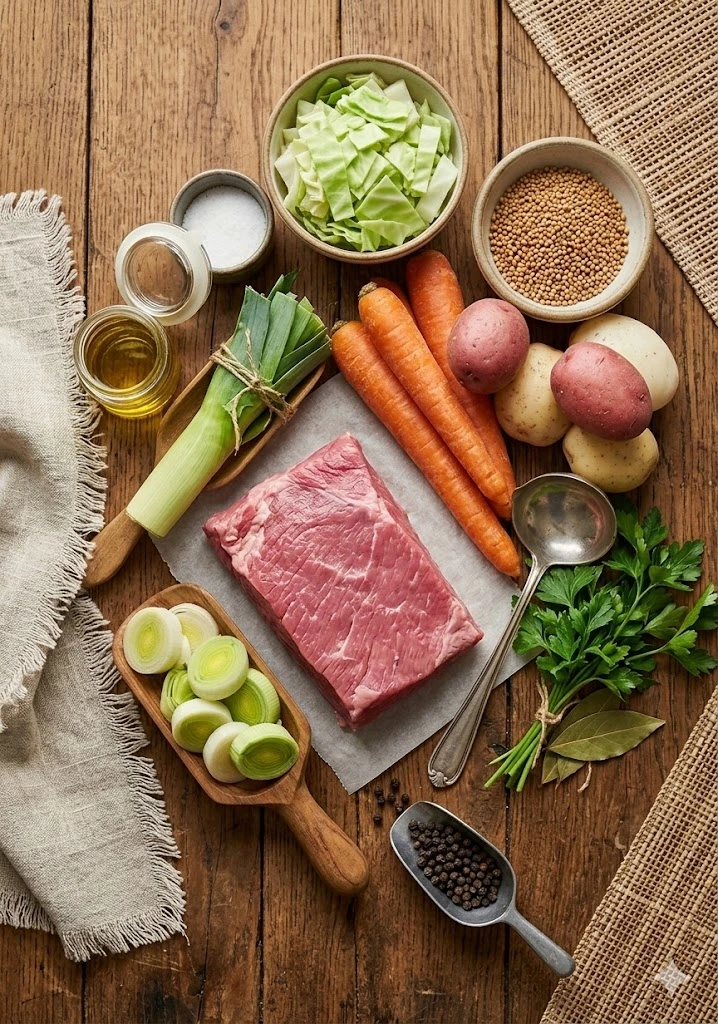
Ingredients
- 2 teaspoons olive oil
- 2 leeks, chopped (using the whites and light green parts only)
- 2 cloves garlic
- 3 medium carrots, chopped
- 1 yellow pepper, chopped
- 1 pound lean corned beef brisket (which yields approximately 9 ounces when cooked)
- 6 cups of water
- 2 bay leaves
- 1/4 cup chopped parsley, plus extra for a fresh garnish
- 1 large potato, peeled and cubed
- 1 small head cabbage, cored and chopped
- Fresh pepper to taste
Instructions
Stove Method
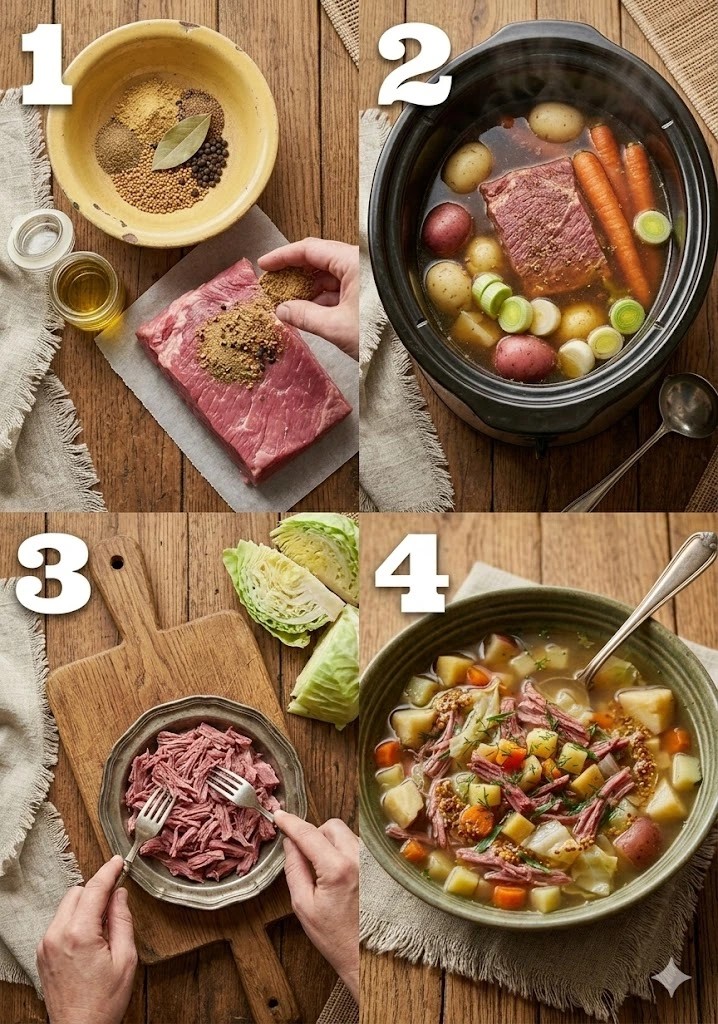
In a large pot or Dutch oven, heat the olive oil over medium low heat. Add the chopped leeks and sauté until they become soft and translucent, which should take about 4 to 5 minutes. Incorporate the garlic, carrots, and yellow pepper, continuing to sauté for another 2 to 3 minutes until the vegetables begin to release their fragrance.
Add the corned beef brisket, the peppercorns or the seasoning packet that typically comes with the beef, the bay leaves, parsley, and the water. Cover the pot and bring the liquid to a rolling boil. Once boiling, reduce the heat to low and let the mixture simmer, covered, for approximately 3 hours, or until the meat is completely tender.
Carefully remove the corned beef from the pot and place it on a stable cutting board. Use a fork to shred the meat into bite-sized pieces. Return the shredded beef to the pot and stir in the chopped cabbage and cubed potatoes. Taste the broth for salt and pepper, adjusting as necessary based on your preference. Continue to cook for about 45 more minutes until the potatoes and cabbage have reached a perfect, tender consistency.
Slow Cooker Method
Heat the olive oil in a skillet over medium low heat. Sauté the leeks until soft, about 4 to 5 minutes, then add the garlic for 2 minutes of cooking. Transfer this aromatic mixture into your slow cooker. Add the carrots, yellow pepper, corned beef, potatoes, seasoning packet, bay leaves, parsley, and water.
Cover and cook on high for 4 1/4 hours (or 8 1/2 hours on low). Once the beef is tender, remove it to a cutting board and shred it with a fork. Return the beef to the slow cooker and arrange the cabbage over the top. Cover again and cook on high for 45 minutes (or 1 1/2 hours on low) until the cabbage is tender.
Instant Pot Method
Select the sauté function and add the olive oil, leeks, garlic, carrots, and yellow peppers. Sauté for 4 to 5 minutes, stirring frequently. Add the corned beef, seasoning packet, bay leaves, parsley, and water.
Lock the lid and cook on high pressure for 90 minutes. Allow for a quick or natural release of pressure. Remove the beef, shred it on a cutting board, and return it to the pot along with the potatoes and cabbage. Secure the lid again and cook on high pressure for 8 minutes. Perform a quick release and serve immediately.
Achieving the Ultimate Texture and Flavor
The secret to a truly spectacular Corned Beef Cabbage Soup lies in the patience of the simmer and the preparation of the aromatics. Unlike many soups where vegetables are simply tossed into boiling water, this recipe emphasizes the importance of the sauté. By softening the leeks and yellow peppers in olive oil first, you develop a foundational sweetness that counters the brine of the corned beef. Leeks, in particular, provide a more delicate and sophisticated flavor profile than standard white onions, offering a buttery undertone that permeates the entire broth.
When dealing with the corned beef itself, the long simmering process is non-negotiable. Brisket is a tough cut of muscle that requires time for the connective tissues to break down. During those three hours on the stove (or ninety minutes in a pressure cooker), the meat transforms from a dense block into succulent fibers that pull apart with the slightest pressure from a fork. This release of collagen also adds body to the soup, giving the water a richer, silkier mouthfeel that mimics a long-cooked bone broth.
The timing of the vegetables is equally critical. Potatoes and cabbage are added toward the end of the process for a specific reason: structural integrity. If you were to add the cabbage at the beginning of a three-hour simmer, it would dissolve into a gray, mushy mess. By adding it in the final 45 minutes, the cabbage retains a slight “tooth” and its vibrant color, while the potatoes soften just enough to release a bit of starch, naturally thickening the soup without the need for flour or heavy creams.
Exploring Creative Modifications and Ingredient Substitutions
While the traditional recipe is a powerhouse of flavor, there is always room for a little kitchen experimentation based on what you have in your pantry. If you find yourself without leeks, a bunch of green onions or a mild shallot can serve as a suitable replacement, though the flavor will be slightly sharper. For those who prefer a bit more heat, adding a pinch of red pepper flakes or even a diced jalapeño along with the yellow peppers can introduce a modern, spicy kick to this Old World dish.
If you are looking to change the starch profile, consider swapping the large white potato for red bliss potatoes or even parsnips. Parsnips offer a woody, herbal sweetness that pairs beautifully with the saltiness of the cured beef. For a lower-carbohydrate version, you could omit the potatoes entirely and double the amount of cabbage, or perhaps introduce cauliflower florets during the final stage of cooking.
For the liquid base, while water is used to keep the flavors clean and focused on the beef, you could substitute half of the water with a low-sodium beef broth or even a dry Irish stout. A splash of Guinness added during the boiling stage can introduce deep notes of coffee and chocolate that play surprisingly well with the vinegar-like notes often found in corned beef spices. Just be sure to monitor the salt levels, as corned beef itself is quite high in sodium.
Masterful Tips for a Flawless Pot of Soup
To ensure your Corned Beef Cabbage Soup is the best it can be, pay close attention to the fat content of your meat. While fat equals flavor, an overly greasy soup can be unappealing. It is highly recommended to trim any large, visible caps of fat from the brisket before it goes into the pot. As noted in the preparation, a 2.5 pound brisket often yields about 2 pounds of meat after trimming. This step ensures that the resulting broth is clear and savory rather than oily.
Another professional tip involves the handling of the seasoning packet. Most store-bought corned beef comes with a small plastic pouch of whole spices like mustard seeds, coriander, and peppercorns. If you prefer a “clean” broth without the texture of whole seeds, you can place these spices into a cheesecloth sachet or a large tea infuser. This allows the oils and flavors to infuse the water while making it easy to remove the solids before serving.
Lastly, consider the “rest” period. Like many stews and braised dishes, this soup often tastes even better the next day. As the soup cools, the flavors of the garlic, leeks, and beef spices continue to marry and penetrate the potatoes. If you are planning a big dinner, making the soup a day in advance and gently reheating it can actually result in a more cohesive and deeply flavored meal.
Serving Suggestions and Perfect Table Accompaniments
Presentation is the final touch that turns a simple bowl of soup into a festive event. Serve this Corned Beef Cabbage Soup in deep, wide bowls to showcase the colorful array of carrots, peppers, and green cabbage. A generous sprinkle of freshly chopped parsley adds a burst of herbal freshness and a bright green hue that contrasts beautifully with the reddish-pink shredded beef.
To complete the meal, nothing beats a warm loaf of Irish Soda Bread. The dense, slightly sweet bread is perfect for soaking up the savory broth. If you want something a bit lighter, a simple side salad with a sharp mustard vinaigrette can help cut through the richness of the meat. For a truly indulgent experience, serve the soup alongside a small dish of creamy horseradish sauce or a grainy Dijon mustard; a small dollop stirred directly into the bowl can provide a zesty punch that highlights the cured flavors of the brisket.
If you are serving this for a crowd, consider a “deconstructed” garnish station. Let guests add their own extra black pepper, a splash of apple cider vinegar for acidity, or even some extra shredded sharp cheddar cheese on top. These small touches allow everyone to customize the bowl to their specific palate.
Deep-Dive Kitchen Frequently Asked Questions
Can I use pre-cooked corned beef leftovers for this recipe?
Yes, you certainly can. If you have leftover corned beef from a previous dinner, you can significantly shorten the cooking time. Simply sauté the aromatics and vegetables as directed, add the water and seasonings, and simmer until the carrots and potatoes are tender. Add the pre-cooked, shredded beef during the last 15 minutes of cooking just to heat it through and allow it to absorb some of the broth’s flavor.
Is it possible to freeze Corned Beef Cabbage Soup for later?
This soup freezes relatively well, though you should be aware of the texture of the vegetables. Potatoes can sometimes become slightly grainy after being frozen and thawed, and cabbage may lose some of its crispness. For the best results, freeze the soup in airtight containers or heavy-duty freezer bags with as much air removed as possible. Thaw overnight in the refrigerator before reheating gently on the stovetop.
How do I prevent the soup from becoming too salty?
Corned beef is cured in a salt brine, which means it will naturally release sodium into the water as it simmers. To control the saltiness, always start with plain water rather than broth. Do not add any extra salt until the very end of the cooking process after the meat has been shredded and the potatoes have had a chance to absorb some of the liquid. If the soup does end up too salty, you can add an extra potato to help absorb the excess, or simply splash in a little more water to dilute the intensity.
What is the best way to shred the corned beef?
The meat should be tender enough that it practically falls apart on its own. The most effective method is to use two large kitchen forks. Hold the meat steady with one fork and use the other to pull the fibers away from the center. You want to aim for long, rustic shreds rather than uniform cubes, as the irregular shapes hold onto the broth better and provide a more pleasant texture in every spoonful.
Optimal Nutritional Profile
| Nutrient | Amount Per Serving (1.75 Cups) |
| Calories | 281 calories |
| Total Fat | 12 grams |
| Saturated Fat | 3.5 grams |
| Cholesterol | 50 milligrams |
| Sodium | 782 milligrams |
| Total Carbohydrates | 31.5 grams |
| Dietary Fiber | 7 grams |
| Sugars | 3.5 grams |
| Protein | 14 grams |
Nutritional Disclaimer
The nutritional information provided above is an estimate based on the specific ingredients and measurements listed in this recipe. Actual nutritional values may vary depending on the specific brand of corned beef used, the amount of fat trimmed from the meat, and any minor substitutions made during the cooking process. For those on strictly monitored diets, it is always recommended to calculate values using a primary nutritional database with your specific brands.
A Final Note on This Traditional Favorite
Bringing this Corned Beef Cabbage Soup to your table is more than just serving a meal; it is about embracing a slow-cooked tradition that celebrates simple, high-quality ingredients. The transformation of a humble brisket and a head of cabbage into a sophisticated, nutrient-dense soup is a testament to the power of home cooking. As the steam rises from your bowl and the savory scent fills your kitchen, you’ll find that this dish offers a sense of comfort that few other recipes can match. It is a hearty, wholesome, and genuinely delicious way to honor Irish heritage or simply enjoy a fantastic dinner with those you love.
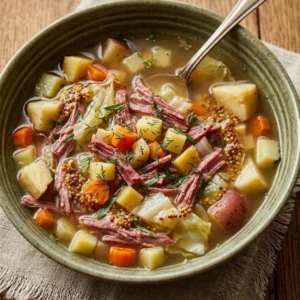
Hearty and Comforting Corned Beef Cabbage Soup
Ingredients
- 2 tsp olive oil
- 2 leeks, chopped (whites and light green only)
- 2 cloves garlic
- 3 medium carrots, chopped
- 1 yellow pepper, chopped
- 1 lb lean corned beef brisket
- 6 cups water
- 2 bay leaves
- 0.25 cup chopped parsley, plus more for garnish
- 1 large potato, peeled and cubed
- 1 small head cabbage, cored and chopped
- fresh pepper to taste
Instructions
- In a large pot or Dutch oven, heat oil over medium low heat. Add leeks and sauté until soft, about 4-5 minutes; add garlic, carrots and yellow pepper and sauté about 2-3 minutes.
- Add corned beef, peppercorns or seasoning packet that comes with the corned beef, bay leaves, parsley and water; cover and bring to a boil.
- Simmer covered on low heat for 3 hours, until the meat becomes tender.
- Remove the corned beef, set it on a cutting board and shred with a fork.
- Return the shredded beef to the pot then add the cabbage and potatoes; taste for salt and pepper and adjust as needed.
- Cook until the potatoes and cabbage are tender, about 45 more minutes. Garnish with fresh parsley before serving.
Notes
Equipment
- large pot or Dutch oven
- cutting board
- Two forks (for shredding)
- chef’s knife