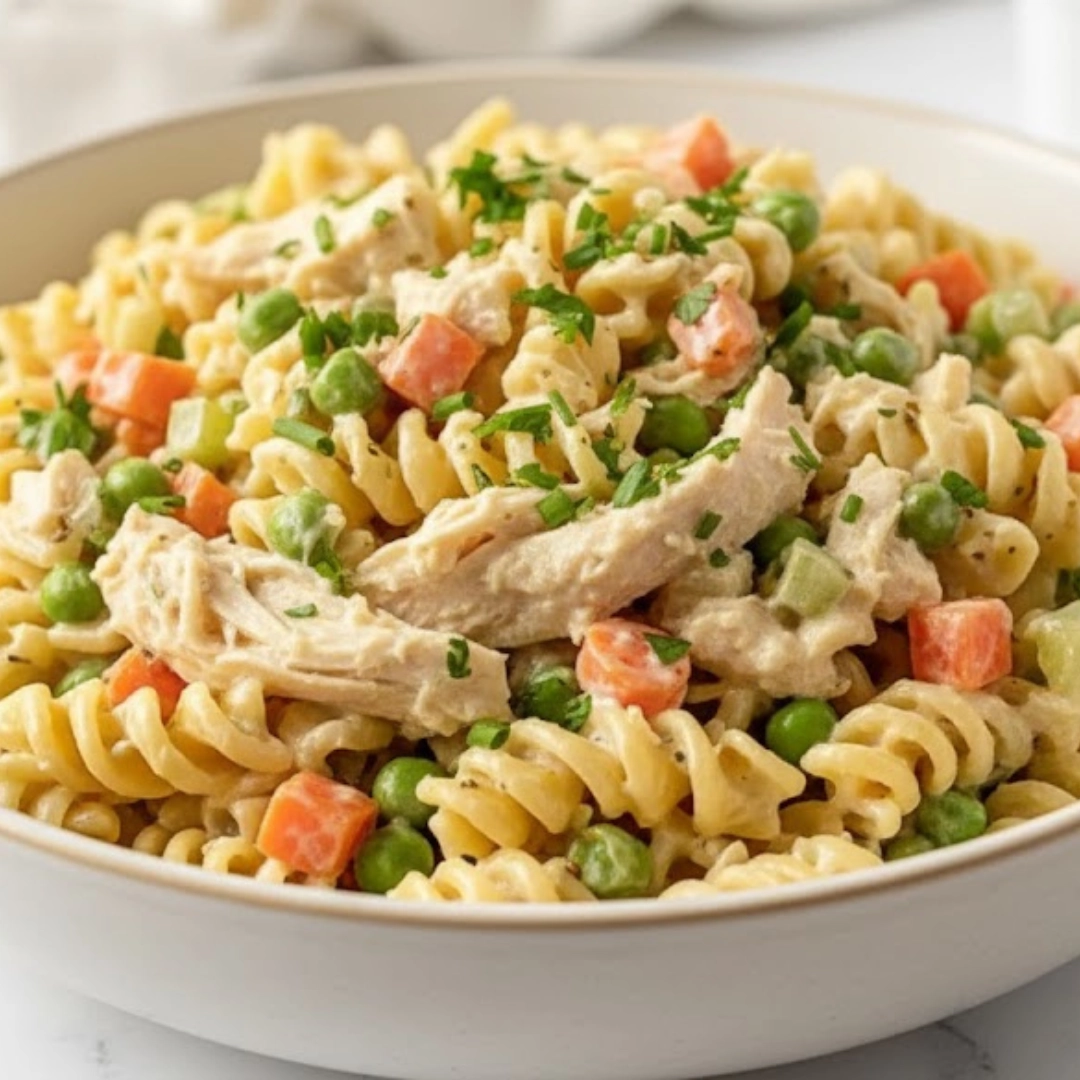
I first learned the magic of chicken pot pie not in a recipe book, but in the warmth of my grandmother’s kitchen on a chilly, rain-slicked Sunday afternoon. It wasn’t just a meal; it was an event. The house would fill with the savory scent of roasting chicken, onion, and thyme, a culinary perfume I’ve chased ever since. While I still adore a classic pot pie with its flaky crust, as a professional chef, I’ve always looked for ways to bring that nostalgic comfort to the table faster, without losing any of the soul.
This Classic Chicken Pot Pie Pasta recipe is the answer. It marries the deeply savory, creamy filling of a traditional pot pie—tender chicken, sweet carrots, and peas coated in a rich, herby sauce—with the convenience and heartiness of a one-pot pasta dish. After testing this recipe multiple times, optimizing for both speed and flavor depth, I can confidently say this version is not a shortcut; it’s an elevation. It delivers all the familiar flavors you crave in under an hour, making it a perfect, weeknight-friendly bowl of comfort. Get ready for a new family favorite that captures the essence of that Sunday nostalgia in every spoonful.
Table of Contents
Why This Homemade Classic Chicken Pot Pie Pasta Works
As someone who has cooked this dish for years, I’ve found that the secret to the Classic Chicken Pot Pie Pasta is in the sauce base—a velvety roux that ensures every noodle is perfectly coated without becoming greasy or thin. This recipe is designed for maximum flavor return on minimal effort.
- Speed: It uses leftover or rotisserie chicken, cutting down on cook time significantly.
- Convenience: It’s a one-pot meal (excluding the pasta water), meaning fewer dishes to wash.
- Balanced Flavor: By sautéing the vegetables before adding the liquid, we build foundational layers of savory depth that prevent the dish from tasting flat.
- Texture: The use of half-and-half and a proper roux creates the rich, comforting texture expected from a classic pot pie filling.
Essential Ingredients for Perfect Pot Pie Pasta
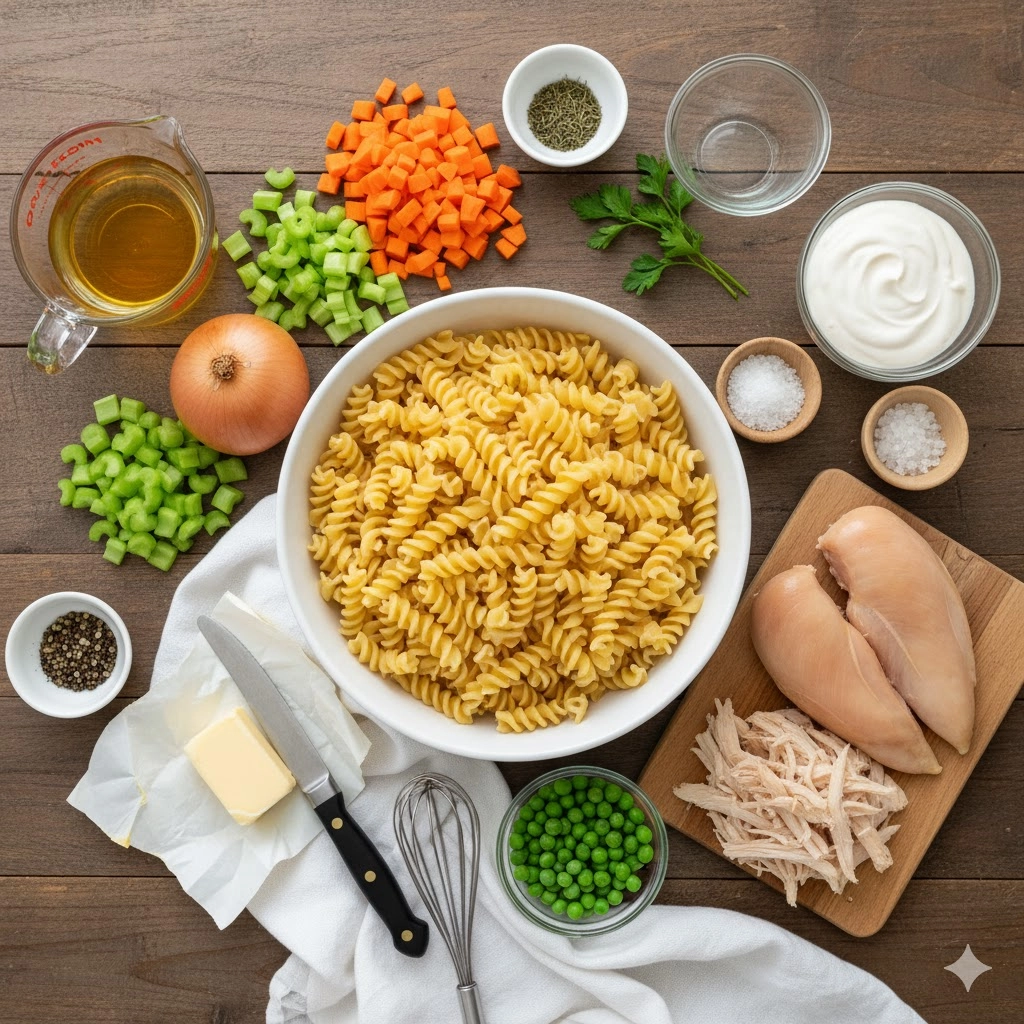
To achieve the best results, start with high-quality components. The simplicity of this recipe means every ingredient has a crucial role to play in the final flavor profile.
| Ingredient Category | Recommended Item | Purpose in the Dish |
| Protein | Cooked, shredded chicken breast or thighs | Heartiness and core pot pie flavor. |
| Dairy/Fats | Butter, all-purpose flour, half-and-half (or milk/cream) | Forms the roux base and creates a rich, creamy sauce. |
| Vegetables | Carrots, celery, sweet peas, onion | The classic aromatic base and textural element. |
| Seasoning | Dried thyme, dried rosemary, chicken broth, salt, pepper | Provides the signature savory, herbaceous flavor of pot pie. |
The Right Pasta Shape for Creamy Sauces
When making a cream-based sauce, the shape of the pasta matters greatly. Based on my experience adjusting flavors for different palates, I recommend a noodle that can trap the rich sauce inside its curves and ridges.
- Penne, Rotini, or Medium Shells: These shapes are ideal because their internal cavities and rough surfaces cling to the thick, flavorful sauce, ensuring every bite is fully coated. Avoid very thin or long pasta like spaghetti, which can’t hold the heavy sauce well.
Enhancing Flavor: Herbs, Spices, and Broth
While the chicken pot pie flavor is unmistakable, you can deepen it easily. Use low-sodium chicken broth to control the overall saltiness. The herbs—thyme and rosemary—are non-negotiable for that authentic taste. If you have fresh herbs, double the quantity listed in the recipe for an extra bright, aromatic finish.
Step-by-Step: Making Your Classic Chicken Pot Pie Pasta
Here is the tested method for creating a rich and satisfying dish.
1. Prep the Ingredients
Cook your pasta according to the package directions, reserving about $1 \text{ cup}$ of the starchy cooking water before draining. Shred the pre-cooked chicken and chop the carrots, celery, and onion finely.
2. Sauté the Aromatics
In a large, deep skillet or Dutch oven, melt the butter over medium heat. Add the chopped carrots, celery, and onion. Sauté for about 5–7 minutes, or until the onions are translucent and the carrots are slightly tender. This step is critical for softening the vegetables and building flavor.
3. Build the Roux
Sprinkle the flour over the sautéed vegetables and cook, stirring constantly, for 1–2 minutes. The flour and butter mixture (the roux) will form a thick paste. This cooks out the raw flour taste and is the technical key to thickening the final sauce.
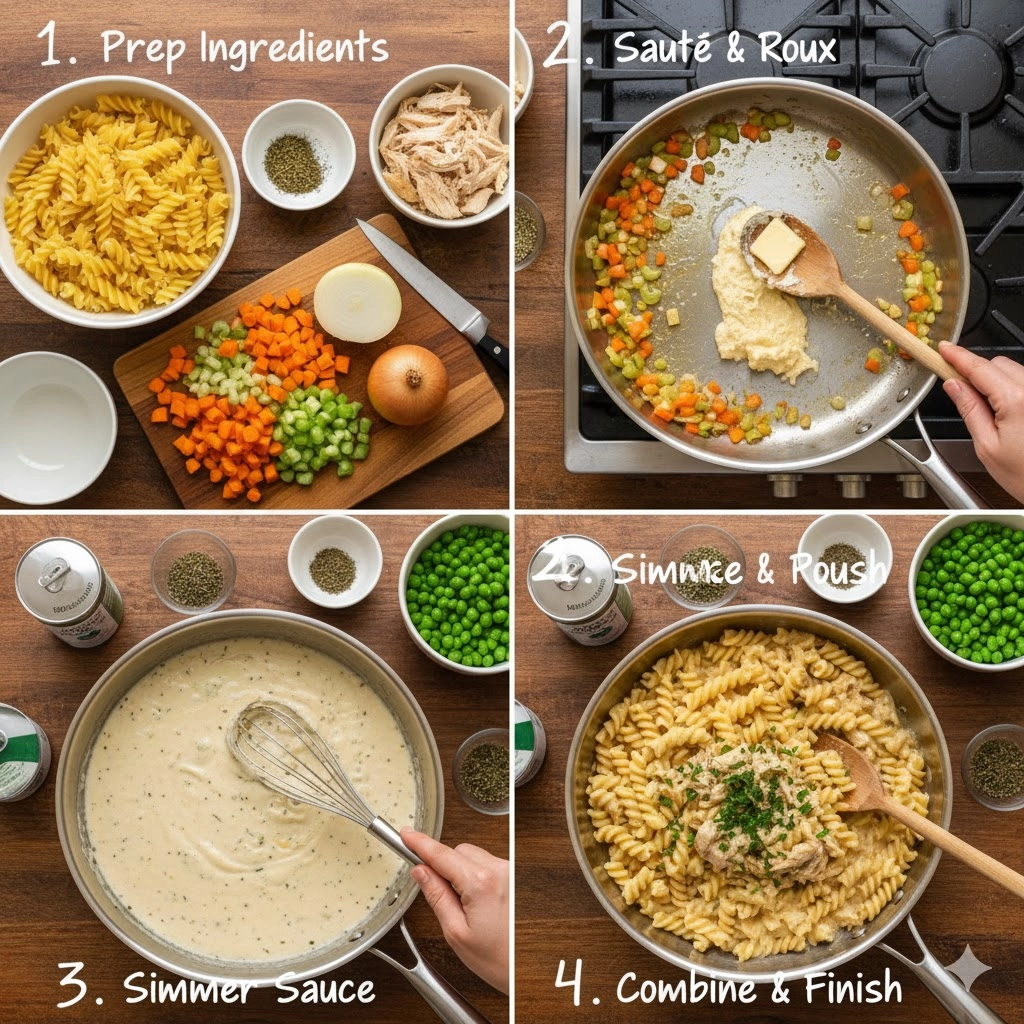
4. Create the Sauce Base
Gradually whisk in the chicken broth, ensuring there are no lumps. Next, pour in the half-and-half, stirring until the sauce is smooth. Bring the mixture to a gentle simmer.
5. Season and Simmer
Add the dried thyme and rosemary, salt, and pepper. Allow the sauce to simmer for 5–8 minutes, stirring occasionally, until it has thickened enough to coat the back of a spoon. If the sauce becomes too thick, add a splash of the reserved pasta water.
6. Combine and Finish
Stir in the shredded cooked chicken and the frozen peas. Heat through for 2 minutes. Finally, add the drained pasta to the creamy sauce, tossing gently until everything is evenly coated. Taste and adjust the seasoning one last time before serving.
Expert Substitutions and Variations
One of the great things about comfort food is its flexibility. If you need to make dietary adjustments or simply want a change, here are tested swaps.
Dietary Swaps: Gluten-Free and Dairy-Free Options
- For Gluten-Free: Use a good quality gluten-free pasta (check cooking instructions carefully) and substitute the all-purpose flour in the roux with an equal amount of gluten-free all-purpose flour blend or $1 \text{ tablespoon}$ of cornstarch mixed with $2 \text{ tablespoons}$ of cold water (a slurry) added at the end of the cooking process.
- For Dairy-Free: Replace the butter with olive oil or a plant-based butter alternative. Substitute the half-and-half with unsweetened full-fat cashew cream, oat milk, or coconut cream (use coconut cream sparingly as it may impart a slight flavor).
Vegetable and Protein Alternatives
If you don’t have the classic medley on hand, feel free to substitute.
- Protein: Cooked turkey, leftover roasted salmon flakes, or even cannellini beans (for a vegetarian version) can replace the chicken.
- Vegetables: Try adding sliced mushrooms, diced potatoes (add these earlier, as they take longer to cook), green beans, or even a handful of fresh spinach, which wilts beautifully into the sauce.
Pro Tips for the Creamiest, Richest Sauce
Achieving that luxurious, creamy mouthfeel is what elevates this dish from good to great.
- Don’t Skimp on the Roux: A proper roux—equal parts flour and fat cooked together—is the secret to an even, stable, and perfectly thick sauce. Always add the cold liquid (broth/milk) gradually to the hot roux to prevent lumps.
- Emulsion is Key: Once the half-and-half is added, keep the heat at a gentle simmer, never a rolling boil. Rapid boiling can cause the dairy to break, or “split,” resulting in a grainy sauce.
- Use Starchy Pasta Water: The reserved pasta water contains starches that help emulsify the sauce, binding the fat and liquid together for a silkier finish. Don’t be afraid to use a few splashes if the sauce looks too tight.
- Garnish with Fresh Herbs: A sprinkle of fresh parsley or chives right before serving adds brightness that contrasts beautifully with the rich creaminess.
Serving, Storing, and Freezing
This is a hearty dish, but thinking ahead ensures you can enjoy it later as well.
What to Serve with Classic Chicken Pot Pie Pasta
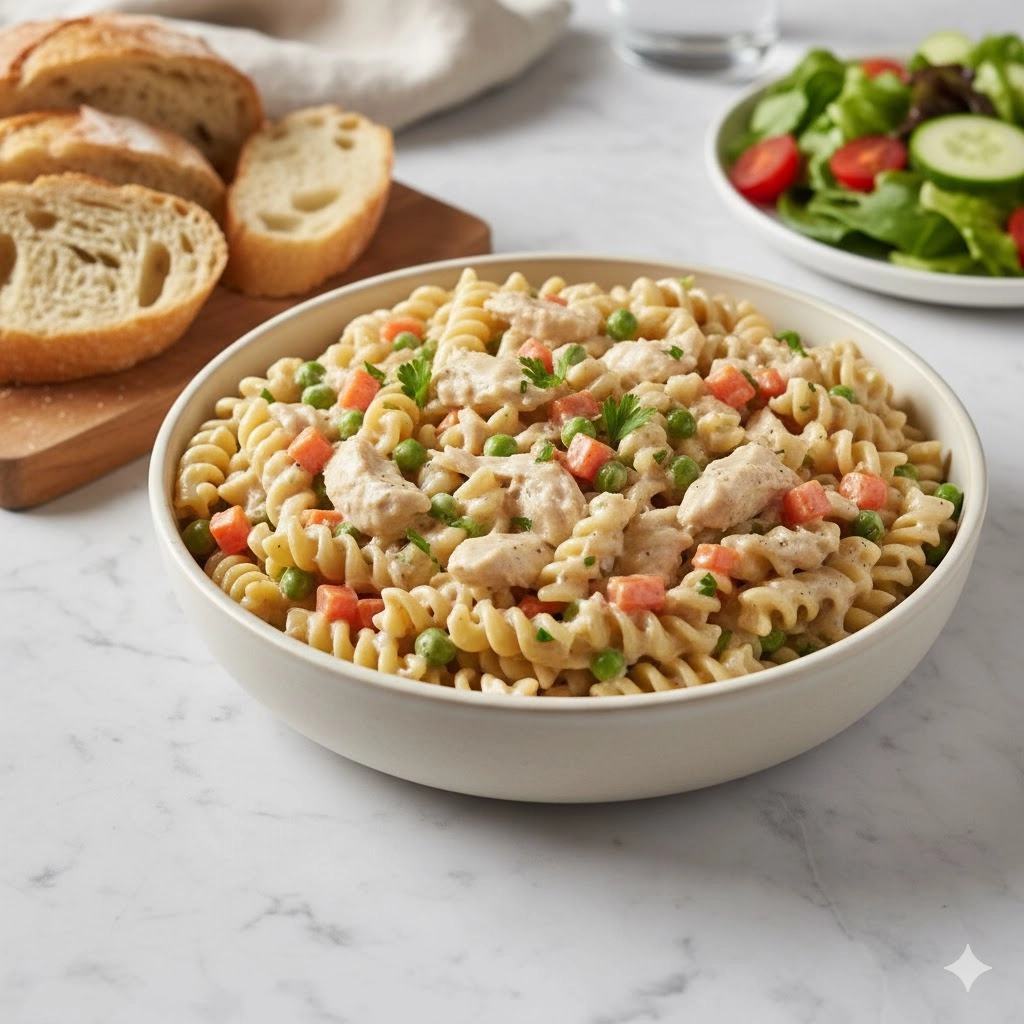
Because the pot pie pasta is rich and savory, it pairs best with a light, acidic side to cut through the creaminess.
- A simple, bright garden salad with a vinaigrette dressing.
- A side of crusty bread. You might even consider pairing this comforting dish with my recipe for an Easy Sourdough Bread Recipe for dipping into the creamy sauce.
- For a sweet finish, follow up this hearty meal with a delightful dessert like a Churro Cheesecake , or try making the viral chocolate bar dessert. If you prefer something cooler, a scoop of homemade Piñon Ice Cream is the perfect capstone.
(Disclaimer: This content is for educational purposes only and does not replace professional dietary or medical advice.)
Storing and Reheating
- Storage: Cool the pasta completely before transferring it to an airtight container. It will keep safely in the refrigerator for up to 3–4 days. The sauce will thicken significantly as it chills.
- Reheating: Reheat gently on the stovetop over medium-low heat, adding a splash of milk or chicken broth to loosen the thickened sauce and restore its creamy texture. Avoid reheating in the microwave, which can sometimes make the chicken tough.
Don’t miss to follow us in Pinterest.
Frequently Asked Questions (FAQs)
Can I make the Classic Chicken Pot Pie Pasta ahead of time?
You can prepare the sauce entirely ahead of time and store it in the refrigerator for up up to two days. However, it’s best to cook and add the pasta right before serving. Pasta absorbs the sauce as it sits, which can make the dish dry and mushy when reheated.
Why did my sauce turn out lumpy?
Lumpy sauce is almost always caused by one of two things: either the roux (flour and butter) was not cooked long enough, or you added the cold liquid too quickly. To fix a lumpy sauce, remove it from the heat and whisk vigorously. If that fails, you can carefully pour the sauce through a fine-mesh sieve.
What kind of chicken works best for this recipe?
Any pre-cooked chicken works well. Rotisserie chicken is the fastest option. If cooking chicken specifically for this, poach or bake boneless, skinless chicken breasts until just cooked, then shred them. This keeps the meat tender and moist.
Is there a specific type of cream or milk I should use?
For the richest sauce, half-and-half is ideal. Whole milk works well but will result in a slightly thinner sauce. Heavy cream is too heavy for this application. Avoid skim milk, as it may not provide enough fat to bind the sauce properly.
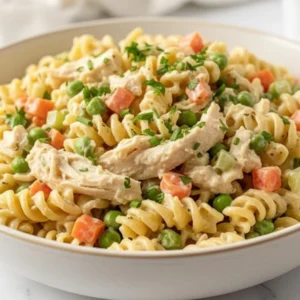
Classic Chicken Pot Pie Pasta
Ingredients
- 12 oz penne, rotini, or medium shell pasta
- 2 tbsp unsalted butter
- 1 cup carrots, finely chopped
- 1 cup celery, finely chopped
- 1 cup onion, finely chopped
- 2 tbsp all-purpose flour
- 2 cups low-sodium chicken broth
- 1.5 cups half-and-half (or whole milk)
- 2 tsp dried thyme
- 1 tsp dried rosemary
- 1 tsp salt (adjust to taste)
- 0.5 tsp black pepper
- 2.5 cups cooked shredded chicken (rotisserie or poached)
- 1 cup frozen peas
- 0.5 cup reserved pasta water (as needed)
Instructions
- Cook the pasta according to package instructions. Reserve ½ cup of the pasta water before draining. Set pasta aside.
- In a large skillet or Dutch oven, melt butter over medium heat. Add chopped carrots, celery, and onion. Sauté for 5–7 minutes until vegetables are softened and onions are translucent.
- Sprinkle flour over the vegetables and stir constantly for 1–2 minutes to form a roux and cook out the raw flour taste.
- Slowly whisk in the chicken broth and then the half-and-half. Stir until the sauce is smooth and begins to simmer gently.
- Stir in thyme, rosemary, salt, and pepper. Simmer for 5–8 minutes until sauce thickens and coats the back of a spoon. Add a splash of pasta water if it gets too thick.
- Add the shredded chicken and frozen peas to the sauce. Stir and heat through for about 2 minutes.
- Fold the cooked pasta into the sauce, stirring gently to coat. Adjust seasoning if needed. Serve hot with optional fresh herbs on top.
Notes
Equipment
- large skillet or Dutch oven
- pasta pot
- colander
- measuring cups and spoons
- whisk