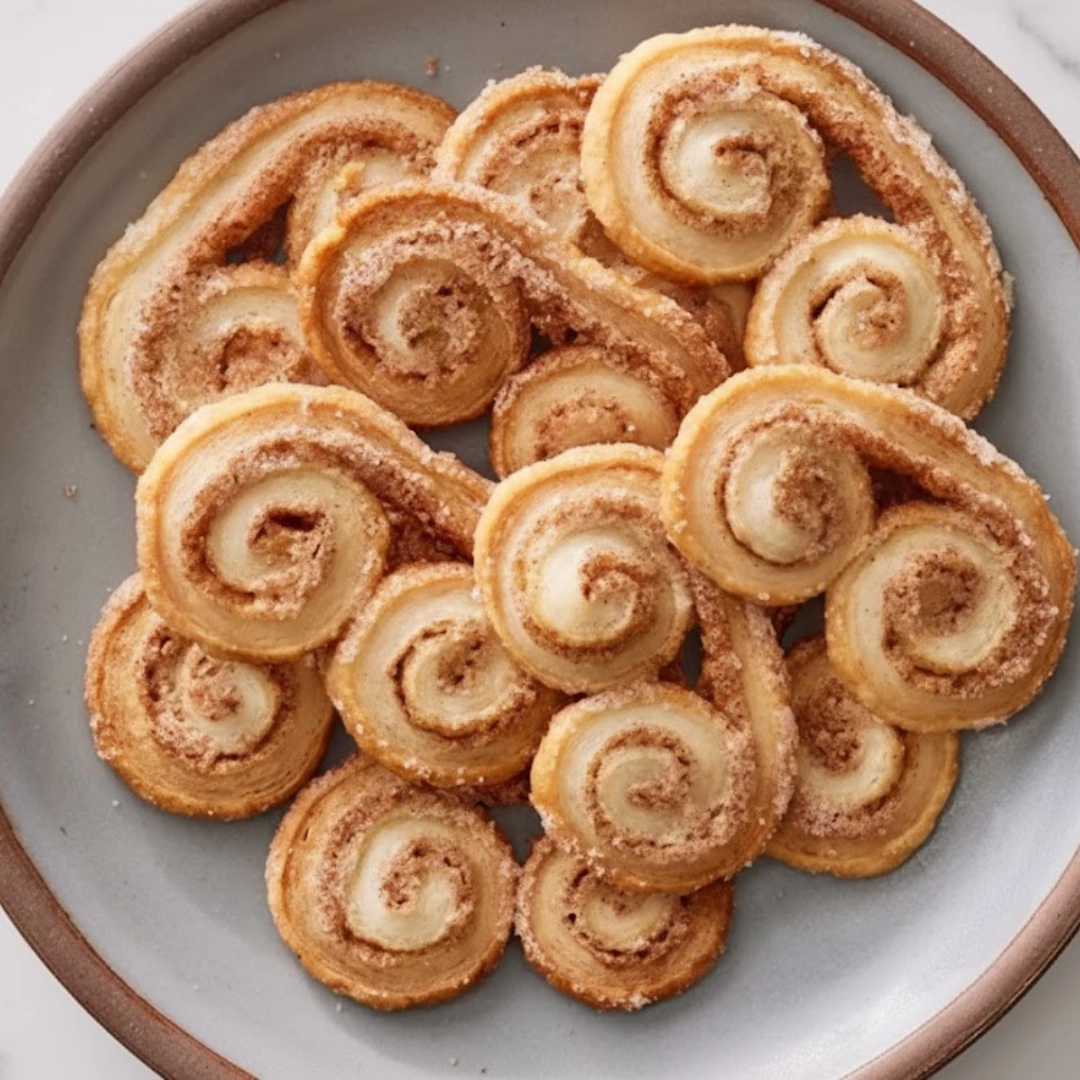
Cinnamon Palmiers, often called “elephant ears” for their distinctive, curled shape, are a testament to the beauty of simplicity in French pastry. This delightful sweet treat requires just a few pantry staples—namely, puff pastry, sugar, and warming spices—and transforms them into a delicate, caramelized confection. Crisp and shattering on the outside with a slight chew toward the center, these cookies are ideal for an afternoon coffee break, a light dessert, or even a quick, elegant offering for unexpected guests. The irresistible aroma of warm cinnamon and butter fills the kitchen, announcing that something wonderful is baking.
Table of Contents
The Foundation: Elements for Superior Palmiers
Achieving the perfect, uniform palmier texture—that satisfying shatter followed by a melting sugar bite—depends entirely on the quality and handling of your core components. We are looking for buttery richness and an intense, almost toffee-like caramelized crust.
What You Will Need
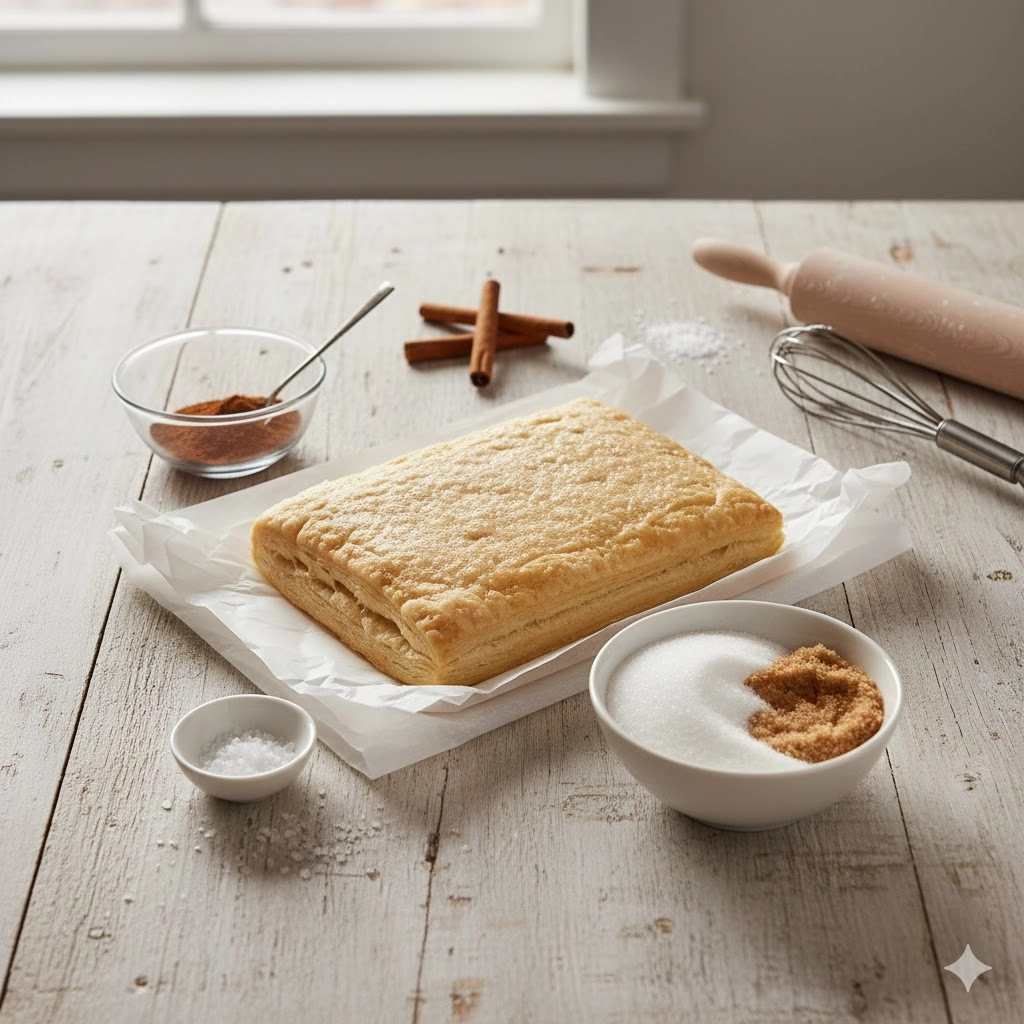
For the Pastry and Coating
- 1 (17.3-ounce) package all-butter puff pastry, thawed according to package directions
- 1 cup granulated sugar, plus extra for dusting
- 1 half cup light brown sugar, packed
- 2 tablespoons ground cinnamon
- 1 quarter teaspoon fine sea salt
Equipment
- Rolling pin
- Large baking sheets
- Parchment paper
- Sharp knife or pizza cutter
Assembly Sequence: Bringing the Palmiers to Life
This process is straightforward, focusing on tight rolling and even slicing to ensure the iconic, heart-shaped symmetry that defines excellent Cinnamon Palmiers.
- Prepare the Surface and Sugar Mixture: Preheat your oven to four hundred Fahrenheit. Line two large baking sheets with parchment paper. In a small bowl, whisk together the granulated sugar, brown sugar, cinnamon, and salt.
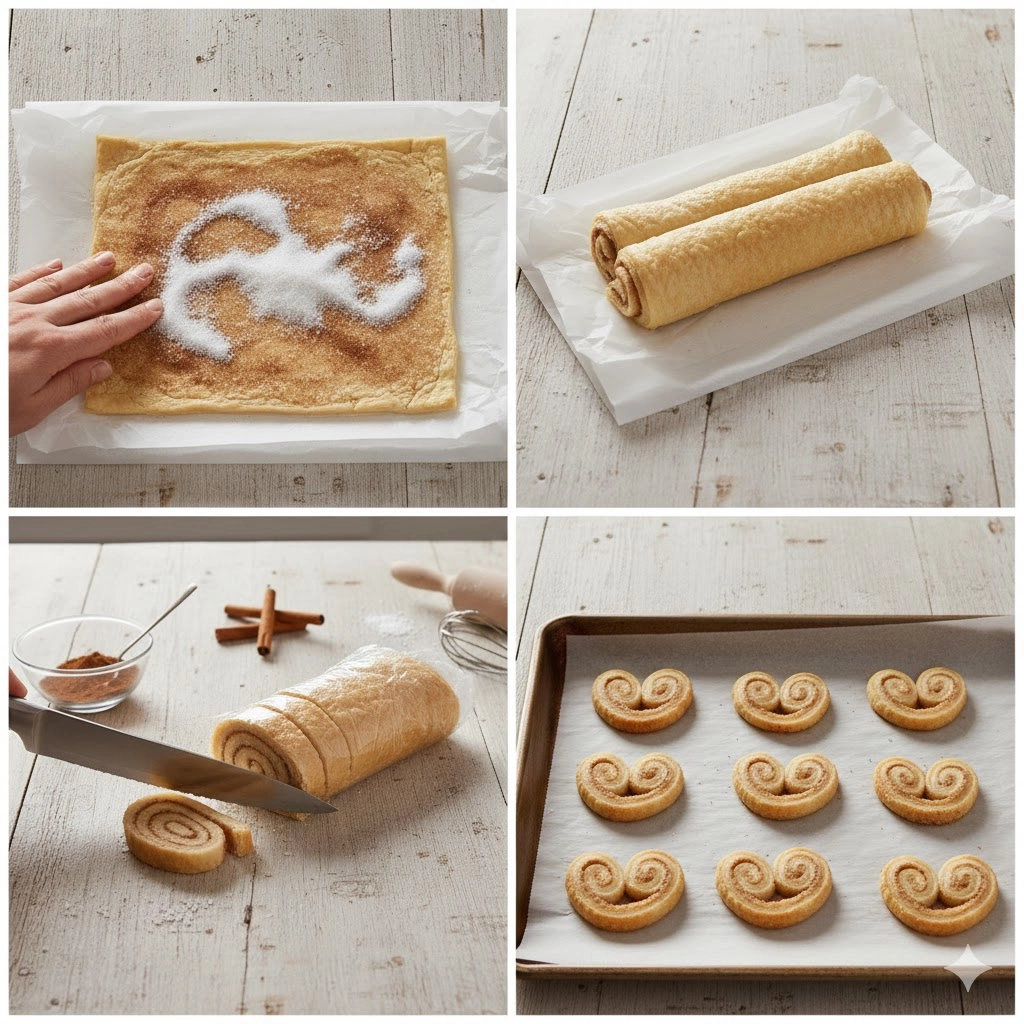
- Coat the Pastry: On a lightly floured surface, unroll one sheet of puff pastry. Sprinkle half of the sugar mixture evenly over the surface, pressing gently to adhere. Flip the pastry over and repeat the coating process with the remaining sugar mixture.
- Roll the Pastry: Starting from the two opposite long edges, tightly roll each edge inward until the two rolled sections meet exactly in the center of the sheet.
- Chill and Slice: Wrap the rolled log tightly in plastic wrap and chill in the freezer for fifteen minutes or in the refrigerator for thirty minutes to firm up. Use a sharp knife to cut the log into half-inch-thick slices.
- Bake the First Side: Lay the slices cut-side up on the prepared baking sheets, leaving two inches between each one. Bake for ten to twelve minutes until the bottom is deeply golden and caramelized.
- Flip and Finish: Carefully flip each palmier using a spatula. Return the tray to the oven and bake for another five to seven minutes until the second side is equally golden and the sugar is molten and bubbling.
- Cool: Transfer the Cinnamon Palmiers immediately to a wire rack to cool completely.
The Craft of Pastry: Deeper Dive into Each Step
The beauty of baking is often in the details—understanding why certain techniques matter elevates a simple cookie into a truly spectacular one.
Perfecting the Sugar Layer
When you lay down the sugar mixture, the goal is not just coverage, but integration. The sugar acts as both the sweetener and the structural element that creates the caramelization. Sprinkle generously and use your rolling pin lightly over the top of the sugar-coated sheet to gently embed the crystals into the buttery pastry. This prevents the sugar from scattering too quickly in the oven and ensures it melts and adheres properly. For a truly intense caramel flavor, consider dusting the counter surface with sugar instead of flour before rolling out the pastry—this creates a final, crucial layer of caramelization on the exterior.
The Art of the Tight Roll
The heart shape of the palmiers comes from rolling the two long sides inward. It is essential that this roll is tight and even. A loose roll will result in a cookie that unravels and spreads too much while baking, losing its signature layered structure. The two rolled sides must meet precisely in the middle without overlapping. If they overlap, the center will become dense and doughy instead of light and airy. Use the parchment paper beneath the pastry to help lift and guide the edges as you roll, ensuring a uniformly shaped log.
The Importance of the Chill
A short chill is non-negotiable. Puff pastry is a laminated dough, meaning it relies on distinct layers of butter and dough. If the pastry is too warm, the butter layers will smear when you slice the log, ruining the potential for maximum lift and flakiness. The fifteen-minute freeze firm the butter back up, allowing the knife to cut cleanly through the log, resulting in sharp, defined layers and a beautiful final shape.
Visual Cues in the Oven
Baking these treats is a dynamic process. When the tray first goes into the oven, the butter will melt, and the layers will begin to separate and puff. Watch the first side closely during the initial ten-to-twelve-minute bake. You are looking for a deep, almost chestnut-brown color on the base. The sugar around the edges will be molten, bubbling, and forming a hard, golden crust. If the pastry is merely pale gold, the caramelization hasn’t been fully achieved, and the palmiers will taste dull. The caramel is what locks in the flavor and gives it that wonderful crunch.
Post-Bake Handling
Once you flip the palmiers and bake the second side, the process is quick. The second side should reach the same golden depth. Crucially, remove the palmiers from the baking sheet immediately after coming out of the oven. The molten sugar will harden quickly on the hot pan, acting like glue and making them nearly impossible to remove without shattering the cookie. Use a thin, wide spatula and move them to a wire rack. This quick transfer ensures the perfect crispy texture.
Elevating the Cookie: Expert Palmiers Pro Tips
Mastering any simple recipe often comes down to internalizing a few high-impact tricks that improve the finished product dramatically.
- Choose All-Butter Pastry: For this specific recipe, the choice of dough is paramount. Many store-bought puff pastries use shortening, which sacrifices the rich flavor and superior crispness that only true butter can provide. Always opt for the all-butter variety.
- Prevent a Sticky Situation: If you find the sugar is melting off the sides onto the baking sheet and burning, reduce your oven temperature by twenty-five Fahrenheit. The intense heat is causing the sugar to liquefy too fast before the pastry has time to set its structure.
- The Quick-Thaw Trick: If your pastry is still slightly frozen, do not force it. Thaw in the refrigerator overnight. If you need it faster, keep the pastry sealed in its packaging and place it in a large zip-top bag filled with cold water. It should be pliable in about forty-five minutes.
- Even Sizing Matters: Consistency in the thickness of the slices is essential for uniform baking. Use a ruler to guide your knife if necessary. Thinner slices will bake faster and become lacier, while thicker slices will retain a chewier, more substantial center. Aim for exactly half-inch slices for a classic result.
- Re-Roll the Scrap: Any scraps of puff pastry should be gently stacked—not kneaded—and lightly rolled to use up any leftover material. The act of kneading will damage the delicate layers. These small pieces can be baked separately and used as a crunchy topping for ice cream.
- Double-Check Oven Temperature: Because these pastries rely on a specific, high heat for their lamination and caramelization, use an inexpensive oven thermometer to confirm your oven is truly heating to four hundred Fahrenheit. A slight variance can mean the difference between flaky and flat.
Creative Twists: Variations on the Classic
The simplicity of the base recipe makes it an excellent canvas for small, flavorful adjustments.
- Pistachio-Orange Palmiers: Replace the brown sugar with all granulated sugar. Finely chop two tablespoons of raw pistachios and add the zest of one small orange to the sugar mixture. The citrus oil adds a beautiful brightness to the rich pastry.
- Savory Sesame Palmiers: Eliminate all sugars and cinnamon. Instead, brush the rolled-out dough lightly with an egg wash, sprinkle with everything bagel seasoning, black pepper, and coarse sea salt. Bake as directed for a sophisticated appetizer.
- Spiced Cardamom Palmiers: In addition to the cinnamon, whisk in one teaspoon of ground cardamom and a half teaspoon of ground ginger into the sugar mixture. This provides a warm, aromatic complexity, especially appealing during the cooler months.
- Chocolate-Dipped Finish: Once the Cinnamon Palmiers have completely cooled, melt five ounces of good quality dark chocolate (at least sixty percent cacao) with a teaspoon of coconut oil or butter. Dip one end of the cookie into the chocolate and lay it on parchment paper to set.
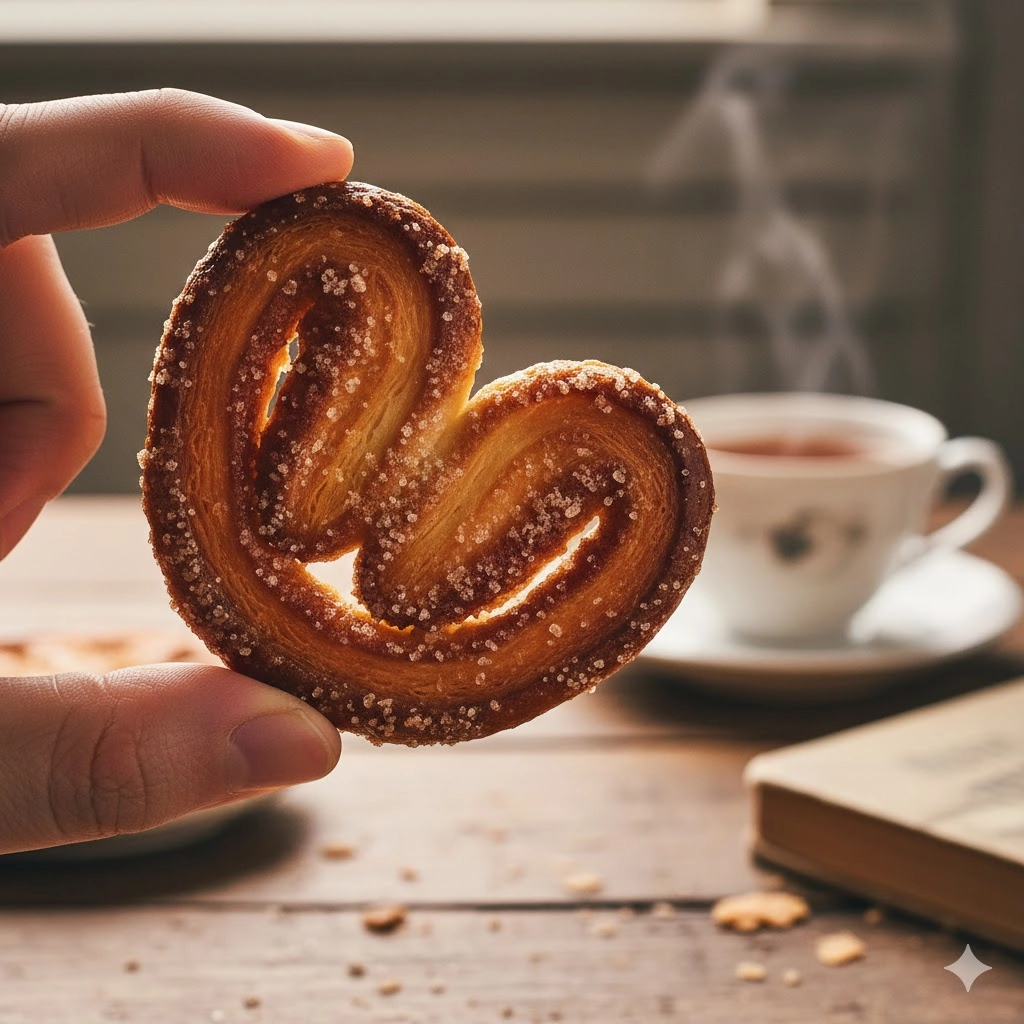
Presenting Your Palmiers: Serving Suggestions
These delicate cookies are versatile, fitting into numerous occasions and pairings.
- Coffee or Tea Service: Their classic pairing. Serve with a strong cup of black coffee, a cappuccino, or an Earl Grey tea. The slight bitterness cuts through the sweetness beautifully.
- Ice Cream Garnish: Use a single palmier as a crunchy, elegant garnish for a scoop of vanilla bean or salted caramel ice cream. The warmth of the cinnamon is excellent alongside the cold creaminess.
- Simple Fruit Platter: Arrange them alongside fresh seasonal berries (raspberries, blueberries) and a dollop of fresh whipped cream. The light fruit provides a textural and flavor contrast.
- Dipping Sauce: For a decadent finish, serve a small bowl of simple lemon curd or a thin chocolate ganache alongside the cookies for dipping.
Common Questions and Troubleshooting
We address the most frequent questions that arise when baking this classic pastry.
Why did my palmiers flatten instead of puffing?
Flattening often happens if your puff pastry was not rolled tightly enough or if it got too warm before slicing. The tight roll and the cold temperature are what create the pressure needed to force the layers apart in the oven, giving the palmiers their height and lightness. Ensure your oven is fully preheated to four hundred Fahrenheit, as lower heat may cause the butter to leak out before the structure sets.
Can I prepare the dough ahead of time?
Yes, you can prepare the rolled-up log of dough one day in advance. After rolling, wrap the log very tightly in plastic wrap and store it in the refrigerator. When you are ready to bake, pull it out, let it sit for five minutes to allow for easier slicing, and proceed with cutting and baking. Do not cut the slices until you are ready to bake, as the exposure will dry out the cut edges.
How should I store leftover palmiers?
Cinnamon Palmiers are best enjoyed the day they are baked. However, you can store cooled leftovers in an airtight container at room temperature for up to three days. To restore their crispness, reheat them quickly on a baking sheet in a three hundred Fahrenheit oven for about five minutes before serving. Avoid storing them in the refrigerator, as the humidity will quickly make them soft.
Is it necessary to use both brown and granulated sugar?
Using a mixture of both sugars is key for a well-rounded flavor and texture. Granulated sugar provides the necessary structure and promotes a sharp, clean caramel crunch on the exterior. Brown sugar, with its molasses content, introduces a subtle depth and a slightly chewier, more complex caramelized flavor to the center of the pastry.
Nutritional Snapshot
Understanding the macronutrient content is helpful for those monitoring their intake. Please note this is an estimate and can vary significantly based on the specific brand of puff pastry used.
| Nutrient | Amount per Serving |
| Calories | 210 kcal |
| Protein | 3 g |
| Carbs | 25 g |
| Fat | 11 g |
| Fiber | 1 g |
| Sugar | 15 g |
| Sodium | 80 mg |
Nutrition Information Disclaimer
Nutrition information is an estimate and may vary based on preparation and ingredients used.
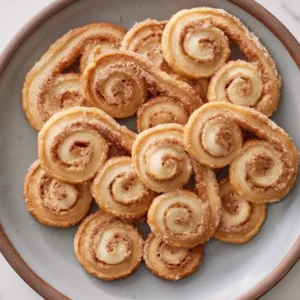
Classic Cinnamon Palmiers
Ingredients
- 1 package all-butter puff pastry, thawed (17.3-ounce)
- 1 cup granulated sugar, plus extra for dusting
- 0.5 cup light brown sugar, packed
- 2 tbsp ground cinnamon
- 0.25 tsp fine sea salt
Instructions
- Preheat the oven to four hundred Fahrenheit. Line two large baking sheets with parchment paper. In a small bowl, whisk together the granulated sugar, brown sugar, cinnamon, and salt.
- On a surface lightly dusted with the sugar mixture (instead of flour), unroll one sheet of puff pastry. Sprinkle half of the sugar mixture evenly over the surface, pressing gently to adhere. Flip the pastry and repeat with the remaining sugar.
- Starting from the two opposite long edges, tightly roll each edge inward until the two rolled sections meet exactly in the center of the sheet. Ensure the roll is firm and even.
- Wrap the rolled log tightly in plastic wrap and chill in the freezer for fifteen minutes (or refrigerator for thirty minutes) to firm up the butter. Use a sharp knife to cut the log into half-inch-thick slices.
- Lay the slices cut-side up on the prepared baking sheets, leaving two inches between each. Bake for ten to twelve minutes until the bottom is deeply golden and caramelized.
- Carefully flip each palmier using a spatula. Return the tray to the oven and bake for another five to seven minutes until the second side is equally golden and the sugar is molten and bubbling.
- Immediately transfer the Cinnamon Palmiers to a wire rack to cool completely. This prevents the melted sugar from gluing the cookies to the parchment paper.
Notes
Equipment
- Rolling Pin
- Large baking sheets
- parchment paper
- Sharp knife or pizza cutter