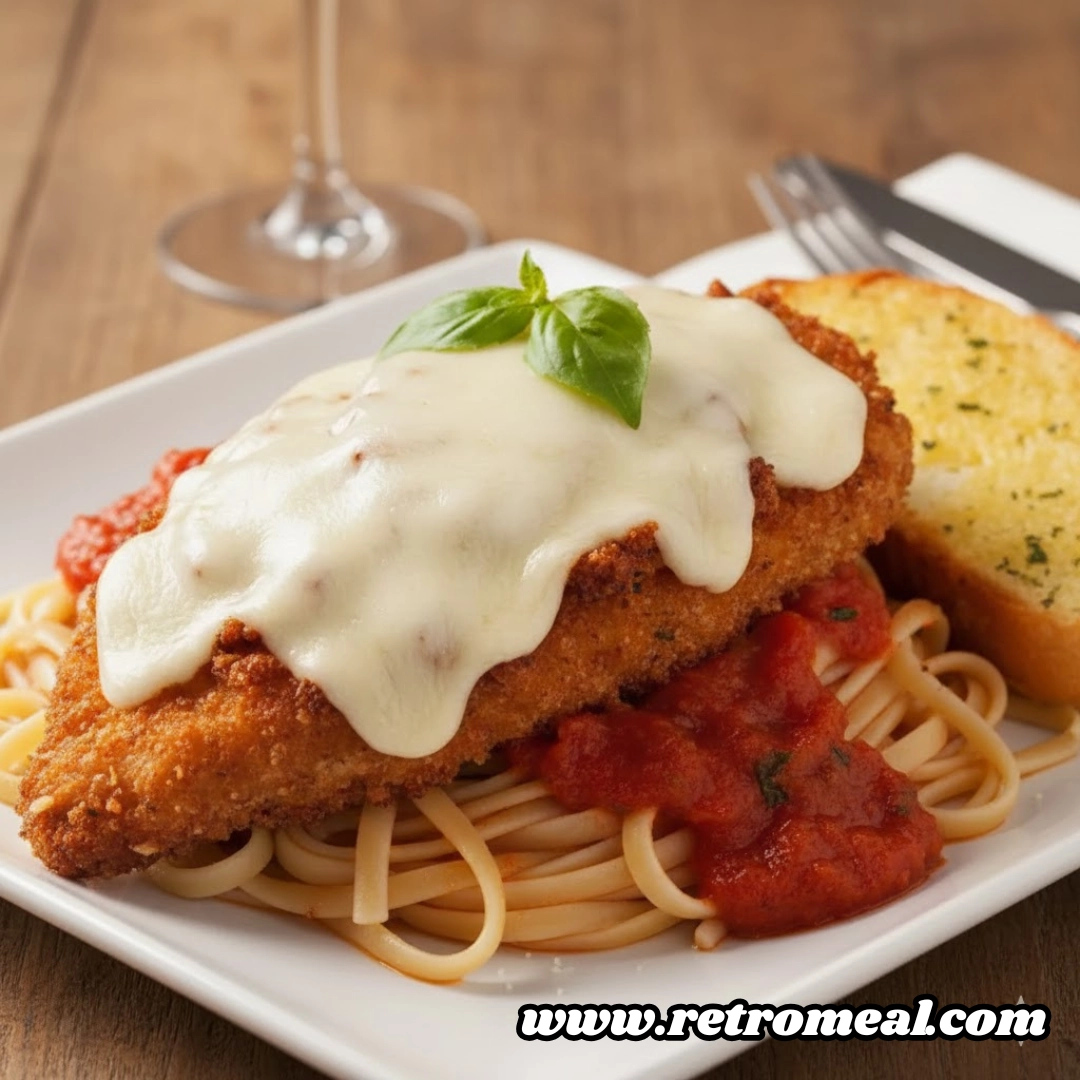
When you think of the quintessential Italian American comfort meal, nothing quite competes with the harmony of textures found in a perfectly executed Chicken Parmesan Pasta. This dish is a symphony of crunch, gooey melted cheese, and the bright, acidic punch of a slow-simmered tomato sauce. It is the kind of meal that turns a regular Tuesday into a celebration and lures everyone into the kitchen with the scent of toasted garlic and savory breading. This specific recipe is designed to be approachable yet sophisticated, utilizing a dual-purpose tomato sauce that yields enough for two separate meals. Whether you are teaching a child the ropes of the kitchen or preparing a romantic dinner for two, this version provides a restaurant-quality experience right from your own stove.
Table of Contents
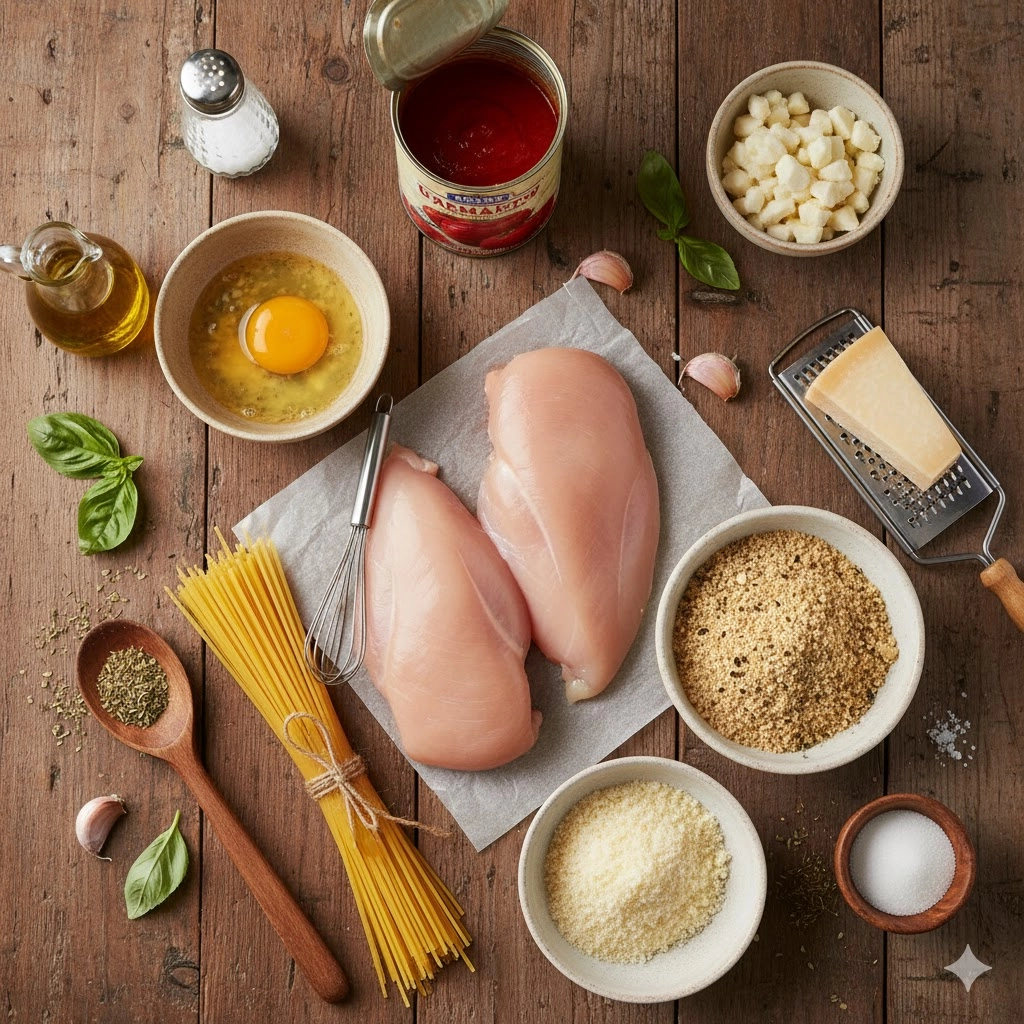
Essential Ingredients for Success
The beauty of this dish lies in the simplicity of its components. High-quality staples are transformed through heat and seasoning into something far greater than the sum of its parts.
For the Vibrant Tomato Sauce
- 2 tablespoons extra-virgin olive oil
- 2 medium garlic cloves, peeled and crushed
- 1 (28 ounce) can crushed tomatoes
- 1/2 teaspoon dried basil
- 1/4 teaspoon dried oregano
- 1/4 teaspoon sugar
- salt and freshly ground black pepper to taste
For the Pasta Base
- 8 ounces spaghetti or linguine
For the Crispy Chicken Cutlets
- 2 large boneless, skinless chicken breasts (6 to 8 ounces each), halved crosswise
- 1 large egg
- 1/2 cup dry bread crumbs
- freshly ground black pepper to taste
- 1/4 cup extra-virgin olive oil
- 1/2 cup grated part-skim mozzarella cheese
- 1/4 cup grated Parmesan cheese, plus more for serving
Master Instructions for the Perfect Plate
Follow these steps with precision to ensure your chicken remains crispy while your pasta is perfectly coated in that rich, homemade sauce.
Preparing the Signature Sauce
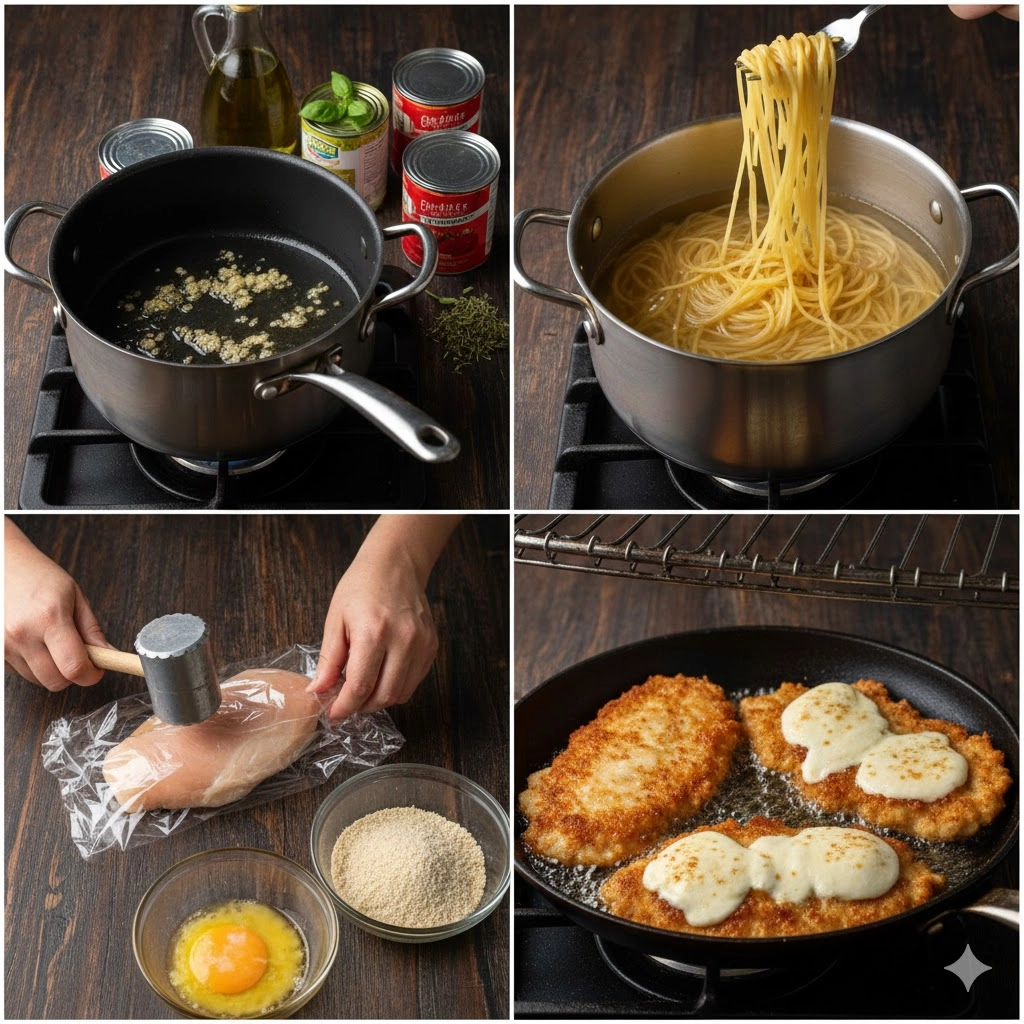
- In a large saucepan, combine the extra-virgin olive oil and the crushed garlic cloves. Heat over medium-high heat. Watch carefully; you want the garlic to reach a gentle sizzle, releasing its aromatic oils into the fat without burning.
- Carefully stir in the crushed tomatoes, dried basil, dried oregano, and sugar. Season the mixture with salt and black pepper according to your preference.
- Bring the sauce to a gentle simmer. Allow it to cook for 10 to 12 minutes. This brief window is essential for the flavors to meld and for the sauce to reach a slightly thicker, more robust consistency.
- Once finished, cover the saucepan and keep it warm. Remember to set aside half of this sauce for a future meal, as this recipe produces a generous double batch.
Preparing the Pasta
- Fill a large pot with water and add a generous pinch of salt. Bring to a rolling boil over high heat.
- Add your spaghetti or linguine, stirring occasionally to prevent the strands from sticking together.
- Cook until the pasta reaches an al dente texture—tender yet firm to the bite—which usually takes about 12 minutes.
- Drain the pasta thoroughly and keep it warm until you are ready to plate.
Creating the Crispy Chicken Cutlets
- Prepare the chicken by placing the pieces between two sheets of plastic wrap. Using a meat mallet or a heavy-bottomed pan, pound the chicken until it reaches an even 1/4-inch thickness.
- In a shallow dish, beat the egg until the yolk and white are completely blended.
- In a separate shallow dish, season the dry bread crumbs with freshly ground black pepper.
- Preheat your oven broiler to the high setting and adjust the oven rack so it sits 4 to 5 inches from the heat source.
- Dip each pounded cutlet into the beaten egg, allowing the excess to drip off, then press it firmly into the seasoned bread crumbs. Place the breaded cutlets on a wire rack set over a cookie sheet to help the breading set.
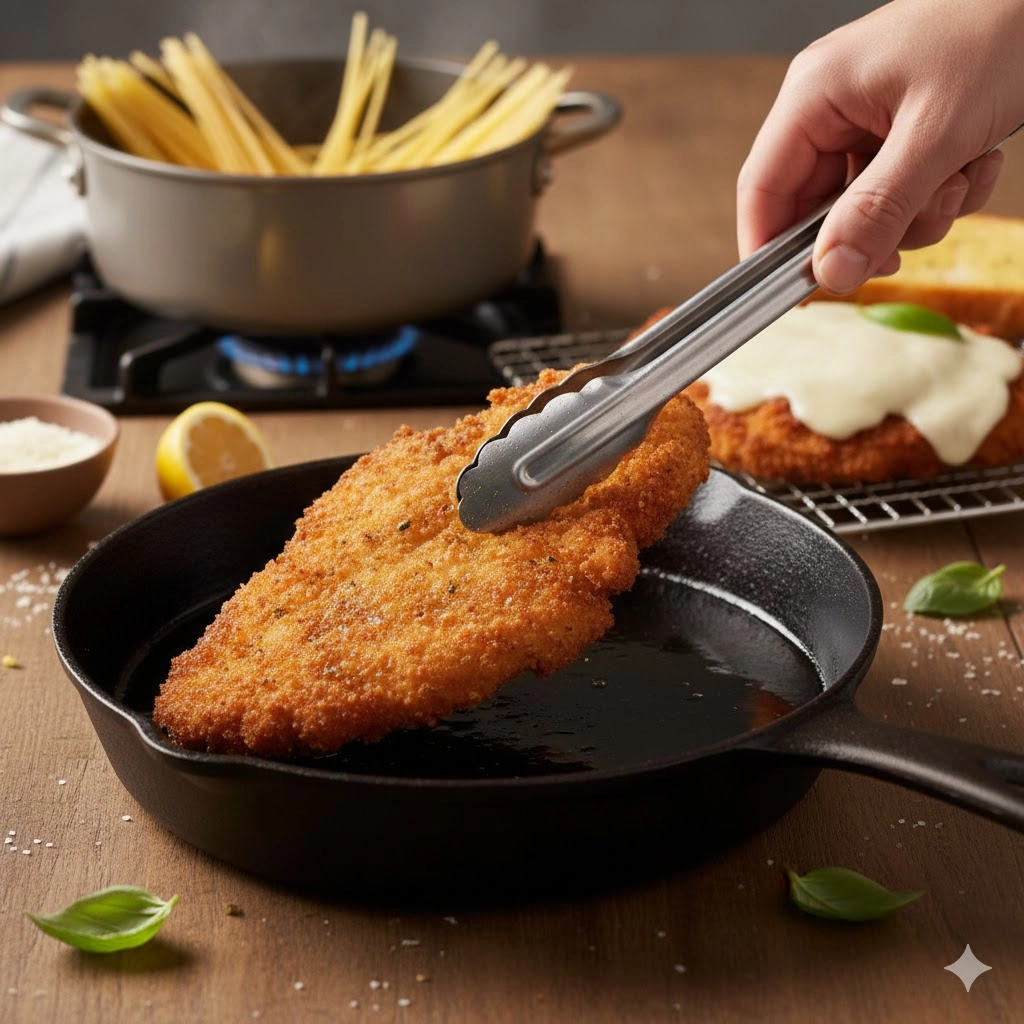
- Heat 1/4 cup of olive oil in a 12-inch skillet over medium-high heat. Wait until the oil shimmers before adding the chicken.
- Fry the cutlets until they are a deep golden brown on both sides, which typically takes about 5 minutes total.
- Transfer the fried chicken back onto a clean wire rack over a cookie sheet.
- Top each cutlet with a generous portion of mozzarella and Parmesan cheese. Broil for 2 to 3 minutes until the cheese is melted and displays beautiful golden-brown spots.
Serving the Meal
- Divide the warm pasta among four plates.
- Place a hot, cheesy chicken cutlet on top of each pasta portion.
- Spoon 2 to 3 tablespoons of the tomato sauce over the chicken, then sauce the surrounding pasta to your liking.
- Serve immediately with extra Parmesan cheese available at the table.
Deep Dive into the Cooking Process
The journey to a perfect Chicken Parmesan Pasta involves mastering several foundational culinary techniques. While the recipe is straightforward, the nuances of the “Step-by-Step” process ensure that every bite is exceptional.
When you begin the tomato sauce, the act of crushing the garlic cloves rather than mincing them allows for a more subtle infusion of flavor. By heating the garlic in cold oil and bringing them up to temperature together, you extract the maximum amount of essential oils. This provides a fragrant base that supports the acidity of the tomatoes. The addition of a tiny amount of sugar is a classic Italian-American secret; it doesn’t make the sauce sweet, but rather balances the natural tartness of the canned tomatoes, resulting in a more rounded flavor profile.
The preparation of the chicken is perhaps the most critical stage for texture. Pounding the chicken to a uniform 1/4-inch thickness isn’t just about making it cook faster; it ensures that the entire piece of meat reaches the safe internal temperature at the exact same moment. This prevents the edges from drying out while the center remains raw. Furthermore, the use of a wire rack after breading and again after frying is a professional trick. It allows air to circulate around the entire cutlet, preventing the bottom from becoming soggy due to trapped steam.
When you move to the frying stage, the shimmer of the oil is your visual cue for success. If the oil is too cold, the breadcrumbs will absorb the fat like a sponge, leading to a greasy finish. If it is too hot, the exterior will burn before the chicken is cooked through. A steady medium-high heat creates that characteristic “shatter-crisp” crust that contrasts beautifully with the melted mozzarella and the soft pasta beneath.
Unique Culinary Insights for Perfection
To elevate this dish from a standard weeknight dinner to a signature meal, consider the physics of the “Broiler Finish.” Many home cooks make the mistake of placing the chicken directly on a baking sheet to melt the cheese. By using a wire rack during the broiling phase, you ensure that the heat from the oven circulates under the chicken as well. This preserves the crunch of the underside while the top becomes a gooey, toasted masterpiece.
Another insight involves the “Carryover Cooking” of the pasta. If you plan to toss your pasta directly in the sauce rather than spooning it over the top, you should drain the pasta about one minute before the box instructions suggest. This allows the pasta to finish cooking inside the warm tomato sauce, where it will absorb the liquid and flavor into the grain of the noodle itself, rather than just having the sauce sit on the surface.
Lastly, the choice of cheese matters. While pre-shredded cheese is convenient, it is often coated in potato starch or cellulose to prevent clumping. For the best “cheese pull” and a smoother melt, grating your own part-skim mozzarella and Parmesan from a block is highly recommended. The fresh oils in the cheese will emulsify better under the broiler, giving you those sought-after spotty brown patches of flavor.
Creative Modifications and Substitutions
While the classic recipe is a crowd-pleaser, there are several ways to adapt this dish to suit different dietary needs or pantry availability.
If you find yourself without chicken breasts, boneless skinless chicken thighs make an excellent substitute. Thigh meat is more forgiving and remains juicy even if slightly overcooked. However, they may require a few extra minutes in the skillet due to their higher fat content. For those looking for a lighter alternative, turkey cutlets can be prepared in the exact same manner, offering a leaner protein profile that still pairs beautifully with the tomato and cheese.
For the breading, if you do not have dry bread crumbs on hand, you can create a rustic version using toasted bread pulsed in a blender. Panko breadcrumbs are another popular variation; they offer a larger, airier crunch that stays crispy even longer under the weight of the sauce. If you need a gluten-free option, crushed pork rinds or a blend of almond flour and extra Parmesan cheese can serve as an effective coating that browns well in the oil.
If you are short on time, the homemade sauce can be swapped for a high-quality store-bought marinara. To make a bottled sauce taste more “homemade,” simmer it for five minutes with a fresh sprig of basil or a splash of red wine before serving. This simple step bridges the gap between convenience and gourmet quality.
Ideal Accompaniments and Serving Suggestions
Chicken Parmesan Pasta is a hearty, stand-alone meal, but it truly shines when paired with sides that provide a fresh contrast to the richness of the fried chicken and melted cheese. A crisp green salad with a sharp vinaigrette is the most traditional pairing. The acidity in a lemon or balsamic dressing helps cleanse the palate between bites of savory pasta.
Garlic bread is, of course, a natural companion. For a more modern twist, consider serving the dish alongside roasted broccolini or charred asparagus. The bitterness of these green vegetables cuts through the sweetness of the tomato sauce and the saltiness of the Parmesan.
When it comes to presentation, serving this dish family-style on a large platter can create a beautiful centerpiece for a dinner party. However, individual plating as described in the instructions allows you to control the exact amount of sauce on each cutlet, ensuring the chicken stays as crispy as possible until the very last bite. Always remember to have a small bowl of extra grated Parmesan and some red pepper flakes on the table so guests can customize their spice and salt levels.
Deep-Dive Culinary FAQ
How can I ensure my chicken breading doesn’t fall off during frying?
The key to a secure breading is the “dry-wet-dry” principle and a bit of patience. After you pound the chicken, ensure it is patted dry with a paper towel before dipping it into the egg. Once breaded, letting the cutlets rest on a wire rack for about five minutes before they hit the hot oil allows the egg and crumbs to form a more cohesive bond. Also, avoid moving the chicken too much once it is in the skillet; let it form a crust before attempting to flip it.
Why does this recipe make twice as much sauce as I need?
This is a strategic time-saver designed for the busy home cook. The labor involved in sautéing garlic and simmering tomatoes is the same whether you make two cups or four. By making a double batch, you can freeze half of the sauce in an airtight container or freezer bag. The next time you want a quick pasta dinner or a base for a different protein, you already have a high-quality, homemade sauce ready to go.
Can I bake the chicken instead of frying it to save on calories?
Yes, you can certainly bake the chicken, though the texture will be slightly different. To achieve a similar golden color in the oven, you should “pre-toast” your breadcrumbs in a dry pan until they are light brown before coating the chicken. Bake the breaded cutlets at 400 degrees Fahrenheit on a wire rack for about 15 to 20 minutes, then proceed with the cheese and broiler steps as usual. It won’t have the same fried richness, but it remains a delicious alternative.
What is the best way to reheat leftovers without the chicken getting soggy?
Reheating Chicken Parmesan can be tricky because the microwave tends to make the breading soft. The best method is to use a toaster oven or a standard oven set to 350 degrees Fahrenheit. Place the chicken on a foil-lined tray and heat until the cheese is bubbling again. Heat the pasta separately in a pan with a splash of water or extra sauce to loosen the noodles. This preserves the structural integrity of the dish much better than a microwave.
A Final Word on This Classic Comfort Dish
There is a profound sense of satisfaction that comes from mastering a dish like Chicken Parmesan Pasta. It is more than just a recipe; it is a collection of techniques—the gentle simmer of a sauce, the careful pounding of a cutlet, and the watchful eye on a broiler—that results in a truly nourishing experience. This meal bridges the gap between professional technique and home-cooked warmth, offering a versatile template that you can return to time and time again. Whether shared with family or enjoyed as a comforting solo meal, it remains a timeless staple of the American kitchen.
Nutrition Information and Disclaimer
| Nutrient | Amount Per Serving |
| Calories | 715 |
| Total Fat | 29 grams |
| Saturated Fat | 8 grams |
| Cholesterol | 115 milligrams |
| Sodium | 980 milligrams |
| Total Carbohydrates | 67 grams |
| Dietary Fiber | 5 grams |
| Total Sugars | 7 grams |
| Protein | 46 grams |
Nutritional Accuracy Notice
Please be advised that the nutritional values provided are estimates based on standard ingredient measurements and typical preparation methods. Actual nutritional content may vary depending on specific brands of ingredients used, such as the type of pasta or the fat content of the mozzarella. For those with specific dietary requirements or health concerns, it is always recommended to calculate nutrition based on the exact products in your pantry.
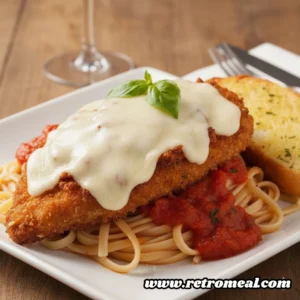
Chicken Parmesan Pasta
Ingredients
- 2 tbsp extra-virgin olive oil (for sauce)
- 2 cloves garlic, peeled and crushed
- 28 ounces crushed tomatoes
- 0.5 tsp dried basil
- 0.25 tsp dried oregano
- 0.25 tsp granulated sugar
- 1 to taste salt and freshly ground black pepper
- 8 ounces spaghetti or linguine
- 2 large boneless, skinless chicken breasts (halved crosswise)
- 1 large egg, lightly beaten
- 0.5 cup dry bread crumbs
- 0.25 cup extra-virgin olive oil (for frying)
- 0.5 cup grated part-skim mozzarella cheese
- 0.25 cup grated Parmesan cheese, plus extra for serving
Instructions
- Heat oil and garlic in a large saucepan until sizzle begins. Stir in tomatoes, basil, oregano, sugar, salt, and pepper. Simmer 10–12 minutes until thickened. Set aside half for future use.
- Boil a large pot of salted water. Cook spaghetti for 12 minutes until al dente. Drain and keep warm.
- Pound chicken pieces between plastic wrap to 1/4-inch thickness. Set up dredging stations with beaten egg and seasoned bread crumbs.
- Preheat broiler to high. Dip chicken in egg, then bread crumbs. Rest on a wire rack set over a cookie sheet.
- Heat 1/4 cup oil in a 12-inch skillet until shimmering. Fry chicken for 5 minutes total until golden brown on both sides.
- Place fried chicken on a clean wire rack. Top with mozzarella and Parmesan. Broil 2–3 minutes until cheese is melted and spotty brown.
- Plate pasta, top with chicken, and spoon tomato sauce over both. Serve with additional Parmesan.
Notes
Equipment
- Large saucepan
- Large pasta pot
- Meat mallet or heavy pan
- 12-inch skillet
- Wire rack and cookie sheet
- Shallow dredging dishes