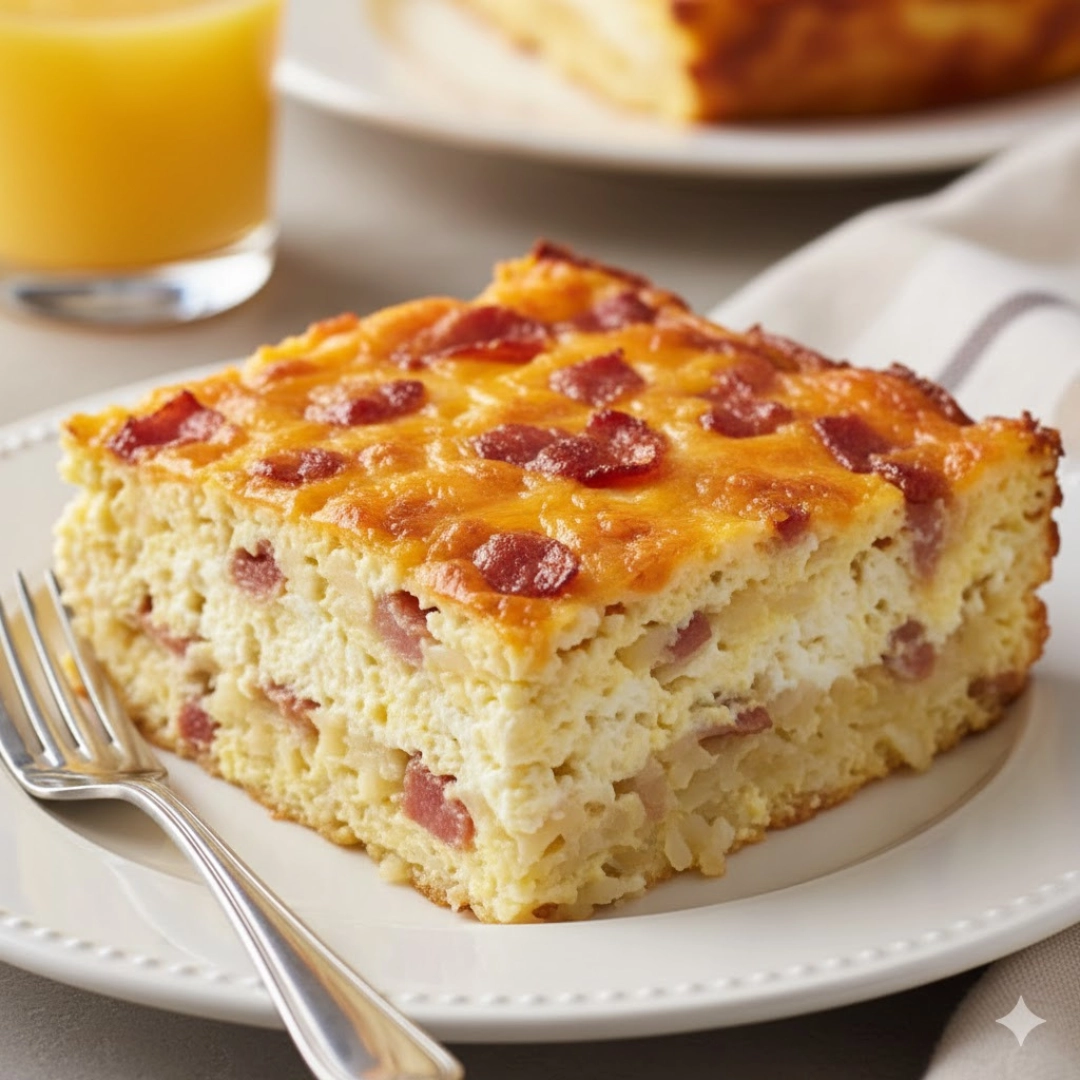
This foundational recipe originates from a tradition of hearty, satisfying morning meals designed to feed a crowd with minimal fuss. When you combine savory diced bacon, tender onions, and a generous medley of three distinctive cheeses, the result is a rich, creamy, and deeply flavorful layered dish that stands up to any holiday brunch or busy weekend gathering. This is not a light meal, but a profoundly comforting one that relies on simple, readily available kitchen staples. The Cheesy Amish Breakfast Casserole achieves a rare balance, offering a substantial experience without sacrificing the delightful, melt-in-your-mouth texture that defines truly great baked egg dishes.
Table of Contents
The Components of a Hearty Breakfast Bake
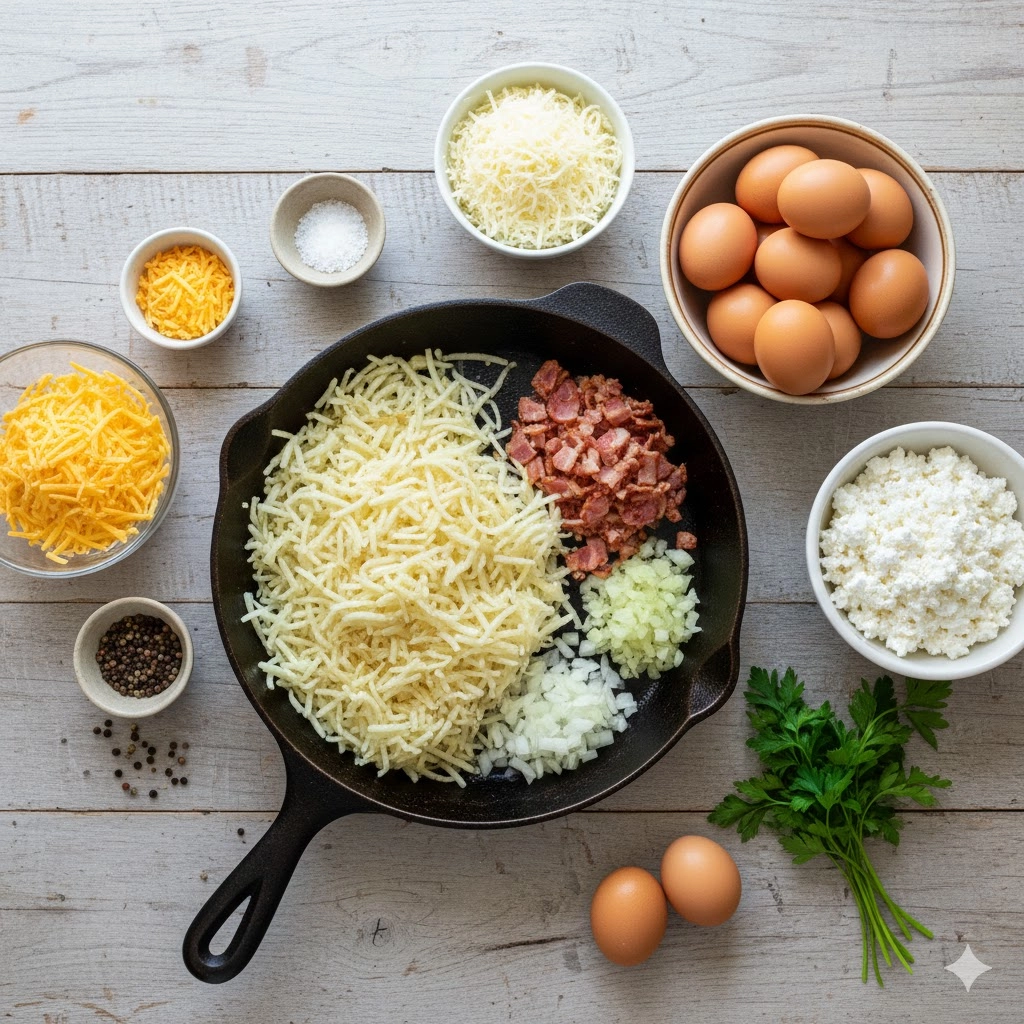
A successful casserole is built on layers of flavor and texture. The ratio of dairy to egg and potato is critical, ensuring the final dish sets up firmly yet remains moist. Below are the specific components needed to construct this satisfying bake.
The Foundation: Hash Browns and Bacon
- One pound of sliced bacon, diced
- One medium sweet onion, chopped
- Four cups frozen shredded hash brown potatoes, fully thawed
The Custard Base: Eggs and Dairy
- Nine large eggs, lightly beaten
- Two cups shredded sharp Cheddar cheese
- One and one half cups small curd cottage cheese
- One and one quarter cups shredded Swiss cheese
- One teaspoon kosher salt
- One half teaspoon freshly ground black pepper
Preparing the Casserole: A Numbered Guide
This sequence ensures that the savory elements are fully cooked and the starchy components are ready to absorb the rich custard before baking.
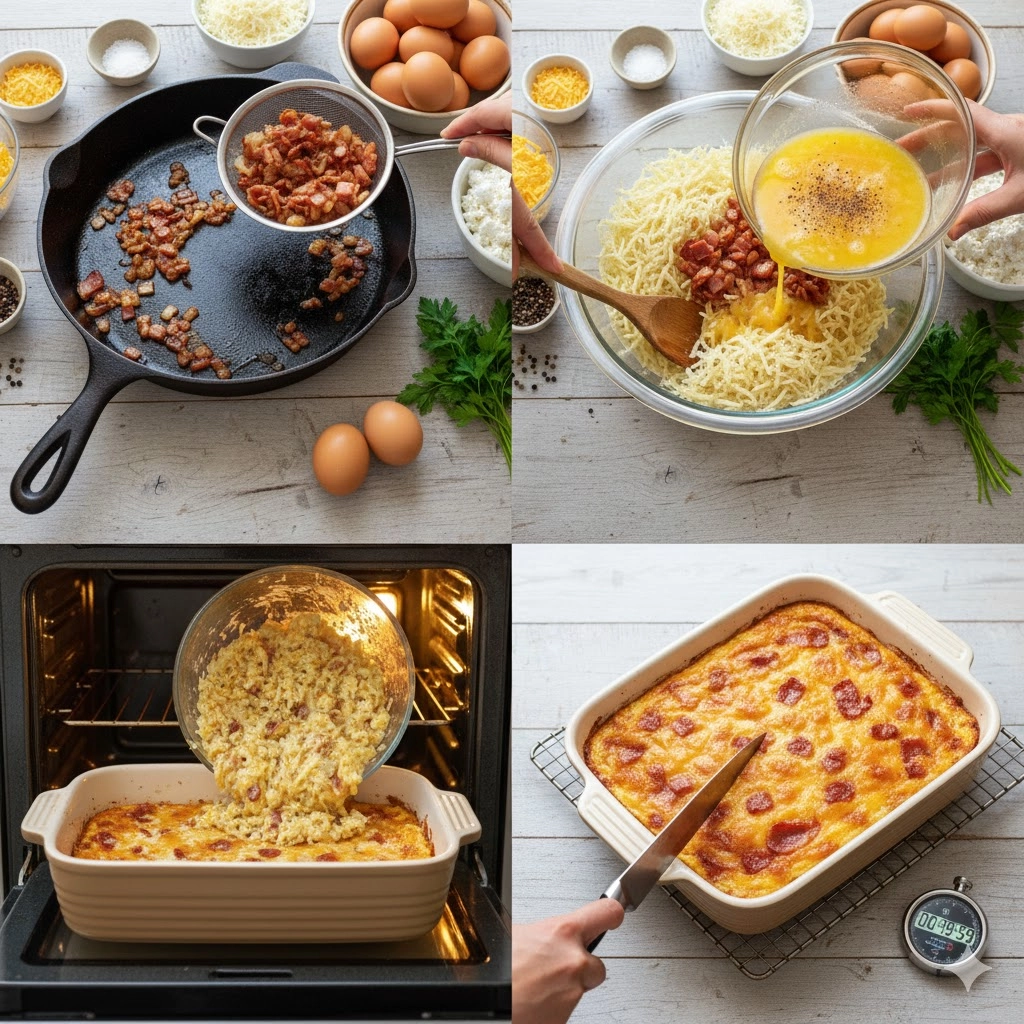
- Prepare the Aromatics and Meat: Preheat a large skillet over medium-high heat. Add the diced bacon and the chopped onion. Cook, stirring occasionally, until the bacon is fully browned and crisp, and the onion is translucent and caramelized.
- Drain Excess Fat: Carefully transfer the bacon and onion mixture from the skillet to a plate lined with paper towels to absorb any excess grease. Once cooled slightly, transfer the mixture to an extra-large mixing bowl.
- Combine the Base Ingredients: Add the fully thawed shredded hash brown potatoes to the bowl with the bacon and onions. Toss gently to ensure even distribution of the savory components.
- Whisk the Custard: In a separate medium bowl, lightly beat the nine large eggs. Stir in the kosher salt and black pepper.
- Assemble the Filling: Pour the beaten eggs over the potato mixture. Add the shredded Cheddar cheese, small curd cottage cheese, and shredded Swiss cheese. Fold all ingredients together thoroughly but gently until everything is evenly coated.
- Transfer to the Dish: Pour the entire mixture into a nine-by-thirteen-inch baking dish that has been liberally greased. Gently spread the filling so it lies flat.
- Initiate the Bake: Place the prepared dish into an oven that has been preheated to three hundred fifty Fahrenheit.
- Bake and Rest: Bake the casserole until the eggs are completely set in the center and the top is lightly golden brown and bubbly, typically requiring forty-five to fifty minutes. Remove from the oven and allow it to stand for ten minutes before cutting and serving.
Mastering the Technique: Expert Prep and Bake Notes
Achieving a creamy, non-soggy, and perfectly set breakfast casserole involves paying close attention to texture and heat. These details elevate the dish from simply good to reliably great.
Prepping the Pan for a Clean Release
The combination of cheese and egg, especially when baked at a medium temperature, can adhere stubbornly to the sides of a baking dish. The step of greasing the pan is non-negotiable. Use a solid fat, like butter or shortening, applied with a paper towel, covering the bottom and all sides thoroughly. For extra peace of mind, especially when making this for a catered event or potluck, line the pan with parchment paper, leaving an overhang on the two longer sides. This creates handles, allowing you to lift the entire cooked casserole out for clean, precise slicing before serving.
Why Thawing the Potatoes is Mandatory
The recipe explicitly calls for thawed frozen hash browns, and this is crucial for two reasons. Firstly, frozen potatoes introduce a significant amount of excess moisture into the egg custard. If baked from frozen, this extra water releases during the bake time, resulting in a watery, unset bottom layer. Secondly, freezing changes the cellular structure of the potato; if not thawed, the shreds may retain a slightly raw, crunchy texture even after the eggs have set. Take the time to thaw the hash browns completely—preferably overnight in the refrigerator—and, if they feel damp, press them lightly between paper towels to remove any residual surface moisture before combining them with the other ingredients.
The Visual Cues of “Just Right” Doneness
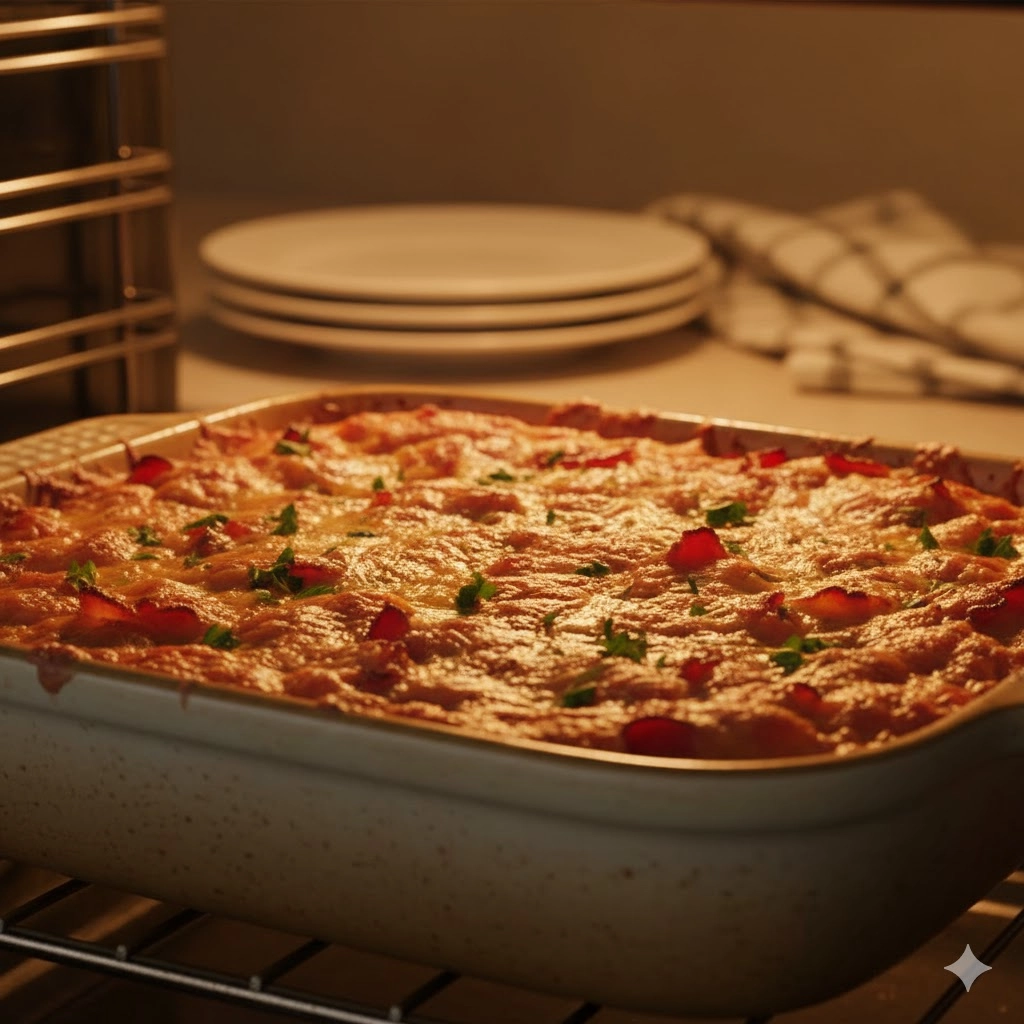
A major mistake is pulling the casserole too early, which leaves the center runny, or too late, which results in a rubbery, dried-out texture. The key to “just right” doneness relies on both sight and sound. Visually, the edges of the casserole should be noticeably set, slightly puffy, and beginning to pull away from the dish. The top layer of shredded cheese should be melted and lightly browned in spots. To test the center, give the dish a very gentle shake. If the center wobbles like liquid, it needs more time. If it jiggles slightly like firm gelatin or seems completely solid, it is ready. For the technical cook, the ideal internal temperature, checked with an instant-read thermometer inserted near the middle, is one hundred ninety Fahrenheit.
Texture and Flavor Builders: Unique Tips
These specific culinary techniques help refine the flavor profile and texture of the Cheesy Amish Breakfast Casserole, ensuring it earns its reputation as a crowd favorite.
- Bloom the Spices: Before adding the eggs, whisk a pinch of dry mustard powder and a quarter teaspoon of smoked paprika into the egg mixture. These spices “bloom” when introduced to the fat content of the eggs and cheeses, adding depth and a subtle, savory warmth that cuts through the richness of the dairy.
- Use Full-Fat Cottage Cheese: While tempting to swap for a lower-fat option, the small curd, full-fat cottage cheese is essential. It provides pockets of moisture and a slightly tangier flavor that prevents the casserole from becoming dense or brick-like. Its slow melt is key to the creamy, velvety texture the Amish-style casserole is known for.
- The Chilling Advantage: To truly elevate the texture, consider chilling the assembled casserole for a minimum of four hours, or up to overnight, before baking. This resting period allows the thawed hash browns to absorb the liquid egg and dairy mixture fully, preventing separation during cooking and resulting in a more cohesive, uniform final slice.
- The Final Cheese Melt: If you prefer a top crust that is uniformly golden and slightly crisp rather than deeply browned, reserve one cup of the shredded Cheddar and Swiss. Sprinkle this reserved cheese over the top only during the final ten minutes of baking. This ensures a fresh, bubbly layer of cheese without over-browning the potato beneath it.
- Post-Bake Steam: Do not skip the ten-minute rest time. As the casserole rests, residual heat finishes the cooking process, and more importantly, the internal structure of the eggs and dairy solidifies. Attempting to slice it immediately will result in ragged pieces and a messier presentation. Allowing it to cool slightly also makes the initial pieces easier to serve.
- Caramelize the Onions: When cooking the onion and bacon, extend the time slightly past just translucent for the onion. Aim for a light, golden-brown caramelization. This concentrates the onion’s sweetness and depth, which is vital since the casserole has few other vegetable or spice notes.
Customizing Your Bake: Meat and Cheese Swaps
The beauty of a casserole is its flexibility. While the classic preparation is spectacular, it welcomes modification based on dietary needs or simple preference.
- Sausage Swap: For a different flavor profile, substitute the bacon with one pound of ground breakfast sausage. Brown the sausage and onion together, ensuring you drain off all excess fat before mixing with the hash browns. If using Italian sausage, reduce the salt by half a teaspoon as the meat is already highly seasoned.
- Ham Addition: For an easy, pre-cooked meat option, use two cups of finely diced cooked ham in place of the bacon. Since ham does not render fat, you will need to sauté the onion separately in one tablespoon of butter or oil before combining it with the rest of the ingredients.
- Cheese for Pepper Jack: If you desire a touch of heat, exchange the Swiss cheese for a medium-heat Pepper Jack cheese. The subtle spice from the peppers pairs wonderfully with the savory bacon and rich egg base. Avoid substituting the cottage cheese, as its unique curd texture is fundamental to the casserole’s overall feel.
- Vegetarian Base: Eliminate the bacon entirely for a meat-free version. Instead, sauté one cup of finely chopped bell peppers (any color) and one cup of sliced mushrooms along with the sweet onion in butter until all the liquid has evaporated from the mushrooms and the vegetables are tender-crisp.
Ideal Pairings for Brunch Success
This dish is immensely filling on its own, but a successful breakfast or brunch spread requires complementary textures and acidity to cleanse the palate.
- Fresh Fruit Salad: The richness of the cheese and meat requires a counterpoint. A simple bowl of fresh, sliced citrus (oranges, grapefruit) or berries provides a necessary acidic brightness that cuts through the fat. A mix of kiwi, pineapple, and strawberries works exceptionally well.
- A Simple Green Side: Offer a light, mixed green salad dressed with a simple vinaigrette (oil, vinegar, Dijon mustard). Serving a salad with a breakfast casserole might seem unorthodox, but the slightly bitter greens and tang of vinegar are a refreshing contrast.
- Spicy Kicker: Present a small bowl of mild salsa or a hot sauce variety on the side. The combination of heat and acidity is a classic pairing for egg and potato dishes, allowing guests to customize the warmth of their individual serving.
- Fluffy Quick Bread: If you are determined to serve another baked good, opt for something straightforward and non-yeasted, like a simple banana nut bread or a blueberry scone. This provides a softer, sweet textural contrast without making the entire meal too heavy or complex.
Troubleshooting and Common Inquiries
Experienced cooks often have similar questions when approaching a new casserole recipe. These answers should help preempt potential issues.
How do I prevent the casserole from being watery or “soupy?”
Wateriness is usually caused by two factors: unthawed or wet hash brown potatoes, or not adequately draining the bacon fat. Ensure the potatoes are fully thawed and patted dry before they are mixed in. Also, be meticulous about draining the bacon grease from the sauté pan; excess fat will leach out during baking and prevent the egg from setting properly.
Can I prepare this casserole completely ahead of time?
Absolutely. Assemble the casserole fully, including mixing the eggs, cheeses, potatoes, and cooked meat, then transfer it to the greased baking dish. Cover the dish tightly with plastic wrap and refrigerate it for up to thirty-six hours. When ready to bake, remove it from the refrigerator about thirty minutes beforehand to take the chill off, then proceed with baking as directed.
What is the best way to reheat leftovers?
To maintain the best texture, reheating in the oven is superior to the microwave. Preheat your oven to three hundred twenty-five Fahrenheit. Cut the leftover casserole into individual serving slices, place them on a foil-lined baking sheet, cover loosely with foil, and bake for fifteen to twenty minutes, or until heated through. This gentle, even heat prevents the edges from drying out while the center warms.
Why is cottage cheese used instead of just shredded cheese?
The cottage cheese is used primarily for its moisture content and texture. While it might seem like a strange addition, the curds melt slightly, introducing a vital creaminess to the egg base. This fat and water content ensures the final dish is not dry, provides essential structure, and lends a subtle, appealing tanginess that powdered or shredded cheeses cannot replicate.
| Nutrient | Amount per Serving |
| Calories | 314 kcal |
| Protein | 22 g |
| Carbs | 12 g |
| Fat | 23 g |
| Fiber | 1 g |
| Sugar | 1 g |
| Sodium | 609 mg |
Nutrition Information
Nutrition information is an estimate and may vary based on preparation and ingredients used.
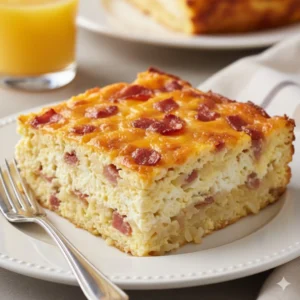
The Ultimate Cheesy Amish Breakfast Casserole
Ingredients
- 1 pound sliced bacon, diced
- 1 medium sweet onion, chopped
- 9 large eggs, lightly beaten
- 4 cups frozen shredded hash brown potatoes, fully thawed
- 2 cups shredded sharp Cheddar cheese
- 1.5 cups small curd cottage cheese
- 1.25 cups shredded Swiss cheese
- 1 tsp kosher salt
- 0.5 tsp freshly ground black pepper
Instructions
- Preheat the oven to three hundred fifty Fahrenheit. Liberally grease a nine-by-thirteen-inch baking dish.
- Heat a large skillet over medium-high heat. Add the diced bacon and chopped onion. Cook, stirring occasionally, until the bacon is fully browned and crisp, and the onion is translucent and caramelized. Drain off all excess grease.
- Transfer the bacon and onion to an extra-large mixing bowl. Add the fully thawed shredded hash brown potatoes and toss gently to distribute the savory components.
- In a separate bowl, whisk the eggs, salt, and pepper. Pour over the potato mixture. Add the Cheddar, cottage cheese, and Swiss cheese. Fold all ingredients together thoroughly but gently until everything is evenly coated.
- Pour the entire mixture into the prepared baking dish and spread evenly. Place the dish into the preheated oven. Bake until the eggs are completely set in the center and the top is lightly golden brown, typically forty-five to fifty minutes.
- Remove the casserole from the oven and allow it to stand for ten minutes before cutting and serving. This resting time is crucial for the internal structure to solidify.
Notes
Equipment
- 9×13-inch baking dish
- large skillet or frying pan
- large mixing bowl