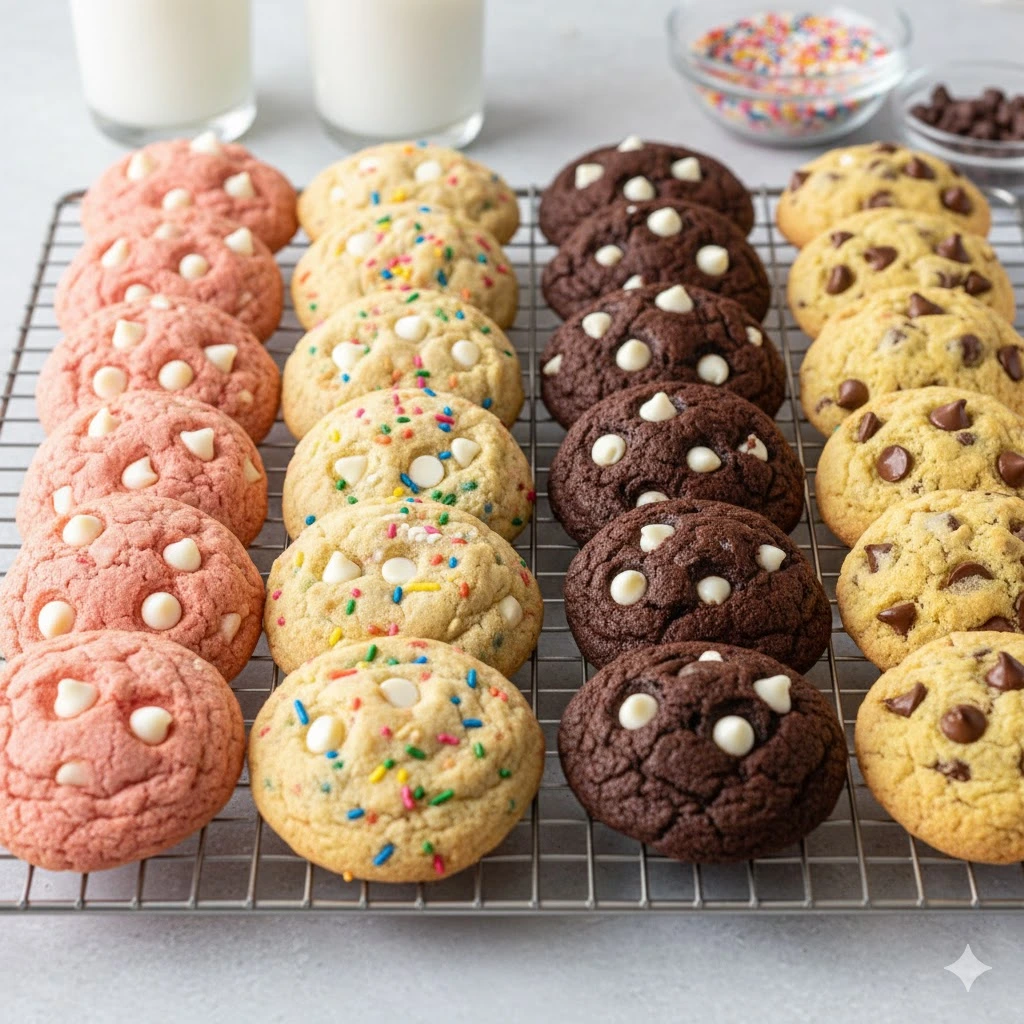
There is something inherently nostalgic and comforting about a dessert that bridges the gap between a fluffy cake and a chewy cookie. This recipe for a Cake Mix Cookie Cake is the ultimate secret weapon for busy parents, last-minute party hosts, or anyone who simply craves a homemade treat without the professional bakery price tag. By utilizing a standard box of cake mix as your structural foundation, you bypass the tedious measuring of flour, leavening agents, and sugar, moving straight to the creative part: the mix-ins.
The beauty of this particular method lies in its incredible versatility. Whether you are celebrating a birthday, a holiday, or a quiet Tuesday night, the base remains consistent while the personality of the cookie changes with your mood. Imagine a deep chocolate base loaded with white chocolate chips, or a bright lemon base studded with dried blueberries. The possibilities are truly infinite, and the result is always a tender, melt-in-your-mouth texture that is impossible to resist.
Table of Contents
Essential Ingredients for Your Cookie Creation
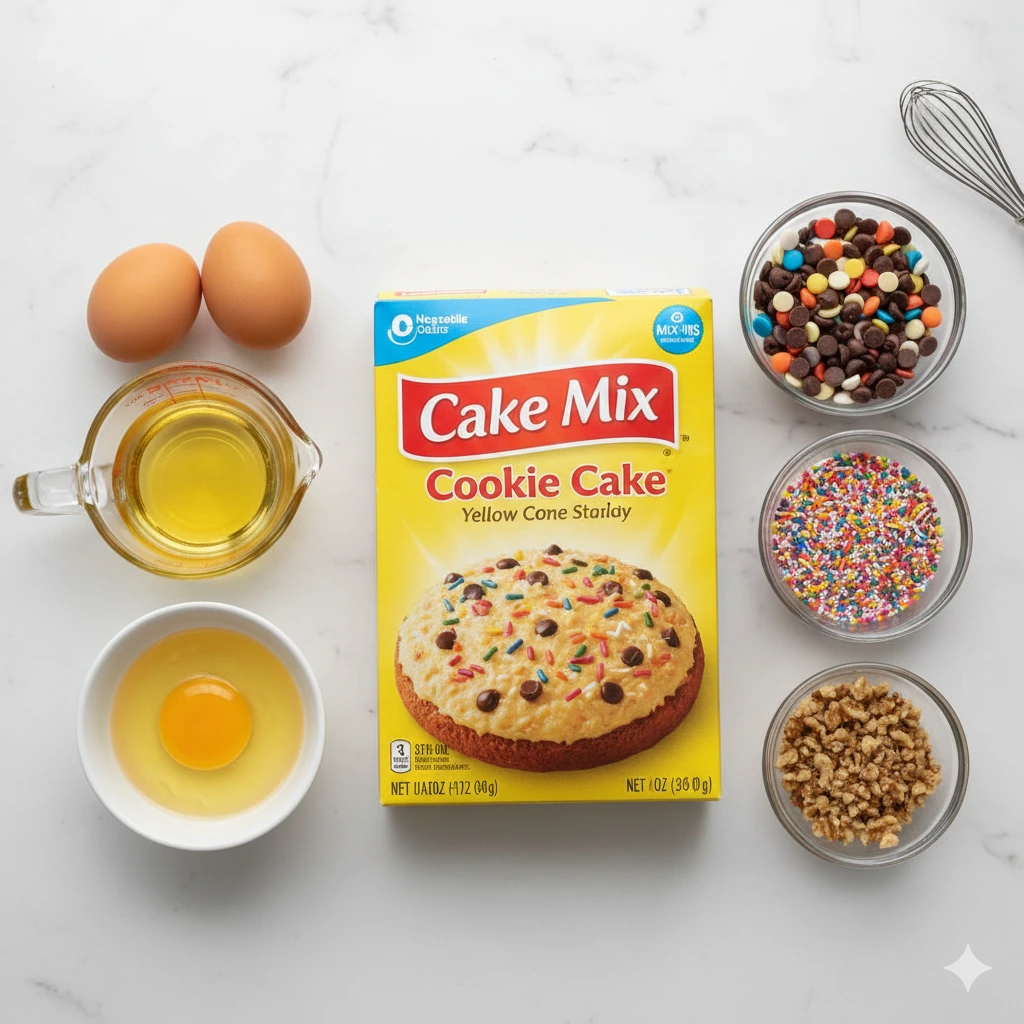
To get started, you will need five simple items that are likely already sitting in your pantry or refrigerator. Each ingredient is vital for achieving that specific “cookie-cake” hybrid texture that is soft in the center with a delicate crunch at the perimeter.
- 1 box cake mix (15.25 ounces)
- 2 large eggs
- 1/2 cup vegetable oil
- 1 cup large mix-ins such as baking chips or various candies
- 1/2 cup smaller mix-ins like colorful sprinkles or finely chopped nuts
Simple Instructions for Baking Success
Following these steps precisely will ensure that your cookies have the perfect structural integrity and flavor profile.
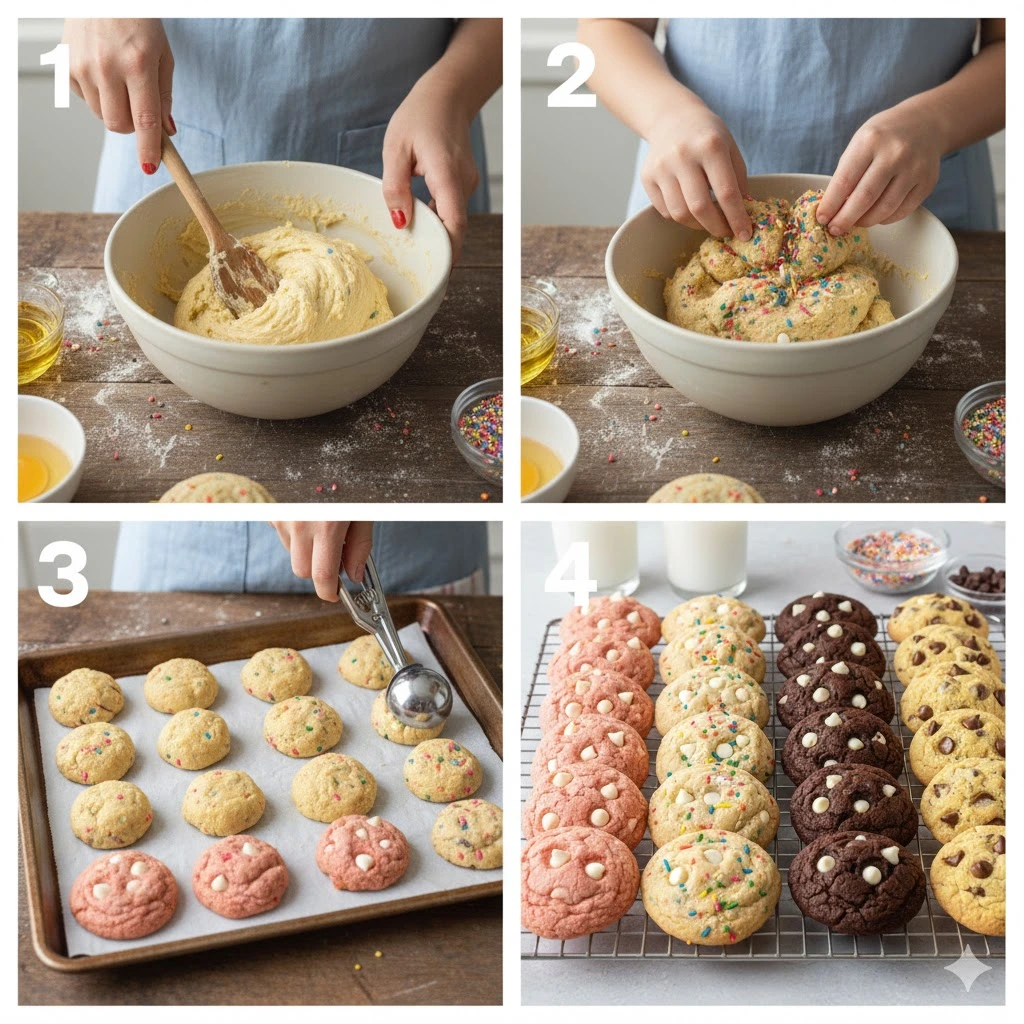
- Heat the Oven: Begin by preheating your oven to 350 degrees Fahrenheit. This ensures a consistent environment for the dough to rise and set.
- Mix the Base: In a large mixing bowl, beat together the cake mix, two large eggs, and the vegetable oil. Continue mixing until a cohesive, soft dough forms.
- Incorporate the Extras: Gently fold in your large mix-ins and smaller decorative elements until they are evenly distributed throughout the batter.
- Portion the Dough: Use a portion scoop or a large spoon to drop rounds of dough onto a baking sheet lined with parchment paper. Leave at least one inch of space between each portion to allow for natural spreading.
- Bake to Perfection: Place the tray in the oven and bake for 10 to 13 minutes. You are looking for the edges to turn a very light golden brown.
- Cooling Phase: Allow the cookies to rest on the hot baking sheet for 2 to 3 minutes before moving them to a wire rack. This “carry-over” cooking time helps the centers set without becoming hard.
Achieving the Ultimate Creamy and Chewy Consistency
When we talk about the science of a Cake Mix Cookie Cake, we are looking at how fats and proteins interact with pre-processed starches. Because a boxed cake mix already contains finely milled flour and emulsifiers, adding two large eggs provides the necessary protein structure to turn a pourable batter into a scoopable dough. The choice of vegetable oil is a deliberate culinary decision; while butter offers a distinct dairy flavor, vegetable oil remains liquid at room temperature, which translates to a cookie that stays soft for days rather than becoming brittle.
To ensure your consistency is top-tier, pay close attention to the mixing stage. You want to beat the eggs and oil into the dry mix until no streaks of white powder remain, but avoid over-working the dough. Over-mixing can develop the gluten too much, leading to a tough, bread-like texture rather than the tender crumb we desire. When you fold in your candies or nuts, use a silicone spatula and a gentle “over and under” motion. This preserves the air pockets created during the initial mixing, keeping the final product light and airy.
Innovative Pairings and Serving Suggestions
The presentation of your Cake Mix Cookie Cake can elevate it from a simple snack to a centerpiece dessert. If you are serving these at a dinner party, consider a “deconstructed” approach. Warm a single large cookie in the microwave for ten seconds, place it in a shallow bowl, and top it with a generous scoop of premium vanilla bean ice cream. The heat from the cookie will begin to melt the ice cream, creating a rich sauce that coats every bite.
For a more casual gathering, a cold glass of whole milk is the classic accompaniment. The fats in the milk cleanse the palate between bites of sugary goodness. If you want to get creative, you can create “cookie sandwiches.” Take two completely cooled cookies of the same size, spread a thick layer of marshmallow fluff or peanut butter on the flat side of one, and press the second cookie on top. This creates a decadent, multi-layered treat that is particularly popular at children’s birthday parties.
Customizing Your Flavor Profile: Modifications and Substitutions
While the standard recipe is fantastic, you might find yourself needing to swap ingredients based on what is in your cupboard. If you find yourself out of vegetable oil, you can use an equal amount of melted butter. This will result in a richer, slightly more “shortbread” style cookie that browns more deeply in the oven. For those looking for a tropical twist, melted coconut oil is an excellent substitute that adds a very faint aroma of coconut to the finished bake.
If you are catering to a specific dietary need, such as a gluten-free lifestyle, you can easily swap the standard 15.25 ounce box for a gluten-free cake mix. Because these mixes often have different absorption rates, you may need to let the dough sit for five minutes before scooping to allow the alternative flours to fully hydrate. As for the mix-ins, feel free to raid the pantry. Crushed pretzels offer a wonderful salty contrast to a sweet chocolate base, while dried cranberries and white chocolate chips create a sophisticated flavor profile for a vanilla or spice cake base.
Advanced Baking Insights: Mastering the Details
The difference between a good cookie and a legendary one often comes down to the small details in the preparation process. One such detail is the temperature of your eggs. Using room-temperature eggs allows them to emulsify more easily with the oil and dry mix, leading to a smoother dough. Simply place your eggs in a bowl of warm water for five minutes before cracking them to take the chill off.
Another tip for a professional look is the “pressing” technique. If you want your cookies to look like they came from a high-end boutique, reserve a handful of your mix-ins (like the chocolate chips or larger candies) and press them manually into the top of the dough balls right before they go into the oven. This ensures that the star ingredients are visible on the surface rather than hidden inside the dough. Furthermore, always use parchment paper or a silicone baking mat. Greasing a pan with cooking spray can cause the cookies to spread too thin, whereas parchment provides just enough friction for the dough to grip as it rises, resulting in a thicker, loftier cookie.
Deep-Dive FAQ
Can I use a smaller or larger box of cake mix for this recipe?
The recipe is specifically calibrated for the standard 15.25 ounce box found in most American grocery stores. If you use a smaller “Jiffy” style mix or a massive bulk-sized bag, the ratio of liquid to dry ingredients will be off, resulting in dough that is either too runny to scoop or too crumbly to hold together. Always check the weight on the front of the box before starting.
Why did my cookies come out flat and greasy?
This usually happens if the dough becomes too warm before hitting the oven or if too much oil was added. Ensure you are measuring your half-cup of oil accurately using a liquid measuring cup at eye level. If your kitchen is particularly warm, try chilling the dough in the refrigerator for twenty minutes before scooping it onto the baking sheet to help it maintain its shape.
How do I know for sure when the cookies are done baking?
The “golden edge” rule is the best visual indicator, but you can also use the “touch test.” Gently press the edge of a cookie with your finger; it should feel firm and set. The center, however, should still feel quite soft and look slightly underbaked. Do not worry—the residual heat from the baking sheet will finish the cooking process as they cool.
Can I make the dough ahead of time and bake it later?
Yes, this dough holds up remarkably well in the refrigerator. You can prepare the mixture, cover the bowl tightly with plastic wrap, and store it for up to forty-eight hours. When you are ready to bake, let the dough sit on the counter for ten minutes so it is soft enough to scoop. This is a great way to have fresh cookies ready in minutes for unexpected guests.
What is the best way to store these to keep them soft?
The key to longevity is preventing airflow. Once the cookies have reached room temperature, place them in an airtight plastic container or a zip-top bag. If you find they are starting to harden after a few days, placing a single slice of white bread into the container will create a humid environment that softens the cookies back up beautifully.
Nutritional Information and Values
The following table provides an estimate per cookie, based on a yield of 24 cookies using a standard yellow cake mix and chocolate chip mix-ins.
| Nutrient | Amount Per Serving |
| Calories | 145 |
| Total Fat | 7 grams |
| Saturated Fat | 2 grams |
| Cholesterol | 15 milligrams |
| Sodium | 130 milligrams |
| Total Carbohydrates | 20 grams |
| Dietary Fiber | 0.5 grams |
| Sugars | 12 grams |
| Protein | 1.5 grams |
Nutritional Disclaimer
The values provided in this table are estimates based on standard ingredient data. Actual nutritional content will vary significantly depending on the specific brand of cake mix used and the variety of mix-ins selected. For those with specific medical or dietary requirements, please calculate the nutrition based on the exact labels of the products in your kitchen.
Wrapping Up Your Baking Adventure
Embarking on the journey of making a Cake Mix Cookie Cake is about more than just satisfying a sweet tooth; it is about reclaiming the joy of simple, stress-free baking. There is a unique satisfaction in seeing a few basic pantry staples transform into a vibrant, festive treat that brings a smile to everyone’s face. Whether you stick to the classic chocolate chip variety or venture into bold new territory with unconventional candies and extracts, you now have the foundational knowledge to bake with confidence. So, preheat that oven, grab your favorite mixing bowl, and let your culinary imagination run wild.
Cake Mix Cookie Cake
Ingredients
- 1 box cake mix (15.25 ounces)
- 2 large eggs
- 0.5 cup vegetable oil
- 1 cup large mix-ins (baking chips or candies)
- 0.5 cup smaller mix-ins (sprinkles or finely chopped nuts)
Instructions
- Preheat your oven to 350 degrees Fahrenheit. Line a large baking sheet with parchment paper to prevent sticking and ensure easy cleanup.
- In a large mixing bowl, thoroughly beat together the cake mix, eggs, and vegetable oil until a soft, uniform dough forms.
- Gently fold in your chosen large mix-ins and smaller decorative elements until they are evenly distributed throughout the dough.
- Using a portion scoop or spoon, drop rounds of dough onto the prepared baking sheet, leaving at least one inch of space between each.
- Bake for 10 to 13 minutes until the edges turn a very light golden brown. The centers should still appear soft.
- Let the cookies rest on the baking sheet for 2 to 3 minutes to set before transferring them to a wire rack to cool completely.
Notes
Equipment
- large mixing bowl
- baking sheet
- parchment paper
- Portion scoop or spoon
- wire cooling rack