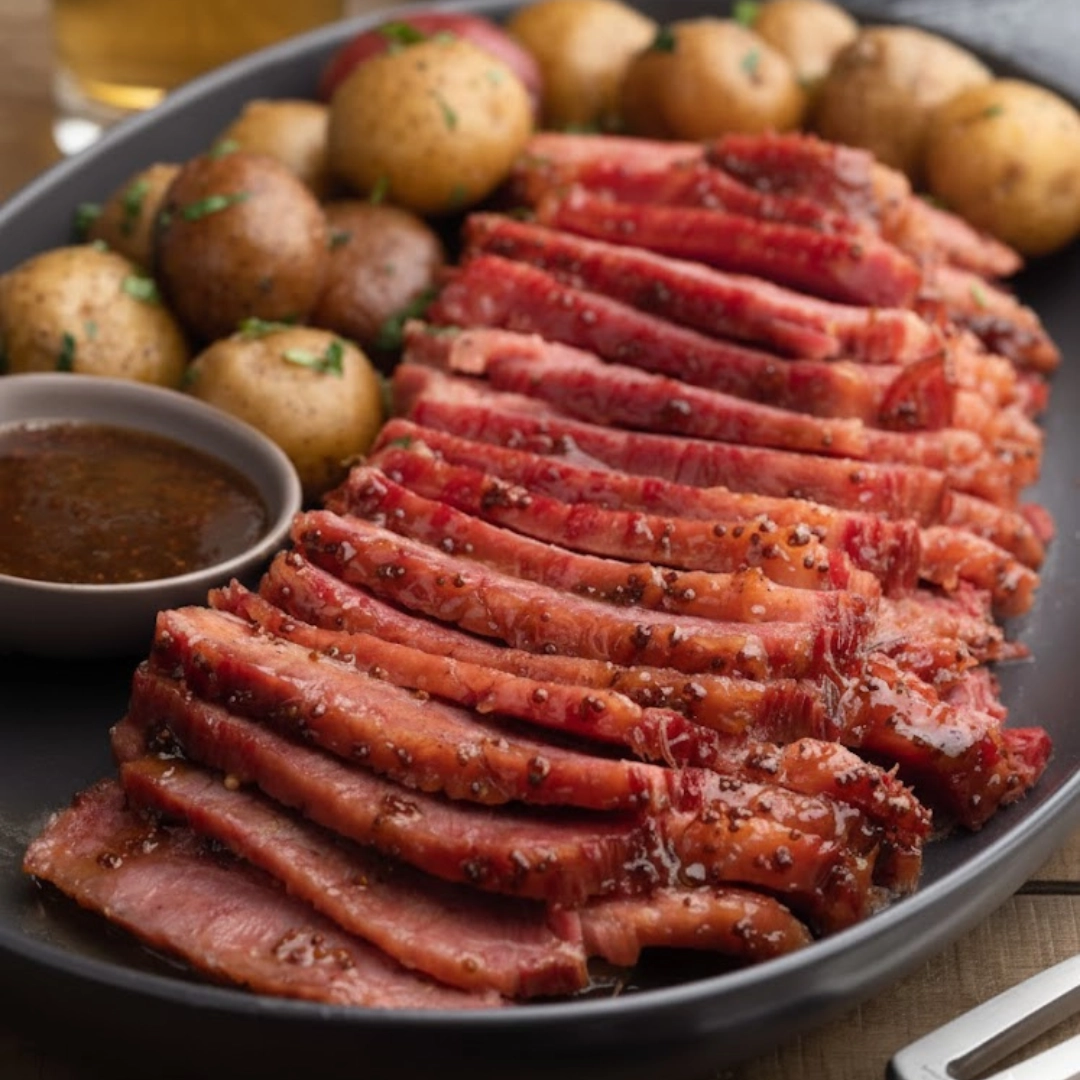
The pursuit of the perfect holiday centerpiece often leads us back to the classics, but even a timeless tradition like the St. Patrick’s Day feast deserves a sophisticated upgrade. This Braised Corned Beef Brisket moves away from the aggressive boiling methods of the past, opting instead for a gentle, flavor-infused bath of lager and aromatics. By transitioning the meat from a slow braise in the oven to a high-heat caramelization under the broiler, we achieve a texture that is impossibly tender on the inside with a complex, tacky, and sweet exterior. The addition of Irish whiskey in the glaze provides a subtle warmth that cuts through the saltiness of the brine, making this a truly memorable meal.
Table of Contents
Ingredients
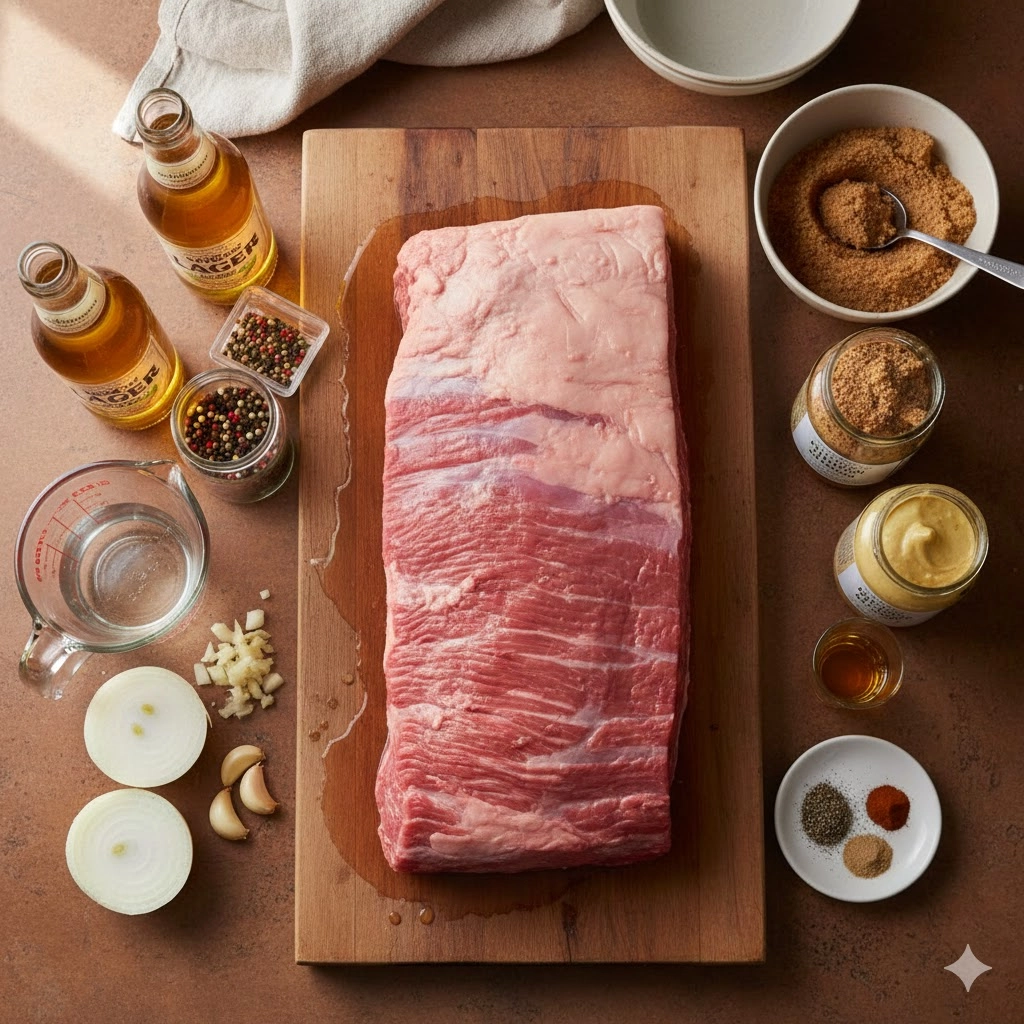
For the Corned Beef
- 4 pound to 5 1/2 pound flat cut corned beef brisket, rinsed well
- 1 large yellow onion, peeled, halved, and sliced
- 4 cloves garlic, peeled and lightly crushed with the back of a knife
- 2 pints lager (choose a variety without heavy bitter notes)
- 1 cup water, plus additional if needed
- 1 tablespoon pickling spice (or use the spice packet provided with your meat)
For the Whiskey Mustard Glaze
- 1/4 cup dark brown sugar, lightly packed
- 2 tablespoons whole grain Dijon mustard
- 1 tablespoon smooth Dijon mustard
- 1 tablespoon Irish whiskey
- 1/4 teaspoon freshly-ground black pepper
- 1 pinch ground cloves
Instructions
Preparing and Braising the Brisket
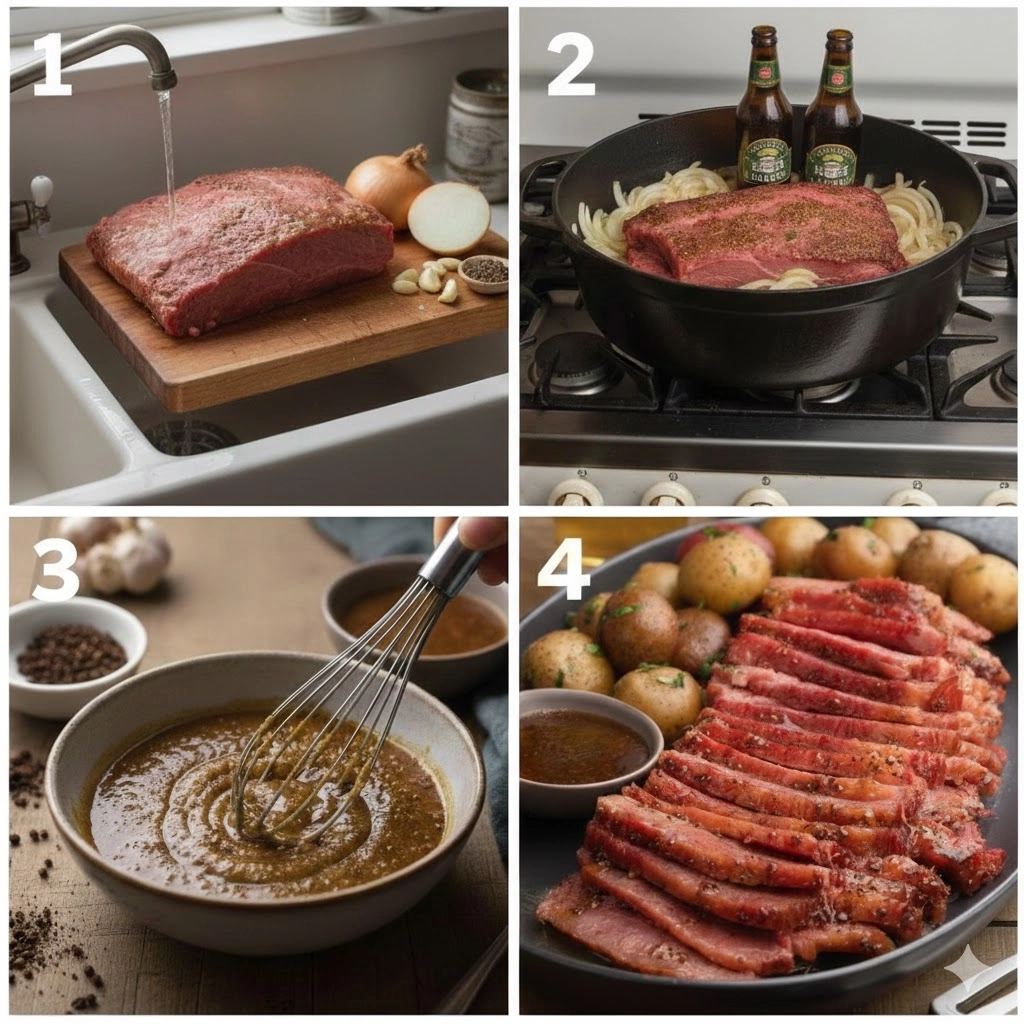
Begin by preheating your oven to 300 degrees Fahrenheit. Prepare your aromatics by peeling and slicing the large yellow onion and crushing the garlic cloves to release their essential oils. In the bottom of a large Dutch oven, create a bed using the onion slices and garlic.
Place the rinsed corned beef brisket directly on top of the onions with the fat cap side facing upward. Sprinkle the pickling spice or the contents of the included spice packet over the meat. Pour the two pints of lager into the pot, then add the cup of water. The liquid should reach almost to the top of the brisket.
Place the Dutch oven on the stovetop over medium-high heat and bring the liquid to a gentle simmer. Once simmering, cover the pot tightly with its lid and transfer it to the preheated oven. Cook for 3 hours total. To ensure even cooking and moisture distribution, carefully flip the brisket over halfway through the cooking time. Monitor the liquid level occasionally, adding a splash more water if significant evaporation has occurred.
Glazing and Finishing
As the braising time nears its end, prepare the glaze by whisking together the dark brown sugar, whole grain Dijon, smooth Dijon, Irish whiskey, black pepper, and ground cloves in a small bowl until the mixture is uniform.
Remove the Dutch oven from the oven and carefully lift the corned beef out of the liquid, transferring it to a broiler-safe pan or a rimmed baking sheet lined with foil. Reserve the braising liquid in the pot. Use paper towels to pat the surface of the meat dry. If the fat cap is excessively thick, trim it down to about 1/4 inch thickness. Use a sharp knife to score the fat in a criss-cross pattern, which helps the glaze penetrate and creates more surface area for caramelization.
Brush a generous layer of the whiskey mustard glaze over the top and sides of the brisket. Set your broiler to high and place the meat on a rack roughly 6 to 8 inches away from the heat element. Broil for 4 to 5 minutes until the glaze begins to bubble and darken. Remove the pan, apply another layer of glaze, and broil for another 2 to 3 minutes. Repeat this one more time until the exterior is beautifully caramelized and mahogany in color. Keep a very close watch during these final minutes, as the high sugar content in the glaze can move from caramelized to burnt very quickly.
Serving
Allow the meat to rest for a few minutes before slicing. Always slice the corned beef against the grain to ensure maximum tenderness. For an extra touch of moisture, strain the reserved braising liquid and spoon it over the sliced meat just before serving.
Step-by-Step Details
The secret to a world-class Braised Corned Beef Brisket lies in the transition from the moist heat of the braise to the dry, intense heat of the broiler. When you first place the brisket in the Dutch oven, you are essentially setting the stage for a transformation. The low temperature of 300 degrees Fahrenheit is crucial; it allows the tough connective tissues in the brisket to break down slowly without the muscle fibers tightening up and becoming “stringy,” which is a common pitfall of boiling the meat at high temperatures.
As the beer and water simmer, the alcohol in the lager acts as a solvent, helping to carry the flavors of the onion, garlic, and pickling spices deep into the fibers of the beef. The lager also provides a malty backbone that complements the natural saltiness of the corned beef. Flipping the meat halfway through is not just a suggestion; it ensures that the top portion of the meat, which sits slightly above the liquid line, gets its turn to be fully submerged and tenderized.
When you reach the glazing stage, the scoring of the fat is a vital step. By cutting shallow diamonds into the fat cap, you create channels where the whiskey and sugar can pool. Under the broiler, these sugars undergo the Maillard reaction, creating a complex crust that balances the acidity of the mustard. This contrast—the soft, yielding beef against the slightly crisp, sticky glaze—is what elevates this dish from a standard deli meat to a gourmet entree.
Unique Culinary Insights
To achieve the ultimate consistency with your Braised Corned Beef Brisket, the choice of beer is paramount. While many reach for a heavy stout, a golden lager is often the superior choice for this specific preparation. Stouts can sometimes become overly bitter when reduced during a three-hour braise, whereas a crisp lager maintains a floral and grainy profile that enhances rather than masks the beef.
Another professional touch involves the “rest and slice” phase. Brisket is a long-fibered muscle. If you slice it with the grain, the meat will feel chewy and tough regardless of how long you cooked it. Look for the lines of the muscle fibers on the underside of the meat before you glaze it. When you are ready to serve, ensure your knife is positioned perpendicular to those lines. This cuts the fibers into short segments, making every bite melt in your mouth.
Lastly, don’t overlook the power of the pickling spice. If your brisket didn’t come with a packet, a high-quality jarred pickling spice containing mustard seeds, coriander, bay leaves, and peppercorns is essential. These spices provide the “corned” flavor profile that characterizes the dish. The addition of a pinch of ground cloves in the glaze echoes the warm notes found in the braising liquid, creating a cohesive flavor bridge from the first bite to the last.
Accompaniments & Serving
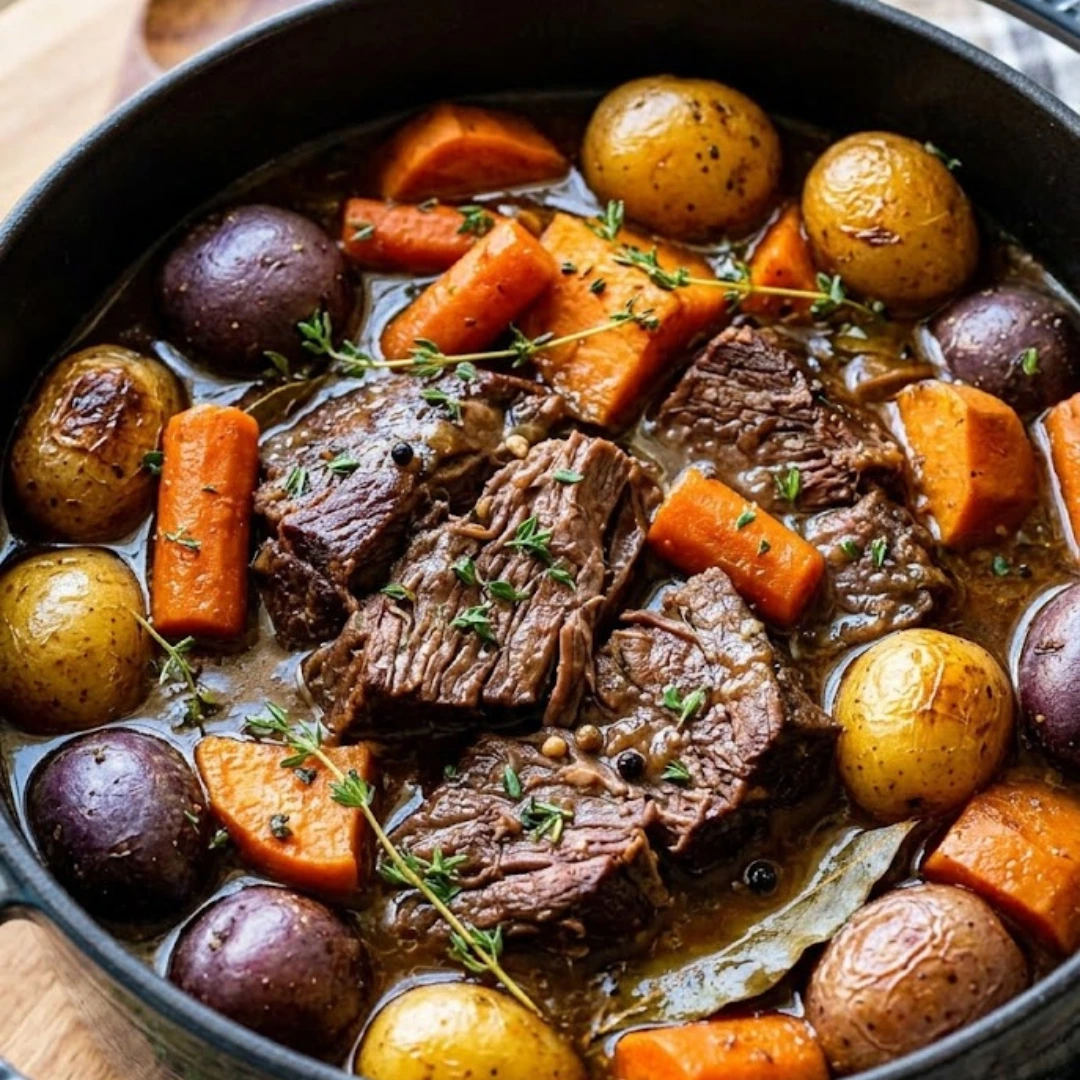
While the Braised Corned Beef Brisket is the star of the show, the traditional sides are what complete the experience. Many home cooks choose to braise their vegetables directly in the pot. If you choose this route, add baby red potatoes to the Dutch oven during the final hour of the beef’s cooking time. Thirty minutes later, add cabbage wedges. To take the cabbage a step further, consider searing the wedges in a skillet with a tiny bit of oil before adding them to the pot; this adds a smoky, charred dimension that pairs perfectly with the whiskey glaze.
If you prefer a more modern presentation, serve the sliced brisket alongside a bowl of creamy Colcannon—a traditional Irish mash of potatoes and kale or cabbage with plenty of butter. For a lighter contrast, a bright, vinegar-based coleslaw can provide a refreshing crunch that balances the richness of the glazed beef. Of course, no corned beef dinner is complete without extra mustard on the table; a variety of stone-ground or spicy brown mustards allows guests to customize their spice level.
Deep-Dive FAQ
How do I know if my corned beef is truly done?
The most reliable way to check for doneness in a braised brisket is the “fork-tender” test. Insert a meat fork into the thickest part of the flat cut. If the fork slides in and out with almost no resistance, the collagen has successfully broken down into gelatin. If you feel a “springy” resistance, the meat likely needs another thirty minutes of covered cooking in the oven.
Can I make this recipe in a slow cooker instead of an oven?
Yes, you can adapt this for a slow cooker by placing the onions and garlic at the bottom, adding the meat and liquids, and cooking on low for 8 to 10 hours. However, you must still perform the final glazing and broiling steps in your oven or broiler to achieve the caramelized crust that defines this specific recipe. The oven method is generally preferred for better temperature control and a more even braise.
Why is my corned beef still salty after cooking?
Corned beef is cured in a heavy salt brine, which is why rinsing the meat thoroughly under cold water before cooking is a mandatory step. If you find the meat consistently too salty, you can soak the raw brisket in cold water for an hour before cooking, changing the water once. Additionally, avoid adding any extra salt to the braising liquid, as the beer and the meat itself provide more than enough sodium.
What is the difference between a flat cut and a point cut?
The flat cut, which this recipe recommends, is the leaner portion of the brisket. It has a consistent thickness, which makes it much easier to slice into beautiful, uniform pieces for a platter. The point cut is more triangular, significantly fattier, and more marbled. While the point cut is exceptionally flavorful, it can be harder to glaze evenly and often falls apart rather than slicing cleanly.
Modifications & Substitutions
If you are following a gluten-free diet and cannot use traditional lager, you can substitute the beer with an equal amount of unsalted beef broth or a gluten-free ale. The flavor will lose some of the malty depth provided by the lager, but the acidity of the mustard and the sweetness of the sugar will still produce a delicious result.
For those who prefer a non-alcoholic version of the glaze, the Irish whiskey can be replaced with a tablespoon of apple cider or even a splash of ginger ale. This maintains the liquid volume of the glaze while providing a different kind of brightness. If you find dark brown sugar too intense, light brown sugar or even honey can be used as the primary sweetener, though the caramelization under the broiler may happen slightly faster, requiring extra vigilance.
A Perfect St. Patrick’s Day Finale
This beer-braised and whiskey-glazed brisket represents the intersection of rustic comfort and culinary refinement. By taking the time to slowly tenderize the meat in a flavorful bath of lager and then finishing it with a sophisticated mustard crust, you transform a humble cut of beef into a restaurant-quality centerpiece. Whether you are hosting a large gathering for the holidays or simply looking for a cozy Sunday dinner, this recipe offers a depth of flavor that far exceeds the effort required. The combination of salty, sweet, and tangy notes ensures that every guest leaves the table satisfied.
Nutrition Table
| Nutrient | Amount per Serving |
| Calories | 1312 calories |
| Total Fat | 89 grams |
| Saturated Fat | 28 grams |
| Cholesterol | 324 milligrams |
| Sodium | 7399 milligrams |
| Total Carbohydrates | 18 grams |
| Sugars | 9 grams |
| Protein | 89 grams |
| Vitamin C | 163.8 milligrams |
| Calcium | 70 milligrams |
| Iron | 10.5 milligrams |
Disclaimer
Nutrition information is calculated using an automated database and should be considered an estimate. Individual results may vary based on the specific brands of ingredients used and the amount of fat trimmed from the meat. Please consult with a healthcare professional for specific dietary needs.
Non-Alcoholic Beer Braised Corned Beef with Whiskey Mustard Glaze
Ingredients
- 4 pounds flat cut corned beef brisket, rinsed well
- 1 large yellow onion, peeled and sliced
- 4 cloves garlic, peeled and crushed
- 2 pints lager beer (not bitter)
- 1 cup water (plus extra as needed)
- 1 tbsp pickling spice
- 0.25 cup dark brown sugar
- 2 tbsp whole grain Dijon mustard
- 1 tbsp smooth Dijon mustard
- 1 tbsp Irish whiskey
- 0.25 tsp freshly ground black pepper
- 1 pinch ground cloves
Instructions
- Preheat oven to 300 Fahrenheit. Place sliced onion and garlic in the bottom of a large Dutch oven. Lay the corned beef on top, fat cap side up, and add pickling spices.
- Pour in the beer and water until the brisket is almost covered. Bring to a simmer on the stovetop over medium heat.
- Cover tightly and cook in the oven for 3 hours. Flip the brisket halfway through and add more water if the liquid evaporates significantly.
- In a small bowl, whisk together brown sugar, both mustards, whiskey, pepper, and cloves to create the glaze.
- Remove meat from liquid and pat dry. Score the fat cap in a criss-cross pattern and place on a broiler-safe pan.
- Brush with glaze and broil 6-8 inches from the heat for 4-5 minutes. Repeat glazing and broiling twice more for 2-3 minutes each until caramelized.
- Slice the corned beef against the grain. Strain the braising liquid and spoon it over the meat when serving.
Notes
Equipment
- 6.75 quart Dutch oven Le Creuset or similar heavy-bottomed pot
- Broiler-safe pan Or a foil-lined rimmed baking sheet
- Sharp carving knife
- paper towels
- small mixing bowl