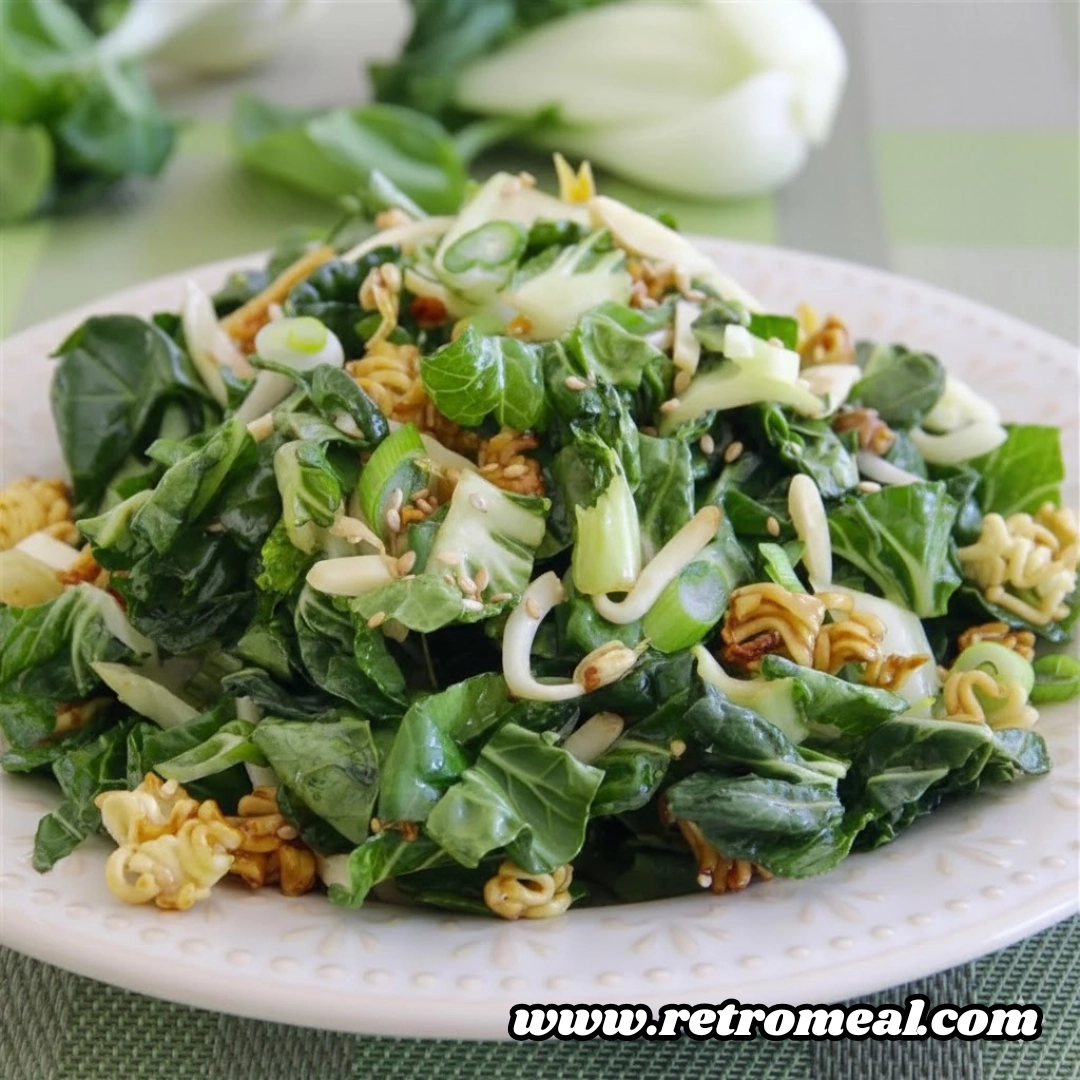
If you are searching for a dish that perfectly balances refreshing greens with an addictive, buttery crunch, this Bok Choy Ramen Salad is the answer to your culinary cravings. It is a vibrant, multi-textured masterpiece that elevates the humble ramen noodle from a pantry staple to a gourmet salad topper. Whether you are hosting a summer barbecue, bringing a side to a potluck, or simply looking for a satisfying lunch that packs a punch, this recipe delivers a symphony of flavors in every bite. The marriage of crisp bok choy, toasted almonds, and a tangy-sweet dressing creates a profile that is both nostalgic and sophisticated.
Table of Contents
Ingredients For This Refreshing Salad
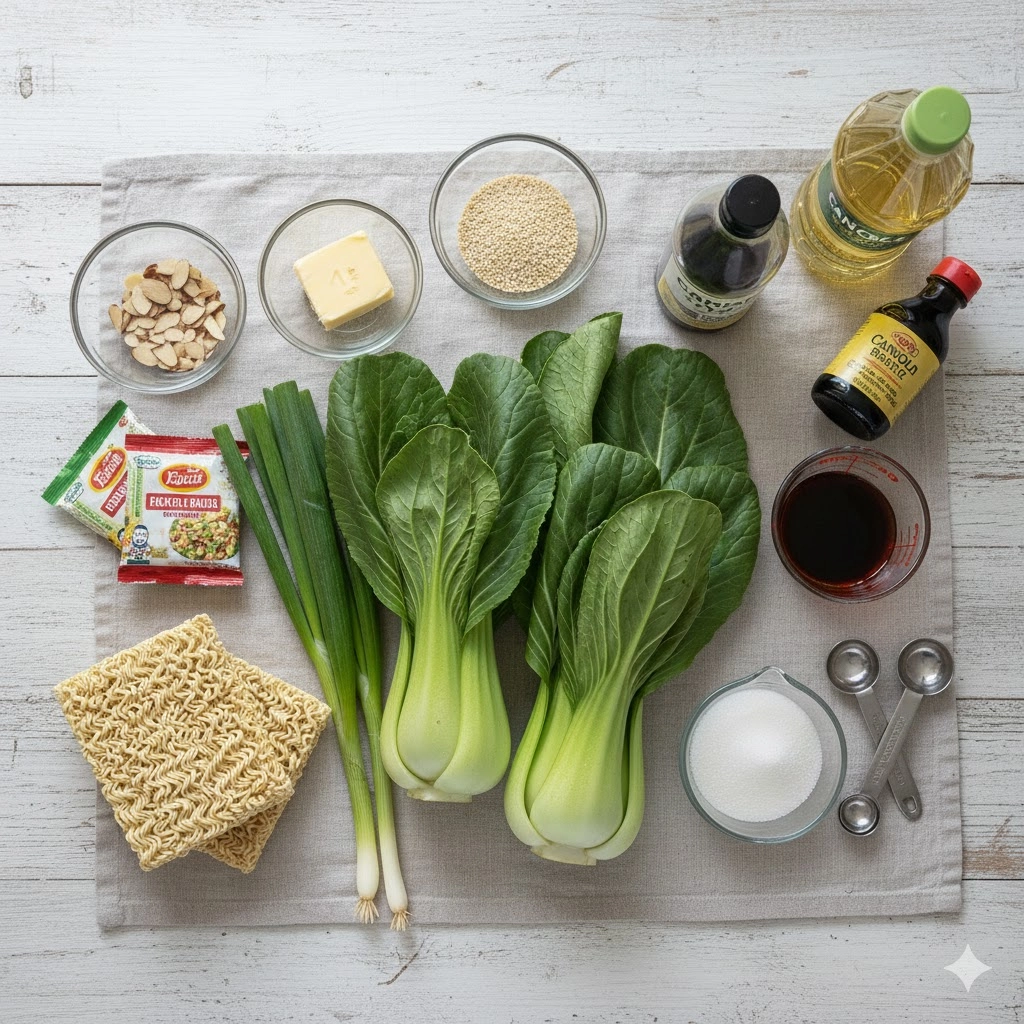
To create this signature dish, you will need to gather a few pantry essentials and fresh produce. The beauty of this recipe lies in the contrast between the fresh greens and the caramelized, toasted noodle mixture.
For the Sweet Soy Vinaigrette:
- One half cup canola oil
- One half cup white sugar
- One quarter cup red wine vinegar
- Two tablespoons soy sauce
For the Crunchy Salad Components:
- One quarter cup unsalted butter
- Two tablespoons white sugar
- Two three ounce packages ramen noodles, flavor packets included
- One half cup sesame seeds
- Three ounces slivered almonds
- One tablespoon soy sauce
- Two large heads bok choy, chopped
- Six green onions, chopped
Essential Cooking Instructions
Following these steps precisely ensures that your noodles are perfectly toasted and your greens remain crisp and vibrant.
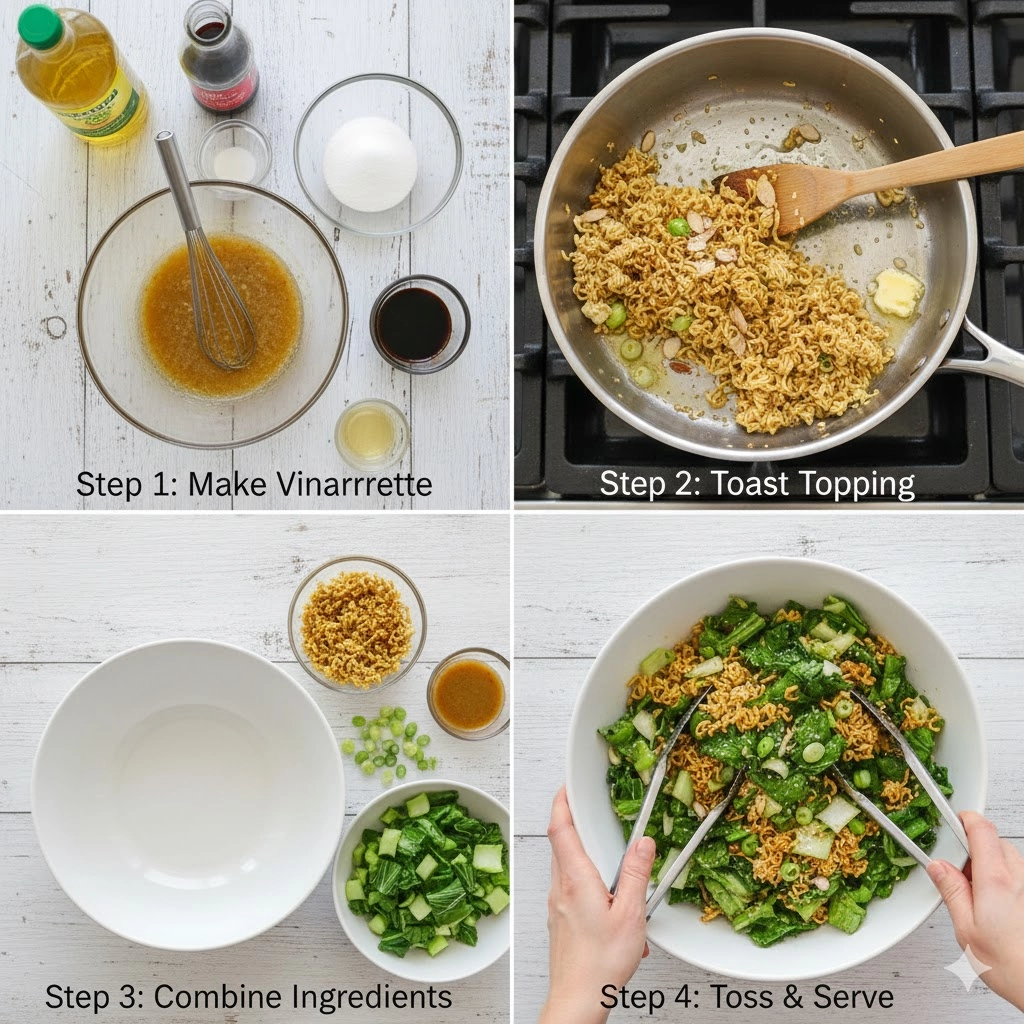
- Begin by preparing the dressing. In a small mixing bowl, whisk together the canola oil, one half cup of white sugar, red wine vinegar, and two tablespoons of soy sauce. Whisk vigorously until the sugar begins to dissolve and the oil is well incorporated. Set this aside to allow the flavors to meld.
- Prepare the crunchy topping by melting the unsalted butter in a saucepan over low heat. Once melted, stir in the two tablespoons of white sugar until it has fully dissolved into the butter.
- Carefully crumble the dry ramen noodles into the butter mixture. Stir in the contents of the ramen seasoning packets, the sesame seeds, the slivered almonds, and one tablespoon of soy sauce.
- Cook this mixture over low to medium-low heat for approximately two to three minutes. You must stir constantly during this phase to prevent the seeds and nuts from scorching. Look for a light golden-brown color and a fragrant, toasted aroma. Once toasted, remove the pan from the heat immediately.
- In a large salad bowl, combine the chopped bok choy and the sliced green onions. Pour the vinaigrette over the greens and add the warm ramen noodle mixture.
- Toss everything together until the leaves are thoroughly coated and the crunchy bits are evenly distributed. Serve immediately to enjoy the peak texture.
Elevating The Textural Experience: Step-By-Step Details
Creating the perfect Bok Choy Ramen Salad is an exercise in managing textures. The process begins with the preparation of the bok choy itself. When you select your heads of bok choy, look for firm, white stalks and deep green, vibrant leaves. The stalks provide a watery, crisp snap similar to celery, while the leaves offer a soft, tender mouthfeel. When chopping, aim for bite-sized pieces that allow both the stalk and leaf to be present in every forkful. This provides a structural base that can stand up to the heavy dressing without wilting instantly.
The vinaigrette is a classic emulsion of acid and oil, but the inclusion of soy sauce and a significant amount of sugar gives it a syrupy, savory quality. When you whisk these ingredients, you are creating a suspension. The red wine vinegar provides a sharp, fruity acidity that cuts through the richness of the canola oil, while the sugar acts as a bridge between the salty soy sauce and the tart vinegar. Allowing this dressing to sit for even ten minutes before tossing helps the sugar granules fully break down, ensuring a smooth texture that coats the bok choy leaves elegantly.
The most critical phase of the recipe is the toasting of the ramen. By melting butter and sugar together first, you are essentially creating a light savory caramel. As you crumble the ramen into the pan, the noodles act like sponges, soaking up the butter. The addition of the seasoning packets provides that unmistakable umami punch. As the almonds and sesame seeds hit the heat, they release their natural oils, intensifying their nutty profile. You must be vigilant; the transition from perfectly golden to burnt happens in a matter of seconds. The goal is a deep mahogany hue that promises a loud, satisfying crunch.
Creative Accompaniments And Serving Suggestions
While this salad is a powerhouse on its own, it functions beautifully as a base for a more substantial meal. If you are looking to serve this for dinner, consider topping it with sliced grilled chicken breast marinated in ginger and garlic. The warmth of the chicken slightly softens the bok choy while the savory juices mingle with the soy vinaigrette. Seared shrimp or even pan-fried tofu cubes also make excellent protein additions that respect the Asian-inspired flavor profile.
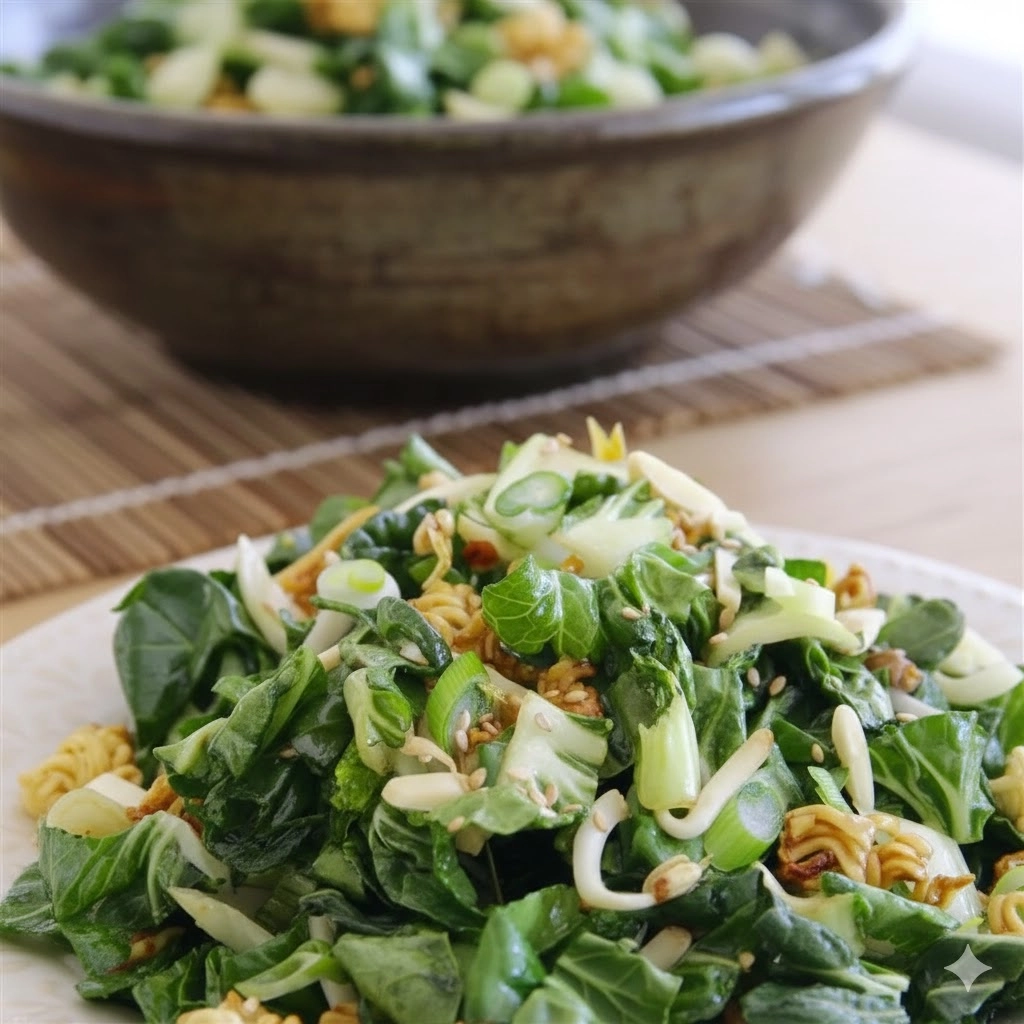
For a formal gathering, serve this salad in a large wooden bowl to highlight the contrast between the green vegetables and the golden-brown noodles. If you are planning a themed dinner, this salad pairs exceptionally well with grilled salmon or teriyaki-glazed ribs. Because the salad has a high fat and sugar content from the dressing and toasted nuts, it acts as a perfect foil for leaner proteins or spicy main courses. If you want to add a pop of color, a few mandarin orange segments or thinly sliced red radishes can be scattered on top just before serving.
Variations And Smart Substitutions
The versatility of this recipe allows for several modifications based on what you have in your pantry. If you find yourself without bok choy, Napa cabbage is a fantastic substitute. It has a similar sweetness and crunch, though it is slightly softer in texture. For the oil in the dressing, while canola is neutral and allows the soy and vinegar to shine, you could substitute peanut oil for an even deeper, nuttier undertone.
For those monitoring their sodium intake, using a low-sodium soy sauce is a seamless transition that doesn’t sacrifice the depth of flavor. If you prefer a bit of heat, adding a teaspoon of red chili flakes to the butter while toasting the noodles will infuse the entire salad with a subtle, creeping warmth. Furthermore, if slivered almonds aren’t available, crushed cashews or sunflower seeds can provide a similar crunch. Just remember that different nuts have different oil contents, so keep a close eye on the pan during the toasting process to avoid burning.
Science-Backed Culinary Insights For Success
One of the most interesting aspects of this recipe is the use of the ramen seasoning packet. These packets are concentrated flavor bombs containing salt, onion powder, garlic powder, and often a touch of ginger. By incorporating them into the butter and sugar mixture rather than the liquid dressing, you are “blooming” the spices. The heat from the butter helps release the fat-soluble compounds in the dry seasonings, making the flavor more intense and evenly distributed across the crunchy noodles.
Temperature also plays a role in the final presentation. Adding the warm, buttery noodle mixture to the cold, crisp bok choy creates a brief window of “wilted salad” dynamics. The heat slightly softens the outermost layer of the greens, allowing the dressing to adhere better, while the core of the vegetable remains cold and crunchy. This contrast is why the recipe is best served immediately. If left to sit, the salt in the dressing will begin to draw moisture out of the bok choy through osmosis, leading to a watery bowl and soggy noodles. To maintain the integrity of the dish for a later meal, store the toasted noodle mix and the liquid dressing in separate airtight containers, only combining them with the fresh greens at the very last moment.
Understanding The Nutritional Profile
This salad is a calorie-dense side dish, primarily due to the healthy fats in the nuts and seeds, as well as the butter and oil used for the dressing and toasting. However, it also provides a significant amount of vitamin A and vitamin C from the fresh bok choy.
| Nutrient | Amount Per Serving |
| Calories | 618 |
| Total Fat | 44 grams |
| Carbohydrates | 50 grams |
| Protein | 10 grams |
| Cholesterol | 20 milligrams |
| Sodium | 1100 milligrams |
Nutritional Disclaimer
The nutritional information provided is an estimate based on standard ingredient measurements. Actual nutritional values may vary depending on the specific brands used and the precision of the preparation. Consult with a healthcare professional for specific dietary needs or concerns.
Frequently Asked Questions
Can I make this salad ahead of time for a party?
You can certainly prepare the components in advance, but do not assemble them until you are ready to eat. The toasted ramen mixture can be prepared up to two days early and kept in an airtight container at room temperature. The dressing can be whisked and stored in the refrigerator for up to a week. The bok choy and green onions can be chopped and kept in a sealed bag. Combining them at the last second ensures the maximum crunch and freshness that makes this salad famous.
What is the best way to chop bok choy for a salad?
The best approach is to treat the stalks and leaves as two different textures. Start by cutting off the very bottom of the bok choy head to separate the stalks. Rinse them thoroughly under cold water to remove any dirt trapped near the base. Slice the white stalks into thin, quarter-inch half-moons for a consistent crunch. For the green leaves, stack them together and slice them into wider strips. This ensures that the salad is easy to eat with a fork while providing a beautiful visual variety.
Why did my ramen noodles turn out bitter?
Bitterness in the toasted mixture usually indicates that either the butter or the sesame seeds were scorched. Sesame seeds and slivered almonds have high oil contents and can go from toasted to burnt very quickly. It is essential to keep the heat on low and move the mixture constantly with a spatula. If you see any black specks or smell a sharp, acrid aroma, it is best to start the topping over, as the bitterness will permeate the entire salad.
Is there a way to make this recipe vegan?
To adapt this recipe for a vegan lifestyle, simply replace the unsalted butter with a high-quality vegan butter substitute or a neutral oil like coconut oil. Ensure that the ramen noodles you purchase do not contain animal-derived ingredients in the seasoning packet, as some brands use chicken or beef fat. Aside from the butter, the rest of the ingredients—including the soy sauce, vinegar, and fresh vegetables—are naturally plant-based.
Bok Choy Ramen Salad
Ingredients
- 0.5 cup canola oil
- 0.5 cup white sugar (for dressing)
- 0.25 cup red wine vinegar
- 2 tbsp soy sauce (for dressing)
- 0.25 cup unsalted butter
- 2 tbsp white sugar (for noodle mixture)
- 2 pkgs ramen noodles (3 ounce packages), flavor packets included
- 0.5 cup sesame seeds
- 3 ounces slivered almonds
- 1 tbsp soy sauce (for noodle mixture)
- 2 large heads bok choy, chopped
- 6 green onions, chopped
Instructions
- In a medium bowl, whisk together the canola oil, 1/2 cup white sugar, red wine vinegar, and 2 tablespoons of soy sauce until the sugar is well incorporated. Set the dressing aside.
- Melt the unsalted butter in a saucepan over low heat. Stir in 2 tablespoons of white sugar and continue to stir until the sugar has fully dissolved into the butter.
- Crumble the dry ramen noodles into the butter. Add the ramen seasoning packets, sesame seeds, slivered almonds, and 1 tablespoon of soy sauce. Cook over low heat, stirring constantly, for 2 to 3 minutes until the mixture is lightly toasted and golden brown. Remove from heat immediately.
- In a large serving bowl, combine the chopped bok choy and green onions. Pour the vinaigrette and the toasted ramen mixture over the vegetables. Toss thoroughly to coat and serve immediately.
Notes
Equipment
- whisk
- small mixing bowl
- saucepan
- Large salad bowl
- spatula For constant stirring while toasting noodles.