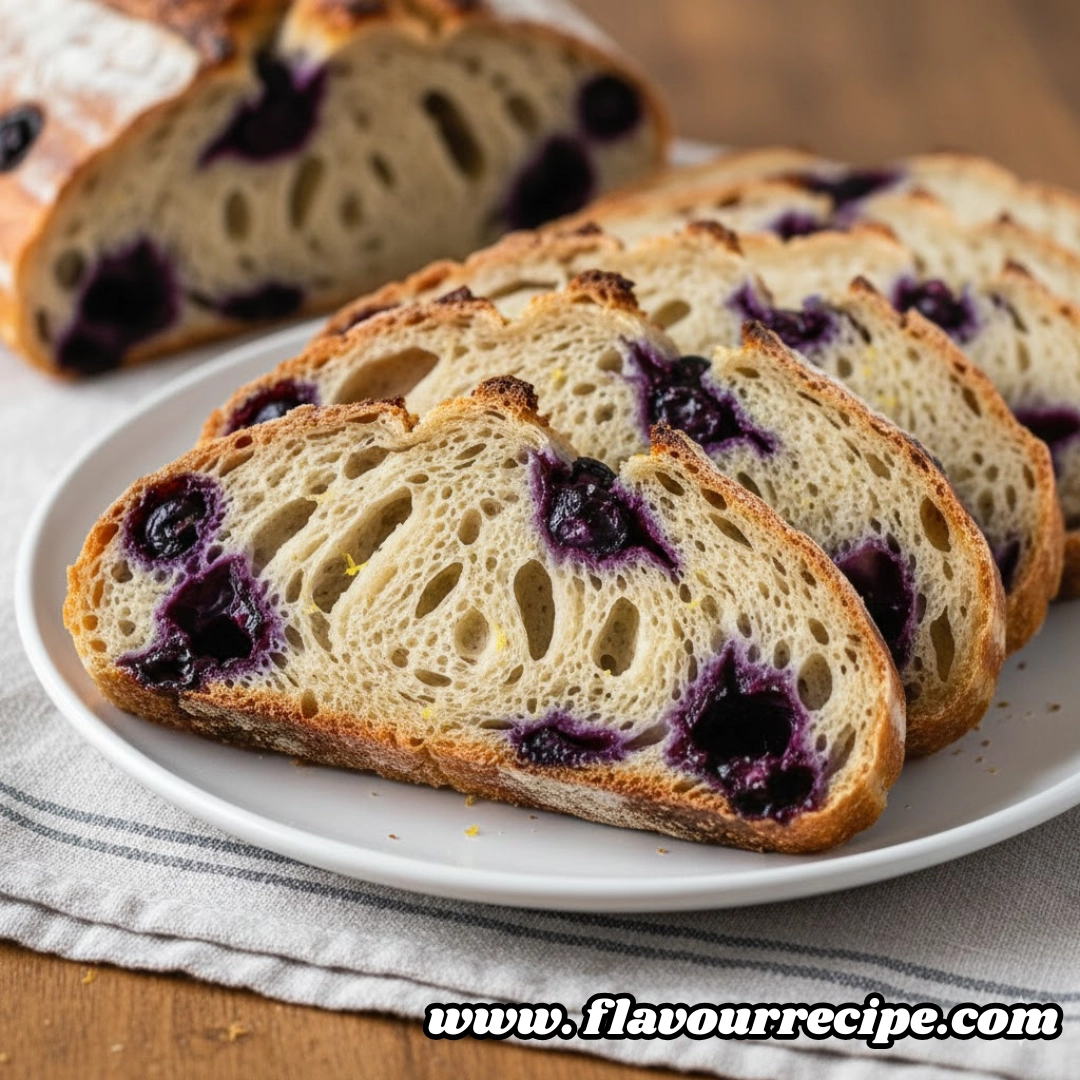
Baking artisan loaves at home allows for a level of creativity that commercial bakeries rarely match. This blueberry lemon sourdough bread is a testament to how simple fruit and citrus additions can transform a standard hearth loaf into a vibrant, breakfast-ready masterpiece. By marrying the natural tang of a long-fermented wild yeast culture with the sweetness of fresh berries and the sharp aromatic oils of lemon zest, you create a bread that features a stunning purple-marbled crumb and a refreshing finish. It is particularly delightful when toasted and topped with a thick layer of salted butter or a smear of honeyed goat cheese.
Table of Contents
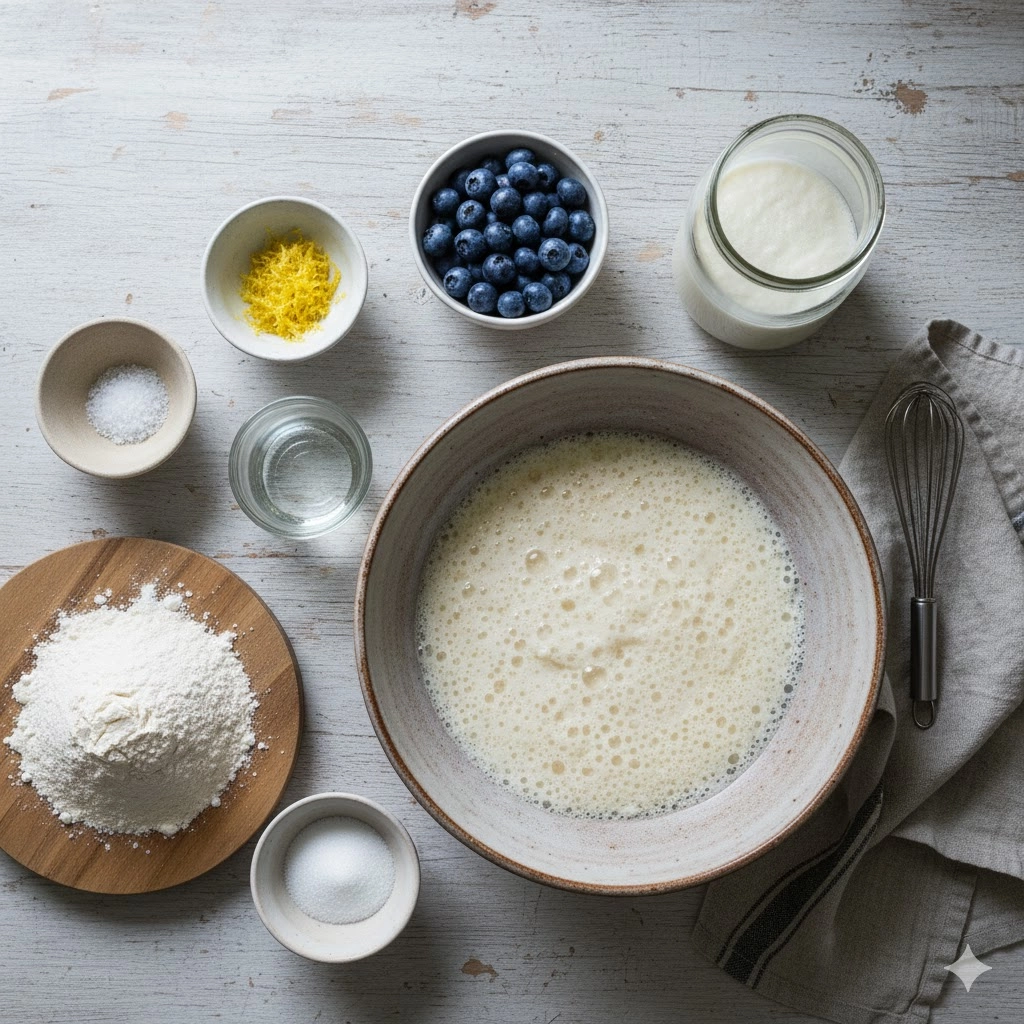
Ingredients
The Levain
- Forty-five grams active sourdough starter
- Forty-five grams bread flour
- Forty-five grams filtered water
The Final Dough
- One hundred twenty grams active levain
- Three hundred thirty grams room temperature water
- Five hundred grams high-protein bread flour (twelve and a half percent protein)
- Fifty-five grams granulated sugar
- Twelve grams fresh lemon zest (approximately two medium lemons)
- Ten grams fine sea salt
- One hundred fifty grams fresh whole blueberries
Instructions
- Prepare the levain by mixing the starter, flour, and water. Let it ferment until it has doubled in size and appears bubbly.
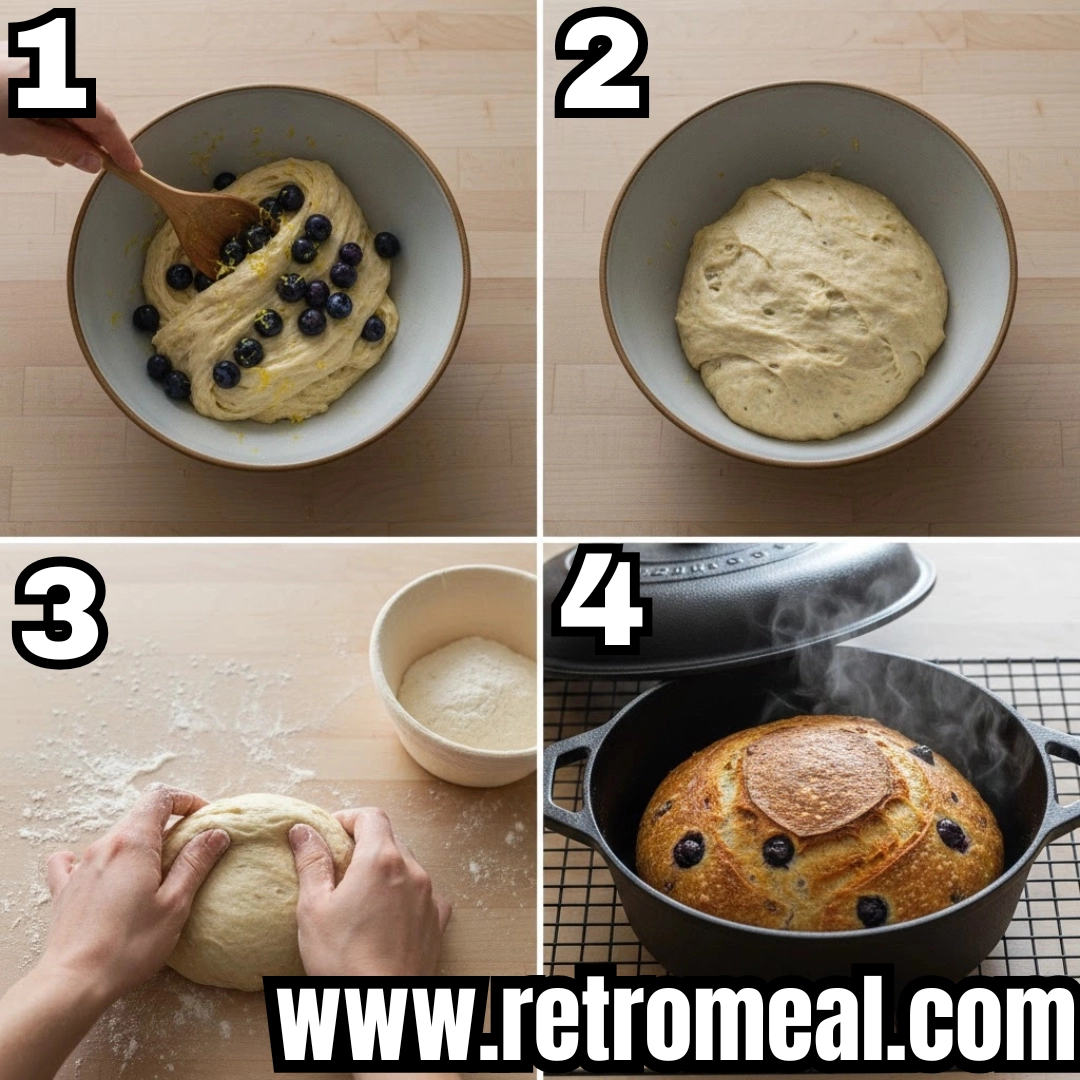
- In a large mixing bowl, whisk together the water, sugar, lemon zest, and active levain until the sugar is mostly dissolved.
- Add the bread flour and salt to the liquid mixture. Mix by hand or with a dough whisk until no dry flour remains and a shaggy mass forms.
- Conduct the bulk fermentation over four to five hours, performing four sets of stretch and folds every thirty minutes.
- Gently fold in the fresh blueberries during the second set of stretch and folds to ensure even distribution without crushing the fruit.
- Allow the dough to rest undisturbed for the remainder of the bulk fermentation until it has grown by forty percent in volume.
- Pre-shape the dough into a loose round and let it rest on the counter for thirty minutes.
- Final shape the dough into a tight boule or batard and place it into a floured banneton.
- Cold ferment the loaf in the refrigerator for twelve to eighteen hours to develop flavor and improve the crust texture.
- Preheat a Dutch oven at four hundred fifty Fahrenheit. Score the cold dough and bake covered for twenty-five minutes at four hundred twenty-five Fahrenheit, then uncovered for twenty minutes at four hundred Fahrenheit.
Step-by-Step Details
Building the Foundation
Success with this blueberry lemon sourdough bread begins with your levain. Ensure your starter has been fed recently and is at its peak of activity. When you mix the levain, aim for a consistent temperature of around seventy-eight Fahrenheit. Within three to four hours, the mixture should be airy and possess a pleasant, milky aroma. This active culture is what provides the lift needed for a heavy, fruit-filled loaf.
Mixing and Hydration
When combining the main dough, focus on the lemon zest. Rubbing the zest into the granulated sugar before adding it to the water can help release the essential oils, intensifying the citrus scent. As you add the flour, you will notice the dough feels quite hydrated. Bread flour is essential here; its high protein content absorbs the moisture from the berries as they bake, preventing the crumb from becoming gummy.
The Art of Inclusions
During bulk fermentation, the “stretch and fold” technique is vital. When you reach the second set, scatter the blueberries over the surface of the dough before folding. As you pull the dough from the edges and over the center, the berries become trapped in layers of gluten. Be incredibly gentle. If you feel a berry pop, stop and adjust. You want the juice to stay inside the fruit until it hits the heat of the oven, preventing the entire loaf from turning an unappealing shade of grey-blue.
Shaping and Tension
After the dough has rested on the counter (the bench rest), it should feel supple and slightly jiggly. For the final shape, use minimal flour. The goal is to create skin tension on the surface of the loaf. This tension acts like a balloon, holding the gases in and forcing the bread to expand upward rather than outward. If a blueberry is poking through the surface, gently tuck a small flap of dough over it to protect it from the direct heat of the Dutch oven.
The Bake Cycle
Preheating the Dutch oven is non-negotiable for that professional artisan crust. When you transfer the dough from the fridge to the pot, the thermal shock creates “oven spring.” Scoring the top with a sharp blade provides a controlled path for steam to escape. Baking with the lid on traps the moisture from the dough, creating a steamy environment that keeps the crust soft long enough for the bread to reach its full height.
Pro Tips
- Zest Quality: Use a microplane to zest your lemons. You want only the yellow outer layer; the white pith underneath is bitter and can ruin the delicate sweetness of the blueberries.
- Temperature Control: Aim to keep your dough at seventy-eight Fahrenheit during bulk fermentation. If your kitchen is cool, use a proofing box or the inside of an oven with the light turned on to ensure the yeast remains active.
- Berry Prep: Ensure your blueberries are completely dry after washing. Excess surface moisture on the berries can create “wet spots” in the crumb that won’t bake through properly.
- Flour Choice: If you must use all-purpose flour instead of bread flour, reduce the initial water by thirty grams. All-purpose flour cannot hold as much water, and the dough may become too difficult to shape.
- The Tap Test: To check for doneness, tap the bottom of the loaf. It should sound hollow. If you use a thermometer, the internal temperature should reach at least two hundred eight Fahrenheit.
- Cooling Patience: Never slice into this bread while it is hot. The starches need time to set. Cutting it early will result in a gummy texture and will cause the remaining loaf to dry out rapidly.
Variations or Substitutions
- Dried Fruit Alternative: If fresh berries are out of season, you can use dried blueberries. Soak them in warm water for ten minutes and drain them thoroughly before adding them to the dough to prevent them from sucking moisture out of the crumb.
- Alternative Citrus: Substitute the lemon zest for orange zest and pair it with dried cranberries for a bright, wintry version of this recipe.
- Herbaceous Twist: Add a tablespoon of finely chopped fresh rosemary along with the lemon zest. The earthy pine notes of the rosemary complement the acidity of the lemon and the sweetness of the fruit beautifully.
- Sugar-Free Option: You can omit the granulated sugar entirely. The bread will have a more traditional sourdough sourness, though the crust may not brown quite as deeply.
Serving Suggestions
- The Ultimate Toast: Slice the bread thick and toast it until the edges are golden. Slather with unsalted butter and a sprinkle of flaky sea salt to balance the fruitiness.
- French Toast Upgrade: Because of the tight crumb and fruit inclusions, this bread makes an incredible base for French toast. Soak slices in a vanilla-cinnamon custard and fry in plenty of butter.
- Cheese Pairing: Serve fresh slices alongside a sharp white cheddar or a creamy brie. The acidity of the sourdough and lemon cuts through the richness of the cheese perfectly.
FAQs
Can I use frozen blueberries in this sourdough?
It is not recommended to use frozen berries because they release a significant amount of purple juice as they thaw, which can break down the gluten structure and turn the dough muddy. If you must use them, add them while they are still rock-solid and be prepared for a very purple loaf.
Why did my blueberries sink to the bottom of the loaf?
This usually happens if the dough is under-proofed or if the gluten structure is too weak to support the weight of the fruit. Ensure you are using high-protein bread flour and performing all the recommended stretch and folds to build strength.
How do I prevent the blueberries on the crust from burning?
If you notice berries on the surface during shaping, try to gently push them deeper into the dough. If they are exposed, the high heat of the Dutch oven can caramelize them to the point of bitterness.
How long does this bread stay fresh?
Because of the moisture from the berries, this loaf is best eaten within two to three days. Keep it in a paper bag at room temperature, or slice and freeze it for long-term storage.
Nutrition Information
| Nutrient | Amount per Serving |
| Calories | 195 kcal |
| Protein | 6 g |
| Carbs | 40 g |
| Fat | 1 g |
| Fiber | 2 g |
| Sugar | 6 g |
| Sodium | 310 mg |
Disclaimer
Nutrition information is an estimate and may vary based on preparation and ingredients used.
Blueberry Lemon Sourdough Bread
Ingredients
- 45 grams active sourdough starter (for levain)
- 45 grams bread flour (for levain)
- 45 grams filtered water (for levain)
- 330 grams room temperature water
- 500 grams high-protein bread flour
- 55 grams granulated white sugar
- 12 grams fresh lemon zest (about 2 lemons)
- 10 grams fine sea salt
- 150 grams fresh whole blueberries
Instructions
- Mix 45g starter, 45g flour, and 45g water. Let ferment at 78 Fahrenheit until doubled and bubbly.
- Whisk water, sugar, lemon zest, and 120g of active levain in a large bowl until the sugar dissolves.
- Add bread flour and salt. Mix by hand until a shaggy dough forms and no dry flour remains. Rest 30 minutes.
- Perform 4 sets of stretch and folds every 30 minutes. Add blueberries during the second set, folding gently.
- Let dough rest at 78 Fahrenheit until it has grown by forty percent and feels jiggly with visible bubbles.
- Gently pre-shape into a round. Rest on counter for 30 minutes, then final shape and place in a floured banneton.
- Cover and refrigerate for 12 to 18 hours. This develops flavor and creates a better crust texture.
- Preheat Dutch oven at 450 Fahrenheit. Score dough and bake covered at 425 Fahrenheit for 25 minutes.
- Remove lid, lower oven to 400 Fahrenheit, and bake for 20 more minutes until deep golden brown.
Notes
Equipment
- Digital Kitchen Scale Crucial for sourdough accuracy
- large mixing bowl
- Banneton (Proofing Basket)
- Dutch oven For trapping steam
- Bread Lame or Sharp Razor For scoring
- Microplane For zesting lemons