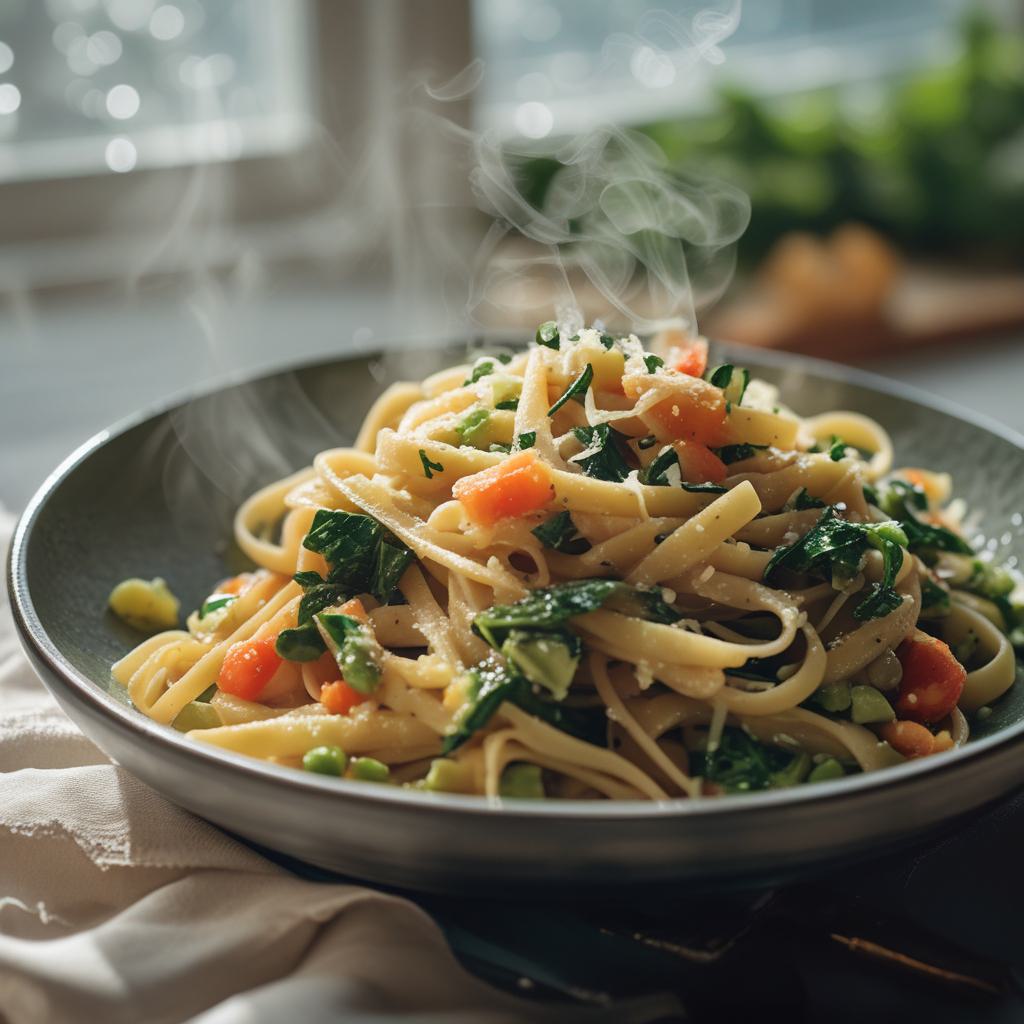
The first wisps of steam rise from al dente pasta, carrying the grassy perfume of fresh basil and the electric tang of lemon zest through the kitchen. This isn’t mere sustenance—it’s a symphony of spring captured in a bowl. Healthy Vegetable Pasta Primavera achieves culinary alchemy, transforming humble vegetables into shimmering jewels under the kiss of premium olive oil.
Imagine plump asparagus spears snapping with vitality, rainbow carrots lending earthy sweetness, and sugar snap peas bursting like emerald fireworks. The magic lies in contrast: creamy cannellini beans against crisp-tender zucchini, bright cherry tomatoes warmed just enough to release their sunset hues. A shower of Parmigiano-Reggiano marries these elements, its umami depth elevating each mouthful from garden-fresh to gourmet.
This dish sings of technical precision—vegetables cooked in staggered stages to preserve their distinct personalities, pasta water emulsified into a glossy sauce, fresh herbs added last as nature’s exclamation point. The aroma profile shifts as you eat: first the bright top notes of citrus, then the herbal mid-palate, finally the deep bassline of roasted garlic lingering like a pleasant memory.
Table of Contents
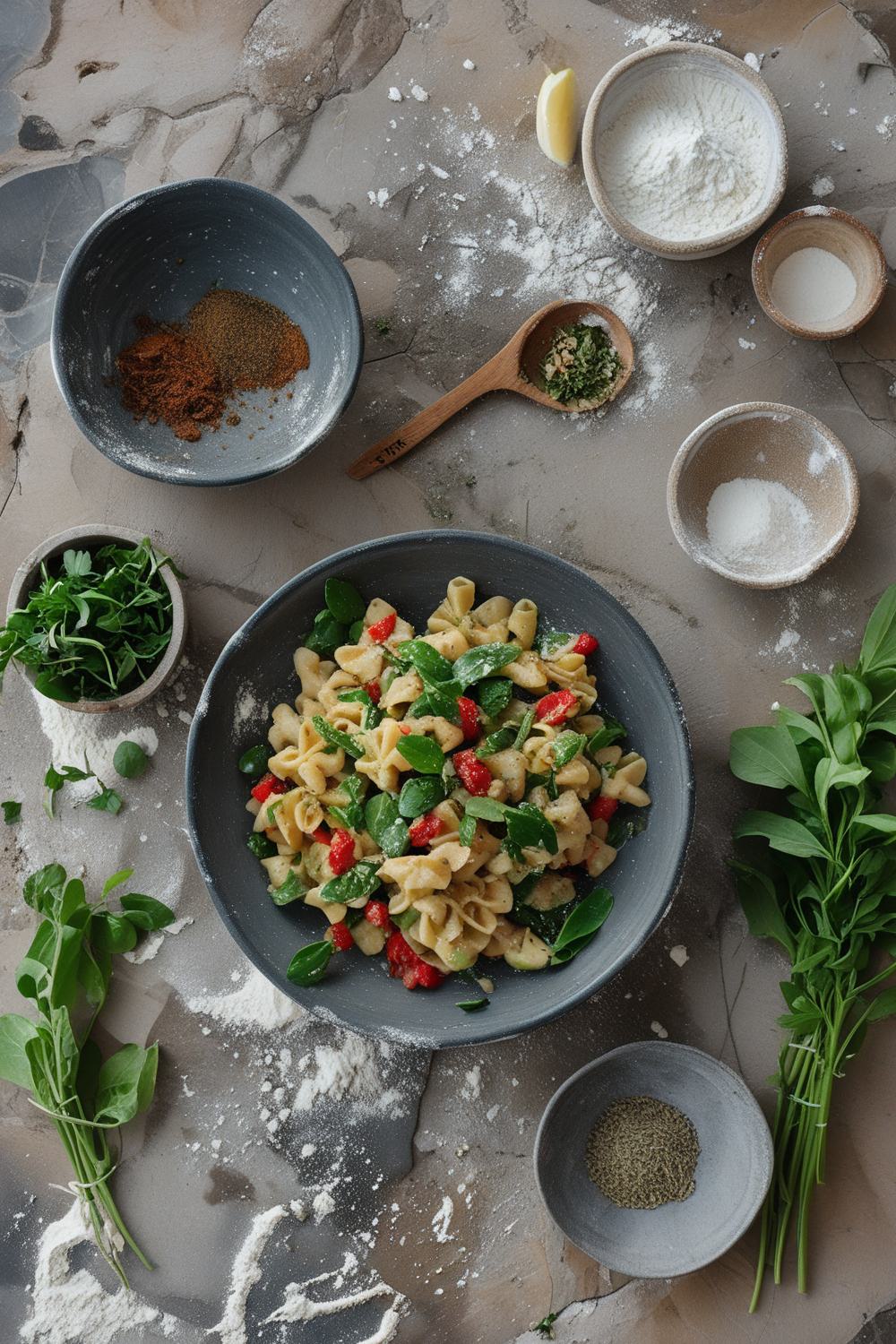
Ingredient Deep Dive
| Ingredient | Quantity | Purpose |
|---|---|---|
| Bronze-cut spaghetti | 12 oz | Rough texture holds sauce better than smooth pasta |
| Rainbow carrots | 3/4 cup julienned | Natural sugars caramelize for depth |
| Asparagus | 1 cup diagonally cut | Provides contrasting crunch |
| Lemon zest | 2 tsp | Brightness cuts through olive oil richness |
| Nutritional yeast | 1/4 cup | Umami boost without dairy |
| Toasted pine nuts | 3 tbsp | Adds fatty mouthfeel and crunch |
| Cold-pressed EVOO | 1/3 cup | Fruity notes withstand cooking temps |
| Reserved pasta water | 1.5 cups | Starch creates emulsified sauce |
Bronze-die pasta creates a micro-textured surface through slow extrusion, allowing sauce to cling like ivy on a trellis—critical when working with oil-based rather than tomato or cream sauces. The rough surface absorbs 30% more liquid than Teflon-cut alternatives.
Seasonal vegetables are chosen for water content management. Asparagus (94% water) and snap peas (90%) require high-heat searing to evaporate surface moisture before steaming, preventing sogginess. Carrots’ cellular structure (88% water but denser) allows longer cooking times to develop Maillard reactions without disintegration.
Substitutions & Swaps
For gluten-free adaptation, use brown rice spaghetti with wider noodles—their increased surface area compensates for lower starch content. Vegan versions benefit from white miso paste (1 tbsp dissolved in pasta water) to replicate Parmesan’s savory depth.
When seasonal produce fails, frozen artichoke hearts and fire-roasted peppers make respectable stand-ins—pat them bone-dry and sear aggressively. No pine nuts? Toasted sunflower seeds add similar crunch with higher iron content. Replace EVOO with avocado oil for higher smoke point during sautéing.
Equipment Guide
A 14-inch carbon steel skillet outshines nonstick for two reasons: its 400°F+ searing capability creates caramelization on vegetables, while slight surface porosity helps develop fond (flavor base). Use tongs with silicone grips to handle al dente pasta without breakage.
Essential tools: mandoline for uniform 1/8″ vegetable slices (ensures even cooking), microplane for fluffy lemon zest (releases more oils than grating), and a spider strainer for quick vegetable retrieval from boiling water. Never use colored plastic bowls for acid-rich dressings—they can leach chemicals into food.
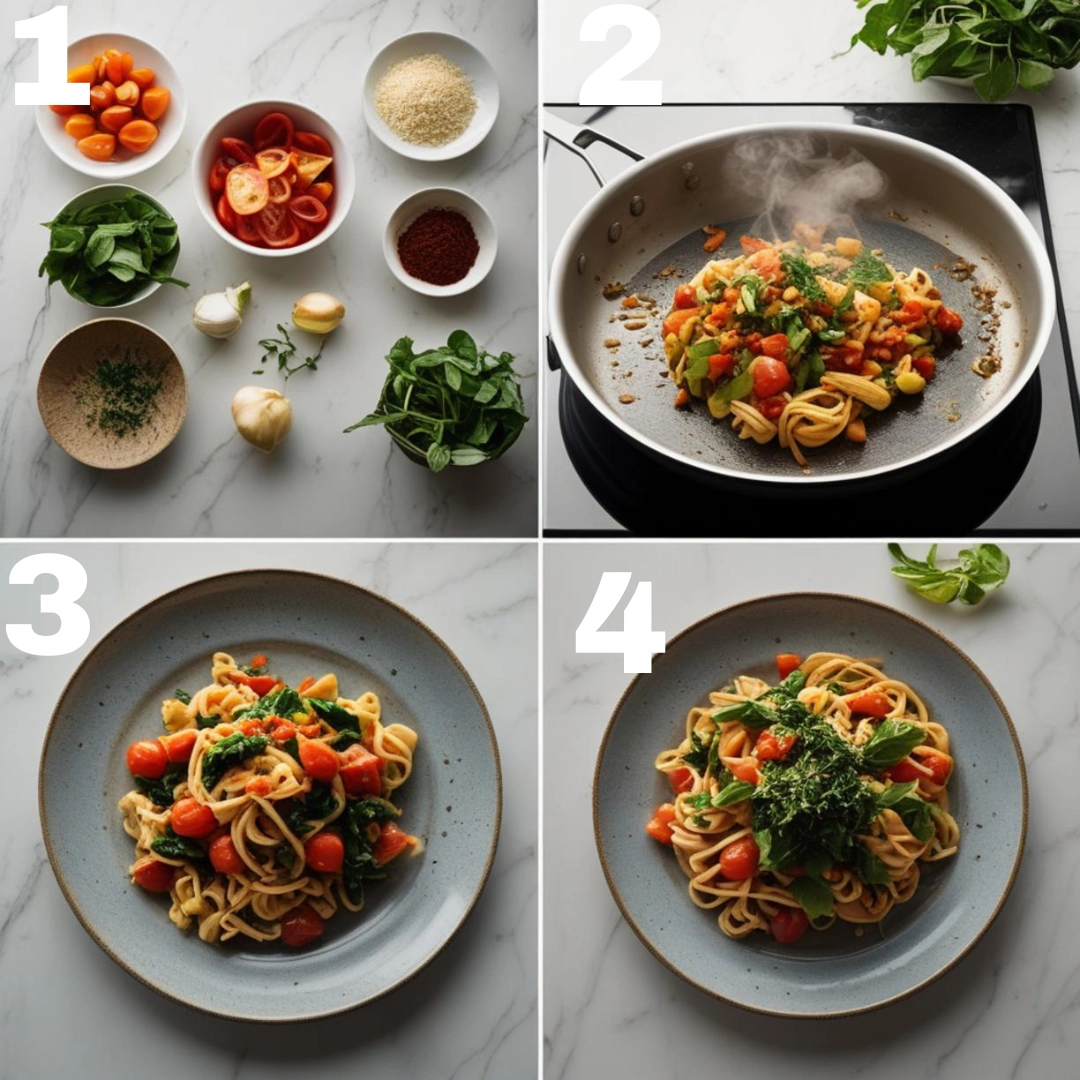
Step-by-Step Walkthrough
- Boil 4 quarts water with 2 tbsp kosher salt—as salty as the sea
- Sear carrots in 1 tbsp oil 3 minutes until blistering appears
- Add asparagus and snap peas; sauté 90 seconds exactly
- Cook pasta 2 minutes less than package suggests
- Reserve 2 cups starchy water before draining
- Combine pasta, veggies, 1 cup water in skillet on medium-low
- Toss continuously until sauce emulsifies (3-4 minutes)
- Off heat, mix in zest, herbs, remaining oil
- Finish with nuts and cheese/miso
The sauce magic happens when starchy water meets olive oil. The amylose and amylopectin in pasta water act as natural emulsifiers, transforming separated oil and water into a velvety coating. Temperature control is vital—below 140°F won’t activate starches; above 180°F causes oil breakdown.
Vegetable sequencing is key. Dense carrots start first, followed by medium-density asparagus, with delicate peas joining last. This “thermal staging” prevents mushiness. Always undercook vegetables slightly—they’ll finish in the sauce phase.
Expert Tips & Troubleshooting
Crisis: Sauce won’t emulsify. Solution: Add ice cube while tossing—the shock helps starch chains reform. Prevent: Always use pasta water within 2 minutes of draining—starch retrograde hardens over time.
For enhanced sweetness without sugar, add one star anise pod while boiling pasta—removed before serving. It subtly enhances vegetables’ natural sugars. “Lift” flat flavors by adding 1/8 tsp citric acid to finishing oil—brightens more reliably than extra lemon juice.
If vegetables release too much water, drain excess liquid and create a slurry with 1 tsp cornstarch + 2 tbsp cold water. Add gradually until desired consistency. Soggy pasta? Spread on baking sheet, bake at 300°F 5 minutes to re-crisp.
Flavor Variations
For heat lovers: Infuse oil with 1 tsp crushed Calabrian chilies before sautéing. Top with lime zest and crispy garlic chips. Kid-friendly version: Blend roasted butternut squash into sauce for natural sweetness, use fun-shaped pasta (like farfalle), fold in puréed white beans for hidden protein.
Umami bomb: Replace 1/4 cup pasta water with mushroom broth, add 1 tbsp capers, finish with bonito flakes. Mediterranean twist: Swap pine nuts for toasted pistachios, add chopped preserved lemon, use mint instead of basil.
Storage & Reheating
Cool completely within 90 minutes—spread on parchment-lined sheet pan. Store in airtight glass (not plastic) containers with paper towel layer to absorb moisture. Lasts 3 days refrigerated.
Reheat properly: Place portion in skillet with 1 tsp water and 1 tsp oil over medium-low. Cover 2 minutes, uncover and toss 1 minute. Never microwave—creates rubbery pasta and mushy vegetables.
FAQ Section
Q: Can I use frozen vegetables?
A: Only if oven-roasted first—skip sautéing. Spread frozen veggies on sheet pan at 425°F 10 minutes to eliminate ice crystals.
Q: Why no cream in “primavera”?
A: Traditional versions use only olive oil and cheese. Cream masks fresh vegetable flavors.
Q: How to make ahead for parties?
A: Par-cook pasta 50%, blanch vegetables, store separately. Combine with hot oil/water sauce at serving time.
Q: Best protein pairings?
A: Grilled shrimp, seared scallops, or flaked salmon. Add after saucing to prevent overcooking.
The Recipe Card
Healthy Vegetable Pasta Primavera
Serves 4 | Active: 25 min | Total: 35 min Fresh seasonal vegetables sautéed to crisp-tender perfection, tossed with bronze-cut spaghetti in an emulsified lemon-herb sauce. Finished with toasted pine nuts and Parmigiano. Vegetarian adaptable to vegan.
Nutrition Information
| Nutrient | Per Serving |
|---|---|
| Calories | 480 |
| Protein | 14g |
| Carbs | 62g |
| Fiber | 8g |
| Sugars | 6g |
| Fat | 18g |
| Sodium | 320mg |
Disclaimer: Nutritional estimates based on FDA guidelines. Actual values may vary with specific ingredients used.